

Condé Nast speeds rights contract analysis with Claude
Condé Nast built a contract pipeline on Amazon Bedrock in which Claude reads incoming licensing contracts, extracts the rights they grant and compares them with templates before rights experts approve the results.
Condé NastUnited States (Contracts from Condé Nast brands and geographies worldwide, handled by a rights team from Asia to the Americas)Publishing and newsIn production
- Use case
- Content rights contract analysis
- Business function
- Legal and compliance
- Kind of solution
- Document extraction
- Who built it
- Built with a partner (Amazon Web Services and Anthropic)
- Where it runs
- Public cloud
- Human oversight
- People approve each output
- Organization
- Media
- AI types
- Generative AI, Machine learning, Document AI
tl;drContract analysis that took weeks now takes hours, and rights clearance is almost instantaneous.See the results
Condé Nast uses Claude 3.7 Sonnet in Amazon Bedrock to read incoming licensing contracts, extract the rights they grant, and compare each one with the company’s contract templates1. A business or legal reviewer validates the results before they enter the rights and royalties management system1.
AWS built the pipeline with Condé Nast’s legal and technical teams, and the two companies described it in November 20251. Processing time for contract analysis fell from weeks to hours1. In a later AWS case study, Condé Nast puts content rights management at weeks to minutes2.
Before the deployment
Rights management experts at Condé Nast reviewed newly ingested contracts by hand, with peaks during brand acquisitions and expansions1. Christopher Donnellan’s global team, from Asia to the Americas, handles content licensing, global syndication and rights management1.
- Experts matched each incoming contract to an existing template and extracted the granted rights and metadata1.
- They managed licensing agreements for images, videos and text from contributors worldwide1.
- The manual, rule-based process was slow and prone to human error1.
- The company used its rights conservatively, which led to missed revenue opportunities1.
- Clearing the rights for one asset took weeks3.
What was built
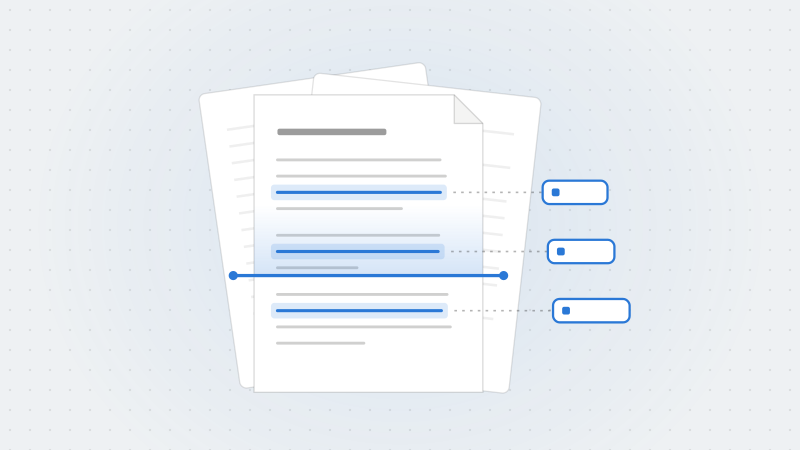
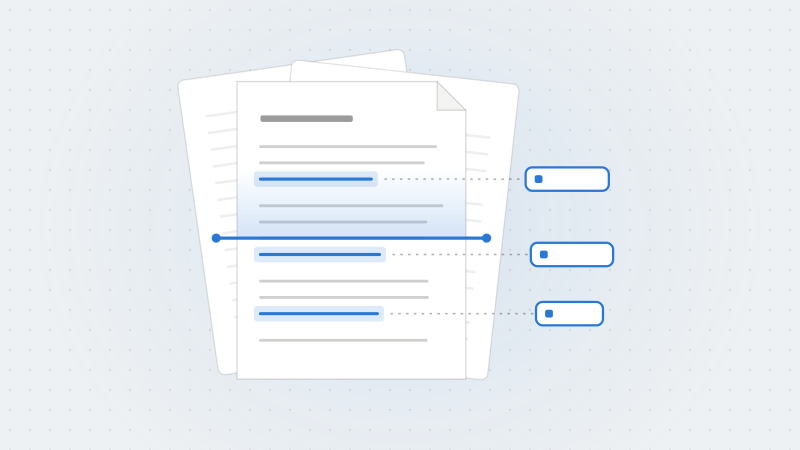
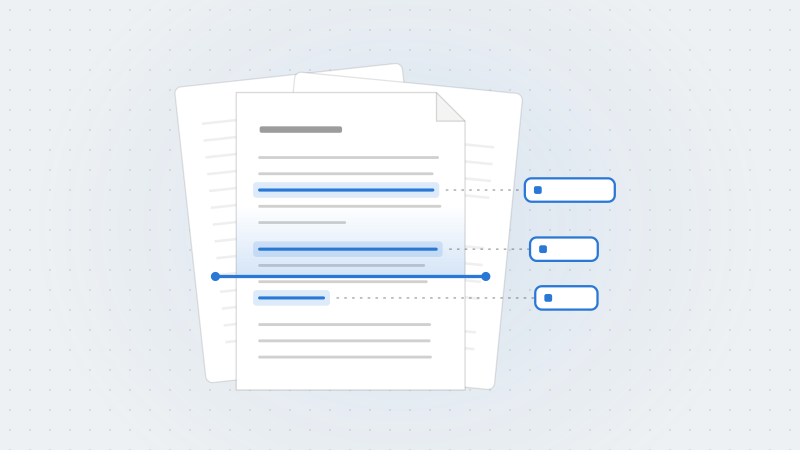
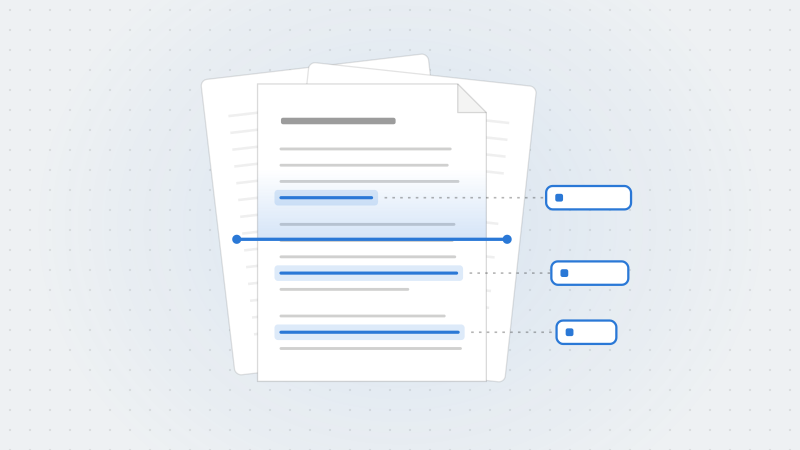
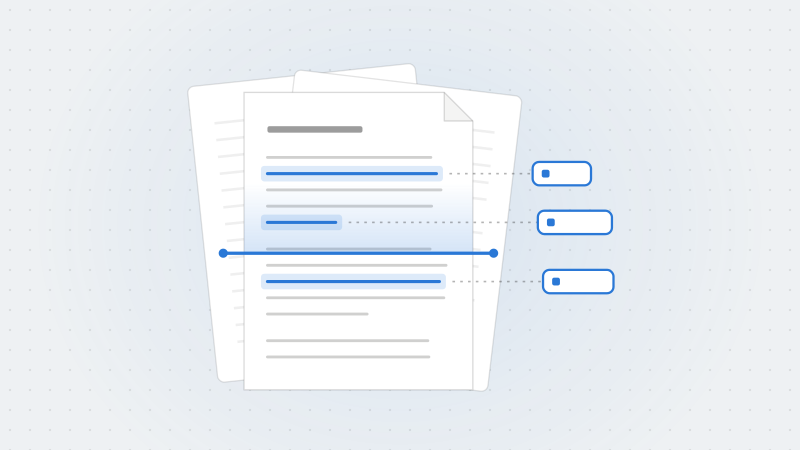
The solution turns each contract into text, extracts its metadata, and finds the closest templates and how the contract differs from them1. It parses, compares and visualizes contracts, and it doesn’t give legal advice1.
- Language model: Claude 3.7 Sonnet transcribes the contract, extracts a fixed set of metadata fields, and states the key semantic differences from the most similar templates1.
- Pipeline software: Starts a run when contracts arrive, searches the template knowledge base, collates the results and notifies staff1.
- Clustering: Groups contracts with no close template by the similarity of their text and the rights they grant1.
- Reviewers: Validate the results before they load into the rights and royalties management system, and draft new templates from the clusters1.
Legal assistants and rights experts encode their expertise into prompts for routine queries, which leaves them the complex cases1. The rollout started with a subset of contracts for specific brands, before full-scale deployment1.
“We use it to do interesting things with content. Always augmenting humans, never replacing them.”
Technology and architecture
- AI component
- Data
- Trigger or control
- Handoff to people
- Feedback
Amazon Bedrock gives the pipeline Claude and other foundation models through a single API1, 2. Amazon SageMaker Processing jobs call the model for each step1.
| Layer | What they used | Role | Source |
|---|---|---|---|
| Language model | Claude 3.7 Sonnet | Transcribes contract page images to text, extracts metadata fields and states differences from the closest templates | 1 |
| Model gateway | Amazon Bedrock | Gives the pipeline access to Claude and other foundation models through a single API | 1, 2 |
| Knowledge content | Amazon Bedrock knowledge base | Holds the text of the contract templates that each incoming contract is compared with | 1 |
| Search and vector index | Amazon OpenSearch Serverless | Serves as the vector store for the template search | 1 |
| Prompt and context management | Metadata prompt template | Gives the model a schema of every metadata field with a short description of each | 1 |
| Embedding and ranking model | Clustering algorithm | Groups contracts with no close template by the similarity of their text and granted rights | 1 |
| Machine learning platform | Amazon SageMaker Processing | Runs the transcription, extraction and template comparison jobs | 1 |
| Workflow engine | AWS Step Functions | Runs the main workflow for each batch of new contracts | 1 |
| Event stream | Amazon EventBridge | Starts the workflow when new contracts land in the input bucket | 1 |
| Document intake | Amazon S3 | Stores incoming contracts, reference templates, transcripts and outputs | 1 |
| Review workbench | Results spreadsheet | Shows reviewers the extracted fields, the closest templates and boilerplates | 1 |
| APIs and connectors | AWS Lambda | Loads validated results into the rights and royalties management system | 1 |
Data inputs
- Incoming contracts: PDFs that include scanned copies, handwritten notes, strikethroughs and multi-column layouts, some of a hundred pages1.
- Templates and boilerplates: Their text sits in an Amazon Bedrock knowledge base, with Amazon OpenSearch Serverless as the vector store1.
- Historical contracts: A representative set across brands and geographies, kept for context and pattern matching1.
- Metadata schema: The prompt template lists every metadata field of interest, each with a short description1.
Integrations
- Rights and royalties management system: An AWS Lambda function loads the validated results, and a notification reports whether the load succeeded1.
- Staff notifications: A message tells business and legal staff that results are ready to review1.
- Downstream applications: The transcripts and outputs feed other internal Condé Nast software and future generative AI use cases1.
How one contract flows through the system
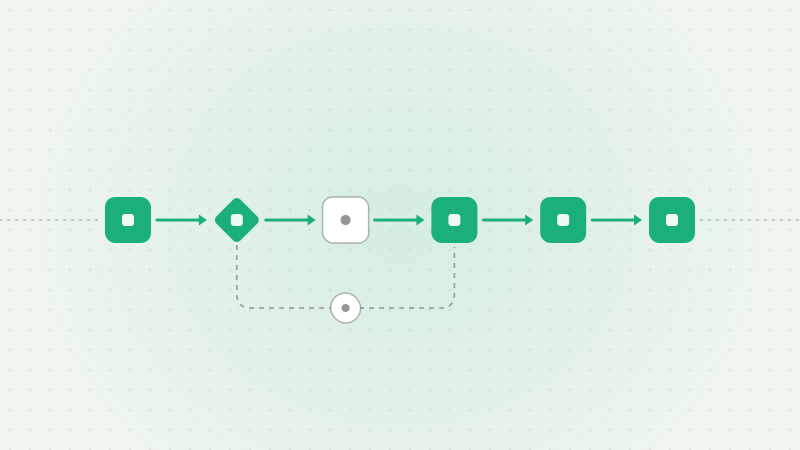
- A staff member uploads a new contract to the input bucket in Amazon S3. Amazon EventBridge detects it and starts the AWS Step Functions workflow1.
- A processing job converts each PDF page to an image. Claude transcribes the image to raw text, splitting a hundred-page document into chunks1.
- A second job sends the text and the metadata schema to Claude, which extracts the pre-specified fields1.
- A third job compares the contract text with the templates in the knowledge base. Claude states the key semantic differences from the most similar ones1.
- The job writes the fields, the closest templates and the boilerplates to the Results spreadsheet in S3, and notifies staff1.
- A reviewer validates the results. A Lambda function loads the valid ones into the rights and royalties management system1.
- If the contract has low similarity to every template, it moves to a separate bucket. The Clustering algorithm groups it with similar contracts and produces cluster labels, similarity scores and interactive visualizations1.
- A reviewer drafts a new template from the cluster results. Once the template is in the knowledge base, the contract runs through the solution again1.
Results
By November 2025, processing time for contract analysis had fallen from weeks to hours1. The AWS case study describes content rights management in minutes2.
| Metric | Before | After | Scope and timeframe | Reported by |
|---|---|---|---|---|
| Contract analysis processing time | Weeks | Hours | Newly ingested contracts, as of November 2025 | Condé Nast and AWS, measured1 |
| Content rights management process time | Weeks of manual review | Minutes | Rights availability across editorial content | Condé Nast, via AWS, measured2 |
| Time to clear rights for an asset | Weeks | Almost instantaneous | One asset, contracts in the system, December 2025 | Condé Nast, via Inside Partnering, measured3 |
- Contract analysis processing time: The time to analyze newly ingested contracts, which went from weeks to hours1.
- Content rights management: The time to identify the rights availability of content from contract and licensing data, which went from weeks of manual legal and licensing review to minutes2.
- Rights clearance: Bhakta said at AWS re:Invent in December 2025 that clearing rights for an asset is now almost instantaneous, because all the contracts are in the system3.
The system handles the workload peaks of brand acquisitions and expansions without additional staff1. Editors can now find and republish historical content, and the project led to a second system that explains rights availability in plain language to non-technical users1, 2.
Lessons learned
The time savings are Condé Nast’s own figures, published by AWS and repeated by Bhakta in a podcast interview1, 2, 3.
The three figures differ because they measure different steps. Weeks to hours covers analysis of newly ingested contracts1. Weeks to minutes and almost instantaneous cover identifying the rights available for content, which Bhakta ties to all contracts being in the system2, 3.
People still check every result. A human reviewer validates the output before it loads, and the team found human evaluation essential for nuanced cases and for refining the prompts1.
Contracts that match no template don’t finish on their own. They go to clustering, and a person drafts a new template before the contract can be rerun1.
Extraction quality depended on the inputs. The team found that metadata extraction relied on the transcription step, and accuracy improved significantly with a broad set of representative historical contracts1.
The way the project ran worked in its favor. Legal teams, rights experts and technical staff took part from the start, and the incremental rollout by brand let the team adjust before full-scale deployment1.
Case study scorecard
- weeks to hours Contract analysis processing time1
- weeks to minutes Content rights management process time2
- almost instantaneous Time to clear rights for an asset3
Sources by publication date
- Vendors and partners 2
- Press, academic, and regulators 1
Build this solution yourself
Analysis
What you need
- A library of contract templates: The pipeline judges each contract by its closest templates, so you need your templates and boilerplates in a searchable store, and someone to add new ones1.
- An archive of representative contracts: Accuracy improved with historical contracts across brands and geographies, so check that you have examples from each of your own1.
- A rights system that accepts loads: Validated results go into the rights and royalties management system through a function, so your system of record must accept them1.
- Rights experts who review and write prompts: Condé Nast’s experts validate the output and encode their knowledge in prompts, so you need people with that expertise and time1.
Reference architecture
Document extraction
Document extraction reads the documents, forms, and images that an organization receives, sorts each one to its case, and turns it into structured fields for the business system that acts on it. Models read each document into fields, and ordinary software checks the fields against business rules and the organization's reference records. A reviewer compares the fields with the source before they reach the business system, or sees only the doubtful ones, and the corrections measure and improve the models.
- Document intake (documented in this case study)
- Document extraction platform
- Preparation
- Text recognition
- Extraction model (documented in this case study)
- Validation rules
- Reference records
- Workflow engine (documented in this case study)
- Review workbench (documented in this case study)
- Answer explanation
- Connectors (documented in this case study)
- Business system
- Corrections log
- Accuracy monitoring
A check mark shows a building block that this case study's sources document.
Open the reference architectureOthers who built it
- Cargolux Airlines International: Cargolux drafts cargo quotes from customer emails with AI. Cargolux's AI has drafted thousands of quotes from emails in eight markets, at a 93% trust level.
- Air France KLM Martinair Cargo: Air France KLM Martinair Cargo uses AI to book and quote. Customers now paste shipment emails into myCargo, and AI fills in the booking fields.
- Pennsylvania Department of Human Services: Pennsylvania's AI check cuts illegible benefit documents. Illegible uploads fell 80% in the pilot, saving 700 staff hours.
- Liberty Global: How Liberty Global matches supplier invoices with GenAI. Liberty Global's shared services cut invoice costs 70% and resolve exceptions 95% faster.
- Parte: Parte embeds AI in property managers' email in 27 offices. Parte's AI for property managers' emails and requests is now live in all 27 of its offices.
- RGF Staffing the Netherlands: AI reads collective agreements for equal pay at RGF Staffing. RGF Staffing's AI checker went live in five months, in time for the January 2026 equal pay rules.
Cite this case study
Enterprise AI Case Studies. "Condé Nast speeds rights contract analysis with Claude." Updated Nov 26, 2026. https://case-studies.ai/use-cases/document-intelligence/DI-070-contract-rights-analysis-conde-nast/
@misc{csai-di-070,
  author = {{Enterprise AI Case Studies}},
  title = {{Condé Nast speeds rights contract analysis with Claude}},
  year = {2026},
  note = {Updated 2026-11-26},
  url = {https://case-studies.ai/use-cases/document-intelligence/DI-070-contract-rights-analysis-conde-nast/}
}Sources
The following reporting, and every passage quoted from it, belongs to its publisher, not to this site. Sources and ownership
- Source 1:
How Condé Nast accelerated contract processing and rights analysis with Amazon Bedrock
Supporting excerpts (50)
The existing process relied heavily on manual review of newly ingested contracts, particularly during strategic initiatives such as brand acquisitions or expansions.
Rights management experts spent countless hours identifying and matching incoming contracts to existing templates, extracting granted rights and metadata, and managing licensing agreements for various creative assets, including images, videos, and text content from contributors worldwide.
This manual, rule-based approach created significant operational bottlenecks. The process was time-consuming and prone to human error.
As a result, the company took a conservative approach to utilizing rights, leading to missed revenue opportunities.
AWS developed an automated contract processing solution powered by AWS AI services focused on parsing, comparison, and data visualization
not providing legal advice of its own
A scalable object storage service used to store incoming contracts, reference templates, and solution outputs.
An on-demand serverless configuration for Amazon OpenSearch Service used as a vector store.
A user uploads new contracts to an input S3 bucket. The addition of new contracts triggers Amazon EventBridge, which starts the main Step Functions workflow.
An Amazon SageMaker Processing job processes the contracts, converting them from PDFs to digital text files.
This step uses the visual reasoning capabilities of Anthropic's Claude 3.7 Sonnet in Amazon Bedrock to perform the transcription from a PDF (converted to an image) into a raw text file.
This operation takes into account handwritten notes, strikethroughs, and specialized document formatting (such as single vs. multiple columns) when evaluating the terms of the individual contracts.
The preprocessing is also able to handle large, hundred-page documents by dividing it into smaller chunks and repeatedly executing the preceding step.
The resulting text file is saved in an S3 bucket to be used as a basis for a suite of existing and future generative AI use cases.
Intermediate processed data outputs are governed by the same access restrictions as the raw source data.
a second SageMaker Processing job runs, using Anthropic's Claude 3.7 Sonnet in Amazon Bedrock to extract a set of pre-specified metadata fields.
The large language model (LLM) is provided a schema through a prompt template, consisting of every potential metadata field of interest accompanied by a short description of that field to aid the model in extraction.
A third SageMaker Processing job discovers similar existing templates by comparing the text of the incoming contract to the text of possible templates, stored in an Amazon Bedrock knowledge base.
Additionally, Anthropic's Claude 3.7 Sonnet determines key semantic differences from the most similar templates.
The results are collated in a spreadsheet, including extracted metadata fields and most similar templates and boilerplates.
A notification message is sent to the corresponding business and legal staff to review the results.
Incoming contracts with low similarity across the templates are sent to a separate S3 bucket to be used in a separate downstream process (further analysis and generation of new templates).
A human reviewer validates the results of the system. Using an AWS Lambda function, valid results are then loaded into Condé Nast's rights and royalties management system.
A notification message is sent, indicating the success or failure of the preceding load.
The outputs from the solution are used in a suite of downstream processes, integrating with other internal Condé Nast software solutions.
These low similarity contracts are passed into a clustering algorithm and grouped based on the similarity of their text and the rights granted by each contract.
A spreadsheet containing assigned cluster labels, similarity scores, contract text, and more is saved to Amazon S3 as well as accompanying interactive visualizations.
A human reviewer uses these results to draft new templates to be used in future deals and runs of the solution.
The solution can then be rerun for the contracts that might have new corresponding templates uploaded to the knowledge base in Step 4.
Amazon Bedrock can provide access to various FMs through a single API.
Processing time for contract analysis has been reduced from weeks to hours, enabling faster content deployment and more agile industry responses.
This helps rights management experts focus on complex cases and strategic initiatives.
Legal assistants and rights experts can now use their knowledge more efficiently by encoding their expertise into prompts that address routine queries
The system effortlessly handles increased workloads during high-volume periods, such as major brand acquisitions or expansions, without requiring additional human resources.
has significantly reduced the risk of rights violations and potential legal challenges
including a system that translates complex rights availability information into plain language for non-technical users
The team discovered that the quality of metadata extraction and subsequent processes heavily depended on the initial contract processing pipeline.
including those with handwritten notes, scanned copies, and multi-column PDFs
the system needed to efficiently process large files, both in terms of file size and page count
The team found that human evaluation was essential for handling nuanced cases and providing a vital feedback loop for prompt engineering.
This human-in-the-loop approach allowed for continuous refinement of the AI models, improving their accuracy and relevance over time.
Involving all relevant parties (legal teams, rights management experts, and technical staff) from the project's inception proved important.
This collaborative approach made sure the solution met compliance requirements while delivering operational efficiency, facilitating smoother adoption across the organization.
The decision to roll out the solution incrementally, starting with a subset of contracts for specific brands, allowed for rapid iteration and refinement.
This phased approach helped the team gather real-world feedback and make necessary adjustments before full-scale deployment
The system's accuracy improved significantly when provided with a comprehensive set of representative historical contracts spanning multiple brands and geographies
well-documented contract archives for context and pattern matching
By helping subject matter experts drive development through prompt engineering, the organization discovered a more direct and business-aligned path to creating technical solutions.
This new model helps experts express requirements in plain English directly to language models, significantly reducing traditional development complexity
Currently, he leads a global team from Asia to the Americas, focusing on content licensing, global syndication, rights management, and AI-driven contract workflows
- Source 2:
Supporting excerpts (8)
reducing content rights management processes from weeks to minutes
Condé Nast uses Amazon Bedrock for access to multiple FMs for various use cases.
Bedrock delivers the inference capabilities that power content rights management, enabling Condé Nast to process the entire body of editorial content, analyzing images and assets, integrating contract and licensing data to identify rights availability in minutes rather than weeks.
Content rights management that previously required weeks now completes in minutes, unlocking a century of content assets that were effectively trapped due to prohibitive manual verification costs,
Content rights management processes that previously required weeks of manual legal and licensing review now finish in minutes through Amazon Bedrock-powered analysis.
now enabling editors to discover and republish valuable historical content that generates new audience engagement and revenue.
We use it to do interesting things with content. Always augmenting humans, never replacing them.
says Sanjay Bhakta, Chief Product and Technology Officer of Condé Nast
- Source 3:
Sanjay Bhakta: AI, Culture, and the Reinvention of a Global Media Company
Supporting excerpts (5)
I sat down with Sanjay Bhakta, Chief Product and Technology Officer at Condé Nast, live from AWS re:Invent.
Sanjay's team began their AI journey focusing on internal use cases in engineering, DevOps, QA, rights management, and content workflows.
Today leveraging AWS Bedrock, AI supports coding, testing, deployments, contracts processing, and internal automation.
A standout example is their new contracts and rights clearance system.
It used to take us weeks to clear rights for a particular asset. Now that all the contracts are in the system, it's almost instantaneous.











Comments
Start the conversation.
Invited members of the library comment here. Sign in to join the conversation.