
FM Logistic cuts warehouse picking travel with AlphaEvolve
FM Logistic gave Google's AlphaEvolve its own order-batching algorithm, and the Gemini-powered coding agent evolved a better one for e-commerce picking at a warehouse in Poland.
FM LogisticPolandFreight and logisticsIn production since 2026
- Scale
- One e-commerce warehouse in Poland with more than 17,700 picking locations
- Scenario
- Warehouse picking route optimization
- Business function
- Supply chain and logistics
- Kind of solution
- Scheduling and routing optimization
- Who built it
- Built with a partner (Google Cloud and Google DeepMind)
- Organization
- Enterprise, 10,000 to 99,999 employees
- AI types
- Generative AI, Agentic AI, Optimization
- Users
- up to several dozen
tl;drPicking distance fell 10.4% at a Polish warehouse, an estimated 15,000 km less travel a year.See the results
FM Logistic uses an algorithm written by Google’s AlphaEvolve to group e-commerce orders into picking runs at a warehouse in Poland1, 2. AlphaEvolve is an evolutionary coding agent that uses Gemini models to generate and refine algorithms1.
The agent started from FM Logistic’s own batching algorithm and evolved a version that shortens the routes operators drive through the warehouse1. FM Logistic integrated it in early 2026, and the pilot now runs in production2, 1.
Picking distance fell 10.4% against the previous best algorithm, an estimated 15,000 km less travel a year2. In July 2026, FM Logistic called it the first supply chain operation worldwide to use AlphaEvolve to improve e-commerce order picking3.
Before the deployment
Operators at the site pick in batches, collecting items for several orders in one run through the warehouse3. Each picking mission groups 16 orders, so the way orders are grouped decides how far operators travel2, 3. The site had the following conditions:
- The warehouse covers the area of eight football fields and holds more than 17,700 picking locations1.
- Up to several dozen operators on ride-on electric trucks work the floor, and each visits dozens of storage locations per tour1.
- The site runs 24/7 across three shifts2.
- Small batching errors at this scale add thousands of kilometers of travel a year and more wear on vehicles3.
FM Logistic had already optimized the process several times with its own algorithms3. The existing model used fast, cost-prioritized allocation logic built for real-time responsiveness. It made decisions step by step, which limited how well it coordinated routes across the full warehouse1. Traditional optimization methods were reaching their limits3.
“This translates directly to faster fulfillment, improved working conditions for our teams, and reduced wear on our fleet.”
What was built
FM Logistic gave AlphaEvolve its existing batching algorithm as a seed program, and the agent rewrote the code until a variant beat the original1. The work is divided as follows:
- AlphaEvolve: Uses Gemini to generate variations of the seed code, with mutations and new logic. It ran a series of experiments, each with hundreds of candidate programs1.
- Evaluation function: Scores every candidate on average travel distance per pick and penalizes routes that the warehouse can’t run1.
- Evolved routing algorithm: Builds the picking missions at the site in real time. It’s a set of human-readable rules1, 2.
- FM Logistic’s team: Defined the process rules, constraints and parameters that the scoring enforces3. Warehouse teams can review and adjust the rules as needs change1.
The FM Logistic team built the project with the AI for Science team at Google Cloud and partners at Google DeepMind1.
Rollout
FM Logistic first built its own order-grouping algorithm, which improved picking performance3. It then joined the AlphaEvolve early-access program among the first organizations worldwide, and integrated the evolved algorithm in early 20263, 2. By March 2026, the Poland pilot ran in production1. FM Logistic plans to scale the model to other high-volume e-commerce sites and to add AI-driven slotting2.
Technology and architecture
FM Logistic uses AlphaEvolve as a service on Google Cloud1. In the product, Gemini Flash models add speed and Gemini Pro models add depth, and a candidate that scores better becomes the parent of the next generation7. The evaluation function is the ground truth for that search, so FM Logistic encoded its operating rules in it1, 3, 7.
The following table lists the parts of the solution.
| Layer | What they used | Role | Source |
|---|---|---|---|
| Task agent | AlphaEvolve | Generates and refines algorithm code, and keeps the variants that score best | 1 |
| Language model | Gemini models | Write the code mutations and new logic inside AlphaEvolve | 1 |
| Offline evaluation | Evaluation function | Scores each candidate in simulation against recorded tours, with penalties | 1, 3 |
| Optimizer | Evolved routing algorithm | Groups pending orders into picking missions in real time | 1 |
| Cloud platform | Google Cloud | Provides AlphaEvolve as a service | 1 |
Data inputs
The solution uses the following data:
- Seed program: FM Logistic’s previous algorithm, which made each routing decision on what looked best at that moment1.
- Evaluation tours: A representative data set of 60 tours, over one hour of workforce data1.
- Pending orders: The pool of open orders, which the algorithm groups into missions of 16 orders1, 2.
How one candidate is scored
The evaluation function tests each candidate program in the following order:
- AlphaEvolve sends a new candidate program to the evaluation function1.
- The evaluation function runs the program on the 60 recorded tours in a simulation of the warehouse1, 3.
- It measures the average travel distance per pick, which is the primary goal1.
- It subtracts penalties when the program exceeds forklift capacity, misses pending orders, assigns a box twice, breaks first-in, first-out (FIFO) priority for older orders, or takes longer than real-time operations allow1.
- AlphaEvolve uses the score to choose the parents of the next round of variants1, 7.
How one picking mission is built
The winning algorithm builds each mission in the following steps:
- The algorithm finds clusters of items that are close together and uses the dense areas as starting anchors. The previous system started from the single location where the most missions overlapped1.
- A quick filter removes the orders that don’t fit the route’s logic1.
- A precise distance simulation runs only on the best remaining candidates, so that routing stays fast enough for real-time operations1.
- If the algorithm can’t fill a truck efficiently around an anchor, it returns those orders to the main pool for a better-fitting route later1.
Results
The evolved algorithm shortened picking routes at the Poland site against the previous best algorithm, with results first published in March 20261, 2. The following table lists the results.
| Metric | Before | After | Scope and timeframe | Reported by |
|---|---|---|---|---|
| Picking distance | Previous best in-house algorithm | 10.4% shorter | One site in Poland, pilot now in production, 2026 | FM Logistic, pilot2, 1, 5 |
| Operator and equipment travel | Not disclosed | 15,000 km less a year | One site in Poland, estimate at full operational scale | FM Logistic, estimated2, 1, 3 |
The metrics need the following explanation:
- Picking distance: Travel distance against a baseline that FM Logistic had already optimized several times3. Google Cloud gives the same figure as an improvement in routing efficiency over the previous best solution1.
- Operator and equipment travel: An annual figure at full operational scale, for operators and their trucks1, 2.
- Operations: The gains brought higher throughput and shorter lead times, with no investment in new infrastructure or equipment2, 3. The same team and equipment can handle larger order volumes1.
Lessons learned
The gain came on top of an algorithm that was already good. Starting from the in-house code gave AlphaEvolve a working baseline, and the result is human-readable rules that the warehouse teams can still review1.
The scoring was the hard part. AlphaEvolve surfaced improvements that weren’t obvious, but not every best-scoring result could run in a live warehouse, so the team had to define the process rules, constraints and parameters in detail3. InfoQ’s Steef-Jan Wiggers notes that AlphaEvolve’s evolutionary search exploits anything the evaluator fails to measure5.
FM Logistic attributes the gain to data and process design rather than new automation or equipment3. It also says that production use depends on reliable data pipelines, strong data governance and interoperability with planning tools4.
The figures are FM Logistic’s own, published by the company and by Google Cloud. InfoQ relayed the 10.4% figure in July 20262, 1, 5. InfoQ also noted that every performance figure in Google’s AlphaEvolve announcement came from Google or from customer testimonials, with no independent benchmarks5.
Case study scorecard
- 10.4% Reduction in picking distance2, 1, 5
- 15,000 km Less operator and equipment travel a year2, 1, 3
Sources by publication date
- Organization 3
- Vendors and partners 3
- Press, academic, and regulators 1
Build this solution yourself
Analysis
What you need
To build this solution, you need the following in place:
- A working algorithm to start from: AlphaEvolve mutates a seed program, and FM Logistic’s batching code gave it a baseline that already solved the problem1.
- Recorded operations to score against: The evaluation function replayed 60 real tours, so each candidate was tested on real-world conditions1.
- Operating rules written as penalties: Truck capacity, FIFO priority, missed orders and compute time had to be in the score, because otherwise the search favors routes the warehouse can’t run1, 3.
Reference architecture
Scheduling and routing optimization
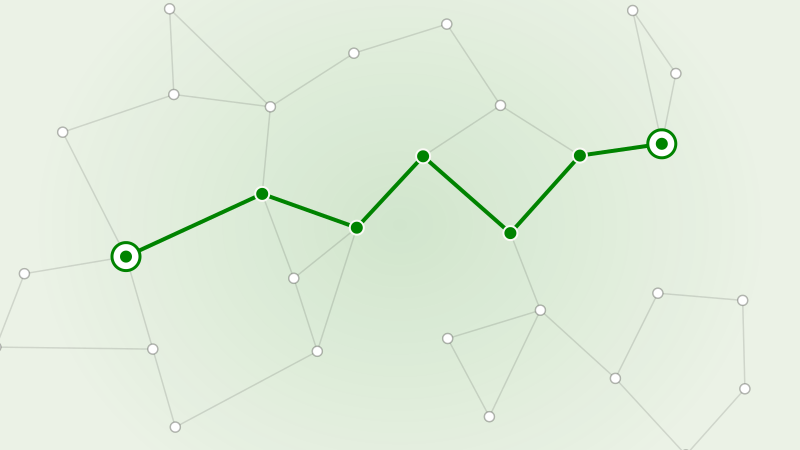
A scheduling and routing optimization solution computes who or what goes where, in what order, and when, within the constraints that apply. An optimizer builds a plan from the work, live positions and conditions, and the organization's rules, and rebuilds it as conditions change. Planners approve or finish the plan or steer it through limits, and the people who carry it out can depart from it.
- Operational system
- Live positions and conditions
- Network and reference data
- Rules and priorities
- Forecasting model
- Optimizer (documented in this case study)
- Planner console
- Field app
- Customer app or website
- Planning platform
- Machine learning platform
- Offline evaluation (documented in this case study)
A check mark shows a building block that this case study's sources document.
Open the reference architectureOthers who built it
- Coolblue: Its data scientists used AlphaEvolve on a 28-day demand forecasting pipeline and cut its weighted mean absolute percentage error (WMAPE) by over 5% in 200 iterations6.
- Kinaxis: Its researchers used AlphaEvolve on mature forecasting and optimization algorithms, with more than 22% better forecasting accuracy and over 90% less runtime on benchmark datasets in early testing6.
- Klarna: It doubled its machine learning training throughput with AlphaEvolve, after exploring about 6,000 candidate programs over three weeks5.
In the library
- Alaska Airlines cuts fuel burn with AI route optimization Alaska Airlines
- How American Airlines uses AI to save tight connections American Airlines
- AI production planning takes 91.6% less time at Atlas Copco Atlas Copco
- UPS's ORION cuts 6 to 8 miles from each delivery route UPS
- GlobalFoundries fills idle fab tool time with AI dispatching GlobalFoundries
- AI disruption tools cut Heathrow delays at British Airways British Airways
Cite this case study
Enterprise AI Case Studies. "FM Logistic cuts warehouse picking travel with AlphaEvolve." Updated Nov 19, 2026. https://case-studies.ai/case-studies/supply-chain-and-logistics/SC-023-warehouse-picking-route-optimization-fm-logistic/
@misc{csai-sc-023,
  author = {{Enterprise AI Case Studies}},
  title = {{FM Logistic cuts warehouse picking travel with AlphaEvolve}},
  year = {2026},
  note = {Updated 2026-11-19},
  url = {https://case-studies.ai/case-studies/supply-chain-and-logistics/SC-023-warehouse-picking-route-optimization-fm-logistic/}
}Sources
The following reporting, and every passage quoted from it, belongs to its publisher, not to this site. Sources and ownership
- Source 1:
How FM Logistic tackled the traveling salesman problem at warehouse scale with AlphaEvolve
Supporting excerpts (26)
The facility spans eight football fields. It holds over 17,700 picking locations.
up to several dozen operators on ride-on electric trucks crisscross the floor collecting cartons, each one navigating dozens of storage locations per tour
Every unnecessary step adds up: in time, in wear on the fleet, and in delayed fulfillment.
Their existing model used a fast, cost-prioritized allocation logic built for real-time responsiveness. It worked well, but it made decisions step by step, which limited how well it could coordinate routes across the full warehouse.
So they turned to AlphaEvolve on Google Cloud.
AlphaEvolve is an evolutionary coding agent that generates and refines algorithms autonomously using Gemini models.
The team didn't start from scratch.
their existing algorithm, which made routing decisions one step at a time based on what looked best in the moment. This gave the agent a working baseline that already solved the problem, just not optimally.
AlphaEvolve used Gemini to generate variations of this code, introducing mutations and new logic to see if it could beat the human-designed original.
FM Logistic designed a custom evaluation function using a representative dataset of 60 tours (over one hour of workforce data), letting the agent test thousands of generated algorithms against real-world conditions.
minimize the average travel distance per pick, while avoiding operational failures
exceeding forklift capacity, missing pending orders, assigning the same box twice, violating FIFO priority for older orders, or exceeding the computation time required for real-time operations
10.4% improvement in routing efficiency over the previous best solution.
15,000+ fewer kilometers of warehouse travel per year at full operational scale.
That efficiency gives FM Logistic room to handle larger order volumes with the same team and equipment, without adding headcount or expanding their fleet.
Through our partnership with Google Cloud and the implementation of AlphaEvolve and Gemini, we further optimized our routing approach for fast-moving operations
The 10.4% improvement was achieved on top of an already highly optimized baseline, where further gains are typically hard to come by. This translates directly to faster fulfillment, improved working conditions for our teams, and reduced wear on our fleet.
By running a series of experiments, each generating hundreds of candidate programs, AlphaEvolve developed a new algorithm that outperformed the previous best human-engineered one.
The result is a set of clear, human-readable rules that warehouse teams can review and adjust as needs change.
The previous system chose a starting mission based on the single location where the most missions overlapped. The new algorithm looks more broadly, identifying clusters of items that are close together and using those dense areas as
To maintain real-time speed, the algorithm uses a two-stage process. First, a quick filter eliminates orders that do not fit the route's logic. Second, a precise distance simulation runs only on the best remaining candidates to find the most efficient path, without slowing down warehouse operations.
It returns those orders to the main pool so they can be picked up by a better-fitting route later, improving efficiency across the entire warehouse.
The Poland pilot (which is now running in production) demonstrated what evolutionary AI can do for complex routing at warehouse scale.
applying the algorithm to other high-volume e-commerce facilities
the AI for Science team at Google Cloud
and partners at Google DeepMind
- Source 2:
FM Logistic at Google Cloud Next 2026 in Las Vegas
Supporting excerpts (9)
a dedicated breakout session led by Mateusz Klimowicz, RPA Manager
The project focused on optimising mission batching by grouping 16 orders in a way that minimises total travel distance for warehouse operators.
More than 17,700 active picking locations
Continuous 24/7 operations across three shifts with multiple simultaneous operators
In early 2026, FM Logistic enhanced this approach by integrating the AlphaEvolve solution, combining advanced algorithms with real-time processing capabilities.
The result: a 10.4% reduction in picking distance, representing annual savings of over 15,000 kilometres for operators and equipment.
These gains translated into increased throughput and reduced lead times, without requiring additional infrastructure investment.
Next steps include scaling this optimisation model to other high-volume e-commerce sites and introducing AI-driven slotting strategies to further improve warehouse efficiency.
At FM Logistic, we are 27,762 people
- Source 3:
FM Logistic cuts picking routes by over 10% in AlphaEvolve 'global first'
Supporting excerpts (14)
it is the first supply-chain operation worldwide to use the AI-based technology to improve e-commerce order picking
Operators use batch picking, collecting items for multiple orders in one run through the warehouse. That makes order grouping critical: the better the batches are built, the fewer trips are needed and the shorter each route becomes.
At this scale, even small batching errors can translate into thousands of extra kilometres walked or driven each year, as well as higher wear on warehouse vehicles.
Traditional optimisation methods, however, were starting to reach their limits.
FM Logistic first built its own order-grouping algorithm, which improved picking performance.
FM Logistic says it was among the first organisations worldwide to join the early-access programme.
Each suggested change was validated in a dedicated simulation environment intended to mirror real warehouse operating conditions.
Simply shortening routes could not be the only measure of success.
The company notes that AI can quickly surface improvements that are not obvious
but not every “best” result is suitable for a live warehouse. The team therefore defined process rules, constraints and parameters in detail.
the process had already been optimised multiple times, and the company’s in-house solutions had significantly reduced picking-route length
a reduction in annual operator travel of more than 15,000 kilometres
productivity gains do not always require new automation or facility upgrades. In this case, the benefits came from using data more effectively and applying a more advanced approach to process optimisation.
FM Logistic says the gains were achieved without investment in new infrastructure or equipment, relying instead on data and process design.
- Source 4:
From theory to operations: scaling route optimization with AI
Supporting excerpts (2)
Integrating such models into existing information systems requires reliable data pipelines, strong data governance, and seamless interoperability with planning tools.
Without this foundation, even the most advanced optimization methods remain theoretical.
- Source 5:
Google's AlphaEvolve Reaches General Availability with Evolutionary Code Optimization as a Service
Supporting excerpts (4)
FM Logistic shaved 10.4 percent off warehouse picking routes, a baseline that had already been through production optimization.
All performance figures are vendor-provided or customer testimonials published on Google's own blog, with no independent benchmarks.
teams must build a scoring harness that captures every property they care about, because the evolutionary search will exploit anything the evaluator fails to measure
Klarna doubled its ML training throughput, exploring roughly 6,000 candidate programs over three weeks while maintaining the bit-exact reproducibility that financial services regulation requires.
- Source 6:
Solve harder problems with AlphaEvolve, now available to everyone on Google Cloud
Supporting excerpts (5)
Today, AlphaEvolve is generally available (GA) on Google Cloud.
FM Logistic: Optimizing warehouse routing
Coolblue data scientists used AlphaEvolve to directly optimize their 28-day demand forecasting pipeline
In just a few (200) iterations, AlphaEvolve improved our production forecast (by reducing WMAPE over the existing solution) by over 5%.
Kinaxis researchers have used AlphaEvolve to materially improve both the speed and quality of highly mature forecasting and optimization algorithms. In early testing, we achieved improvements of more than 22% in key forecasting accuracy metrics while reducing runtime by over 90% on benchmark datasets.
- Source 7:
AlphaEvolve on Google Cloud: AI for agentic discovery and optimization
Supporting excerpts (4)
Gemini models (Flash for speed, Pro for depth) process the context and generate mutated, optimized versions of the code
It then tests these changes against a "ground truth" evaluator that you define.
If the new code performs better, it becomes the parent for the next generation.
The seed is a compile-ready piece of code that is the algorithm that you want to optimize.







Comments
Start the conversation.
Invited members of the library comment here. Sign in to join the conversation.