
Choose your region

    Lists show the case studies of your region first. Browse and search still hold every case study.

    Europe
    North America

    Process automation AI case studies

    Process automation covers AI that carries back-office work from start to finish across more than one system. The work ends in a transaction, such as a claim paid, a request filed, or a price changed.

    Property and casualty insurance

    Lemonade's AI claims bot automates more than half of claims

    Lemonade built AI Jim, a claims bot that takes each claim by chat in the insurer's app, settles the simple ones on its own and routes the rest to claims experts working in an in-house platform.

    • 55%of claims automated from start to finish (Measured)
    • 96%of first notices of loss taken by AI Jim without human intervention (Measured)
    • 13% to 5%loss adjustment expense ratio, the cost of handling claims as a share of gross earned premium (Measured)


    More in Process Automation

    For and worldwideEvery region

    Reference architectures used here

    All reference architectures

    Techniques used here

    All topics

    Scope and deployments

    Process automation systems run workflows such as claims, prior authorizations, account reconciliations, tax returns, and markdown pricing.

    • Lemonade: The claims bot AI Jim takes the first notice of loss, pays simple claims in seconds, and assigns the rest to human claims experts.
    • Allegheny Health Network: Software checks whether a payer requires prior authorization, bundles the records, and submits the request.
    • Other deployments: FloQast’s account reconciliations, IBM’s tax returns, and Zalando’s markdown prices follow the same pattern.

    Typical workflow

    1. An event starts the workflow, such as a claim, a referral, a month-end close, or a new customer.
    2. The system pulls data from the enterprise resource planning (ERP) system, the claims platform, or another system of record.
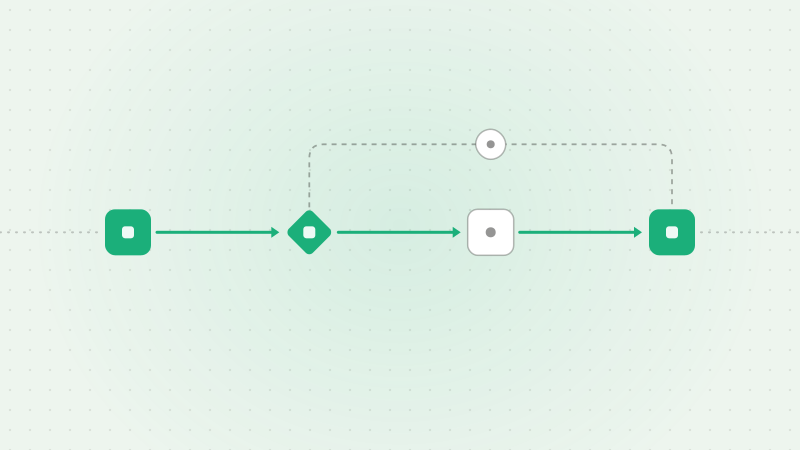
    3. Models read and match the data, and business rules decide the path.
    4. Routine cases finish without a person and leave an audit trail.
    5. Exceptions go to a person, who often also approves the rules that the system runs on.

    The model’s part is sometimes smaller than it looks. At FloQast, a Claude model drafts a matching rule from an accountant’s examples. After that, the saved rule finds further matches without the model.

    Results and evidence

    • Lemonade: AI Jim automated 55% of claims from start to finish at the end of 2025, the same share as a year earlier. Most of the public record on AI Jim is Lemonade’s own filings and shareholder letters. A 2021 Vox report covers a claim about its AI that the company withdrew.
    • Zalando: Company researchers measured the markdown pricing system over the 10 weeks after an optimizer upgrade. The weekly PC2 profit effect was EUR 5.8 million. Their EUR 175 million yearly gain is a projection, extrapolated from eight simulated weeks.
    • bunq: The data-driven know your customer (KYC) onboarding ended up in court. In October 2022, the Dutch appeals court College van Beroep voor het bedrijfsleven annulled an instruction from De Nederlandsche Bank (DNB). The instruction concerned purpose checks and transaction monitoring. DNB later fined bunq EUR 2.6 million for failures in ongoing monitoring.