
COA ends its GeoMatch refugee placement pilot a year early
The Dutch asylum reception agency COA piloted GeoMatch, a machine learning tool from the Immigration Policy Lab that advises staff on which labor market region gives a refugee the best chance of work.
Central Agency for the Reception of Asylum SeekersNetherlandsNational governmentDiscontinued
- Scale
- 35 Dutch labor market regions
- Scenario
- Refugee placement recommendations
- Business function
- Customer service
- Kind of solution
- Personalization and targeting
- Who built it
- Built by a partner (Immigration Policy Lab, Statistics Netherlands, Deloitte, and Berenschot)
- Human oversight
- Assists people
- Organization
- Public sector
- AI types
- Machine learning, Optimization
- Sites
- 35
tl;drCOA stopped its GeoMatch refugee placement pilot in 2026, a year earlier than planned.See the results
The Central Agency for the Reception of Asylum Seekers (COA) piloted GeoMatch, a machine learning tool that advised its staff on which Dutch labor market region gave a status holder the best chance of a job1, 2. Status holders are asylum seekers who have received a residence permit and whom COA links to a municipality for housing3.
The Immigration Policy Lab (IPL) at Stanford University and ETH Zurich built GeoMatch, and COA started the pilot in 20241, 2. The aim was to raise the chance that status holders find lasting, suitable work1.
In July 2026, COA announced that it would end the pilot early4. External support stopped after September 2026, a year earlier than planned, and COA closed the pilot1.
Before the deployment
Before 2016, status holders were assigned to municipalities by population size, without regard to labor market opportunities5. From 2016, COA’s “promising coupling” policy aimed to place them in regions with better job and education prospects5.
- Intake interview: A staff member assessed each status holder’s profile in an interview5.
- Hard criteria: Employment opportunities, first-degree family members and medical advice5.
- Soft criteria: Education, work experience, network and ambitions, and wider family ties or regional connections3, 5.
- Regional recommendation: The staff member drafted it, generally in line with the interview5.
- A hard judgment: For a status holder without direct ties to a municipality, staff found it hard to judge where the chance of a job was best, because many factors play a part3.
A 2018 study by the Netherlands Bureau for Economic Policy Analysis had found big data techniques promising for regional matching5.
“Although there have been studies about the characteristics of refugees and their relation with integration outcomes in the Netherlands, these studies haven’t led to concrete tools to use these insights directly in the work process. Until now.”
What was built
GeoMatch predicted each household’s chance of finding work in each of the 35 Dutch labor market regions and advised staff on the three most suitable regions2, 5. COA’s project initiation document set a goal of a four percentage-point rise in employment within the first year, a relative improvement of one-third over the baseline5.
- Prediction models: One supervised learning model per region estimated which characteristics of a person drive the chance of a job and the level of taxable income2.
- Employment impact score: Combined a family’s job chances in a region, the effect on future arrivals’ chances, and whether the region was too full or too empty5. Municipal quotas and a smoothing constraint kept the allocation balanced over time5.
- Staff member: Received the three GeoMatch suggestions after the intake interview and could add up to three regions of their own5. The staff member also weighed the status holder’s social network and wishes, and recorded a reason when choosing a region other than the advice2.
- Placement director: A second staff member, the placement director, took the placement decision from the three to six options1, 5.
Rollout
The grants came from J-PAL Europe and Stanford Impact Labs, for IPL’s GeoMatch pilots in Canada and the Netherlands6. External support had been planned to run until September 20271.
Technology and architecture
GeoMatch is an existing IPL algorithm, first built to predict employment outcomes for visa applicants in Canada3, 5. For COA, IPL trained it on Dutch data from COA and Statistics Netherlands (CBS)3.
| Layer | What they used | Role | Source |
|---|---|---|---|
| Solution platform | GeoMatch | Recommends three labor market regions for each status holder’s case | 2, 3, 5 |
| Predictive model | Gradient boosting machine models | One supervised model per labor market region predicts a case’s chance of employment | 2, 5 |
| Optimizer | Employment impact score | Ranks regions by job chances, effect on future arrivals and regional capacity | 5 |
| Business or operational system | IBIS database | Holds COA’s administrative records of status holders and supplies the case data | 5 |
| External data source | CBS Asielcohort microdata | Tracks the employment and income of earlier status holders for training | 2, 5 |
| Data platform and storage | CBS RA environment | Secure environment where the model was developed on combined COA and CBS data | 3 |
| Feedback capture | Override reasons | Records why staff chose a region other than the one GeoMatch advised | 2 |
Data inputs
- Case data: Gender, marital status, date of birth, country of origin and mother tongue, with origin, work experience and education2.
- Earlier outcomes: CBS data on whether earlier status holders found a job and what income they earned2.
- Training history: IBIS records of all status holders since 2014, without the cases that moved on to a second or third region5.
- Bias check data: Ethnicity and religion, used only to check the algorithm for bias and not to develop it2.
Integrations
- IBIS database: COA’s administrative database, named after its software provider, supplies the case data on which the recommendations are based5.
- CBS RA environment: IPL developed the model in CBS’s RA environment, which combines COA data with CBS data3.
- CBS Asielcohort microdata: Links administrative records to track employment and education after arrival5. When CBS publishes new data, the algorithm is updated to the latest trends in inflow and employment2.
How one case flows through the system
- A staff member interviews a status holder without direct ties to a municipality and records the hard and soft criteria3, 5.
- The gradient boosting machine models predict, for each region, the chance that at least one family member finds work within the first year after moving into housing5.
- The employment impact score ranks the regions within the municipal quotas, and GeoMatch returns three suggestions2, 5.
- The staff member weighs the suggestions with other factors and adds up to three regions of their own2, 5.
- If the staff member’s advice differs from GeoMatch, the reason is recorded2.
- The placement director selects the final region and takes the placement decision1, 5.
Results
COA ended the GeoMatch pilot early, in 20261. It announced the decision in July 2026, and external support stopped after September 2026 instead of in September 20271, 4. With it, support for the further development, monitoring and evaluation of GeoMatch ended1.
- Pilot monitoring: A monthly monitoring plan checked the quality and speed of the advice, how much of it staff followed, and unintended effects such as discrimination2.
- Backtests: Before the pilot, IPL ran backtests to show the potential for higher earnings or employment rates7.
- Savings projection: IPL projected EUR 5.3 million in annual savings from reduced social assistance and higher tax revenue5.
- Expected scale: COA expected GeoMatch to help allocate over 35,000 refugees annually5.
Lessons learned
COA ended the pilot because the interim results gave it too little basis to continue without external support1. That support stopped early because of what COA called changed priorities in the United States1. COA plans to use the experience and the Dutch technical agreement for profiling algorithms (NTA) in future data and AI work1.
The design kept people in charge of each placement, and two staff members took part in every decision1. CBS reviewed the training data for bias, and Deloitte audited the technical and ethical aspects of the model3.
Utrecht University researchers found that demographic and procedural variables dominated the predictions, while work experience counted for little5. The male variable also weighed strongly in the family-level score5. A risk report among COA’s documents had warned that some variables reveal ethnicity, with a high risk of discrimination4.
The researchers and Follow the Money concluded that GeoMatch can widen inequality between status holders and between municipalities1, 5. Staff couldn’t see the model’s decision criteria, so they couldn’t challenge a suggestion or explain it to the status holder5.
The model learned from historical outcomes rather than current labor demand, and it left out the cases that moved on, although about 20% of refugees in the Netherlands relocate5. Deloitte’s audits found the model was fed more than it needed and left GDPR compliance uncertain5.
COA and IPL rejected the researchers’ conclusions, and COA said predictive calculations showed positive outcomes for both high and low education levels1. The savings figures are IPL’s own projections, and they fell from EUR 5.3 million to EUR 4.5 million a year without religion and ethnicity as predictors5.
Case study scorecard
Sources by publication date
- Organization 1
- Vendors and partners 3
- Press, academic, and regulators 3
- 2 undated
Build this solution yourself
Analysis
What you need
- Linked outcome data on earlier arrivals: GeoMatch learned from CBS records of whether earlier status holders found work, combined with COA’s case records inside CBS’s secure environment3, 5. You need comparable linked data and a legal basis to process it.
- An outcome that matches the goal: The pilot counted any job within 12 months as success, while COA’s aim was lasting, suitable work1, 5. Check that your target measures what placements should achieve.
- Reasons that staff can see: Staff who couldn’t see the criteria couldn’t challenge or explain a suggestion5. Decide what reasoning reaches staff and the person placed before you start.
- Your own capacity to monitor and evaluate: COA’s pilot ended when external support for development, monitoring and evaluation stopped1. Check that you can run them yourself.
Reference architecture
Personalization and targeting
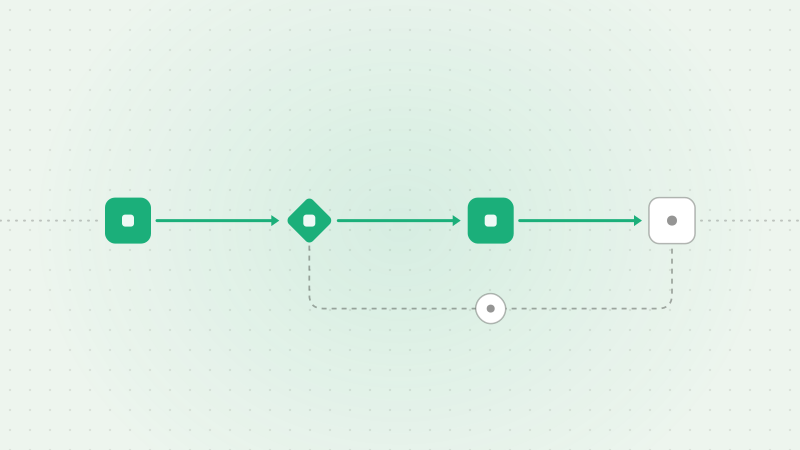
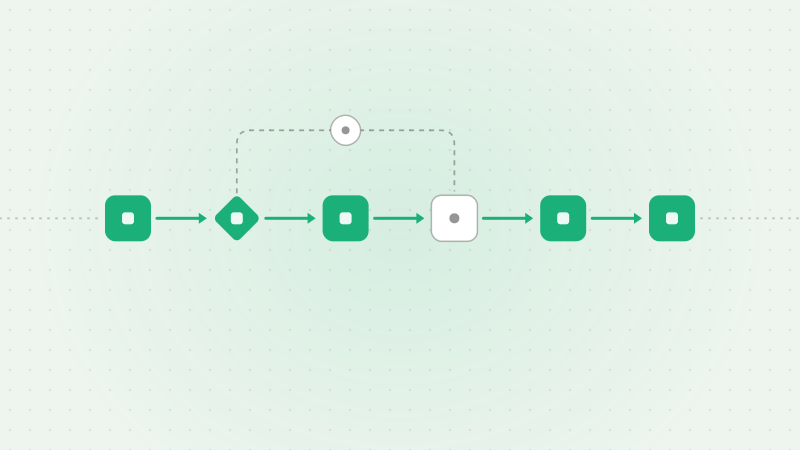
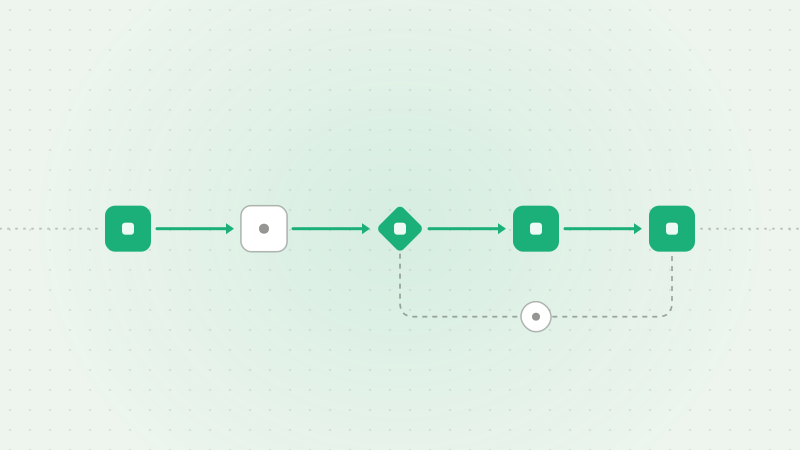
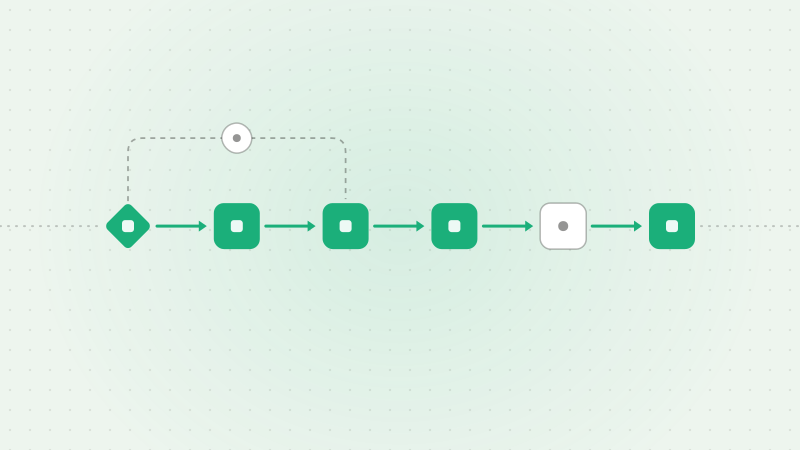
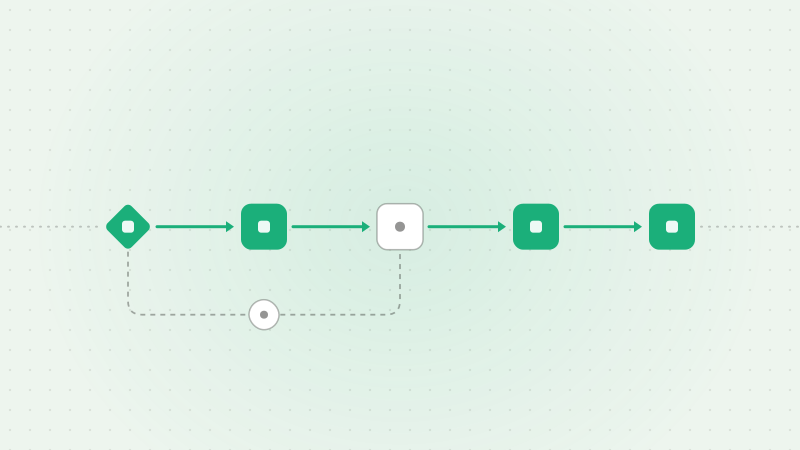
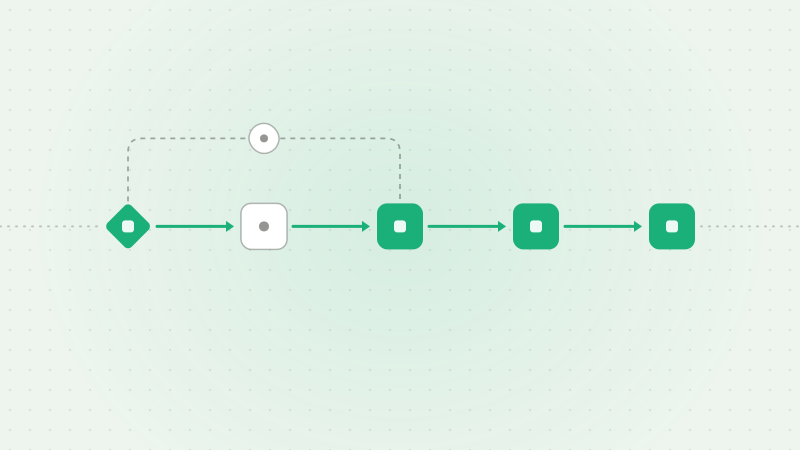
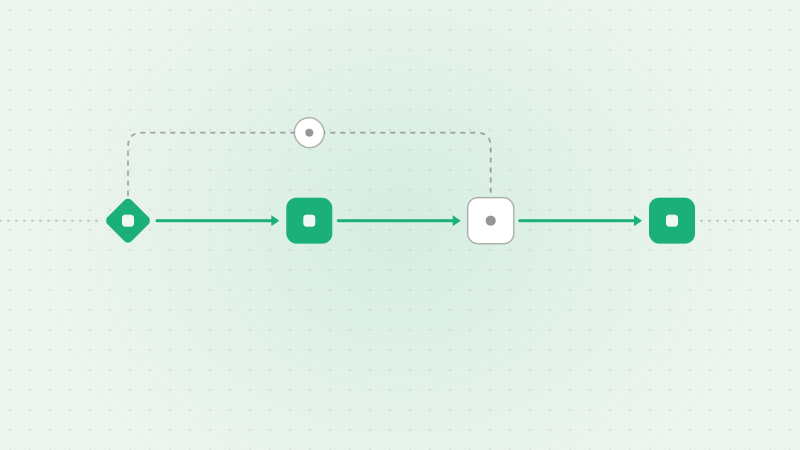
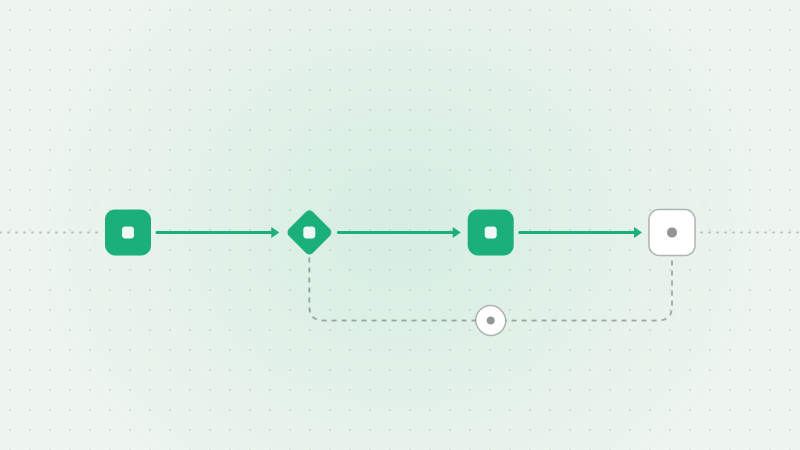
A personalization and targeting solution chooses the offer, content, or product for each customer, from what the organization knows about them or from what they ask for. People set the actions to choose from, models predict what each action is worth for each customer, and a targeting policy picks one, which a message or the website delivers. What the customer does over the following months trains the next policy.
- Prediction models (documented in this case study)
- Targeting policy (documented in this case study)
- Messaging
- Website or app
A check mark shows a building block that this case study's sources document.
Open the reference architectureOthers who built it
- Meta: Meta uses LLMs to let people steer Facebook recommendations. Facebook began rolling out Your algorithm, so people can steer Feed and Reels in their own words.
- Royal Belgian Football Association: RBFA personalizes fan content with a Vertex AI recommender. The RBFA app and website now recommend articles, videos, and quizzes to each user by tag.
- Amaury Sport Organisation: A.S.O. gives Tour de France fans AI-written race stories. Inside My Race drew more than 1 million visits and wrote about 200 stories every two minutes.
- HEINEKEN: How HEINEKEN steers sales reps with AI next best actions. AIDDA scaled to eight markets in 2024, with 490,000 daily customer engagements.
- Manulife: Manulife's AI tool steers John Hancock retirement sales. The tool produced nearly 2,000 sales opportunities and about 390 closed deals by May 2026.
- VDAB: VDAB's AI job and career tools pass 1 million users. More than 1 million people used VDAB's AI tools Jobbereik and Orient in four years.
Cite this case study
Enterprise AI Case Studies. "COA ends its GeoMatch refugee placement pilot a year early." Updated Nov 25, 2026. https://case-studies.ai/case-studies/process-automation/PA-065-refugee-placement-recommendations-coa/
@misc{csai-pa-065,
  author = {{Enterprise AI Case Studies}},
  title = {{COA ends its GeoMatch refugee placement pilot a year early}},
  year = {2026},
  note = {Updated 2026-11-25},
  url = {https://case-studies.ai/case-studies/process-automation/PA-065-refugee-placement-recommendations-coa/}
}Sources
The following reporting, and every passage quoted from it, belongs to its publisher, not to this site. Sources and ownership
- Source 1:
COA stopt voortijdig met AI-pilot GeoMatch
Supporting excerpts (23)
stopt voortijdig met de pilot GeoMatch, een datagedreven hulpmiddel dat medewerkers ondersteunt bij het koppelen van statushouders aan arbeidsmarktregio
De externe ondersteuning voor het project eindigt na september 2026, een jaar eerder dan oorspronkelijk gepland.
De tussentijdse resultaten bieden volgens het COA onvoldoende basis om de pilot zonder die ondersteuning voort te zetten.
Het COA begon in 2024 met GeoMatch
Het achterliggende doel is om de kans te vergroten dat statushouders duurzaam en passend aan het werk gaan.
GeoMatch kwam eind vorig jaar in opspraak na onderzoek van Follow the Money.
De onderzoekers concludeerden daarbij onder meer dat het algoritme zeer gevoelige gegevens van vluchtelingen gebruikt en dat de werkwijze de ongelijkheid tussen statushouders en tussen gemeenten kan vergroten.
Ook plaatsten zij vraagtekens bij de juridische basis voor het gebruik van gevoelige persoonsgegevens.
Het COA en ontwikkelaar Immigration Policy Lab (IPL) konden zich niet vinden in die conclusies.
Volgens het COA lieten voorspellende berekeningen positieve uitkomsten zien voor zowel hoge als lage opleidingsniveaus.
De externe ondersteuning van GeoMatch stopt na september 2026 vanwege
gewijzigde prioriteiten vanuit de Verenigde Staten
Aanvankelijk zou deze ondersteuning tot september 2027 doorlopen.
Door het eerdere einde worden ook de doorontwikkeling, monitoring en evaluatie van GeoMatch niet langer ondersteund.
Daarom heeft de organisatie besloten de pilot vervroegd af te ronden.
Het COA benadrukt GeoMatch zelf geen besluiten neemt.
Het systeem wordt uitsluitend gebruikt als aanvullend adviserend hulpmiddel.
Bij ieder besluit zijn twee medewerkers betrokken.
Eén medewerker geeft een advies, waarbij breder wordt gekeken en ook het advies van GeoMatch kan worden meegenomen.
Vervolgens neemt een regievoerder het plaatsingsbesluit.
is volgens het COA gewerkt met monitoring, evaluatie, technische ondersteuning en een audit- en verantwoordingsdossier.
Het COA zegt de ervaringen met GeoMatch wel te willen meenemen bij toekomstige data- en AI-initiatieven.
Volgens het COA kan de NTA helpen om toekomstige initiatieven vanaf het begin zorgvuldiger in te richten.
- Source 2:
Kansrijke Koppeling met GeoMatch
Supporting excerpts (23)
Laatst gewijzigd op 26 augustus 2024
Het algoritme geeft advies over waar in Nederland een statushouder de grootste kans heeft op een baan.
Een medewerker van het COA gebruik dit advies om te bepalen aan welke arbeidsmarktregio een statushouder gekoppeld wordt.
Een algoritme kan in kortere tijd veel meer gegevens gebruiken en verwerken in een advies dan een mens (in dit geval een COA-medewerker).
Het algoritme analyseert de gegevens van de statushouders, zoals hun herkomst en hun werkervaring en opleiding.
Daarnaast kijkt het algoritme waar mensen met vergelijkbare kenmerken in het verleden succesvol werk hebben gevonden.
Het algoritme geeft dan een advies over de drie meest geschikte regio
Een medewerker van het COA bekijkt dat advies en houdt ook rekening met andere factoren.
Bijvoorbeeld waar de statushouder een sociaal netwerk heeft en waar hij/zij/hen zelf graag wil wonen.
Als de COA-medewerker iets anders kiest dan het algoritme adviseert, noteren we de reden daarvoor.
Met een monitoringsplan kijken we elke maand of het algoritme zo werkt als het bedoeld is.
We kijken dan bijvoorbeeld naar de kwaliteit en snelheid van de adviezen, hoeveel van de adviezen worden opgevolgd en of er geen onbedoelde effecten zijn, zoals discriminatie.
Op het moment dat CBS nieuwe gegevens publiceert, wordt het algoritme aangepast op de laatste trends op het gebied van instroom en werkgelegenheid.
Data Protection Impact Assessment (DPIA)
Impact Assessment Mensenrechten en Algoritmes (IAMA): AI Impact Assessment (AIIA) op basis van Toetsingskader Algoritmes van de Algemene Rekenkamer
Gegevens over de persoon als geslacht, burgerlijke staat, geboortedatum, land van herkomst en moedertaal
Historische gegevens van het CBS over of statushouders een baan hebben gevonden en welk inkomen ze hebben.
We controleren regelmatig of het algoritme geen vooroordeel heeft of ongeoorloofd discrimineert.
Hiervoor gebruiken we gegevens over etniciteit en religie. Deze worden niet gebruikt om het algoritme te ontwikkelen, maar alleen voor controle.
Hierbij zijn de twee doelen de kans op een baan en de hoogte van het belastbaar inkomen.
Per arbeidsmarktregio wordt met behulp van supervised learning een model ontwikkeld van welke karakteristieken van een individu bepalend zijn voor het succes op de doelvariabelen.
Vervolgens wordt per gezin of familie-eenheid bepaald welke arbeidsmarktregio het beste resultaat geeft.
Immigration Policy Lab - Stanford University en ETH Zürich
- Source 3:
COA vraagt CBS om hulp bij onderzoek mogelijke inzet AI
Supporting excerpts (12)
Als asielzoekers een verblijfsvergunning krijgen, koppelt COA hen aan een gemeente voor huisvesting.
Als een statushouder geen directe connecties heeft met een gemeente in Nederland wordt gekeken naar o.a. studieachtergrond van de statushouder, de werkervaring, het netwerk en de ambities om een goede match te vinden.
Het is voor COA-medewerkers soms lastig in te schatten in welke gemeente de statushouder de beste kans heeft op een baan, aangezien daarbij veel verschillende factoren van invloed zijn.
GeoMatch is een aanbevelingsinstrument voor de optimale verdeling van statushouders over arbeidsmarktregio
Het is een bestaand algoritme, waarvan nu wordt onderzocht of deze voor Nederland bruikbaar is.
Daarvoor wordt het model getraind op Nederlandse data van COA en CBS.
Daarom is aan het CBS gevraagd om mee te kijken met de samenstelling van de gebruikte dataset en deze te onderzoeken op potentiele bias.
Daarbij is het GeoMatch model dat COA gebruikt ontwikkeld op de RA-omgeving van het CBS.
Het model combineert data van COA met data van het CBS om te leren van statushouders die in het verleden zijn toegewezen aan gemeenten en hoe het hen daar is vergaan.
Aangezien de gebruikte dataset al bij het CBS bekend is, heeft COA aan het CBS gevraagd om de review uit te voeren.
Zo wordt voorkomen dat additionele partijen toegang verkrijgen tot privacygevoelige data van het CBS en COA.
Deloitte heeft daarnaast de andere aspecten van het algoritme geanalyseerd, zoals de technische en ethische aspecten van het model.
- Source 4:
COA verdeelt met algoritme statushouders over het land: "In plaats van win-win verliest iedereen"
Supporting excerpts (8)
Update 13 juli 2026: COA stopt met GeoMatch
Het COA laat op haar website weten de pilot met de AI-tool GeoMatch vervroegd te stoppen.
Originele publicatiedatum: 9 februari 2026
Ze analyseerden vertrouwelijke documenten van het COA, zoals rapportages en risicoanalyses rondom gegevensbescherming en kunstmatige intelligentie (AI) van onafhankelijke organisaties.
Een deel van de variabelen zegt onmiskenbaar iets over de etniciteit van de betrokkenen. Dit leidt tot hoog risico op discriminatie.
Toch ging de proef met GeoMatch van start.
Statushouders weten niet waarom ze ergens worden geplaatst en werknemers van het COA krijgen geen inzicht in de afwegingen van het systeem
De wetenschappers roepen het COA en de overheid op om te stoppen met het experimenteren met algoritmen bij kwetsbare groepen.
- Source 5:
Supporting excerpts (48)
Published: 8 January 2026
The GeoMatch algorithm was created by the Immigration Policy Lab (IPL, based at Stanford University and ETH Zurich) to predict employment outcomes for visa applicants in Canada
the Dutch pilot project of GeoMatch was initiated in 2021 (and since 2025 has been in its trial phase) to support COA's decision-making regarding the placement of newly arrived refugees in one of the 35 Dutch labour market regions (LMRs)
According to COA, the GeoMatch algorithm is expected to help allocate over 35,000 refugees annually
Several COA sources mention that the project unfolded following a 2018 study by the Netherlands Bureau for Economic Policy Analysis, which had concluded that Big Data techniques seemed promising for improving regional matching and enhancing refugees' employment outcomes
The Project Initiation Document specifies a measurable goal of a four percentage-point rise in employment within the first year, amounting to a relative improvement of one-third compared to the baseline
IPL, which carries out the design, testing, and implementation of the Kansrijke Koppeling solution
and Deloitte, which was contracted to audit the technical and ethical elements of the algorithm
the consultancy firm Berenschot conducted a data protection impact assessment and an artificial intelligence impact assessment, which are mandatory under European and Dutch law
The GeoMatch algorithm is trained, implemented, and tested using two key data sources: COA's IBIS database (named after software provider IBIS), which provide comprehensive administrative information on all status holders since 2014 and serves as the basis for generating recommendations
CBS's Asielcohort microdata, which merge various administrative databases to track post-arrival outcomes such as economic and educational integration
the Deloitte (2024) audit report highlights that key safeguards were excluded from review, leaving uncertainty about full GDPR compliance and potential personal data leaks outside the EU
these databases do not contain information on the specific needs and opportunities in the 35 Dutch LMRs
the algorithm can only draw on refugees' historical outcomes rather than ongoing regional labour demand
several cases were excluded from this data, including those where permit-holders moved to a second or third region
IPL argues that it becomes unclear whether later outcomes should be attributed to the first or subsequent region
about 20% of refugees in the Netherlands relocate, regardless of income
the model is biased toward successful stayers and blind to the real frequency of relocation
Deloitte's (2024) audits throughout GeoMatch's development suggest that the model is fed more than it needs
The GeoMatch algorithm uses the gradient boosting machine (GBM) estimation technique, an ensemble method that combines many weak models into a stronger one
their robustness to irrelevant predictors, automatic variable selection, and ability to discover
The offline problem is solved by defining and quantifying each case's employment impact score (EIS), which reflects how good a match a refugee family is with a location
It combines three factors: their chance of finding a job there, how the placement affects future refugees' opportunities, and whether the location is already too full or too empty
a consideration of proportionality to account for the receiving capacity of each market region, the municipal quotas, as well as what we shall term the smoothing constraint, which ensures a balanced allocation across the municipalities over time
across regions, procedural variables (e.g., age_at_assign, assign_month, and assign_year) consistently dominate predications
Similarly, demographic variables (e.g., country_origin, language, male, and marital_status) also rank highly.
human capital variables—such as previous work experience in health, transport, automation and IT, trade, logistics, and hospitality—show low significance
in both LMRs, these variables contribute less than 20% of the impact of factors like age or marital status
while GeoMatch does not directly include variables such as race, ethnicity, or religion, it relies on proxies such as country of birth or language, which can operate as indirect indicators of ethnic origin or religion
whether a status holder has found any employment in any of the 12 months within their first year after moving into housing in the municipality
a refugee who holds a job for just one day within the first 12 months after their relocation would be counted as a success
the predicted probability that at least one refugee in the case would find employment at the location in question
the male variable strongly influences the model prediction, while female does not appear at all
before 2016 and under the Dutch Housing Act, the relocation policy typically assigned refugees to municipalities according to population size, without regard to labour-market opportunities
With the introduction of the promising coupling policy in 2016, COA sought to improve integration outcomes by placing refugees in regions where they had better employment and education prospects.
the matching process began with a profile assessment carried out in an intake interview
Employees recorded both hard criteria (such as employment opportunities, presence of first-degree family members, and medical advice) and soft criteria (such as extended family ties or regional connections)
Based on this, the staff drafted a regional recommendation, generally aligned with the intake interview.
After the interview, but before drafting their own regional recommendation, employees receive three suggestions from GeoMatch.
They may add up to three of their own, resulting in between three and six options. A separate decision-maker then selects the final region from this combined list.
Although they continue to conduct interviews, they cannot access the algorithm's decision criteria.
although these plots are included in the technical appendix, they will not be provided to users, as focusing too much on individual predictions would present an incomplete picture of what COA is trying to achieve with GeoMatch
employees cannot see how particular factors are excluded from the automated decision results, nor can they challenge the algorithm's reasoning or explain it to refugees
Current work instructions offer no clear guidance on how to explain automation to refugees.
IPL promised COA efficiency, projecting EUR 5.3 million in annual savings from reduced social assistance and increased tax revenue.
these gains drop to EUR 4.5 million if sensitive predictors such as religion and ethnicity are excluded
Our analysis suggests that the GeoMatch algorithm reproduces, rather than mitigates, socio-economic inequalities.
these tools must, at most, be considered—as they were initially designed—as nudging tools used for voluntary guidance with a full explanation of their logic, rationale, and outcomes
- Source 6:
New Funding Advances GeoMatch in Canada and the Netherlands
Supporting excerpts (5)
IPL is collaborating with Immigration, Refugees and Citizenship Canada (IRCC) and the Central Agency for the Reception of Asylum Seekers (COA) in The Netherlands to explore pilot programs for GeoMatch.
Now that effort will be boosted by new grants from J-PAL Europe and Stanford Impact Labs.
Sjef van Grinsven, project leader at COA in the Netherlands
The Immigration Policy Lab will be able to provide us with access to analytical methods and capabilities that will unlock insights about historical refugee integration and help inform future program and policy design
Although there have been studies about the characteristics of refugees and their relation with integration outcomes in the Netherlands, these studies haven't led to concrete tools to use these insights directly in the work process. Until now.
- Source 7:
A Data-Driven Approach to Refugee Integration
Supporting excerpts (3)
The Immigration Policy Lab is partnering with the Central Agency for the Reception of Asylum Seekers in the Netherlands (COA) to implement a data-driven matching algorithm tool called GeoMatch
The algorithm helps placement officers identify the best locations for incoming refugees that optimize on their integration outcomes.
The team conducted backtests to demonstrate the potential for improved outcomes, such as higher earnings or employment rates, and the next step is to launch pilot programs to test whether these potential gains can be realized in practice.








Comments
Start the conversation.
Invited members of the library comment here. Sign in to join the conversation.