

Crédit Agricole moves staff from secure AI chat to agents
Crédit Agricole gave its staff Sécuri'Chat, an in-house secure generative AI chat, and its new AI company now rolls out Sécur'IA, where business teams build their own agents.
Crédit AgricoleFranceBankingIn production since 2024
- Scale
- Sécuri'Chat is used regularly by nearly 90% of trained Crédit Agricole S.A. employees
- Scenario
- No-code AI agent building for employees
- Business function
- Knowledge management
- Kind of solution
- Enterprise AI platform
- Who built it
- Built with a partner (Prisme.ai)
- Where it runs
- Hybrid
- Organization
- Enterprise, 100,000 employees or more
- AI types
- Generative AI, Agentic AI, Conversational AI
- Team size
- 150
tl;drNearly 90% of trained Crédit Agricole S.A. employees use its secure AI chat tool regularly.See the results
Crédit Agricole runs Sécuri’Chat, an in-house generative AI chat tool that only its employees can use1, 4. The group rolled it out at Crédit Agricole S.A. in 20241.
In October 2026, the group’s new AI company, Crédit Agricole Artificial Intelligence, started to roll out the successor, Sécur’IA1. On Sécur’IA, business teams design, use, and share AI agents that connect to the group’s IT system1.
By October 2026, nearly 90% of the Crédit Agricole S.A. employees trained on Sécuri’Chat used it regularly1. The rollout is part of an AI program of nearly 500 million euros for 2026 to 20288.
Before the deployment
Crédit Agricole experimented with generative AI from 2023 to mid-2024. From mid-2024, the group aimed for production at industrial scale5.
- Data risk: Banks and insurers couldn’t risk language models training on texts that hold sensitive customer data4.
- Scattered assistants: Many assistant initiatives appeared across the group, and each one had to be maintained and moved toward agents7.
- Local automations: Olivier Biton, director of technological transformation, saw a gray zone of local automations between assistants and industrial AI. He called it a second season of RPA, with far greater capabilities7.
- Impact at scale: Some production deployments had very good returns but not the expected impact for a group of 160,000 employees and 55 million customers5.
In June 2026, the group announced an AI company to run the AI foundations of all its entities8.
What was built
The solution gives staff a secure generative AI tool, then lets business teams build their own agents in the same governed setting1, 2. Aldrick Zappelini, the group’s chief data and AI officer, said that the employee assistants of three years earlier had become agents for all, built by a business unit or by an employee for their own team5.
- Sécuri’Chat: A generative AI chat that the group’s developers built for staff use only. The press called it a secured ChatGPT4.
- Secur’Agents: Specialized AI agents on the same secure platform, which the group DataLab showed at VivaTech 20252.
- Sécur’IA: The successor platform. Business teams design, use, and share agents that connect to the IT system. The agents assist employees in daily work or handle certain processes1.
- Crédit Agricole Artificial Intelligence: The group’s AI company. It pools AI technology assets for all entities and rolls out Sécur’IA1.
- Local experts: Teams in each entity deploy the AI and transform their own processes. The group ruled out a central AI factory that would steer deployments6, 7.
“The AI transition relies on our ability to provide the business units with useful, secure and well-governed tools.”
Rollout
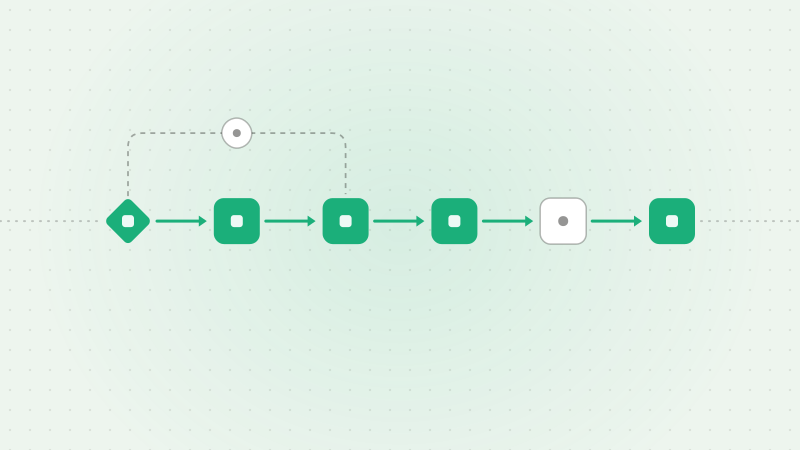
The phases moved the platform from one entity’s chat tool to a group service that a dedicated company runs1, 8. The company got 150 million euros of the program as its capital3.
Technology and architecture
Sécur’IA is the platform where business teams build agents and staff use them. Prisme.ai is a sovereign agent platform. In this deployment, it powers Sécuri’Chat and Secur’Agents2. The AI company also works with Prisme.AI so that employees can use, create, and share agents at industrial scale1.
| Layer | What they used | Role | Source |
|---|---|---|---|
| Solution platform | Sécur’IA | Lets business teams design, use, and share agents connected to the IT system | 1 |
| Chat interface | Sécuri’Chat | Secure generative AI chat for Crédit Agricole S.A. employees | 1, 4 |
| Task agent | Secur’Agents | Specialized AI agents on the secure platform | 2 |
| Agent orchestration | Prisme.ai | Sovereign platform that powers Sécuri’Chat and Secur’Agents | 2 |
| Cloud platform | CA-GIP infrastructure | Distributes AI computing across the private cloud, European partners, and other solutions | 1 |
CA-GIP, the group’s infrastructure entity, places each AI workload by its sensitivity and criticality1. In October 2026, the AI company also signed a partnership with Mistral. It gives the company access to all Mistral models, products, and tools, and Mistral helps build the AI platform for the group’s customers and employees1.
Data inputs and integrations
- Group IT system: Agents built on Sécur’IA connect to the IT system, so they can handle processes as well as assist staff1.
- Internal data: In-house staff platforms such as Sécuri’Chat have access to internal data4.
Results
| Metric | Before | After | Scope and timeframe | Reported by |
|---|---|---|---|---|
| Regular use of Sécuri’Chat | Not disclosed | nearly 90% of trained employees | Crédit Agricole S.A., from the 2024 rollout to October 2026 | Crédit Agricole, measured1 |
- Regular use of Sécuri’Chat: Counts the Crédit Agricole S.A. employees who were trained on the tool. The group stated the figure in October 2026, when Sécur’IA took over1.
- Daily use across the group: In June 2026, 70% of all group employees used generative AI tools daily, through personal assistants or functions built into software6. This figure covers all of the group’s tools, not Sécuri’Chat alone.
Lessons learned
Adoption among trained staff is the documented strength. The group built Sécur’IA as the successor to Sécuri’Chat, a tool in regular use, and didn’t start a new one1, 3.
The usage figure is Crédit Agricole’s own, from its October 2026 announcement, and the press relays it1, 3. It counts trained employees at Crédit Agricole S.A., one entity of the group1.
Pooling answered a problem of scattered tools. Biton said that each assistant built in the group had to be maintained and moved toward agents, so the group would keep one or two solutions7.
The value is hard to measure. In 2024, Zappelini said that a quarter hour saved in an employee’s day is productivity that the bank can’t recover9. In June 2026, Olivier Gavalda, chief executive of Crédit Agricole S.A., said that the gains remain very difficult to assess6.
Costs grow with use. In June 2026, Biton said that token spending was still modest next to the IT budget but growing very fast6.
Hallucinations remain a limit of language models. Zappelini said that zero hallucinations isn’t possible. Where the same question must always get the same answer, a deterministic scenario answers in place of a language model. He said it about the customer agents that the group builds next5.
Case study scorecard
Sources by publication date
- Organization 3
- Press, academic, and regulators 6
Build this solution yourself
Analysis
What you need
- A training program for staff: The adoption that Crédit Agricole reports is among trained employees, so you need training alongside the tool1.
- One operator for all entities: Separate assistants each needed their own upkeep, so you need one team that runs the platform for every entity7.
- Connections to your IT system: Agents on Sécur’IA connect to the IT system, which lets them handle processes and not only answer questions1.
- Placement by sensitivity: Crédit Agricole places AI workloads by sensitivity and criticality, so you need a private or trusted environment for confidential work1.
Reference architecture
Enterprise AI platform
An enterprise AI platform gives an organization's staff one governed way to use language models for everyday reading and writing work. A staff member signs in and asks in a chat window or in the app they work in, and the platform screens the request and sends it, with the records it concerns, to a language model that doesn't train on the content. The person who asked checks the screened draft and decides what to do with it, and the program owners review the usage figures.
- AI platform (documented in this case study)
- Sign-in and access
- Chat interface (documented in this case study)
- Workplace apps
- Orchestrator
- Connectors
- Input and output checks
- Data protection
- Language model
- Usage record
A check mark shows a building block that this case study's sources document.
Open the reference architectureOthers who built it
- Axa: Gave its staff Secure GPT, an internal generative AI platform reserved for employees4.
- BNP Paribas: Integrated Mistral models into its internal LLM infrastructure under a group-wide contract signed in 20243.
- BPCE: Trained 45,000 of its 100,000 employees and keeps its own servers for its most sensitive data4.
In the library
- Advantage Solutions scales Claude from a 150-person pilot Advantage Solutions
- L&G extends Copilot to all 10,000 staff after service gains Legal & General
- How Cisco gave every employee a personal AI agent Cisco
- LLM Suite reaches 150,000 weekly users at JPMorgan Chase JPMorgan Chase
- How Thomson Reuters built Open Arena, AI for every employee Thomson Reuters
- Meta gets ads ML features to production 3.6x faster Meta
Cite this case study
Enterprise AI Case Studies. "Crédit Agricole moves staff from secure AI chat to agents." Updated Nov 21, 2026. https://case-studies.ai/case-studies/process-automation/PA-049-secure-agent-platform-credit-agricole/
@misc{csai-pa-049,
  author = {{Enterprise AI Case Studies}},
  title = {{Crédit Agricole moves staff from secure AI chat to agents}},
  year = {2026},
  note = {Updated 2026-11-21},
  url = {https://case-studies.ai/case-studies/process-automation/PA-049-secure-agent-platform-credit-agricole/}
}Sources
The following reporting, and every passage quoted from it, belongs to its publisher, not to this site. Sources and ownership
- Source 1:
Supporting excerpts (11)
After the successful rollout of the Sécuri'Chat tool at Crédit Agricole S.A. in 2024 (regularly used by nearly 90% of trained employees), Crédit Agricole Artificial Intelligence is now rolling out Sécur'IA.
This platform allows business teams to design, use and share agents that are connected to the IT system and tailored to their specific needs.
Whether they are assisting employees in their daily activities or handling certain processes, these agents will thus evolve in a secure and well-governed environment.
Collaboration with Prisme.AI therefore aims to allow employees to use, create and share AI agents tailored to their needs, on an industrial scale and in a secure and well-governed environment.
Crédit Agricole Artificial Intelligence – the Group's AI company dedicated to pooling AI technology assets to drive business transformation – has announced a partnership with frontier AI laboratory Mistral.
In addition to providing access to all models, products and tools for developing and managing AI uses
Mistral is helping to create the AI platform for all of the Group's customers and employees
Designed to deliver services to all Group entities, the company uses CA-GIP infrastructures, notably to manage the distribution of AI calculations according to their sensitivity and criticality, combining the Group's private cloud, European partners and complementary solutions as required.
The AI transition relies on our ability to provide the business units with useful, secure and well-governed tools.
Just a few months after the announcement of its creation, Crédit Agricole Artificial Intelligence is ready to deliver the secure industrial deployment of artificial intelligence within the Group.
The partnership with Mistral and collaboration with Prisme.AI also illustrate our desire to work with French and European technological players who are able to meet the requirements of a large banking group and to support our transformation on a large scale.
- Source 2:
Trustworthy and Responsible AI Featured at VivaTech 2025
Supporting excerpts (2)
Sécuri’Chat/Secur’Agents: A secure Agentic platform with specialized AI agents powered by the sovereign platform Prisme.ai
For another consecutive year, the Crédit Agricole DataLab participated in VivaTech as a key player in responsible AI innovation.
- Source 3:
Le Crédit Agricole associe Mistral à la fabrication de sa plateforme d'IA
Supporting excerpts (4)
Sécur'IA prend la suite de Sécuri'Chat, déployé chez Crédit Agricole S.A. en 2024.
Selon le groupe, près de 9 collaborateurs formés sur 10 utilisent régulièrement Sécuri'Chat.
Le communiqué de résultats du 31 juillet a précisé que 150 millions d'euros de cette enveloppe servent à doter le capital de Crédit Agricole Artificial Intelligence.
Elle a signé en 2024 un premier contrat à l'échelle du groupe, qui intégrait ses modèles à son infrastructure interne de LLM.
- Source 4:
Comment banques et assurances encadrent l'usage de l'IA sur les données de leurs clients
Supporting excerpts (6)
Que ce soit Axa avec « Secure GPT » ou le Crédit Agricole avec son « Sécuri'Chat », qualifiée de « ChatGPT sécurisé », de nombreuses banques et assurances ont demandé à leurs équipes de développeurs de créer une plateforme à usage exclusif des salariés.
Ces plateformes font tout de même appel en sous-main aux modèles de langage des gros acteurs de l'IA, comme ceux de Microsoft ou d'Anthropic, et ont accès aux données internes.
Mais banquiers et assureurs espèrent avec ces plateformes maison garder le contrôle sur leurs données.
Banques et assurances ne peuvent pas prendre le risque que les modèles de langage s'entraînent à partir de textes contenant des données clients sensibles.
45.000 salariés sur 100.000 de BPCE (Banque populaire, Caisse d'Epargne) en ont déjà suivi une.
BPCE a de son côté également recourt à des serveurs de prestataires et réserve ses serveurs aux données « les plus sensibles ».
- Source 5:
Supporting excerpts (7)
De 2023 à mi-2024, c’était effectivement l’époque des expérimentations.
À partir de mi-2024, on a commencé à recentrer les choses pour dire : maintenant, l’enjeu, ce n’est plus tellement l’expérimentation, c’est de viser directement les mises en production de manière industrielle et à l’échelle.
Il y avait eu des mises en production, mais cela n’avait pas forcément l’impact escompté. Il pouvait y avoir des projets très intéressants, même avec de très bons ROI. Mais il faut ramener l’impact à l’échelle d’une entreprise qui fait 160 000 collaborateurs et 55 millions de clients.
La grande famille des assistants collaborateurs d’il y a trois ans est devenue l’agentique pour tous : la capacité pour un métier, voire pour le collaborateur lui-même, de faire des agents pour son petit service de comptabilité ou de contrôle de gestion.
Ceux qui vous disent que l’on peut faire du zéro hallucination, ce n’est pas vrai. Il faut accepter une part d’hallucination ou considérer que, dans certaines situations où l’on n’en veut absolument pas, il faut revenir sur des scénarios déterministes où ce n’est pas un LLM qui répondra, parce que l’on veut toujours la même réponse à la même question.
Sur les 500 millions d’euros annoncés, 150 millions constitueront le capital de départ de l’entreprise IA
Aldrick Zappelini, Chief Data & AI Officer du groupe Crédit Agricole
- Source 6:
Crédit Agricole crée une société interne pour piloter l'IA
Supporting excerpts (5)
Même si le coût de la consommation de tokens reste à ce stade modeste au regard du budget IT de la banque, « la croissance est très rapide », souligne Olivier Biton, qui indique que 70% des salariés du groupe sont déjà utilisateurs quotidiens d'outils de GenAI (soit via des assistants personnels, soit via des fonctions embarquées dans les progiciels exploités en interne).
150 personnes « pour la première tranche »
Olivier Biton écartait toutefois toute IA Factory, chargée de piloter les déploiements, ceux-ci devant rester, dans l'optique du groupe mutualiste, à la main des entités.
en évaluer les gains reste très difficile
Olivier Gavalda, le directeur général de Crédit Agricole S.A.
- Source 7:
Entretien Olivier Biton, DSI groupe Crédit Agricole : « Les investissements en IA sont colossaux »
Supporting excerpts (3)
C'est le cas des assistants IA, par exemple. Beaucoup d'initiatives ont vu le jour dans le groupe. Mais ces solutions doivent être maintenues et leur convergence vers l'agentique assurée. Sur ce terrain, nous allons créer des synergies pour retenir une à deux solutions pour le groupe.
entre l'assistant et cette IA industrielle, subsiste une zone grise, ciblant des automatisations locales. Une sorte de saison 2 de la RPA, avec des capacités décuplées !
ce sont bien les experts en local qui procèdent aux déploiements et à la transformation des processus.
- Source 8:
Le Crédit Agricole accélère sa transformation IA
Supporting excerpts (3)
Le Crédit Agricole investira près de 500 millions d'euros sur trois ans (2026-2028) pour accélérer son déploiement de l'IA à l'échelle du Groupe.
Il annonce la création d'une « Entreprise IA » dédiée qui opérera les socles technologiques IA de l'ensemble de ses entités.
ses 160 000 collaborateurs
- Source 9:
Comment le Crédit Agricole a passé à l'échelle la GenAI
Supporting excerpts (1)
le calcul de la valeur de ces applications reste complexe, reprend Aldrick Zappellini. On parle par exemple du quart d'heure gagné sur la journée de travail d'un collaborateur. Mais, en réalité, il s'agit d'une productivité non récupérable.







Comments
Start the conversation.
Invited members of the library comment here. Sign in to join the conversation.