
DXC rolls out Amazon Quick agents to 115,000 employees
DXC Technology deployed AWS's Amazon Quick agentic workspace across its own workforce as Customer Zero, adding role-based advisors and workflow agents before selling the same rollout to its clients.
DXC TechnologyUnited States (Global workforce of 115,000 employees in 70 countries)IT servicesScaled since 2026
- Scale
- 115,000 employees in 70 countries
- Scenario
- Personal AI agents for employees
- Business function
- Knowledge management
- Kind of solution
- Enterprise AI platform
- Who built it
- Built with a partner (Amazon Web Services)
- Where it runs
- Vendor-hosted service
- Human oversight
- Assists people
- Organization
- Enterprise, 100,000 employees or more
- AI types
- Generative AI, Agentic AI, Conversational AI
- Users
- 115,000
tl;drAmazon Quick reached 115,000 DXC staff, and more than 40,000 engineers use its AI Advisor Agent.See the results
DXC Technology runs Amazon Quick, AWS’s agentic AI workspace, for its whole workforce of 115,000 employees in 70 countries1. Employees ask its agents questions in plain language across DXC’s own systems, and role-based advisors and workflow agents take on specific jobs3, 4.
DXC completed the rollout in February 2026 as Customer Zero. It ran Amazon Quick internally at full scale before selling the same deployment to clients through a new DXC Amazon Quick Practice1. An AI Advisor Agent built on the workspace is used by more than 40,000 engineers1. Engineers built roughly 400 agents in the first 20 days2.
Before the deployment
Before the rollout, critical information at DXC was fragmented across ServiceNow, SharePoint and internal systems4. The company works as a highly distributed, global enterprise across all of its lines of business1.
- Time spent searching: The workforce of more than 100,000 people spent too much time searching for answers4.
- Manual requests: Resource requests for the Resource Management teams and lead routing for Sales were done by hand3.
AWS released Amazon Quick in the October before DXC completed its rollout2. DXC deployed it under its Customer Zero approach, which puts a new technology into production internally, under real security and governance requirements, before DXC offers it to customers1. Chief Digital Information Officer Russell Jukes led the initiative1.
What was built
DXC deployed Amazon Quick as an enterprise agentic workspace for every employee, from finance to HR to marketing3, 4. Its agents answer questions across DXC’s systems, and workflow agents automate specific requests and approvals3, 4. The agents, the platform and the employees divide the work:
- AI Advisor Agent: Gives employees one access point for AI-related knowledge, tools, prototypes and feedback1. It queries structured and unstructured data across enterprise systems in natural language, and it delivers self-service tools for HR, IT support, sales, finance, legal and procurement4.
- Role-based advisors: The Supply Chain Advisor gives operational guidance by connecting employees directly to validated knowledge1.
- Workflow agents: One agent handles resource requests for the Resource Management teams, and another routes leads for Sales3. Quick Flows and custom agents automate approvals, procurement requests and compliance reporting4.
- Platform controls: Amazon Quick connects employees to data across systems while it keeps DXC’s security, access controls and compliance requirements in place1.
- Employees: Use the answers to inform a decision. The agents don’t make the decision3.
DXC separates two kinds of agents. Personal agents help individuals with their own everyday tasks, conversations and workflows. Professional agents are built by IT, with far more rigorous guardrails, governance, security and data connectivity3.
“We started with use cases where people could verify the answer themselves, so they could build confidence before relying on it for higher-stakes decisions.”
Rollout
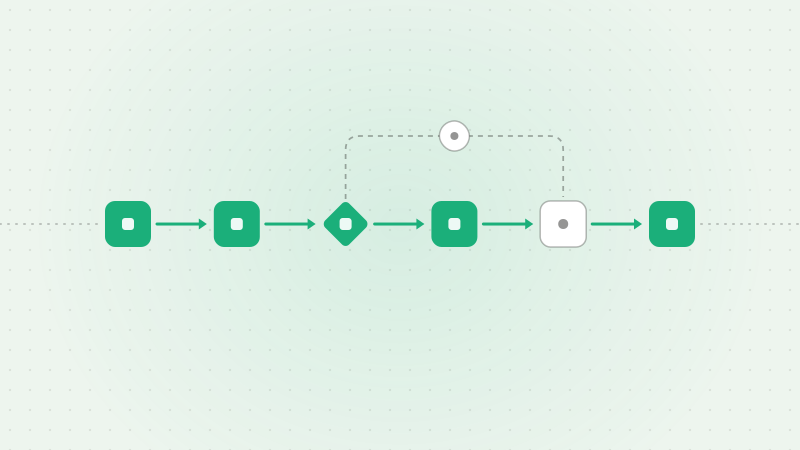
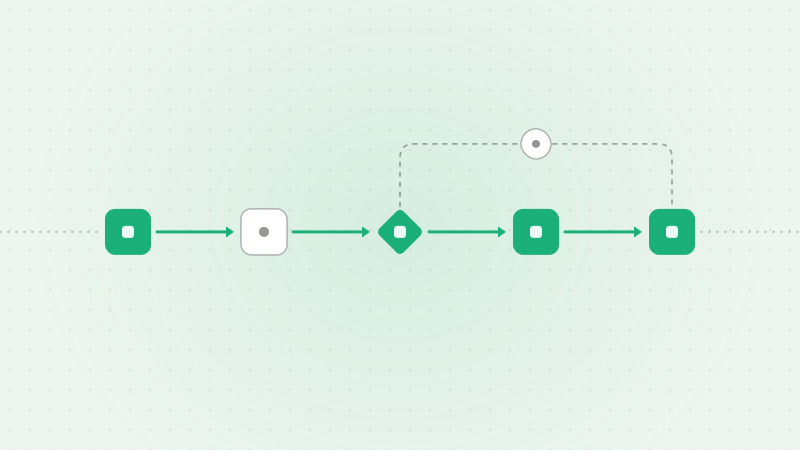
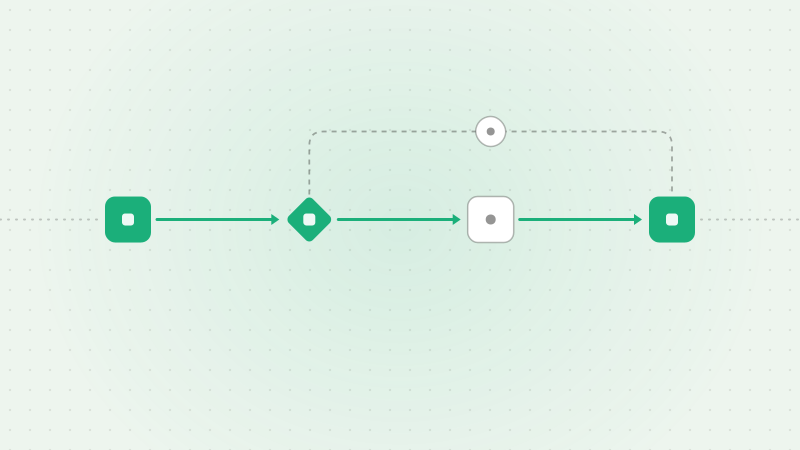
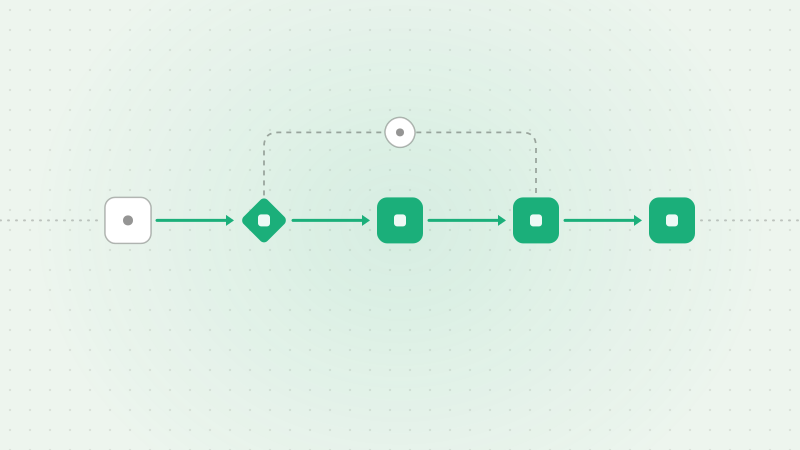
DXC staged adoption in three steps of its Crawl-Walk-Run model, which it developed and validated internally4:
- Crawl: Reliable AI assistance for everyday information needs4.
- Walk: Automation of repetitive, high-volume workflows with Amazon Quick Flows and no-code tools4.
- Run: Complex multi-step agents that handle end-to-end workflows, with human governance kept on high-risk decisions4.
The global rollout was complete in February 20263. By September 2026, DXC also had the Quick business desktop deployed across thousands of users3.
Technology and architecture
Amazon Quick is an AWS service in which users work through natural-language chat, and AI agents process their requests against connected data sources and applications5. In this deployment, it is the workspace for all 115,000 employees, and DXC builds its own agents on it1, 2.
| Layer | What they used | Role | Source |
|---|---|---|---|
| Solution platform | Amazon Quick | Agentic AI workspace that connects employees to enterprise data and hosts the agents | 1, 3, 5 |
| Chat interface | AI Advisor Agent | Single access point where employees ask questions in natural language across enterprise systems | 1, 4 |
| Task agent | Supply Chain Advisor | Role-based advisor that gives operational guidance from validated knowledge | 1 |
| Task agent | Resource request agent | Handles resource requests for the Resource Management teams | 3 |
| Task agent | Lead routing agent | Routes sales leads for the Sales teams | 3 |
| Workflow engine | Quick Flows | Automates approvals, procurement requests and compliance reporting with custom agents | 4, 5 |
| Workplace application | Quick business desktop | Desktop client of the workspace, deployed to thousands of users | 3, 5 |
| Business or operational system | ServiceNow | Holds knowledge that the AI Advisor Agent queries | 4 |
| Knowledge content | SharePoint | Holds documents that the AI Advisor Agent queries | 4 |
Data inputs
- Employee questions: Requests in natural language to the AI Advisor Agent4.
- Enterprise knowledge: Structured and unstructured data in ServiceNow, SharePoint and internal systems4.
- Validated knowledge: The source of the Supply Chain Advisor’s guidance1.
- Requests and leads: Resource requests and sales leads that the workflow agents handle3.
Integrations
- ServiceNow and SharePoint: The AI Advisor Agent queries both, where much of DXC’s critical information sat4.
- Internal systems: The agent also queries DXC’s other enterprise systems4.
- Desktop and other surfaces: Amazon Quick runs on the web and as a desktop application, and it connects to apps, databases and systems5.
DXC feeds what it learns from the deployment back to AWS, and that feedback flows into how Amazon Quick is built2, 3. Jukes describes the partnership as co-innovation rather than a buyer-supplier relationship3.
Results
By February 2026, Amazon Quick reached DXC’s 115,000 employees in 70 countries, which DXC calls one of the largest enterprise deployments of the product to date1.
| Metric | Before | After | Scope and timeframe | Reported by |
|---|---|---|---|---|
| Engineers using the AI Advisor Agent | Not disclosed | more than 40,000 engineers | DXC engineers, February 2026 | DXC Technology, measured1 |
| Agents built by DXC engineers | Not disclosed | roughly 400 agents | First 20 days with Amazon Quick | DXC Technology, via Channel Dive, measured2 |
| Annual hours saved in the supply chain AI use case | Not disclosed | more than 13,000 hours | Supply chain AI use case, per year | DXC Technology, measured4 |
- AI Advisor Agent use: Counts the engineers who use the agent, out of a workforce of 115,0001. DXC’s services page describes 40,000 engineers using Amazon Quick’s agents daily4.
- Agents built: Counts the agents DXC engineers built in the first 20 days with Amazon Quick2.
- Hours saved: Covers DXC’s supply chain AI use case, per year4.
The workflow agents for resource requests and lead routing save teams hours of work that used to be manual3. The AI Advisor Agent cuts the time employees spend finding the right answer, and Quick Flows and custom agents reduce cycle times for approvals and procurement requests4. The deployment has helped speed up decision-making and improve productivity1.
New roles also appeared. Business partners in finance and HR now work directly with Jukes on AI, and IT has new roles around governance, guardrails and gateways3.
Lessons learned
The rollout reached the whole workforce. Amazon Quick covers 115,000 employees in 70 countries, and more than 40,000 engineers use one agent1.
DXC’s first AI rollout fell short. Jukes says he rolled out the first AI capability the way he would roll out any SaaS application, and it didn’t work3. His conclusion is that AI needs sponsorship at the top and alignment down through every level of the organization3.
Trust shaped the order of the rollout. DXC started with use cases in which people could check the answer themselves, and it treats the answers as input to a decision, not the decision3.
The headline figures count users and agents, which Jukes himself says is not the measure of success. He argues for measuring the AI fluency of the workforce, that is, how people use the tool and whether it makes them more effective3. The one productivity figure, more than 13,000 hours a year, covers a single supply chain use case4.
The figures are DXC’s own, from its announcement, its services page and an interview with Channel Dive1, 2, 4. DXC sells the same rollout to clients through its DXC Amazon Quick Practice, and the internal deployment is the basis of that offer1.
Case study scorecard
- more than 40,000 engineers Engineers using the AI Advisor Agent1
- roughly 400 agents Agents built by DXC engineers2
- more than 13,000 hours Annual hours saved in the supply chain AI use case4
Sources by publication date
- Organization 3
- Vendors and partners 1
- Press, academic, and regulators 1
Build this solution yourself
Analysis
What you need
- Knowledge in systems the agents can query: The AI Advisor Agent is useful because it reaches ServiceNow, SharePoint and internal systems where DXC’s information was fragmented4. Check that your platform can connect to the systems that hold your answers.
- Sponsorship at every level: The SaaS-style first rollout didn’t work at DXC, and alignment from the top down did3. You need managers at each level who can say where the tool creates value.
- Use cases with answers people can check: You need starting tasks where employees can verify the output, so that they trust it before higher-stakes work3.
- An IT team for professional agents: At DXC, IT builds the agents that carry stricter guardrails and data connectivity3. You need people who own those controls.
Reference architecture
Enterprise AI platform
An enterprise AI platform gives an organization's staff one governed way to use language models for everyday reading and writing work. A staff member signs in and asks in a chat window or in the app they work in, and the platform screens the request and sends it, with the records it concerns, to a language model that doesn't train on the content. The person who asked checks the screened draft and decides what to do with it, and the program owners review the usage figures.
- AI platform (documented in this case study)
- Sign-in and access
- Chat interface (documented in this case study)
- Workplace apps (documented in this case study)
- Orchestrator
- Connectors
- Input and output checks
- Data protection
- Language model
- Usage record
A check mark shows a building block that this case study's sources document.
Open the reference architectureOthers who built it
- Advantage Solutions: Advantage Solutions scales Claude from a 150-person pilot. A 10-hour weekly forecast task fell to under 30 minutes as Claude spread past a 150-person pilot.
- Legal & General: L&G extends Copilot to all 10,000 staff after service gains. NPS rose 8 points in L&G's AI-backed Retail service, and Copilot is going to all 10,000 staff.
- Cisco: How Cisco gave every employee a personal AI agent. Cisco gave about 90,000 employees MyAgent as agentic use of Circuit grew nearly 350% in a quarter.
- JPMorgan Chase: LLM Suite reaches 150,000 weekly users at JPMorgan Chase. About 150,000 staff use LLM Suite every week and estimate it saves them about four hours each.
- Thomson Reuters: How Thomson Reuters built Open Arena, AI for every employee. By April 2026, 70% of Thomson Reuters employees used AI tools consistently.
- Crédit Agricole: Crédit Agricole moves staff from secure AI chat to agents. Nearly 90% of trained Crédit Agricole S.A. employees use its secure AI chat tool regularly.
Cite this case study
Enterprise AI Case Studies. "DXC rolls out Amazon Quick agents to 115,000 employees." Updated Nov 25, 2026. https://case-studies.ai/case-studies/process-automation/PA-080-amazon-quick-agents-dxc/
@misc{csai-pa-080,
  author = {{Enterprise AI Case Studies}},
  title = {{DXC rolls out Amazon Quick agents to 115,000 employees}},
  year = {2026},
  note = {Updated 2026-11-25},
  url = {https://case-studies.ai/case-studies/process-automation/PA-080-amazon-quick-agents-dxc/}
}Sources
The following reporting, and every passage quoted from it, belongs to its publisher, not to this site. Sources and ownership
- Source 1:
Supporting excerpts (10)
the agentic AI-powered digital workspace, across its global workforce of 115,000 employees operating in 70 countries
The announcement represents one of the largest enterprise deployments of Amazon Quick to date
By first operating new technologies internally at true enterprise scale, under real-world security and governance requirements, DXC validates what works before helping customers deploy and scale those capabilities in their own environments.
DXC deployed Amazon Quick to improve how its employees access information, collaborate, and deliver work across a highly distributed, global enterprise in all lines of its business.
The platform connects employees to trusted data across systems while maintaining enterprise-grade security, access controls, and compliance requirements.
As part of the rollout, DXC introduced an AI Advisor Agent that provides employees with a single access point for AI-related knowledge, tools, prototypes, and feedback and is now used by more than 40,000 engineers.
The rollout also includes role-based AI advisors, such as a Supply Chain Advisor that delivers fast, trusted operational guidance by connecting employees directly to validated knowledge, enabling teams to move faster with confidence.
By reducing friction across disparate systems and simplifying access to information, the deployment has helped speed up decision-making, improve productivity, and accelerate the building of ideas into real customer solutions.
Chief Digital Information Officer Russell Jukes
a new business unit focused on helping customers worldwide operationalize AI at scale across multivendor enterprise ecosystems
- Source 2:
DXC fast-tracks adoption of AWS AI agent builder
Supporting excerpts (5)
The move marks one of the largest enterprise-wide deployments of Amazon Quick since its October release, according to DXC.
The IT services and consulting firm is taking a customer-zero approach to agentic AI adoption, providing AWS with feedback on its progress as it pressure tests Amazon Quick
More than 40,000 DXC engineers are already leveraging an AI assistant to access agent-building knowledge, tools and prototypes.
DXC engineers built roughly 400 agents in the first 20 days with the AWS suite.
It's starting to show some very nice early-stage results
- Source 3:
Co-innovating enterprise AI: When DXC deployed AI to 115,000 employees, here's what AWS learned
Supporting excerpts (17)
In February, DXC Technology completed a global rollout of Amazon Quick, an AI platform from AWS that lets anyone in the organization, from finance to HR to marketing, query their own tools and data in plain language and act on what they find.
The deployment spans more than 115,000 employees across 70 countries, and the real-world feedback it generates flows directly back into how Amazon Quick is built.
DXC's partnership with AWS isn't a buyer-supplier relationship. It's genuine co-innovation.
The Quick business desktop is the latest addition to the platform, and DXC already has it deployed across thousands of users
Deploying AI is not the same as deploying SaaS. I learned that the hard way. I rolled out our first AI capability the way I would roll out any SaaS application, and it simply doesn't work like that.
it starts with sponsorship at the very top of the organization, but it doesn't stop there. You have to work down through every level
The foundation has to be right: safe, secure and scalable, with the appropriate guardrails in place.
We started with use cases where people could verify the answer themselves, so they could build confidence before relying on it for higher-stakes decisions.
They need to know the answer is accurate, and that it's being used to inform a decision, not make one. Because AI supports decision-making. It doesn't replace it.
The number of agents deployed across an enterprise is not the measure of success.
Personal agents help individuals drive their own productivity through everyday tasks, conversations, and workflows.
Professional agents are enterprise-grade capabilities built by IT, with far more rigorous guardrails, governance, security and data connectivity.
What matters is the AI fluency of the workforce.
we have an agent that handles resource requests for our Resource Management teams and another that does lead routing for Sales.
saving teams hours of personal productivity that used to be entirely manual
New roles are appearing inside IT itself, around governance, guardrails and gateways.
I have business partners in finance and HR who used to be deep in technology, reporting and analytics, who now partner with me directly on AI.
- Source 4:
Supporting excerpts (12)
With critical information fragmented across ServiceNow, SharePoint and internal systems, DXC's workforce, more than 100,000 strong, was spending too much time searching for answers
DXC deployed Amazon Quick as an enterprise agentic workspace.
Employees began using AI Advisor Agent to query across enterprise systems, and structured and unstructured data, in natural language, cutting the time spent finding the right answer.
The agent also delivers self-service AI tools spanning HR, IT support, sales, finance, legal and procurement.
Approvals, procurement requests and compliance reporting are automated through Quick Flows and custom agents, reducing cycle times and freeing teams to focus on higher-value work.
Amazon Quick's enterprise-grade security and DXC's governance framework help AI deployment pass the requirements of security, compliance and legal teams
13,000+ annual hours saved in DXC's supply chain AI use case
were developed and validated internally before being brought to market
Crawl establishes reliable AI assistance for everyday information needs
Walk automates repetitive, high-volume workflows using Amazon Quick Flows and no-code tools
Run scales AI automation across the organization, with complex multi-step agents handling end-to-end workflows while maintaining human governance on high-risk decisions
with 40,000 engineers already using Amazon Quick's agents daily as part of their workflow
- Source 5:
Supporting excerpts (4)
natural language chat, and Quick uses AI agents to process your requests
to automate repetitive, routine tasks without needing technical expertise.
Use Quick from the web, the desktop application, or
Quick integrates with the apps, databases, and systems









Comments
Start the conversation.
Invited members of the library comment here. Sign in to join the conversation.