

Northern Trust cuts onboarding data prep with an AI agent
Northern Trust and Microsoft's forward deployed engineers built an agent that turns years of institutional clients' transaction history into the bank's standard format, with analysts approving its work.
Northern TrustUnited StatesCapital marketsIn production
- Scenario
- Institutional client data onboarding
- Business function
- Finance and accounting
- Kind of solution
- Data matching and enrichment
- Who built it
- Built with a partner (Microsoft)
- Where it runs
- Public cloud
- Human oversight
- People approve each output
- Organization
- Enterprise
- AI types
- Generative AI, Agentic AI
tl;drData prep for a new institutional client fell from 2.5 weeks to three days, an 83% cut.See the results
Northern Trust, the Chicago custodian bank, has handed the slowest part of onboarding new institutional clients to its Front Office Solutions platform to an AI agent1. The agent turns years of a client’s transaction history, sent in whatever format the client kept it, into the bank’s standardized format1.
Northern Trust and forward deployed engineers from Microsoft Frontier Company built the agent jointly. It runs on Microsoft Azure and uses Microsoft Foundry. The bank’s analysts review, refine, and approve its work in Excel and SharePoint1, 2.
The two companies announced the deployment in November 2026. In measured production cases, data preparation fell from about 2.5 weeks per client to three days on average, a cut of 83%1. In controlled tests on anonymized client workbooks, the agent’s first pass scored 96.5% on F1, a metric that combines precision and recall1.
Before the deployment
Before the agent, analysts mapped and transformed each new client’s data by hand before they loaded it into the bank’s environment2. Northern Trust, founded in Chicago in 1889, held US$19.9 trillion in assets under custody or administration at the end of September 20261.
Front Office Solutions is the part of its asset servicing business that gives institutional investors performance reporting and analytics. Its clients include foundations, endowments, pension schemes, and large family offices1. Before a new client can see its portfolio there, the bank rebuilds the client’s performance history from large volumes of investment and transaction data from several sources1. The old process had the following problems:
- Volume: Chief operating officer Pete Cherecwich said a large institutional client can bring “an enormous amount of data, particularly in alternative investments,” with years of transaction history and cash flows across many holdings2.
- Formats: The data arrives “in all kinds of different formats”2. Alternative assets make the consolidation hardest1.
- Time: The whole preparation step, covering transformation, analyst review, exception handling, and final validation, took about 2.5 weeks per onboarding1.
- A shared problem: In a survey by Northern Trust, 57% of asset owners named consolidating data from multiple, disparate internal and external sources as their biggest challenge1.
Cherecwich listed the returns he expects in this order: “speed to revenue, the client experience, and taking a very manual process and making it more efficient”2. He saw the problem as a good fit for AI because “there’s a lot of complexity and variability in the data, but there are also patterns that the technology can learn”2. Mapping rules written for one client’s files probably wouldn’t carry over cleanly to the next, because each client’s history looks a little different.
What was built
The agent converts a client’s historical transaction data into Northern Trust’s standardized format, ready for the Front Office Solutions reporting environment1. It runs during implementation, before the client goes live, so that analysts can find and reconcile errors while they validate the client’s starting data1. The work is divided as follows:
- Onboarding agent: Converts the history and shows the reasoning behind its output1. In Cherecwich’s words, it “does a lot of the heavy lifting”2.
- Excel and SharePoint: Hold the agent’s output in familiar Microsoft 365 tools, where analysts review, refine, and approve it1.
- Analysts: Review the outputs, evaluate the reasoning, resolve the exceptions, and feed their corrections back1, 3. They take the cases where there’s uncertainty2.
- Governed intelligence layer: Preserves the onboarding knowledge that analysts approve, so that each completed onboarding adds to what the solution builds on for the next one1, 3.
The release calls the approach “augmented intelligence.” AI acts as a force multiplier for human expertise, and judgment and accountability stay with people1.
“That’s the sweet spot for us: let the technology do what it does well and let our people apply their expertise where it matters.”
How the partnership worked
The agent came out of one of the earliest client engagements of Microsoft Frontier Company2. Microsoft launched the $2.5 billion venture in July 2026. Its forward deployed engineers help customers move from AI trials to deploying frontier AI at scale2. The partnership worked as follows:
- Northern Trust: Brought its knowledge of asset servicing and of “what a capital call or a valuation looks like even when the data comes in a strange format,” in Cherecwich’s words2.
- Microsoft Frontier Company: Brought the AI engineering. Its teams also include industry experts and people with expertise in change management and process optimization2.
- “Eyes off” tuning: Microsoft hill-climbed on the F1 score and other evaluation measures by using only anonymized data, so client data remained under Northern Trust’s control1, 2.
“We felt like we needed to organize ourselves differently to be able to serve customers at the speed and scale they want,” said Bill Borden, Microsoft’s corporate vice president for worldwide financial services2. Cherecwich doesn’t think “either side could have built as good a solution by themselves”2.
Technology and architecture
Apart from the bank’s reporting platform, the stack is Microsoft’s. The governed intelligence layer also runs on Azure1, 2, 3.
Microsoft Foundry is Microsoft’s platform for building and running agents. Its documentation describes an agent as a model paired with instructions and tools that can reason over a request and take action6. Foundry has tracing, monitoring, and evaluations built in, and it offers models from Microsoft, OpenAI, Anthropic, Meta, and others6.
The following table lists the components of the solution.
| Layer | What they used | Role | Source |
|---|---|---|---|
| Task agent | Client onboarding agent | Converts a client’s historical transaction data into the bank’s standardized format and shows its reasoning | 1, 2 |
| Machine learning platform | Microsoft Foundry | Enterprise AI platform the agent is built on | 1, 2, 3 |
| Cloud platform | Microsoft Azure | Hosts the agent and its knowledge layer | 1, 2, 3 |
| Knowledge content | Governed intelligence layer | Preserves approved onboarding knowledge so later onboardings build on it | 1, 2 |
| Review workbench | Microsoft Excel and SharePoint | Microsoft 365 tools where analysts review, refine and approve the agent’s output | 1, 2 |
| Business or operational system | Front Office Solutions | Reporting environment that receives the standardized history | 1 |
Data inputs
The solution uses the following data:
- Client history: Each case brings transaction records and cash flows across many investments, from several sources and in many formats1, 2.
- Test set: Seven real client transaction workbooks, anonymized, with reference outputs that analysts prepared1.
- Approved knowledge: What analysts approve flows back into the governed intelligence layer1.
How one client’s history flows through the system
One client’s history moves through the solution in the following steps:
- The client’s history comes in during implementation, before the client goes live1.
- The agent converts the history to the standard format. It writes its output and its reasoning where analysts can see them1.
- An analyst reviews the work. The analyst resolves the exceptions and reconciles the errors while validating the client’s starting data1.
- The analyst approves the starting data for the Front Office Solutions reporting environment1.
- The approved knowledge stays in the governed intelligence layer for the next onboarding1.
Results
Northern Trust and Microsoft published two figures with the announcement on November 9, 2026. Each came with a footnote on how it was measured1.
| Metric | Before | After | Scope and timeframe | Reported by |
|---|---|---|---|---|
| Data preparation time per onboarding | Approximately 2.5 weeks | Three days on average (83% less) | Real client onboarding cases after deployment, including transformation, analyst review, exception handling and final validation | Northern Trust, measured1, 2, 3 |
| F1 first-pass quality score | Not disclosed | 96.5% | Controlled testing on seven anonymized historical client workbooks, before analyst corrections | Northern Trust and Microsoft, controlled test1, 2 |
The two metrics measure the following:
- Data preparation time: After deployment, Northern Trust timed real onboarding cases and compared their average with the old baseline of about 2.5 weeks. The timed span includes the analysts’ review, the exception handling, and the final validation, so the 83% describes the agent and the people together1.
- F1 first-pass quality score: Measures the agent’s first pass, before any analyst touched it. F1 combines precision, how much of what the agent produced was right, and recall, how much of what it should have produced it found1. The seven test cases used real, anonymized client workbooks, scored against reference outputs that analysts prepared and that were withheld while the agent ran1.
- The F1 score in CIO: CIO reported the same figure as “over a 96%” and described it as a measure of “the correctness and completeness of the mappings it produces”2.
On the bank’s Q3 2026 earnings call in October, CEO Michael O’Grady said the agent combines “advanced AI with enterprise-grade privacy, security and governance to make the process faster for clients”3.
Lessons learned
The time saving is the better-founded of the two results. It was measured on real production onboardings rather than in a lab, and the timed span includes the human review and validation1. The release also explains how the comparison was made1.
The F1 test was designed sensibly. Analysts prepared the reference outputs, and they were withheld from the agent while it ran, so the score isn’t graded against anything the agent could have seen1.
Two design choices also answer the problem directly. Running the agent before go-live puts the review where an error is cheapest to fix, and tuning only on anonymized data let an outside team improve the agent without handling client data1.
The agent’s first pass isn’t error-free. A 96.5% F1 in testing means that some mappings were wrong or missing before analysts corrected them, and the companies present review and error reconciliation as a standing part of the workflow1. Cherecwich said the bank’s people handle “the things where there’s uncertainty”2. The three days still include real analyst work, and the saving depends on how much of each history the agent gets right the first time.
Both headline figures come from Northern Trust and Microsoft’s joint press release. CIO and CIO Dive repeated them and added interviews with Cherecwich and Borden and remarks from the earnings call. Neither outlet measured anything2, 3. The test covered seven cases, which is a small sample for a population of clients as varied as the ones the bank describes1.
The executives drew their own lessons. Cherecwich’s lesson is that domain knowledge and AI engineering had to sit together. Having Microsoft’s engineers embedded with the bank’s people let the project move a lot faster2. O’Grady’s lesson, on the earnings call, was about method: start with outcomes and redesign the work “rather than just adding tools”3.
Case study scorecard
- 83% Less time to prepare a new client's data1, 2, 3
- 96.5% F1 first-pass quality score of the agent's output1, 2
Sources by publication date
- Organization 1
- Vendors and partners 1
- Press, academic, and regulators 4
Build this solution yourself
Analysis
What you need
To build this solution, you need the following in place:
- A fixed target format: Northern Trust’s standardized format and reporting environment defined what a finished history looks like, which gave the agent a target to aim at1.
- Reference outputs from past onboardings: Analysts prepared reference outputs for anonymized test cases. Without them, there’s nothing to measure a first pass against1.
- A review step that already exists: The agent built on the analysts’ review, exception handling, and final validation in the old process1.
- A way to tune without client data: The “eyes off” approach let the outside team improve the agent without access to client data1.
Reference architecture
Data matching and enrichment
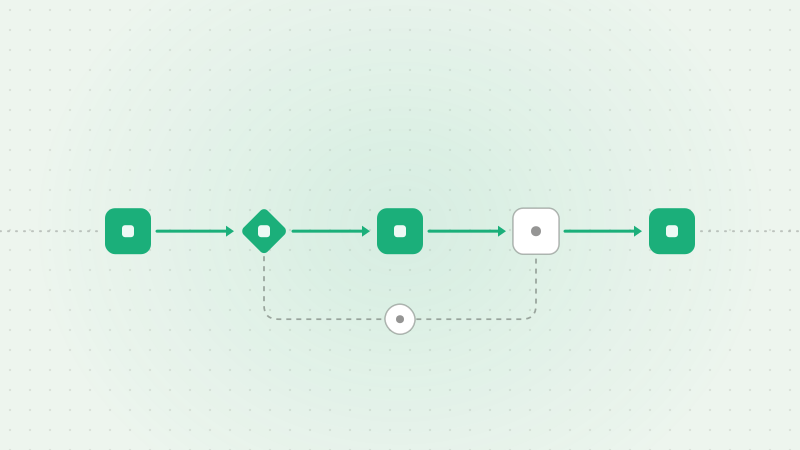
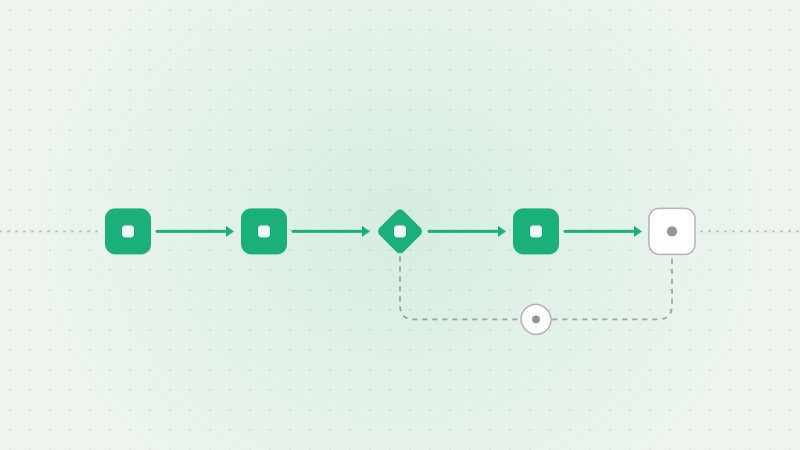
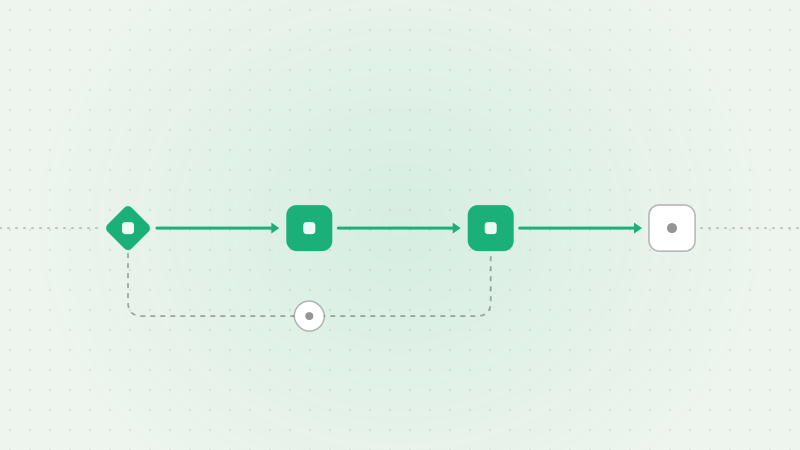
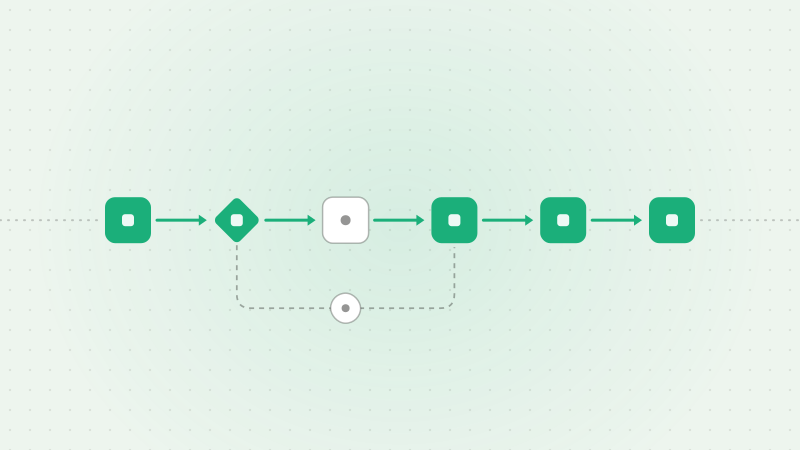
A data matching and enrichment solution uses a language model to match, fill in, correct, or convert the records that an organization keeps, such as transactions or catalog listings. A language model turns incoming records into a proposal, and only what passes a check reaches the system of record. People who know the records define a right answer, approve proposals or check samples of them, and settle what's left over.
- Connections to the sources
- Language model
- Review and approval (documented in this case study)
- System of record (documented in this case study)
- Handoff to staff
A check mark shows a building block that this case study's sources document.
Open the reference architectureOthers who built it
- Deutsche Bank: By September 2026, its private bank had put an agentic AI system live in Singapore and Hong Kong that prepares source-of-wealth assessments for staff to review during know your customer (KYC) onboarding4.
- TradePMR: The custodian for registered investment advisers launched Fusion SYNC in October 2024, an AI-enabled tool that migrates advisers’ client data into its Fusion platform and cross-checks it for errors5.
In the library
- Magical Listing cuts eBay listing time by more than 25% eBay
- Matalan drafts product descriptions with generative AI Matalan
- Maersk's AI cuts forced labor mapping from 100 person-days A.P. Moller - Maersk
- LLMs create or improve 850 million data points at Walmart Walmart
- LLM-written matching rules for reconciliation at FloQast FloQast
Cite this case study
Enterprise AI Case Studies. "Northern Trust cuts onboarding data prep with an AI agent." Updated Nov 19, 2026. https://case-studies.ai/case-studies/process-automation/PA-017-client-data-onboarding-agent-northern-trust/
@misc{csai-pa-017,
  author = {{Enterprise AI Case Studies}},
  title = {{Northern Trust cuts onboarding data prep with an AI agent}},
  year = {2026},
  note = {Updated 2026-11-19},
  url = {https://case-studies.ai/case-studies/process-automation/PA-017-client-data-onboarding-agent-northern-trust/}
}Sources
The following reporting, and every passage quoted from it, belongs to its publisher, not to this site. Sources and ownership
- Source 1:
Northern Trust and Microsoft Frontier Company Collaborate to Transform Client Onboarding Through AI
Supporting excerpts (26)
Northern Trust and Microsoft today announced an expanded collaboration to accelerate AI transformation across Northern Trust, beginning with the deployment of a new AI-powered client onboarding agent for clients on Northern Trust Asset Servicing's Front Office Solutions platform.
Developed jointly by Northern Trust and Microsoft Frontier Company Forward Deployed Engineering (FDE) teams, the agent streamlines one of the most complex aspects of institutional client onboarding: transforming years of data and transaction history into a standardized format ready for use within Northern Trust's reporting environment.
The platform provides performance and analytics for institutional investors, including foundations, endowments, pension schemes and large family offices.
Onboarding can require Northern Trust to consolidate large volumes of investment and transaction data from multiple sources to reconstruct performance histories, particularly for alternative assets.
more than half of asset owners (57%) surveyed by Northern Trust cite consolidating data from multiple, disparate internal and external sources as their biggest challenge
The agent automates a key part of this process by converting clients' historical transaction data into Northern Trust's standardized format, cutting data preparation time by 83 percent
from two and a half weeks to three days
achieving a 96.5 percent F1 first-pass quality score
a standard AI evaluation metric that combines precision and recall into a single quality metric
The solution has been designed with human oversight embedded throughout the workflow, enabling analysts to review outputs, evaluate reasoning, resolve exceptions and continuously improve performance through expert feedback and governance.
By using the agent during implementation, before the client goes live, analysts can identify and reconcile errors while validating the client's starting data.
Built on Microsoft Azure, the agent uses Microsoft Foundry for enterprise AI and integrates with familiar Microsoft 365 tools, including Microsoft Excel and SharePoint, so Northern Trust analysts can review, refine and approve its work.
A governed intelligence layer powered by Azure preserves approved onboarding knowledge, allowing the solution to build upon institutional expertise over time and continuously improve the onboarding process.
The result is less manual work for analysts, a faster and more predictable experience for clients, and a more efficient onboarding experience.
Microsoft hill-climbed on F1 first-pass quality scoring and other evaluation measurements using only anonymized data, ensuring Northern Trust client data remained securely governed under the firm's control throughout the process.
This model has enabled the organization to achieve production-scale performance while meeting the stringent data stewardship expectations of a highly regulated industry.
The solution reduces the time required to prepare and validate clients' data while maintaining the oversight and controls our clients expect, creating capacity for both sides to focus on higher-value work.
At the center of this strategy is augmented intelligence: using AI as a force multiplier for human expertise, while keeping judgment and accountability with people.
This approach points to a broader opportunity across regulated industries to transform complex workflows and deliver business value without compromising trust.
Following deployment of the client onboarding agent, Northern Trust measured preparation times for real client onboarding scenarios.
The analysis included data transformation, analyst review, exception handling, and final validation.
The resulting percentage improvement was calculated by comparing the prior workflow baseline of approximately 2.5 weeks with the average time required to complete measured production cases using the agent-assisted process
The 96.5 percent F1 quality score reflects first-pass results from controlled testing across seven representative test cases using real, anonymized historical client transaction workbooks supplied by Northern Trust.
Agent-generated output values were compared with analyst-prepared reference outputs withheld during execution, before analyst feedback or corrections.
As of September 30, 2026, Northern Trust had assets under custody/administration of US$19.9 trillion, and assets under management of US$2.0 trillion.
Founded in Chicago in 1889
- Source 2:
Northern Trust streamlines client onboarding with AI agent
Supporting excerpts (21)
Onboarding a large institutional client can involve an enormous amount of data, particularly in alternative investments,
You might have years of transaction history and cash flows across multiple investments, and the data can come to us in all kinds of different formats.
Until now, Northern Trust had to map and transform that data manually before loading the data into its environment.
This seemed like a really good problem for AI because there's a lot of complexity and variability in the data, but there are also patterns that the technology can learn,
The agent does a lot of the heavy lifting, and then our people review the output and handle the things where there's uncertainty.
That's the sweet spot for us: let the technology do what it does well and let our people apply their expertise where it matters.
the agent has cut data preparation time by 83%, from two-and-a-half weeks to just three days
achieves over a 96% F1 first-pass quality score, an AI evaluation metric of the correctness and completeness of the mappings it produces
The agent was also evaluated using only anonymized data to ensure client data was securely governed throughout the process.
When I think about ROI, I wouldn't look at just one number,
It's speed to revenue, the client experience, and taking a very manual process and making it more efficient.
The partners built the agent on Microsoft Azure. It uses Microsoft Foundry for enterprise AI and integrates with Microsoft 365 tools like Microsoft Excel and SharePoint.
Azure provides a governed intelligence layer to preserve approved onboarding knowledge
The agent is a result of one of Microsoft Frontier Company's earliest client engagements.
Microsoft launched the $2.5 billion venture in July to provide clients support from FDEs that help them overcome the hurdle of moving from AI trials to deploying frontier AI at scale.
We felt like we needed to organize ourselves differently to be able to serve customers at the speed and scale they want,
Team members with expertise in change management and process optimization are also key parts of the mix.
We know asset servicing, our clients, and what a capital call or a valuation looks like even when the data comes in a strange format,
Microsoft knows AI and the underlying technology. You really needed both.
I don't think either side could have built as good a solution by themselves.
And having Microsoft's engineers embedded with our people and our expertise allowed us to move a lot faster.
- Source 3:
Northern Trust leans on Microsoft FDEs to boost agentic buildout
Supporting excerpts (11)
cuts data preparation time by 83% — from two and a half weeks to three days
The agent is built on Microsoft Azure, using Microsoft Foundry for enterprise AI, and connects to Microsoft 365 tools.
The foundation lets Northern Trust analysts review and approve the agent's work while a governed intelligence layer preserves onboarding knowledge, letting the agent build expertise over time
Human oversight has been embedded throughout the agent's workflow, letting analysts evaluate the tool's reasoning and review outputs
Northern Trust CEO Michael O'Grady said last month during the financial services firm's Q3 2026 earnings call.
advanced AI with enterprise-grade privacy, security and governance to make the process faster for clients,
Alongside its client onboarding agent, Northern Trust has adopted client action plan agents, which O'Grady said save customer relationship managers two to three hours per client memo.
AI-enabled digitization has also nearly doubled straight-through processing, or automated financial transactions, for the company.
Internally, the bank's AI assistant Byron supports wealth managers with more tailored insights to deliver to clients, he added.
Our approach is disciplined, starting with outcomes, simplifying processes and redesigning work rather than just adding tools,
More than two-thirds of global financial firms surveyed by Evident for the report said they have added additional controls for AI systems.
- Source 4:
Deutsche Bank rolls out agentic AI to streamline KYC onboarding in private banking
Supporting excerpts (2)
The AI-powered Source of Wealth (SoW) solution has gone live in the bank's Singapore and Hong Kong booking centres
It analyses client documentation alongside approved external data sources to prepare assessments for review by bank staff, while identifying gaps or inconsistencies that require further investigation.
- Source 5:
TradePMR taps AI to simplify RIA transitions
Supporting excerpts (3)
has launched a new AI-enabled tool designed to simplify the process of transitioning to a new custodian.
Fusion SYNC, automates the process client data migration, allowing RIA firms to upload their complete client-approved information and automatically populate it into TradePMR's Fusion platform.
Fusion SYNC also performs a cross-check for errors, potentially shortening the transition process from weeks to days.
- Source 6:
Supporting excerpts (3)
Microsoft Foundry unifies agents, models, and tools under a single management grouping with built-in enterprise-readiness capabilities including tracing, monitoring, evaluations, and customizable enterprise setup configurations.
Most projects on Foundry center on an agent: a model paired with instructions and tools that can reason over a request and take action.
Access more than 10,000 models from Microsoft, OpenAI, Anthropic, Meta, and others.






Comments
Start the conversation.
Invited members of the library comment here. Sign in to join the conversation.