
BNY's digital employees validate payments on Eliza
BNY handed the repair of malformed addresses and country codes on cross-border payments to an AI agent it treats as staff, with its own login, a human supervisor and a reviewer who approves each fix.
BNYUnited StatesBankingScaled since Jun 2025
- Scale
- Payment validation persona replicated across multiple team instances; a cohort of digital employees on payment remediation by November 2025
- Scenario
- Cross-border payment validation and repair
- Business function
- Finance and accounting
- Kind of solution
- Agentic process automation
- Who built it
- Built in-house (Microsoft)
- Human oversight
- People approve each output
- Organization
- Enterprise, 10,000 to 99,999 employees
- AI types
- Generative AI, Agentic AI
tl;drPayment validations that took five or six minutes now clear in under 30 seconds at BNY.See the results
BNY uses an AI agent to validate cross-border payments. The agent reads the vendor address on a payment, asks a mapping API which country a place name such as York refers to, fixes the country code and passes the payment to a person to approve1.
The bank calls agents like this one digital employees. Each has its own login, an avatar, an employee number in the corporate directory and a human supervisor1. They run on Eliza, BNY’s AI platform5.
By May 2026, payment validations that used to take five or six minutes were clearing in under 30 seconds, and open investigations in payments had fallen by nearly 80%1. PYMNTS took up those figures in October 2026, in a report on banks that put their AI agents through performance reviews2.
Before the deployment
For years, BNY’s payments team handled thousands of manual interventions a day1. The old process had the following problems:
- Small repairs: Each intervention fixed a fault such as a missing country code, a malformed address or a garbled routing field1.
- Held payments: Each repair held up a payment at a bank that moves $2.5 trillion in transactions a day1.
- Brittle bots: The team had tried robotic process automation. The bots had to be scripted step by step through every screen, and BNY’s mix of mainframes, HTML interfaces and hybrid systems fought those scripts constantly1.
- Double work: “Maintaining the bots consumed so much effort that the humans were effectively doing two jobs instead of one,” said Rachel Lewis, who leads AI enablement across BNY’s operations organization1.
An agent that reads a free-text address and asks a lookup service doesn’t depend on fixed screens, which is most likely why the operations group pointed its first payments agent at address and country-code validation.
BNY already had a place to build such an agent. It set up an AI Hub in 202310, and the same year it launched Eliza, a model-agnostic platform that brings Anthropic, Google, OpenAI and other models under one governed roof5.
What was built
The payments digital employee validates the address and country code on cross-border payments, and a person approves each fix1. Lewis’s team built it with BNY engineers as the bank’s first dedicated payment digital employee, with one narrow task1. The scope was tight on purpose, not because the technology couldn’t do more, but because a tight scope makes a digital employee trustworthy and auditable at a bank where one misrouted payment can freeze a billion-dollar transfer1.
The work is divided as follows:
- Payments digital employee: Corrects the payment and queues it for review1. It works in the same applications as human employees, with its own system credentials, and submits its work for managerial approval8.
- Personas and instances: The AI Hub developed its first two personas within three months, for tasks such as code vulnerability fixes and payment instruction validation. It copied each persona into several instances assigned to specific teams, which limits each agent’s access so that no single one has broad visibility across the company8.
- Reviewers: Approve each corrected payment or send the work back1.
- Supervisors: Assign tasks and review output1. In February 2026, Lewis, then described as head of payment operations, oversaw nine digital employees alongside thousands of human staff3.
- Managers: Track each digital employee on a live dashboard1. Leigh-Ann Russell, BNY’s CIO and global head of engineering, describes their job as monitoring what logic is applied to decision-making10.
In Microsoft’s account, managing a digital employee looks more like running a performance review than operating software1. BNY’s chief executive puts the review step in the bank’s older terms:
“We don’t make payments at BNY without a lot of validation. The fact that an AI model wants to make a payment, that’s nice. We don’t fully trust even people to do things solely by themselves. We have maker-checker processes.”
Rollout
Before an idea becomes a working agent at BNY, it passes sixteen steps of review boards, compliance gates and model risk evaluations1. The payments work grew from one agent to a cohort of digital employees that does payment remediation, with human employees reviewing their work9. Payment remediation is the job of working out what is wrong with a payment instruction that lacks key details, and fixing it9.
Technology and architecture
Every digital employee runs on Eliza. The platform provides the following:
- A menu of models: BNY built Eliza as a platform of its own rather than buying separate vendor tools for each function. Its builders choose from a menu of models6.
- Model routing: On the October 15, 2026 earnings call, Vince said the routing engines that pick the right model for each task are built into Eliza7. He said this takes a layer that all of the bank’s agents operate in, which working through the front door of one lab’s ecosystem wouldn’t allow7.
- Governance: Russell calls Eliza both the bank’s tech stack and its governance framework, because everything AI-related at BNY is centralized there10. It gives teams the ability to prototype, test and deploy agents “with guardrails, telemetry and approvals”6.
- Audit: Every action a digital employee performs is auditable and its rationale is logged, in the words of Michael Demissie, BNY’s head of applied AI5.
- Microsoft connections: Eliza runs partly on Microsoft Azure. It connects to the bank’s Microsoft 365 environment through the Graph API, drawing context from Outlook, Teams, SharePoint and Dynamics CRM1.
The following table lists the parts of the payments agent.
| Layer | What they used | Role | Source |
|---|---|---|---|
| Task agent | Payments digital employee | Reads the vendor address, calls the mapping API, validates the country code and submits the corrected payment for review | 1 |
| Solution platform | Eliza | Builds, tests, deploys and governs the digital employees | 1, 6 |
| Tools and actions | Mapping API | Says which country an ambiguous place name refers to | 1 |
| Access and identity | Digital employee credentials | A login, an employee number and a named supervisor for each agent | 1, 8 |
| Monitoring | Live dashboard | Processed volume, cycle times, missed transactions and approval outcomes | 1 |
| Audit trail | Action and rationale log | Records every action with its rationale | 5 |
A payment most likely reaches the agent from an existing repair queue, and its corrections probably land in the review queues that human repairs already used.
How one payment flows through the system
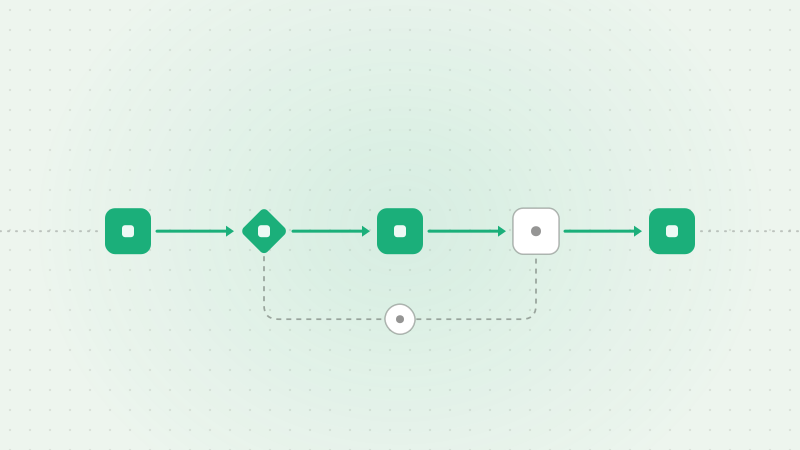
Take a cross-border payment whose vendor address names York. The payment moves through the following steps:
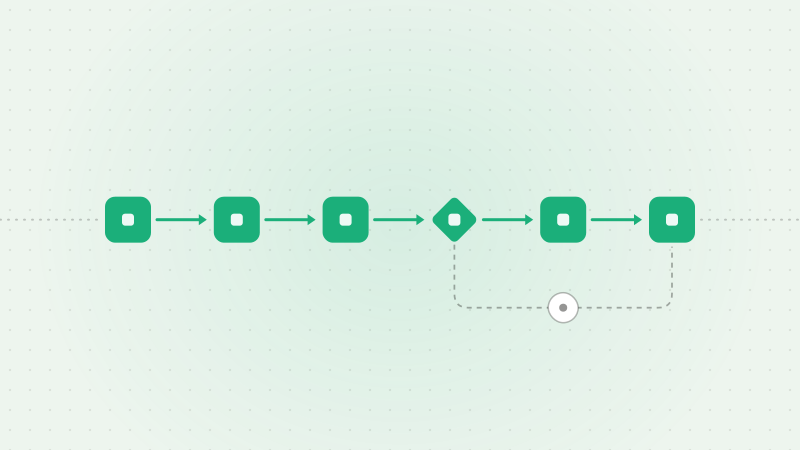
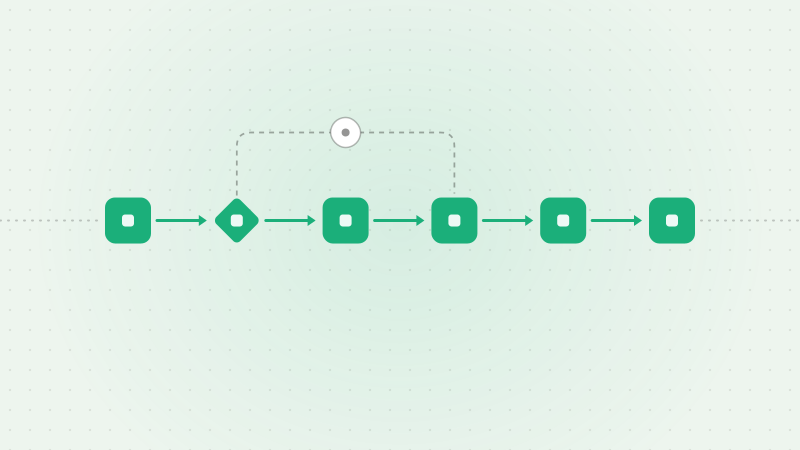
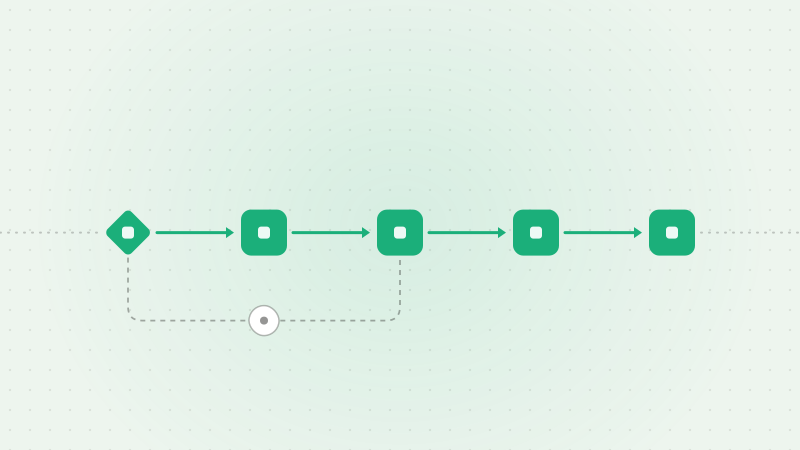
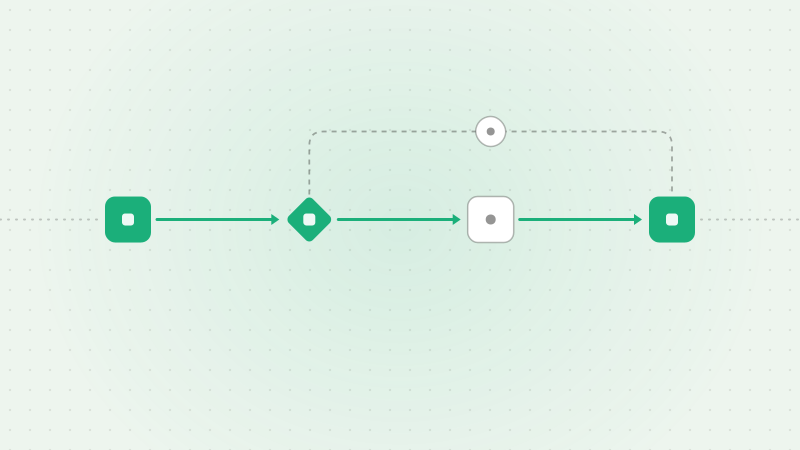
- The agent reads the vendor address1.
- The agent asks the mapping API whether York means the United Kingdom, South Africa or Western Australia1.
- The agent validates the country code against the answer1.
- The agent submits the corrected payment for a person to review1.
- The reviewer approves the payment or sends it back. Work that comes back feeds the agent’s coaching and retraining1.
- AI component
- Data
- Trigger or control
- Handoff to people
- Feedback
- Inferred, not documented
Results
The payments agent’s results were published in May 2026, as part of Microsoft’s account of AI at BNY1.
| Metric | Before | After | Scope and timeframe | Reported by |
|---|---|---|---|---|
| Time per payment validation | Five or six minutes | Under 30 seconds | Address and country-code validation on cross-border payments, as of May 2026 | BNY, via Microsoft, measured1, 2 |
| Open payment investigations | Not disclosed | Down nearly 80% | Payments operation, as of May 2026 | BNY, via Microsoft, measured1, 2 |
The two metrics measure the following:
- Time per payment validation: The time it takes to check and correct the address and country code on one payment1. PYMNTS, retelling the figure in October 2026, put the old time at up to six minutes2.
- Open payment investigations: Payments in the payments operation that someone is still chasing1.
The deployment also brought the following changes:
- Stuck transactions: Forrester analysts, who had worked with BNY for months, describe payment validation agents that identify issues with stuck transactions in minutes instead of hours and find problems humans miss5.
- Client inquiries: A separate digital employee for client payment inquiries reads an incoming email, gauges its urgency, pulls records from several systems, drafts a reply and queues it for a human manager to review1. An inquiry that once waited days now resolves the same day1.
- Staff work: Team members who used to spend much of the day repairing payment exceptions now identify data-quality patterns, benchmark clients on data quality, contribute to client strategy discussions and help design and test new AI tools1.
- Scale: BNY had more than 130 digital employees in production in May 2026, up from 70 less than a year before5. By October 2026, it had 400-plus AI solutions of all kinds in production7.
- Headcount: BNY’s human headcount fell to 48,100, from about 53,400 in 20233. The bank doesn’t credit AI for that: “Our head count has trended down a little bit, but that’s not really anything to do with AI yet,” chief financial officer Dermot McDonogh said on the fourth-quarter call3.
Lessons learned
The payments agent is an example of a narrow agent doing a checkable job. A country code is right or wrong, the mapping service supplies the answer, and a person sees the result before the payment moves on1. The same design shows in the team-bound instances, so that no agent sees across the company8, and in a logged rationale for every action5.
Forrester’s reading is that BNY got here by building the governed platform and training its workforce before it put autonomous agents into core operations5. Vince’s view is that “the weak link isn’t the tech, it’s the adoption of the tech”9.
The agent didn’t win over its reviewers at once, and they sent back some of its work. The bank’s own explanation, in Microsoft’s account and PYMNTS’s retelling, is that the cause was their habits from the old process rather than wrong answers1, 2. The team handled it as it would a new hire, through coaching, recalibration and retraining1.
The narrow scope has a cost too. The agent does one task, and a person still reviews every corrected payment it submits1, 8. PYMNTS set BNY’s account beside FINRA’s 2026 oversight report, which flags agents acting autonomously without human validation and approval2.
Both headline figures come from one BNY manager, Lewis, in a piece that Microsoft published about a bank that runs part of Eliza on Microsoft Azure and has worked with Microsoft throughout its AI journey1. PYMNTS repeated the figures and said that both are the bank’s own and unaudited2. The independent coverage (CNBC, InvestmentNews, Allwork.Space, ABA Banking Journal, CIO.com) reports the program and its scale, not the payment figures3, 4, 8, 9, 10.
Forrester’s “minutes instead of hours” is the bank’s account relayed by analysts, not the firm’s own measurement, because they had worked with BNY for months and had its people speak at their own summit. It covers payment validation agents on stuck transactions in general, not the address agent alone5.
The accounts also differ on where the program began. Microsoft describes the first dedicated payment digital employee as an address and country-code validator1, while Russell describes BNY’s first digital employee as working in payments on reconciliations10.
Case study scorecard
Sources by publication date
- Organization 2
- Vendors and partners 1
- Press, academic, and regulators 7
Build this solution yourself
Analysis
What you need
To build this solution, you need the following in place:
- A task whose answer can be checked quickly: BNY’s agent confirms a country code against a mapping service, and a person approves each fix before the payment moves1.
- A governed platform: Eliza gave the agent an identity, a supervisor, a dashboard and a logged rationale for each action1, 5.
- Access through the existing applications: The agent ran through the same applications that people use, with its own credentials and team-bound access8.
Reference architecture
Agentic process automation
An agentic process automation solution gives the routine steps of a business process to software agents that carry each case across the business systems. A task agent reads each case, gathers what's missing, and takes or prepares the next step in the business systems, within limits that rules enforce. People set the limits, approve the outcomes that need approval, take the cases outside the agent's authority, and monitor the rest.
- Business systems
- Agent platform (documented in this case study)
- Orchestrator or planner
- Task agent (documented in this case study)
- Language model
- Checking agent
- Knowledge and context
- Shared data layer
- Tools and connectors (documented in this case study)
- Pricing and scoring models
- Rules and limits
- Fixed workflows
- Handoff to staff
- Review queue or workbench
- Audit trail (documented in this case study)
- Monitoring (documented in this case study)
A check mark shows a building block that this case study's sources document.
Open the reference architectureOthers who built it
- Goldman Sachs had been working with Anthropic engineers for six months on Claude-based agents for trade and transaction accounting and for client vetting and onboarding, as of February 20264.
- DBS, the Singapore bank, had given credit agents to about 1,500 employees by October 2026, after a 150-person pilot2.
In the library
- Lemonade's AI claims bot automates more than half of claims Lemonade
- AI agents spread ML techniques across Meta's ads models Meta
- AI agents handle freight quotes and orders at C.H. Robinson C.H. Robinson
- Walmart's AI negotiates deals with tail-end suppliers Walmart
- Mars cuts brand campaign creation from months to weeks Mars
- Saudia Cargo answers emailed rate requests with AI agents Saudia Cargo
Cite this case study
Enterprise AI Case Studies. "BNY's digital employees validate payments on Eliza." Updated Nov 19, 2026. https://case-studies.ai/case-studies/process-automation/PA-012-payment-validation-digital-employees-bny/
@misc{csai-pa-012,
  author = {{Enterprise AI Case Studies}},
  title = {{BNY's digital employees validate payments on Eliza}},
  year = {2026},
  note = {Updated 2026-11-19},
  url = {https://case-studies.ai/case-studies/process-automation/PA-012-payment-validation-digital-employees-bny/}
}Sources
The following reporting, and every passage quoted from it, belongs to its publisher, not to this site. Sources and ownership
- Source 1:
The making of a Frontier Firm: How AI is redesigning work at BNY
Supporting excerpts (27)
BNY calls these “digital employees,” and there are nearly 140 of them throughout the company
They each have login credentials, an avatar, an employee number in the corporate directory, and a supervisor who assigns tasks and reviews output.
Rachel Lewis, who leads AI enablement across BNY’s operations organization
For years, BNY’s payments team dealt with roughly thousands of manual interventions a day: missing country codes, malformed addresses, garbled routing fields.
They tried robotic process automation. The bots had to be scripted step-by-step through every screen
BNY’s complex infrastructure—mainframes, HTML interfaces, hybrid systems—fought those scripts constantly
“Maintaining the bots consumed so much effort that the humans were effectively doing two jobs instead of one,” Lewis says.
Last spring, her team worked with BNY engineers to build the bank’s first dedicated payment digital employee with one narrow task
read a vendor address on a cross-border transaction; call a mapping API to determine whether “York” means the United Kingdom, South Africa, or Western Australia; validate the country code; and submit the corrected payment for a human to review.
The scope was deliberately tight—not because the technology couldn’t do more, but because tight scope is what makes digital employees trustworthy and auditable
a misrouted payment can freeze a billion-dollar transfer
Lewis now sees payment validations that once took five or six minutes clear in under 30 seconds. Open investigations in payments dropped by nearly 80%.
The digital employee reads the message, gauges the urgency, pulls records from multiple systems, drafts a response in the appropriate tone, and queues it for review by a human manager.
An inquiry that once waited days now resolves the same day.
Managing digital employees looks more like running a performance-review process than operating software.
Agent bosses monitor a live dashboard showing processed volume, cycle times, missed transactions, and approval outcomes.
When the payments digital employee’s team noticed that some of its responses were being sent back by reviewers
because reviewers had ingrained habits from the way the work used to be done
coaching, recalibration, retraining.
Team members who previously spent much of their day manually repairing payment exceptions are now identifying data-quality patterns
benchmarking clients on data quality, contributing to client strategy discussions, and supporting the design and testing of new AI tools
sixteen steps of review boards, compliance gates, and model risk evaluations
moves $2.5 trillion in transactions a day
BNY runs its internal AI platform, Eliza, partly on Microsoft Azure.
connects to the bank’s Microsoft 365 environment through the Graph API, drawing context from Azure, Outlook, Teams, SharePoint, and Dynamics CRM
BNY has worked with Microsoft throughout its AI journey
The bank is already exploring a tool that would allow any employee to record a workflow, have Eliza analyze and map it, flag inefficiencies, and then create a preliminary draft of instructions for a new digital worker.
- Source 2:
Banks Put AI Agents Through Performance Reviews
Supporting excerpts (5)
Validations that took up to six minutes now clear in under 30 seconds, and open payment investigations fell nearly 80%, Lewis said. Both figures are the bank’s own and unaudited.
The pushback came from reviewers’ old habits, not from wrong answers.
Managers track each digital employee on a live dashboard
The report flags agents acting autonomously without human validation and approval.
Singapore-based DBS gave credit agents to about 1,500 employees globally in August, after a 150-person pilot, the bank announced at the time.
- Source 3:
Digital Employees, AI Bootcamps: America’s Oldest Bank Is Spending Billions on Tech
Supporting excerpts (7)
At America’s oldest bank, 134 new workers don’t sleep or take sick days.
said Rachel Lewis, who oversees nine digital employees in addition to thousands of humans as head of payment operations for BNY
The digital employee works 24/7, which is obviously very different to our human counterparts
BNY employs 48,100 humans, down from about 53,400 in 2023
CFO Dermot McDonogh was asked on the firm’s fourth-quarter analyst call last month
“Our head count has trended down a little bit, but that’s not really anything to do with AI yet,” McDonogh said.
BNY spent $3.8 billion on technology in 2025, or about 19% of its revenue.
- Source 4:
BNY, Goldman double down on tech with 'digital employees' and AI agents
Supporting excerpts (3)
BNY reportedly spent $3.8 billion on technology in 2025, about 19% of its revenue
connecting a mix of open-source and commercial models with the bank’s data and compliance systems
the bank has reportedly been collaborating with Anthropic engineers to develop agents based on the Claude model for two high-stakes areas: accounting for trades and transactions, and client vetting and onboarding.
- Source 5:
BNY Built Its Digital Workforce Backward — And It’s Working
Supporting excerpts (9)
In 2023, BNY launched Eliza, a model-agnostic platform that brings Anthropic, Google, OpenAI, and other models under one governed roof.
BNY has more than 130 digital employees in production, up from 70 less than a year ago.
These included payment validation agents that identify issues with stuck transactions in minutes instead of hours, finding problems that humans miss
BNY ensured that each one was scoped, monitored, and fully auditable.
As Michael Demissie, BNY’s head of applied AI, put it
Every action the digital employee performs is fully auditable
the rationale is logged.
Only after the platform was live and the workforce was fluent did BNY start deploying real autonomous agents in core operations.
After working with BNY for months and having them to speak at Forrester’s Technology & Innovation Summit North America in Austin last year, we just published a case study.
- Source 6:
AI In the Next Phase: Driving Adoption
Supporting excerpts (6)
We have built, onboarded and deployed over 100 digital employees with distinct personas, credentials and supervisors to automate routine tasks.
Digital employees are part of our payment teams, working side by side with our people, so that clients can benefit from even faster processing.
including solutions that help identify new business leads, write code, automate payment processing, accelerate client onboarding and increase automation of reconciliations
Ability to prototype, test, and deploy AI agents with guardrails, telemetry and approvals
We made a deliberate choice to build AI as a platform within our company
A menu of models is provided to our builders — any BNY employee — to power different solutions.
- Source 7:
BNY (BNY) Q3 2026 Earnings Call Transcript
Supporting excerpts (9)
Forward-looking statements made on this call speak only as of today, October 15, 2026
Chief Executive Officer - Robin Vince
we've got 400-plus AI solutions in production
So we spend $4 billion a year on technology. We have a $13 billion expense base.
we want to be very, very careful to make sure we're using the right models for the right tasks, the routing engines, et cetera. And that's all built into Eliza.
You actually need to have a layer that all of your agents operate in, all of your people operate through in order to manage that.
Because if you're just natively operating through the front door of one of the labs' ecosystems, you can't do that type of routing.
We don't make payments at BNY without a lot of validation. The fact that an AI model wants to make a payment, that's nice. We don't fully trust even people to do things solely by themselves. We have maker-checker processes.
we're not breaking it out
- Source 8:
New York Bank Adds AI Digital Employees
Supporting excerpts (5)
These AI workers handle specialized tasks such as code vulnerability fixes and payment instruction validation, according to The Wall Street Journal.
Developed within three months by the bank’s AI Hub, two distinct digital personas were created, each replicated across multiple instances assigned to specific teams.
This design limits their access, preventing any single AI from having broad visibility across the company.
submit their work for managerial approval
Equipped with system credentials, these digital employees autonomously identify issues, write code patches, and submit their work for managerial approval using the same applications as human employees.
- Source 9:
From process efficiency to ‘digital employees’
Supporting excerpts (6)
according to remarks made at the Clearing House’s annual conference in New York City
said chairman and CEO Robin Vince
operate as autonomous agents, he said, although their work is reviewed by human employees
Two key examples in production are code remediation and payment remediation, when payment instructions are missing key details.
Figuring out what’s wrong with it and the remediation is now done by a cohort of digital employees
The weak link isn’t the tech, it’s the adoption of the tech.
- Source 10:
Coherence: Where leadership and AI success intersect
Supporting excerpts (6)
For Leigh-Ann Russell, BNY’s CIO and global head of engineering
We set up the AI hub in 2023
140 autonomous agentic employees who work alongside our human employees and that have direct human managers who monitor what logic is applied to decision-making
If you look at our first digital employee, it was in the payment space, looking at reconciliations, and that was born out of a collaboration between engineering and operations.
Our first human manager of a digital employee was in the operations side of the business.
everything AI-related at the company is centralized in Eliza. It’s our tech stack; it’s our governance framework.








Comments
Start the conversation.
Invited members of the library comment here. Sign in to join the conversation.