
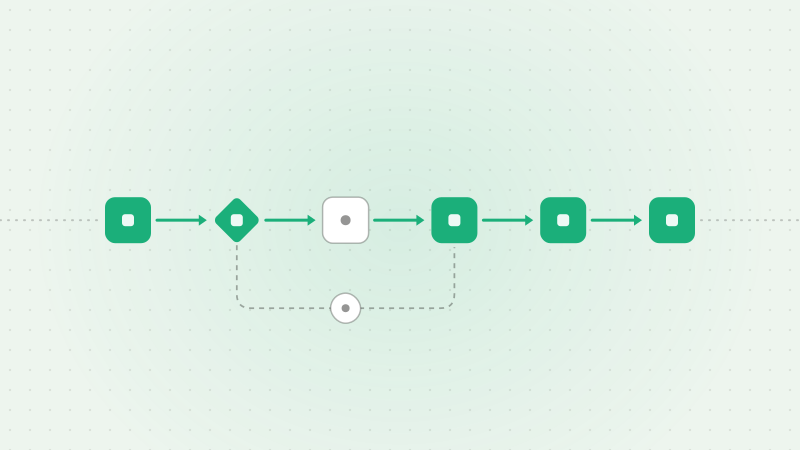
Customers Bank's AI agents close commercial loans in a week
Customers Bank built a multi-agent credit underwriting process with OpenAI engineers working onsite, to take the paperwork out of closing a commercial loan while bankers keep the decisions.
Customers BancorpUnited StatesBankingIn production since 2026
- Scenario
- Commercial loan underwriting and closing
- Business function
- Finance and accounting
- Kind of solution
- Agentic process automation
- Who built it
- Built with a partner (OpenAI)
- Human oversight
- People approve each output
- Organization
- Enterprise
- AI types
- Generative AI, Agentic AI
tl;drPilot commercial loans closed in seven days, and the scaled process cut cycle time 95%.See the results
Customers Bank, a commercial lender in West Reading, Pennsylvania, uses AI agents to handle the paperwork behind a commercial loan. Its engineers built the multi-agent credit underwriting process with OpenAI engineers working beside them at the bank2, 6.
People review every credit memo that the agents help prepare, and they remain accountable for every lending decision9.
In the second quarter of 2026, a pilot used the process to close selected commercial loans in seven days1. A close had typically taken 30 to 60 days1. In October 2026, the bank said it had scaled the process by adding functions and drawing more use3, 4. It said that the cycle time was down 95%4.
Before the deployment
Customers Bank is the banking subsidiary of Customers Bancorp, which held nearly $26 billion in assets when it signed its OpenAI deal in April 20268. It makes commercial and industrial (C&I) and commercial real estate (CRE) loans, besides residential and personal lending8. Much of the work of closing a commercial deal is documents.
A credit memo is the written case for a loan: the analysis of the borrower, the collateral, and the risks that a credit decision rests on. Assembling one is mostly reading and writing. Two figures describe how long a close took:
- Chief executive Sam Sidhu told CNBC in April 2026 that a close took between 30 and 45 days6. That span includes underwriting, document collection, and legal negotiations6.
- The bank’s July 2026 release put the typical span at 30 to 60 days1.
By April 2026, 75% of the bank’s staff used tools powered by OpenAI8. The bank said it had spent the previous year building the operational and governance infrastructure to deploy AI at scale8.
On April 27, 2026, Customers announced a multiyear strategic collaboration with OpenAI that covers three domains: lending, deposits, and payments8, 2. Its stated goal was to become the nation’s leading AI-native regional bank2. For lending, Sidhu set a target of roughly seven days to close a commercial loan6. The target depended on enhancements to be developed over the next six to 12 months6.
What was built
For lending, the bank’s engineers built what Sidhu called a “multi-agentic credit underwriting process”, designed to get commercial loans ready to close in seven days or less2. The bank set out to hand it the loan paperwork so that bankers can focus on structuring the right deal and servicing their clients8. That paperwork is document collection, credit memoranda, legal documents, and post-closing portfolio and collateral monitoring8.
The work is divided as follows:
- Agentic pods: Engineers pair with the subject matter experts who own a piece of work2. Together they shadow the real workflow and build agents in the bank’s own data and systems2. By October 2026, 12 forward-deployed engineers from the bank’s partners worked in pods with its own engineers and experts4.
- OpenAI: Its technical teams work onsite with the bank8. Lending is the domain where the bank leans heavily on OpenAI4.
- Credit memo drafting: Each credit memo is AI-assisted, and people review every one9.
- People: They stay in the loop and are accountable for every decision9. The client relationship stays human, which was a stated aim of the OpenAI collaboration from the start8.
Every AI use case at the bank goes through the same cycle, and the loan process was built that way2. The bank validates each agent and measures its real impact, and only then is the agent absorbed into daily operations2.
The bank chose to build custom capabilities on its own processes, data, and institutional knowledge rather than adopt off-the-shelf AI tools8. Sidhu has said that what it builds is purpose built in house by its employees2. In July 2026, he described the OpenAI arrangement this way: “This is not a typical enterprise licensing relationship with a frontier model provider”2.
Lending was the first of the three domains that the bank took on2, 9. The pods focused on loans in the second quarter of 2026 and on deposits in the third4. By October 2026, the bank worked on all three domains at once4.
“A faster, more predictable close gives a borrower certainty, and it frees our credit analysts and relationship managers to spend less time on handoffs and more time with the client.”
Rollout
The pilot ran on real C&I and CRE loans in the second quarter of 20261, 2. The bank completed it one to two quarters ahead of the schedule it had set1.
Technology and architecture
The following table lists the two parts of the loan process that the bank describes2, 9.
| Layer | What they used | Role | Source |
|---|---|---|---|
| Solution platform | Multi-agentic credit underwriting process | The bank’s own multi-agent process that gets C&I and CRE loans ready to close | 2, 4 |
| Task agent | AI-assisted credit memo drafting | Prepares the credit memo for each loan, which people then review | 9 |
The underwriting process is proprietary, built by the bank’s engineers in its own data and systems2. The memo drafting hands every memo to a person for review9.
Sidhu said that the OpenAI collaboration gives the bank OpenAI’s frontier models8. The agents most likely run on those models.
In April 2026, the bank said that all of its AI capabilities would be deployed within its own secure, enterprise-grade infrastructure8. It said they’d have data governance, access controls, and risk management built in from the start8.
Results
The pilot’s figures describe loans that actually closed1, 2. The following table lists the results for the loan process.
| Metric | Before | After | Scope and timeframe | Reported by |
|---|---|---|---|---|
| Time to close selected commercial loans | 30 to 60 days typically | seven days | Pilot, second quarter of 2026 | Customers Bancorp, pilot1 |
| Time to readiness to close | Industry norms of 30 to 60 days | 85% reduction | C&I and CRE pilot loans, second quarter of 2026 | Customers Bancorp, pilot2 |
| Cycle time of the AI-powered loan underwriting process | Not disclosed | 95% reduction | After scaling, third quarter of 2026 | Customers Bancorp, measured4 |
The metrics and the bank-wide figures mean the following:
- Time to readiness to close: Sidhu gave this figure on the July 2026 earnings call for the C&I and CRE pilot loans2. Readiness to close most likely means the point at which a loan has everything it needs to be signed. That would make it a narrower measure than the full close.
- Cycle time: This is the figure for the process in use after scaling, given in October 20264. Sidhu said it “will allow the same team to handle significantly more loan throughput”4.
- Hours saved, bank-wide: Staff estimated in periodic surveys that AI had saved them 76,000 cumulative hours by September 17, 2026, up nearly 65% from the second quarter3, 5. The figure covers every AI tool at the bank, not the loan process alone.
- Capacity, bank-wide: The bank estimated over $15 million of annualized capacity3. It counts the salary and benefits of positions not backfilled and open positions reduced during the year3.
Lessons learned
Real loans went through the process. Selected C&I and CRE loans closed in seven days in a live pilot, and the bank then scaled the process1, 2, 3. The pilot met the target that Sidhu set in April, ahead of its own schedule6, 1.
The design answers the main risk in a regulated lender. People review every AI-assisted credit memo and stay accountable for every decision, and no agent joins operations before its impact has been measured9, 2.
The seven-day closings covered selected commercial loans, not every deal, and the October update said only that use was increasing1, 3. The word “nationwide” comes from the introduction of a sponsored interview in November 2026, not from Sidhu’s own answers9. Those answers say only that the process was scaled by adding functionality and increasing utilization9.
The figures sit on different baselines. Sidhu told CNBC in April that a commercial loan took 30 to 45 days to close6, and the bank’s July release said 30 to 60 days1. The 85% cut is measured against industry norms, not against the bank’s own history2.
Sidhu didn’t give a figure when an analyst on the July call asked whether the bank could quantify its AI expense savings2. He said the bank was building proprietary software, not plug-ins, and that some larger builds take “quarters, not, you know, weeks”2. The bank’s own footnote calls the bank-wide hours self-reported estimates that were never re-measured or validated3.
Every figure about the loan process is the bank’s own, from its earnings releases, its earnings calls, its April announcement, and a sponsored interview with Sidhu under Commercial Observer’s Partner Insights label1, 2, 3, 4, 8, 9. PYMNTS and Banking Dive repeated those numbers5, 6.
Case study scorecard
- seven days Time to close selected commercial loans in the pilot1
- 85% Cut in time to readiness to close2
- 95% Cut in cycle time of the AI-powered loan underwriting process4
Sources by publication date
- Organization 7
- Press, academic, and regulators 3
Build this solution yourself
Analysis
What you need
To build this solution, you need the following in place:
- Engineers of your own: The bank’s engineers built the agents in its own data and systems2.
- A model provider that works onsite: Forward-deployed partner engineers worked in pods with the bank’s team2, 4.
- Bankers who give time to the pods: The agents were built by shadowing the real work of the people who own the lending workflow2.
- Credit analysts who review every memo: People review every AI-assisted credit memo and stay accountable for every decision9.
Reference architecture
Agentic process automation
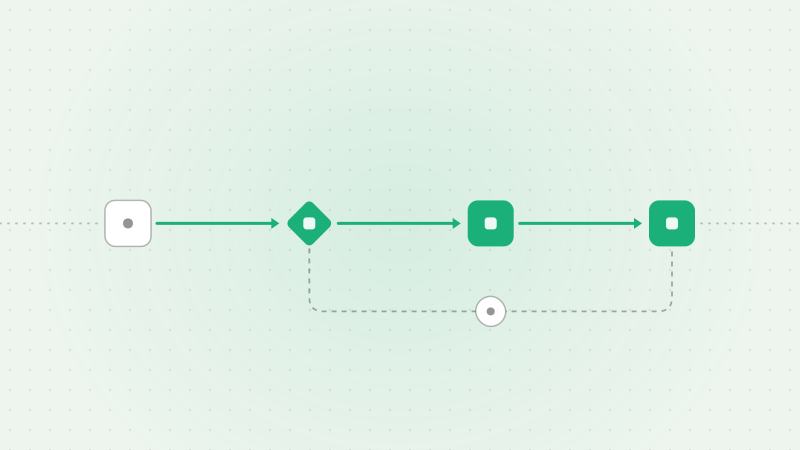
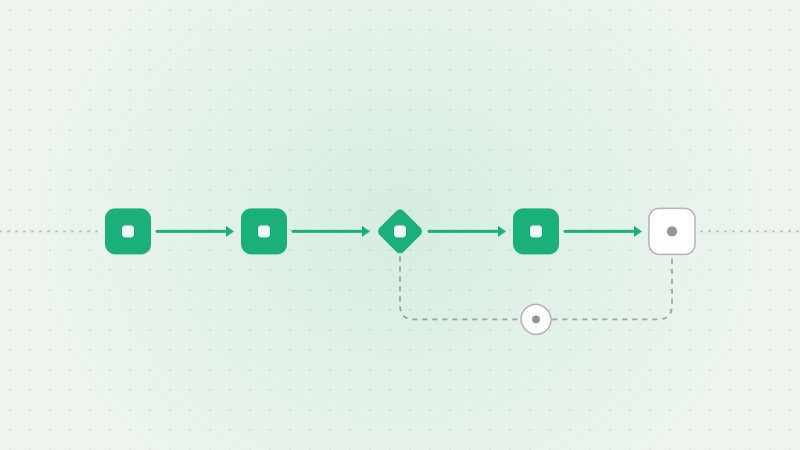
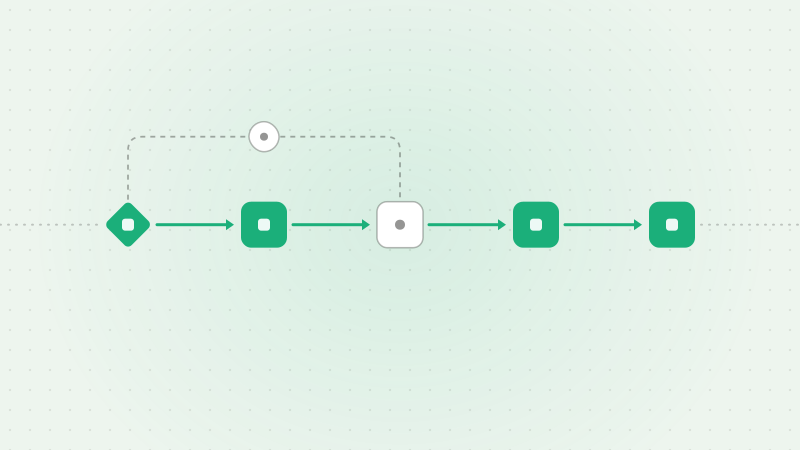
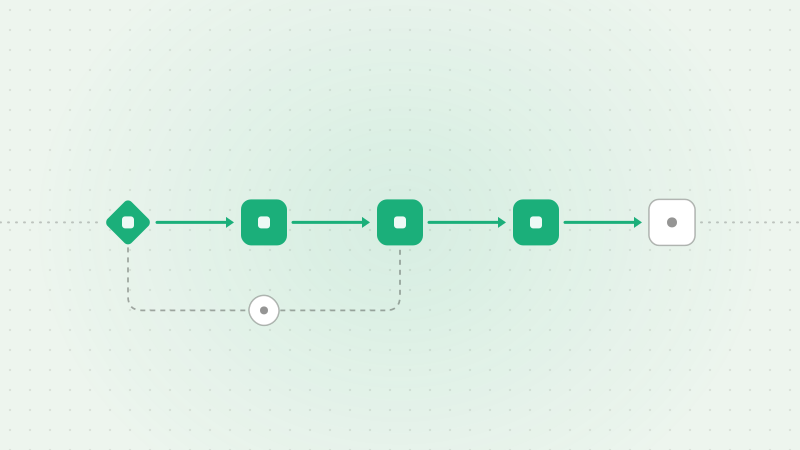
An agentic process automation solution gives the routine steps of a business process to software agents that carry each case across the business systems. A task agent reads each case, gathers what's missing, and takes or prepares the next step in the business systems, within limits that rules enforce. People set the limits, approve the outcomes that need approval, take the cases outside the agent's authority, and monitor the rest.
- Business systems
- Agent platform (documented in this case study)
- Orchestrator or planner
- Task agent (documented in this case study)
- Language model
- Checking agent
- Knowledge and context
- Shared data layer
- Tools and connectors
- Pricing and scoring models
- Rules and limits
- Fixed workflows
- Handoff to staff
- Review queue or workbench
- Audit trail
- Monitoring
A check mark shows a building block that this case study's sources document.
Open the reference architectureOthers who built it
- BMO launched its first commercial credit agent, Aura, in 2026 to draft the credit assessments that underwriters had written by hand7. Underwriters review the drafts and keep the credit decision, and BMO aims to cut underwriting time by roughly 50%7.
- DBS expanded agentic AI tools that draft review-ready credit memos to roughly 1,500 relationship managers and credit risk managers in August 202610. The expansion followed a pilot with 150 staff members10.
In the library
- Lemonade's AI claims bot automates more than half of claims Lemonade
- AI agents spread ML techniques across Meta's ads models Meta
- AI agents handle freight quotes and orders at C.H. Robinson C.H. Robinson
- Walmart's AI negotiates deals with tail-end suppliers Walmart
- Mars cuts brand campaign creation from months to weeks Mars
- Saudia Cargo answers emailed rate requests with AI agents Saudia Cargo
Cite this case study
Enterprise AI Case Studies. "Customers Bank's AI agents close commercial loans in a week." Updated Nov 19, 2026. https://case-studies.ai/case-studies/process-automation/PA-013-commercial-loan-closing-agents-customers-bank/
@misc{csai-pa-013,
  author = {{Enterprise AI Case Studies}},
  title = {{Customers Bank's AI agents close commercial loans in a week}},
  year = {2026},
  note = {Updated 2026-11-19},
  url = {https://case-studies.ai/case-studies/process-automation/PA-013-commercial-loan-closing-agents-customers-bank/}
}Sources
The following reporting, and every passage quoted from it, belongs to its publisher, not to this site. Sources and ownership
- Source 1:
Customers Bancorp Reports Results for Second Quarter 2026
Supporting excerpts (5)
successfully closing selected commercial loans in seven days, down from 30 to 60 days typically
milestone one to two quarters ahead of schedule
seven day loan closing agentic tool
we piloted AI-powered KYC screening and OFAC false-positive clearing
we completed a pilot of our new AI-powered loan closing process
- Source 2:
Customers Bancorp, Inc. (CUBI) Q2 2026 Earnings Call Transcript
Supporting excerpts (24)
We create AI agentic pods by pairing our engineers with subject matter experts that own the work, shadow the real workflow, and build agents in our own data and systems.
And we then validate and measure the real impact first, and only then does it get absorbed into the operations of the bank.
it is embedding OpenAI engineers side by side with our team building custom capabilities bespoke for our processes.
Our engineers have architected a multi-agentic credit underwriting process that can allow us to be ready to close commercial loans in 7 days or less versus industry norms of 30 to 60 days.
successfully closed C&I and CRE loans
that is an 85% reduction in readiness to close
Everything I have walked you through here is proprietary and purpose built in house by Customers Bank, employees.
our team has now saved at least 46 thousand hours through AI enabled workflow automation, up about 65% from last quarter and equivalent to 24 FTEs
100% of our team members are now AI licensed, up from 75% last quarter
I am personally leading a 40-person and growing team today representing about 5% of our workforce focused on AI workflow transformation.
we have set a goal of getting to a low-forties run-rate efficiency ratio in 2027, versus the 50% or so we are at today
are you able to quantify at all how much in expense savings you have sort of recognized already from these AI efforts?
some of the larger lifts actually take quarters, not, you know, weeks
is really only about 6 months old or so
We believe we were the first bank to publish an MCP or model context protocol last year for our commercial payments customers.
This is not a typical enterprise licensing relationship with a frontier model provider.
Let me start by giving you an update on the first top down initiative, loans.
Starting with the highest impact opportunities.
Our top down road map spans 3 domains, lending, deposits, and payments.
a goal of becoming the nation's leading AI-native regional bank
They have built more than 600 agents and custom GPTs
these are not software plug ins
we are actually building proprietary software
our focus is decoupling our expense base from our revenue growth
- Source 3:
Customers Bancorp Reports Results for Third Quarter 2026
Supporting excerpts (7)
we continued to scale our AI-powered loan process, adding additional functionality and increasing utilization
Includes custom GPTs and other similar AI agent products across major platforms used in the last 6 months.
Survey data as of September 17, 2026.
Self-reported estimates from periodic surveys of employees using AI tools, captured at time of submission and not subsequently re-measured or validated.
we estimate we have unlocked over $15 million of annualized capacity
Represents salary and benefits savings from positions not backfilled and open positions reduced YTD.
Our team doubled the number of agents
- Source 4:
Customers Bancorp (CUBI) Q3 2026 Earnings Call Transcript
Supporting excerpts (9)
In lending, we scaled our AI powered loan underwriting process adding functionality and increasing utilization. The cycle time for this process is down 95%.
This will allow the same team to handle significantly more loan throughput.
We have 12 and growing forward-deployed engineers from our partners working in pods alongside our in house engineers and subject matter experts.
we now have over 60 people focused on AI transformation at the bank.
Cumulative estimated hours saved have now grown to 76 thousand.
In the last 6 months, revenue producers grew 6% and accounted for about 60% of the new positions we filled, while total headcount drifted lower.
whereas they were sort of a focus in the second quarter on the loan and third quarter on deposits.
So loans where we are really leaning in heavily with OpenAI
sort of working on each of them concurrently
- Source 5:
Customers Bank Uses AI to Close Commercial Loans in 7 Days
Supporting excerpts (6)
with more than $27 billion in assets
It also doubled its deployed AI agents in the quarter, a count that includes custom GPTs and similar tools.
Customers Bank employees said in a survey that they saved an estimated 76,000 cumulative hours, up nearly 65% from the second quarter.
Full payoffs are still rare.
The June 2026 survey covered 60 senior technology executives
TD Bank Group, the Canadian lender, delivered about 195 million Canadian dollars (about $141 million) in AI value in the first three quarters of its fiscal year
- Source 6:
Customers Bank expands OpenAI partnership to automate commercial lending, deposits and payments
Supporting excerpts (14)
Customers began its collaboration with OpenAI in 2023, deploying ChatGPT Enterprise.
including underwriting, document collection and legal negotiations
down from between 30 and 45 days
By letting AI handle lending-related tasks such as document collection, credit memoranda preparation, legal documents, and portfolio and collateral monitoring
bankers can focus on structuring the right deal and servicing their clients
they can work around the clock
technical teams are engaging with the bank directly onsite to build custom AI capabilities
saving about 28,000 hours of work
West Reading, Pennsylvania-based lender
our bankers will spend more of their time on the work that creates value for clients and our shareholders
to be developed over the next six to 12 months
to roughly seven days
Customers Bancorp CEO Sam Sidhu told CNBC
AI has written roughly half of Customers’ software code
- Source 7:
Aura: Helping power BMO's goal of 50% faster underwriting by 2028
Supporting excerpts (3)
The first agent for this transformation was launched in 2026 and focuses on automating the generation of commercial credit assessments, which previously underwriters created manually.
underwriters review, validate and refine the generated commentary, remaining accountable for analysis, due diligence and credit decisions
reduce our credit underwriting time by roughly 50%
- Source 8:
Supporting excerpts (15)
nearly $26 billion in assets
today announced a multiyear strategic collaboration with OpenAI to deploy artificial intelligence
This is an expansion of the relationship, which began in 2023 when Customers Bank was an early adopter to deploy ChatGPT Enterprise.
We have spent the last year building the operational and governance infrastructure to deploy AI at scale.
Today, 75% of our team members use tools powered by OpenAI.
By the end of 2026, our bankers will spend more of their time on the work that creates value for clients and our shareholders.
This collaboration involves direct onsite engagement with OpenAI’s technical teams and resources.
Rather than adopting off-the-shelf AI tools, the deployment allows Customers Bank to work with OpenAI to build custom AI capabilities on the Bank’s own processes, data, and institutional knowledge
keeping customer relationships fully human
All AI capabilities will be deployed within Customers Bank’s secure, enterprise-grade infrastructure, and designed with strict data governance, access controls, and risk management built in from day one.
Lending: AI handling tasks like document collection, credit memoranda preparation, legal documents, and post-closing portfolio and collateral monitoring, so bankers can focus on structuring the right deal and servicing their clients.
traditional lines such as C&I, commercial real estate, and residential and personal lending
Leveraging OpenAI’s advanced models
This strategic collaboration with OpenAI gives us the frontier models, engineering expertise, and ability to co-create a roadmap toward becoming an AI-native bank.
President and CEO of Customers Bancorp
- Source 9:
Executive Spotlight: Sam Sidhu of Customers Bank
Supporting excerpts (7)
Presented By: Partner Insights
sat down with Commercial Observer to discuss
the nationwide rollout of its AI-powered credit underwriting system
lending is where we began that journey
in the third quarter, scaled the process by adding functionality and increasing utilization
A faster, more predictable close gives a borrower certainty, and it frees our credit analysts and relationship managers to spend less time on handoffs and more time with the client.
Humans stay in the loop, are accountable for every decision, and review every AI-assisted credit memo.
- Source 10:
DBS Rolls Out Agentic AI Tools to 1,500 Bankers, Aiming to Significantly Cut Credit Assessment Time
Supporting excerpts (3)
has expanded the use of specialised agentic artificial intelligence tools to support roughly 1,500 relationship managers and credit risk managers worldwide in handling corporate credit assessments
follows a successful pilot involving 150 staff members
generate an initial, review-ready draft of a credit memo







Comments
Start the conversation.
Invited members of the library comment here. Sign in to join the conversation.