
Microsoft Treasury lifts payment matching to 90% with AI
Microsoft Treasury pulled its collections work into SAP and Dynamics 365, then added AI agents that match payments to invoices, predict late payments and disputes, and prepare each case manager's day.
MicrosoftUnited StatesEnterprise softwareIn production
- Scale
- over 1,000 collectors
- Scenario
- Accounts receivable collections and cash application
- Business function
- Finance and accounting
- Kind of solution
- Agentic process automation
- Who built it
- Built with a partner (Accenture)
- Human oversight
- Acts under watch
- Time to production
- 3 months
- Organization
- Enterprise
- AI types
- Generative AI, Agentic AI, Machine learning
- Users
- over 1,000
- People served
- 400K
tl;drPayment matching accuracy rose from 40% to 90%, and 98% of payments are applied within 48 hours.See the results
Microsoft’s Global Collection team, part of the company’s Treasury division, uses AI agents to match payments to invoices, predict late payments and disputes, and prepare each case manager’s day1. The agents work from one SAP and Microsoft Dynamics 365 environment that holds customer, invoice and payment data1.
The work is part of the Microsoft Integrated Collections Solution, or MICS, a two-year project with Microsoft’s engineering teams and Accenture11. Its clearest result is in cash application, the step that matches a payment to the invoices it settles.
In results published in June 2026, payment matching accuracy rose from 40% to 90% after AI was applied to the step1. The team could then apply 98% of payments within 48 hours, and automatic cash applications saw 2X growth1.
Before the deployment
Treasury collects about $300 billion a year from Microsoft’s customers and works with more than 100 banking partners2. Collections alone has over 1,000 collectors around the world1.
The credit and collections setup had grown on multiple tools and systems, some of them third-party, with fractured processes that relied heavily on manual work11. It had the following problems:
- No single customer view: Customer master data lived in a different system for each line of business11. Collectors visited several systems to see a customer’s invoices and what another team had discussed with the customer1.
- Hard-coded strategies: Over 160 collections strategies were hard coded across the systems, and supporting them took 800+ correspondence templates11.
- Manual email and approvals: Millions of customer emails a year were categorized, tracked, assigned and answered by hand. Refunds, write-offs, holds and releases went through manual workarounds and offline approvals11.
- Lost preparation time: Case managers worked out the right contact, the issues a customer was likely to challenge and the next route for an exception, because the answers were spread across systems or buried in handoffs1.
- Manual cash application: Posting payments to the correct customer account took a lot of manual work11. Payment matching accuracy stood at 40% before the team applied AI to it1.
“We didn’t have a single view of how much a customer owed us,” said Kathy Brustad, a director in the Global Treasury and Financial Services division1.
Treasury aimed its AI work at operations where manual effort slowed teams down, such as collections2. Those processes had proven business problems and repeatable steps, such as case review, invoice follow-up and exception routing2.
What was built
The solution is a human-led, AI agent-assisted support system for case managers1. Microsoft files the collections agents under its “human-led, agent-operated” pattern, in which people set direction and agents carry out business processes, checking in as needed3.
The work is divided as follows:
- Payment matching: Matches incoming payments to invoices for automatic cash application. Payment posting runs through smart cash application logic1, 11.
- Prediction models: Predict late payments and flag the invoices that are likely to be disputed1, 11.
- Collections agents: Categorize incoming emails, turn them into cases, and summarize and route each case to the right collections manager, with drafted responses1, 11. Each morning, an agent orders every case manager’s workload by urgency and past client behavior1.
- Assistants: Copilot sits in the case managers’ daily workflow, with inline knowledge suggestions, call summaries, drafted replies and help with payment research1, 11. Collection Intelligence, a reporting assistant in Teams, compiles a “One Customer View” of a customer’s credit and payment standing before a customer review10.
- Case managers: Keep the customer relationship and resolve the exceptions. When work arrives prioritized and prepped, they spend less time chasing context1.
Microsoft’s June 2026 list also has the agent answer customer inquiries automatically1. In Microsoft’s overview of its collections tools, a separate Collections Email Agent does that work9.
“The hard part was reimagining the collection experience with AI front and center, and bringing the underlying infrastructure up to speed to get it there.”
Rollout
Microsoft’s Finance and Finance IT teams built the custom AI solutions with Microsoft tools, tailored to the company’s own systems and data9. The team built the solution in the following order:
- The team consolidated its dispersed tools and systems into an SAP and Dynamics 365 environment, a single source of truth for customer, invoice and payment data1. Customer master data was consolidated and standardized across the lines of business11.
- The team layered the IQ intelligence platform on that base to add semantic understanding and business context1.
- The team simplified worklists, collection strategies and correspondence templates into consistent global practices1, 11. Routine communications, payment reminders and overdue notices became automated1, 11.
- The team applied AI to payment matching, customer response drafts and case routing1.
- The team embedded Copilot in the case managers’ daily workflow1.
A change management work stream with role-based training on real, day-to-day scenarios ran alongside the rollout1. Finance as a whole backed the change with leadership support, volunteer communities, training programs and safer experimentation2. The Collection Intelligence assistant launched in 3 months10.
In September 2025, Treasury Today named MICS a Highly Commended Winner in the Harnessing the Power of Technology category of its Adam Smith Awards11. In September 2026, Treasury was evaluating and building agents to follow up the invoices of smaller customers2. Those customers often get only a standard dunning process, because the team lacks the capacity to chase them directly2. That solution wasn’t yet in production2.
Technology and architecture
The solution runs on Microsoft’s own stack, with SAP as a second system of record1, 3. It combines traditional machine learning with generative AI from Copilot and Azure OpenAI11. Microsoft’s overview describes the Integrated Collection Solution as created with D365 and Fabric9.
In the IQ intelligence platform, Work IQ handles unstructured data, Fabric IQ operates over structured data, and Foundry IQ provides the knowledge-grounding layer4. Together the three layers form a shared business ontology for agents4.
The following table lists the components of the solution.
| Layer | What they used | Role | Source |
|---|---|---|---|
| Solution platform | Microsoft Integrated Collections Solution (MICS) | The collections system across master data, communications, collections and payment posting, including AI matching of payments to invoices | 1, 9, 11 |
| Task agent | Collections AI agents | Categorize and route emails and cases, summarize cases and prioritize workloads | 1, 3, 11 |
| Predictive model | Late payment and dispute prediction | Predicts late payments and flags invoices likely to be disputed | 1, 3, 11 |
| Language model | Copilot | Knowledge suggestions, call summaries, drafted replies and payment research help for case managers | 1, 11 |
| Language model | Azure OpenAI | Generative AI natively integrated in the Dynamics 365 environment | 11 |
| Workplace application | Collection Intelligence | One Customer View report in Teams, with links into D365 | 10 |
| Knowledge graph | IQ intelligence platform | Semantic understanding and business context over the consolidated data, from layers that form a shared business ontology | 1, 4 |
| Review workbench | Collections worklists | Simplified worklists where each case manager’s prioritized cases arrive | 1, 11 |
| Business or operational system | SAP | Customer, invoice and payment data in the consolidated environment | 1, 3 |
| Business or operational system | Microsoft Dynamics 365 | The other half of that environment, with the AI integrated in it | 1, 11 |
Data inputs
The solution uses the following data:
- Customer, invoice and payment records: SAP and Dynamics 365 hold them as one source of truth, which gives the agents their context1.
- Incoming payments: The matching step matches each payment to invoices and posts it1, 11.
- Customer emails: The agents turn them into cases and route them1, 11.
- Customer calls: Copilot summarizes the case managers’ calls1.
- Customer signals: Collection Intelligence compiles aging, disputes, holds and flags, financing exposure and pipeline context into the One Customer View. These signals used to take hours of manual preparation before a customer review10.
Integrations
The solution connects to the following systems:
- SAP: Holds customer, invoice and payment data in the consolidated environment that the agents are connected to1, 3.
- Dynamics 365: The generative AI is natively integrated in it, and Collection Intelligence links into it10, 11.
- Microsoft Teams: Collection Intelligence runs as a reporting assistant in Teams and delivers its report there10.
- Master data look-up: An automated API look-up consolidates customer master data across the lines of business and identifies duplicates11.
How one payment likely flows
HighRadius, a cash application vendor, described its AI product for the job in 20188. The product took the following steps:
- It extracted remittance details across formats8.
- It linked payments and remittance, even when the remittance data was missing or incorrect8.
- It matched the linked payments to open receivables, with a confidence score for each prediction8.
Microsoft’s smart cash application logic most likely works along the same lines, so that a confident match posts on its own and the rest go to a case manager.
The matching step is connected to SAP and Dynamics 365 and matches payments to invoices automatically1, 3. Copilot helps staff research a customer’s payment11.
Results
The collections results were published in June 2026, and a case-handling figure followed in August 20261, 3. The following table lists them.
| Metric | Before | After | Scope and timeframe | Reported by |
|---|---|---|---|---|
| Payment matching accuracy | 40% | 90% | Before and after AI was applied to payment matching; reported June 2026 | Microsoft, measured1 |
| Payments applied within 48 hours | Not disclosed | 98% | After workflows were standardized and automated | Microsoft, measured1 |
| Automatic cash applications | Not disclosed | 2X growth | After the system reached case managers | Microsoft, measured1 |
| Call preparation time | Not disclosed | 40% reduction | Collections case managers, after deployment | Microsoft, measured1 |
| Case-handling time | Not disclosed | 22% cut | The AI solution in Finance collections, reported August 2026 | Microsoft, measured3 |
| Customer inquiry resolution time | Not disclosed | 2.5X faster | Collections teams, after deployment | Microsoft, measured1 |
The metrics measure the following:
- Payment matching accuracy: Compares the matching step before and after the team applied AI to it1.
- Payments applied within 48 hours: Measures speed. It’s the share of payments that the team could apply within 48 hours once its workflows were standardized and automated1.
- Automatic cash applications: Measures the growth after the system was deployed to case managers1.
- Inquiry handling time: Fell by up to 60%, through inline suggestions, summarized calls and drafted replies1.
Lessons learned
Fixing the data and the workflows before adding AI is the first lesson that Microsoft draws1, 11. In Microsoft’s view, AI delivers the most value on standardized processes and a unified data foundation rather than on disconnected systems and ad hoc handoffs1. Brustad’s advice is to know the process “very, very well” and to design the agent-enabled process around its bottlenecks, instead of injecting an agent into the existing one1.
The same order is the deployment’s main limit. The AI depended on the consolidation into SAP and Dynamics 365 within MICS, so the matching gains can’t be separated from the cleanup that came before them1, 11. In the same way, the 33% drop in unit cost per dollar collected covers all of credit and cash collections over years of growth and several tools, so it can’t be credited to this system alone9.
Getting people to work differently was harder than building the tools. “Creating the tools is actually not that difficult. But getting people to establish a new habit and change how they work is a lot more difficult,” Brustad said, and she called AI adoption the hardest part of the journey2. The collections team found that outcomes improved when it tested early and kept frontline users involved1.
Treasury teams build trust in the AI’s output on purpose. They use the right data sources, show where the numbers came from and explain key reasoning steps, because the processes are tied to controls, audit evidence and regulatory requirements2.
The figures are Microsoft’s own, including the Treasury Today awards write-up, which quotes Microsoft’s Davide Musillo1, 9, 10, 11. Microsoft calls the June 2026 metrics directional signals from internal data, which might change as systems, processes and behaviors evolve1. Microsoft also sells most of the stack, and Inside Track is part of its Customer Zero program, which tests products in-house and passes the lessons on to customers3. The collections post ends with an offer of a Dynamics 365 free trial1.
The time-saved figures come at different scopes, from 12K hours a year for Collection Intelligence and 36K hours for the separate Collections Email Agent to about 84,000 hours for MICS in September 20259, 10, 11. In June 2026, all agents and models in collections unlocked hundreds of thousands of hours a year1. Preparation time fell 40% for calls in one account and from 1-2 hours to minutes before customer reviews in another1, 10.
Case study scorecard
- 40% to 90% payment matching accuracy1
- 98% of payments applied within 48 hours1
- 2X growth in automatic cash applications1
- 40% reduction in call preparation time1
Sources by publication date
- Organization 6
- Vendors and partners 3
- Press, academic, and regulators 2
- 4 undated
Build this solution yourself
Analysis
What you need
To build this solution, you need the following in place:
- One clean record of customers, invoices and payments: Microsoft brought collections into SAP and Dynamics 365, merged duplicate customer master data and cut back the hard-coded strategies and templates before it applied AI to matching1, 11.
- Platforms that you control: The generative AI is natively integrated in Dynamics 365, and Microsoft’s own Finance IT teams built the agents with its own tools9, 11.
- Time for the consolidation: The cleanup ran within MICS, a two-year project with Microsoft’s engineering teams and Accenture11. If your receivables run across several ERPs, the consolidation is most likely the bigger project.
Reference architecture
Agentic process automation
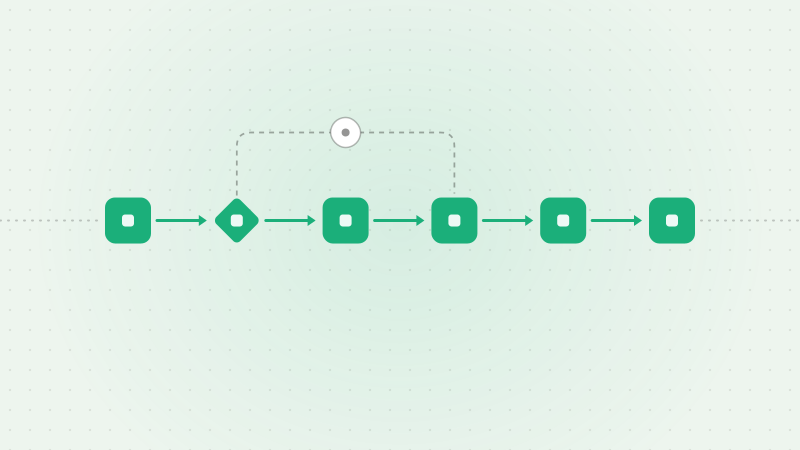
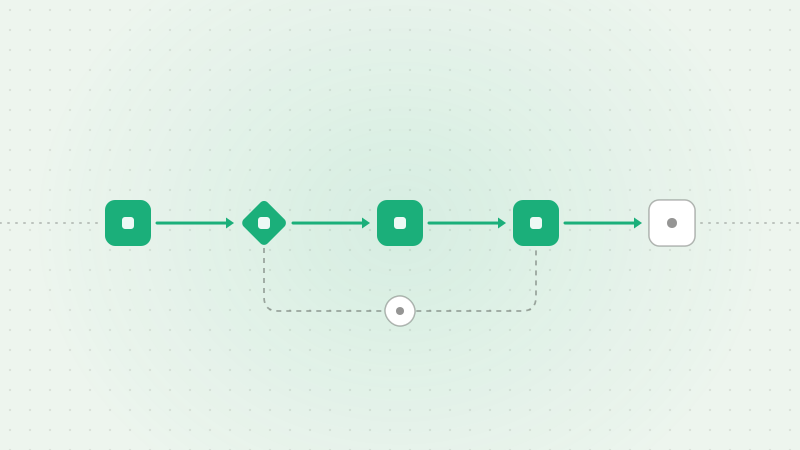
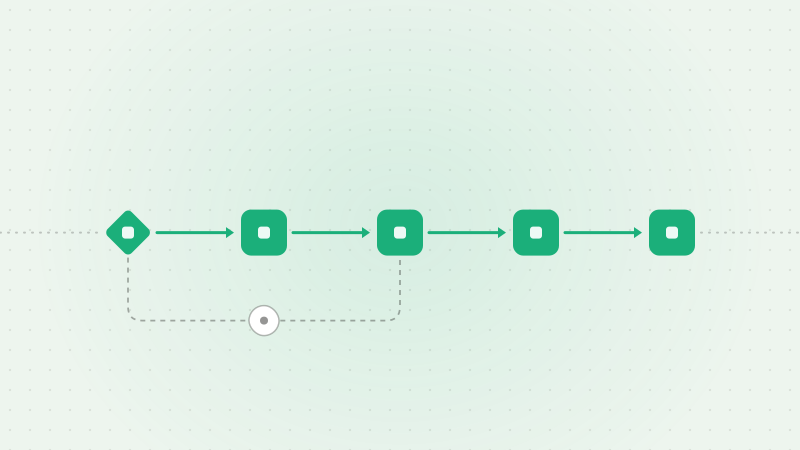
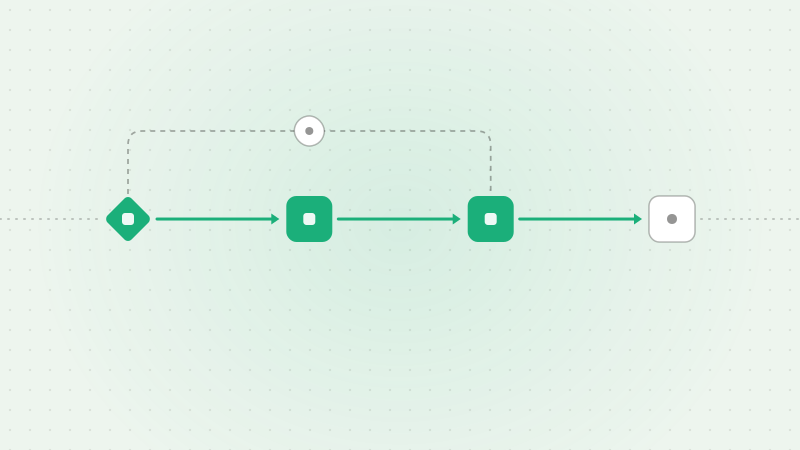
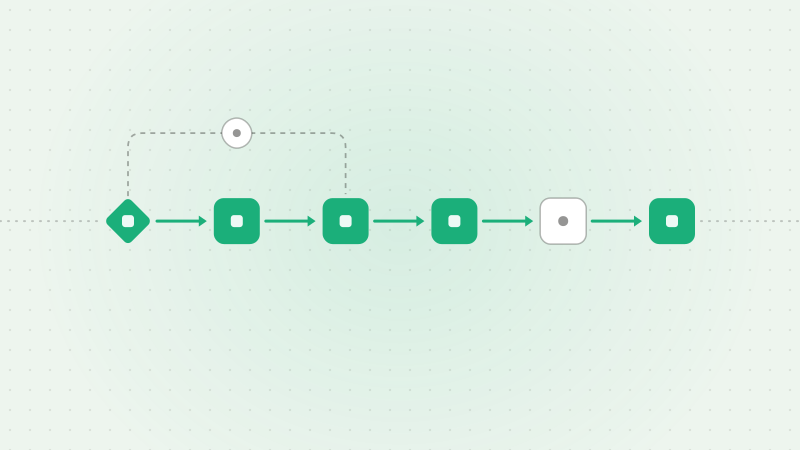
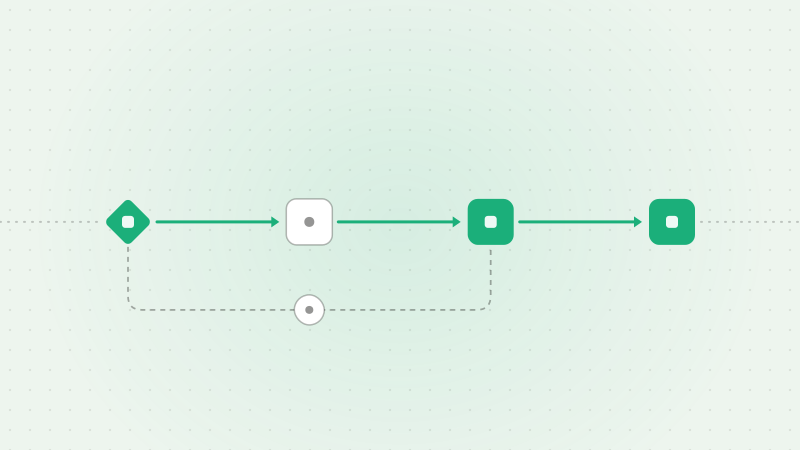
An agentic process automation solution gives the routine steps of a business process to software agents that carry each case across the business systems. A task agent reads each case, gathers what's missing, and takes or prepares the next step in the business systems, within limits that rules enforce. People set the limits, approve the outcomes that need approval, take the cases outside the agent's authority, and monitor the rest.
- Business systems (documented in this case study)
- Agent platform (documented in this case study)
- Orchestrator or planner
- Task agent (documented in this case study)
- Language model (documented in this case study)
- Checking agent
- Knowledge and context
- Shared data layer
- Tools and connectors
- Pricing and scoring models (documented in this case study)
- Rules and limits
- Fixed workflows
- Handoff to staff
- Review queue or workbench (documented in this case study)
- Audit trail
- Monitoring
A check mark shows a building block that this case study's sources document.
Open the reference architectureOthers who built it
- OTR Solutions, a freight factoring company, reached 76% straight-through cash application and cut its cash application cycle time from a week or more to under 24 hours with HighRadius6.
- Red Bull reached 96% automated cash application with HighRadius, alongside a 56% gain in team productivity7.
- Hewlett Packard Enterprise built an RPA workflow for cash application that used fuzzy logic to identify payment data and machine learning to avoid repeating earlier posting errors5.
In the library
- Lemonade's AI claims bot automates more than half of claims Lemonade
- AI agents spread ML techniques across Meta's ads models Meta
- AI agents handle freight quotes and orders at C.H. Robinson C.H. Robinson
- Walmart's AI negotiates deals with tail-end suppliers Walmart
- Mars cuts brand campaign creation from months to weeks Mars
- Saudia Cargo answers emailed rate requests with AI agents Saudia Cargo
Cite this case study
Enterprise AI Case Studies. "Microsoft Treasury lifts payment matching to 90% with AI." Updated Nov 19, 2026. https://case-studies.ai/case-studies/process-automation/PA-009-cash-application-automation/
@misc{csai-pa-009,
  author = {{Enterprise AI Case Studies}},
  title = {{Microsoft Treasury lifts payment matching to 90% with AI}},
  year = {2026},
  note = {Updated 2026-11-19},
  url = {https://case-studies.ai/case-studies/process-automation/PA-009-cash-application-automation/}
}Sources
The following reporting, and every passage quoted from it, belongs to its publisher, not to this site. Sources and ownership
- Source 1:
Streamlining finance cash collection at Microsoft with AI
Supporting excerpts (46)
Our Global Collection team in the Microsoft Treasury division makes sure payments are seamlessly executed in our fast-moving global enterprise environment.
our case managers were often losing valuable time figuring out things like who the right contact was for a given customer, which issues were likely to be challenged by a customer, and where an exception should be routed next. This information was spread across systems or buried in handoffs.
our team built a human-led, AI agent-assisted support system to reduce preparation time and streamline their processes.
Building the AI assistance wasn't the hard part
says Kathy Brustad, a director in the Global Treasury and Financial Services division at Microsoft
The hard part was reimagining the collection experience with AI front and center, and bringing the underlying infrastructure up to speed to get it there.
We have over 1,000 collectors around the world who perform collections for Microsoft.
They had multiple systems they had to go to in order to find out things like the totality of the customer's invoice and what conversations a different team had with the customer.
We didn't have a single view of how much a customer owed us.
Predicting late payments and possible customer disputes
Summarizing customer case interactions for use by case managers
Routing customer emails to the right collections manager faster and with greater precision
Automatically matching payments to invoices
Automatically responding to customer inquiries
We started by consolidating these dispersed tools and systems into an SAP and Microsoft Dynamics 365 environment, creating a single source of truth for all relevant customer, invoice, and payment data.
On that foundation, we layered on Microsoft's IQ intelligence platform to infuse semantic understanding and business context.
That standardized our workflows by simplifying templates and worklists to reduce complexity and put consistent global practices into place. Routine communications became fully automated.
We then applied AI to improve payment matching accuracy from 40% to 90%, generate customer response drafts, and intelligently route cases to reduce time-consuming back-and-forth.
Copilot assistance was embedded directly into the daily workflow of our case managers to reduce administrative load by providing inline knowledge suggestions, summarizing calls, and automatically drafting replies.
With these standardized automated workflows, we could apply 98% of payments within 48 hours.
We have various agents and models deployed to assist our human agents with all the activities they have to do
the team introduced a change management work stream program and role-based training focused on real, day-to-day scenarios alongside the rollout.
Each morning, the agent prioritized each case manager's workload according to urgency and past client behavior
40% reduction in call preparation time
2X growth in automatic cash applications
2.5X acceleration of customer inquiry resolution time
Hundreds of thousands of hours unlocked annually
Our team tracked dollars collected through collections and hours worked to create productivity metrics.
When we tested early and included frontline users throughout the process, outcomes improved.
The biggest takeaway is to know your own process very, very well.
You need to understand where all the bottlenecks and pain points are.
Start from there to design the new agent-enabled process instead of saying, 'I'm going to just inject the agent into my existing process.'
Fix fragmented workflows before adding intelligence
All metrics cited are based on Microsoft internal data gathered during the writing of this article. They're best read as directional signals from that period, and they may change as systems, processes, and behaviors evolve.
run it in a different way
moving from manual, fragmented preparation toward workflows where prioritization, context gathering, and routing were increasingly supported within the system.
We reduced repetitive communications using automatically drafted responses and automated statements.
After deploying this system to our case managers, we saw measurable improvements in both productivity and speed
Operationally, the team also saw up to 60% reduction in inquiry handling time through inline suggestions, summarized calls, and automatically drafted replies.
we emphasized observability in our evaluation approach
When work arrives prioritized and prepped, case managers spend less time chasing context and more time resolving exceptions.
AI delivers the most value when it's layered on top of standardized processes and a unified data foundation rather than disconnected systems and ad hoc handoffs.
Copilot-style support works best when it shows up directly in prioritization, preparation, routing, and drafting to reduce friction without changing how people work.
Trust comes from clear ownership, standardized workflows, quality data, and ongoing human oversight.
saving hundreds of thousands of hours that we spent on manually tracking things before
Start a Dynamics 365 free trial.
- Source 2:
Prioritizing AI transformation opportunities in Microsoft Finance
Supporting excerpts (17)
The group works with more than 100 banking partners, collects about $300 billion from our customers annually, and has about $100 billion in assets under management at any given time.
Treasury also works with an outsourcing partner that employs roughly 1,000 people who support business process activities.
Treasury's AI work focused on operations where manual effort slowed teams down, especially in areas like collections and risk management.
Those processes featured proven business problems and repeatable steps, including case review, information gathering, invoice follow-up, exception routing, and customer communications.
some teams are evaluating more autonomous workflows in which agents can gather information, conduct research, and generate recommendations while humans retain final decision authorities.
with credit-check exception work, AI can gather data, evaluate the case, and send a detailed report to a reviewer. But the human still makes the final decision.
Now, Treasury is evaluating and building AI agents that can identify those invoices and follow up. This solution is not yet in production
Smaller customers and their invoices may be subject to a standard dunning process
Treasury teams focus on using the right data sources, showing where the numbers came from, and explaining key reasoning steps so people can understand the AI's outputs.
That work matters in processes tied to controls, audit evidence, and regulatory requirements.
AI adoption turns out to be the hardest part of this journey, versus just building the technology.
Creating the tools is actually not that difficult. But getting people to establish a new habit and change how they work is a lot more difficult.
Always start with what your process looks like first, not what technology you want to use.
Larger accounts often receive more personal attention.
the team did not always have the resources to follow up directly.
Brustad mentioned Finance invested in leadership support, volunteer communities, training programs, and safer experimentation
Begin the work early because changing habits can be harder than building the technology.
- Source 3:
From AI ambition to enterprise execution: Our Customer Zero journey
Supporting excerpts (10)
Human-led, agent-operated
Connected to SAP and Dynamics 365, agents can predict late payments, identify potential customer disputes, categorize and summarize cases, route inquiries to the right owner
the AI solution has cut case-handling time by 22 percent
reduced customer inquiry-handling times by as much as 60 percent
Collection teams are resolving inquiries up to 2.5 times faster
contributing to a 48 percent reduction in time from quote to deal close
provide AI-generated recommendations that help teams focus on the highest-priority work
Humans set direction and agents execute business processes and workflows, checking in as needed
In Microsoft Finance, AI agents are helping collections teams move faster and make better decisions.
As Customer Zero, we test our technology, products, and approaches in-house first, then use the lessons learned to help our customers get the most out of technology.
- Source 4:
Intelligence on tap: How Work IQ enables AI and agents at Microsoft
Supporting excerpts (4)
Work IQ handles unstructured data
Fabric IQ operates over structured data
Foundry IQ provides the knowledge-grounding layer
Work IQ combines with the Fabric IQ and Foundry IQ intelligence layers to create a shared business ontology
- Source 5:
9 RPA use cases in finance and accounting
Supporting excerpts (4)
Applying the right payments to the right accounts and invoices is a process that includes multiple ways to introduce errors.
The HPE cash application team processed a large volume of payments from customers in more than 50 countries, Singh said.
HPE faced challenges that included varying bank statement formats, multiple languages and missing information that compounded the work of accounts receivable analysts
his team developed an RPA workflow that used fuzzy logic to improve data identification and machine learning to avoid repeating previous posting errors.
- Source 6:
OTR Solutions: 85% boost in cash app with daily ACH and checks automation
Supporting excerpts (3)
OTR Solutions is a financial technology and factoring company dedicated to the transportation and logistics industry.
76% Straight-Through Cash Application
< 24 Hours Cash Application Cycle Time (reduced from a week or more)
- Source 7:
Supporting excerpts (1)
96% Automated Cash App With 56% Team Productivity
- Source 8:
Automating cash application with artificial intelligence
Supporting excerpts (4)
Extract remittance details across formats
Link payments and remittance, even in cases of missing/incorrect remittance data
Match linked payments to open A/R data
Confidence score for each prediction
- Source 9:
Microsoft Frontier Finance AI solution overviews: Credit & Cash Collection
Supporting excerpts (7)
Annual collections scaled from $200B to over $350B across 400K customers, unit cost per dollar collected dropped 33%, and we resolved 260K customer inquiries within SLA despite higher volumes.
Collection Solution, created with D365 and Fabric, replaces hours of manual preparation with a real-time snapshot of a customer’s trade receivable position and key signals, late payment and dispute prediction, case summarization, intelligent case routing, and automatic cash application.
This customer-forward solution cuts prep time to minutes while improving risk visibility and decision quality.
Treasury teams manage over 60K emails per month, traditionally requiring manual reviews to address payment inquiries, invoice requests, remittance advice, and account updates.
now resolves 55% of these
freeing 36K hours per year while accelerating response times
Our internal Finance and Finance IT teams have leveraged Microsoft tools to build custom AI solutions within the Microsoft ecosystem, tailored to our underlying systems and data.
- Source 10:
Supporting excerpts (7)
Collection Intelligence is an AI-powered virtual reporting assistant in Teams that delivers an on-demand “One Customer View” of a customer’s credit and payment standing.
It replaces hours of manual data gathering with a curated, validated report and direct links into D365.
Key signals—aging, disputes, holds/flags, financing exposure, and pipeline context—are spread across multiple systems, requiring hours of manual preparation and coordination before customer reviews.
Reduces customer prep time from 1-2 hours to minutes
12K hours Annual time savings
Launched in 3 months
Dynamic 365 • Copilot Studio • Fabric Data Agent
- Source 11:
Microsoft harnesses traditional AI, Gen AI and machine-learning
Supporting excerpts (18)
Highly Commended Winner
Harnessing the Power of Technology
with multiple tools and systems, some being third-party propriety systems along with fractured processes with heavy reliance on manual activities.
Customer master data for the same customer living in different systems for each LOB which hindered the 360-degree view of the customer.
Management of millions of inbound and outbound customer emails per year involved manual categorisation, tracking and assignment as well as fully manual responses to all correspondence received.
Multiple systems needed to be configured with collections strategies with over 160 separate strategies hard coded within each system.
To support these strategies, the company required 800+ templates to manage correspondence with its customers.
manual workarounds and offline approvals for various items such as refunds, write-offs, holds, releases and any item that requires a level of review and approval
Processing the volume and value of cash applications across multiple systems is complex
This resulted in a lot of manual work to post payments to the correct customer account.
It initiated the Microsoft Integrated Collections Solution Project (aka Project MICS), a two-year project in partnership with Microsoft engineering teams as well as its strategic partner Accenture.
a combination of traditional AI with machine learning (ML) and generative AI (Gen AI) using Copilot and Azure Open AI, which is natively integrated in its Dynamics 365 environment.
automated API look-up for master data consolidation and duplicate identification
automated categorisation of incoming emails, case creation, prioritisation and assignment, content summarisation and AI agent assistance in drafting responses.
simplified and standardised collection strategies and correspondence templates, worklist prioritisation for agents, automates payment reminders and overdue emails, proactively identifies invoices likely to be disputed and integrated workflows for follow-up actions.
enhanced the straight through processing of payments using smart cash application logic and leveraged Copilot to assist agents in customer’s payment research.
The MICS solution has resulted in saving approximately 84,000 hours annually, leading to multi-million-dollar vendor cost reductions, increased cash velocity and an improved experience for both customers and users
explains Davide Musillo, Group Finance Manager.







Comments
Start the conversation.
Invited members of the library comment here. Sign in to join the conversation.