
Seven AI agents cut food spoilage claim times at Allianz
After storms knock out power in Australia, Allianz runs small food spoilage claims through Project Nemo, a chain of task-specific AI agents that prepares each claim for a person to approve the payout.
AllianzAustraliaProperty and casualty insuranceIn production since Jul 2025
- Scenario
- Low-value insurance claims automation
- Business function
- Customer service
- Kind of solution
- Agentic process automation
- Who built it
- Built in-house
- Human oversight
- People approve each output
- Time to production
- 3 months
- Organization
- Enterprise, 100,000 employees or more
- AI types
- Generative AI, Agentic AI
tl;drSeven AI agents cut processing and settlement time for food spoilage claims by 80%.See the results
Allianz uses Project Nemo, a chain of seven AI agents, to handle food spoilage claims in Australia. Since July 2025, the agents have checked each claim and prepared it for a claims professional, who decides the payment1.
Allianz described Nemo in November 2025 as its first agentic AI solution1. In June 2026, the Evident AI Index for Insurance called Nemo the most advanced example of agentic AI deployment among the 30 insurers it tracks4.
In November 2025, Allianz said Nemo had cut claim processing and settlement time by 80%1. In an illustrative example, a claim reaches final human review in less than five minutes after the customer files it. Before, a claim like it could take four days or more1.
Before the deployment
When a severe storm cuts the power for hours, homeowners come back to fridges full of spoiled food. In Australia, that loss is typically covered under standard home contents insurance, with a threshold of AUD 5001. Each claim is small, but it needs the same checks as a larger one, on cover, on the storm, on fraud, and on the amount owed.
The old process had the following problems:
- Spikes after catastrophes: The claims come in bulk after a natural catastrophe. During major events, Allianz staff face overwhelming spikes in claim volumes1.
- Long waits: Thomas Baach, managing director for core insurance platforms at Allianz Technology, said a food spoilage claim could take four days or more to process. He said this was because the claims teams were focused on the more complex claims from the same event1. The delay came from waiting for someone free to do the routine checks.
- Growing pressure: Allianz expects the pressure to grow, because climate change is making natural catastrophes more frequent and intense across Australia and other vulnerable regions. It says insurers will have to handle larger claim volumes with greater speed and precision1.
What was built
Nemo breaks a claim into separate jobs and gives each job to its own AI agent. An AI agent is software that carries out one step of a multi-step workflow, and seven of them work each claim2, 5. The work is divided as follows:
- Planner and cyber agents: The planner agent starts the workflow and keeps track of where it stands. The cyber agent watches over the workflow for data security1, 5.
- Checking agents: The coverage agent confirms that the policy covers spoilage in severe weather. The weather agent confirms that a matching weather event took place, and the fraud agent looks for signs of fraud1, 5.
- Payout and audit agents: The payout agent works out the amount and reports it back to the planner. The audit agent reviews the whole process and writes up what each agent decided1, 5.
- Claims professional: Receives the audit summary and makes the payment decision on every claim. None of the seven agents can pay a claim1, 5.
Maria Janssen, chief transformation officer at Allianz Services, stated the principle: “AI agents support our teams by making recommendations, but the ultimate responsibility always rests with a claims professional.” She added, “By design, payout decisions are never automated.”1
With the agents doing the routine checks, processors can spend less time on them and more time on complex or emotionally sensitive cases1.
“By automating the small stuff, you free up capacity to focus on the big stuff”
Rollout
Nemo was the first agentic AI use case of its kind at Allianz. The team kept it small on purpose, with one claim type, one peril and one monetary ceiling1, 5. “We scoped it intentionally to be focused but impactful and aligned all teams to deliver,” Janssen said, and the system went live in under 100 days1.
The rollout had the following dated steps:
- July 2025: Allianz dates the launch in Australia to this month1.
- November 3, 2025: Allianz published its account. That month, Insurance Business reported that Allianz had officially launched Nemo3.
- November 2025: Allianz said it was exploring agentic AI for other low-complexity, high-frequency claims, such as travel delays, simple auto claims and property damage assessments. It said the agents’ design allows for adaptation across product lines, geographies and regulatory environments1, 6.
- Later in November 2025: Insurance News called the Australian deployment a pilot that provides a blueprint for broader application. It reported that Allianz was looking to roll the technology out to other countries and product lines2.
Technology and architecture
The customer files the claim online, and the planner agent passes it to each checking agent1. The cyber agent and the audit agent do no claims work. They are the system’s own oversight: one watches the workflow for data security, and the other leaves a written record of every agent’s decision for the reviewer1, 5. The system also logs decisions for regulatory compliance4.
The following table lists the parts of Nemo.
| Layer | What they used | Role | Source |
|---|---|---|---|
| Customer app or website | Online claim filing | The customer files the claim, with a photo, which starts the workflow | 1, 4 |
| Solution platform | Project Nemo | Allianz’s agentic AI system for food spoilage claims | 1, 4 |
| Agent orchestration | Planner agent | Starts the workflow, holds its state and collects the payout amount | 1, 5 |
| Privacy controls | Cyber agent | Oversees the workflow to ensure data security | 1, 5 |
| Task agent | Coverage agent | Confirms the policy covers spoilage in severe weather | 4, 5 |
| Task agent | Weather agent | Confirms a weather event that matches the claim, from storm data | 1, 4 |
| Task agent | Fraud agent | Checks the claim for signs of fraud | 1, 5 |
| Task agent | Payout agent | Determines the payout amount and reports it to the planner | 1, 5 |
| Audit trail | Audit agent | Reviews the process and writes up all the agents’ decisions | 1, 5 |
| Handoff to staff | Claims professional review | Receives the summary and makes the payment decision | 1, 2 |
Data inputs
Nemo uses the following data:
- Online claim and photo: The customer’s food spoilage claim, filed online at Allianz, and the photo that goes with it1, 4.
- Policy and storm data: The agents look up the customer’s policy for spoilage cover and storm data for the claimed event4, 5.
How one claim flows through the system
Allianz illustrates the process with a hypothetical claim from a customer called Laura:
- A storm causes a 20-hour power outage at Laura’s home. AUD 250 worth of food goes bad, and she files the claim online1.
- The planner agent starts the workflow. The cyber agent oversees it for data security1.
- The coverage agent confirms that her policy covers food spoilage in severe weather1, 5.
- The weather agent confirms a weather event that matches her claim. The fraud agent checks for signs of fraud1.
- The payout agent sets the amount and reports it to the planner1.
- The audit agent reviews the process and writes up all the agents’ decisions. It passes the file to a person, who makes the payment decision1, 5.
From the minute Laura files to that final human review takes less than five minutes1.
Results
Allianz published its results in November 20251. The following table lists the headline result.
| Metric | Before | After | Scope and timeframe | Reported by |
|---|---|---|---|---|
| Claim processing and settlement time | Not disclosed | 80% reduction | Food spoilage claims in Australia since the launch | Allianz, measured1, 2 |
The figures measure the following:
- Claim processing and settlement time: The reduction is measured against the process that came before, for food spoilage claims1, 2.
- Processing time for claims under AUD 500: Processing time has gone from several days to one day, or even hours1, 2.
- Less than five minutes: The time from filing to final human review in Allianz’s illustrative example of a single AUD 250 claim. It describes how long the agents’ work takes, not a measured average, and it stops before the review1.
Lessons learned
A tight scope let Allianz go live with its first agentic system in under 100 days. It picked one claim type, one peril and one ceiling of AUD 500, in one country1, 5. Food spoilage after a storm suits agents, because each check is simple, the evidence is cheap to verify, and a wrong recommendation costs little before a person sees it. Insurance News called the deployment a pilot2.
The design choice that matters most is that no agent can pay a claim. A blog post by the chief executive of Brights, a software firm, which lists Allianz’s own article among its references, makes the point that the payout gate “is not a policy written in a governance handbook that a workflow can skip under deadline pressure. It is an absence in the architecture.”5
The same choice is Nemo’s main limit. A claims professional decides every payout, so the human sign-off stays on the critical path1, 2. The agents finish in under five minutes, while customers see their claims processed in one day, or even hours1. That gap is most likely the time a claim waits for a reviewer, so in a big storm the review team, not the agents, sets the pace.
The sources conflict on payment. Insurance Business’s coverage of the Evident index describes a system that handles claims “from customer photo submission through to settlement”, with modules “executing payment”4. Allianz says payouts are never automated, and Insurance News says a human makes the final payout decision1, 2. Allianz’s firsthand account is the more specific, and the likeliest reading is that a payment is made once the professional approves it.
The sources also differ on the launch date and on the parts. Allianz dates the launch to July 20251. Insurance Business wrote in November 2025 that Allianz had officially launched Nemo that month3, and in June 2026 that it launched “last November”4. Emerj goes further than Allianz, with a weather agent that “integrates with meteorological databases” and a fraud agent that uses “machine learning pattern recognition”6. Those details are one outlet’s description, not Allianz’s.
The figures are Allianz’s own. The 80% and the five-minute figures come from its media center feature, and Insurance News and Insurance Business repeated them without data of their own1, 2, 4. The Evident index’s high rating doesn’t add an outside check, because the index is based on publicly available data, which means mostly the same account4.
Case study scorecard
- 80% Reduction in claim processing and settlement time1, 2
- Source quality: 69%, High quality. Rests on an in-house write-up.
Sources by publication date
- Organization 1
- Press, academic, and regulators 5
Build this solution yourself
Analysis
What you need
To build this solution, you need the following in place:
- A claim that data can check: Nemo’s claim is almost entirely checkable against data Allianz had or could look up. The policy says whether spoilage is covered, a storm record says whether the outage was real, and the amount is capped at AUD 5001, 4.
- Policy terms and weather data that software can reach: Nemo’s coverage agent checks the customer’s policy, and its weather agent checks storm data for the claimed event4, 5.
- An audit summary that a reviewer can approve in moments: At Allianz, a claims professional makes every payment decision from the audit agent’s summary.
- Enough reviewers for the worst storm week: Every Nemo claim still waits for a claims professional’s payment decision.
Reference architecture
Agentic process automation
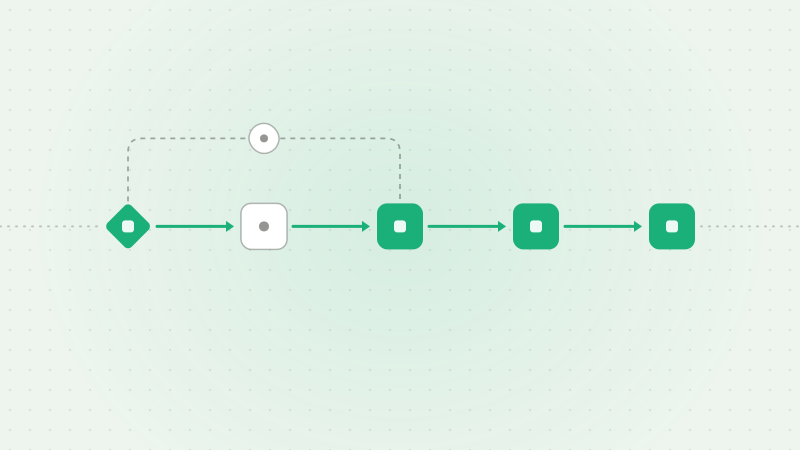
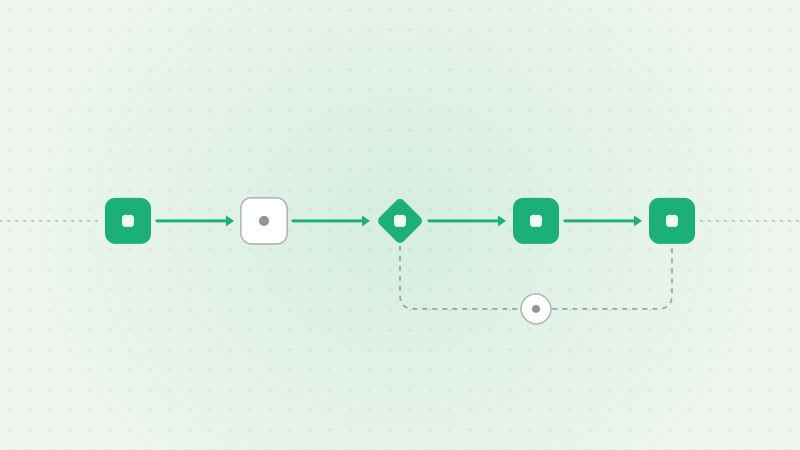
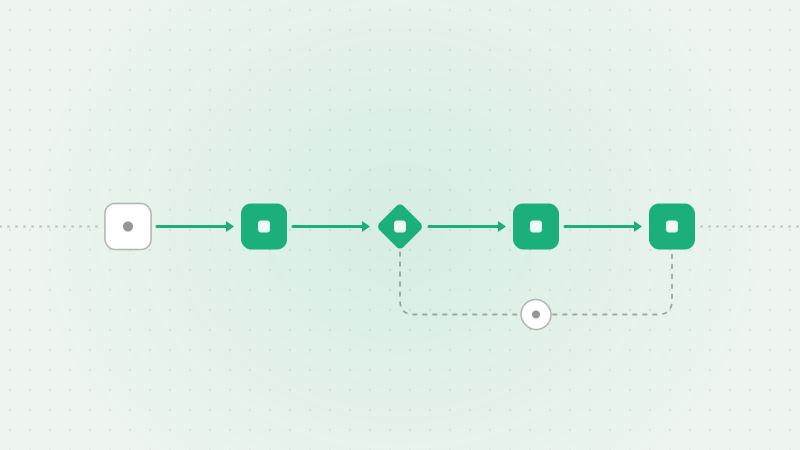
An agentic process automation solution gives the routine steps of a business process to software agents that carry each case across the business systems. A task agent reads each case, gathers what's missing, and takes or prepares the next step in the business systems, within limits that rules enforce. People set the limits, approve the outcomes that need approval, take the cases outside the agent's authority, and monitor the rest.
- Business systems
- Agent platform (documented in this case study)
- Orchestrator or planner (documented in this case study)
- Task agent (documented in this case study)
- Language model
- Checking agent
- Knowledge and context
- Shared data layer
- Tools and connectors
- Pricing and scoring models
- Rules and limits
- Fixed workflows
- Handoff to staff (documented in this case study)
- Review queue or workbench
- Audit trail (documented in this case study)
- Monitoring
A check mark shows a building block that this case study's sources document.
Open the reference architectureOthers who built it
- AXA Switzerland uses Shift Claims for assessment, prioritization, handler guidance and task automation across the claims lifecycle. Its reported results are a 3% reduction in claims losses, 30% faster handling and 60% automation5.
- CFC built agents for underwriting rather than claims, with one product line, one team and an underwriter approving every quote. At the Databricks Data + AI Summit, it presented quotes ready in 5 minutes against a 24-hour baseline5.
In the library
- Lemonade's AI claims bot automates more than half of claims Lemonade
- AI agents spread ML techniques across Meta's ads models Meta
- AI agents handle freight quotes and orders at C.H. Robinson C.H. Robinson
- Walmart's AI negotiates deals with tail-end suppliers Walmart
- Mars cuts brand campaign creation from months to weeks Mars
- Saudia Cargo answers emailed rate requests with AI agents Saudia Cargo
Cite this case study
Enterprise AI Case Studies. "Seven AI agents cut food spoilage claim times at Allianz." Updated Nov 19, 2026. https://case-studies.ai/case-studies/process-automation/PA-014-food-spoilage-claims-agents-allianz/
@misc{csai-pa-014,
  author = {{Enterprise AI Case Studies}},
  title = {{Seven AI agents cut food spoilage claim times at Allianz}},
  year = {2026},
  note = {Updated 2026-11-19},
  url = {https://case-studies.ai/case-studies/process-automation/PA-014-food-spoilage-claims-agents-allianz/}
}Sources
The following reporting, and every passage quoted from it, belongs to its publisher, not to this site. Sources and ownership
- Source 1:
When the storm clears, so should the claim queue
Supporting excerpts (25)
Allianz has launched its first agentic AI solution to automate food spoilage claims and drastically cut processing times from days to hours.
These claims—with a threshold of $AUD500—are typically covered under standard home contents insurance.
But it could take four days or more to process as the focus of the claims teams was on more complex claims happening during the NatCat event.
Thomas Baach, Managing Director, Core Insurance Platforms at Allianz Technology
Launched in Australia in July 2025, Nemo uses AI agents to automate low-complexity, repetitive tasks, significantly reducing processing times.
we're achieving an impressive 80% reduction in claim processing and settlement time
Maria Janssen, Chief Transformation Officer at Allianz Services
a storm has caused a 20-hour power outage in Laura
$AUD250 worth of food has gone bad. Laura files this claim online at Allianz.
The planner agent starts the workflow, overseen by the cyber agent to ensure data security.
and the weather agent confirms if there was a weather event that matches the claim. The fraud agent checks for signs of fraud. The payout agent determinates the payout amount and reports it to the planner.
Finally, the audit agent reviews the process, writes up the summary of all the AI agents
passes it to a human agent to make the payment decision. Overall, this process takes less than five minutes from the minute Laura filed the claim until the final human review.
For food spoilage claims under AUD$500, processing time has been slashed from several days to one day—or even just hours.
AI agents support our teams by making recommendations, but the ultimate responsibility always rests with a claims professional.
By design, payout decisions are never automated.
During major NatCat events, Allianz staff face overwhelming spikes in claim volumes.
As climate change increases the frequency and intensity of NatCats across Australia and other vulnerable regions, the insurance industry will have to handle larger claim volumes with greater speed and precision.
By automating the small stuff, you free up capacity to focus on the big stuff
Claims processors can spend less time on routine checks and more time engaging with complex or emotionally sensitive cases.
Agentic AI is now being explored for other low-complexity, high-frequency use cases—such as travel delays, simple auto claims, or property damage assessments.
allows for adaptation across product lines, geographies and regulatory environments.
Going live with Project Nemo in under 100 days is truly exceptional
We scoped it intentionally to be focused but impactful and aligned all teams to deliver. It was the first agentic AI use case of its kind at Allianz
who was instrumental in overseeing the design and implementation of the governance process.
- Source 2:
AI trial provides blueprint for future, Allianz says
Supporting excerpts (6)
is now looking to roll out the tech to other countries and product lines.
cut spoilt food claim processing times by 80% as AI agents carried out repetitive tasks.
The Australian pilot provides a blueprint for broader application
A human makes the final payout decision.
For food spoilage claims below $500, processing time has been slashed from several days to hours.
Nemo uses seven task-specific AI agents to manage coverage checks, detect fraud and more.
- Source 3:
Global insurers race to use agentic AI at the "core" of their operations
Supporting excerpts (1)
This month, Allianz officially launched its first agentic AI system: Project Nemo, in Australia.
- Source 4:
Allianz leads the pack as insurers race to turn AI investment into real competitive advantage
Supporting excerpts (4)
Its Nemo platform, launched last November, represents the most advanced example of agentic AI deployment found among the 30 insurers
a coordinated system of seven specialized agents that handles food spoilage claims from customer photo submission through to settlement, with specialized modules verifying storm data, checking policy coverage, assessing fraud risk, executing payment, and logging decisions for regulatory compliance.
It has registered more than 900 AI use cases worldwide spanning underwriting, claims, fraud detection, and customer service.
The Evident AI Index for Insurance: Key Findings Report, June 2026, was published by Evident Insights and is based on publicly available data.
- Source 5:
Agentic AI in Insurance: 6 Production Deployments and the Scoping Decision Behind Each
Supporting excerpts (15)
None of the seven agents can pay a claim.
Shift Claims with AXA Switzerland
3% reduction in claims losses, 30% faster handling, 60% automation
Presenting at the Databricks Data + AI Summit, CFC reported trusted quotes ready in 5 minutes against a 24-hour baseline, at a cost of £0.50, down from £5.
Allianz picked one claim type, one peril, one monetary ceiling, and went live in under 100 days.
Project Nemo, launched in Australia in July 2025 and fully operational in under 100 days, runs seven task-specific agents for food spoilage claims following severe-weather outages.
A planner agent orchestrates the workflow and holds process state. A cyber agent enforces data security. A coverage agent confirms that the policy covers spoilage due to severe weather.
A fraud agent screens for anomalies. A payout agent calculates the amount. An audit agent documents every decision and its rationale, then hands the file to a claims professional.
The payout gate is not a policy written in a governance handbook that a workflow can skip under deadline pressure. It is an absence in the architecture.
Assessment, prioritization, handler guidance, and task automation across the lifecycle
CFC picked one product line, one team, and a limited number of real submissions, with the underwriter approving every quote.
Brights brings 15 years of software development experience, 120+ specialists
Dmytro Umen CEO at Brights
Allianz, "When the storm clears, so should the claim queue" — allianz.com
Allianz built and deployed Project Nemo in under 100 days
- Source 6:
Artificial Intelligence at Allianz Two Use Cases
Supporting excerpts (5)
What distinguishes Project Nemo from a point solution is its modular architecture and explicit design for cross-product scalability.
The Weather Agent integrates with meteorological databases to cross-reference the customer’s stated weather event against recorded conditions
The Fraud Agent applies machine learning pattern recognition to identify statistical anomalies suggesting deliberate misrepresentation
For claims related to food spoilage, for example, the system comprises seven specialized agents, per Allianz’s newsletter:
with deployment targets for all 158,000 employees globally.








Comments
Start the conversation.
Invited members of the library comment here. Sign in to join the conversation.