
AI coding finds missed diagnoses at CHU de Liège
CHU de Liège, a Belgian university hospital, co-develops Solventum's AI coding software and tested it against its own coders on French-language patient records.
CHU de LiègeBelgium (Liège, Wallonia)Hospitals and health systemsPilot
- Scale
- 18,515 inpatient stays from the first half of 2025
- Scenario
- AI-assisted clinical coding of hospital stays
- Business function
- Finance and accounting
- Kind of solution
- Document extraction
- Who built it
- Built with a partner (Solventum and Université de Liège)
- Where it runs
- Vendor-hosted service
- Human oversight
- Assists people
- Organization
- Public sector
- AI types
- Document AI
- Team size
- 25
tl;drAfter expert review, AI-found diagnoses added the equivalent of 7.67 hospital beds.See the results
CHU de Liège tests Solventum’s 360 Encompass AI coding model on its French-language patient records1. The university hospital in Liège, Belgium, is one of four innovator hospitals that developed the software with Solventum1.
The model reads the clinical text of a hospital stay and suggests the ICD-10 diagnosis and procedure codes that coders assign in routine practice1. In September 2025, the hospital’s researchers reported a 92% F1-score on the ambulatory stays that the model rated High confidence1.
In April 2026, the team compared AI and human coding on 18,515 inpatient stays from the first half of 20252. After 25 professional coders reviewed the stays where the AI assigned a higher severity of illness, the AI-detected diagnoses added a net gain equivalent to 7.67 hospital beds2.
Before the deployment
Belgian hospitals code each stay in ICD-10-CM/PCS and register the codes in the Minimal Hospital Dataset (MZG/RHM)2. Financing partly depends on how severe the care is, measured through All Patient Refined Diagnosis Related Groups (APR-DRGs)3.
- Staff and software: In 2017, Belgium’s Court of Audit counted more than 1,100 full-time equivalents assigned to the dataset, and more than €11 million a year in software3.
- Manual work: Coding is labor-intensive, varies between coders and faces workforce constraints2.
- French text: No reliable AI-based coding system existed for French medical documents in routine use1.
- Wider financing: The health care service of NIHDI, Belgium’s health insurance institute, plans to extend APR-DRG-based financing to all APR-DRGs5.
Dr. Peter Heirman of CHU de Liège ran the studies with Prof. Philippe Kolh and Prof. Ashwin Ittoo of CHU de Liège and the University of Liège4.
What was built
The solution suggests a principal diagnosis in ICD-10-CM and a main procedure in ICD-10-PCS for each stay, and derives its APR-DRG1. CHU de Liège has a formal partnership with Solventum to develop and improve 360 Encompass, which is based on the ECAN framework1.
- Coding model: EffectiveCAN reads the stay’s free-text documents as one narrative and predicts diagnosis and procedure codes1.
- Confidence levels: Each stay gets a High, Medium or Low rating from hospital-specific thresholds. High marks stays suitable for coding without manual review1.
- Output limit: Postprocessing suppresses suggestions for stays with a high share of low-confidence codes, so coders aren’t handed suggestions that take longer to fix than to code from scratch1.
- Grouper: The Solventum APR DRG grouper turns the codes into an APR-DRG and a severity of illness (SOI) level1, 2.
- Coders: They review the predicted codes, reject incorrect suggestions and add missing codes1.
In Solventum’s autonomous coding product, visits that don’t meet the criteria for autonomous coding are queued for coder review6.
Technology and architecture
EffectiveCAN is a deep learning model for multi-label classification of clinical documents. In this deployment, it was trained on retrospective data from four hospitals: a French regional hospital, a Dutch academic hospital, a Dutch regional hospital and CHU de Liège1. Solventum trained and evaluated it in a secure AWS cloud environment1. Solventum describes the product as a combination of rules-based and deep learning AI6.
| Layer | What they used | Role | Source |
|---|---|---|---|
| Solution platform | Solventum 360 Encompass | Coding software the hospital co-develops and tests | 1, 6 |
| Document and OCR model | EffectiveCAN | Predicts ICD-10-CM and ICD-10-PCS codes from each stay’s text | 1, 2 |
| Rules and decision logic | Confidence-level framework | Rates each coded stay High, Medium or Low against hospital-specific thresholds | 1 |
| Rules and decision logic | Solventum APR DRG grouper | Groups the codes into an APR-DRG and a severity of illness level | 1, 2 |
| Decision explanation | Attention-based evidence highlighting | Highlights the phrases in the clinical text that back each predicted code | 1 |
| Privacy controls | De-identification | Removes patient identifiers from the text and keeps eponyms | 1 |
| Cloud platform | AWS cloud environment | Secure environment where Solventum trained and evaluated the model | 1 |
| Framework or library | PyTorch | Framework the model is implemented in | 1 |
| Offline evaluation | OMOP Common Data Model | Stores the human and AI groupings of each stay side by side for comparison | 2 |
The grouper’s APR-DRG and SOI results for human and AI coding go to the OBSERVATION table of the OMOP Common Data Model, linked to each stay by its visit occurrence id2. Separate observations with provenance indicators let both results coexist without overwriting source data2.
Data inputs
- Stay documents: Consultation notes, procedure reports and discharge summaries, concatenated into one narrative per stay1.
- Training records: Five years of CHU de Liège ambulatory stays from 2020 to 2024, about 35,000 a year and ~175,000 in total1.
- Coders’ codes: Codes assigned by the hospital’s coders in routine practice served as the gold-standard labels1.
- Evidence labels: A sample of records was labeled by hand with the medical evidence for each ICD-10 code1.
- Raw text: The model ingests clinical text with its abbreviations and typos, to mirror a realistic application scenario1.
How one inpatient stay was checked
- Professional coders coded the stay in routine practice2.
- The Solventum 360 AI coding model generated its own codes from the stay’s documents2.
- The same grouper logic derived an APR-DRG and an SOI level from each set of codes2.
- If the AI’s SOI was higher, the stay joined the 2,563 cases for expert review2.
- A reviewer judged whether each extra AI diagnosis was valid, based on the full medical record and the original coding2.
Results
In April 2026, the inpatient comparison found the same APR-DRG for 10,312 of 18,515 stays2. The ambulatory results date from September 20251.
| Metric | Before | After | Scope and timeframe | Reported by |
|---|---|---|---|---|
| Net capacity gain after experts validated the AI-suggested diagnoses | Human coding | 7.67 hospital beds | 2,563 reviewed inpatient stays, first half of 2025 | CHU de Liège and University of Liège researchers, pilot2, 4 |
| Inpatient stays where AI and human coding gave the same APR-DRG | Not disclosed | 10,312 of 18,515 | 18,515 inpatient stays, first half of 2025 | CHU de Liège and University of Liège researchers, pilot2 |
| F1-score on high-confidence ambulatory stays | Not disclosed | 92% | High-confidence share of 214 unseen production stays | CHU de Liège, University of Liège and Solventum researchers, pilot1 |
| Overall F1-score on ambulatory stays | Not disclosed | 70.0% | 214 unseen production stays, empty records excluded | CHU de Liège, University of Liège and Solventum researchers, pilot1 |
- Bed equivalent: The 7.67 hospital beds are the corrected net gain after expert validation, a 15% increase relative to the cohort’s mean length of stay of 5.79 days2. Additional secondary diagnoses that the AI detected and coders had omitted drove the effect2.
- High confidence: 18% of 214 unseen production stays were rated High confidence. On those, precision was 92% and recall 93%1.
- Overall score: The 70.0% F1-score combines a precision of 79.3% and a recall of 63.3%, without the stays that had missing documentation1. The APR-DRG was right for about 75% of stays1.
Lessons learned
The hybrid of coders and AI is the outcome the researchers back. AI improves the completeness of coding, and coders guard the clinical validity4. Fully autonomous coding of routine stays isn’t reliable enough to replace coders, while human expertise mitigates the AI’s hallucinations2.
The AI struggles with the principal diagnosis. Telling a symptom from a diagnosis, patients with several conditions and coding rules caused errors4.
The study saw no time saving or staff saving, only better quality4. Autonomous coding of inpatient stays still gave a different APR-DRG in half of the cases, so the team found no real staff saving possible3.
Medium- and low-confidence stays scored F1-scores of 56% and 63%1. Records with missing documentation depressed the medium group, which rose to about 74% without them, and the authors hold that low-confidence stays must stay with coders1.
The 2025 evaluation covered ambulatory stays at one hospital, and the confidence feedback loop wasn’t used1. On Dutch production data, the same model improved with continuous use and feedback, to an F1-score above 90% on about three quarters of cases1.
The figures are the CHU de Liège and University of Liège researchers’ own, and a Solventum employee co-wrote the 2025 paper1. The hospital co-develops the software it evaluates1.
Case study scorecard
- 7.67 hospital beds Net capacity gain after experts validated the AI-suggested diagnoses2, 4
- 10,312 of 18,515 Inpatient stays where AI and human coding gave the same APR-DRG2
- 92% F1-score on high-confidence ambulatory stays1
- 70.0% Overall F1-score on ambulatory stays1
Sources by publication date
- Organization 1
- Vendors and partners 1
- Press, academic, and regulators 4
Build this solution yourself
Analysis
What you need
- Years of coded stays with their text: The model learned from about 175,000 ambulatory stays whose codes the hospital’s coders had assigned1. You need that history in the language your doctors write in.
- Coders who review the AI: The bed-equivalent gain was counted after 25 professional coders checked the extra diagnoses against the record2. You need coders who can spend time validating suggestions.
- A side-by-side store of results: The OMOP Common Data Model kept human and AI groupings per stay with their provenance2. You need a way to compare both before trusting either.
Reference architecture
Document extraction
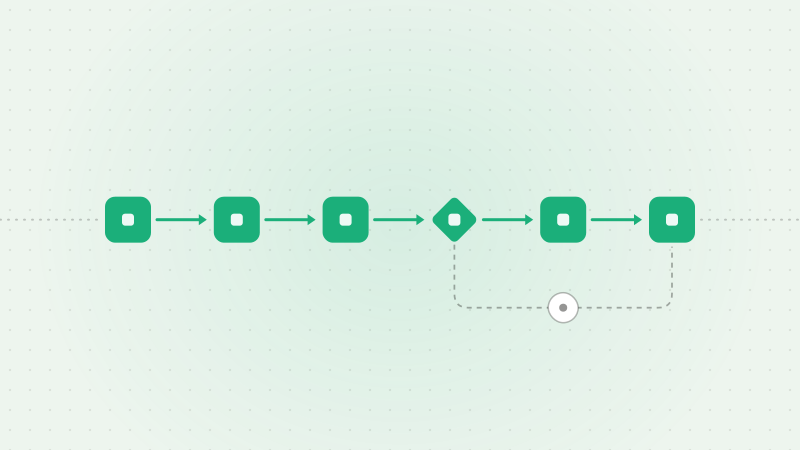
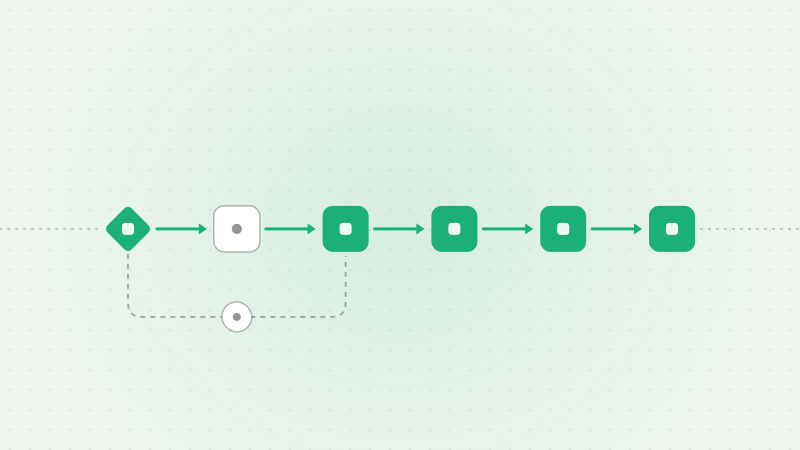
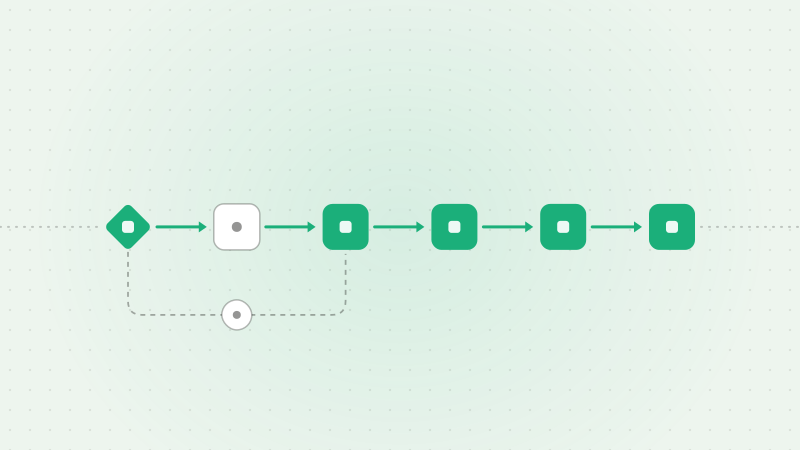
Document extraction reads the documents, forms, and images that an organization receives, sorts each one to its case, and turns it into structured fields for the business system that acts on it. Models read each document into fields, and ordinary software checks the fields against business rules and the organization's reference records. A reviewer compares the fields with the source before they reach the business system, or sees only the doubtful ones, and the corrections measure and improve the models.
- Document intake
- Document extraction platform (documented in this case study)
- Preparation
- Text recognition (documented in this case study)
- Extraction model
- Validation rules (documented in this case study)
- Reference records
- Workflow engine
- Review workbench
- Answer explanation (documented in this case study)
- Connectors
- Business system
- Corrections log
- Accuracy monitoring
A check mark shows a building block that this case study's sources document.
Open the reference architectureOthers who built it
- Condé Nast: Condé Nast speeds rights contract analysis with Claude. Contract analysis that took weeks now takes hours, and rights clearance is almost instantaneous.
- Cargolux Airlines International: Cargolux drafts cargo quotes from customer emails with AI. Cargolux's AI has drafted thousands of quotes from emails in eight markets, at a 93% trust level.
- Air France KLM Martinair Cargo: Air France KLM Martinair Cargo uses AI to book and quote. Customers now paste shipment emails into myCargo, and AI fills in the booking fields.
- Pennsylvania Department of Human Services: Pennsylvania's AI check cuts illegible benefit documents. Illegible uploads fell 80% in the pilot, saving 700 staff hours.
- Liberty Global: How Liberty Global matches supplier invoices with GenAI. Liberty Global's shared services cut invoice costs 70% and resolve exceptions 95% faster.
- Parte: Parte embeds AI in property managers' email in 27 offices. Parte's AI for property managers' emails and requests is now live in all 27 of its offices.
Cite this case study
Enterprise AI Case Studies. "AI coding finds missed diagnoses at CHU de Liège." Updated Nov 25, 2026. https://case-studies.ai/case-studies/process-automation/PA-082-ai-clinical-coding-chu-de-liege/
@misc{csai-pa-082,
  author = {{Enterprise AI Case Studies}},
  title = {{AI coding finds missed diagnoses at CHU de Liège}},
  year = {2026},
  note = {Updated 2026-11-25},
  url = {https://case-studies.ai/case-studies/process-automation/PA-082-ai-clinical-coding-chu-de-liege/}
}Sources
The following reporting, and every passage quoted from it, belongs to its publisher, not to this site. Sources and ownership
- Source 1:
Supporting excerpts (49)
Dr. Peter Heirman is employed by CHU de Liège, a French-speaking academic hospital in Belgium that serves as an innovator for the Solventum™ 360 Encompass™ software.
A formal partnership exists between Solventum™ and CHU de Liège to jointly develop and improve 360 Encompass™, which is based on the ECAN framework.
developed 360 Encompass™ in collaboration with four innovator hospitals.
Dr. Maarten Lambrecht is employed by Solventum™
To date, no reliable AI-based coding system exists for French medical documents in routine use
This study was conducted using retrospective clinical data from four hospitals: a French regional hospital, a Dutch academic hospital, a Dutch regional hospital and our own large French academic hospital.
The performance was measured in production on French cases from our hospital only.
We extracted five years of ambulatory hospital stay records (approximately 35,000 stays per year, ~175,000 in total) from 2020–2024.
Each stay is associated with one or more free-text medical documents, such as consultation notes, procedure reports, or discharge summaries.
all text documents for a given stay were concatenated into a single clinical narrative per stay.
the principal diagnosis coded in ICD-10-CM
the main procedure coded in ICD-10-PCS (Procedure Coding System)
using Solventum™ APR-DRG version 40 logic.
The gold standard labels for model training and evaluation were the codes assigned by the hospital
experienced human coders in routine practice.
a sample of the data underwent manual labeling, where annotation (medical evidence) was linked to each ICD-10 code.
All data was de-identified in compliance with privacy regulations: in particular, patient names were removed or replaced with placeholders.
we anonymized patient-specific identifiers while retaining eponyms
the model ingested raw clinical text (including abbreviations, typos, etc.) to mirror a realistic application scenario.
Special care was given to avoid encounters from the same patient in different splits.
All model training and evaluation was done in a secure AWS cloud environment by Solventum.
It was chosen due to its strong performance on English and non-English datasets and its ability to handle long documents with many labels
were assigned afterwards by the Solventum APR DRG grouper.
The model was implemented in Python using PyTorch
We defined three categories: High, Medium, and Low confidence. The High confidence category corresponds to cases that are considered suitable for automated coding without manual review.
The confidence categories were determined by applying hospital-specific thresholds for coding performance and APR DRG accuracy.
we can safely automate a subset of hospital stays with minimal human intervention
The algorithm includes a feedback mechanism that allows it to gradually adapt its confidence level assignments based on user interaction with the software.
However, this functionality was not utilized or evaluated in the present study
all metrics in this study were computed on new unseen production data that was independent of the training and test sets.
The gold standard was established by allowing human coders to review the predicted codes and make adjustments, including rejecting incorrect suggestions or adding missing codes.
The unseen production data used for evaluation consisted of 214 ambulatory stays.
we found that 18% were classified as High confidence, 16% as Medium confidence, and the remaining 65% as Low confidence.
Confidence Level Precision Recall F1 Score High 92% 93% 92% Medium 54% 59% 56% Low 75% 54% 63%
recalculating yields an F1 of approximately 74% for Medium-confidence cases when such outliers are removed.
performance was artificially depressed by the presence of some records with missing documentation.
intentionally suppresses output for cases with a high proportion of low-confidence codes. The rationale is to avoid burdening coders with suggestions that may require more effort to review and correct than starting from scratch.
the model achieved an overall Precision of 79.3%, Recall of 63.3%, and an F1-score of 70.0% on our French Language data set.
The accuracy of the DRG assignment was approximately 75% overall.
However, through continuous use and the activation of feedback mechanisms, performance on the Dutch data has improved significantly over time.
Currently, approximately 50% of cases are classified as high confidence and another 25% as medium confidence—these two groups combined achieve an F1 score exceeding 90%
highlights them in the clinical documentation.
The ECAN model provides the medically relevant phrases associated with the predicted codes
Therefore, Low-confidence cases must remain with human coders for the foreseeable future.
although trained on data from four hospitals, our evaluation was done on a single hospital level.
we did not tackle inpatient cases with extensive diagnoses/procedures.
While our study did not include a formal time-and-motion analysis
a pre-check for documentation completeness could be integrated
let the AI handle the easy cases and send the hard cases to human experts.
- Source 2:
Comparing Human and AI-Derived DRG Severity of Illness Using OMOP CDM: A Belgian APR-DRG Case Study
Supporting excerpts (16)
from ICD-10-CM/PCS coding registered in the Minimal Hospital Dataset (MZG/RHM).
manual coding is labor-intensive, subject to variability, and increasingly challenged by workforce constraints.
We conducted a retrospective analysis of 18,515 inpatient hospitalizations from the first semester of 2025 at CHU de Li
ICD-10-CM/PCS codes produced by professional human coders were compared with codes automatically generated by the Solventum 360 AI coding model.
SOI levels were independently derived from both coding sources using the same grouper logic.
A subset of 2,563 such cases was reviewed by a panel of 25 professional coders.
based on the full medical record and original human coding.
APR-DRG and SOI results were represented in OMOP CDM using the OBSERVATION table, linked to the hospitalization via visit occurrence id.
Separate observations were created for human-derived and AI-derived groupings, with explicit provenance indicators for derivation method and grouping context.
without overwriting source data.
Among the 18,515 analyzed hospitalizations, 10,312 stays showed identical APR-DRG assignments between human and AI coding.
had been omitted during initial manual coding.
the corrected impact corresponded to a net gain equivalent to 7.67 hospital beds, representing a 15% increase relative to the mean length of stay of 5.79 days within this cohort.
The observed effect was primarily attributable to additional secondary diagnoses detected by the AI model that influenced SOI assignment.
Fully autonomous AI-based coding for routine hospitalizations is not yet sufficiently reliable to replace human coders. However, a hybrid human–AI approach offers clear advantages.
Human expertise mitigates AI-related hallucinations and errors, while AI systems effectively identify missed diagnoses that materially affect DRG and SOI assignment.
- Source 3:
Impact van AI-Ondersteunde Codering op Casemix op Personeelsbestaffing
Supporting excerpts (6)
Meer dan 1.100 VTE zijn toegewezen aan MZG en de specifieke software kost meer dan 11 miljoen euro per jaar.
De financiering van ziekenhuizen in België is gedeeltelijk afhankelijk van de zorgzwaarte
Deze studie had als doel de prestaties van het 360 AI-model van Solventum voor automatische codering te analyseren
Echter, er is geen effectieve personeelsbesparing mogelijk daar een autonome codering van klassieke hospitalisaties nog in de helft van de gevallen een andere APR-DRG geeft.
HET PERSONEELSTEKORT IN DE ZORG
Belgisch Rekenhof, 2017
- Source 4:
Impact van AI-ondersteunde codering op casemix op personeelsbestaffing (poster)
Supporting excerpts (11)
Dr. Peter Heirman, prof. Philippe Kolh, prof. Ashwin Ittoo.
A.I. heeft probleem om de hoofddiagnose te identificeren
symptoom vs. diagnose; polypathologie; codeerregels
18.515 klassieke hospitalisaties (2025, CHU Luik)
AI alleen → onvoldoende betrouwbaar
Mens alleen → onvolledig
Beste aanpak: hybride combinatie van mens + AI
AI verbetert de volledigheid van codering.
De mens bewaakt de klinische validiteit.
Geen geobserveerde tijdswinst
of personeelsbesparing, wel kwaliteitsverbetering
- Source 5:
Supporting excerpts (2)
Now we are going to extend this—albeit using a different calculation method—to all APR-DRGs.
Health Care Service of the NIHDI
- Source 6:
Solventum 360 Encompass Autonomous Coding System
Supporting excerpts (2)
When complex visits don't meet qualifying autonomous coding criteria, a semi-autonomous worfklow is ready and flagged visits are queued for coder review.
Combination of rules-based and deep learning AI







Comments
Start the conversation.
Invited members of the library comment here. Sign in to join the conversation.