
Parte embeds AI in property managers' email in 27 offices
Belgian syndic Parte worked with AE to build email classification, case matching and data extraction into its property managers' daily work, with people kept in control.
ParteBelgium and GermanyReal estate and facilitiesScaled
- Scale
- All 27 offices
- Scenario
- Property manager email classification and case matching
- Business function
- Customer service
- Kind of solution
- Document extraction
- Who built it
- Built with a partner (AE)
- Where it runs
- Public cloud
- Organization
- Enterprise, 250 to 999 employees
- AI types
- Generative AI, Agentic AI, Document AI
- Sites
- 27 offices
tl;drParte's AI for property managers' emails and requests is now live in all 27 of its offices.See the results
Parte, a Belgian property-management company, uses large language models to classify its property managers’ emails, match them to cases, extract data and answer questions inside their daily work1. AE built the capabilities with Parte as its transformation and delivery partner1.
Parte manages more than 5,000 buildings across Belgium and Germany from 27 regional offices2. In December 2025, the AI capabilities were live in all 27 offices, with growing adoption among property managers1.
Before the deployment
Parte’s property managers handled large volumes of emails, requests, documents and follow-up activities, and each office kept its own local practices1. Founded in 2020, Parte manages the communal areas of apartment buildings for homeowner associations, and it grew in Belgium and Germany through acquisitions2.
- Unstructured volume: High volumes of unstructured email communication and requests reached the property managers1.
- Many request types: More than 80 recurring communication and workflow types made up the work1.
- Existing systems: The landscape centered on Properly, Parte’s custom CRM1.
- Oversight needs: Any automation had to keep human oversight, explainability and controlled exception handling1.
Parte announced an investment from Hg on September 23, 20252. After that investment, AI became a strategic lever for faster growth and a scalable, technology-enabled platform1. The aim was to cut the time property managers spent on repetitive communication and administration, without replacing their judgment1.
“We want to be the number one employer for property managers and provide superior customer service by leveraging technology.”
What was built
The solution reads the emails and requests that reach property managers, classifies them, matches them to cases, extracts data and answers general questions1. It works inside the managers’ daily workflow and gives an explicit rationale with its output1.
- Language models: Classify emails, match them to cases, extract data and answer questions, grounded in retrieved data1.
- Tool and data layer: Connects the models to Parte’s tools and data through the Model Context Protocol (MCP)1.
- Property managers: Stay in control through human-in-the-loop controls, and keep the judgment on each case1.
- AI Impact Cockpit: Tracks quality, adoption, saved time and business value by office, live1. Management uses it for product priorities, steering and rollout decisions1.
Rollout
- Discovery: Workshops with leadership and process owners ranked the highest-value communication flows and produced a quantified business case1.
- Prototyping: Rapid prototypes for email classification, case matching, data extraction and question answering ran on real operational data1. Buy-versus-build validation and feasibility testing came before production investment1.
- Industrialization: A dedicated, multidisciplinary Tiger Team took the prototypes to production in two-weekly delivery increments, with monthly steering and continuous user feedback1.
- Office by office: Each office got onboarding, champions and training, and early offices supported later rollout waves1.
Technology and architecture
- AI component
- Data
- Trigger or control
- Handoff to people
- Inferred, not documented
The models sit behind a multi-provider abstraction layer. LiteLLM is an open-source library that gives one interface to call more than 100 LLMs in the OpenAI format3. In this deployment, it routes the capabilities’ calls to Azure OpenAI and to Anthropic’s Sonnet 5, Sonnet 4.6, Opus 4.8 and Haiku 4.51.
Langfuse is an open-source AI engineering platform that traces LLM calls, retrieval and API calls4. Here, it provides observability and guardrails together with OpenTelemetry1. The team uses Claude Cowork to build new features on the same technologies1.
| Layer | What they used | Role | Source |
|---|---|---|---|
| Language model | Azure OpenAI | Classifies, matches, extracts and answers | 1 |
| Language model | Sonnet 5, Sonnet 4.6, Opus 4.8 and Haiku 4.5 | Anthropic models for the same tasks | 1 |
| Model gateway | LiteLLM | Routes calls to both providers | 1, 3 |
| Tools and actions | MCP-based tool and data integration layer | Connects the models to tools and data | 1 |
| Search and vector index | Azure AI Search | Retrieval that grounds the models’ answers | 1 |
| Data platform and storage | Snowflake | Data source for the grounded retrieval | 1 |
| Monitoring | Langfuse | Observability and guardrails for the model calls | 1, 4 |
| Monitoring | OpenTelemetry | Observability alongside Langfuse | 1 |
| Monitoring | AI Impact Cockpit | Tracks value and adoption by office | 1 |
Data inputs
- Emails and requests: The unstructured messages that reach property managers, which the models classify and match to cases1.
- Documents: The files property managers handle, from which the models extract data1.
- Retrieved content: RAG-grounded retrieval from Azure AI Search and Snowflake gives the models their context1.
- Operational data: Real operational data served for the prototypes of each capability1.
The capabilities are built into a brownfield landscape centered on Properly, Parte’s custom CRM1. The MCP layer is most likely how the models reach Properly’s case data.
Results
In December 2025, the AI capabilities were live across all 27 Parte offices1.
- Adoption: Adoption is growing among property managers, and the AI Impact Cockpit tracks it by office1.
- Volume and quality: The capabilities handle a high volume of interactions with a low error rate1.
- Processing time: Early automation flows reduce processing and resolution times and free capacity for higher-value work1.
- New workflows: Each workflow that is validated and brought into production builds on the existing platform1.
Lessons learned
The rollout to every office is the clearest documented outcome. The capabilities reached all 27 offices, and adoption is tracked office by office1.
The staged model tied each capability to a business case before production money was spent. Discovery, prototypes on real operational data and buy-versus-build checks came first1.
Building with users rather than handing over a finished product kept the operational knowledge in the solution. It also lets Parte extend the capabilities as new use cases are added1.
The outcomes are the description of AE, Parte’s delivery partner, and they are stated in words rather than figures1. Hg, Parte’s majority owner, is quoted in the same account on its work with AE1.
Case study scorecard
Sources by publication date
- Organization 1
- Vendors and partners 3
Build this solution yourself
Analysis
What you need
- Email work that falls into known types: Parte’s property managers handle more than 80 recurring communication and workflow types, which gave classification and case matching a defined target1.
- A CRM and data the models can reach: The capabilities run inside a landscape centered on Properly, with retrieval from Azure AI Search and Snowflake1.
- A measure of value per office: The AI Impact Cockpit gave management the fact base for each rollout decision, so check that you can measure quality and saved time per team1.
Reference architecture
Document extraction
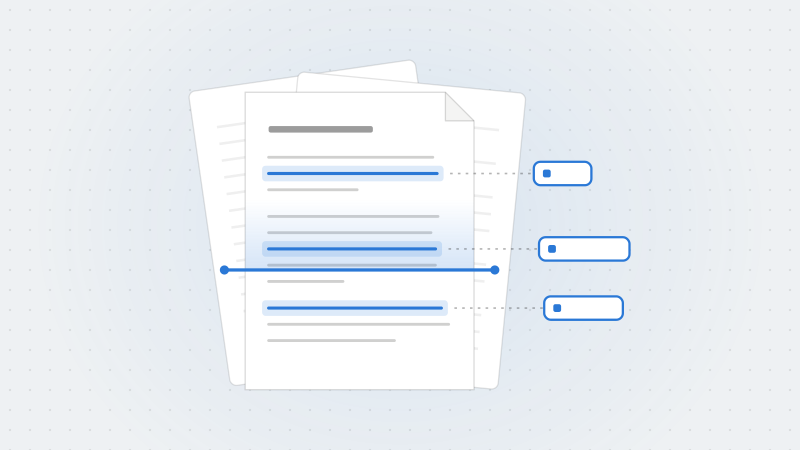
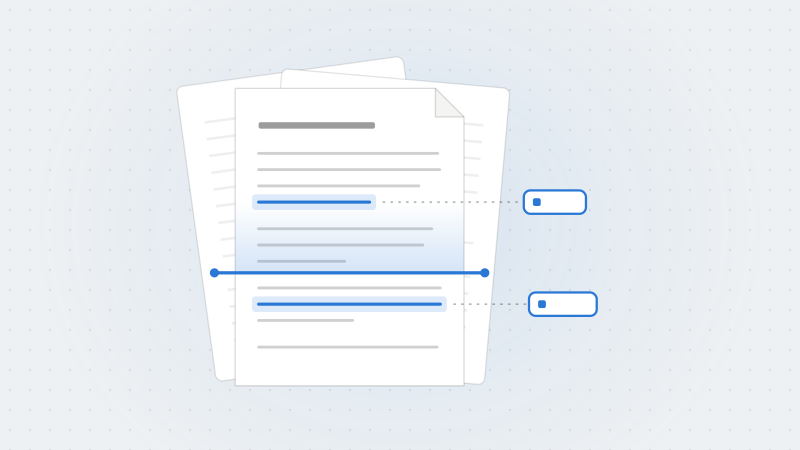
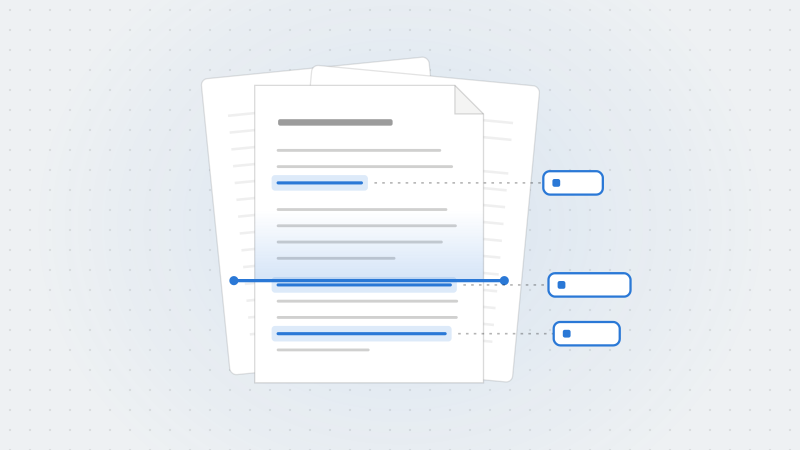
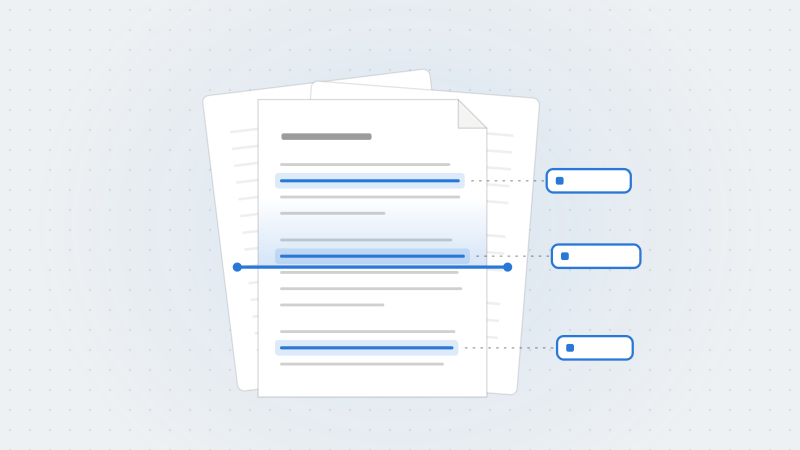
Document extraction reads the documents, forms, and images that an organization receives, sorts each one to its case, and turns it into structured fields for the business system that acts on it. Models read each document into fields, and ordinary software checks the fields against business rules and the organization's reference records. A reviewer compares the fields with the source before they reach the business system, or sees only the doubtful ones, and the corrections measure and improve the models.
- Document intake
- Document extraction platform
- Preparation
- Text recognition
- Extraction model (documented in this case study)
- Validation rules
- Reference records (documented in this case study)
- Workflow engine
- Review workbench
- Answer explanation
- Connectors
- Business system
- Corrections log
- Accuracy monitoring (documented in this case study)
A check mark shows a building block that this case study's sources document.
Open the reference architectureOthers who built it
- Condé Nast: Condé Nast speeds rights contract analysis with Claude. Contract analysis that took weeks now takes hours, and rights clearance is almost instantaneous.
- Cargolux Airlines International: Cargolux drafts cargo quotes from customer emails with AI. Cargolux's AI has drafted thousands of quotes from emails in eight markets, at a 93% trust level.
- Air France KLM Martinair Cargo: Air France KLM Martinair Cargo uses AI to book and quote. Customers now paste shipment emails into myCargo, and AI fills in the booking fields.
- Pennsylvania Department of Human Services: Pennsylvania's AI check cuts illegible benefit documents. Illegible uploads fell 80% in the pilot, saving 700 staff hours.
- Liberty Global: How Liberty Global matches supplier invoices with GenAI. Liberty Global's shared services cut invoice costs 70% and resolve exceptions 95% faster.
- RGF Staffing the Netherlands: AI reads collective agreements for equal pay at RGF Staffing. RGF Staffing's AI checker went live in five months, in time for the January 2026 equal pay rules.
Cite this case study
Enterprise AI Case Studies. "Parte embeds AI in property managers' email in 27 offices." Updated Nov 26, 2026. https://case-studies.ai/case-studies/document-intelligence/DI-067-property-manager-email-triage-parte/
@misc{csai-di-067,
  author = {{Enterprise AI Case Studies}},
  title = {{Parte embeds AI in property managers' email in 27 offices}},
  year = {2026},
  note = {Updated 2026-11-26},
  url = {https://case-studies.ai/case-studies/document-intelligence/DI-067-property-manager-email-triage-parte/}
}Sources
The following reporting, and every passage quoted from it, belongs to its publisher, not to this site. Sources and ownership
- Source 1:
From manual property management to AI-enabled operations at scale
Supporting excerpts (32)
Parte is a leading Belgian property-management platform managing more than 5,000 buildings through over 450 employees across 27 offices.
Following Hg Capital's majority investment, AI became a strategic lever for accelerating growth, improving operational leverage and creating a scalable technology-enabled platform.
Property managers handle large volumes of emails, requests, documents and follow-up activities, while each office retains local practices and domain expertise.
Parte wanted to reduce the time skilled property managers spent on repetitive communication and administrative handling without replacing their judgement or disrupting the systems that support daily work.
High volumes of unstructured email communication and requests.
More than 80 recurring communication and workflow types.
A brownfield landscape centred on Properly, Parte's custom CRM.
The need for human oversight, explainability and controlled exception handling.
AE acts as Parte's transformation and delivery partner in close co-creation with Parte
The work follows a staged model: discovery, rapid prototyping and industrialisation through a dedicated Tiger Team.
Discovery workshops with leadership and process owners to identify and prioritise the highest-value communication flows.
A quantified business case covering recurring value creation, implementation effort and expected return.
Rapid prototypes for email classification, case matching, data extraction and general question answering using real operational data.
Buy-versus-build validation and feasibility testing before production investment.
Industrialisation by an multidisciplinary Tiger Team.
Office-by-office onboarding, champion activation, training and adoption tracking.
Key technologies: an MCP-based tool and data integration layer, RAG-grounded retrieval (Azure AI Search & Snowflake), a multi-provider LLM abstraction layer (LiteLLM with Azure OpenAI and Anthropic
Sonnet 5, Sonnet 4.6, Opus 4.8, Haiku 4.5
and built-in observability and guardrails (Langfuse, OpenTelemetry).
Claude Cowork is being used to build out features using the aforementioned technologies.
Product decisions, workflow design, implementation and rollout are performed in close collaboration with users and platform owners.
This enables operational knowledge to remain embedded in the solution and allows Parte to extend the capability as new use cases are added.
AI capabilities are integrated into the daily workflow with explicit rationales and human-in-the-loop controls.
A live AI Impact Cockpit tracks quality, adoption, saved time and business value by office.
This provides a shared fact base for product prioritisation, management steering and rollout decisions.
two-weekly delivery increments, monthly steering and continuous user feedback
Change management is treated as part of the product, with tailored onboarding and early offices supporting subsequent rollout waves.
The AI capabilities are now live across all 27 offices, with growing adoption among property managers and a high volume of interactions handled with a low error rate.
Early automation flows are already reducing processing and resolution times, freeing up significant capacity for higher-value work.
every new workflow that is validated and brought into production builds on the existing platform and extends the measurable operational impact.
At Hg, we work with AE on the AI transformation of one of our portfolio companies.
while keeping people in control
- Source 2:
Parte secures investment from Hg to accelerate growth across Benelux and DACH regions
Supporting excerpts (6)
London, UK, 23 September 2025 – Parte, a leading property management software and services provider in Belgium, today announced it has secured an investment from Hg
Today, Parte manages more than 5,000 buildings across Belgium and Germany, with a total of more than 450 employees across 27 regional offices.
Founded in 2020 by Around Partners, Parte specialises in managing communal areas of apartment buildings for homeowner associations
Since its foundation in 2020, the company has established strong market positions in Belgium and Germany through a range of acquisitions.
We want to be the number one employer for property managers and provide superior customer service by leveraging technology.
This frees employees from repetitive tasks so they can focus on what really matters: building relationships and solving complex challenges for customers.
- Source 3:
Supporting excerpts (2)
LiteLLM is an open-source library that gives you a single, unified interface to call 100+ LLMs (OpenAI, Anthropic, Vertex AI, Bedrock, and more) using the OpenAI format.
Built-in retry / fallback logic across multiple deployments via the Router
- Source 4:
Open Source AI Engineering Platform - Langfuse
Supporting excerpts (3)
Langfuse is an open-source AI engineering platform (GitHub) that helps teams collaboratively debug, analyze, and iterate on their AI agent applications.
Traces include all LLM and non-LLM calls, including retrieval, embedding, API calls, and more
Capture traces via our native SDKs for Python/JS, 100+ library/framework integrations, OpenTelemetry, or via an LLM Gateway such as LiteLLM
















Comments
Start the conversation.
Invited members of the library comment here. Sign in to join the conversation.