
AI agents read personal injury claim files at a.s.r.
Dutch insurer a.s.r. built AI agents with Rewire that each read a personal injury claim file from a legal, medical or home-situation angle, then merge their findings into one view.
a.s.r.NetherlandsProperty and casualty insuranceIn production
- Scale
- All 120 employees of the personal injury department, daily
- Scenario
- Personal injury claim file summarization
- Business function
- Customer service
- Kind of solution
- Document review and drafting
- Who built it
- Built with a partner (Rewire)
- Human oversight
- Assists people
- Organization
- Enterprise
- AI types
- Generative AI, Agentic AI
- Users
- 120
tl;drAll 120 staff in a.s.r.'s personal injury department now work with the AI agents daily.See the results
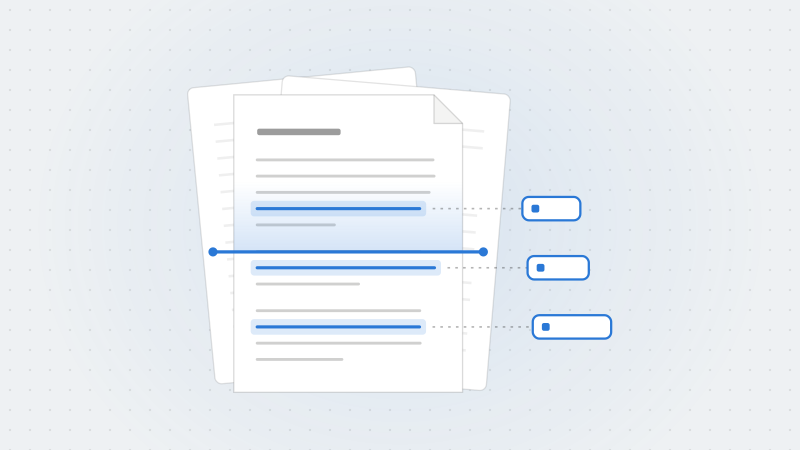
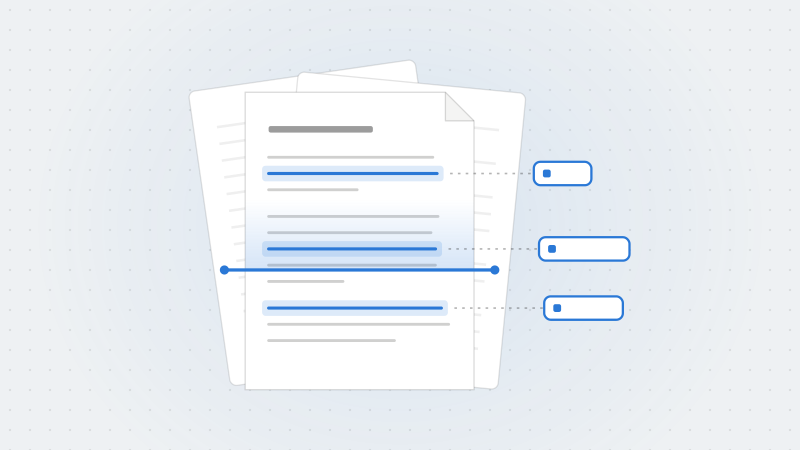
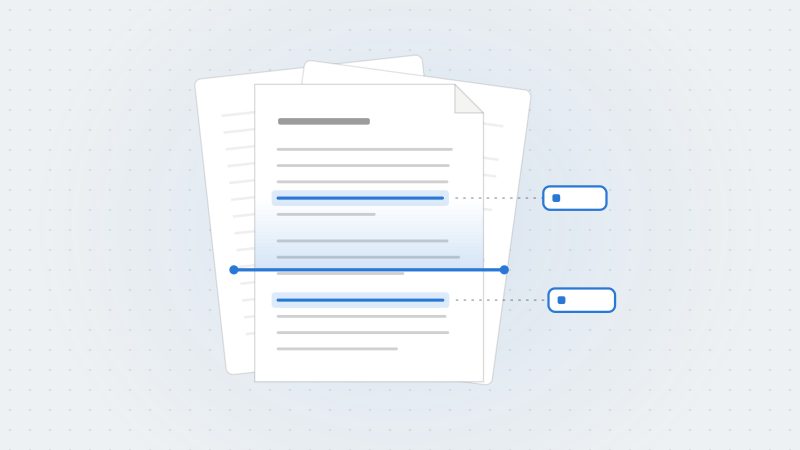
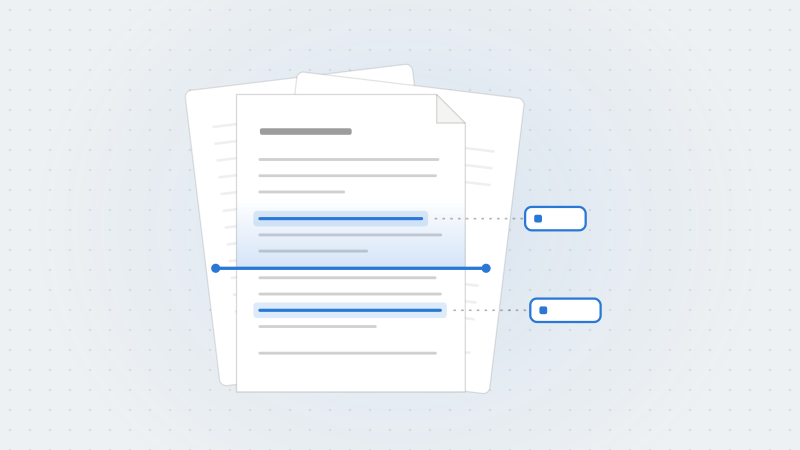
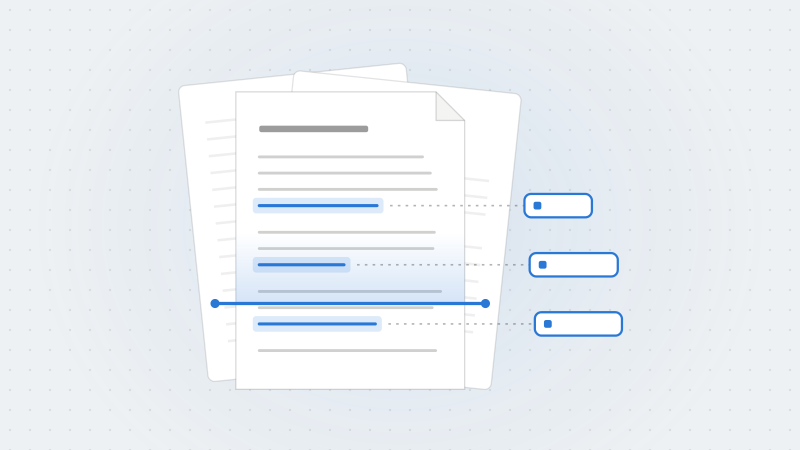
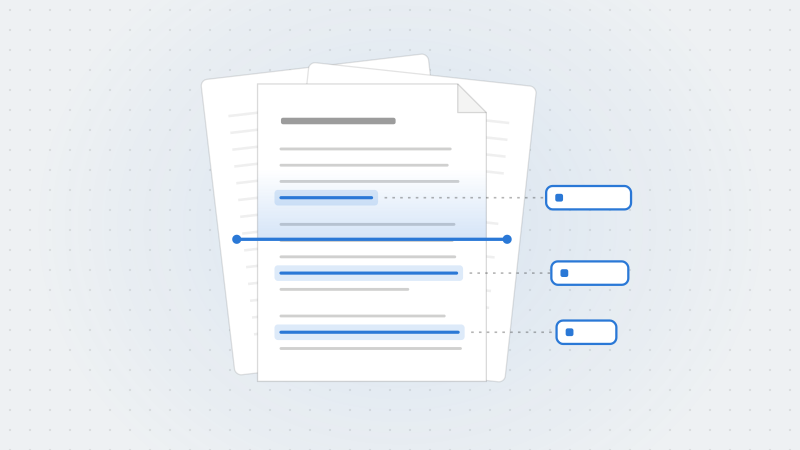
Dutch insurer a.s.r. uses a set of AI agents to read personal injury claim files for its claims specialists1. Specialist agents each read a file from a legal, medical, or home-situation angle, and an overarching agent combines their findings into one file view1.
The insurer built the agents with Rewire, an AI consultancy in Amsterdam1. People take every final decision on a claim1.
In August 2026, more than a year after the kickoff, all 120 employees of the personal injury department worked with the agents daily1.
Before the deployment
Personal injury claims are a core process for a.s.r. and a specialist trade1. The volume of work is large enough that the insurer also hires external capacity1. The files caused the following problems:
- Long cases: Personal injury cases often run for a long time, with much correspondence, many reports, and other communication1.
- Growing files: The files grow as a case runs, so keeping an overview gets harder1.
- Repeated reading: At each new development, the claims experts on the case had to work through the file again1.
- Unstructured documents: The files moved from paper to emails and PDFs, which generative AI can now read and structure1.
Maarten Kramer leads the work as a.s.r.’s first chief data officer, a role he had held for more than three years by August 20261. After the breakthrough of ChatGPT, a.s.r. formed its own multidisciplinary team to keep up1. Kramer named better support for the experts and better service for clients as the main goal, ahead of efficiency1.
What was built
The solution shows a claims specialist at a glance what is going on in a personal injury file, because a growing file is hard to keep an overview of1. The work is divided as follows:
- Specialist agents: Read the same claim file, each from its own angle: legal, medical, or the claimant’s home situation1.
- Overarching agent: Combines the findings of the specialist agents into one file view for the claims staff1.
- Agent instructions: Hold the department’s rules in explicit form. For example, they state that a.s.r. determines liability itself1.
- Claims specialists: Check which information in the file view the agents generated, and take the final decision1.
Rollout
a.s.r. set out to build a proof of concept within three months instead of planning a long project in advance, because learning came first1. The team chose a partner that would take ownership through to a concrete result, not one that only writes a report1. It then onboarded the agent the way it would onboard a new employee1:
- Job interview: A test checked whether the agent could process the volume of data in a file at all1.
- Starter: The team trained the agent step by step. It gave instructions, and the experts gave feedback on the agent’s work throughout1.
- Shared prompts: The team developed all prompting together with the claims staff1.
- Split by expertise: During training, the team replaced the single agent with specialist agents and an overarching agent1.
Technology and architecture
- AI component
- Data
- Trigger or control
- Handoff to people
- Feedback
The agents run on large language models, and they split one file into separate readings that a single agent then joins1. The following table lists the components of the solution.
| Layer | What they used | Role | Source |
|---|---|---|---|
| Language model | Large language models | Power the agents that read and structure the documents in a claim file | 1 |
| Task agent | Specialist agents | Read the same file from a legal, medical, or home-situation angle | 1 |
| Agent orchestration | Overarching agent | Combines the specialist findings into one file view | 1 |
| Prompt and context management | Agent instructions | Hold the department’s implicit rules in explicit form, written with the staff | 1 |
| Review workbench | File view | Shows the specialist one overview and lets them check what the agents generated | 1 |
The agents read the documents in the claim file: correspondence, reports, emails, and PDFs, including letters from a claimant’s lawyer1. The experts’ feedback during training shaped the instructions, which codified knowledge that had lived only in the experts’ heads1.
Results
The agents are in daily use across the personal injury department1. The following table lists the result.
| Metric | Before | After | Scope and timeframe | Reported by |
|---|---|---|---|---|
| Staff who work with the agents daily | Not disclosed | All 120 | Personal injury department, more than a year after the kickoff, as of August 2026 | a.s.r., measured1 |
The following points explain the result:
- Daily users: The figure counts the employees of the personal injury department who work with the agents every day1.
- Effect on the work: In August 2026, Kramer had no concrete figures to support the results yet. He described the first impressions on the work floor as very positive1.
- Expected effect: Kramer expects a positive effect on the speed and quality of the specialists’ work, and he expects customers to benefit in the future1.
Lessons learned
The rollout reached the whole department. Kramer ties that adoption to trust: the staff wrote the prompts with the team, could check what the agents generated, and were involved from day one1.
Implicit rules have to be written down. Early on, an agent concluded from a lawyer’s letters that a.s.r. was liable, while a.s.r. determines liability itself1. Kramer’s lesson is that every department applies rules that nobody recorded, and the agent’s instructions must state them1.
One agent couldn’t hold the whole file. It had to process too many instructions to assess every aspect of a file, which made it unmanageable and lowered its quality1. The split into specialist agents by area of expertise answered that problem1.
The agents assist and don’t decide. Kramer says that AI models make mistakes, as people do, so the final decision always stays with a.s.r.’s staff1.
The account is a.s.r.’s own, from an interview with its chief data officer in a partner contribution on Banken.nl1. The effect on speed and quality rests on his first impressions from the work floor1.
Case study scorecard
- All 120 Employees of the personal injury department who work with the agents daily1
Sources by publication date
- Organization 2
- Vendors and partners 1
- Press, academic, and regulators 1
Build this solution yourself
Analysis
What you need
To build this solution, you need the following in place:
- Claims experts who help write the instructions: a.s.r.’s agents learned the department’s rules from instructions and continuous expert feedback, and the staff wrote the prompts with the team1.
- Explicit rules on what stays with people: The liability case showed that a rule every handler applies has to be written into the agents’ instructions1.
- A file view that people can check: Your staff take the final decision, so they need to see which information the agents generated1.
Reference architecture
Document review and drafting
A document review and drafting solution reads a case's documents against a written standard, precedents, or a list of questions and drafts a review, summary, clause, or report with its sources for an expert to finish. The solution pulls the case's documents, and a language model answers each question from the passages that bear on it, with its source. Fixed logic settles what must not vary, and an expert checks the draft against the sources and makes the decision.
- Source system
- Connector to the source system
- Review and drafting platform
- Text recognition
- Document preparation
- Passage index
- Access control
- Questions and templates (documented in this case study)
- Drafting model (documented in this case study)
- Private model endpoint
- Fixed logic
- Review workbench (documented in this case study)
- Reviewer feedback
- Tests on known cases
A check mark shows a building block that this case study's sources document.
Open the reference architectureOthers who built it
- Van Ameyde: An agentic solution for claims intake and triage classifies emails and documents, asks customers for missing information, and prefills systems2.
- Allianz: Its personal injury practice increasingly uses its own AI agents, for example for policy conditions and work descriptions3.
- Nationale-Nederlanden: AI agents flag the cause of damage and check coverage on claims, and they flag unusual claims for a claims handler4.
In the library
- How Nationwide uses generative AI to summarize claim notes Nationwide
- Merck drafts clinical study reports in days with gen AI Merck & Co.
- AI drafts clinical study reports in minutes at Novo Nordisk Novo Nordisk
- Corona, California speeds building plan review with AI City of Corona
- Denver pre-screens permit applications with CivCheck AI City and County of Denver
- Court strikes down DOGE's ChatGPT screening of NEH grants United States DOGE Service
Cite this case study
Enterprise AI Case Studies. "AI agents read personal injury claim files at a.s.r.." Updated Nov 20, 2026. https://case-studies.ai/case-studies/document-intelligence/DI-030-personal-injury-claim-files-asr/
@misc{csai-di-030,
  author = {{Enterprise AI Case Studies}},
  title = {{AI agents read personal injury claim files at a.s.r.}},
  year = {2026},
  note = {Updated 2026-11-20},
  url = {https://case-studies.ai/case-studies/document-intelligence/DI-030-personal-injury-claim-files-asr/}
}Sources
The following reporting, and every passage quoted from it, belongs to its publisher, not to this site. Sources and ownership
- Source 1:
Hoe maak je complexe financiële dienstverlening efficiënter en klantgerichter met AI-agents?
Supporting excerpts (36)
Letselschades resulteren vaak in dikke dossiers vol ongestructureerde data.
Een jaar later werken ruim honderd schadespecialisten dagelijks met hun nieuwe digitale collega.
trad Maarten Kramer ruim drie jaar geleden aan als eerste Chief Data Officer van de verzekeraar
De doorbraak van ChatGPT bracht die ontwikkeling in een stroomversnelling. Om die te kunnen bijhouden, formeerde a.s.r. een eigen multidisciplinair team.
de Amsterdamse AI-consultant Rewire
maar echt ownership pakt en doorgaat tot er een concreet resultaat staat
wilden ze geen lange trajecten vooraf uittekenen, maar binnen drie maanden een sterk proof of concept neerzetten
We zoomden daarbij specifiek in op de enorme hoeveelheid documenten in onze letselschadedossiers.
Dit is een typisch kernproces voor verzekeraars
Tegelijk is het een echt expertisevak, waarbij we vanwege de grote hoeveelheid werk ook met externe capaciteit werken.
Dat is de optimale ondersteuning voor onze experts en betere dienstverlening voor onze cliënten
dankzij GenAI kunnen we die documenten nu daadwerkelijk lezen en structureren
Letselschadezaken hebben vaak een lange looptijd, met veel correspondentie, rapportages en andere communicatie. Overzicht houden wordt daardoor steeds moeilijker.
Naarmate procedures langer lopen, worden de dossiers immers steeds omvangrijker. Bij elke nieuwe ontwikkeling moeten de betrokken schade-experts zich daar opnieuw in verdiepen.
Het inzetten van op Large Language Models
kon die enorme hoeveelheid informatie veel sneller toegankelijk maken
In letselschade gespecialiseerde AI-agents worden immers niet
behandel een agent als een nieuwe medewerker, en begin bij de sollicitatie
In dit geval was dat een test om te kijken of de agent die hoeveelheid data überhaupt kon verwerken
Daarna werd de agent een starter die we stap voor stap moesten opleiden. Je geeft instructies en laat je experts doorlopend feedback geven.
Elke afdeling werkt met regels en afspraken die iedereen normaal vindt en impliciet toepast, maar die nergens specifiek zijn vastgelegd.
in het begin constateerde de agent op basis van communicatie van een advocaat dat a.s.r. aansprakelijk was. Maar natuurlijk moet a.s.r. de aansprakelijkheid zelf bepalen. Dat moet je dus heel expliciet bepalen en vastleggen in de aansturing van de agent.
Tijdens de training bleek al snel dat de inzet van één enkele AI-agent tekortschoot.
Die moest simpelweg te veel instructies verwerken om alle aspecten van een dossier goed te kunnen beoordelen
Dan wordt het onbeheersbaar en gaat de kwaliteit omlaag.
Zo kwamen we uit op meerdere inhoudelijke agents, die elk vanuit een eigen blik hetzelfde dossier lezen. Bijvoorbeeld juridisch, medisch en met focus op de thuissituatie.
Daarboven zit een overkoepelende agent die de bevindingen samenbrengt tot één overzichtelijk dossierbeeld
Om die medewerkers mee te krijgen, is vertrouwen volgens Kramer minstens zo belangrijk als techniek.
Daarom is alle prompting bijvoorbeeld samen met de medewerkers ontwikkeld.
Net als mensen maken AI-modellen fouten. Daarom ligt de uiteindelijke beslissing altijd bij onze menselijke collega
We zorgen bovendien dat medewerkers makkelijk kunnen controleren welke informatie door de agent is gegenereerd.
Juist door die transparantie en volledige betrokkenheid vanaf dag één bouw je het vertrouwen op dat succesvolle adoptie vereist.
Ruim een jaar na de aftrap werken alle 120 medewerkers op de letselschadeafdeling nu dagelijks met hun nieuwe
Kramer heeft nog geen concrete cijfers om de resultaten te staven.
Maar de eerste indrukken op de werkvloer zijn zeer positief
Die heeft zeker positieve impact op de inzet van hun vakmanschap, de snelheid en de kwaliteit waarmee ze hun werk verrichten. Hier gaan onze klanten in de toekomst ongetwijfeld ook van profiteren.
- Source 2:
Van Ameyde transformeert claimsproces met agentic AI
Supporting excerpts (1)
De eerste concrete toepassing hiervan is een agentic oplossing voor intake en triage binnen het claimproces. Deze applicatie classificeert automatisch e-mails en documenten, vraagt ontbrekende informatie uit bij klanten en vult systemen alvast voor.
- Source 3:
AI in de letselschadepraktijk bij Allianz
Supporting excerpts (2)
AI in de letselschadepraktijk bij Allianz
Daarnaast maken wij steeds vaker gebruik van eigen AI Agents, bijvoorbeeld voor onze polisvoorwaarden of werkbeschrijvingen.
- Source 4:
Digital where possible, personal where it matters: using AI to manage claims
Supporting excerpts (3)
flagging the cause of the damage cause and checking whether the damage is covered by the policy
are now carried out automatically by AI agents
claims that fall outside predefined criteria or that show unusual patterns, for example, are automatically flagged by the AI to be assessed by a claims handler












Comments
Start the conversation.
Invited members of the library comment here. Sign in to join the conversation.