
BNY's AI assistant cuts vendor contract review time by 75%
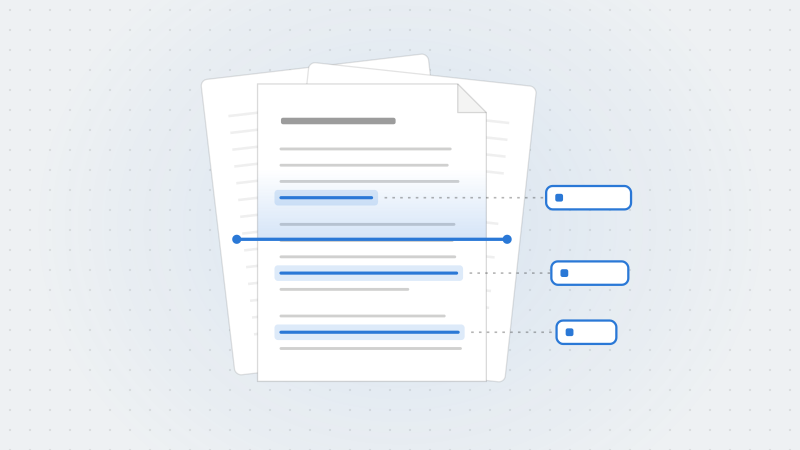
BNY's in-house lawyers check the vendor contracts they negotiate with a Contract Review Assistant built on Eliza, the bank's own AI platform, using OpenAI's models.
BNYUnited StatesBankingIn production
- Scale
- 3,000+ vendor agreements a year
- Scenario
- Contract review
- Business function
- Legal and compliance
- Kind of solution
- Document review and drafting
- Who built it
- Built in-house (OpenAI and Microsoft)
- Human oversight
- Assists people
- Organization
- Enterprise, 10,000 to 99,999 employees
- AI types
- Generative AI, Agentic AI
tl;drBNY's vendor contract reviews fell from 4 hours to 1, across more than 3,000 agreements a year.See the results
BNY’s legal department uses the Contract Review Assistant to check the vendor contracts it negotiates. The assistant is an AI agent on Eliza, the bank’s own enterprise AI platform, and it runs on OpenAI’s models1, 3, 8.
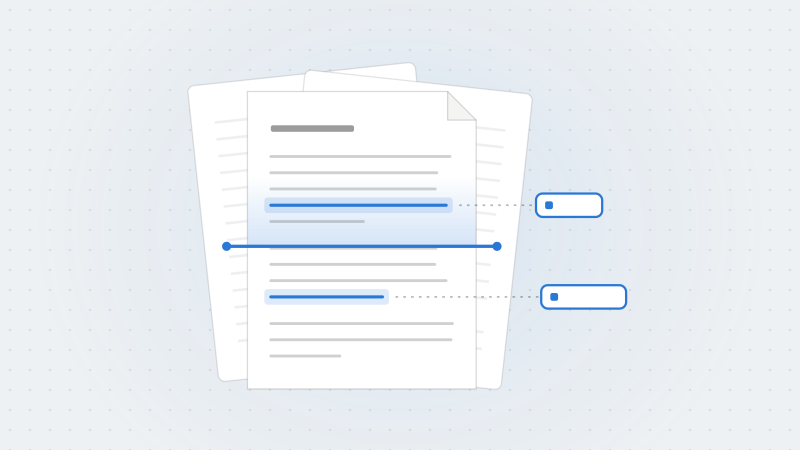
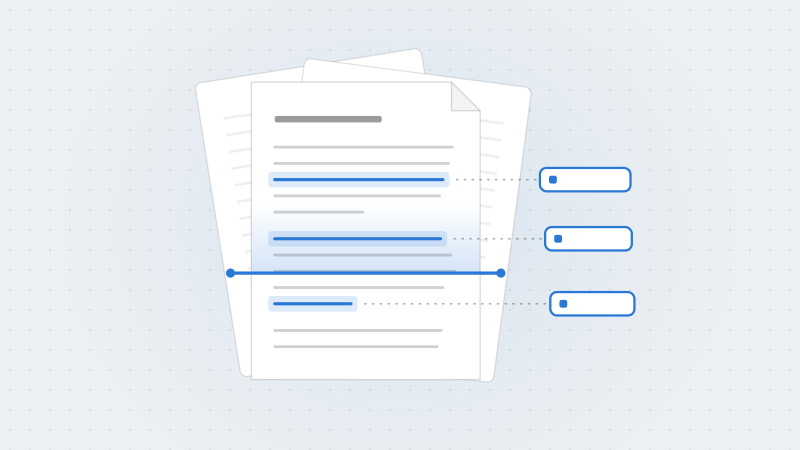
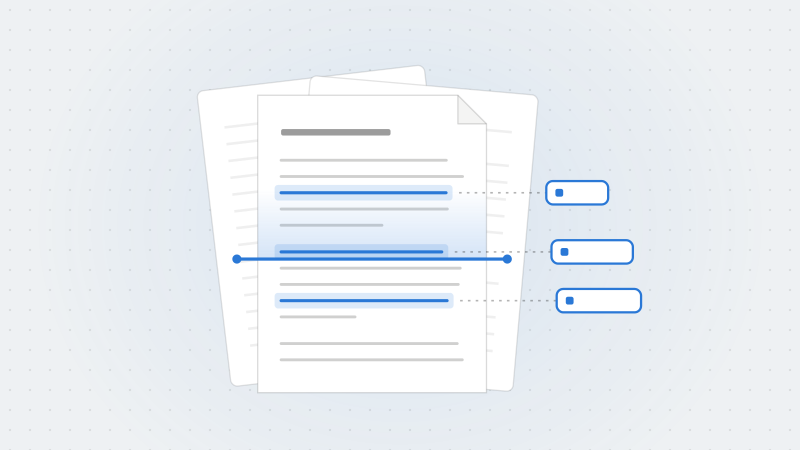
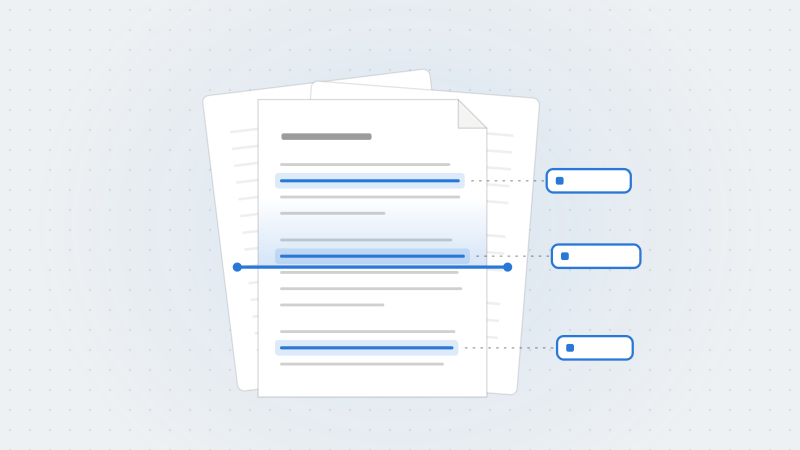
The assistant compares each negotiated agreement with BNY’s corporate best practices and with regulatory requirements that keep changing1. It helps attorneys with their reviews, and the attorneys carry out each review3.
A review that took 4 hours now takes 1 hour8. In an interview published on October 26, 2026, general counsel Kevin McCarthy put the cut in the time his department spends reviewing negotiated vendor contracts at about 75%2.
Before the deployment
BNY clears US Treasury bills and moves $2.5 trillion in transactions a day4. It prides itself on a mature resiliency and risk management framework, so its adoption of generative AI was less about speed to market and more about controlled, secure integration3.
Vendor contracts sit with the legal department’s commercial law group5. The work had the following shape:
- Scope: The group supports contracting processes, vendor management, and data quality, with the bank’s business teams, sourcing, and external counsel5.
- Systems: The group runs the department’s contract lifecycle management (CLM) systems and contract repositories5.
- Volume: The department reviews more than 3,000 vendor agreements a year8.
BNY’s push into AI began when ChatGPT launched in late 2022. The bank set up a central AI Hub, launched Eliza as an internal platform for building and deploying AI, and trained its staff on responsible use8.
Lawyers weren’t the people expected to lead. Microsoft, which supplies some of BNY’s AI tools, called the legal department “the group most people assumed would resist the longest”4. BNY Legal won an FT Innovative Lawyers North America 2024 award for its adoption of generative AI, and Legalweek 2025 named it Most Innovative Legal Department of the Year5.
What was built
The Contract Review Assistant benchmarks each negotiated agreement against BNY’s corporate best practices and evolving regulatory requirements1. It was among the first wave of agents that the AI Hub and BNY’s departments built together in Eliza8. The work is divided as follows:
- Contract Review Assistant: Uses advanced reasoning to benchmark the agreement against the bank’s standard, to help the attorney review it1, 3.
- OpenAI models: Carry out the document analysis and summarization for the assistant3.
- Eliza: Acts as the secure wrapper around the models, so that BNY keeps control of data handling, bias mitigation, and audit trails3.
- Attorneys: Carry out each review. The assistant helps them improve the speed, quality, and consistency of their reviews, and the decision on what the bank accepts stays with them3.
The assistant is part of wider AI work in the legal department. Seema Phekoo, a managing director and legal counsel, rolled out 500 Copilot licenses with custom training across legal, built agents to redline documents and reduce contract review time, and ran a pro bono hackathon with Microsoft4. Legal was the first department at BNY in which everyone completed preliminary AI training4.
Governance
The assistant sits inside the bank’s AI governance because it’s an Eliza agent8. BNY extended its existing legal and compliance processes to AI instead of writing new governance from scratch8. The governance has the following bodies:
- Data use review board: Brings together leaders from intellectual property, cybersecurity, engineering, data, privacy, and third-party relationships to consider new AI use cases8.
- AI release board: Looks at initiatives again before they go into production8.
- Enterprise AI Council: Provides senior oversight and policy alignment across the firm8.
Microsoft’s profile describes the path from an idea to a working agent as “sixteen steps of review boards, compliance gates, and model risk evaluations”4. Lawyers work inside that process. Watt Wanapha is deputy general counsel and chief technology counsel, and the commercial law group supports firmwide AI governance with intake triage, issue tracking, and governance documentation3, 5.
“Some might see AI governance as a barrier, but in our experience, we have seen it as an enabler.”
Alternatives considered
BNY made a deliberate choice to build AI as a platform within the company1. It weighed the following options:
- Vendor solutions for siloed functions: Tools chosen for specific functions, the path BNY describes others taking1.
- One platform for the whole company: Avoids redundant investments in similar tools, and lets the bank integrate new models as they become available1.
Rollout
BNY first named the assistant in a paper on its AI adoption1. Later accounts by OpenAI, StartupHub.ai, and Law.com gave its results, and Microsoft profiled the legal team2, 3, 4, 8. In the same period, the commercial law group advertised for a specialist to help build “an Agentic AI workflow to support contracting and negotiations”5.
Technology and architecture
Eliza is BNY’s in-house AI platform, and the assistant is one agent on it1, 8. Eliza gives builders a menu of models, and most builders now come from outside the engineering teams1. It’s model agnostic by design, runs partly on Microsoft Azure, and offers models that include OpenAI’s frontier models4, 8.
Governance is built into the platform. All prompting, agent development, model selection, and sharing happen inside a governed environment that standardizes permissions, security, and oversight across models and tools8. Every employee completes mandatory training before using Eliza8.
The following table lists the parts of the solution.
| Layer | What they used | Role | Source |
|---|---|---|---|
| Solution platform | Contract Review Assistant | Benchmarks each negotiated vendor agreement against best practices and regulatory requirements, to help attorneys review it | 1, 3, 8 |
| Machine learning platform | Eliza | BNY’s in-house AI platform: menu of models, governed prompting and agent building, permissions and audit trails | 1, 3, 8 |
| Language model | OpenAI models | Document analysis and summarization | 3 |
The assistant uses the following data:
- Negotiated vendor agreements: The case input, which the assistant reviews one agreement at a time1, 8.
- Best practices and regulatory requirements: BNY’s corporate best practices and evolving regulatory requirements, the standard that each agreement is benchmarked against1.
Results
The figures measure the time a lawyer spends reviewing a negotiated vendor agreement2, 3, 8. The following table lists them.
| Metric | Before | After | Scope and timeframe | Reported by |
|---|---|---|---|---|
| Legal review time per vendor agreement | 4 hours | 1 hour | 3,000+ vendor agreements a year; reported December 2025 | OpenAI customer story on BNY, measured8 |
| Review time with the assistant | Not disclosed | 75% on average | Reported January 2026 | StartupHub.ai, on a video with BNY’s deputy general counsel and chief AI officer, measured3 |
| Time spent reviewing negotiated vendor contracts | Not disclosed | about 75% less | BNY legal department; reported October 2026 | BNY general counsel via Law.com, measured2 |
The figures need the following explanation:
- Review time per agreement: The December 2025 figure is the most specific, with a baseline and a yearly volume8. It measures a lawyer’s hours on the review, not the days that a contract takes to reach signature.
- The 75% figures: The January 2026 average comes from a video in which Wanapha and chief AI and data officer Sarthak Pattanaik discussed Eliza3. McCarthy’s October 2026 figure covers the legal department’s review of negotiated vendor contracts2.
- The wider shift: McCarthy believes the bigger shift is still ahead, because AI proficiency is becoming a fundamental skill for lawyers2.
Lessons learned
The account became more specific over time. BNY first described what the assistant does1, a later account added a baseline and a volume8, and the 75% saving has stayed the same in every account since2, 3.
Vendor contracts suited a first agent. They come in volume, follow a recognizable pattern, and can be measured against a written standard, and the assistant was among the first wave of agents that BNY built on Eliza1, 8.
The design keeps the legal work with lawyers, who still carry out each review3. That keeps the risk of a missed clause with a person, and it also bounds the saving. The figures cover review time per agreement, so supplier responses and rounds of negotiation fall outside them.
The assistant reviews contracts but doesn’t negotiate them. In 2026, the commercial law group advertised for a specialist to help build an agentic workflow for contracting and negotiations5. That posting describes a plan for the next step, not a part in use.
Governance is the part that BNY’s lawyers most want to talk about. Wanapha’s view is that “Good governance has allowed us to move much more quickly”8. The bank’s choice to extend its existing legal and compliance review to AI is one that another regulated institution can copy8.
Wanapha has also said that, as use cases expand and models shift, the bank has to keep evaluating its AI projects “to maintain accuracy”8. That statement covers BNY’s AI projects in general, not the assistant alone8.
The figures are BNY’s own, passed on by others. Only McCarthy’s figure comes from a BNY person, in a Law.com interview behind a paywall2. The 4-hours-to-1 figure is in OpenAI’s words, in a vendor’s customer story about BNY8.
The 75% average is in StartupHub.ai’s words, in a write-up of a video that adds no reporting of its own3. The three figures most likely trace back to one internal measurement, so their agreement doesn’t make the number independent. Microsoft’s account of the legal team’s AI work also comes from a BNY supplier4.
Case study scorecard
- 1 hour Legal review time per vendor agreement8
- about 75% Cut in time spent reviewing negotiated vendor contracts2
- 75% on average Cut in review time with the assistant3
Sources by publication date
- Organization 2
- Vendors and partners 2
- Press, academic, and regulators 4
Build this solution yourself
Analysis
What you need
This deployment depended on the following, which you need in place too:
- A governed AI platform that risk and compliance already trust: The assistant was built as an Eliza agent, so model access, permissions, and audit trails were in place before the first contract was read3, 8. A legal team that buys a stand-alone tool would probably have to clear those reviews on its own.
- A written standard to benchmark against: The assistant compares each agreement with BNY’s corporate best practices and regulatory requirements1. Check that your positions on each clause are written down, not held only in your lawyers’ heads.
- A steady stream of similar agreements: BNY reviews more than 3,000 vendor agreements a year, which gives the assistant enough repeated work to save time on8.
Reference architecture
Document review and drafting
A document review and drafting solution reads a case's documents against a written standard, precedents, or a list of questions and drafts a review, summary, clause, or report with its sources for an expert to finish. The solution pulls the case's documents, and a language model answers each question from the passages that bear on it, with its source. Fixed logic settles what must not vary, and an expert checks the draft against the sources and makes the decision.
- Source system
- Connector to the source system
- Review and drafting platform (documented in this case study)
- Text recognition
- Document preparation
- Passage index
- Access control
- Questions and templates
- Drafting model (documented in this case study)
- Private model endpoint
- Fixed logic
- Review workbench
- Reviewer feedback
- Tests on known cases
A check mark shows a building block that this case study's sources document.
Open the reference architectureOthers who built it
- JPMorgan Chase: By February 2017, its COIN system was interpreting commercial loan agreements, work that had consumed 360,000 hours of lawyers’ time a year7.
- McCarthy Tétrault: In May 2026, the Canadian firm described a lawyer who used an AI tool on a term sheet review that would have taken six hours and took one, under a human-in-the-loop policy6.
In the library
- How Nationwide uses generative AI to summarize claim notes Nationwide
- Merck drafts clinical study reports in days with gen AI Merck & Co.
- AI drafts clinical study reports in minutes at Novo Nordisk Novo Nordisk
- Corona, California speeds building plan review with AI City of Corona
- Denver pre-screens permit applications with CivCheck AI City and County of Denver
- Court strikes down DOGE's ChatGPT screening of NEH grants United States DOGE Service
Cite this case study
Enterprise AI Case Studies. "BNY's AI assistant cuts vendor contract review time by 75%." Updated Nov 18, 2026. https://case-studies.ai/case-studies/document-intelligence/DI-012-legal-contract-review-bny/
@misc{csai-di-012,
  author = {{Enterprise AI Case Studies}},
  title = {{BNY's AI assistant cuts vendor contract review time by 75%}},
  year = {2026},
  note = {Updated 2026-11-18},
  url = {https://case-studies.ai/case-studies/document-intelligence/DI-012-legal-contract-review-bny/}
}Sources
The following reporting, and every passage quoted from it, belongs to its publisher, not to this site. Sources and ownership
- Source 1:
AI In the Next Phase: Driving Adoption
Supporting excerpts (11)
By harnessing advanced reasoning, BNY’s AI-driven Contract Review Assistant benchmarks negotiated agreements against our corporate best practices and evolving regulatory requirements.
Today, nearly all our employees are trained to use our enterprise AI platform, Eliza, with the majority of our AI builders now coming from outside of our engineering teams.
A menu of models is provided to our builders
Eliza is a core asset, purpose-built in line with our data, risk, legal and compliance standards.
Ability to prototype, test, and deploy AI agents with guardrails, telemetry and approvals
Eliza adoption is up 175% this year, with 99% of employees fully trained and onboarded onto the platform
our enterprise-wide Responsible AI approach is anchored in governance frameworks around data usage, transparency, fairness, compliance, employee training and technical guardrails, along with continuous oversight.
We made a deliberate choice to build AI as a platform within our company
others are carefully selecting vendor solutions for specific and siloed functionalities
By deploying a single platform across our company, we eliminate redundant investments in similar tools
Eliza enables us to continuously integrate best-in-class models as they become available
- Source 2:
AI in Practice: AI Is Cutting Contract Review Time for BNY's Legal Team by 75%
Supporting excerpts (2)
Artificial intelligence is already cutting the time BNY’s legal department spends reviewing negotiated vendor contracts by about 75%, but General Counsel Kevin McCarthy believes the bigger shift is still ahead, with AI proficiency becoming a fundamental skill for lawyers.
BNY General Counsel Kevin McCarthy discusses how AI is reshaping the bank’s legal department, from streamlining contract reviews to changing the skills lawyers need, and why he believes legal leaders can’t afford to sit on the sidelines.
- Source 3:
BNY Legal’s 75% Efficiency Gain: The Governance Blueprint for Enterprise AI Adoption
Supporting excerpts (12)
Watt Wanapha, Deputy General Counsel and Chief Technology Counsel, alongside Sarthak Pattanaik, Chief AI and Data Officer, discussed BNY’s internal AI platform, Eliza, and its collaboration with OpenAI.
a contract review assistant built on BNY’s proprietary Eliza platform, utilizing OpenAI’s models for document analysis and summarization.
the system has reduced the time spent on reviews by 75% on average.
Wanapha confirmed that this agent helps attorneys
consistency of their reviews.
Some might see AI governance as a barrier, but in our experience, we have seen it as an enabler.
For BNY, which prides itself on having a very mature and robust resiliency and risk management framework
the adoption of generative AI was less about speed-to-market and more about controlled, secure integration.
BNY’s Eliza platform serves as the secure wrapper, ensuring that the external power of OpenAI is channeled safely within the firm’s regulatory and ethical boundaries.
maintaining full control over data handling, bias mitigation, and audit trails.
building the governance guardrails and having responsible AI principles by design.
This internal orchestration allows BNY to leverage the rapid advancements of external large language models while maintaining full control over data handling, bias mitigation, and audit trails.
- Source 4:
The making of a Frontier Firm: How AI is redesigning work at BNY
Supporting excerpts (8)
the group most people assumed would resist the longest
became the first to reach 100 percent in preliminary AI training
Seema Phekoo, a managing director and legal counsel leading the department’s AI transformation, helped roll out 500 Copilot licenses and custom training across legal, built agents to redline documents and reduce contract review time, and ran a hackathon with Microsoft pairing senior counsel on pro bono challenges.
When a group most would stereotype as risk-averse becomes the most enthusiastic, the conversation across the rest of the firm changes fast
sixteen steps of review boards, compliance gates, and model risk evaluations, mapping the journey from a good idea to a working agent
a bank that clears US Treasury bills and moves $2.5 trillion in transactions a day
BNY runs its internal AI platform, Eliza, partly on Microsoft Azure.
is model agnostic by design
- Source 5:
Senior Legal Specialist, Data Analyst/AI Specialist - Commercial Law Group
Supporting excerpts (9)
Collaborating with attorneys to design, develop, and manage BNY Legal’s custom-built AI solutions to modernize the Legal Department's operations, including developing an Agentic AI workflow to support contracting and negotiations.
Supporting the administration, optimization, and adoption of legal technology platforms, including CLM systems, contract repositories, analytics tools, and custom-built AI solutions.
Supporting BNY’s firmwide AI governance efforts, including intake triage, issue tracking, workflow coordination, and maintaining governance documentation.
to support contracting processes, vendor management, data quality, and related governance initiatives.
including business teams, sourcing, and external counsel
Innovation in Operational Transformation (adoption of generative AI)
FT Innovative Lawyers North America 2024
Legalweek 2025 | ALM Law.com – Most Innovative Legal Department of the Year
this job was removed at 08:48 a.m. (EST) on Wednesday, Aug 26, 2026
- Source 6:
From six-hour reviews to one: Matthew Peters on what AI is actually doing inside McCarthy Tétrault
Supporting excerpts (2)
Peters recently received an email from a lawyer at the firm, incredulous at what an AI tool had done during a term sheet review. What would have taken six hours took one.
The firm established a policy framework early – human-in-the-loop, security protocols, training requirements
- Source 7:
JPMorgan’s tech strategy turns to machine learning
Supporting excerpts (1)
The programme, called COIN, for Contract Intelligence, does the mind-numbing job of interpreting commercial-loan agreements that, until the project went online in June, consumed 360,000 hours of lawyers’ time annually.
- Source 8:
BNY builds “AI for everyone, everywhere” with OpenAI
Supporting excerpts (18)
Contract Review Assistant: Reduces legal review time by 75%, from four hours to one, across 3,000+ annual vendor agreements each year.
The first wave of agents built in Eliza, in collaboration with the AI Hub and different BNY departments
When ChatGPT launched in late 2022, BNY made a decisive move to embrace generative AI across the enterprise.
the firm created a centralized AI Hub, launched an internal AI deployment and education platform called Eliza, and trained its employees on responsible AI use.
pairing BNY’s governance rigor with leading models—including OpenAI frontier models
That platform now supports over 125 live use cases, with 20,000 employees actively building agents.
A data use review board, which brings together cross-functional leaders in intellectual property rights, cybersecurity, engineering, data, privacy, third-party relationships, and others.
An Artificial Intelligence release board, which aligns similar teams plus additional groups to reconsider initiatives before they are deployed into production.
The Enterprise AI Council, providing senior oversight and policy alignment across the firm.
Within Eliza, all prompting, agent development, model selection, and sharing happens inside a governed environment.
Eliza embeds governance at the system level
It standardizes permissions, security, and oversight across all models and tools, ensuring every workflow meets the same level of protection.
All employees complete mandatory training before they can use it
Good governance has allowed us to move much more quickly.
As our use cases expand, and as the models shift, we have to constantly evaluate AI projects to maintain accuracy.
Instead of creating generative AI-specific governance from scratch, BNY extended its mature legal and compliance processes to cover new use cases.
Eliza’s interface enforces tagging, telemetry, approval flows, and access controls - without burdening end users with manual steps.
Products: ChatGPT, API














Comments
Start the conversation.
Invited members of the library comment here. Sign in to join the conversation.