
AI halves the time to summarize labor agreements at Securex
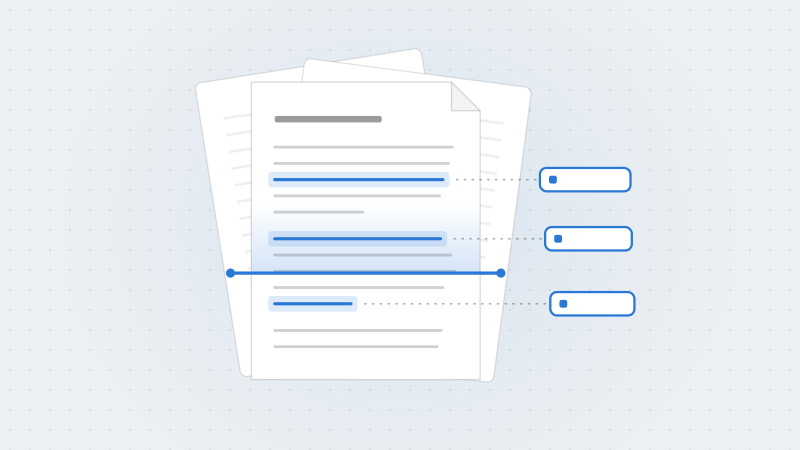
Securex uses a language model built by Faktion to detect what changed in each collective labor agreement and to summarize the changes for the advisors who use its Lex4You legal information portal.
SecurexBelgiumOutsourcing and staffingIn production
- Scenario
- Legislation change detection and summarization
- Business function
- Legal and compliance
- Kind of solution
- Document review and drafting
- Who built it
- Built by a partner (Faktion)
- Human oversight
- Assists people
- Organization
- Enterprise
- AI types
- Generative AI
- Languages
- Dutch and French
tl;drThe AI system cut the time to summarize and update labor agreements on Lex4You by 50%.See the results
Securex uses a large language model (LLM) to detect what changed in each collective labor agreement and to summarize the changes for its Lex4You portal1. A collective labor agreement (CLA) is a legal instrument that employer groups and employee organizations negotiate. It sets out workplace rights, obligations, and benefits1.
Faktion built the system for the Securex AI Lab and integrated it into Lex4You1. Customer care representatives and legal advisors read the summaries there1.
The system reduced the summarization and update processing time by 50%1. It reached 100% accuracy in content identification and 90% compliance with Securex-specific legal terminology1.
Before the deployment
Every year, Securex’s legal experts analyzed new and updated CLAs by hand1. They extracted the key points on topics such as purchasing power, additional benefits, premiums, transportation costs, and working hours1.
These analyses are the basis of the employment agreement content on the Lex4You portal1. Lex4You is the Securex department that provides HR news, labor law updates, and regulatory information to businesses and entrepreneurs1. Customer care agents and legal advisors use the portal to assist businesses with labor law1.
The manual process had the following problems:
- Slow updates: Legal professionals spent extensive time reviewing and summarizing CLAs, which made updates slow1.
- Difficult retrieval: Customer care teams relied on long, complex documents, so relevant information was difficult to retrieve1.
- No summary of changes: The process had no efficient way to extract only the changes from previous years. Those changes are the primary interest of businesses that consult the agreements1.
Securex required a system that summarizes the changes in CLAs, maintains high accuracy, complies with legal terminology, and produces structured outputs1.
What was built
The Lex4You summarization system compares the previous and current version of a CLA and writes a concise, structured summary of the key updates1. It produces the summaries in Dutch and French1. The work is divided as follows:
- Large language model: Detects the changes, ignores irrelevant sections, and writes the summary in the terminology and format of Securex’s legal standards1.
- Software around the model: Extracts the text from each CLA file, filters out irrelevant sections, and adds keywords and metadata to improve search1.
- Customer care representatives and legal advisors: Read the summaries on the Lex4You portal and use them to assist businesses1.
Rollout
Faktion built the system in the following four phases:
- Data analysis and processing: Faktion identified the key sections within CLAs and determined which content is relevant1.
- Summarization model development: Faktion generated structured summaries by using zero-shot and few-shot summarization techniques1. A zero-shot prompt contains no example summaries, and a few-shot prompt contains a few.
- Human validation: Securex’s legal advisors gave feedback on AI-generated summaries over multiple iterations. Faktion refined the prompts and instructions to improve clarity, brevity, and domain-specific terminology1.
- Integration: Faktion integrated the tool into the Lex4You platform, which made it accessible to Securex’s customer care and advisory teams1.
Technology and architecture
- AI component
- Data
- Trigger or control
- Feedback
- Inferred, not documented
The following table lists the parts of the solution.
| Layer | What they used | Role | Source |
|---|---|---|---|
| Language model | Large language model | Detects the changes between two versions of a CLA and writes the structured summary | 1 |
| Solution platform | Lex4You summarization system | Packages pre-processing, change detection, summarization, and keyword extraction | 1 |
| Prompt and context management | Prompts and instructions | Set the clarity, brevity, and legal terminology of the summaries | 1 |
| Data preparation | Text pre-processing | Extracts structured data from .docx files and filters out irrelevant sections | 1 |
| Data preparation | Keyword extraction | Extracts the keywords and metadata that make the summaries searchable | 1 |
| Workplace application | Lex4You portal | Shows the summaries to customer care representatives and legal advisors | 1 |
Data inputs
The system uses the following data:
- Current CLA: A new or updated CLA as a .docx file1.
- Previous CLA: The earlier version of the same agreement, which the system compares with the current version1.
Integrations
The system makes its summaries accessible on the Lex4You portal, which Securex’s customer care and advisory teams use1.
How one CLA flows through the system
- Text pre-processing reads the new or updated CLA. It extracts structured data from the .docx file and filters out irrelevant sections1.
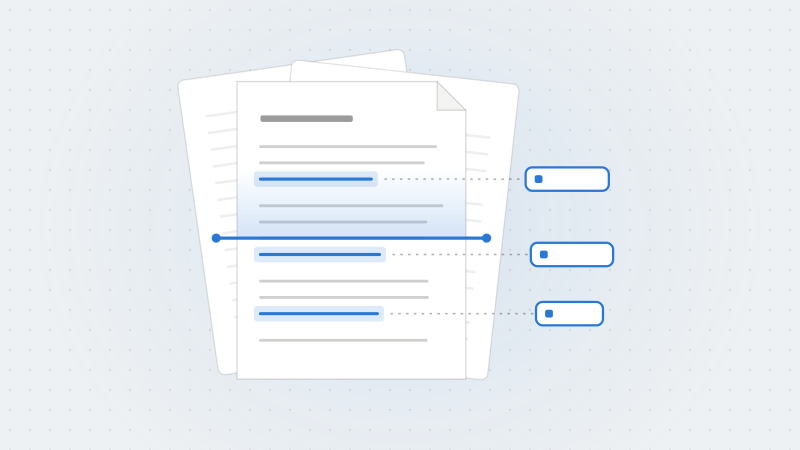
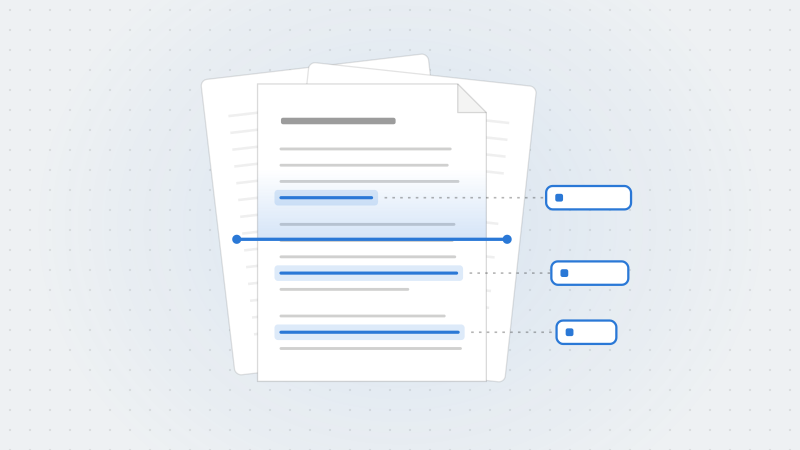
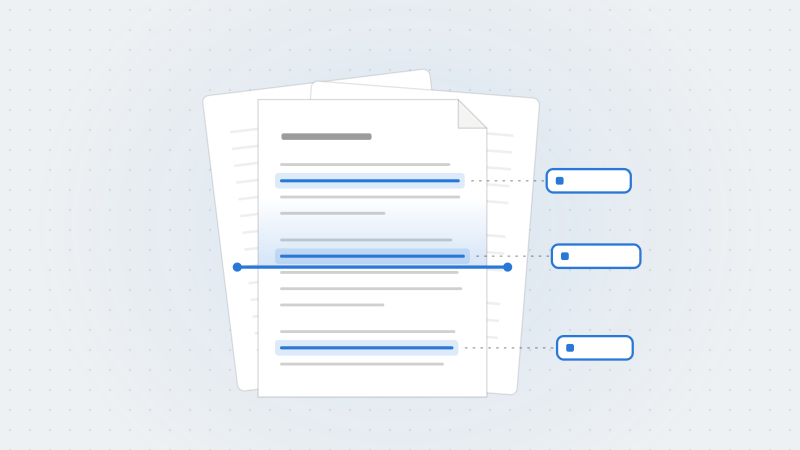
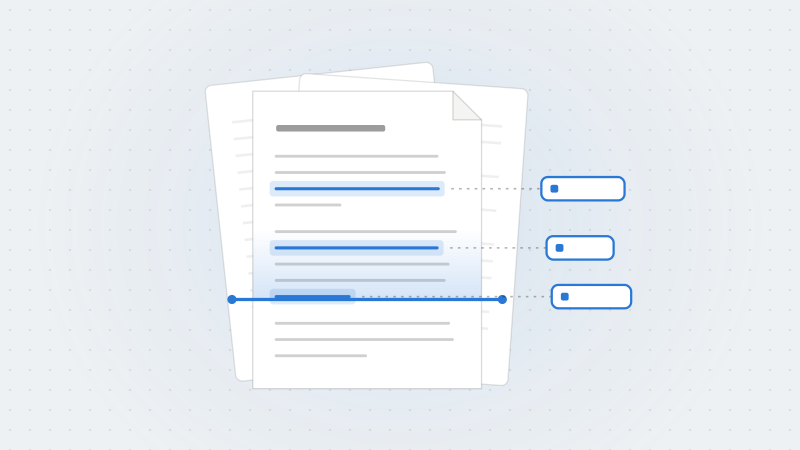
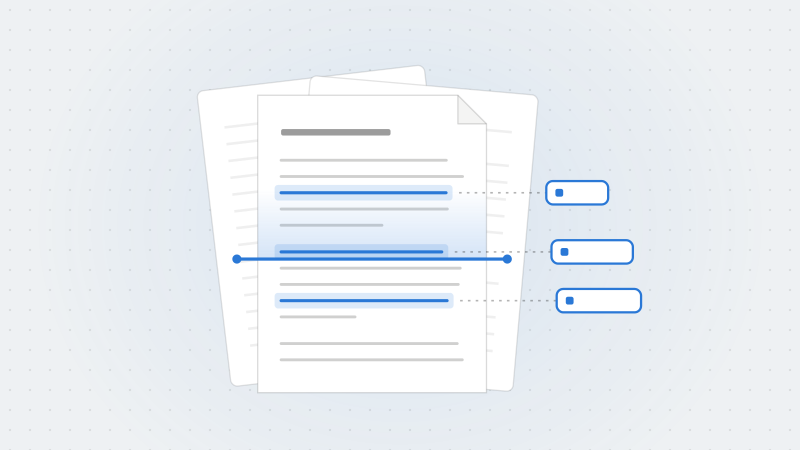
- The change-detection mechanism compares the document with its previous version and highlights the updates. The LLM detects changes from key indicators such as “increase”, “adjusted”, and “modified”, and from date-specific references1.
- The LLM writes a concise, structured summary of the substantial updates. It keeps the terminology and formatting consistent with Securex’s legal standards1.
- Keyword extraction adds keywords and metadata so that staff can find the summary by search1.
- The Lex4You portal shows the summary to customer care representatives and legal advisors1.
Results
The following table lists the published results.
| Metric | Before | After | Scope and timeframe | Reported by |
|---|---|---|---|---|
| Summarization and update processing time | Not disclosed | 50% reduction | CLAs in the Lex4You department | Faktion, measured1 |
| Accuracy in content identification | Not disclosed | 100% | CLAs in the Lex4You department | Faktion, measured1 |
| Compliance with Securex-specific legal terminology | Not disclosed | 90% | AI-generated summaries of CLAs | Faktion, measured1 |
The metrics measure the following:
- Processing time: The time that it takes to summarize CLAs and to process updates1.
- Content identification: The step that identifies the key sections within a CLA and determines the relevant content1.
- Terminology compliance: The consistency of the summaries with the terminology of Securex’s legal standards1.
The system also led to faster response times, improved searchability, higher accuracy and consistency, and reduced manual effort1.
Securex plans to explore full integration into its MyH&S platform, to centralize legal and compliance information1.
Lessons learned
Summarizing only the changes matched what the readers need. Businesses that consult a CLA are mainly interested in what changed from previous years, so the system compares versions and summarizes the key updates1.
The legal advisors’ review shaped the output. Faktion ran multiple iterations of AI-generated summaries and refined the prompts and instructions with the advisors’ feedback, which improved clarity, brevity, and terminology1.
The two languages didn’t match from the start. The Dutch and French versions showed discrepancies, which Faktion addressed during development1. Securex plans to refine the multi-language capabilities to better align the Dutch and French summaries1.
The system processes CLAs only. Extending the AI processing to additional legal documents is a plan1.
The figures are Faktion’s, published in its customer story about the project1.
Case study scorecard
- 50% Reduction in summarization and update processing time1
- 100% Accuracy in content identification1
- 90% Compliance with Securex-specific legal terminology1
Sources by publication date
- Organization 1
- Vendors and partners 2
Build this solution yourself
Analysis
What you need
To build this solution, you need the following in place:
- Both versions of each document as text files: The system compares the previous and current version of a CLA, and it extracts the text from .docx files. Check that you keep earlier versions in a format that software can read1.
- Legal experts who review the drafts: Securex’s legal advisors gave feedback over multiple iterations, and that feedback set the terminology of the summaries. You need experts with time for those rounds1.
- A portal that staff already use: The summaries appear on the Lex4You portal, which customer care representatives and legal advisors use to assist businesses. Check that you have such a place for the output1.
Reference architecture
Document review and drafting
A document review and drafting solution reads a case's documents against a written standard, precedents, or a list of questions and drafts a review, summary, clause, or report with its sources for an expert to finish. The solution pulls the case's documents, and a language model answers each question from the passages that bear on it, with its source. Fixed logic settles what must not vary, and an expert checks the draft against the sources and makes the decision.
- Source system
- Connector to the source system
- Review and drafting platform (documented in this case study)
- Text recognition
- Document preparation (documented in this case study)
- Passage index
- Access control
- Questions and templates (documented in this case study)
- Drafting model (documented in this case study)
- Private model endpoint
- Fixed logic
- Review workbench
- Reviewer feedback
- Tests on known cases
A check mark shows a building block that this case study's sources document.
Open the reference architectureOthers who built it
- SD Worx: Its Legal Watch platform, built with Faktion, compares document versions with a deterministic diffing mechanism. It sends only the differences to an LLM-based system, and it generates a summary, an impact assessment, and a list of key changes2.
- Lexum: The company generates AI summaries of the legislation of four Canadian provinces on CanLII. It links each assertion in a summary to the original document, and it provides French summaries for documents available in French3.
In the library
- How Nationwide uses generative AI to summarize claim notes Nationwide
- Merck drafts clinical study reports in days with gen AI Merck & Co.
- AI drafts clinical study reports in minutes at Novo Nordisk Novo Nordisk
- Corona, California speeds building plan review with AI City of Corona
- Denver pre-screens permit applications with CivCheck AI City and County of Denver
- Court strikes down DOGE's ChatGPT screening of NEH grants United States DOGE Service
Cite this case study
Enterprise AI Case Studies. "AI halves the time to summarize labor agreements at Securex." Updated Nov 20, 2026. https://case-studies.ai/case-studies/document-intelligence/DI-026-legislation-change-summarization-securex/
@misc{csai-di-026,
  author = {{Enterprise AI Case Studies}},
  title = {{AI halves the time to summarize labor agreements at Securex}},
  year = {2026},
  note = {Updated 2026-11-20},
  url = {https://case-studies.ai/case-studies/document-intelligence/DI-026-legislation-change-summarization-securex/}
}Sources
The following reporting, and every passage quoted from it, belongs to its publisher, not to this site. Sources and ownership
- Source 1:
Securex: Lex4You Automatic Legislation Change Detection & Summarisation
Supporting excerpts (37)
Faktion delivered a Legal AI solution that automates change detection and structured summarisation, cutting processing time by 50% while ensuring 90% compliance with legal standards.
The Lex4You department serves as a hub for specialised legal advice, offering HR news, labour law updates, and critical regulatory information to businesses and entrepreneurs.
Collective Labour Agreements (CLAs) - legal instruments negotiated between employer groups and employee organisations, outlining workplace rights, obligations, and benefits.
Every year, Securex's legal experts meticulously analyse new and updated CLAs to extract key insights on topics such as purchasing power, additional benefits, premiums, transportation costs, and working hours.
These analyses form the foundation of employment agreements available on the Lex4You portal, which is used by customer care agents and legal advisors to assist businesses in navigating labour laws.
Time-intensive manual processing: legal professionals spent extensive time in reviewing and summarising CLAs, making updates a slow process.
Inefficient search & retrieval: Customer care teams relied on long, complex documents, making it difficult to quickly retrieve relevant information
without automation, there was no efficient way to extract only the changes from previous years, which is the primary interest of businesses consulting these agreements
Securex required a system that could automate CLA document summarisation, and more specifically, the summary of changes in CLAs.
The system should maintain high accuracy, comply with legal terminology and produce structured outputs
Faktion developed a Legal AI system tailored for Securex AI Lab.
Automatically analyse CLAs and identify differences between previous and current versions.
Generate concise, structured summaries that highlight key updates.
Enhance searchability by extracting relevant keywords and metadata.
Seamlessly integrate with the Lex4You portal, making summaries readily accessible to customer care representatives and legal advisors.
Detect legislative changes based on key indicators such as ‘increase’, ‘adjusted’, ‘modified’, etc. or date-specific references
Ignore irrelevant sections and focus on substantial updates
Maintain consistency in terminology and formatting, aligned with Securex’s legal standards
The implementation followed a structured methodology, combining data analysis, iterative model development, and human validation:
Identify key sections within CLAs and determine relevant content.
Faktion also applied text pre-processing techniques to extract structured data from .docx files while filtering out irrelevant sections.
By using zero-shot and few-shot summarisation techniques, Faktion generated structured summaries.
Faktion also designed a change-detection mechanism to compare documents and highlight updates, and integrated keyword extraction techniques to enhance search functionality
Faktion conducted multiple iterations of AI-generated summaries, incorporating feedback from Securex’s legal advisors and refining prompts and instructions to improve clarity, brevity, and domain-specific terminology accuracy.
Moreover, Faktion addressed discrepancies between the Dutch and French versions to ensure consistency across languages
By integrating the tool into the Lex4You platform, Faktion made it accessible for Securex’s customer care and advisory teams.
100% accuracy in content identification.
90% compliance with Securex-specific legal terminology.
50% reduction in summarisation and update processing time.
Faster response times.
Improved searchability.
Higher accuracy & consistency.
Reduced manual effort.
Following the success of this project, Securex plans to further enhance the AI-powered Lex4You summarisation system by:
Expanding AI processing to additional legal documents beyond CLAs.
Refining multi-language capabilities for better alignment between Dutch and French summaries.
Exploring full integration into Securex's MyH&S platform, ensuring legal and compliance information is centralised and easily accessible.
- Source 2:
SD Worx Legal Watch: A Regulatory Monitoring Platform Built to Scale across Europe
Supporting excerpts (4)
Faktion partnered with SD Worx to build a production-grade Legal Watch platform
Faktion built a deterministic diffing mechanism that compares document versions and produces a structured visual comparison.
Rather than analysing every new document in full, the platform identifies what has actually changed and sends only those differences to the LLM-based AI system.
For flagged documents, the platform generates a summary, an impact assessment, and a list of key changes in a single structured response.
- Source 3:
Lexum Extends its AI Enrichment Services to Legislative Material
Supporting excerpts (4)
Lexum is proud to announce the launch of AI summaries for the legislation of Alberta, Saskatchewan, Manitoba, and Prince Edward Island on CanLII
Our tried and approved method links each assertion included within the summaries to the original document whenever possible, ensuring transparency and verifiability.
for the documents available in French, French summaries are also provided.
Our goal is to support Canadian legal researchers from coast to coast with AI enrichments













Comments
Start the conversation.
Invited members of the library comment here. Sign in to join the conversation.