

Boehringer Ingelheim reads adverse event forms with GenAI
Boehringer Ingelheim built ArisGlobal's generative AI into its validated drug safety system to read incoming adverse event forms and emails, with people correcting what it reads and reports on those corrections.
Boehringer IngelheimGermanyPharmaceuticals and biotechIn production since 2025
- Scenario
- Adverse event case intake
- Business function
- Legal and compliance
- Kind of solution
- Document extraction
- Who built it
- Vendor product (ArisGlobal)
- Human oversight
- Acts under watch
- Organization
- Enterprise
- AI types
- Generative AI, Document AI
tl;drAI reached 90% data accuracy on Boehringer's safety case intake within weeks of go-live.See the results
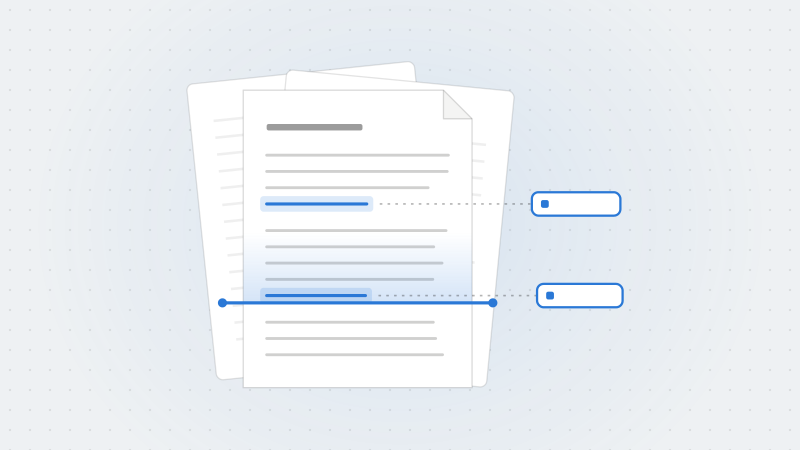
Boehringer Ingelheim’s drug safety team uses ArisGlobal’s NavaX-powered Advanced Intake to read the adverse event reports that start each safety case1. The generative AI reads CIOMS forms and partially structured emails and puts what they say into the case fields of Boehringer’s validated safety system2.
Staff see which values the AI read and change any that are wrong2. Reports on those changes show how accurate the model is2. In November 2025, Claudia Lehmann, who runs Boehringer’s patient safety and pharmacovigilance operations, presented the setup at a forum hosted by the European Medicines Agency (EMA) as an example in use at the company2, 3.
ArisGlobal announced the go-live in July 2025. Within weeks of deployment, Boehringer’s case forms were being processed with up to 90% average data extraction accuracy1.
Before the deployment
Every adverse event report starts a regulatory clock under the EU’s guideline on good pharmacovigilance practices8. Case processing worked under the following conditions:
- A marketing authorisation holder has 15 days from receipt to submit a serious valid individual case safety report (ICSR), and 90 days for a non-serious one8.
- Day zero is the first day anyone at the company, medical representatives and contractors included, learns of a valid case, even on a weekend or a public holiday8.
- EudraVigilance, the European database of suspected adverse drug reaction reports, collected and managed nearly 1.8 million ICSRs on reactions after authorisation in 2024, a 7.9% drop from 20239.
- On benchmark data published in 2018, case processing takes up to two-thirds of internal pharmacovigilance resources, and most of the whole budget once outsourcing is counted10.
Boehringer had automated this work for at least five years before generative AI, and its rule-based automation brought considerable efficiency and quality gains4. Rules suit whatever can be specified, tested and validated, because they always produce what is wanted2. They can’t handle some tasks, free-text analysis among them2.
That gap matters for safety as well as cost. “Even a non-serious case might include something in the free text that points to serious event information, and we cannot ignore that,” Lehmann said in a March 2026 interview4. The company saw an untapped opportunity, and it judged that the rise of generative AI was well timed for it4.
What was built
The solution reads each incoming form or email, fills the case fields, and lets people correct what it read2. Boehringer calls its control model two-factor human oversight: users see which data the AI read, and reports on their changes monitor the model2. The work is divided as follows:
- Advanced Intake: Reads CIOMS forms, the standard international format for reporting a suspected adverse reaction, and partially structured emails2. Its Dynamic Data Extraction processes forms whatever their number, variation or formatting, with no configuration of forms required1, 7.
- Validated safety system: Holds the case. The AI runs on top of and within it, is described in the validation plan and release frameworks, and uses no self-learning algorithms2.
- Case processors: Boehringer’s outside case processing vendor performs the quality control4. Its staff see which values the AI read and change any that are wrong2.
- Second check: Boehringer adopted the Four Eyes principle, a second set of eyes on the data, to keep control as it defers more to AI4.
- Change reports: Report every manual change to an AI-read value, which shows how the model performs2.
Forms were the starting point because they’re easy to read and check, but the same approach can be used for any unstructured information coming in2. The aim is to let safety teams spend more time on medical review and benefit-risk analysis1. Boehringer lists AI coding of adverse events, extraction from full-text literature articles and AI-written case narratives as other potential uses in case processing2.
Validation and training
Boehringer prepared its own groups and its vendor before the AI went live4. The preparation covered the following groups:
- Computer system validation group: Helped work out how AI fitted into the validation and testing plans and what the risk assessment had to cover4.
- Case processing vendor: Was brought in early to learn where each value comes from and how AI-assisted intake differs from the validated rules, because its staff perform the quality control. The vendor’s team also didn’t see the technology as a threat4.
- Users: Get guidance on what AI, an algorithm, inference and hallucinations are, and on the personal accountability each of them carries for safe use4. When the AI suggests something, staff are expected to understand it and be able to rationalize it4.
“There is a middle ground between blindly trusting AI and being so risk-averse that you reject the technology.”
Alternatives considered
Boehringer chose a contained start over a broad one5. It weighed the following options:
- A contained business case: A handful of NavaX applications, the intake of unstructured data among them, to test what the technology could do and what return a broader rollout might bring5. The team ran it as a technical initiative, so that it could keep it under control and keep monitoring it4.
- Going very broad from the outset: Lehmann said other companies prefer this, and called it “just a different approach”5.
The team picked case intake first because, compared with other patient safety projects, it’s easily controllable through human review4.
Rollout
The phases led from a vendor product launch to a go-live that Boehringer presented to regulators1, 2. Before go-live, sandbox tests had to show that the AI worked inside the existing automation, and Boehringer worked out with ArisGlobal how to measure the AI and how to react quickly together when the implementation needed improving4, 5.
Technology and architecture
The AI comes from ArisGlobal, and the controls around it are Boehringer’s. LifeSphere NavaX is ArisGlobal’s cognitive computing engine, the AI and machine learning layer that powers the products on its LifeSphere platform1, 5. Advanced Intake is the NavaX application for adverse event intake. It automates the collection of safety data and the workflows that follow, and it uses generative AI and large language models7.
The following table lists the parts of the solution.
| Layer | What they used | Role | Source |
|---|---|---|---|
| Solution platform | Advanced Intake | NavaX-powered intake application that reads Boehringer’s ICSRs with GenAI and Dynamic Data Extraction | 1, 7 |
| Workflow engine | Rule-based workflow automation | Existing validated automation the AI functionality was integrated into | 4 |
| Business or operational system | Validated safety system | The validated computer system the AI runs on top of and within, and whose data points it fills | 2, 4 |
| Review workbench | Case screen showing AI-read values | Shows which data the AI read, beside the source, so users can change wrong values | 2 |
| Monitoring | Reports on manual changes | Report the manual changes people make to AI-read values, to monitor the model’s accuracy | 2 |
Integrations
Advanced Intake is built to sit on top of existing safety databases, third-party systems included7. At Boehringer, it connects to the following systems:
- Rule-based workflow automation: The AI functionality was integrated into the existing workflow automation, not set beside it4.
- Validated safety system: The extracted fields land in data points of the system4. A screenshot from Boehringer’s testing environment, labeled NavaX and LSMV, shows the source document and the screen view side by side2.
Advanced Intake also serves companies that don’t use LifeSphere MultiVigilance, ArisGlobal’s own safety database7. The LSMV label most likely refers to that system.
Because the AI sits inside the existing automation, the sandbox tests had to show three things4:
- Everything sent to the AI engine comes back4.
- The fields land in the right data points in the system4.
- The whole process still works4.
Accuracy monitoring
Accuracy is monitored through the corrections themselves2. Every value a person changes counts as a manual change, and reports on those changes show how the model performs2.
Lehmann’s deck also describes a test case under the heading “assessing extraction quality, test case”2. It works as follows:
- Comparison: A report compares the data in defined fields when a case enters Intake and Assessment and again when it exits2.
- Schedule: The report runs daily over every serious adverse event (SAE) alert that left Intake and Assessment the day before2.
- Gaps found: Technology gaps, where the AI read something wrong and a person had to fix it, and process gaps, where people changed data they shouldn’t have2.
- Follow-up: Findings were to be discussed with ArisGlobal and lead to updated prompts, configurations or a fix, and a cumulative report for trending was to be created2.
How one form flows through the system
The documented controls give the following order of work for one form:
- A CIOMS form or a partially structured email arrives, and NavaX reads it2.
- NavaX puts the extracted values into the case fields2, 4.
- A case processor sees which values the AI read and changes any that are wrong2.
- A second person most likely looks at the case under the Four Eyes principle before it moves on.
- Each correction counts as a manual change, and the reports on those changes track the model’s accuracy2.
- Boehringer and ArisGlobal improve the implementation together when needed5.
Results
The headline result came with the go-live announcement on July 8, 20251. The following table lists it.
| Metric | Before | After | Scope and timeframe | Reported by |
|---|---|---|---|---|
| Data accuracy for safety case intake | Not disclosed | 90% | Within weeks of go-live, first-half 2025 update; the go-live release of July 2025 gave it as up to 90% average data extraction accuracy | ArisGlobal, measured6, 1 |
The results need the following explanation:
- Data accuracy: Measures how much of what the AI pulls from a form into the case fields is right. The first-half update on July 29, 2025 gave it as 90% data accuracy within weeks of go-live6.
- Manual effort and timelines: The go-live release says the system was reducing manual effort, even with the quality control steps in place, and accelerating timelines1. The first-half update described manual effort as dramatically reduced in the early rollout6.
- The deployment: Generative AI reads incoming case forms inside a validated pharmacovigilance system1. In November 2025, Boehringer presented the setup to regulators and industry as an example in use2.
Lessons learned
The control design is the strongest part of the account, and it comes from Boehringer itself. Lehmann’s deck for the EMA forum sets out where the AI sits, what people can see and change, and how errors are measured2. It answers a risk that the deck names: generative AI has no fixed outcome, so the written requirements aren’t guaranteed to hold, with hallucination the biggest downside2.
The contained start did what it was meant to, because the issues surfaced before the AI went to larger volumes4. In the sandbox, the AI failed at first because of differences between its interfaces and the existing workflow automation, which caused some frustration4. It worked after adjustments to the system, and Lehmann drew from it the need to re-validate the whole process, not just the individual elements4.
Lucinda Smith of ArisGlobal said that even at this scale, change management is critical, because the way people work, their mindsets and the processes all change4.
Use stayed small. In April 2025, the work had been done on a small scale, which made it easy to oversee, and Lehmann was still asking how to combine structured and unstructured data, which make up the bulk of Boehringer’s cases5. The deck warns that later uses have to avoid review fatigue and keep a clear quality-control mechanism, and that fully AI-based case processing needs a lot of review and checking2.
The figures are ArisGlobal’s, from two of its releases1, 6. They give the accuracy in two forms: “up to 90% average” at go-live and a flat 90% three weeks later1, 6. The same 90% figure is the one ArisGlobal claimed for Advanced Intake in early pilots when it launched the product in April 20247.
Boehringer’s own accounts describe the design and the lessons. They are the EMA deck, whose opinions are the presenter’s and not the company’s, and two interviews2, 4, 5. One interview ran on ArisGlobal’s blog, and the other in a trade magazine beside ArisGlobal’s chief safety product officer4, 5.
Case study scorecard
- 90% data accuracy for Boehringer's safety case intake6
Sources by publication date
- Organization 1
- Vendors and partners 5
- Press, academic, and regulators 6
Build this solution yourself
Analysis
What you need
This deployment depended on the following, which you need in place too:
- Validated rule-based intake automation: Boehringer built the AI into automation it had run for at least five years4. Expect interface trouble where the AI meets that automation, as Boehringer found in the sandbox4.
- A validation group that can write AI into test plans: The AI sits in a validated system with release frameworks, and the validation group shaped the test plans and the risk assessment2, 4.
- A record of every manual change to AI-read values: The accuracy monitoring reports on these changes, so without the record it has nothing to report2.
- Case processors who know which values came from a model: They perform the quality control, so they have to see where each value comes from4.
Reference architecture
Document extraction
Document extraction reads the documents, forms, and images that an organization receives, sorts each one to its case, and turns it into structured fields for the business system that acts on it. Models read each document into fields, and ordinary software checks the fields against business rules and the organization's reference records. A reviewer compares the fields with the source before they reach the business system, or sees only the doubtful ones, and the corrections measure and improve the models.
- Document intake
- Document extraction platform (documented in this case study)
- Preparation
- Text recognition
- Extraction model
- Validation rules
- Reference records
- Workflow engine (documented in this case study)
- Review workbench (documented in this case study)
- Answer explanation
- Connectors
- Business system (documented in this case study)
- Corrections log
- Accuracy monitoring (documented in this case study)
A check mark shows a building block that this case study's sources document.
Open the reference architectureOthers who built it
- Merck KGaA: In January 2026, its ICSR management team was about four weeks into implementing NavaX for pharmacovigilance and had deferred major process changes until later in 202612.
- Pfizer: In a pilot published in 2018, Pfizer tested three commercial vendors’ AI on extracting data from adverse event source documents and judging case validity, and two of the vendors beat its internal benchmark10.
- Eli Lilly: It built MosaicPV, an intake platform that brings adverse event data from call centers, email systems and patient platforms into a data lake11. Machine learning and rule-based models interpret the data, and the first two releases came in 201811.
In the library
- Condé Nast speeds rights contract analysis with Claude Condé Nast
- Cargolux drafts cargo quotes from customer emails with AI Cargolux Airlines International
- Air France KLM Martinair Cargo uses AI to book and quote Air France KLM Martinair Cargo
- Pennsylvania's AI check cuts illegible benefit documents Pennsylvania Department of Human Services
- How Liberty Global matches supplier invoices with GenAI Liberty Global
- Parte embeds AI in property managers' email in 27 offices Parte
Cite this case study
Enterprise AI Case Studies. "Boehringer Ingelheim reads adverse event forms with GenAI." Updated Nov 18, 2026. https://case-studies.ai/case-studies/document-intelligence/DI-005-pharma-adverse-event-processing/
@misc{csai-di-005,
  author = {{Enterprise AI Case Studies}},
  title = {{Boehringer Ingelheim reads adverse event forms with GenAI}},
  year = {2026},
  note = {Updated 2026-11-18},
  url = {https://case-studies.ai/case-studies/document-intelligence/DI-005-pharma-adverse-event-processing/}
}Sources
The following reporting, and every passage quoted from it, belongs to its publisher, not to this site. Sources and ownership
- Source 1:
Boehringer Ingelheim Harnesses GenAI to Transform Case Intake with LifeSphere NavaX
Supporting excerpts (9)
announced that Boehringer Ingelheim has implemented LifeSphere
the organization is now leveraging NavaX-powered Advanced Intake to process individual case safety reports (ICSRs)
The solution's application of GenAI and Dynamic Data Extraction technologies is delivering tangible results
within weeks of deployment, case forms are being processed with up to 90% average data extraction accuracy
reducing manual effort despite quality control steps and accelerating timelines
the solution allows safety teams to focus on higher-value activities such as medical review and benefit-risk analysis
By going live with LifeSphere NavaX, we are unlocking the potential of AI and automation to transform how our teams process cases
NavaX is ArisGlobal's cognitive computing engine, powering all AI-products across the LifeSphere® Unify platform.
Dr. Robert Buchberger, Head of Patient Safety and Pharmacovigilance at Boehringer Ingelheim
- Source 2:
AI in pharmacovigilance - industry perspective
Supporting excerpts (31)
CLAUDIA LEHMANN, HEAD PSPV OPERATIONS & SYSTEMS, BOEHRINGER INGELHEIM
OPINIONS EXPRESSED ARE THOSE OF THE PRESENTER, NOT THE COMPANY OR ORGANISATION
rule based automation: specified, tested, validated, always producing what is wanted
cannot be adressed with rule based automation, e.g. free text analysis
AI usage has downsides, e.g. and the biggest one, halluzination.
AI does not have a fixed outcome and prompting techniques do not consistently produce the same outcome.
Thus, it is not guaranteed that the requirements as written down are always fulfilled.
AN EXAMPLE IN USE AT BOEHRINGER INGELHEIM
Use of GenAI for intake of information from forms, such as CIOMS or from partially structured mails
easy to read and check, but can be used for any unstructured info coming in
On top and within a validated computer system, being described in the validation plan and integrated in release frameworks
No self learning algorithms
Twofactor human oversight
which data are read via AI with ability to change the data if wrong
Monitoring of accuracy through reports about manual changes and thus performance of the model
Oversight, control, improvement through human pattern recognition
Source and screen view
NAVAX LSMV SCREENSHOT, TESTING ENVIRONMENT BOEHRINGER INGELHEIM
ASSESSING EXTRACTION QUALITY –TEST CASE
Comparison of data in defined fields at entry and exit of Intake&Assessment
Runs daily and displays all SAE Alerts that exited I&A on the previous day
Identifies process gaps (people changing data where they should not) and technology gaps
Cumulative report will be created for trending
Findings to be discussed with vendor
update of prompts, configurations, or fix
Intelligent coding of adverse events
Data extraction from full text literature articles
Gen AI based narrative writing in ICSR processing
Avoid review fatigue, have a clear QC mechanism
Fully AI based case processing requires a lot of review and checking
Does not differentiate the mix of rule based automation and AI technologies Not seen yet
- Source 3:
Agenda: 1st EMA/HMA Multi-Stakeholder Forum on EudraVigilance and Signal Detection
Supporting excerpts (3)
1st EMA/HMA Multi-Stakeholder Forum on EudraVigilance and Signal Detection 5 November 2025
Artificial intelligence in pharmacovigilance
Claudia Lehmann (EFPIA), Attila Oláh (Medicines for Europe)
- Source 4:
AI in Pharmacovigilance: Key Takeaways from Boehringer Ingelheim's Recent Rollout
Supporting excerpts (29)
Claudia Lehmann is Head of Patient Safety and Pharmacovigilance Operations at Boehringer Ingelheim.
Lucinda Smith is Chief Safety Product Officer at ArisGlobal.
starting with adverse event case intake and processing
A lot of our work over the last five years led up to this point.
having started our automation journey at least five years earlier
Rule-based automation has already produced some considerable efficiencies and quality gains, but we knew there was still an untapped opportunity, and the rise of Generative AI (GenAI) was well timed.
We identified case processing/case intake as good use cases for AI.
this type of application is easily controllable through human review
Because we were starting small, we defined this as a technical initiative - with scope to control and keep monitoring it.
Our computer system validation group guided us too - in how to factor in use of AI in our validation and testing plans, and in the risk assessment we would need to do
We had to factor in our case processing vendor here as well, because they would be performing the quality control and would need to understand where the information is coming from, and how AI-enabled activity would differ from existing, validated, rule-based automation.
Taking the time to work through this also ensured the vendor's team didn't see the technology as a threat.
When we started testing in the sandbox
we experienced some issues arising from differences in the interfaces
This is because the AI functionality was integrated into existing workflow automation. It caused some frustration when it didn't work.
the need to consider and re-validate not just individual elements but also the overall process
Process qualification means testing that everything that goes in the AI engine comes back, for instance; that the fields are extracted into the right data points in the system; and that the whole process still works within the system.
Initially that wasn't the case but, with adjustments in the system, we made it work.
Even at this scale of initiative, change management is critical
due to changes to the way people operate, to their mindsets, to processes, and to culture
principle (a second set of eyes) which has been helpful in building confidence
It ensures an optimum level of control over data as we defer increasingly to AI.
We're providing a wealth of guidance for users on everything from “What is AI?”, “What is an algorithm?”, and “What is inference?”, to “What are hallucinations?”
teams must understand safe use and the personal accountability that sits with each user
There is a middle ground between blindly trusting AI and being so risk-averse that you reject the technology.
When AI suggests something, we have to understand it and be able to rationalize it, using our logical minds.
in time we expect to do this in aggregate document writing, analytics, and other tasks
Even a non-serious case might include something in the free text that points to serious event information, and we cannot ignore that.
If you start small, you have a chance to iron out issues before extending AI-based automation to larger work volumes or new use cases.
- Source 5:
Supporting excerpts (11)
Claudia Lehmann, Head of Global PSPV Operations at Boehringer Ingelheim, joined a user panel discussing the impact of NavaX
the powerful AI and machine learning engine which powers the platform
we have taken initial small steps with a very contained business case, focusing on a handful of applications. These include the intake of unstructured data.
The strategy has been to test what's possible with NavaX, and determine what the ROI might be if we then apply the technology more broadly.
Other companies prefer to go very broad from the outset, which is just a different approach.
in determining how to measure that
We've done this on a small scale up to now, making it easy to oversee everything.
how can we combine structured and unstructured data, which represents the bulk of our cases?
how to react quickly together with ArisGlobal to improve the implementation if needed
the full benefit can only be achieved if we combine new process and new technology
e.g. to find adverse events in literature articles or other unstructured text information
- Source 6:
ArisGlobal Achieves Strong Global Growth and Continued Innovation in First Half 2025
Supporting excerpts (3)
announced significant momentum in the first half of 2025
Boehringer Ingelheim: Successfully implemented NavaX for safety case intake, achieving 90% data accuracy within weeks of go-live
dramatically reducing manual effort and improving efficiency in early rollout
- Source 7:
Significant Case Intake Efficiencies Found in Newly Launched Life Sciences Generative AI Solution
Supporting excerpts (8)
today revealed details about its Advanced Intake solution powered by LifeSphere NavaX
Advanced Intake automates the collection of Safety data and downstream workflows.
leverages the latest intelligent automation technologies, including Generative AI and Large Language Models (LLMs), to revolutionize adverse event (AE) intake
Advanced Intake features Dynamic Data Extraction, meaning the system can intelligently process forms regardless of number, variation, or formatting inconsistencies.
With Dynamic Data Extraction, no configuration of forms is required.
As demonstrated in early pilots, Advanced Intake delivers up to 65% efficiency gains and shows 90% data extraction accuracy and quality.
Layer Advanced Intake on top of existing safety databases via open architecture and seamless integrations with third-party safety systems.
even where organizations do not leverage LifeSphere MultiVigilance
- Source 8:
Guideline on good pharmacovigilance practices (GVP) Module VI (Rev 2)
Supporting excerpts (6)
marketing authorisation holder within 15 days from the date of receipt of the reports
marketing authorisation holder within 90 days from the date of receipt of the reports
personnel of the marketing authorisation holder, including medical representatives and contractors
This date should be considered as day zero.
It is the first day when a notified competent authority or marketing authorisation holder gets knowledge of a valid ICSR
irrespective of whether the information is received during a weekend or public holiday
- Source 9:
2024 Annual Report on EudraVigilance for the European Parliament, the Council and the Commission
Supporting excerpts (2)
EudraVigilance, the European database of suspected adverse drug reaction (ADR) reports
In 2024, nearly 1.8 million ICSRs related to suspected ADRs occurring after authorisation were collected and managed in EudraVigilance (a 7.9% decrease compared to 2023).
- Source 10:
Innovation in Pharmacovigilance: Use of Artificial Intelligence in Adverse Event Case Processing
Supporting excerpts (6)
the strongest cost driver for a company's overall pharmacovigilance budget
Case processing activities constitute a significant portion of internal pharmacovigilance (PV) resource use, ranging up to two‐thirds on the basis of PVNet benchmark data.
When additional costs related to outsourcing are taken into account, case processing spending, on average, consumes most of a pharmaceutical company's overall PV budget.
The pilot paradigm was used to simultaneously test proposed solutions of three commercial vendors.
support extraction from adverse event source documents and evaluation of case validity
two of the vendors achieved overall F1 scores and case‐level accuracy in excess of the Pfizer internal benchmark
- Source 11:
Eli Lilly AI automates adverse reaction reporting
Supporting excerpts (4)
The team built MosaicPV, an intelligent intake platform that automates the business rules used to triage and manage these reports.
The software ingests both structured and unstructured case data about adverse events from global call centers, email systems and patient connection platforms into a data lake.
as machine learning (ML) algorithms and rule-based models interpret the information and make predictions
Following two releases in 2018
- Source 12:
AI in PV case intake & processing: where are we now?
Supporting excerpts (2)
Author: Claudia Schaffer, Head of ICSR Management at Merck KGaA, based in Darmstadt, Germany.
At the time of writing, we are about four weeks into our implementation of NavaX for PV, but we have deferred any major process changes until later in 2026.

























Comments
Start the conversation.
Invited members of the library comment here. Sign in to join the conversation.