

LSEG staff summarize market research with ChatGPT Enterprise
LSEG, the global market data and exchange group, gave its staff ChatGPT Enterprise and the OpenAI APIs to summarize market information and draft reports, client communications and documentation.
LSEGUnited Kingdom (Employees across LSEG's operations in 65 countries in EMEA, North America, Latin America and Asia Pacific)Capital marketsScaled
- Scale
- Thousands of employees globally
- Scenario
- Financial research summarization and report drafting
- Business function
- Knowledge management
- Kind of solution
- Document review and drafting
- Who built it
- Vendor product (OpenAI)
- Where it runs
- Vendor-hosted service
- Human oversight
- Assists people
- Organization
- Enterprise, 10,000 to 99,999 employees
- AI types
- Generative AI, Conversational AI
- Users
- 4,000
- People served
- more than 40,000
tl;drLSEG gave thousands of employees worldwide access to ChatGPT Enterprise within weeks.See the results
LSEG, the UK-headquartered financial markets infrastructure and data group, uses ChatGPT Enterprise and the OpenAI APIs for summaries of financial and market information and for drafts of reports, client communications and documentation1.
The rollout started from plans that LSEG announced in December 2025, with an initial 4,000 employees2, 3. By June 2026, the tools were deployed across the organization, and thousands of employees globally had access within weeks1.
Before the deployment
LSEG supports more than 40,000 customers and 400,000 end users across approximately 190 markets1. It had invested in AI and machine learning for financial models and analytics for years1. Its knowledge work still ran on older patterns:
- Manual synthesis: Staff pulled information together by hand, in fragmented workflows1.
- Slow insight: Time-intensive processes slowed insight generation and limited how far the work could scale1.
- Client demand: Many LSEG clients already used ChatGPT in their own work1.
What was built
LSEG gives its employees ChatGPT Enterprise for summarizing and drafting, and the OpenAI APIs for the workflows and prototypes that its teams build1. Teams across product, engineering, research and operations use AI to draft reports, synthesize market data, prototype products and streamline internal workflows1. The model, the governance controls and the staff divide the work:
- Analyst summaries: ChatGPT summarizes large volumes of financial and market information for analysts, which cuts the time that they spend on initial research1.
- Drafting and prototypes: Business teams generate client communications and documentation with it, and product teams use it to prototype features1.
- Governance controls: Model evaluation frameworks and strict data privacy and security controls were in place from the outset1.
- Staff: People review critical outputs in a human-in-the-loop step1.
LSEG selected OpenAI for model quality, enterprise readiness and alignment with customer demand1. It started from real problems and scaled from there, and it works with OpenAI’s technical success teams on adopting the latest frontier models1, 2.
“We don’t think about restricting people—we think about enabling them”
Rollout
- December 3, 2025: LSEG announced initial plans to make ChatGPT Enterprise available to employees, starting with 4,000 of them. On the same day, it announced a Model Context Protocol (MCP) connector that brings its data into ChatGPT for customers2, 3.
- By June 2026: ChatGPT Enterprise and the OpenAI APIs were deployed across the organization1.
- Next: LSEG is expanding to workflow-level AI applications in research processes, product development and client-facing solutions1.
Technology and architecture
| Layer | What they used | Role | Source |
|---|---|---|---|
| Solution platform | ChatGPT Enterprise | Gives employees OpenAI’s models within ChatGPT’s secure enterprise environment | 1, 2 |
| Chat interface | ChatGPT | Chat where analysts ask for summaries and teams draft reports and client documents | 1 |
| Language model | OpenAI APIs | Give LSEG teams OpenAI models for internal workflows and product prototypes | 1 |
ChatGPT Enterprise is OpenAI’s workplace edition of ChatGPT. In this deployment, employees use it within ChatGPT’s secure enterprise environment to streamline tasks and internal processes2. LSEG deployed the OpenAI APIs beside it, and teams use AI to streamline internal workflows and prototype products1.
The main data input is the financial and market information that ChatGPT summarizes for analysts, together with the market data that teams synthesize1.
Results
| Metric | Before | After | Scope and timeframe | Reported by |
|---|---|---|---|---|
| Employees with ChatGPT Enterprise and the OpenAI APIs | Not disclosed | thousands of employees | Across the organization, within weeks, by June 2026 | OpenAI, measured1 |
By June 2026, LSEG had moved from an initial group of 4,000 employees to a deployment across the organization1, 2:
- Reach: ChatGPT Enterprise and the OpenAI APIs reached thousands of employees globally within weeks1.
- Adoption: Adoption scaled quickly, driven by grassroots enthusiasm, and early users showed immediate value across teams and geographies1.
- Accuracy and time: Employees reported positive feedback on the accuracy of ChatGPT for complex tasks, with time savings from faster outputs and reduced manual effort1.
- Analyst research: Analyst productivity increased through faster research and synthesis1.
- AI products: The products that LSEG adapts for AI consumption moved to a release cycle of 2 weeks, from 3 to 6 months before. Customer delivery takes about 4 weeks from request to production1.
Lessons learned
Broad access with governance in place from the start worked for LSEG. It enabled thousands of employees within weeks, and adoption spread from early users who showed value1. LSEG’s own lesson is that strong governance enables faster, safer innovation1.
The gains for analysts rest on employee feedback about accuracy and time savings1.
The 2-week release cycle describes LSEG’s AI products, not its use of the employee tools. LSEG, quoted in the account, ties the earlier cycle of three to six months to regulatory, compliance, legal, cybersecurity and delivery requirements1.
The same account gives the earlier release cycle two ways: about 6 months in its headline figure and 3 to 6 months in its list of results1. The workforce also appears as over 26,000 people in December 2025 and 27,000 employees in June 20261, 2.
The figures are OpenAI’s and LSEG’s own, from OpenAI’s customer story with quotes from LSEG’s AI leaders1. Reuters reported the December 2025 announcement of the employee rollout and the customer connector3.
LSEG draws its own lessons from the rollout. It starts with high-impact, low-risk use cases because governance is critical for scaling safely, and it invests in training because the best use cases often come from users1.
Case study scorecard
- thousands of employees Employees enabled on ChatGPT Enterprise and the OpenAI APIs1
Sources by publication date
- Organization 1
- Vendors and partners 1
- Press, academic, and regulators 1
Build this solution yourself
Analysis
What you need
- Governance before broad access: LSEG put model evaluation, human review of critical outputs, and privacy and security controls in place from the outset, and then opened the tools widely1. Check that you can do the same before you give thousands of staff access.
- An enterprise environment for financial material: LSEG’s employees work within ChatGPT’s secure enterprise environment2. You need terms and controls that cover the financial and market information your staff will summarize.
- Early adopters and training: Adoption at LSEG grew from early users who showed visible value1. You need a training and enablement program that finds those users and spreads their use cases.
Reference architecture
Document review and drafting
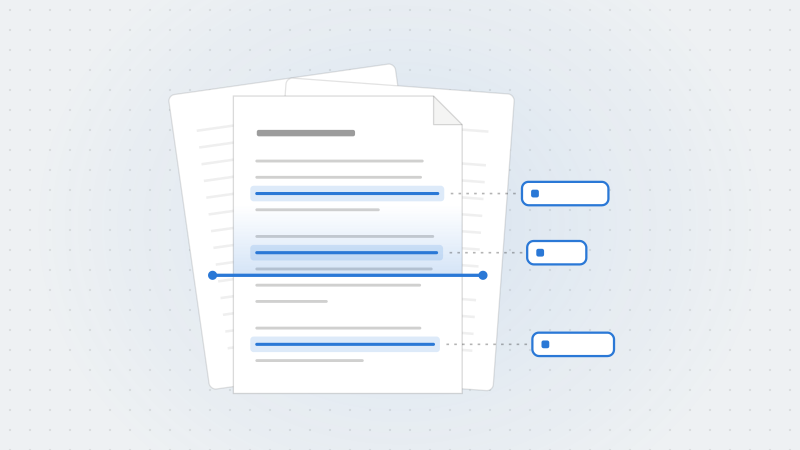
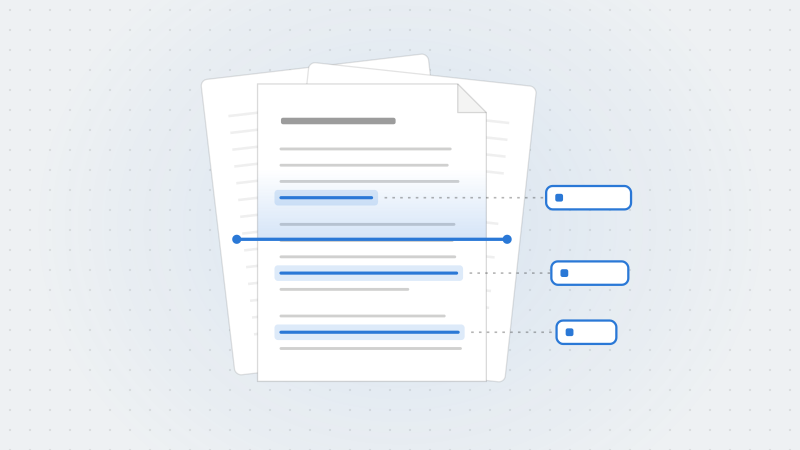
A document review and drafting solution reads a case's documents against a written standard, precedents, or a list of questions and drafts a review, summary, clause, or report with its sources for an expert to finish. The solution pulls the case's documents, and a language model answers each question from the passages that bear on it, with its source. Fixed logic settles what must not vary, and an expert checks the draft against the sources and makes the decision.
- Source system
- Connector to the source system
- Review and drafting platform (documented in this case study)
- Text recognition
- Document preparation
- Passage index
- Access control
- Questions and templates
- Drafting model (documented in this case study)
- Private model endpoint
- Fixed logic
- Review workbench
- Reviewer feedback
- Tests on known cases
A check mark shows a building block that this case study's sources document.
Open the reference architectureOthers who built it
- Nationwide: How Nationwide uses generative AI to summarize claim notes. Nationwide's AI now summarizes the log notes of thousands of claims every week.
- Merck & Co.: Merck drafts clinical study reports in days with gen AI. First drafts of clinical study reports take three to four days instead of two to three weeks.
- Novo Nordisk: AI drafts clinical study reports in minutes at Novo Nordisk. NovoScribe cut clinical study report creation from 12 weeks to 10 minutes at Novo Nordisk.
- City of Corona: Corona, California speeds building plan review with AI. AI cut Corona's permit plan-review time by 97% across 20 permit types.
- City and County of Denver: Denver pre-screens permit applications with CivCheck AI. Denver's AI assistant now checks permit applications for missing information before submission.
- United States DOGE Service: Court strikes down DOGE's ChatGPT screening of NEH grants. A federal court struck down DOGE's ChatGPT-aided cancellation of more than 1,400 NEH grants.
Cite this case study
Enterprise AI Case Studies. "LSEG staff summarize market research with ChatGPT Enterprise." Updated Nov 24, 2026. https://case-studies.ai/case-studies/document-intelligence/DI-054-research-summarization-chatgpt-lseg/
@misc{csai-di-054,
  author = {{Enterprise AI Case Studies}},
  title = {{LSEG staff summarize market research with ChatGPT Enterprise}},
  year = {2026},
  note = {Updated 2026-11-24},
  url = {https://case-studies.ai/case-studies/document-intelligence/DI-054-research-summarization-chatgpt-lseg/}
}Sources
The following reporting, and every passage quoted from it, belongs to its publisher, not to this site. Sources and ownership
- Source 1:
From data to decisions: how LSEG is scaling trusted AI
Supporting excerpts (40)
it supports more than 40,000 customers and 400,000 end users across approximately 190 markets.
For years, LSEG had invested heavily in AI and machine learning to power financial models and analytics.
Despite advanced infrastructure, knowledge work across the organization still involved manual synthesis, fragmented workflows, and time-intensive processes that slowed insight generation and limited scalability.
The company selected OpenAI based on model quality, enterprise readiness, and alignment with customer demand.
Many LSEG clients were already using ChatGPT, creating a natural opportunity to integrate LSEG's trusted data directly into those workflows.
LSEG approached generative AI with a deliberate strategy: start with real problems, and scale responsibly.
LSEG deployed ChatGPT Enterprise and OpenAI APIs across the organization, enabling thousands of employees globally within weeks.
Teams across product, engineering, research, and operations began using AI to draft reports, synthesize market data, prototype products, and streamline internal workflows.
Analysts, for example, now use ChatGPT to summarize large volumes of financial and market information—reducing time spent on initial research and accelerating insight generation.
Product teams use AI to rapidly prototype features, while business teams generate client communications and documentation more efficiently.
LSEG embedded governance from the outset.
This included model evaluation frameworks, human-in-the-loop review for critical outputs, and strict data privacy and security controls.
We don't think about restricting people—we think about enabling them
Give people the tools to move faster, while making sure everything remains safe and compliant.
Adoption scaled quickly, driven by grassroots enthusiasm.
Early users demonstrated immediate value, creating momentum across teams and geographies.
Employees reported positive feedback on the accuracy of ChatGPT for complex tasks, with clear time savings driven by faster, high-quality outputs and reduced manual effort.
What has changed with ChatGPT is that we can scale best practice more easily, complete tasks more quickly, and still embed the standards and skills we care about,
says Emily Prince, Group Head of AI at LSEG
AI is a step change. But the real transformation comes when you rethink how you solve problems—not just how you execute them.
Emily Prince, Group Head of Enterprise AI, LSEG
says Max Grigoryev, Group Director for AI Products
Reduced product release cycles from 3–6 months to 2 weeks
product release cycles, from ~6 months to ~2 weeks
Enabled thousands of employees globally within weeks
Accelerated customer delivery timelines to ~4 weeks from request to production
Increased analyst productivity through faster research and synthesis
Expanded innovation velocity, with ideas moving from concept to prototype in hours
Historically, bringing products to market often took three to six months because of regulatory, compliance, legal, cybersecurity, and delivery requirements.
Now, many of the products we are adapting for AI consumption are on a two-week release cycle.
Rethink workflows, not just tasks: The biggest gains come from redesigning how work gets done
Enable broadly, early: Giving teams access at scale accelerates learning and adoption
Balance speed with trust: Strong governance enables faster, safer innovation
Start with high-impact, low-risk use cases: Governance is critical for scaling safely for LSEG.
Empower early adopters: Adoption accelerated for LSEG when value was immediately visible.
Invest in training and enablement: The best use cases often emerge from users themselves.
Be demanding about outcomes: Be clear on what success looks like before scaling.
LSEG is now expanding beyond individual productivity gains to more deeply embedded, workflow-level AI applications.
This includes integrating AI directly into research processes, product development, and client-facing solutions.
When you imagine the collective power of 27,000 employees leaning into AI with confidence
- Source 2:
LSEG announces new collaboration with OpenAI
Supporting excerpts (6)
LSEG today announced an MCP (Model Context Protocol) connector for ChatGPT users and enterprise customers of OpenAI, and initial plans to make ChatGPT Enterprise available for employees.
Additionally, an initial 4,000 LSEG employees will get access to ChatGPT Enterprise to efficiently streamline tasks, improve internal processes and be more productive, within ChatGPT's secure enterprise environment.
LSEG will work with OpenAI's technical success teams to ensure successful adoption of the latest frontier AI models and product capabilities.
LSEG's MCP connector is expected to be live in ChatGPT from the week of 8 December 2025.
LSEG is headquartered in the United Kingdom, with significant operations in 65 countries across EMEA, North America, Latin America and Asia Pacific.
We employ over 26,000 people globally, more than half located in Asia Pacific.
- Source 3:
LSEG to integrate financial data into ChatGPT in AI push
Supporting excerpts (3)
available to its employees, it said on Wednesday
as financial services firms race to adopt generative AI tools that can quickly analyse vast amounts of market information
Reuters provides news for LSEG's Workspace










Comments
Start the conversation.
Invited members of the library comment here. Sign in to join the conversation.