

Emmen gives its council AI search over council records
The Dutch municipality of Emmen took AethiQs' MAAT into use, an AI tool that searches council documents and meeting recordings and answers councillors' questions with citations to the source passages.
Gemeente EmmenNetherlandsLocal and regional governmentIn production since 2025
- Scenario
- Council information search and question answering
- Business function
- Knowledge management
- Kind of solution
- Knowledge assistant
- Who built it
- Vendor product (AethiQs)
- Where it runs
- Private cloud
- Human oversight
- Assists people
- Organization
- Public sector
- AI types
- Generative AI, Conversational AI, Speech AI
- Sites
- tien
tl;drEmmen became the tenth Dutch municipality to put MAAT to work for its council and clerk's office.See the results
The municipality of Emmen in the Netherlands uses MAAT, an AI search and support tool for council information1. The advisory firm AethiQs developed the tool1. Councillors and the clerk’s office use it to search council records and get answers with citations1.
In June 2025, Emmen became the tenth Dutch municipality to take MAAT into use, after the tool had gone through several pilot phases1. The municipality expects the tool to make its council more decisive and better informed1.
Before the deployment
Dutch councils publish their agendas, documents and meeting streams in council information systems, which are public websites where residents follow local politics4. In January 2024, Nieuwsuur analyzed these systems at all 342 Dutch municipalities4. In June 2025, a study by ICTU for the Ministry of the Interior followed5. The two found these problems:
- In almost half of the systems, the search didn’t work properly, documents were hard to find, or meetings couldn’t be watched or heard back4.
- The search options of the suppliers of these systems were very limited5.
- Each supplier kept the data on its own platform, in its own structure5.
- New councillors could hardly trace the chronology and status of a theme with the existing technology5.
Some municipalities had started to put standard search software from AethiQs, Debatrijk or Spinque on top of these systems5.
What was built
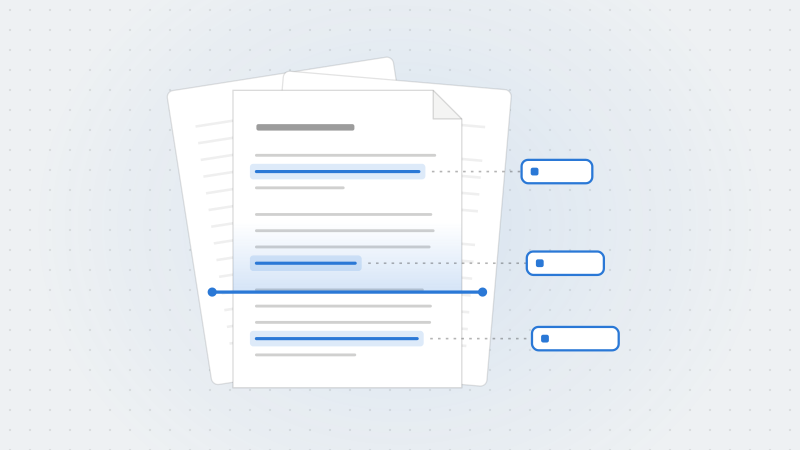
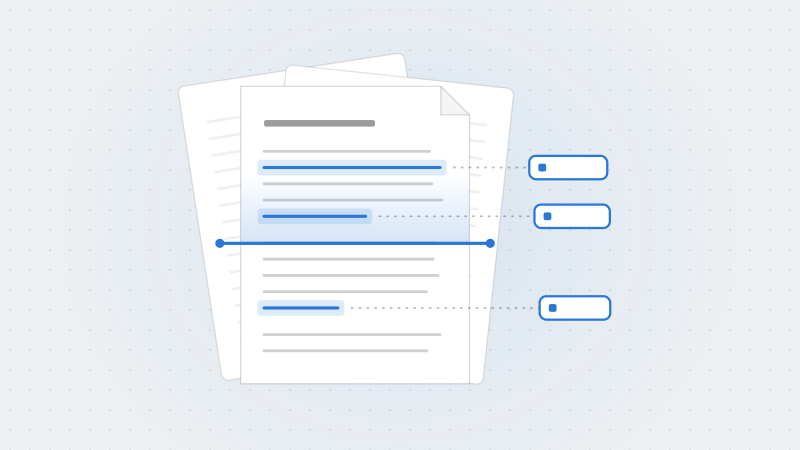
MAAT indexes complete council dossiers, including text, audio and video, so that users can search them with synonyms and contextual queries1. A second layer uses generative AI to write summaries and answer questions about the documents1. The AI, the surrounding software and the users divide the work:
- Search and ranking: MAAT finds exact matches and results with a related meaning, such as synonyms, and ranks them by relevance with AI2. It ignores spelling and typing errors, and it searches the content of documents instead of only file names2.
- Meeting transcription: The meetings module makes a transcript of every meeting with AI, so that a user can find when a topic came up and watch that fragment2.
- Generative answers: The generative layer summarizes documents and answers questions, and it always returns source references and quotations with an answer1.
- Dossiers and timelines: The software combines the results of several searches into a dossier, or shows the policy history of a topic as a timeline2.
- Councillors and the clerk’s office: They ask the questions and check each answer against its cited source1. The dossier module saves the clerk’s office from compiling dossiers by hand, so councillors can work more independently2.
Technology and architecture
MAAT runs inside the isolated cloud environment of the organization that uses it, such as Microsoft Azure, so that data isn’t sent to public AI models by accident1. The municipality set it up with an explicit focus on ethics, privacy and transparency1.
| Layer | What they used | Role | Source |
|---|---|---|---|
| Solution platform | MAAT | AI search and support tool for council information | 1 |
| Search and vector index | Search index over council records | Indexes full council dossiers with text, audio and video | 1 |
| Embedding and ranking model | AI relevance ranking | Finds results with a related meaning and ranks them | 2 |
| Speech recognition | Meeting transcription module | Transcribes each meeting so a topic can be found and replayed | 1, 2 |
| Language model | Generative AI layer | Writes summaries and answers questions with citations | 1 |
| Workplace application | Dossier and timeline module | Builds dossiers and policy timelines for export | 2 |
| Business or operational system | Council information and webcast systems | Hold the documents and recordings that MAAT searches | 2 |
| Cloud platform | Isolated cloud environment | Runs MAAT inside the organization’s own cloud | 1 |
Data inputs
- Council documents: The complete council dossiers, which MAAT indexes as searchable text1.
- Meeting recordings: Audio and video of council meetings, which the meetings module transcribes1, 2.
- Questions: Queries in the user’s own words from people who want to find decisions, motions or meeting times2.
Integrations
MAAT works as a shell on top of the council and webcast systems and older archives, so that users search all of them from one place2. Outside sources such as wetten.overheid.nl, NOS material or records of the Tweede Kamer can be added to the same search2.
How one search flows through the system
- A councillor types a query in their own words. MAAT finds exact matches and results with a related meaning2.
- The ranking model orders the results by relevance2.
- MAAT shows each result inside the text fragment around it. The councillor can search again within the results2.
- One click opens the passage in the document, or plays the fragment of the meeting video2.
- The generative layer answers a question about the documents, with source references and quotations1.
- The councillor adds the results to a dossier or a timeline, and exports and shares it2.
Results
MAAT is in use for Emmen’s councillors and clerk’s office1. The municipality described the gains it expects in the council’s work1:
- Preparation: Councillors find relevant information faster and prepare better for meetings1.
- Debate and decisions: Better preparation leads to sharper questions and better-founded decisions1.
- Openness: The council becomes more transparent toward residents1.
Lessons learned
The citations are the main safeguard in the design. Every answer points to the quoted passage, so a councillor checks the claim before using it and the judgment stays with the council1.
The tool depends on the quality of the records beneath it. ICTU found that all AI search engines for council information, MAAT included, suffer from poorly accessible council information systems and documents5. Each supplier stores its data in its own structure, and the ORI-API standard of the VNG to unify that data was still too general and not yet implemented5.
The same study judged that AI search engines from several companies try to solve the search problem, but that there is still much to gain5.
Other councils renewed the tool after a first term. Maastricht’s council extended its use of MAAT by three years2.
Emmen’s expected gains are the municipality’s own, as Binnenlands Bestuur reported them, and the description of the tool’s functions comes from AethiQs1, 2.
Case study scorecard
Sources by publication date
- Vendors and partners 2
- Press, academic, and regulators 5
Build this solution yourself
Analysis
What you need
- Council records that a search layer can read: MAAT sits on top of the existing council and webcast systems, so you need access to their documents and recordings2. ICTU found that poorly accessible systems hold back every AI search engine5.
- Recordings of your meetings: The meetings module makes debates searchable from their transcripts, so meetings without recordings stay out of reach2.
- A cloud environment under your control: Emmen runs MAAT in its own isolated cloud environment, so that council data isn’t sent to public AI models1.
Reference architecture
Knowledge assistant
A knowledge assistant answers a question that staff ask in their own words, by using the organization's own documents, and shows the sources of the answer. The search index returns the passages that best match a question, and a language model writes the answer from them. Content curators prepare the content beforehand, and the person who asked checks the answer and decides what to do with it.
- Chat interface
- Assistant platform (documented in this case study)
- Search index (documented in this case study)
- Knowledge content
- Content ingestion
- Embedding and ranking models (documented in this case study)
- Language model (documented in this case study)
- Answer ratings
- Business system (documented in this case study)
- Test set of sample questions
A check mark shows a building block that this case study's sources document.
Open the reference architectureOthers who built it
- Zoetermeer: The municipality used MAAT for a year, including its timeline function, and then decided to extend the contract with AethiQs2.
- Waalwijk: In September 2025, the municipality started a MAAT pilot for budget questions beside its Notubiz system, with answers drawn only from loaded documents and meeting transcripts3.
- Goes: Since June 2026, the council has used Debatrijk, which pulls its Notubiz records into AI analysis with a locally run language model and clerk checks6.
- Lochem: Since February 2026, Notubiz Videosearch has transcribed council meetings, summarized them with AI, and linked each result to its original source7.
In the library
- European Commission's DG INTPA gives staff an AI assistant European Commission
- AskNSI answers 83% of employee queries at NSI Luxembourg NSI Luxembourg
- West Midlands Police halts Copilot after AI hallucination West Midlands Police
- Vanderlande's AI assistant handles IT self-service requests Vanderlande
- How Target rolled out an AI chatbot to nearly 2,000 stores Target Corporation
- How CM.com staff search company policies with AI agent Norma CM.com
Cite this case study
Enterprise AI Case Studies. "Emmen gives its council AI search over council records." Updated Nov 23, 2026. https://case-studies.ai/case-studies/document-intelligence/DI-047-council-information-ai-search-emmen/
@misc{csai-di-047,
  author = {{Enterprise AI Case Studies}},
  title = {{Emmen gives its council AI search over council records}},
  year = {2026},
  note = {Updated 2026-11-23},
  url = {https://case-studies.ai/case-studies/document-intelligence/DI-047-council-information-ai-search-emmen/}
}Sources
The following reporting, and every passage quoted from it, belongs to its publisher, not to this site. Sources and ownership
- Source 1:
AI-systeem voor raadsinformatie verovert gemeenten
Supporting excerpts (13)
Een innovatief AI-zoek- en ondersteuningstool is na enkele pilotfases inmiddels bij tien Nederlandse gemeenten in gebruik.
ontwikkeld door adviesbureau AethiQs onder de naam MAAT
biedt raadsleden en griffies de mogelijkheid om snel en effectief toegang te krijgen tot raadsinformatie via slimme zoekfuncties en samenvattende AI
MAAT indexeert volledige raadsinformatiedossiers waaronder tekst, audio en video zodat inhoud via synoniemen en contextuele zoekopdrachten doorzocht kan worden.
In de tweede laag zet het generatieve AI in om onder meer samenvattingen te genereren en vragen over de documenten te beantwoorden
Gemeente Emmen is de tiende gemeente die het systeem in gebruik neemt.
Volgens de gemeente is het ingericht met een nadrukkelijke focus op ethiek, privacy en transparantie.
Het draait binnen de geïsoleerde cloudomgeving van de betreffende organisatie
waardoor data niet onbedoeld naar publieke AI-modellen wordt verzonden
Daarnaast levert MAAT altijd bronverwijzingen en citaten voor antwoorden, waardoor gebruikers eenvoudig kunnen controleren wat de AI onderbouwt.
Met het AI-systeem verwacht gemeente Emmen een slagvaardiger en beter geïnformeerde gemeenteraad.
Raadsleden kunnen sneller relevante informatie vinden en zich beter voorbereiden op vergaderingen.
Dat vertaalt zich in scherpere vragen, beter onderbouwde besluiten en meer transparantie richting inwoners.
- Source 2:
MAAT: Jouw virtuele AI-adviseur voor het raadsdomein
Supporting excerpts (19)
Niet alleen in documenten én video’s uit de verschillende raadssystemen, maar ook in eventuele externe bronnen.
Met MAAT worden namelijk niet alleen de exacte matches met de zoekopdracht gevonden, maar ook relevante resultaten op basis van hun context (bijvoorbeeld synoniemen).
Bovendien worden de resultaten gerangschikt met AI op basis van relevantie.
Met deze module worden automatisch hoogwaardige transcripten van iedere vergadering gemaakt met AI.
Zo kan nauwkeurig teruggevonden worden wanneer over een onderwerp gesproken is. Met één klik kan het fragment vervolgens ook bekeken worden.
Zo worden zoekresultaten weergegeven in een omliggend tekstfragment.
Daarnaast biedt MAAT de mogelijkheid om binnen de zoekresultaten verder te zoeken met een nieuwe zoekopdracht.
Met één klik word je direct verwezen naar het weergegeven segment van de tekst
MAAT maakt het gemakkelijk om dossiers op te stellen waar de resultaten van verschillende zoekopdrachten gecombineerd worden.
Hetzelfde geldt voor tijdslijnen waarmee de beleidshistorie van een onderwerp wordt weergegeven.
Nadat MAAT een dossier of tijdslijn heeft opgesteld kan je het gemakkelijk exporteren en delen.
Zo wordt de tijdrovende taak van handmatig dossiers samenstellen uw griffie bespaard en kunnen raadsleden zelfstandiger te werk gaan.
Of het nu in data uit verschillende raads- en webcastsystemen, oudere archieven en/of externe bronnen is. Dat komt omdat ons zoeksysteem werkt als “schil” bovenop deze bronnen.
Daarmee kunnen bijvoorbeeld eenvoudig externe databronnen zoals wetten.overheid.nl, materiaal van de NOS of uit de Tweede Kamer toegevoegd worden.
Inwoners, raadsleden en griffies die snel besluiten, moties of vergadertijden willen terugvinden.
MAAT gebruikt Al om spel- en typefouten te negeren en zoekt in de inhoud in plaats van alleen bestandsnamen.
Het afgelopen jaar maakte de gemeente Zoetermeer gebruik van AI-systeem MAAT om raadsinformatie beter vindbaar te maken en besluitvorming beter inzichtelijk te maken met bijvoorbeeld de ingebouwde tijdlijnfunctionaliteit.
besloten de samenwerking met AethiQs (het bedrijf achter MAAT) te verlengen
De gemeenteraad van Maastricht verlengt het gebruik van onze zoekmachine MAAT met 3 jaar!
- Source 3:
Gemeente Waalwijk start pilot met AI-assistent MAAT
Supporting excerpts (5)
De gemeente Waalwijk is officieel gestart met een pilot
Met de pilot onderzoekt de gemeente terugkijkend in hoeverre MAAT raadsleden en griffiemedewerkers had kunnen ondersteunen bij het beantwoorden van begrotingsvragen over 2025.
De AI-assistent wordt ingezet naast het bestaande raadsinformatiesysteem Notubiz van de gemeente Waalwijk.
Dat betekent dat de AI-assistent alleen de ingelezen documenten en transcripten van de vergaderingen gebruikt voor beantwoording.
draait volledig in een besloten West-Europese Microsoft Azure-omgeving, onder regie van de gemeente
- Source 4:
Gemeenteraden informeren burgers nog steeds gebrekkig
Supporting excerpts (3)
Nieuwsuur analyseerde de zogenoemde 'raadsinformatiesystemen' van alle 342 Nederlandse gemeenten.
Via die systemen - openbare websites - kunnen inwoners de lokale politiek volgen.
In bijna de helft van de systemen ontbreekt er van alles: de zoekfunctie werkt niet naar behoren, documenten zijn amper vindbaar of vergaderingen zijn niet te zien of te beluisteren.
- Source 5:
Vooronderzoek Nederlandse raadsinformatievoorziening
Supporting excerpts (8)
In opdracht van het Ministerie van BZK
Voor het ontsluiten en doorzoeken van documenten wordt door sommige gemeenten gebruik gemaakt van standaard software van Aethiqs/MAAT, Debatrijk of Spinque/Raadzaam.
Alle zoekmachines hebben last van de beperkte toegankelijkheid van de bestaande raadsinformatie- systemen EN van de beperkte toegankelijkheid van de documenten zelf.
de data staat bij de verschillende RIS-leveranciers op hun eigen platform, de structuur van de data verschilt per leverancier
er is gelukkig door de VNG een standaard ontwikkeld (ORI-API) voor het uniformeren van deze data maar die standaard is nog te globaal en ook nog niet geïmplementeerd
de zoekmogelijkheden van de betreffende RIS-leveranciers zijn zeer beperkt
een aantal innovatieve bedrijven probeert hier met behulp van op (generatieve) AI-gebaseerde specifieke zoekmachines een oplossing voor te bieden, maar ook hierbij is nog veel te winnen.
Voor nieuwe raadsleden is het haast onmogelijk om op basis van de huidige techniek om rond een bepaald thema de chronologie en status te achterhalen
- Source 6:
Gemeenteraad Goes - Debatrijk (AI)
Supporting excerpts (4)
Begindatum 2026-06 Contactgegevens stadskantoor@goes.nl
Het raadsinformatiesysteem van Notubiz wordt leeggehaald. Deze stukken komen dan beschikbaar voor analyse met AI in Debatrijk.
Het taalmodel draait lokaal.
Bij het AI-journaal moet de griffie controles uitvoeren.
- Source 7:
Supporting excerpts (4)
Begindatum 2026-02 Contactgegevens griffie@lochem.nl
Spraakherkenning zet audio om naar tekst.
AI geeft korte samenvattingen en antwoorden.
Resultaten verwijzen naar originele bron.






















Comments
Start the conversation.
Invited members of the library comment here. Sign in to join the conversation.