
Pennsylvania's AI check cuts illegible benefit documents
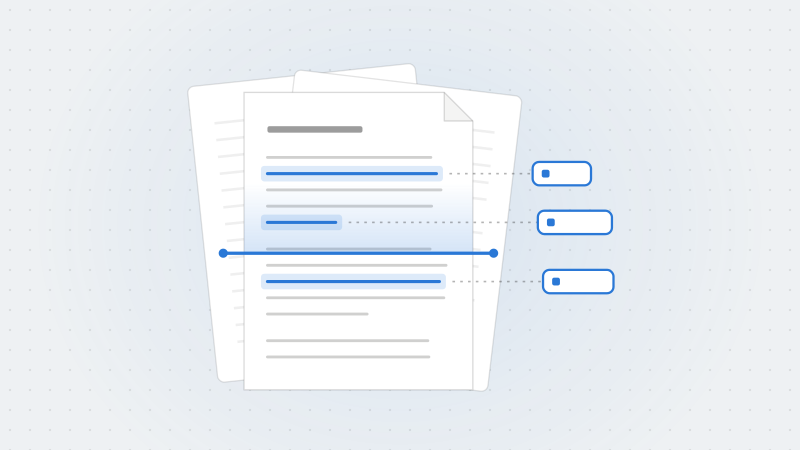
Pennsylvania's Department of Human Services added an AI check to COMPASS that screens each uploaded document for blurriness, image quality, and relevance before a caseworker opens it.
Pennsylvania Department of Human ServicesUnited States (Pennsylvania)Local and regional governmentIn production since Oct 2025
- Scale
- More than 1 million documents processed
- Scenario
- Benefits application document upload screening
- Business function
- Customer service
- Kind of solution
- Document extraction
- Who built it
- Built with a partner (Deloitte, Amazon Web Services, Nava PBC, and Digital Public Works)
- Human oversight
- Assists people
- Organization
- Public sector
- AI types
- Generative AI, Computer vision, Document AI
tl;drIllegible uploads fell 80% in the pilot, saving 700 staff hours.See the results
Pennsylvania’s Department of Human Services (DHS) uses AI to screen the documents that applicants upload to COMPASS, the state’s online portal for SNAP and other benefits1. The check looks at each upload for blurriness, image quality, and relevance, and tells the applicant at once so they can send a clearer copy4.
DHS piloted the check with the Commonwealth Office of Digital Experience (CODE PA) from October 2025 and launched it statewide in December 20251. During the pilot, the number of illegible documents submitted fell by 80%, which saved 700 hours of staff time1. By September 2026, the state had processed more than 1 million documents with the capability5.
Before the deployment
Before the check, a blurry or hard-to-read document derailed a benefits application until the applicant resubmitted it5. Caseworkers at the County Assistance Offices spent time trying to decipher poor scans and working with clients to resubmit them1.
- Who did the checking: Caseworkers judged image quality and relevance themselves6.
- Where documents come in: Applicants upload them to COMPASS, online or through the myCOMPASS PA mobile app, to verify an application or a renewal1, 2.
- Why DHS acted in 2025: The federal budget bill signed in July 2025 added SNAP reporting and verification mandates without extra funding1, 2.
Right after the bill became law, DHS began working with CODE PA on tools to meet the new mandates1.
What was built
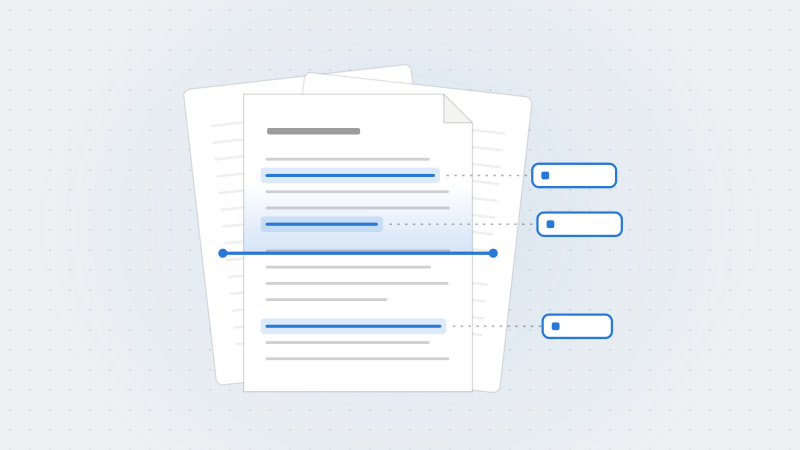
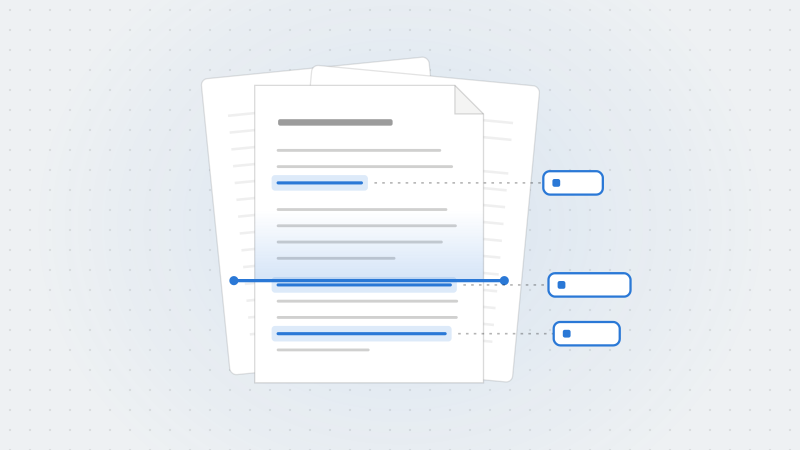
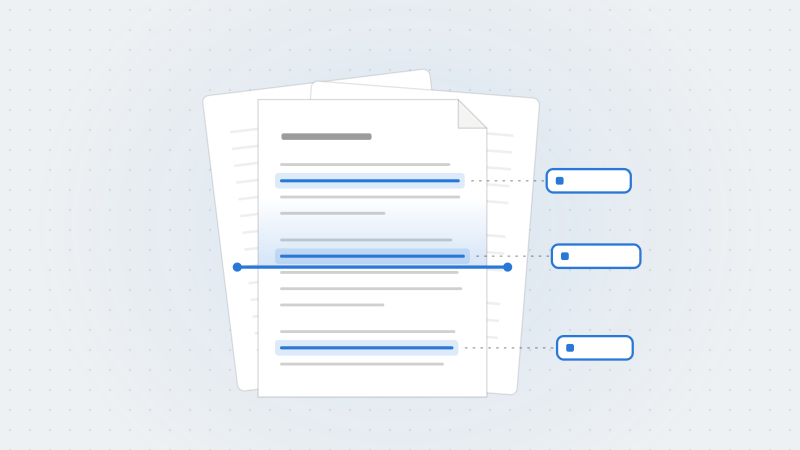
The AI check scans each document as the applicant uploads it to COMPASS and flags blurry, unreadable, or irrelevant files before they are submitted1, 2. The model, the portal, and the caseworkers each have one job:
- AI check: Screens each upload for blurriness, image quality, and relevance1. The underlying technology uses generative AI and large language models to extract, classify, and summarize information5.
- COMPASS: Shows the flag to the applicant, who can send a clearer scan right away1.
- Caseworkers: Process the case and make the eligibility decision, which stays outside the tool1.
“We’re preventing that manual back and forth, which could take weeks if we were not enabling some of that upfront validation.”
The document check is one of five COMPASS enhancements that DHS and CODE PA built with technology companies in about eight weeks3.
The others are a benefits status tracker, consent-based income verification, a self-service password reset, and the SNAP Case Checker, which sends supervisors daily reports on likely case errors such as missing signatures1. Caseworkers shaped the suite through a labor and management group of SEIU Local 668 members and DHS management, which discussed how AI can assist with their duties4.
The launch partners were the DHS Office of Income Maintenance, the Office of Administration’s IT team, and CODE PA, with Deloitte, Amazon Web Services, Nava PBC, and Digital Public Works1.
Rollout
County Assistance Offices in Allegheny, Washington, Westmoreland, and Fayette counties were among those testing the tools during the pilot2. The statewide rollout covers both new applications and renewals2.
Technology and architecture
The AI check runs inside the COMPASS upload step, so the applicant sees a flag while still in the portal1, 2. The Commonwealth’s redesign of its digital services runs on an Amazon Web Services foundation of AI and cloud capabilities5.
| Layer | What they used | Role | Source |
|---|---|---|---|
| Document and OCR model | Intelligent document processing | Screens each uploaded document for blurriness, image quality, and relevance | 1, 4 |
| Language model | Large language models | Extract, classify, and summarize information in the documents | 5 |
| Customer app or website | COMPASS | Online and mobile portal where applicants upload documents for applications and renewals | 1, 2 |
Data and integrations
- Uploaded documents: The documentation that applicants upload to COMPASS to verify information in an application or renewal1.
- COMPASS: The check reads each upload as it arrives and returns its flags to the applicant in the same session1, 2.
How one upload flows through the system
- The applicant uploads a required document to COMPASS for an application or a renewal1.
- The AI check scans the document for blurriness, image quality, and relevance1.
- If the check finds an issue, COMPASS informs the applicant before the document is submitted2, 4.
- The applicant resubmits a clearer scan immediately1.
- The caseworker processes the readable document and decides eligibility1.
Results
In December 2025, DHS reported the pilot results with the statewide launch, and the volume grew through 20261, 5.
| Metric | Before | After | Scope and timeframe | Reported by |
|---|---|---|---|---|
| Fewer illegible documents submitted | Not disclosed | 80% | Pilot applicants’ uploads, two months from October 2025 | Pennsylvania Department of Human Services, pilot1 |
| Staff time saved at County Assistance Offices | Not disclosed | 700 hours | County Assistance Offices, two months from October 2025 | Pennsylvania Department of Human Services, pilot1 |
| Documents processed by the AI check | Not disclosed | more than 1 million documents | Since launch, as of September 2026 | Bryanna Pardoe, Pennsylvania CIO, via Government Technology, measured5 |
- Illegible documents: The 80% measures the drop in illegible or incorrect documents submitted, among the portion of applicants in the two-month pilot1.
- Staff hours: The 700 hours are County Assistance Office time no longer spent deciphering scans or chasing resubmissions during the pilot1.
- Flag rate: The pilot scanned about 12,000 documents and flagged concerns in 25% of cases1. By April 2026, nearly 400,000 documents had been scanned, with about 30% flagged for issues that could delay processing4.
- Volume: More than 1 million documents had been processed by September 20265.
Lessons learned
Placing the check at the upload worked because it moves the fix to the applicant, at the moment the document is sent. The scanning and alerting are tasks that caseworkers did before6, and the Commonwealth’s CIO credits using AI at the right moment for the impact5.
Use grew quickly after the pilot. The check went from about 12,000 documents in the pilot to nearly 400,000 by April 2026 and more than 1 million by September 20261, 4, 5.
A large share of uploads still have problems. The check flagged 25% of cases in the pilot and about 30% of documents by April 2026, and the two figures count different units1, 4.
The accounts name the tool differently. An AWS-sponsored feature in Government Technology credits the 80% and 700-hour figures to a tool it calls SNAP Case Check5. DHS reports both figures for intelligent document processing and describes the SNAP Case Checker as a separate report for supervisors1.
The staff time appears two ways in the same DHS release, as 700 hours and as more than 700 hours1.
Every figure is the Commonwealth’s own: from DHS, the Office of Administration, and the CIO in an AWS-sponsored feature1, 4, 5. The news coverage relays them2, 6.
Case study scorecard
- 80% Fewer illegible documents submitted1
- 700 hours Staff time saved at County Assistance Offices1
- more than 1 million documents Documents processed by the AI check5
Sources by publication date
- Organization 3
- Vendors and partners 1
- Press, academic, and regulators 2
Build this solution yourself
Analysis
What you need
- An upload step you control: The check works because it runs inside COMPASS while the applicant is still there to resubmit1. You need the same hook in your own portal.
- A clear rule on what the AI decides: Here the tool screens documents and never determines eligibility1. Settle that line before staff and applicants rely on the flags.
- Caseworkers in the design: DHS took caseworkers’ input through a labor and management group4. You probably need a similar route so that the flags match what caseworkers reject.
Reference architecture
Document extraction
Document extraction reads the documents, forms, and images that an organization receives, sorts each one to its case, and turns it into structured fields for the business system that acts on it. Models read each document into fields, and ordinary software checks the fields against business rules and the organization's reference records. A reviewer compares the fields with the source before they reach the business system, or sees only the doubtful ones, and the corrections measure and improve the models.
- Document intake
- Document extraction platform
- Preparation
- Text recognition (documented in this case study)
- Extraction model (documented in this case study)
- Validation rules
- Reference records
- Workflow engine
- Review workbench
- Answer explanation
- Connectors
- Business system
- Corrections log
- Accuracy monitoring
A check mark shows a building block that this case study's sources document.
Open the reference architectureOthers who built it
- Condé Nast: Condé Nast speeds rights contract analysis with Claude. Contract analysis that took weeks now takes hours, and rights clearance is almost instantaneous.
- Cargolux Airlines International: Cargolux drafts cargo quotes from customer emails with AI. Cargolux's AI has drafted thousands of quotes from emails in eight markets, at a 93% trust level.
- Air France KLM Martinair Cargo: Air France KLM Martinair Cargo uses AI to book and quote. Customers now paste shipment emails into myCargo, and AI fills in the booking fields.
- Liberty Global: How Liberty Global matches supplier invoices with GenAI. Liberty Global's shared services cut invoice costs 70% and resolve exceptions 95% faster.
- Parte: Parte embeds AI in property managers' email in 27 offices. Parte's AI for property managers' emails and requests is now live in all 27 of its offices.
- RGF Staffing the Netherlands: AI reads collective agreements for equal pay at RGF Staffing. RGF Staffing's AI checker went live in five months, in time for the January 2026 equal pay rules.
Cite this case study
Enterprise AI Case Studies. "Pennsylvania's AI check cuts illegible benefit documents." Updated Nov 26, 2026. https://case-studies.ai/case-studies/document-intelligence/DI-074-benefits-document-legibility-screening-pennsylvania/
@misc{csai-di-074,
  author = {{Enterprise AI Case Studies}},
  title = {{Pennsylvania's AI check cuts illegible benefit documents}},
  year = {2026},
  note = {Updated 2026-11-26},
  url = {https://case-studies.ai/case-studies/document-intelligence/DI-074-benefits-document-legibility-screening-pennsylvania/}
}Sources
The following reporting, and every passage quoted from it, belongs to its publisher, not to this site. Sources and ownership
- Source 1:
Supporting excerpts (17)
The Shapiro Administration today launched a suite of new and improved technology and tools
During the pilot, the use of intelligent document processing cut down on the number of illegible documents submitted by 80 percent, saving 700 hours of staff time.
Documents will be scanned for legibility when users upload required documentation to COMPASS to verify information in their application or renewal.
This AI-driven tool will screen for blurriness, image quality, and relevance to assist users in submitting accurate and readable information and help caseworkers quickly process information, cutting time spent trying to decipher poor scans or time spent working with clients to resubmit.
The tool will not determine eligibility but will support DHS staff and improve accuracy and efficiency in case processing.
Approximately 12,000 documents have been scanned
identifying concerns in 25 percent of cases
These flags allow clients to resubmit unclear scans of necessary documents immediately, decreasing instances of illegible or incorrect documents by 80 percent and saving CAO staff more than 700 hours of work.
the Republican Budget Bill that President Trump signed into law last July
Immediately after the Republican Budget Bill was signed into law, the Department of Human Services began working with the Commonwealth Office of Digital Experience (CODE PA) to develop tools to address the unfunded federal mandates included in the legislation.
DHS and CODE PA have piloted these new tools for the last two months
The new tools were piloted beginning in October to a portion of applicants and will be rolled out to assist all clients over the next few weeks.
in collaboration with the Commonwealth Office of Digital Experience (CODE PA), Deloitte, Amazon Web Services, Nava PBC, and Digital Public Works.
Supervisors within DHS
now receive daily reports flagging common potential case errors like missing signatures or calculations of wages and deductions before a case is submitted for quality control reviews.
the new SNAP case checker helped staff prioritize more than 1,000 cases for additional review
We are leveraging modern technology, including AI, to improve access to benefits that are a vital lifeline to millions of Pennsylvanians and empower caseworkers with tools to do their jobs more effectively
- Source 2:
Pa. offers new online tools to help those applying for SNAP benefits
Supporting excerpts (5)
an upgraded document system flags blurry or unreadable uploads before they are submitted
which can be accessed online or through the myCOMPASS PA mobile app
County assistance offices across Southwestern Pennsylvania, including offices serving Allegheny, Washington, Westmoreland and Fayette counties, have been testing some of the tools for the past two months.
The tools are being rolled out statewide and will apply to both new applications and renewals
which added reporting and verification mandates without additional funding
- Source 3:
Supporting excerpts (3)
the Department of Human Services (DHS) and CODE PA collaborated with technology companies to rapidly prototype, pilot, and deploy five enhancements to the COMPASS system in approximately eight weeks
intelligent document processing (IDP) with AI is reducing paperwork issues and errors
This set the stage for the creation of product roadmaps for each enhancement that align business and technology strategies for continued development and improvements.
- Source 4:
Supporting excerpts (5)
The Department of Human Services is using AI to scan documents uploaded by clients and inform them of potential issues with blurriness, image quality, and relevance.
Since its launch in October 2025, nearly 400,000 documents have been scanned, with approximately 30 percent flagged for issues that could delay processing.
Comprised of employees represented by Service Employees International Union (SEIU) Local 668 and management from the Department of Human Services
last year members engaged in discussions around how AI can assist with their duties as case workers
DHS and OA incorporated this input into a suite of enhancements to COMPASS to improve customer service
- Source 5:
Government Is Complicated. These States Are Trying to Make It Simpler.
Supporting excerpts (11)
Sponsored Content: This story appeared in a special joint issue of Governing and Government Technology sponsored by AWS.
Prior to last year, Pennsylvanians who submitted blurry or hard-to-read documents when applying for state benefits triggered a chain of events that derailed their applications until they resubmitted the information.
Pennsylvania health and human service agencies catch and fix most of these issues before they delay application processing, easing staff workloads and reducing frustration for residents.
We're preventing that manual back and forth, which could take weeks if we were not enabling some of that upfront validation,
Targeting use cases like this and making sure we're using AI at the right moment has been incredibly impactful.
Pardoe says the state has processed more than 1 million documents using this capability.
It uses GenAI and large language models (LLMs) to automatically extract, classify and summarize information.
Pennsylvania used the technology to develop a tool called SNAP Case Check to streamline the benefits application process and minimize errors.
reduce the number of illegible documents by 80%, saving 700 hours of staff time
It has allowed us to make optimizations every single month to that platform to make it more effective for our caseworkers and for residents.
built on an Amazon Web Services (AWS) foundation of AI and cloud capabilities
- Source 6:
Pennsylvania to Roll Out GenAI Tools Across State Workforce
Supporting excerpts (3)
scanning documents uploaded by residents and alerting them to common issues like image quality or relevance
tasks that were formerly done by caseworkers
Since October, nearly 400,000 documents have been scanned by AI tools.















Comments
Start the conversation.
Invited members of the library comment here. Sign in to join the conversation.