

Swiss Re's ClaimsGenAI flags recoveries and fraud in claims
Swiss Re Corporate Solutions built ClaimsGenAI, a generative AI tool that reads corporate claims documents from first notice of loss and flags possible recoveries and irregularities for claims handlers.
Swiss Re Corporate SolutionsSwitzerlandProperty and casualty insuranceIn production since 2024
- Scenario
- Commercial claims document screening for recoveries and fraud
- Business function
- Risk and fraud
- Kind of solution
- Document review and drafting
- Who built it
- Built in-house
- Human oversight
- Assists people
- Organization
- Enterprise, part of Swiss Re
- AI types
- Generative AI, Document AI
tl;drClaimsGenAI raised over 1,000 irregularity alerts and hundreds of recovery leads in its first year.See the results
Swiss Re Corporate Solutions, the commercial insurance arm of Swiss Re, uses ClaimsGenAI to read the documents of its corporate insurance claims1, 2. Swiss Re built the generative AI tool itself and deployed it in mid-20241.
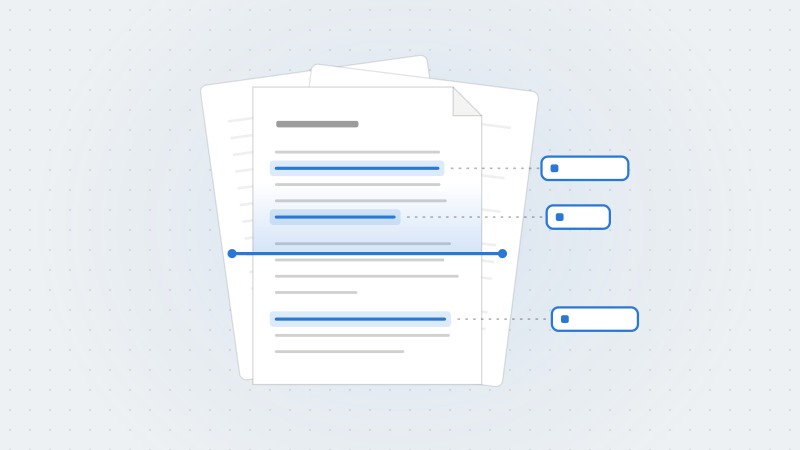
From the first notice of loss, ClaimsGenAI triages a claim’s documents, scans them for useful data, and organizes the information for the claims handler1. It also flags potential irregularities and third-party recovery opportunities, and the handlers keep the decisions1.
In its first year, the tool generated over 1,000 alerts for potential irregularities and identified hundreds of recovery opportunities that handlers hadn’t already found1. The first-year figures appeared in September 20261.
Before the deployment
Swiss Re’s annual corporate insurance claims exceed 40,000, which created a clear need for a step change in how the company manages its growing caseloads1. Vincent Plantard, who leads claims performance, analytics, and delivery at Swiss Re Corporate Solutions, describes the pressures on claims teams3:
- Mixed workload: Teams handle high volumes of low-severity claims alongside fewer complex and large losses3.
- Late detection: High-impact cases are sometimes identified late, after reserves have moved or recovery opportunities have narrowed3.
- Unstructured evidence: Critical insight sits in adjuster notes, expert reports, emails, and attachments that are often reviewed inconsistently3.
- Backward-looking tools: Dashboards and rule engines improve visibility, but they report what has already happened3.
What was built
ClaimsGenAI screens incoming claim documents for data, recovery signals, and irregularities, so that handlers start from organized information1.
- ClaimsGenAI: Starts on a claim as soon as the first notice of loss arrives. It triages the documents, scans them for useful data, and organizes the information to make handlers more efficient1.
- Recovery keywords: Indicate corporate loss scenarios that often lead to successful recoveries. The tool evaluates each incoming document against them and flags third-party recovery opportunities1.
- Irregularity alerts: Mark potential irregularities in a claim. They contribute to Swiss Re’s fraud savings pipeline1.
- Large-loss signals: Claims GenAI use cases trained on years of claims data flag claims that could develop into large losses at a very early stage3.
- Claims handlers: Keep the decision-making authority over each claim, a foundational principle of Swiss Re’s Responsible AI strategy1.
“The future of claims is symbiotic. AI provides consistency, scale and signal detection at volume. Humans bring judgment, hard-won experience and relationship management.”
Technology and architecture
- AI component
- Data
- Trigger or control
- Handoff to people
ClaimsGenAI is Swiss Re’s own generative AI tool for corporate claims1. Plantard describes it as providing intelligent summarization, early insight extraction, and unified visibility across claims data3.
| Layer | What they used | Role | Source |
|---|---|---|---|
| Solution platform | ClaimsGenAI | Triages claim documents from first notice of loss, extracts useful data, organizes it, and flags irregularities and recovery opportunities | 1, 3 |
| Reference data | Recovery keywords | Indicate loss scenarios that often lead to recoveries, against which the tool evaluates each incoming document | 1 |
The tool reads two kinds of data:
- Claim documents: The first notice of loss and the documents that arrive with each corporate claim, which the tool triages and scans1.
- Historical claims data: Over two decades of unstructured claims data, which the tool is built on1, 3.
Results
| Metric | Before | After | Scope and timeframe | Reported by |
|---|---|---|---|---|
| Alerts for potential irregularities | Not disclosed | Over 1,000 | Corporate claims, first year after the mid-2024 deployment | Swiss Re, measured1 |
| Third-party recovery opportunities | Those found by human claims handlers | Hundreds more | Corporate claims, first year after the mid-2024 deployment | Swiss Re, measured1 |
| Fraud savings pipeline | Not disclosed | Potentially worth millions of dollars | Contribution of the first-year alerts | Swiss Re, estimated1 |
- Irregularity alerts: Each alert marks a potential irregularity in a claim. The count is of flags, not of confirmed fraud cases1.
- Recovery opportunities: The count includes only opportunities beyond those that the human claims handlers had already found1. By June 2025, the tool was boosting the unit’s recoveries2.
- Fraud savings pipeline: The figure is the potential value of the pipeline that the alerts contributed to, not an amount recovered1.
The first-year figures were published in September 20261. In January 2026, Pravina Ladva, Swiss Re’s group chief digital and technology officer, named ClaimsGenAI among the milestones of Swiss Re’s AI work4.
Lessons learned
The recovery result shows the tool doing work that the handlers didn’t. Its recovery opportunities were counted beyond the handlers’ own findings, and the unit was seeing a boost to recoveries within a year of deployment1, 2.
The fraud result is a leading indicator. The alerts mark potential irregularities, and the savings pipeline they feed is a potential value, so the realized saving depends on how each alert is followed up1.
Starting at the first notice of loss answers a problem that Plantard names. High-impact cases are sometimes found late, after recovery opportunities have narrowed, and early signals leave handlers room to influence the outcome3.
The design keeps decisions with people. The tool flags and organizes, and decision-making authority stays with the people who oversee it, under Swiss Re’s Responsible AI strategy1. Plantard also lists automated guardrails with human validation among the controls that the tool and its users provide together3.
Every figure is Swiss Re’s own, from an article by Florian Maurer, chief digital and technology officer of Corporate Solutions, and Vincent Plantard, which PYMNTS relayed1.
Case study scorecard
- over 1,000 Alerts for potential irregularities1
- hundreds Third-party recovery opportunities beyond those human claims handlers had found1, 2
- potentially worth millions of dollars Fraud savings pipeline that the alerts contributed to1
- Source quality: 71%, High quality. Rests on a news report.
Sources by publication date
- Organization 1
- Vendors and partners 1
- Press, academic, and regulators 4
Build this solution yourself
Analysis
What you need
- An archive of your own claims documents: ClaimsGenAI is built on over two decades of Swiss Re’s unstructured claims data, so you need years of past claims to build on1.
- Named signals of a recoverable loss: The tool checks each document against keywords for loss scenarios that often lead to recoveries, so your recovery specialists must be able to state those signals1.
- Handlers who act on each flag: The tool raises alerts and opportunities, and the handlers decide. You need claims staff with the time and authority to follow up each one1.
Reference architecture
Document review and drafting
A document review and drafting solution reads a case's documents against a written standard, precedents, or a list of questions and drafts a review, summary, clause, or report with its sources for an expert to finish. The solution pulls the case's documents, and a language model answers each question from the passages that bear on it, with its source. Fixed logic settles what must not vary, and an expert checks the draft against the sources and makes the decision.
- Source system
- Connector to the source system
- Review and drafting platform (documented in this case study)
- Text recognition
- Document preparation
- Passage index
- Access control
- Questions and templates
- Drafting model
- Private model endpoint
- Fixed logic
- Review workbench
- Reviewer feedback
- Tests on known cases
A check mark shows a building block that this case study's sources document.
Open the reference architectureOthers who built it
- RBC Insurance: Its genAI-enabled Claims Lifecycle Automated Recommendation Assistant, CLARA, captured over $2 million in savings on fraudulent claims in its first year, while still a pilot5.
- AXA Switzerland: It uses Shift Claims Fraud Detection to identify suspicious activity at first notice of loss and assign the claim to the right expert for investigation6.
In the library
- How Nationwide uses generative AI to summarize claim notes Nationwide
- Merck drafts clinical study reports in days with gen AI Merck & Co.
- AI drafts clinical study reports in minutes at Novo Nordisk Novo Nordisk
- Corona, California speeds building plan review with AI City of Corona
- Denver pre-screens permit applications with CivCheck AI City and County of Denver
- Court strikes down DOGE's ChatGPT screening of NEH grants United States DOGE Service
Cite this case study
Enterprise AI Case Studies. "Swiss Re's ClaimsGenAI flags recoveries and fraud in claims." Updated Nov 24, 2026. https://case-studies.ai/case-studies/document-intelligence/DI-053-commercial-claims-document-screening-swiss-re/
@misc{csai-di-053,
  author = {{Enterprise AI Case Studies}},
  title = {{Swiss Re's ClaimsGenAI flags recoveries and fraud in claims}},
  year = {2026},
  note = {Updated 2026-11-24},
  url = {https://case-studies.ai/case-studies/document-intelligence/DI-053-commercial-claims-document-screening-swiss-re/}
}Sources
The following reporting, and every passage quoted from it, belongs to its publisher, not to this site. Sources and ownership
- Source 1:
Insurance Claims Lose the Paper Chase as AI Gets to Work
Supporting excerpts (7)
A Swiss Re article written by Florian Maurer, chief D&T officer Corporate Solutions, and Vincent Plantard, GL head of Performance, Analytics and Delivery at Claims Corporate Solutions
describes how SwissRe built and deployed ClaimsGenAI to automate its corporate insurance claims handling process
annual corporate insurance claims now exceed 40,000, creating a clear need for a step change in how the company manages growing caseloads.
when a First Notice of Loss arrives, ClaimsGenAI is deployed immediately to triage documents, scan them for useful data, and organize information to boost claims handlers
The tool is built on insights from over two decades of unstructured claims data and evaluates incoming documents against keywords indicative of corporate insurance loss scenarios that often lead to successful recoveries.
Since its mid-2024 deployment, the article says ClaimsGenAI generated over 1,000 alerts for potential irregularities in its first year, contributing to a fraud savings pipeline potentially worth millions of dollars, and identified hundreds of third-party recovery opportunities beyond those already found by human claims handlers.
Human decision-making authority remains paramount throughout. The decision-making authority remains with the people overseeing it, a foundational principle of Swiss Re
- Source 2:
Swiss Re sees recoveries rising, fraud falling due to AI claims system
Supporting excerpts (1)
primary commercial insurance wing Swiss RE Corporate Solutions is seeing a boost to recoveries from a GenAI tool it deployed to its claims operations in mid-2024, identifying both fraud and a slew of third-party recovery opportunities to help boost profits.
- Source 3:
Agentic Claims Intelligence in Insurance
Supporting excerpts (10)
By Vincent Plantard, Global Head Performance, Analytics & Delivery, Swiss Re Corporate Solutions
Across insurance, claims teams manage high volumes of low severity claims alongside a smaller number of technically complex and large losses.
High impact cases are sometimes identified late: after reserves have moved; client expectations have hardened; or recovery opportunities have narrowed.
Critical insight is embedded in adjuster notes, expert reports, emails and attachments, often unstructured and inconsistently reviewed. Traditional dashboards and rule engines improve visibility but remain backward looking.
Solutions such as Claims GenAI already demonstrate this shift by providing intelligent summarisation, early insight extraction and unified visibility across claims data.
Within this model, Claims GenAI use cases play a pivotal role. Trained on years of claims data, GenAI powered frameworks flag, at a very early stage, claims with the potential to develop into large losses.
By surfacing these signals at an early stage, handlers can anticipate exposure, prioritise effort and take preventive action while there is still room to influence the outcome.
Strengthened control through automated guardrails with human validation.
Throughout, the focus is on augmenting human judgment, not replacing it.
The future of claims is symbiotic. AI provides consistency, scale and signal detection at volume. Humans bring judgment, hard-won experience and relationship management.
- Source 4:
AI's productivity-boosting substance will ultimately prevail: Swiss Re's Ladva
Supporting excerpts (2)
Pravina Ladva, Group Chief Digital & Technology Officer at Swiss Re
Among milestones, ClaimsGenAI helps our Corporate Solutions claims handlers detect recovery opportunities and fraud
- Source 5:
RBC Insurance's AI Playbook: How governance, agility and client focus are driving measurable results
Supporting excerpts (1)
CLARA (our genAI-enabled Claims Lifecycle Automated Recommendation Assistant) captured over $2 million in savings related to fraudulent claims in its first year, while still in pilot phase.
- Source 6:
AXA Switzerland stops fraud in real-time to drive customer satisfaction
Supporting excerpts (1)
Using Shift Claims Fraud Detection, we are able to consistently identify suspicious activities at FNOL and assign the claim to the appropriate expert for investigation























Comments
Start the conversation.
Invited members of the library comment here. Sign in to join the conversation.