
W. R. Berkley speeds submission intake with AI workbenches
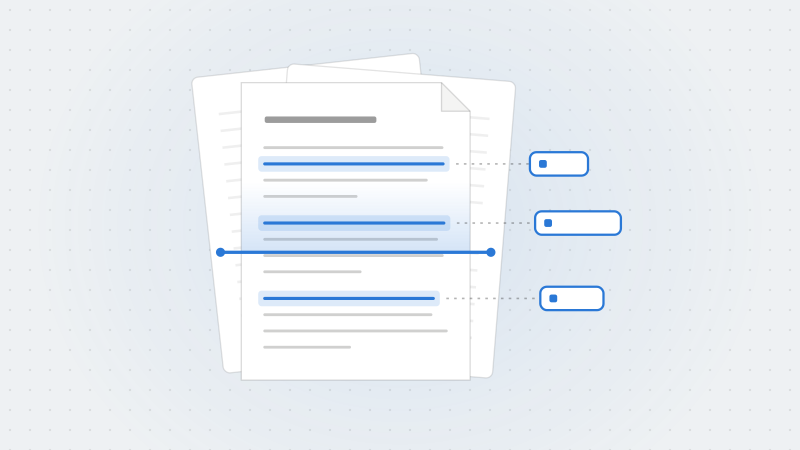
W. R. Berkley is moving its specialty underwriters onto AI-supported workbenches that carry a broker submission from intake straight through to quote, with Kalepa's platform running at its Admiral carrier.
W. R. Berkley CorporationUnited StatesSpecialty insuranceIn production
- Scenario
- Commercial insurance submission intake
- Business function
- Risk and fraud
- Kind of solution
- Document extraction
- Who built it
- Vendor product (Kalepa)
- Organization
- Enterprise
- AI types
- Document AI
tl;drBerkley's ability to take in and quote submissions rose by more than 20% where workbenches run.See the results
W. R. Berkley Corporation uses AI-supported underwriting workbenches to carry a broker submission digitally from intake straight through to quote2. The US specialty insurer runs as a federation of some 60 businesses2.
Kalepa’s underwriting platform went in first at Admiral Insurance Group, Berkley’s excess and surplus lines carrier5, 12. In August 2025, a group agreement set out to extend the platform across Berkley’s operating companies5, 12.
In October 2026, chief executive Rob Berkley said the company’s “ability to take in submissions and quote them, is up by that 20%” where the workbenches run1. He first gave the figure in July 2026, as a “20-plus percent uplift in efficiency”2.
Before the deployment
Berkley’s specialty underwriters quote from broker submissions. A wholesale broker sends a package for each account, typically an application, a statement of values for property, several years of loss runs, and supplemental questionnaires. The underwriter reads it, checks that the risk fits the company’s appetite, pulls out the exposures, prices it, and sends back a quote.
Admiral is an example of that business. It writes “wholesale-dedicated excess and surplus (E&S) lines of commercial insurance” and specializes in “difficult-to-place to moderate to high-risk commercial businesses”9.
The following pressures made the time from submission to quote matter:
- Account mix: Large accounts draw more competition, and Berkley likes the margin in smaller ones1.
- Small-account gap: When it lost large accounts, Berkley would “struggle to make up for it with the small accounts”1. Each small account still needs a submission read and a quote written, for far less premium.
- Speed: The CEO called speed a huge advantage in small accounts1.
- Expense ratio: In July 2026, Berkley said it would keep its expense ratio at 30% or better while “making significant investments in the organization”, with AI among them2.
The company has been “on a data journey for many, many years”, and the CEO called data “the fuel that drives those engines” now that AI tools have arrived1.
What was built
The workbenches digitize underwriting activity “right from intake straight through to quote”2, 4. Berkley runs “a few different solutions” for this work, and it sets up “a little bit of a horse race between solutions” across its businesses before it consolidates around fewer1.
Berkley buys its tools instead of building them. Rob Berkley said the company is “certainly not in a position that we are going to go out and try and create our own large language model”, because spending tens of billions of dollars to compete with model makers isn’t its strength2. Its businesses act as “60 different laboratories” that try tools before the group settles on the best ones2.
“We are big believers in doing something, but we’re not going to participate within AI for the purpose of the headline. We are clearly looking to make investments. We are looking to create value, and we expect to generate returns on those investments.”
Admiral integrated Kalepa’s platform into its underwriting operations5. The August 2025 agreement extends it to Berkley’s other operating companies, with the aim of improving underwriting efficiency and accuracy5, 12. Claims is a separate project, where Berkley uses “AI and other tools” to move toward straight-through processing, because roughly half its claims settle for $5,000 or less2.
Kalepa’s product pages divide the work on a submission as follows:
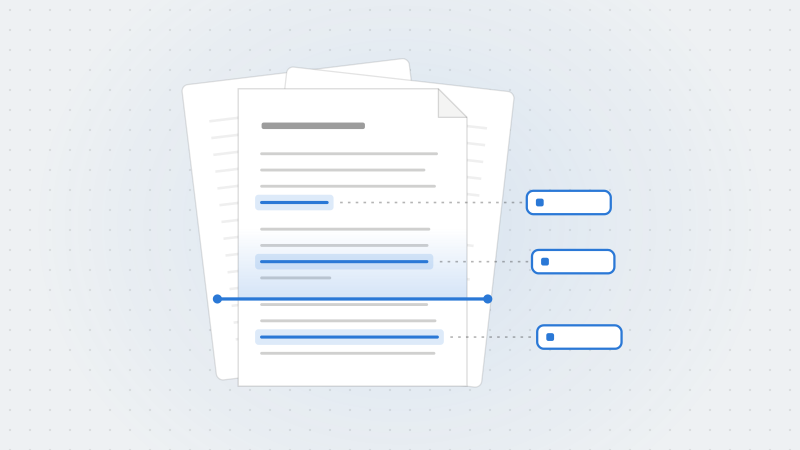
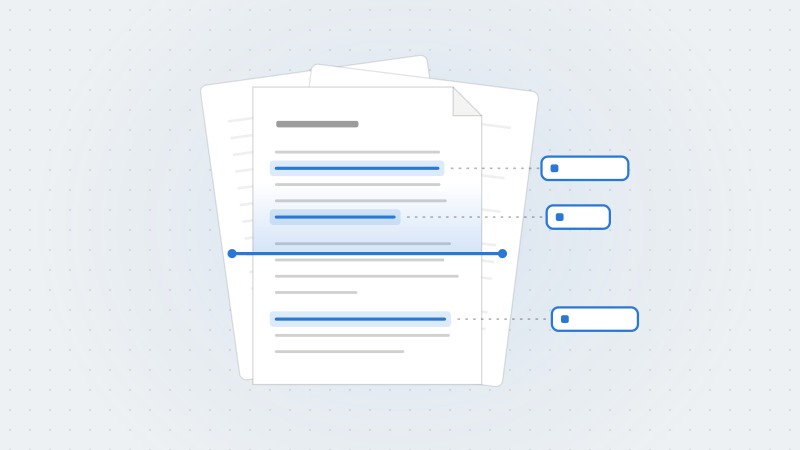
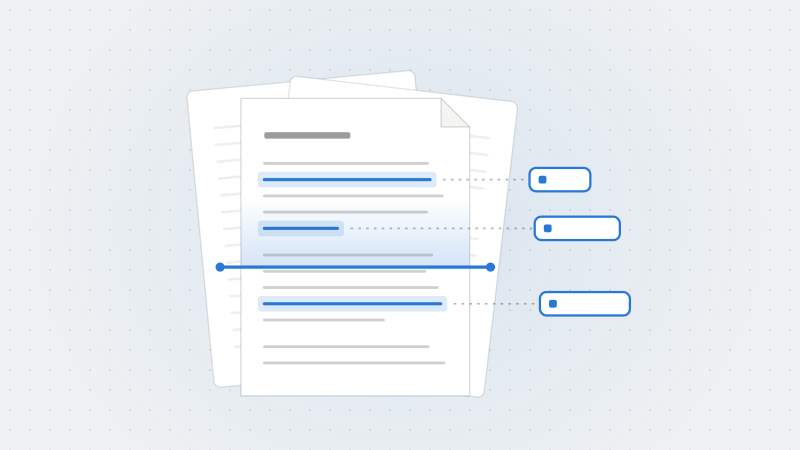
- Classification and extraction: The platform classifies incoming submissions and extracts data from “hundreds of document types, from standard ACORDs and SOVs to complex loss runs and supplemental applications”6.
- Checks and routing: The platform detects conflicts, verifies completeness, runs sanctions screening, confirms appointed producers, and routes the submission on6.
- Triage: The Triage module ranks inbound submissions by appetite fit, guideline compliance, bind likelihood, profitability potential, and portfolio impact7.
- Workbench view: The underwriter works the account from a single view of exposures, loss runs, third-party data, appetite fit, and referral guidance, and produces rating and quote documents there6.
- Underwriter judgment: Kalepa’s engine “knows when to automate versus amplify underwriter judgment”6. The platform keeps human oversight for decisions that need professional judgment or approval8.
In an E&S book like Admiral’s, the extraction, completeness, and appointment checks most likely run on their own, while the underwriter still decides whether to quote a risk and at what price.
Rollout
Kalepa’s platform moved from one Berkley carrier to a group agreement, and the efficiency figures followed within a year1, 2, 5, 12. By October 2026, Berkley had the technology “in a couple of spots” and expected to push it further across the organization1.
Technology and architecture
The following table lists the component of the solution.
| Layer | What they used | Role | Source |
|---|---|---|---|
| Solution platform | Kalepa underwriting platform | Integrated into Admiral’s underwriting operations, with a 2025 agreement to broaden it across operating companies; the product classifies and extracts broker submissions | 5, 6, 8, 12 |
The Kalepa underwriting platform is an underwriting workbench6. In this deployment, Admiral runs it in its underwriting operations, and the August 2025 agreement brings it to Berkley’s other operating companies5, 12. Its “AI Ensemble Engine” picks the model or method for each task in real time6.
Data inputs
The platform uses the following data:
- Broker submissions: ACORD forms, statements of values, loss runs, and supplemental applications, which the platform classifies and extracts1, 6.
- Third-party data: The platform enriches each submission with “third-party data and public domain insights”6.
Integrations
The platform connects to existing systems in the following ways:
- Carrier platforms: Kalepa connects through APIs to a carrier’s existing policy, underwriting, and document platforms instead of replacing them7.
- Rating: The product takes pricing models from Excel, external raters, or internal systems, and fills in rating criteria automatically6.
How one submission flows through the system
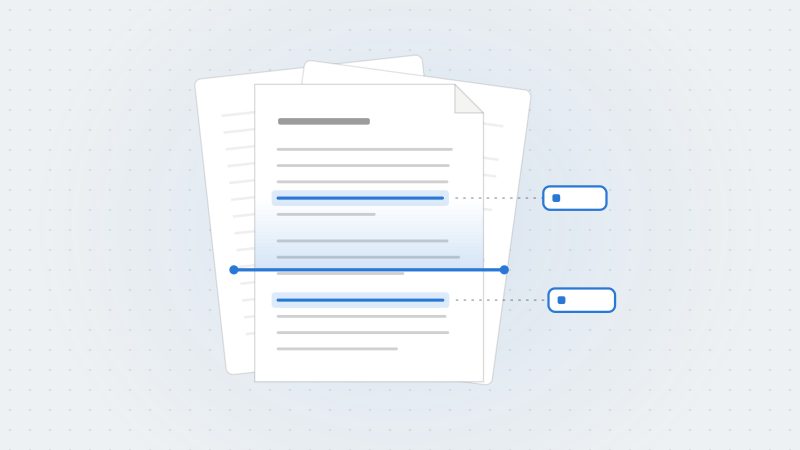
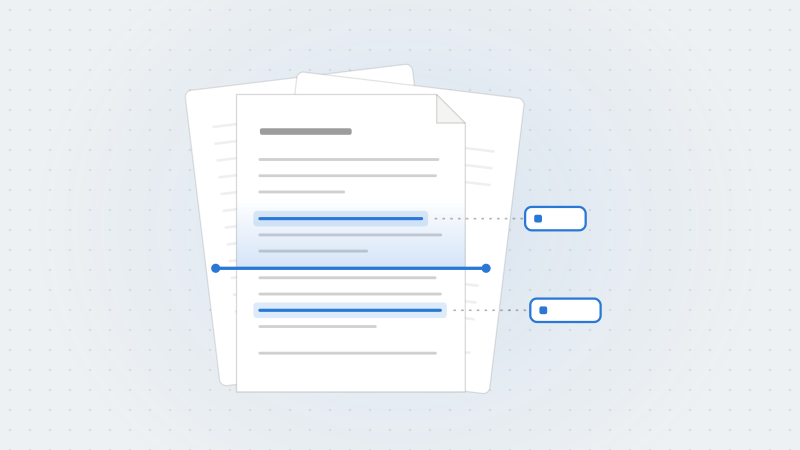
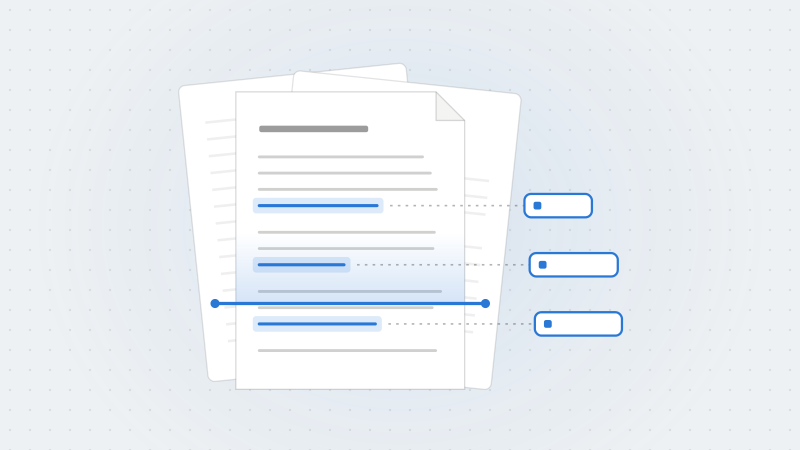
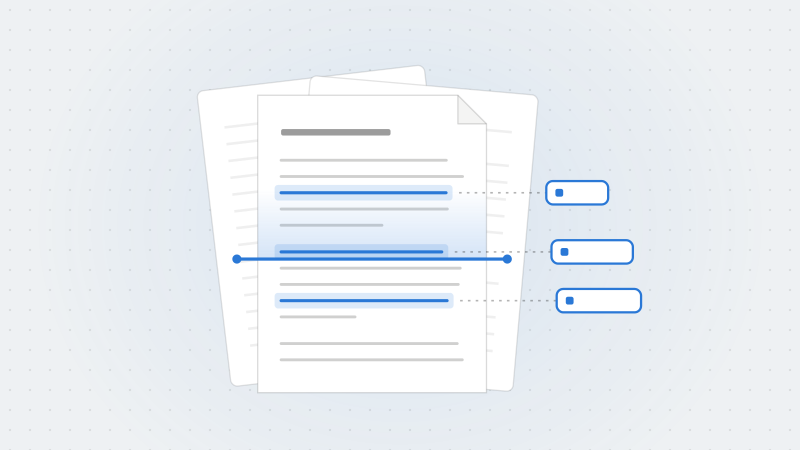
The following flow shows the most likely path of one submission, from the broker’s documents to the quote.
Results
The following table lists the published result.
| Metric | Before | After | Scope and timeframe | Reported by |
|---|---|---|---|---|
| Ability to take in submissions and quote them | Not disclosed | More than 20% better | Early returns where underwriting workbenches are in use, stated July and October 2026 | W. R. Berkley, measured1, 2, 3, 4 |
The result and its effects are as follows:
- Ability to take in and quote submissions: In July 2026, the figure covered the places where Berkley had begun to use the workbenches2. In October 2026, an analyst asked where the gain would show up in the financials, and the CEO said it measures how many submissions Berkley takes in and quotes, which gives it that many more chances to win business1.
- Small-account reach: Berkley can touch more business more easily than before and be more responsive than many of its peers in turning quotes around1. On the small-account gap, the CEO said, “Right now, because of this efficiency, we’re able to keep up and then some”1.
- Expense ratio: The CEO said the technology won’t necessarily keep the expense ratio from ticking up, but it will help mitigate it1.
Lessons learned
The figure was stated twice, three months apart, on earnings calls with analysts1, 2. The second time, the CEO tied it to a concrete effect: more submissions taken in and quoted, and a small-account book that keeps pace when large accounts are lost1.
Berkley’s way of buying is explicit. It buys tools instead of building a model, races competing solutions across its businesses, and consolidates on the winners1, 2. Its group agreement with Kalepa followed a first deployment at Admiral5. That sequence most likely reflects the same approach, with one carrier proving a tool before the group commits to it.
The gains so far are mainly speed. Berkley can take in and respond to submissions faster than before1. The CEO said the “next mountain” is “not just the benefits of speed but the insights” that would improve underwriting decisions1, 3.
The gain covers part of the group. In July 2026, it was an early return “where we’ve begun to utilize it”2. In October 2026, the technology was still “in a couple of spots”1.
The 20% figure is the CEO’s own, from the two calls, and the trade press repeated it3, 4. The CEO named no vendor on either call and said Berkley runs “a few different solutions” side by side, so the 20% isn’t a figure for Kalepa alone1.
Kalepa’s own customer figures, such as a 58% cut in the time to produce quotes, are aggregated across its customers, and none of them is Berkley’s8. Beinsure notes that customers reported them and that they aren’t independently verified8. The description of the platform’s steps comes from Kalepa’s product pages6, 7.
Case study scorecard
- More than 20% Gain in the ability to take in submissions and quote them1, 2, 3, 4
- Source quality: 74%, High quality. Rests on an official disclosure.
Sources by publication date
- Organization 4
- Vendors and partners 3
- Press, academic, and regulators 5
- 4 undated
Build this solution yourself
Analysis
What you need
To repeat this deployment, you need the following in place:
- A book where intake is the bottleneck: Berkley’s gain came in wholesale E&S and small commercial accounts whose premium can’t carry hours of reading per submission, so quoting more of them changes what the company can write1, 9.
- A unit that goes first: Admiral ran Kalepa’s platform before the group agreement, and Berkley tries competing tools in different businesses before it consolidates1, 5.
- Submissions in recurring document types: You most likely need them, because the platform is built to classify and extract standard documents such as ACORD forms, statements of values, and loss runs6.
Reference architecture
Document extraction
Document extraction reads the documents, forms, and images that an organization receives, sorts each one to its case, and turns it into structured fields for the business system that acts on it. Models read each document into fields, and ordinary software checks the fields against business rules and the organization's reference records. A reviewer compares the fields with the source before they reach the business system, or sees only the doubtful ones, and the corrections measure and improve the models.
- Document intake
- Document extraction platform (documented in this case study)
- Preparation
- Text recognition
- Extraction model
- Validation rules
- Reference records
- Workflow engine
- Review workbench
- Answer explanation
- Connectors
- Business system
- Corrections log
- Accuracy monitoring
A check mark shows a building block that this case study's sources document.
Open the reference architectureOthers who built it
In the library
- Condé Nast speeds rights contract analysis with Claude Condé Nast
- Cargolux drafts cargo quotes from customer emails with AI Cargolux Airlines International
- Air France KLM Martinair Cargo uses AI to book and quote Air France KLM Martinair Cargo
- Pennsylvania's AI check cuts illegible benefit documents Pennsylvania Department of Human Services
- How Liberty Global matches supplier invoices with GenAI Liberty Global
- Parte embeds AI in property managers' email in 27 offices Parte
Cite this case study
Enterprise AI Case Studies. "W. R. Berkley speeds submission intake with AI workbenches." Updated Nov 18, 2026. https://case-studies.ai/case-studies/document-intelligence/DI-016-submission-intake-workbenches-wr-berkley/
@misc{csai-di-016,
  author = {{Enterprise AI Case Studies}},
  title = {{W. R. Berkley speeds submission intake with AI workbenches}},
  year = {2026},
  note = {Updated 2026-11-18},
  url = {https://case-studies.ai/case-studies/document-intelligence/DI-016-submission-intake-workbenches-wr-berkley/}
}Sources
The following reporting, and every passage quoted from it, belongs to its publisher, not to this site. Sources and ownership
- Source 1:
W. R. Berkley Corporation FQ3 2026 Earnings Call Transcripts
Supporting excerpts (22)
We are able to intake and respond in a more speedy manner than we could in the past.
This certainly applies to the underwriting activities as well as the claims front.
allowing us to become more efficient to the tune of 20% plus
more than 50% of our claims are settling for $5,000 or less
the next mountain that is before us is not just the benefits of speed but the insights
We have been on a data journey for many, many years
data is the fuel that drives those engines
We like the margin in the smaller accounts, and we have the platform to be able to handle it efficiently.
relatively flat expense ratio of 28.6%
are helping us manage that
already is a competitive advantage
There tends to be a bit more competition with larger accounts.
we are able to be more responsive than many of our peers in turn quotes around
that contributes in our ability to be able to get to a lot more small accounts
able to touch more business more easily than we could in the past
our ability to take in submissions and quote them, is up by that 20%
when we lose the large accounts, we would struggle to make up for it with the small accounts
Right now, because of this efficiency, we're able to keep up and then some.
we have it in a couple of spots
And we have a few different solutions that are able to do on this.
create a little bit of a horse race between solutions
will not necessarily keep the expense ratio undoubtedly from ticking up, but it will help mitigate
- Source 2:
W. R. Berkley Corporation FQ2 2026 Earnings Call Transcripts
Supporting excerpts (13)
we focused very much on underwriting work benches and the idea of how we digitalize activity right from intake straight through to quote
Early returns on that front where we've begun to utilize it, that we are getting 20-plus percent uplift in efficiency
we're reasonably confident that there's significant additional juice to squeeze out of that
we are certainly not in a position that we are going to go out and try and create our own large language model
What is our strength is to take the tools that are out there and then layer on our own approach on top of that.
60 different laboratories, each one of our businesses to be experimenting with tools and then to coalesce around the best solutions
We are big believers in doing something, but we're not going to participate within AI for the purpose of the headline. We are clearly looking to make investments. We are looking to create value, and we expect to generate returns on those investments.
we'll be able to keep the expense ratio at 30% or better
we are making significant investments in the organization
very excited about our ability to reallocate people's time in other directions
use AI and other tools to move in the direction of
approximately 50% of our claims settled for $5,000 or less
spend tens of billions of dollars. That is not our strength.
- Source 3:
WR Berkley CEO Shares Insights on AI Adoption During Q3 Call
Supporting excerpts (3)
Initially, artificial intelligence brought speed to the specialty insurer's underwriting and claims, Berkley explained.
Insurance intake efficiency has improved
to the tune of 20%-plus
- Source 4:
W. R. Berkley sees 20%+ underwriting efficiency gains from AI: CEO
Supporting excerpts (2)
the firm is seeing efficiency gains of more than 20% from artificial intelligence in underwriting
with efforts largely focused on underwriting workbenches and digitising processes from intake through to quote
- Source 5:
Kalepa expands technology partnership with W. R. Berkley Corporation affiliate
Supporting excerpts (4)
has entered into an agreement with an affiliate of W. R. Berkley Corporation
The agreement will broaden the use of Kalepa's platform to help improve efficiency and accuracy in underwriting across Berkley's various operating companies.
The expanded collaboration builds on a successful initial implementation with Admiral Insurance Group, a Berkley company, which previously integrated Kalepa's platform into its underwriting operations.
Outstanding underwriting is the foundation of Berkley, and Kalepa's advanced platform brings next-generation technology to drive lasting performance and value.
- Source 6:
Supporting excerpts (8)
Automatically classify submissions and extract data from across hundreds of document types, from standard ACORDs and SOVs to complex loss runs and supplemental applications.
Detect conflicts, verify completeness, conduct sanctions screening, confirm appointed producers, and route submissions in streamlined or automated workflows.
Automatically prioritize submissions most likely to bind, align them to appetite and guidelines, and focus on the most profitable business.
Kalepa ingests and enriches submissions with third-party data and public domain insights
Kalepa's proprietary AI Ensemble Engine chooses the right model or method in real time, knows when to automate versus amplify underwriter judgment
Incorporate pricing models from Excel, external raters, or internal systems; auto-populate rating criteria and compare pricing scenarios.
Manage forms and generate decision-ready quote and binder documents without friction.
Kalepa delivers a single, decision-ready view of every risk - exposures, loss runs, third-party data, appetite fit, and referral guidance in one place
- Source 7:
Supporting excerpts (2)
Kalepa's Triage automatically ranks inbound submissions using appetite fit, guideline compliance, bind likelihood, profitability potential, and portfolio impact.
Kalepa integrates via API with existing policy, underwriting, and document platforms, augmenting current workflows without large transformation programs.
- Source 8:
Insurtech Kalepa raises $75 mn in Series B at $470 mn valuation to expand insurance AI platform
Supporting excerpts (5)
Its customers include major insurers and managing general agents (MGAs) such as W.R. Berkley, Bowhead Specialty and AmRisc.
Its platform is designed to coordinate multiple AI agents across connected workflows while retaining human oversight for decisions requiring professional judgment or approval.
A 58% reduction in the time required to produce quotes.
These figures represent results reported by customers rather than independently verified industry-wide outcomes.
A 30% to 60% increase in premium handled per underwriter.
- Source 9:
Supporting excerpts (3)
wholesale-dedicated excess and surplus (E&S) lines of commercial insurance
We specialize in underwriting difficult-to-place to moderate to high-risk commercial businesses
As a member of W. R. Berkley Corporation
- Source 10:
AIG: Turning One Human Underwriter Into Five, 'Turbocharging' E&S
Supporting excerpts (1)
AI tools that are up and running in financial lines allow AIG to review 100% of every private and non-profit business submission that comes in, without adding underwriters
- Source 11:
Hiscox's generative AI-enhanced lead underwriting model enabled by Google Cloud goes live
Supporting excerpts (2)
Risks that are in scope are assessed using Google Cloud's Gemini large language model
Hiscox can provide a broker with an insurance quote in a matter of minutes.
- Source 12:
Berkley Expands Use of Kalepa's Platform
Supporting excerpts (2)
expanding their efforts to implement a technology platform designed to enhance underwriting efficiency and accuracy across Berkley's operating companies
This agreement follows a successful initial deployment with Admiral Insurance Group, a Berkley Company, which had previously enlisted Kalepa's platform to support its underwriting processes.















Comments
Start the conversation.
Invited members of the library comment here. Sign in to join the conversation.