
Univé prepares pet insurance claims in minutes with AI
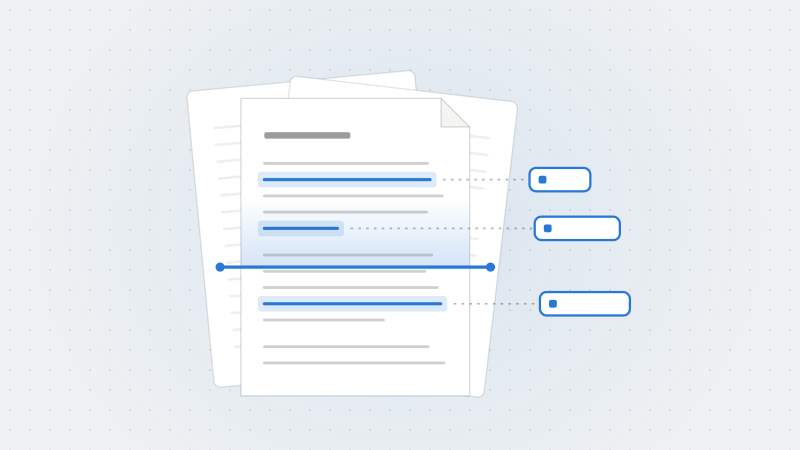
Univé, a Dutch cooperative insurer, uses a ChatGPT Enterprise workspace agent to assemble pet insurance claim files and review vet invoices before a claims professional decides.
UnivéNetherlandsProperty and casualty insuranceIn production
- Scenario
- Insurance claim file preparation
- Business function
- Customer service
- Kind of solution
- Document review and drafting
- Who built it
- With OpenAI
- Where it runs
- Vendor-hosted service
- Human oversight
- Assists people
- Organization
- Enterprise, 1,000 to 9,999 employees
- AI types
- Generative AI, Agentic AI, Document AI
- Users
- 85%
tl;drPet insurance claims that took hours to prepare are now ready for decision in minutes.See the results
Univé uses a ChatGPT Enterprise workspace agent to prepare pet insurance claims for its claims professionals1. The agent assembles the claim file, reviews the veterinary invoices, and checks the policy conditions before a person assesses the claim1.
OpenAI described the deployment in a customer story in July 20261. Claims that took hours to prepare are ready for decision in minutes, and the trained claims professional still makes every final decision1.
Before the deployment
Univé is one of the largest cooperative insurers in the Netherlands, and it serves millions of members in insurance, mortgages, financial services, and risk prevention1. Before the agent, claims professionals prepared each pet insurance claim themselves:
- Preparing a pet insurance claim for decision took hours1.
- Claims professionals spent that time gathering, reading, and structuring the evidence1.
Univé treated AI as an organizational change, not an IT project. It started with AI leadership sessions for its whole management community1.
What was built
The solution prepares each pet insurance claim so that the claims professional starts from a finished case file with a recommendation1. Three parts divide the work:
- Workspace agent: Gathers the evidence for the claim, checks it against the policy, flags what is missing or unusual, and drafts a traceable recommendation1.
- ChatGPT Enterprise: Runs the agent inside Univé’s governance framework. Its access follows the permissions of the underlying enterprise systems1.
- Claims professional: Assesses the prepared case, applies their expertise, and remains fully accountable for every final decision1.
The agent is part of a wider program in which Univé employees build their own tools. Instead of asking for a business case for every idea, Univé gave staff permission, structure, and time to redesign their work1. Employees have built about 1,500 custom GPTs, and a workspace agent of the same kind prepares underwriters’ work queues1.
“Most organisations try to scale AI by building more solutions. We chose to scale AI by creating more builders.”
Technology and architecture
A workspace agent is an agent that an organization builds in ChatGPT for a repeatable task. The builder can test it before publishing and connect it to apps and tools2. Univé’s rollout of ChatGPT Enterprise includes enterprise authentication, privacy assessments, security reviews, and continuous monitoring1.
| Layer | What they used | Role | Source |
|---|---|---|---|
| Task agent | Workspace Agents | Assembles the claim file, reviews the invoices, checks the policy, and drafts a recommendation | 1, 2 |
| Solution platform | ChatGPT Enterprise | Hosts the agents that Univé staff build, inside the governance framework | 1 |
| Access and identity | Connector permission inheritance | Limits the AI to what the employee may already see in the enterprise systems | 1 |
Data inputs
- Claim file: The agent assembles the material of each pet insurance claim into one file1.
- Veterinary invoices: The agent reviews the vet’s invoices that come with the claim1.
- Policy conditions: The agent checks the claim against the conditions of the member’s policy1.
How one claim flows through the system
- The workspace agent assembles the claim file1.
- The agent reviews the veterinary invoices and checks them against the policy conditions1.
- The agent identifies missing information and highlights anomalies1.
- The agent prepares a traceable recommendation before the claims professional begins the assessment1.
- The claims professional assesses the prepared case and makes the final decision1.
Results
| Metric | Before | After | Scope and timeframe | Reported by |
|---|---|---|---|---|
| Time to prepare a claim for decision | Hours | Minutes | Pet insurance claims at Univé, July 2026 | OpenAI, customer story1 |
- Preparation time: Pet insurance claims are now ready for decision in minutes instead of hours1. The time covers the work before the claims professional’s assessment: gathering, reading, and structuring the evidence1.
- Change in the work: Claims professionals start from a prepared case and spend their time on the assessment. The decision stays with them1.
Lessons learned
The design keeps accountability where it was. The agent only prepares the case, and the trained claims professional stays accountable for every final decision1.
Governance came first. Univé designed it into the rollout from day one, because adoption at scale depended on employees trusting the platform, and the agent’s access follows the permissions of the underlying systems1.
The account describes the pet claims agent as AI at Univé today. It also says that current use cases mostly support individual tasks, and that Univé is exploring workspace agents as the next phase1.
The time saving comes from OpenAI’s customer story, the vendor’s account of its customer, and it’s stated as hours to minutes1. The story itself advises measuring success by sustained adoption and employee capability, not by productivity alone1.
Case study scorecard
- minutes instead of hours Time to prepare a pet insurance claim for decision1
Sources by publication date
- Organization 1
- Vendors and partners 2
- Press, academic, and regulators 1
Build this solution yourself
Analysis
What you need
- Claim material in systems the agent can reach: The agent assembles the file and reads the invoices itself, so you need the claim documents in systems that your platform connects to, with permissions that follow those systems1.
- Policy conditions the agent can check: The agent compares each claim with the policy before the handler starts, so the conditions must be available to it1.
- A claims professional who owns each decision: At Univé, the agent’s recommendation is traceable and a trained professional makes every final decision, which keeps accountability where it was1.
Reference architecture
Document review and drafting
A document review and drafting solution reads a case's documents against a written standard, precedents, or a list of questions and drafts a review, summary, clause, or report with its sources for an expert to finish. The solution pulls the case's documents, and a language model answers each question from the passages that bear on it, with its source. Fixed logic settles what must not vary, and an expert checks the draft against the sources and makes the decision.
- Source system
- Connector to the source system
- Review and drafting platform (documented in this case study)
- Text recognition
- Document preparation
- Passage index
- Access control (documented in this case study)
- Questions and templates
- Drafting model
- Private model endpoint
- Fixed logic
- Review workbench
- Reviewer feedback
- Tests on known cases
A check mark shows a building block that this case study's sources document.
Open the reference architectureOthers who built it
In the library
- How Nationwide uses generative AI to summarize claim notes Nationwide
- Merck drafts clinical study reports in days with gen AI Merck & Co.
- AI drafts clinical study reports in minutes at Novo Nordisk Novo Nordisk
- Corona, California speeds building plan review with AI City of Corona
- Denver pre-screens permit applications with CivCheck AI City and County of Denver
- Court strikes down DOGE's ChatGPT screening of NEH grants United States DOGE Service
Cite this case study
Enterprise AI Case Studies. "Univé prepares pet insurance claims in minutes with AI." Updated Nov 24, 2026. https://case-studies.ai/case-studies/document-intelligence/DI-052-pet-insurance-claim-file-preparation-unive/
@misc{csai-di-052,
  author = {{Enterprise AI Case Studies}},
  title = {{Univé prepares pet insurance claims in minutes with AI}},
  year = {2026},
  note = {Updated 2026-11-24},
  url = {https://case-studies.ai/case-studies/document-intelligence/DI-052-pet-insurance-claim-file-preparation-unive/}
}Sources
The following reporting, and every passage quoted from it, belongs to its publisher, not to this site. Sources and ownership
- Source 1:
Univé builds an AI-ready workforce
Supporting excerpts (28)
Pet insurance claims prepared for decision in minutes instead of hours
serves millions of members across insurance, mortgages, financial services, and risk prevention
One of the clearest examples of AI in action is pet insurance claims.
A Workspace Agent can assemble the claim file, review veterinary invoices, check policy conditions, identify missing information, highlight anomalies, and prepare a traceable recommendation before the claims handler begins their assessment.
Work that previously took hours to prepare can now be ready for decision in minutes.
Rather than spending time gathering, reading, and structuring evidence, claims professionals begin with a well-prepared case and can focus on applying their expertise.
Importantly, the trained claims professional remains fully accountable for every final decision. AI prepares the work; people make the decision.
ChatGPT Enterprise providing a secure platform that employees could adopt quickly within Univé’s governance framework
Instead of treating AI as an IT initiative, the company brought its entire management community together for dedicated AI leadership sessions.
Univé also recognized that adoption at scale would only happen if employees trusted the platform they were using.
Governance wasn’t something added after deployment—it was designed into the rollout from day one.
Enterprise authentication, connector permission inheritance, privacy assessments, governance processes, security reviews, responsible AI principles, continuous monitoring, and clear human accountability created the confidence employees needed to experiment responsibly.
Permissions always follow the underlying enterprise systems, to prevent AI from getting access beyond what employees are already authorised to see.
Rather than requiring detailed business cases for every new idea, Univé gave employees permission, structure, and dedicated time to rethink their own work.
employees collectively spend hundreds of hours every week redesigning work with ChatGPT Enterprise, building custom GPTs, experimenting with Workspace Agents
Approximately 1,500 custom GPTs have been created to solve internal challenges
Before an underwriter starts the day, a Workspace Agent reviews the incoming work queue
While today’s use cases focus primarily on supporting employees during individual tasks, Univé is actively exploring the next phase of enterprise AI through Workspace Agents.
every new application continues to be evaluated within the company’s governance framework
97% of ChatGPT Enterprise licences activated
85% of licensed users are active every week
Employees average 40 prompts per active user each week
Most organisations try to scale AI by building more solutions. We chose to scale AI by creating more builders.
Our competitive advantage is not that we use AI. It is that thousands of employees are learning how to reinvent their own work every single week.
AI will not replace your employees. But employees who learn to build with AI will redefine what your organisation is capable of.
Treat governance as an accelerator, not a gatekeeper. Strong guardrails allow innovation to scale responsibly.
Give employees time to experiment, not just access to the technology.
Measure success by sustained adoption and employee capability—not simply productivity.
- Source 2:
ChatGPT Workspace Agents for Enterprise and Business
Supporting excerpts (1)
ChatGPT workspace agents let you build agents for repeatable tasks and workflows in ChatGPT. You can create an agent, test it before publishing, choose its model and reasoning effort, connect it to apps and tools
- Source 3:
Supporting excerpts (2)
Hundreds of use cases already in place
Summarisation, auto-fill, AI assistant for health claims
- Source 4:
Van Ameyde transformeert claimsproces met agentic AI
Supporting excerpts (1)
E-mails en documenten worden automatisch geclassificeerd, ontbrekende informatie wordt actief opgevraagd bij klanten en systemen worden alvast voorgevuld.














Comments
Start the conversation.
Invited members of the library comment here. Sign in to join the conversation.