
Allianz Partners cuts health claim processing to minutes
Allianz Partners put a chain of AI agents on Taktile's decisioning platform to read medical invoices, map treatments to cover and assess health claims, with specialists taking the exceptions.
Allianz PartnersFrance (Headquartered in Paris. The health claims operation serves customers worldwide.)Health insuranceIn production
- Scale
- Thousands of health claims a day, extending to a portfolio of more than 30 million claims a year
- Scenario
- Health insurance claims invoice processing
- Business function
- Customer service
- Kind of solution
- Document extraction
- Who built it
- Built with a partner (Taktile)
- Human oversight
- People review exceptions
- Organization
- Enterprise, 10,000 to 99,999 employees, part of Allianz
- AI types
- Generative AI, Agentic AI, Document AI
- Users
- 60+
tl;drHealth claim reviews fell from days to minutes, and straight-through processing rose 30% in a pilot.See the results
Allianz Partners uses a chain of AI agents on Taktile’s decisioning platform to process health insurance claims1. The agents read the invoices that members upload, map each treatment to the member’s cover and assess the claim. Specialists review the claims that the agents flag1, 2.
A six-month production pilot cut claims processing time from days to minutes and raised straight-through processing by 30%1. In June 2026, a World Economic Forum (WEF) report presented the solution as deployed at scale, and PYMNTS reported the time saving in September 20262, 3. In October 2026, Taktile reported that Allianz Partners is extending the workflow to its full claims portfolio1.
Before the deployment
Allianz Partners is the assistance and insurance arm of Allianz Group. It sells travel, health and automotive cover, mostly through airlines, banks and employers that embed its products in their own offers1. Its executive team saw the health claims process as the place to start1.
Before the agents, reviewers handled health claims in a largely manual process2. The process had the following problems:
- Thousands of claims arrived every day in different languages, formats and levels of detail2.
- Each claim needed a careful reading of medical invoices, coverage rules and eligibility criteria2.
- Members found it hard to submit claims accurately because of the medical paperwork1.
- Reviewers checked invoices for completeness and confirmed basic payment eligibility by hand1.
- Claim reviews took days1.
The company picked health claims because they combine high volume, high complexity and heavy manual effort1, 2. The complexity of the insurance products had made end-to-end automation hard to achieve at scale1.
What was built
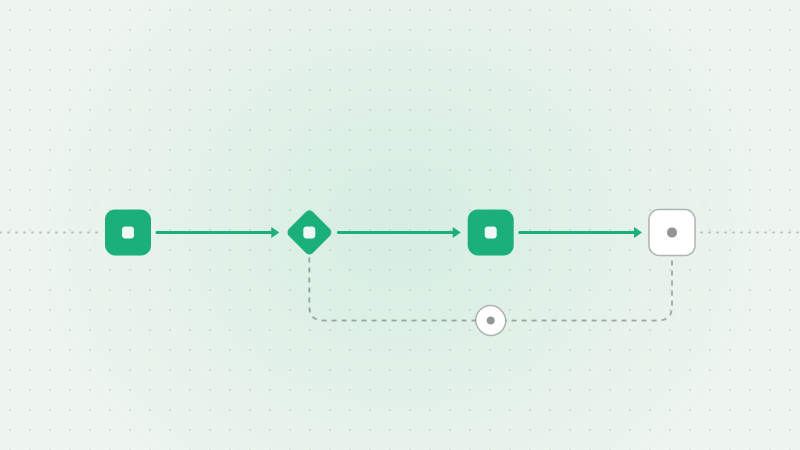
The solution passes each health claim through four AI agents in sequence, and each agent owns one step of the claims journey1, 2. Clear-cut claims go straight through, and nuanced ones go to experts1. The work is divided as follows:
- Document classification agent: Decides whether an uploaded document is an invoice, so that only valid invoices go on1.
- Data extraction agent: Pulls the dates, provider details, currency and itemized treatments and costs from each invoice into a standard format1.
- Treatment mapping agent: Assigns each line item to the correct benefit in the member’s coverage, and flags missing coverage1.
- Claim assessment agent: Applies the company’s coverage, eligibility and fraud rules, and returns a coverage decision or flags issues for review1.
- Specialists: Review the high-risk and nuanced claims that the workflow routes to them. Their findings refine the agents’ prompts and the decision logic1.
Each agent follows Allianz Partners’ own policies on what to extract, how to categorize treatments and what to flag1.
“Taktile gave us the tools to purposefully build AI into the core of our health claims operations. We’ve gone from a manual, time-consuming process to an agentic workflow that’s already delivering massive value globally.”
Rollout
Allianz Partners started with health claims as the first line of business for agentic AI on Taktile1. An initial 6-month production pilot validated the workflow. The team is now extending it to its full portfolio of more than 30 million claims per year1.
Technology and architecture
The agents run as modular components on Taktile, which combines AI agents and decision rules in one workflow1, 4. The following table lists the parts of the solution.
| Layer | What they used | Role | Source |
|---|---|---|---|
| Solution platform | Taktile decisioning platform | Runs the agents and the decision logic, and lets experts monitor and work with the agents | 1, 2 |
| Task agent | Document classification agent | Lets only valid invoices into the workflow | 1 |
| Task agent | Data extraction agent | Turns each invoice into structured line items | 1 |
| Task agent | Treatment mapping agent | Places each line item against a benefit in the member’s coverage | 1 |
| Task agent | Claim assessment agent | Produces a coverage decision or flags the claim | 1 |
| Rules and decision logic | Coverage, eligibility and fraud rules | Hold the company’s policies that the assessment agent applies | 1 |
| Handoff to staff | Expert review | Takes the nuanced and high-risk claims to specialists | 1 |
| Audit trail | Decision traceability | Shows the logic from the original document through every agent step | 1, 2 |
| Simulation testing | Simulation and backtesting | Tests a change to the decision logic before it reaches production | 1 |
Allianz Partners onboarded 60+ subject matter experts onto Taktile. They change and backtest the decision logic themselves, under granular access rights1. Taktile’s claims product lets teams test such changes against historical claims before deployment4.
Data inputs
The agents use the following data:
- Claim documents: The files that members upload with each claim, including medical invoices in many languages and formats1, 2.
- Member’s coverage: The benefits in the member’s policy, which the mapping agent matches each treatment to1.
- Specialists’ findings: What specialists learn on high-risk claims, which refines the agents’ prompts and the decision logic1.
Results
The pilot results come from a six-month production pilot on health claims1. The following table lists the published results.
| Metric | Before | After | Scope and timeframe | Reported by |
|---|---|---|---|---|
| Claims processing time | Days | Minutes | Health claims, production pilot | Taktile, pilot1. WEF2 |
| Straight-through processing | Not disclosed | 30% increase | Health claims, six-month production pilot | Taktile, pilot1 |
| Adjudication quality | Not disclosed | 4 to 6% better | Selective claims journeys, production pilot | Taktile, pilot1 |
| Fraud and false payout detection | Not disclosed | Over 1.5 times better | Health claims, deployed at scale | WEF, measured2 |
The metrics measure the following:
- Straight-through processing: The claims that move from submission to decision without manual intervention4. Taktile expects the rate to grow as more agents and use cases come online1.
- Adjudication quality: How well the workflow catches fraud and claims leakage that the manual process missed, on selective claims journeys1.
- Processing time: The gain frees specialists from repetitive data validation for complex, high-stakes cases1. The WEF report also credits it with a better customer experience2.
- Fraud and false payout detection: The WEF report attributes the gain to consistent application of the decision logic2.
Lessons learned
The modular design is the choice that both accounts stress. Because each agent owns one step, Allianz Partners can reuse the agents in other products and regions without rebuilding the workflow1, 2. The company describes the components as a foundation for a broader AI program with consistent traceability and governance1.
Putting subject matter experts on the platform let them iterate on the decision logic directly, which the WEF report describes as collaboration between experts and technology teams1, 2. They test each hypothesis in simulation before it goes to production1.
The agents don’t settle every claim. Nuanced and high-risk claims still go to specialists, so straight-through processing covers the clear-cut cases1.
The two accounts state the fraud gain differently. Taktile reports better adjudication quality on selective claims journeys, and the WEF report gives a multiple for fraud and false payout detection across health claims1, 2. The figures measure different things over different scopes, so they don’t confirm each other.
Every figure comes from Taktile’s customer story or from the WEF case study titled after Allianz Partners and Taktile1, 2. The time and straight-through results come from the production pilot, and the gains across the full portfolio are Taktile’s projection1.
Case study scorecard
- days to minutes Health claims processing time1, 2, 3
- 30% Increase in straight-through processing of claims1
- 4 to 6% Improvement in adjudication quality1
- Over 1.5 times Better fraud and false payout detection2
Sources by publication date
- Organization 1
- Vendors and partners 3
- Press, academic, and regulators 2
Build this solution yourself
Analysis
What you need
To build this solution, you need the following in place:
- Claim rules that software can run: The assessment agent applies the coverage, eligibility and fraud rules to every claim, so those rules must exist as decision logic1.
- Benefit data for each member: The mapping agent places every invoice line against a benefit, so it needs the member’s coverage at claim time1.
- Specialists who own the logic: At Allianz Partners, experts review flagged claims, feed what they learn back into the prompts and backtest the logic themselves1.
Reference architecture
Document extraction
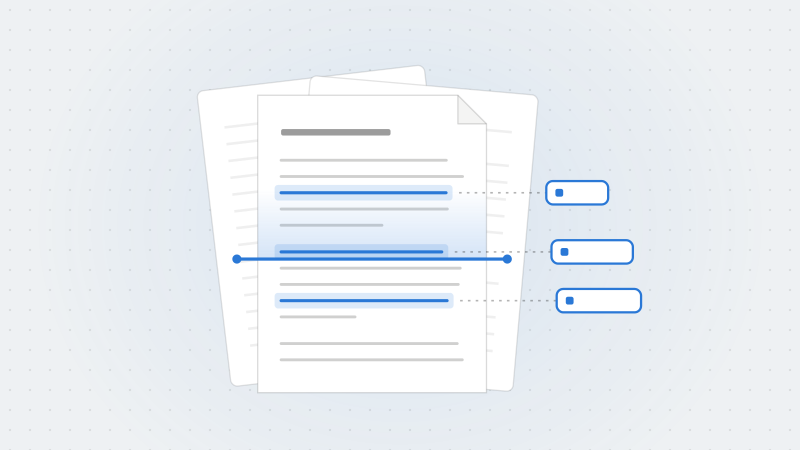
Document extraction reads the documents, forms, and images that an organization receives, sorts each one to its case, and turns it into structured fields for the business system that acts on it. Models read each document into fields, and ordinary software checks the fields against business rules and the organization's reference records. A reviewer compares the fields with the source before they reach the business system, or sees only the doubtful ones, and the corrections measure and improve the models.
- Document intake
- Document extraction platform (documented in this case study)
- Preparation
- Text recognition
- Extraction model
- Validation rules (documented in this case study)
- Reference records
- Workflow engine
- Review workbench
- Answer explanation
- Connectors
- Business system
- Corrections log
- Accuracy monitoring
A check mark shows a building block that this case study's sources document.
Open the reference architectureOthers who built it
- Swiss Re: Its ClaimsGenAI tool triages the documents that arrive with a first notice of loss on corporate insurance claims, and it has run since mid-20243.
- Greenlight Rent: Taktile’s Document Intelligence Agent sorts and reads leases, ledgers and inspection reports on security deposit claims, and adjusters make the final call5.
- Selective Insurance Group: Its AI claims ingestion tool has processed more than 500,000 claim documents for its adjusters6.
In the library
- Condé Nast speeds rights contract analysis with Claude Condé Nast
- Cargolux drafts cargo quotes from customer emails with AI Cargolux Airlines International
- Air France KLM Martinair Cargo uses AI to book and quote Air France KLM Martinair Cargo
- Pennsylvania's AI check cuts illegible benefit documents Pennsylvania Department of Human Services
- How Liberty Global matches supplier invoices with GenAI Liberty Global
- Parte embeds AI in property managers' email in 27 offices Parte
Cite this case study
Enterprise AI Case Studies. "Allianz Partners cuts health claim processing to minutes." Updated Nov 20, 2026. https://case-studies.ai/case-studies/document-intelligence/DI-028-health-claims-ai-agents-allianz-partners/
@misc{csai-di-028,
  author = {{Enterprise AI Case Studies}},
  title = {{Allianz Partners cuts health claim processing to minutes}},
  year = {2026},
  note = {Updated 2026-11-20},
  url = {https://case-studies.ai/case-studies/document-intelligence/DI-028-health-claims-ai-agents-allianz-partners/}
}Sources
The following reporting, and every passage quoted from it, belongs to its publisher, not to this site. Sources and ownership
- Source 1:
Supporting excerpts (36)
Allianz Partners, a global leader in insurance and assistance services, partnered with Taktile to embed agentic AI across multiple lines of business, starting with its health claims process.
Lifted straight-through processing of claims by 30% in a production pilot, with direct cost impact
Improved adjudication quality by 4–6% on selective claims journeys, strengthening fraud and leakage detection
Reduced claims processing time from days to minutes and improved customer satisfaction significantly
Now the team is expanding the new agentic process to its full portfolio of more than 30 million claims per year.
Taktile gave us the tools to purposefully build AI into the core of our health claims operations. We’ve gone from a manual, time-consuming process to an agentic workflow that’s already delivering massive value globally.
Pieter ViljoenChief Data & AI Officer at Allianz Partners
Allianz Partners is the assistance and insurance arm of Allianz Group, one of the world's largest financial services companies.
With 22,200 employees, it delivers travel, health, and automotive coverage to customers worldwide, primarily through partnerships with airlines, banks, and employers who embed Allianz Partners' products into their own offerings.
Every year, its teams process tens of millions in cases across a global medical network of 2.1 million providers
The executive team at Allianz Partners recognized a strategic opportunity to evolve the company’s claims operations
Processing thousands of daily claims across diverse languages and formats is an inherently nuanced undertaking.
The intricacies of medical documentation often make it difficult for members to submit claims accurately, and the complexity of insurance products has made end-to-end automation challenging to achieve at scale.
reviewers must manage repetitive tasks like manually checking invoices for completeness and confirming basic payment eligibility
Our health claims process was a compelling use case for AI transformation: high volume, high complexity, and significant manual effort.
Allianz Partners' claim reviews took days.
They needed a solution that could automate time-consuming steps with AI while keeping human experts in the loop on every decision, making every agent action auditable, and ensuring agents follow policy.
they worked with Taktile to deploy specialized AI agents as modular components, with each agent responsible for a specific step in the health claims journey
Document classification – identifying whether an uploaded document is an invoice and ensuring only valid invoices proceed.
Data extraction – extracting relevant information from invoices (like dates, provider details, currency, and itemized treatments and costs), into a standard format.
Treatment mapping – categorizing each extracted line item to the correct benefit in the member’s coverage (and flagging any missing coverage).
Claim assessment – applying the company’s coverage, eligibility, and fraud rules to the claim and invoice details to produce a coverage decision or flag issues for review.
Each agent reflects our unique decisioning context – what to extract, how to categorize treatments, and what to flag for review – based on our company policies and guardrails.
this system enables straight-through processing for clear-cut cases while flagging nuanced issues for expert review
Specialists can follow the logic from the original document through every agent step to the final outcome, providing the full traceability required for rigorous audit and compliance protocols.
When the workflow routes high-risk claims to specialists, their insights further refine agent prompts and decision logic where appropriate.
An initial 6-month production pilot validated the new agentic workflow bottom-up
the rate is set to grow as more agents and use cases come online
The agentic workflow consistently surfaces fraud and claims leakage that the manual process would miss, applying the same checks to every claim at scale.
freeing specialists from repetitive data validation and allowing them to focus on the complex, high-stakes cases that require expert judgment
Allianz Partners also onboarded 60+ subject matter experts onto Taktile, empowering them to directly iterate on and backtest complex decision logic.
Strict enterprise security and granular access rights allowed them to work quickly within a safe, governed environment, while using Taktile’s advanced simulation capabilities to rapidly test a new hypothesis and deploy to production.
Because the workflow uses independent, modular agent components, Allianz Partners can reuse these capabilities across the organization without building from scratch.
By implementing reusable components, we’ve created a foundation for a broader AI transformation program where we can plug-and-play modules into new use cases while keeping traceability and governance consistent.
Extending the same agentic foundation across more than 30 million health claims at Allianz will transform what AI-driven operations can deliver at enterprise scale.
More claims now move through the process without manual intervention
- Source 2:
The AI Playbook for Financial Services
Supporting excerpts (13)
Allianz Partners and Taktile: using agentic AI to scale accuracy, trust and efficiency in global health claims
Thousands of claims arrive daily in different languages, formats and levels of detail, each requiring a careful interpretation of medical invoices, coverage rules and eligibility criteria.
Allianz Partners identified health claims as a high-impact opportunity for AI, given that they are high in volume and variability, and require intense manual effort.
Allianz Partners pivoted from a predominantly manual approach to a human-in-the-loop (HITL), agentic AI model, partnering with Taktile to redesign the end-to-end claims workflow.
Instead of treating automation as a single model, the team deployed multiple specialized AI agents, each responsible for a discrete step in the claims journey, with people overseeing exceptions and edge cases.
Sequential AI agents covering document classification, structured data extraction, treatment mapping and claim assessment
Modular agent design, allowing capabilities to be reused and extended across products and geographies without rebuilding workflows
HITL governance, ensuring full traceability, auditability and compliance through clear escalation and validation mechanisms
Delivery on Taktile’s decisioning platform, enabling collaboration between subject matter experts and technology teams
The solution, deployed at scale, delivers clear benefits, including:
Cutting claims processing time from days to minutes, improving customer experience
Reducing manual effort for insurance members and claims adjudicators by automating information extraction from documents and invoices
Over 1.5 times better fraud and false payout detection through consistent application of advanced decision logic
- Source 3:
Insurance Claims Lose the Paper Chase as AI Gets to Work
Supporting excerpts (5)
Allianz Partners cut claims processing time from days to minutes using agentic AI while keeping humans in the decision seat.
The article said Allianz Partners used an AI claims tool to reduce claims processing time from days to minutes while keeping people involved in oversight.
describes how SwissRe built and deployed ClaimsGenAI to automate its corporate insurance claims handling process
when a First Notice of Loss arrives, ClaimsGenAI is deployed immediately to triage documents, scan them for useful data, and organize information to boost claims handlers’ efficiency
Since its mid-2024 deployment
- Source 4:
Supporting excerpts (4)
Taktile automates insurance claims adjudication by combining AI agents and decision rules in one workflow.
Straight-through processing (STP) allows insurance claims to move from submission to decision and payout without manual intervention.
Taktile automatically routes complex or uncertain insurance claims to human reviewers, providing the relevant data and reasoning behind each recommendation.
Changes can be tested against historical claims before deployment
- Source 5:
Supporting excerpts (3)
Taktile’s Document Intelligence Agent
Verify and categorize documentation – securely ingesting leases, ledgers, apartment photos, and move out inspections, and automatically triaging each document type.
Adjusters make the final call to approve or deny the claim and determine the amount.
- Source 6:
Selective Insurance Group Q1 2026 earnings call
Supporting excerpts (1)
Our AI claims ingestion tool has processed more than 500,000 documents, letting our adjusters focus on higher value work.













Comments
Start the conversation.
Invited members of the library comment here. Sign in to join the conversation.