
SEW-EURODRIVE automates customer order intake with Doxis AI
SEW-EURODRIVE has Doxis AI.dp read the customer orders that arrive by email in many languages and layouts and pass their details to SAP, with staff checking only the orders the system is unsure of.
SEW-EURODRIVEGermany (Headquartered in Bruchsal; order documents arrive from locations in more than 50 countries)Industrial machinery and equipmentIn production
- Scale
- About 750,000 incoming customer documents a year
- Scenario
- Customer order document processing
- Business function
- Sales and marketing
- Kind of solution
- Document extraction
- Who built it
- Vendor product (Doxis)
- Human oversight
- Acts under watch
- Organization
- Enterprise, 10,000 to 99,999 employees
- AI types
- Generative AI, Document AI
- Users
- 6,100
- Sites
- over 50 countries
- Team size
- 10
tl;drAI.dp reads 750,000 documents a year; earlier AI order extraction saved an estimated EUR 1 million.See the results
SEW-EURODRIVE, the German maker of gear motors and drive electronics, uses Doxis AI.dp to read the customer orders that reach it by email as PDFs and pass their details to SAP2. The orders arrive in whatever language and layout the customer chose2.
Orders are the typical case among more than 750,000 customer documents a year that arrive from locations in over 50 countries2. An employee looks at an order only when the document is ambiguous or the system is unsure2. AI.dp went through a proof of concept and a pilot that was under way in February 20266. By May 2026, it was handling those documents in daily use2.
AI.dp is the second stage of order extraction on the company’s Doxis platform. The first stage let sales specialists pull key details from incoming orders and enquiries automatically. The company estimates that this capability saved at least EUR 1 million on its own between 2020 and 20231, 4.
Before the deployment
Entering quotations and orders fell to the salespeople, and the company wanted them working on customers and leads instead of paperwork1. Benjamin Schaller, the group manager for enterprise content management (ECM), described it as repetitive processing and said “there’s really not a lot of value creation going on there.”1
The old process had the following problems:
- Document-heavy sales: The products are highly configurable, which brings a lot of incoming sales documentation. The company has a sales portal, but much of the exchange between sales and buyers still happens in documents1.
- A spread-out business: SEW-EURODRIVE has 23,000 staff, 18 production plants, and 92 assembly plants across 57 countries1.
- Volume and speed: Volumes were getting beyond what manual processing could handle. The business also needed information processed faster and more accurately5, 6.
- Template rules: Traditional document processing works from templates and fixed extraction rules. Every deviation means new rules, manual rework, more errors, and higher running costs2.
- Growing variety: As the company grew internationally, varying layouts, changing formats, and country-specific requirements made rule-based approaches increasingly cumbersome. The data also had to reach SAP sooner2.
Order intake sits on a document estate that the company had already consolidated. SEW-EURODRIVE handles about 250,000 assembly orders a year, and earlier ECM projects had achieved little4. It moved that estate onto Doxis Intelligent Content Automation, the content platform from the vendor then called SER1, 3.
What was built
AI.dp reads each emailed order, a validation step checks the data, and SAP receives it as a structured order2. The work is divided as follows:
- Doxis AI.dp: Classifies each document and extracts the order fields. It judges what a number is from what surrounds it, not from a fixed position on the page, so processing stays stable when a customer changes its layout or language2.
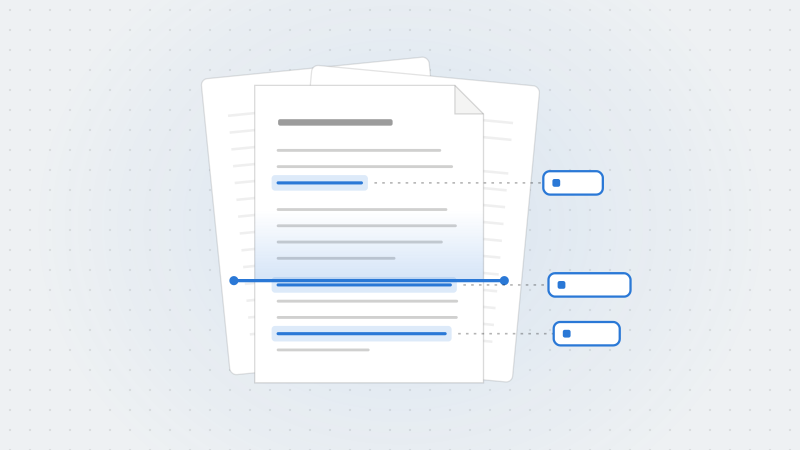
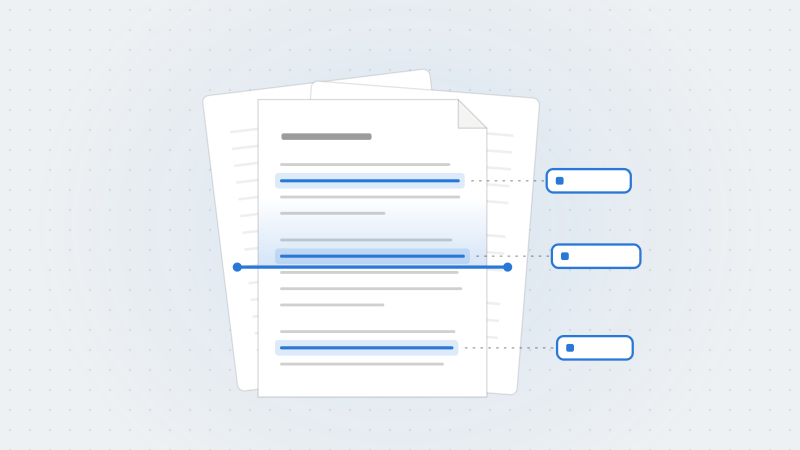
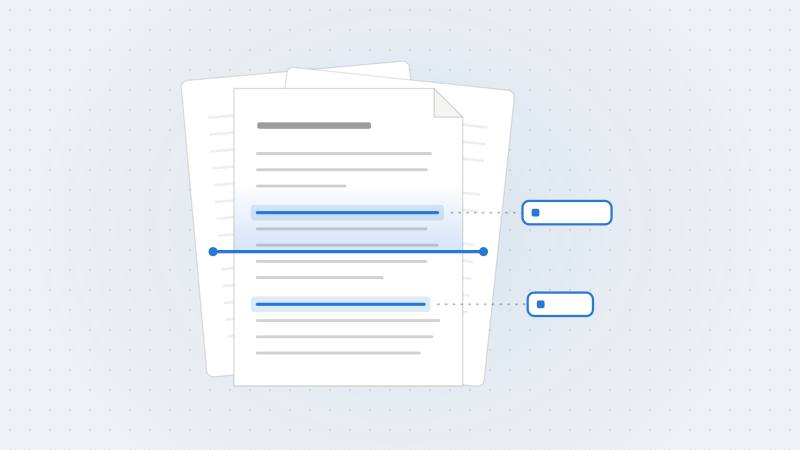
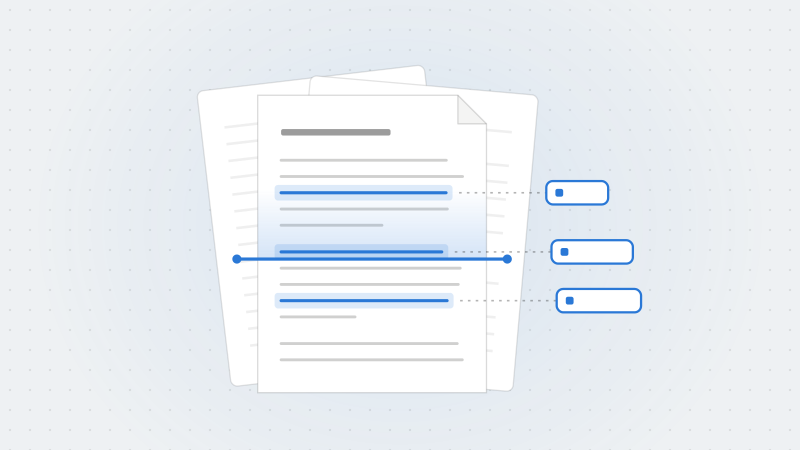
- Source-text and reliability view: Shows, for each value, the passage of text it was extracted from and how reliable the assignment is. This traceability is meant to build trust in sensitive business processes2.
- Validation and SAP: The information is validated and then transferred to SAP in a structured format2.
- Employee review: An employee reviews the transaction only when the document is ambiguous or the system is uncertain2.
- ECM team: Schaller leads 10 ECM specialists who are responsible for every application tied to ECM processes1.
Schaller credits generative AI with a precision and efficiency that the company couldn’t reach before6. With the earlier system, it often wasn’t clear why it had made a particular decision. Now staff can explain what was recognized and why, and Schaller says that creates acceptance6.
“We are processing much more than we used to with the same amount of people. We can do more without hiring people and follow up many more quotations.”
AI.dp extends the Doxis landscape that SEW-EURODRIVE already ran6. By 2023, the company had rolled out about 80 to 90 applications on Doxis for document management, collaboration, and workflow automation3.
Schaller keeps them on one platform for the joined-up record it gives, from the quote and the order to the delivery note and the production quality documents. “If we had multiple solutions doing this, then it would be much harder to get this overview.” He still checks Doxis against other options, Microsoft SharePoint among them1.
Rollout
A Forrester study that SER commissioned already counted AI order extraction among the platform’s benefits. AI.dp then went through a proof of concept and a pilot before it handled the company’s customer documents in daily use2, 3, 4, 6.
During the pilot, existing processes were adjusted, which raised data quality6. Rolling out across the world meant balancing global standards with local requirements, such as the German implementation of the GDPR1. New countries and languages can be added without complex configuration5, 6. In May 2026, the automated processing of supplier declarations and payment notifications was next in line2.
Technology and architecture
Doxis AI.dp is the vendor’s intelligent document processing product. In this deployment, it classifies, recognizes, and extracts data from incoming customer documents regardless of language and format, and delivers the results to connected systems such as SAP6. As a product, AI.dp uses machine learning and large language models to pull the fields. It checks extracted data against master data, business rules, and external sources, and corrections from staff feed back into the model7.
The following table lists the components of the solution.
| Layer | What they used | Role | Source |
|---|---|---|---|
| Solution platform | Doxis AI.dp | Classifies incoming customer documents, extracts the order fields and passes validated data on | 2, 6 |
| Business or operational system | SAP | Receives the validated order data in a structured format | 2, 5 |
| Decision explanation | Source-text and reliability view | Shows the passage each value came from and how reliable the assignment is | 2, 6 |
| Handoff to staff | Employee review | An employee reviews the transaction when the document is ambiguous or the system is unsure | 2 |
Data inputs
The solution uses the following data:
- Customer orders: PDFs sent by email from different countries, in various languages and layouts2.
- Operational feedback: Feedback from day-to-day operations improves quality step by step, so there’s no complex rule set to maintain2.
- Doxis content platform: The platform behind AI.dp runs as an on-premises deployment and serves 6,100 users in 37 countries4.
How one customer order flows through the system
A single order moves through the following steps:
- A customer somewhere in SEW-EURODRIVE’s network emails an order as a PDF, in its own language and layout2.
- AI.dp classifies the document as an order2.
- AI.dp reads the customer reference, item numbers, quantities, prices, and delivery dates from their context. It records where in the text each value came from and how reliable it is2.
- The validation step checks the data. If nothing is ambiguous, the order goes to SAP in a structured format without anyone touching it2.
- If the document is ambiguous or the system is unsure, an employee reviews the transaction first2.
- AI component
- Data
- Trigger or control
- Handoff to people
- Feedback
- Inferred, not documented
Results
The published savings figure belongs to the AI extraction that SEW-EURODRIVE ran on its Doxis platform before AI.dp1, 4.
| Metric | Before | After | Scope and timeframe | Reported by |
|---|---|---|---|---|
| Savings from AI extraction of order details | Not disclosed | At least EUR 1 million | Incoming orders and enquiries, 2020 to 2023, with the AI extraction in use before AI.dp | SEW-EURODRIVE, estimated, via diginomica1 |
The results break down as follows:
- Savings from AI extraction of order details: The estimate covers the capability that let sales specialists extract key details from incoming orders and enquiries automatically, from 2020 to 20231. It’s a floor and an estimate, not a measured figure. Forrester’s 2023 study of the platform counted the same capability among its benefits4.
- AI.dp proof of concept and pilot: The proof of concept showed information being recognized faster and fewer sources of error than before. During the pilot, AI.dp extracted more information automatically, including some that hadn’t been accessible at all6.
- AI.dp in use: The outcomes listed for AI.dp are higher data quality, significantly less manual rework, and faster, more accurate processing5.
- Whole-platform return: A Forrester Total Economic Impact model, commissioned by SER in June 2023 and built on information that SEW-EURODRIVE provided, put the platform’s return at 336% over three years, with payback in less than 6 months3.
- EUR 17 million: SER’s 2023 press release puts the platform’s savings at more than EUR 17 million over three years3. In August 2026, diginomica wrote that a 2023 analysis found more than EUR 17 million in time-saving benefits in the sales process alone1.
Lessons learned
Extraction that reads fields in context answered the problem with template rules. It needs no new rule for every layout or language change, and each value shows its source text and reliability2. Schaller says the explainability is what built acceptance6.
People stay in the process. An employee still reviews any transaction that the system finds ambiguous or is unsure of2. Schaller’s sales colleagues were skeptical at first about AI in their process and were won over by the time it saved1.
Order extraction is a small part of a large document load. Of about 150,000 documents a day, Schaller says, “even now, many processes are still manual”1.
The figures are the company’s and its vendor’s. Every account of the deployment comes from Doxis or from an interview with SEW-EURODRIVE, and the money figures go back to one model that Forrester built for the vendor from the company’s own information1, 3. The 336% and the payback describe the whole platform of 80 to 90 applications, not order extraction alone3.
The EUR 1 million figure most likely belongs to the first generation of order extraction, not to AI.dp. It covers 2020 to 20231, and the February 2026 spotlight describes AI.dp in a pilot and contrasts it with an earlier system whose decisions were often unexplained6. The results for AI.dp itself are qualitative5, 6.
The two EUR 17 million figures conflict. SER’s release applies the figure to the whole platform3, and diginomica applies it to the sales process alone1. The press release is closer to the study, so it’s probably the better reading.
Case study scorecard
- EUR 1 million Saved by AI extraction of key details from incoming orders and enquiries1, 4
- Rules and standards: GDPR
Sources by publication date
- Vendors and partners 9
- Press, academic, and regulators 1
- 2 undated
Build this solution yourself
Analysis
What you need
To build this solution as SEW-EURODRIVE did, you need the following in place:
- A document platform that already runs: AI.dp extended a Doxis landscape that a central team of 10 ECM specialists already owned1, 6.
- An ERP that takes structured orders: The validated order goes to SAP in a structured format, so no one retypes it2.
- A visible reason for each value: Acceptance came from showing the source text and reliability of each extracted value2, 6.
- Someone who owns the review: An employee reviews every transaction that the system finds ambiguous or is unsure of2.
Reference architecture
Document extraction
Document extraction reads the documents, forms, and images that an organization receives, sorts each one to its case, and turns it into structured fields for the business system that acts on it. Models read each document into fields, and ordinary software checks the fields against business rules and the organization's reference records. A reviewer compares the fields with the source before they reach the business system, or sees only the doubtful ones, and the corrections measure and improve the models.
- Document intake
- Document extraction platform (documented in this case study)
- Preparation
- Text recognition
- Extraction model
- Validation rules
- Reference records
- Workflow engine
- Review workbench
- Answer explanation (documented in this case study)
- Connectors
- Business system (documented in this case study)
- Corrections log
- Accuracy monitoring
A check mark shows a building block that this case study's sources document.
Open the reference architectureOthers who built it
- Serax: The Belgian homeware maker sends customers’ PDF orders to SAP Document AI and has cut its manual B2B orders by 33%8.
- i-PRO Americas: The camera maker processes customer orders with Doxis Order-to-Cash for SAP, which handles 70% of orders automatically9.
- Benchmark Electronics: The manufacturer extracts and validates data from PDF sales orders in different layouts across 250 customers with Infor Velocity Suite10.
In the library
- Condé Nast speeds rights contract analysis with Claude Condé Nast
- Cargolux drafts cargo quotes from customer emails with AI Cargolux Airlines International
- Air France KLM Martinair Cargo uses AI to book and quote Air France KLM Martinair Cargo
- Pennsylvania's AI check cuts illegible benefit documents Pennsylvania Department of Human Services
- How Liberty Global matches supplier invoices with GenAI Liberty Global
- Parte embeds AI in property managers' email in 27 offices Parte
Cite this case study
Enterprise AI Case Studies. "SEW-EURODRIVE automates customer order intake with Doxis AI." Updated Nov 18, 2026. https://case-studies.ai/case-studies/document-intelligence/DI-013-customer-order-processing-sew-eurodrive/
@misc{csai-di-013,
  author = {{Enterprise AI Case Studies}},
  title = {{SEW-EURODRIVE automates customer order intake with Doxis AI}},
  year = {2026},
  note = {Updated 2026-11-18},
  url = {https://case-studies.ai/case-studies/document-intelligence/DI-013-customer-order-processing-sew-eurodrive/}
}Sources
The following reporting, and every passage quoted from it, belongs to its publisher, not to this site. Sources and ownership
- Source 1:
How SEW-EURODRIVE built a document automation engine to unlock millions in savings
Supporting excerpts (25)
says that in one area alone, its sales process, a 2023 analysis found more than €17 million in time-saving benefits over the previous three years.
That includes AI-enabled document and process automation that lets sales specialists automatically extract key details from incoming orders and enquiries - a capability the company estimates saved at least €1 million on its own between 2020 and 2023.
Other benefits of committing to its supplier's 'Intelligent Content Automation' technology include 90 per cent time savings in some document-centric processes, full payback within six months, and an overall 336 per cent ROI across the 2020-2023 period.
more than 22 TB of managed content and at least 313 million documents now held in its chosen partner's repository
SEW-EURODRIVE's Group Manager for Enterprise Content Management, Benjamin Schaller
Schaller works for a 23,000-strong, privately held global leader in drive and automation technology. In total, the company operates 18 production plants and 92 assembly plants across 57 countries.
Due to the extensive product configuration we want to offer and all the related customer interaction that necessitates, we handle a lot of incoming sales documentation.
We encourage use of our sales portal of course, but there is still a lot of document-based communication needed between sales and buyers.
there's really not a lot of value creation going on there.
So, instead of them being overloaded with bureaucracy, we wanted the guys to be able to focus on customers and chasing leads instead.
In practical terms, that means leading an internal team of 10 ECM specialists responsible for every application tied to ECM processes
He says his sales colleagues were initially sceptical about AI being introduced into their process, but were soon won over by the time savings it delivered.
Other challenges, he says, centered on rolling out the system in a way that balanced global standardization with local requirements - such as aligning with the German implementation of the EU's GDPR
The decision to bring in this specific vendor predates his tenure
We handle around 150,000 documents per day globally - but even now, many processes are still manual, so we never really stop pushing for automating document-heavy workflows.
constantly checks Doxis's capabilities and suitability for projects against other market options such as Microsoft SharePoint.
If we had multiple solutions doing this, then it would be much harder to get this overview.
In 2023, SEW-EURODRIVE's main ECM partner, Doxis - then still known as SER Group - commissioned a Total Economic Impact (TEI) study from Forrester Consulting
Not everything goes into Doxis - if it's collaboration stuff, we advise people to use other platforms
there's other use cases in Procurement and Finance where people are doing manual work which we want to get rid of
which alone resulted in estimated savings of €640,000 over the period studied.
Automating routine content-centric workflows delivered time savings of up to 90% - equivalent, according to the study, to at least €6.1 million recovered in end-user productivity.
Holding all documents in one central place opened up a further €9.6 million in end-user productivity gains over the period analysed.
Document Intelligence means we can see the quote, we can see the order, the delivery note, the quality documents from production
SEW-EURODRIVE was able to shut down legacy ECM systems as part of the migration to Doxis
- Source 2:
AI-powered document processing: How SEW-EURODRIVE makes global processes scalable
Supporting excerpts (19)
With more than 750,000 customer documents per year, locations in over 50 countries, and numerous language and format variations, stable, scalable document processes have become a business-critical requirement.
Different layouts, changing formats, and country-specific requirements made traditional, rule-based approaches increasingly cumbersome.
Traditional document processing is usually based on templates and fixed extraction rules.
Every deviation means new rules, manual rework, greater susceptibility to errors, and rising operating costs.
At the same time, data must be available more quickly and, ideally, integrated directly into relevant ERP systems such as SAP.
A number, for example, isn't viewed in isolation
A typical use case at SEW-EURODRIVE is the processing of incoming customer orders:
Orders arrive via email as PDFs from different countries, in various languages and layouts.
The AI automatically recognizes relevant content such as customer reference, item numbers, quantities, prices, and delivery dates.
The information is validated and transferred to SAP in a structured format.
Only in cases of ambiguity, or when the system is uncertain, does an employee review the transaction.
The system focuses on contextual relationships rather than fixed document positions, so processing remains stable even with layout changes or new language variants.
The solution shows the textual basis from which information was extracted and how reliable the assignment is.
This traceability builds trust, particularly in sensitive business processes.
The AI automatically classifies and extracts relevant information and transfers it directly to the connected system.
Feedback from day-to-day operations improves quality step by step, without the need to maintain complex rule sets.
SEW-EURODRIVE capitalizes on Doxis AI.dp to process 750,000 customer documents per year
New areas of application such as the automated processing of supplier declarations or payment notifications are already in the pipeline.
At SEW-EURODRIVE, this approach was implemented using an AI-based solution for intelligent document processing, specifically Doxis AI.dp.
- Source 3:
Supporting excerpts (7)
SEW-EURODRIVE achieved a 336% return on investment and savings totaling more than €17 million over three years by automating document management and processes
Benefits exceeding €17 million and payback in less than 6 months
a commissioned study conducted by Forrester Consulting in June 2023 on behalf of SER.
Based on information provided by SEW-EURODRIVE, Forrester built a 3-year financial model
The company has rolled out approximately 80 to 90 applications for AI-powered document management, collaboration and workflow automation.
Today, Doxis handles a total of 22 TB of data in nearly 313 million documents, with an annual document growth of approximately 30 million to 35 million.
SEW-EURODRIVE reported an annual revenue of €4.2 billion in 2022.
- Source 4:
336% ROI: Total Economic Impact study reveals benefits of modern ECM in manufacturing
Supporting excerpts (8)
SEW-EURODRIVE handles around 250,000 assembly orders a year, and at the time its drawing and microfiche archives were still decentralized across locations.
The administrative workload created a need for additional staff, and previous attempts with ECM systems had yielded limited success.
Automated content-centric workflows, saving 70% of their time in year 1 and 95% in years 2 and 3.
Leveraged AI to extract key elements from incoming orders and inquiries, significantly reducing manual effort.
Forrester Consulting studied the total economic impact of Doxis Intelligent Content Automation at our customer SEW-EURODRIVE.
An on-premises deployment allowed SEW-EURODRIVE to cut down on hardware and maintenance expenses.
The platform now serves 6,100 users in 37 countries.
net present value benefits exceeding €13 million
- Source 5:
SEW-Eurodrive: Processing 750,000 customer documents per year with Doxis AI.dp
Supporting excerpts (8)
We are processing much more than we used to with the same amount of people. We can do more without hiring people and follow up many more quotations.
Benjamin Schaller, Group manager, archiving and documenting services
Manual document processing is reaching its limits
Need for faster and more accurate information processing
Seamless integration with existing systems such as SAP
Easy rollout to new countries and languages without complex configuration
Higher data quality and significantly less manual rework
Faster and more accurate processing of information
- Source 6:
Supporting excerpts (13)
Die manuelle Verarbeitung dieser Informationen stößt zunehmend an ihre Grenzen.
Mit Doxis AI.dp hat SEW-EURODRIVE seine bestehende Doxis Landschaft um einen intelligenten Motor erweitert: Künstliche Intelligenz.
Die Lösung klassifiziert, erkennt und extrahiert Daten aus 750.000 eingehenden Kundendokumenten pro Jahr unabhängig von Sprache und Format.
Dabei liefert Doxis AI.dp präzise Ergebnisse direkt in die verbundenen Systeme wie SAP.
Generative KI ermöglicht uns heute eine Präzision und Effizienz, die zuvor nicht möglich war.
Group Manager Enterprise Content Management (CDF-WE)
Das Proof of Concept macht die Unterschiede zu vorher deutlich: Informationen werden schneller erkannt und Fehlerquellen minimiert.
neue Standorte können ohne aufwendige Konfiguration integriert werden.
Schon während der laufenden Pilotphase zeigen sich klare Fortschritte.
Bestehende Prozesse wurden angepasst und dadurch die Datenqualität spürbar erhöht.
Doxis AI.dp deutlich mehr Informationen automatisch extrahieren lassen, auch solche, die zuvor gar nicht zugänglich waren.
Früher war oft nicht klar, warum das System bestimmte Entscheidungen getroffen hat. Heute können wir genau erklären, was erkannt wurde und warum.
Das schafft Akzeptanz
- Source 7:
Intelligent document processing software with Doxis AI.dp
Supporting excerpts (5)
Doxis AI.dp is an AI-powered Intelligent Document Processing solution that captures, classifies, extracts, validates and routes business documents.
Machine learning and LLMs pull every field your process needs, from totals and IBANs to names, dates and line items.
Extracted data is checked against your master data, your business rules and external sources.
authorized staff confirm only the fields the model is unsure about
Corrections your team makes along the way feed back into the model, so the share of documents needing review keeps falling.
- Source 8:
Serax Reduces Manual Work with SAP Business AI
Supporting excerpts (3)
These B2B manual orders amount to 30% of all orders coming into Serax.
First, it sends the PDF to SAP Business Technology Platform (SAP BTP), where SAP Document AI extracts the data.
The application has cut the number of manual B2B orders by 33%.
- Source 9:
Levelling up SAP at i-PRO Americas: How 70% of customer orders are now automatic
Supporting excerpts (2)
i-PRO digitized its customer order processing with Doxis Order-to-Cash for SAP.
70% of orders handled automatically
- Source 10:
Benchmark Electronics automates complex sales order processing with Infor Velocity Suite
Supporting excerpts (2)
the system extracts data from sales order documents regardless of layout to validate and flag discrepancies
Automate complex, PDF-based order processing across 250 customers with different order document layouts















Comments
Start the conversation.
Invited members of the library comment here. Sign in to join the conversation.