
Pitt cuts online course quality reviews to minutes with AI
The University of Pittsburgh built a Claude-based reviewer that reads a whole Canvas course and proposes a score for every objective of the OLC Quality Scorecard, which an instructional designer confirms or overrides.
University of PittsburghUnited States (Pittsburgh, Pennsylvania)EducationPilot
- Scenario
- Online course quality review against a rubric
- Business function
- Engineering and design
- Kind of solution
- Document review and drafting
- Who built it
- Built with a partner (Amazon Web Services)
- Where it runs
- Public cloud
- Human oversight
- Assists people
- Organization
- Academic or research
- AI types
- Generative AI, Document AI
- Unit cost
- $1.92–$8.18
tl;drCourse reviews that took two to four hours now start from AI-proposed scores in under three minutes.See the results
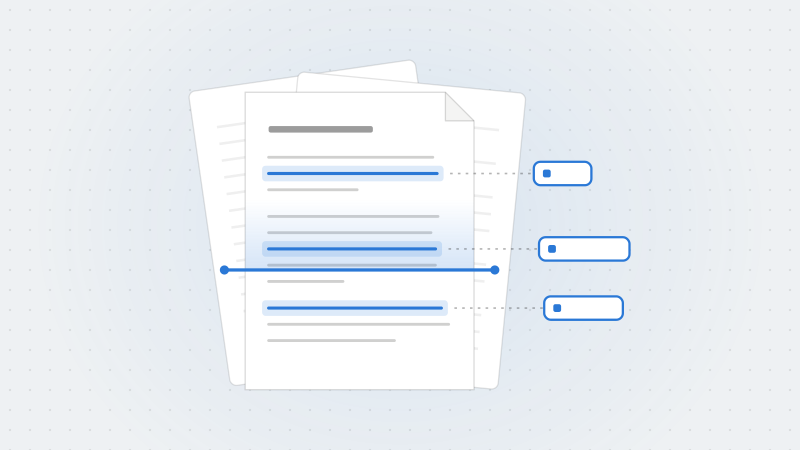
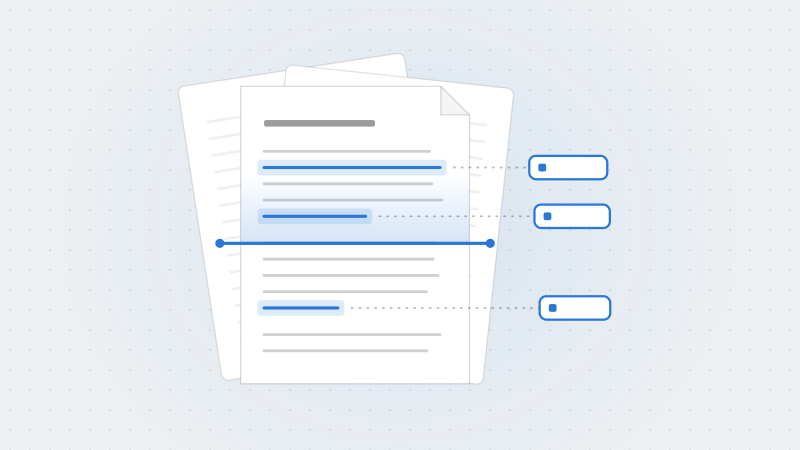
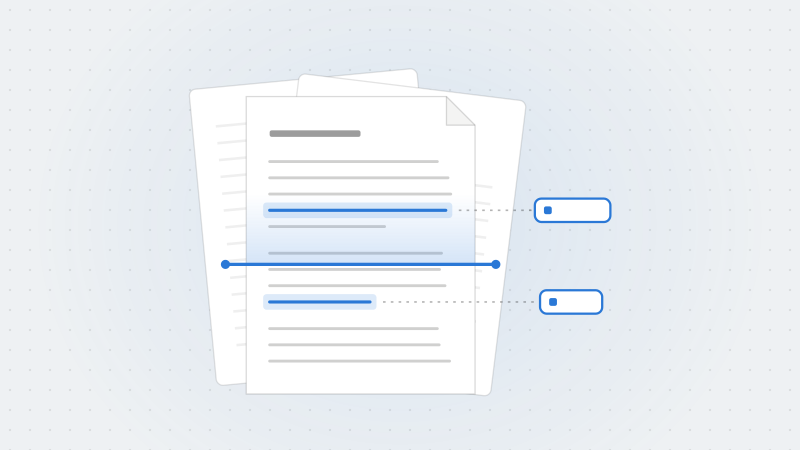
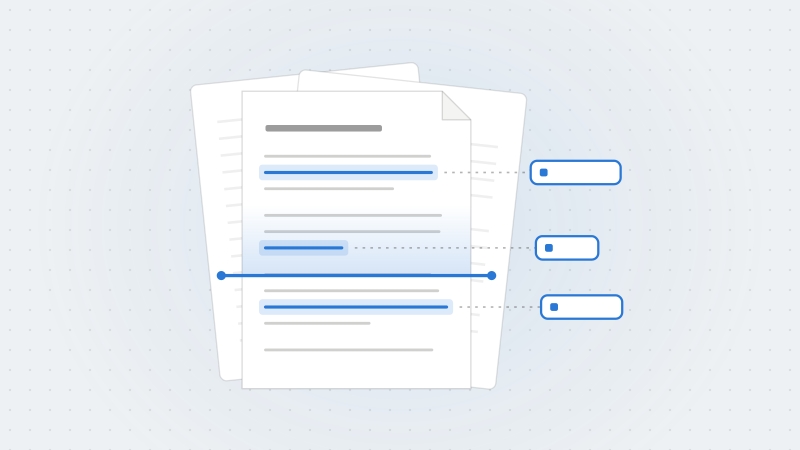
The University of Pittsburgh has built Canvas OLC Insights, an AI reviewer that checks online courses against the Online Learning Consortium (OLC) Quality Scorecard. Its Cloud Innovation Center (CIC) made the tool for the university’s online-education unit, Pitt EDGE1.
The tool reads an entire Canvas course and proposes a score for each of the scorecard’s 50 objectives. An instructional designer then confirms or overrides every one1. Pitt Digital described the tool on October 29, 2026, and released its code and documentation on GitHub1. Intelligent CIO reported it on November 33.
A review that took two to four hours by hand now starts from a full proposed scorecard, returned in under three minutes1. The design rests on a test before the build. AI scoring alone agreed with expert reviewers about as well as a coin flip, and AI scoring with a person confirming or overriding each score reached expert-reviewer-level reliability1, 3. In the university’s October 2026 audit, one full review cost between $1.92 and $8.18 in model and cloud charges2.
Before the deployment
Every online course at Pitt EDGE, the University of Pittsburgh Center for Excellence in Digital Education, goes through a quality review before it launches1. The yardstick is the OLC Quality Scorecard: 50 objectives that cover course design, content, structure, and engagement1. Its questions include whether a course has a clear grading policy, whether it’s free of broken links, and whether its learning objectives are measurable or vague1.
The manual review had the following problems:
- Time: An instructional designer who worked through a course objective by objective needed two to four hours1, 3.
- Consistency: Two reviewers could reach different verdicts on the same course, because much of the scorecard comes down to judgment1, 3.
- Volume: Hundreds of courses come up for revision on a roughly 1- to 1.5-year cycle1.
- Coverage: At that pace, courses went unreviewed, quality gaps persisted, and faculty didn’t get the specific feedback that they needed to improve1.
Rae Mancilla, who runs University Digital Education at Pitt EDGE, took the problem to the university’s CIC, which is powered by Amazon Web Services1.
“Our instructional designers know this scorecard inside and out, but there aren’t enough hours in the day to run every course through it by hand, so we knew we needed to leverage AI”
What was built
The tool splits the work between a model, deterministic code, and a person. The model reads the course, the code computes the scores, and the reviewer decides1, 2. Some objectives are checked from structure alone, such as rubric coverage or assignment counts. Others need a reading of the syllabus, pages, and attached files1.
The work is divided as follows:
- Claude Sonnet 4.6: Compares the course content with each objective’s accomplished and exemplary criteria. It returns a structured verdict on each criterion, with the evidence it found, a confidence level, and suggestions for improvement2.
- Score recomputation: Deterministic code computes each objective’s score from the per-criterion verdicts. The score is never taken from the model directly2.
- Flagging: The model decides at runtime whether an objective can be judged from static content. It flags the ones it can’t, such as whether an instructor answers students within a reasonable time over a semester, for the reviewer instead of guessing1, 2.
- Instructional designer: Works through each proposed score with its evidence and rationale in a dashboard, and confirms or overrides each one1. A flagged objective needs a written rationale before the review can be finalized2.
- Claude Haiku 4.5: A lighter model that writes an improvement plan for every objective scored below Exemplary once a review is locked1, 2.
Finalizing asks for confirmation, locks the scores so that they can’t change, saves the scorecard to the course’s permanent history, and produces a PDF2. The history lets Pitt EDGE track a course’s scores across review cycles1.
The criteria are Pitt’s own reading of the OLC’s free, public scorecard. They sit in one file, so another OLC-member institution with access to the consortium’s detailed Handbook can replace them with its own interpretation without touching the rest of the system1.
Alternatives considered
The team set aside the following options:
- The OLC’s ChatGPT-based review assistant: Pitt EDGE piloted it first. Canvas course exports routinely exceeded its token limits, so designers split content into batches by hand and did so inconsistently1. As a consumer product, it couldn’t meet Pitt’s data governance requirements or connect to the university’s systems1, 3.
- AI scoring alone: Before the full build, the team compared AI scoring alone and AI scoring checked by a person against expert human reviewers. The gap between the two, from a coin flip to expert-level agreement, is why every score in the tool passes through a reviewer1, 3.
Rollout
The tool went through the following stages:
- Build: CIC student developer Avi Kottakota built the tool, with an AWS solutions architect as technical lead and CIC program leaders managing the project1, 2.
- Validation: The team tested the tool on an entirely synthetic course, seeded with deliberately planted, unambiguous evidence for as many objectives as possible. The course gave the team ground truth to debug against, without the variation in what real courses contain1.
- Audit: In October 2026, an audit measured the cost of full reviews across a set of courses and recorded findings, some of them deliberately deferred2.
- Scope: Pitt EDGE’s initial scope for the tool is the university’s online and hybrid programs1.
Technology and architecture
The tool is serverless on AWS. Four self-contained Lambda functions (extraction, evaluation, the API, and the improvement plan) share no code2. AWS Step Functions runs them as a two-step pipeline, extract and then evaluate, that scales to zero when idle2.
The following table lists the components of the solution.
| Layer | What they used | Role | Source |
|---|---|---|---|
| Language model | Claude Sonnet 4.6 | Scores each of the 50 objectives with per-criterion verdicts, evidence and rationale | 1, 2, 3 |
| Language model | Claude Haiku 4.5 | Writes the improvement plan after a review is finalized | 1, 2 |
| Model hosting | AWS Bedrock | Serves both Claude models | 1, 2 |
| APIs and connectors | Canvas LMS API | Supplies the course list and all course content | 1, 2 |
| Data preparation | Extraction Lambda | Pulls content, follows links, parses files, collects metadata, checks links and spelling | 2 |
| Workflow engine | AWS Step Functions | Runs the extract-then-evaluate pipeline | 2 |
| Framework or library | PydanticAI | Enforces structured output from Bedrock | 2 |
| Rules and decision logic | Score recomputation from criterion verdicts | Computes each objective’s score from the model’s verdicts | 2 |
| Review workbench | Reviewer dashboard | Confirm or override scores, score flagged objectives, finalize, export PDF, view trends | 1, 2 |
| Data platform and storage | DynamoDB and S3 | Review sessions, course history, extracted content, verdicts and PDFs | 2 |
| Access and identity | Amazon Cognito | Reviewer login on every API route, no self-signup | 2 |
Data inputs
The Extraction Lambda gathers the following inputs:
- Course content: The pages, assignments, quizzes, discussions, announcements, files, and syllabus, fetched through parallel calls to the Canvas LMS API2.
- Linked attachments: Resources that the module structure doesn’t list, found by following links inside the content. The Lambda parses PDF, DOCX, and PPTX files for their text2.
- Structural metadata: Module counts, rubric coverage, and due-date spread. The Lambda also checks links and spelling2.
The evaluation step then scores all 50 objectives in one invocation, with up to 8 simultaneous Bedrock calls2. It also writes a course quality summary and a subject-area overview. PydanticAI holds the model to a structured output format2.
Safeguards
The tool has the following safeguards:
- Canvas token: The Canvas API token lives in AWS Systems Manager as an encrypted parameter and is fetched at runtime. The tool sees the courses that the token’s grant in Canvas allows2.
- Scope guard: Checks every Canvas call against 16 expected endpoint patterns2.
- Link checker: Refuses private IP addresses2.
- Download cap: Limits each file download to 50 MB2.
- Retention: Deletes extracted content and AI verdicts after 30 days2.
How one course flows through the system
A course moves through a review in the following steps:
- A reviewer logs in and picks a course from the list that Canvas returns for the token. The reviewer files a new review2.
- The pipeline pulls the course and scores it in about two to three minutes2.
- The reviewer goes through the 50 proposed scores and accepts or changes each one2.
- The reviewer scores the flagged objectives with a written rationale and finalizes the review2.
- Claude Haiku 4.5 writes the improvement plan last2.
Results
The following table lists the results.
| Metric | Before | After | Scope and timeframe | Reported by |
|---|---|---|---|---|
| Time to a full proposed 50-objective scorecard | Two to four hours of manual review | Under three minutes | One course per review, as of October 2026 | University of Pittsburgh, pilot1, 3 |
| Agreement with expert reviewers | Essentially a coin flip (AI scoring alone) | Expert-reviewer-level reliability (AI plus human confirmation) | Test before the full build | University of Pittsburgh, pilot1, 3 |
| Model and cloud cost of one full review | Not disclosed | $1.92 to $8.18 | Courses in the October 2026 audit | University of Pittsburgh CIC, pilot2 |
The metrics measure the following:
- Time to a proposed scorecard: How long the software takes to produce its proposals. The code repository puts the pipeline at about two to three minutes and the whole review process at “around 3 minutes”2.
- Agreement with expert reviewers: How closely the tool’s scores match expert human reviewers. The test compared AI scoring alone with AI scoring that a person confirmed or adjusted1, 3.
- Cost of one full review: Model and cloud charges at Bedrock prices of October 2026. The cost rises with the amount of content in a course, and the 50 scoring calls to Sonnet 4.6 made up about 96% of it2. Every service is billed per request, so the idle infrastructure costs effectively $02.
Lessons learned
The design answers a negative result that Pitt chose to publish. On its own, the AI’s scores agreed with expert reviewers about as well as a coin flip1, 3. Pitt built the tool so that the model drafts and a person decides on every objective, and the published claim is about the combination, not the model1.
Two other design choices follow the same line. Code recomputes each score from the model’s verdicts on each criterion, so a number in the dashboard can be traced to the judgments behind it2. The model also says when an objective can’t be judged from course materials, instead of inventing a score2.
The synthetic test course, with evidence planted where the team knew it was, is a cheap way to get ground truth for a judgment task that has none built in1. Objectives that depend on watching an instructor over a semester, such as response times to students, can’t be assessed from a course’s static content and always go to a person1, 2.
The open-source release carries audit findings that the team deferred on purpose, from unrecognized page links to unfinished hardening2. It has no per-review or monthly spending cap, no limit on how much course content goes to the model, and no automated test suite or CI pipeline yet2. Its disclaimer calls the code not suitable for production environments and says it includes shortcuts for rapid prototyping2.
The speed figure measures the software’s time to produce its proposals1. The agreement result shows that those proposals are reliable only once a person has gone through all 50 of them1. Mancilla’s own description is in the future tense: the tool “will make our team more efficient”1.
Every figure comes from the University of Pittsburgh’s own account, the Pitt Digital story and the project’s code repository1, 2. Intelligent CIO’s report repeats the university’s figures and adds none of its own3.
Case study scorecard
- Under three minutes Time for the tool to return a full proposed 50-objective scorecard1, 3
- Expert-reviewer-level reliability Agreement with expert reviewers when a person confirms or overrides each AI score1, 3
- $1.92 to $8.18 Model and cloud cost of one full review2
Sources by publication date
- Organization 4
- Press, academic, and regulators 1
Build this solution yourself
Analysis
What you need
To build this solution, you need the following in place:
- A written standard with criteria for each level: Pitt EDGE had the OLC scorecard’s 50 objectives, with criteria for each level, so the tool could hand them to a model one objective at a time1.
- Courses in a system with a full API: Pitt’s courses live in Canvas, whose API returns every page, assignment, and file, so the tool reads a whole course without anyone exporting it2.
- Reviewers with time to confirm every score: The agreement test showed that the tool depends on experienced instructional designers who check each score1. Measure that step, not only the model’s run time.
Reference architecture
Document review and drafting
A document review and drafting solution reads a case's documents against a written standard, precedents, or a list of questions and drafts a review, summary, clause, or report with its sources for an expert to finish. The solution pulls the case's documents, and a language model answers each question from the passages that bear on it, with its source. Fixed logic settles what must not vary, and an expert checks the draft against the sources and makes the decision.
- Source system
- Connector to the source system (documented in this case study)
- Review and drafting platform
- Text recognition
- Document preparation (documented in this case study)
- Passage index
- Access control (documented in this case study)
- Questions and templates
- Drafting model (documented in this case study)
- Private model endpoint (documented in this case study)
- Fixed logic (documented in this case study)
- Review workbench (documented in this case study)
- Reviewer feedback
- Tests on known cases
A check mark shows a building block that this case study's sources document.
Open the reference architectureOthers who built it
- Quality Matters and Noodle: The QM AI Review Assistant, in beta for Canvas users, connects to the learning management system to surface evidence for QM’s Specific Review Standards and flag missing elements. A full release is expected in 20274.
- National Louis University: Its learning-design team offers a Course Quality AI, a ChatGPT assistant that helps evaluate courses against the Quality Matters standards5.
- Online Learning Consortium: The consortium offers its own ChatGPT-based review assistant for its scorecard, which Pitt EDGE piloted before it built its own tool1.
In the library
- How Nationwide uses generative AI to summarize claim notes Nationwide
- Merck drafts clinical study reports in days with gen AI Merck & Co.
- AI drafts clinical study reports in minutes at Novo Nordisk Novo Nordisk
- Corona, California speeds building plan review with AI City of Corona
- Denver pre-screens permit applications with CivCheck AI City and County of Denver
- Court strikes down DOGE's ChatGPT screening of NEH grants United States DOGE Service
Cite this case study
Enterprise AI Case Studies. "Pitt cuts online course quality reviews to minutes with AI." Updated Nov 18, 2026. https://case-studies.ai/case-studies/document-intelligence/DI-018-online-course-quality-review-pitt/
@misc{csai-di-018,
  author = {{Enterprise AI Case Studies}},
  title = {{Pitt cuts online course quality reviews to minutes with AI}},
  year = {2026},
  note = {Updated 2026-11-18},
  url = {https://case-studies.ai/case-studies/document-intelligence/DI-018-online-course-quality-review-pitt/}
}Sources
The following reporting, and every passage quoted from it, belongs to its publisher, not to this site. Sources and ownership
- Source 1:
From Hours to Minutes: Pitt CIC Builds an AI Reviewer for Online Course Quality
Supporting excerpts (30)
Every online course at the University of Pittsburgh Center for Excellence in Digital Education (Pitt EDGE) goes through a quality review before it launches.
The review checks against the Online Learning Consortium's (OLC) Quality Scorecard, a widely adopted framework covering 50 objectives across course design, content, structure and engagement.
Things like: Is there a clear grading policy? Is the course free of broken links? Are learning objectives measurable, or just vague?
Doing that by hand, course by course, objective by objective, takes two to four hours per course, and two reviewers can genuinely disagree on the same course because a lot of the scorecard comes down to judgment calls.
Rae Mancilla, executive director of University Digital Education at Pitt EDGE, brought that challenge to the University of Pittsburgh Cloud Innovation Center (CIC), powered by Amazon Web Services (AWS).
The result, built by CIC student developer Avi Kottakota, is the Canvas OLC Insights tool, which uses artificial intelligence to read a Canvas course and return a full 50-objective scorecard in under three minutes.
But with hundreds of courses on a roughly 1- to 1.5-year revision cycle, a manual review process that takes hours per course doesn't scale.
In the existing process, courses go unreviewed, quality gaps persist, and faculty don't get the specific, actionable feedback they need to improve.
Pitt EDGE had already piloted the OLC's own ChatGPT-based review assistant, but it ran into multiple limits.
Canvas course exports routinely exceeded the tool's token limits, forcing designers to manually batch content in an inconsistent way, and as a consumer GPT product, it couldn't meet Pitt's data governance requirements or integrate with existing systems.
Our instructional designers know this scorecard inside and out, but there aren't enough hours in the day to run every course through it by hand, so we knew we needed to leverage AI
This tool will make our team more efficient and give them more time to focus on the judgment calls that need human intervention.
pulls a Canvas course's full content (syllabus, modules, pages, assignments, discussions, quizzes, rubrics, and files, including linked PDFs, Word docs, and slide decks)
then evaluates it against each of the scorecard's 50 objectives using Claude Sonnet 4.6 on AWS Bedrock
A lighter model, Claude Haiku 4.5, generates the improvement plan once a review is finalized.
Before building the full system, the team ran a real test: how well does AI scoring alone line up with expert human reviewers, compared to AI scoring with a human checking and adjusting it?
Alone, the AI's agreement with expert reviewers was essentially a coin flip.
With a human confirming or overriding each proposed score, that agreement jumped to expert-reviewer-level reliability.
Some are checked structurally, from metadata like rubric coverage or assignment counts.
always offering the actual evidence and rationale it found alongside its proposed score
for objectives that require watching an instructor behave over an entire semester, like whether they respond to students within a reasonable time
The model determines at runtime whether an objective can be judged from static course content and flags the ones that can't for the human reviewer.
A reviewer works through the AI's proposed scores and evidence in a dashboard, confirming or overriding each one, and can export a finalized scorecard as a PDF.
tracks a course's scores over time so Pitt EDGE can measure improvement across review cycles
To validate the tool without the noise of real courses (which vary in what content they contain), the team built an entirely synthetic test course with deliberately planted, unambiguous evidence for as many objectives as possible, giving them real ground truth to debug against.
Pitt EDGE's initial scope for the tool is online and hybrid programs at the University of Pittsburgh
The scorecard criteria the tool evaluates against are independently derived from OLC's free, publicly available Quality Scorecard
the code is structured so any OLC-member institution with access to OLC's own detailed Handbook can drop in its own interpretation of each objective without touching the rest of the system
Explore the code, architecture, and full documentation on GitHub.
support staff so they can focus on what really matters, which is improving course quality
- Source 2:
Supporting excerpts (46)
reducing a multi-hour manual review process to around 3 minutes
is an open-source project developed by the Health Sciences and Sports Analytics Cloud Innovation Center at the University of Pittsburgh
Solutions Architect, Amazon Web Services (AWS)
Retrieves all course content (modules, pages, assignments, discussions, files, syllabus) from Canvas LMS via API and extracts text from PDFs, DOCX, and PPTX files
A single Lambda retrieves the entire Canvas course content through parallel API calls
then follows in-content links to discover additional resources (like PDF attachments) that aren't directly listed in the module structure
The Lambda also collects structural metadata (module counts, rubric coverage, due date distribution) for the dashboard and runs content quality checks: SSRF-protected link validation and spelling analysis.
A second Lambda receives the extracted content and scores all 50 objectives in one invocation using bounded-concurrency async calls to Bedrock (Claude Sonnet 4.6).
Each objective is evaluated against its accomplished and exemplary criteria, producing a structured verdict with per-criterion judgments, evidence, confidence level, and improvement suggestions.
objectives that require live observation or instructor interaction are flagged for human review rather than guessed at
Scores are never taken from the model directly; they are deterministically recomputed from the individual criterion verdicts.
After scoring, the Lambda generates a course quality summary and a subject-area overview.
Four self-contained Lambdas (Extraction, Evaluation, API, Improvement Plan) share no code
The architecture scales to zero when idle and handles burst workloads without provisioning.
A React 19 + TypeScript frontend provides the reviewer workspace
The OLC-derived scorecard organizes 50 course quality objectives into three sections:
Orchestrates 2-step Extract → Evaluate pipeline
Review sessions + permanent course history
Content storage, verdict JSONs, PDFs, frontend hosting
Structured AI output with Bedrock integration
Cognito authorizer on all API Gateway routes
Self-signup is disabled for security.
Authorization is enforced by the Canvas API token's own grant within Canvas LMS
A scope guard validates that API calls match expected Canvas endpoint patterns (16 regex patterns) to catch programming errors before they reach the network
Content quality link checker validates URLs against private IP ranges before making requests
Each file download is capped at 50 MB (larger files are skipped and listed as failed), every Canvas request has a timeout, link checking stops after 60 seconds
Extracted course content and AI verdicts (`reviews/` in the content bucket) expire after 30 days.
Frontend and content buckets block all public access
Canvas API token stored in SSM SecureString, fetched at runtime
Browse the course list (pulled from Canvas API based on your token's access) and select a course to review
Starts the automated extraction and scoring pipeline (~2-3 minutes)
Objectives the AI could not score need a written rationale first, Finalize asks for confirmation, and scores can't be changed afterwards
Lock in scores, which saves the scorecard to permanent history and generates a PDF.
After finalization, generates actionable recommendations using Claude Haiku 4.5 targeting objectives scored below Exemplary
A full review costs **$1.92–$8.18** with scoring on Claude Sonnet 4.6.
This is the range measured across the courses in the October 2026 audit; cost grows with the amount of course content
Scoring (50x Sonnet 4.6) | ~96% | Dominant cost driver
Infrastructure baseline (idle) is effectively $0
using Sonnet 4.6 with bounded concurrency (8 simultaneous Bedrock calls)
These audit findings are known and intentionally deferred:
some valid page URLs may not be recognized
there is no per-review or monthly spending cap and no limit on how much course content is sent to the model
the repository has no automated test suite or CI pipeline yet
not suitable for production environments, or on production or other critical data
include shortcuts in order to support rapid prototyping
Infrastructure baseline (idle) is effectively $0 — all services are pay-per-request with no provisioned capacity.
- Source 3:
University of Pittsburgh develops AI tool to reduce online course reviews from hours to minutes
Supporting excerpts (9)
The University of Pittsburgh has developed an Artificial Intelligence tool designed to reduce the time required to review online courses from several hours to less than three minutes.
Previously, reviewing a course manually took between two and four hours.
The university also identified inconsistencies in how reviewers interpreted certain assessment criteria.
An earlier trial of a ChatGPT-based review assistant encountered limitations involving course size, data governance and integration with existing systems.
It then uses Claude Sonnet 4.6 through AWS Bedrock to evaluate the material against the scorecard
The university found that AI scoring alone produced agreement with expert reviewers at approximately chance level.
However, introducing human confirmation and adjustment increased agreement to a level comparable with expert review.
The university tested the technology using a synthetic course containing deliberately constructed evidence to validate the assessment process.
code, architecture and documentation available through GitHub
- Source 4:
QM AI Review Assistant (Now in Beta)
Supporting excerpts (4)
This AI-powered tool connects with your LMS to help surface evidence related to QM Specific Review Standards, identify missing elements
Available now in beta for Canvas LMS users
The QM AI Review Assistant was purpose-built by QM and Noodle for higher education institutions
A full release is anticipated in 2027.
- Source 5:
Supporting excerpts (2)
The Course Quality AI helps evaluate courses using the Quality Matters (QM) standards to ensure high-quality online and blended learning experiences.
A free ChatGPT subscription is required to use these tools.














Comments
Start the conversation.
Invited members of the library comment here. Sign in to join the conversation.