
STOWA's AI assistant answers from its water research reports
STOWA, the knowledge center of the Dutch water boards, built an AI search assistant with Het Waterschapshuis that answers water managers' questions from its research reports and Deltafacts.
STOWANetherlandsWater and wastewaterPilot
- Scale
- More than 1,500 publications
- Scenario
- Research report search and question answering
- Business function
- Knowledge management
- Kind of solution
- Knowledge assistant
- Who built it
- Built with a partner (Het Waterschapshuis and Microsoft)
- Where it runs
- Public cloud, In the EU or EEA
- Human oversight
- Assists people
- Organization
- Public sector
- AI types
- Generative AI, Conversational AI
tl;drUsers get answers with source citations from more than 1,500 STOWA publications.See the results
STOWA, the knowledge center of the Dutch water boards and provinces, runs an AI search assistant that answers questions from its research publications1, 4. STOWA built it with Het Waterschapshuis, which supports the water boards with digitalization and AI projects1, 3.
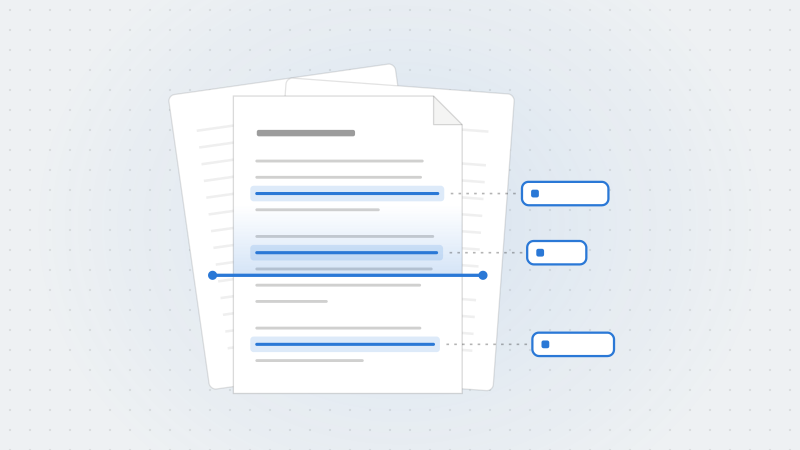
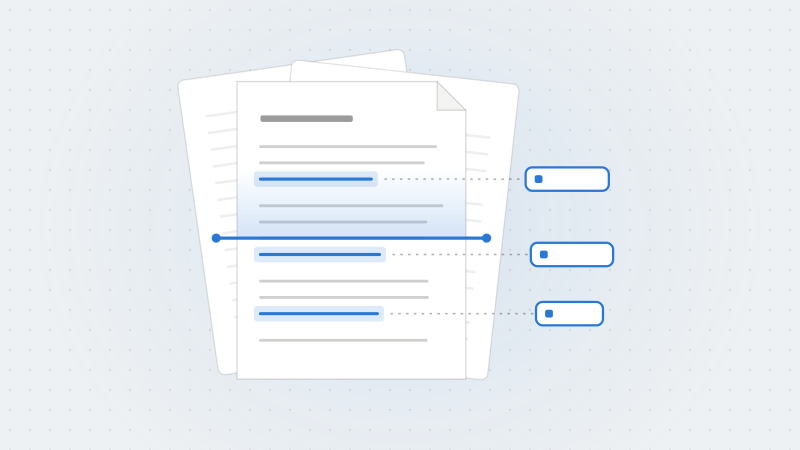
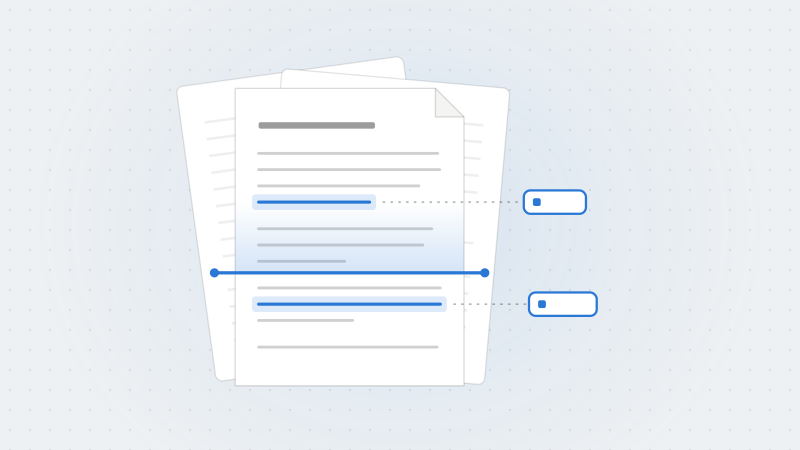
Users type a question in ordinary words and get a short answer that points to the passage in the original report3. Every answer cites one or more publications that the user can download1.
In September 2025, STOWA published version 2 of its accountability statement, and the assistant now searches the Deltafacts knowledge dossiers as well as all STOWA publications1. In November 2026, the STOWA homepage invites visitors to search its reports and Deltafacts with the assistant4.
Before the deployment
STOWA develops and collects applied knowledge that answers the questions of regional water managers1. In 2025, it had 350 projects running and delivered forty to sixty reports a year on average3.
- A large archive: STOWA had released more than 1,500 publications, and new ones arrived every week2.
- Many channels: STOWA shared its knowledge through meetings, news items, videos, and articles3.
- Information overload: Director Mark van der Werf asked how STOWA could keep people from drowning in the overload of information3.
- A goal: He wanted people to find answers quickly, in new reports and in everything already published3.
Van der Werf saw language-driven AI as an opportunity3. For the technical work, STOWA turned to Jonathan Gerbscheid, a data scientist at Het Waterschapshuis3.
What was built
The assistant takes a question in ordinary words, searches STOWA’s publications and Deltafacts, and returns a short answer with citations to its sources1, 3. It’s meant mainly for general questions about content1.
- Language model: chatgpt-4o writes each answer. Gerbscheid adapted the ChatGPT basis to STOWA’s specific needs1, 3.
- Search software: A fork of a Microsoft sample project searches the document database for the text fragments that an answer rests on1.
- Ingestion job: An Azure Function downloads new publications from the STOWA website and processes them into the document database1.
- Answer explanation tabs: A click on a citation opens tabs that show the instruction, the model, the search process, and the supporting text fragments. A third tab downloads the source publication1.
- Users: Decide what to do with an answer. They can open the cited publication or, for some topics, continue on one of STOWA’s satellite websites1.
STOWA limits the assistant to its own reports3. Van der Werf said he doesn’t want an AI that makes things up, and that all answers must be traceable to STOWA’s publications3. He sees the assistant as support for people, not a replacement3.
STOWA aims for full transparency about how the AI reaches its answers, and conversations with the assistant aren’t stored1.
Technology and architecture
The assistant runs on a fork of Azure-Samples/azure-search-openai-demo, a Microsoft sample project with many extra functions built in1. The fork sits on Het Waterschapshuis GitLab, separated from the internet1. The model, chatgpt-4o, runs in a Microsoft Azure datacenter in Sweden1.
Microsoft’s sample creates a ChatGPT-like experience over an organization’s own documents by using retrieval-augmented generation (RAG)5. It uses Azure OpenAI Service for GPT models and Azure AI Search for indexing and retrieval, and it renders citations and the thought process for each answer5.
| Layer | What they used | Role | Source |
|---|---|---|---|
| Language model | chatgpt-4o | Writes each answer from text fragments of STOWA publications | 1, 3 |
| Framework or library | Azure-Samples/azure-search-openai-demo | Microsoft sample project that STOWA’s assistant runs on as a fork | 1, 5 |
| Chat interface | AI-zoekassistent | Takes questions on the STOWA website and shows answers with citations | 1, 3, 4 |
| Decision explanation | Answer explanation tabs | Show the instruction, model, search process and text fragments behind an answer | 1 |
| Search and vector index | Document database | Holds the processed publications that the assistant searches | 1 |
| Data preparation | Azure Function | Loads new publications from the STOWA website every night | 1 |
| Developer tools | Het Waterschapshuis GitLab | Hosts the fork, separated from the internet | 1 |
| Cloud platform | Microsoft Azure datacenter in Sweden | Runs the model | 1 |
Data inputs
- STOWA publications: All reports in STOWA’s publication database, more than 1,500 in July 20251, 2.
- Deltafacts: STOWA’s knowledge dossiers, part of the search scope since version 21, 2.
- The user’s question: Typed in ordinary words after a click on the Stel STOWA een vraag button3.
Integrations
- STOWA website: The Azure Function checks the website every day at 3 a.m. and downloads new publications1.
- STOWA satellite websites: For some topics, the assistant refers users to sites such as www.sleutelfactortoxiciteit.nl, www.handreikinggrasbekledingen.nl, www.wikinoodmaatregelen.nl, and www.kenniscentrumbever.nl1.
How one question flows through the system
STOWA’s report on AI in water management shows one question in full3:
- A user clicks Stel STOWA een vraag on the STOWA website and asks what STOWA does on AI3.
- The assistant searches the publications and Deltafacts in its document database1.
- chatgpt-4o writes a short answer. It describes STOWA’s research into neural networks and fuzzy logic in water management, and STOWA’s work on the Meteobase database3.
- The answer lists two cited STOWA reports as PDF files3.
- The user clicks a citation to see the thought process and the supporting text fragments, or downloads the source publication1.
Results
The assistant went live as a beta on the STOWA website, and its scope grew once1, 3:
- Beta online: By August 2025, the assistant was available as a beta version through the Stel STOWA een vraag button3.
- Wider scope: In September 2025, version 2 of the accountability statement extended the search from STOWA’s publications to the Deltafacts as well1, 2.
- Still offered: In November 2026, the STOWA homepage invites visitors to search its reports and Deltafacts with the AI search assistant4.
Lessons learned
Limiting the assistant to STOWA’s own publications gives every answer a source that the user can download1. It matches Van der Werf’s demand that all answers be traceable to STOWA’s publications3.
The interface builds transparency into each answer. The explanation tabs show the instruction, the model, and the search process, and two published versions of the accountability statement name the codebase, the model, and the data center1, 2.
The assistant works less well for specific questions about exact values, because of the way it searches1. STOWA presents it as a tool for general questions about content1.
Answers rest on probabilities, and STOWA tells users to go back to the source when they need to be sure an answer is correct1. Van der Werf adds that finding the right answer starts with the quality of the question, which remains human work3.
The build took judgment. It was sometimes a challenge to decide how far the tools of big tech companies could be used, and which adjustments Gerbscheid had to build himself3.
The account of the assistant comes from STOWA’s own accountability statements, its report on AI in water management, and its website1, 3, 4.
Case study scorecard
Sources by publication date
- Organization 4
- Vendors and partners 1
Build this solution yourself
Analysis
What you need
- Your publications in one readable place: The assistant answers only from STOWA’s publications and Deltafacts, and a nightly job pulls new publications from the STOWA website1. You need your documents where such a job can collect them.
- Someone who can adapt a sample codebase: A data scientist at Het Waterschapshuis adapted a Microsoft sample to STOWA’s needs1, 3. You need a person who can maintain the fork and decide what to build yourself.
- A model in a region that suits your data rules: STOWA runs chatgpt-4o in a Microsoft Azure datacenter in Sweden1. Check that your cloud tenancy offers the model in a region you can use.
Reference architecture
Knowledge assistant
A knowledge assistant answers a question that staff ask in their own words, by using the organization's own documents, and shows the sources of the answer. The search index returns the passages that best match a question, and a language model writes the answer from them. Content curators prepare the content beforehand, and the person who asked checks the answer and decides what to do with it.
- Chat interface (documented in this case study)
- Assistant platform
- Search index (documented in this case study)
- Knowledge content
- Content ingestion (documented in this case study)
- Embedding and ranking models
- Language model (documented in this case study)
- Answer ratings
- Business system
- Test set of sample questions
A check mark shows a building block that this case study's sources document.
Open the reference architectureOthers who built it
- European Commission: European Commission's DG INTPA gives staff an AI assistant. More than 2,000 DG INTPA staff have sent the AI assistant over 400,000 queries since March 2026.
- NSI Luxembourg: AskNSI answers 83% of employee queries at NSI Luxembourg. AskNSI automatically answers 83% of employee queries at NSI Luxembourg.
- West Midlands Police: West Midlands Police halts Copilot after AI hallucination. West Midlands Police switched Copilot off after it put a non-existent match in a police report.
- Vanderlande: Vanderlande's AI assistant handles IT self-service requests. Vanderlande's VIGO assistant now takes self-service IT requests that used to reach the help desk.
- Target Corporation: How Target rolled out an AI chatbot to nearly 2,000 stores. Target store staff used Store Companion more than 50,000 times after its chainwide rollout.
- CM.com: How CM.com staff search company policies with AI agent Norma. CM.com saw policy awareness rise as staff sent policy search prompts to its Norma agent.
Cite this case study
Enterprise AI Case Studies. "STOWA's AI assistant answers from its water research reports." Updated Nov 26, 2026. https://case-studies.ai/case-studies/document-intelligence/DI-071-research-report-search-assistant-stowa/
@misc{csai-di-071,
  author = {{Enterprise AI Case Studies}},
  title = {{STOWA's AI assistant answers from its water research reports}},
  year = {2026},
  note = {Updated 2026-11-26},
  url = {https://case-studies.ai/case-studies/document-intelligence/DI-071-research-report-search-assistant-stowa/}
}Sources
The following reporting, and every passage quoted from it, belongs to its publisher, not to this site. Sources and ownership
- Source 1:
Verantwoording AI-zoekassistent STOWA (versie 2, september 2025)
Supporting excerpts (23)
STOWA ontwikkelt en verzamelt praktisch toepasbare kennis voor het beantwoorden van de vragen van regionale waterbeheerders.
Om deze kennis beter te ontsluiten, heeft STOWA samen met het Waterschapshuis een AI-zoekassistent ontwikkeld.
De assistent doorzoekt daarvoor alle publicaties en Deltafacts (kennisdossiers) die STOWA heeft uitgebracht.
De AI-zoekassistent geeft bij het gegeven antwoord altijd één of meer bronvermeldingen.
Deze verwijzen naar de publicatie op basis waarvan het antwoord wordt gegeven. De publicatie kun je direct downloaden.
de AI-zoekassistent geeft antwoorden op basis van waarschijnlijkheden. Wil je zeker weten of het antwoord juist is, ga dan altijd terug naar de bron.
De AI-zoekassistent is vooral bedoeld is om algemene inhoudelijke vragen te beantwoorden.
minder goed voor het beantwoorden van specifieke vragen over exacte waarden.
STOWA hecht aan maximale transparantie over de manier waarop de antwoorden via AI tot stand komen.
Als je klikt op een bronvermelding onderaan het antwoord, verschijnen aan de rechterkant van het scherm de tabs
Het denkproces geeft aan op basis van welke instructie, met welk AI-taalmodel en via welk zoekproces de zoekassistent tot bepaalde resultaten komt.
kun je de tekstfragmenten zien waarop de antwoorden gebaseerd zijn.
download je de bronpublicatie.
De reikwijdte van de zoekresultaten is beperkt de Deltafacts en de publicaties die in de publicatiedatabase van STOWA zijn opgenomen.
In sommige gevallen verwijst de zoekassistent naar satellietwebsites van STOWA, zoals www.sleutelfactortoxiciteit.nl
www.handreikinggrasbekledingen.nl, www.wikinoodmaatregelen.nl of www.kenniscentrumbever.nl
Gesprekken met zoekassistent worden niet opgeslagen.
Samples/azure-search-openai-demo. Dit is een voorbeeldproject van Microsoft waarin veel extra functionaliteiten zijn verwerkt.
De assistent maakt gebruik van een kopie (een zogenoemde fork) van die codebase.
Deze is afgescheiden van het internet en staat op de Gitlab (een ontwikkelaarsplatform) van het Waterschapshuis.
Het gebruikte model specifiek is chatgpt-4o.
Het draait in een Microsoft Azure datacentrum in Zweden.
Dagelijks (om 3 uur 's ochtends) kijkt een Azure Function op de STOWA website en worden nieuwe publicaties gedownload en verwerkt in de documentdatabase van de zoekassistent.
- Source 2:
Verantwoording AI-zoekassistent STOWA (versie 1, juli 2025)
Supporting excerpts (3)
Verantwoording AI-zoekassistent STOWA (versie 1, juli 2025)
De assistent doorzoekt daarvoor alle publicaties die STOWA heeft uitgebracht. Dat zijn er momenteel meer dan 1500. Daar komen iedere week nieuwe STOWA-publicaties bij.
De reikwijdte van de zoekresultaten is beperkt tot de publicaties die in de publicatiedatabase van STOWA zijn opgenomen.
- Source 3:
Supporting excerpts (26)
Het Waterschapshuis (hWh) ondersteunt de waterschappen bij digitalisering, informatiestromen en AI-projecten
STOWA gebruikt taalgestuurde AI om haar enorme rapportenarchief beter toegankelijk te maken.
Via een nieuwe zoekfunctie kunnen gebruikers vragen stellen en direct relevante passages vinden in ruim 1500 publicaties.
De bètaversie is inmiddels online.
Er lopen nu 350 projecten
veertig tot zestig rapporten per jaar op
zegt directeur Mark van der Werf
We organiseren bijeenkomsten en publiceren nieuwsberichten, filmpjes en artikelen.
Maar hoe voorkom je dat mensen verdrinken in de overload aan informatie?
We moeten het mensen makkelijker maken om snel antwoorden te vinden, in nieuwe rapporten én in alles wat er al ligt
Mark zag in taalgestuurde AI een kans.
Voor de technische uitwerking zocht STOWA samenwerking met Jonathan Gerbscheid, data scientist bij Het Waterschapshuis.
Jonathan bouwde een toepassing die gebruikers in staat stelt om in gewone bewoordingen vragen te stellen.
Het systeem geeft een kort, helder antwoord en verwijst direct naar de plek in het oorspronkelijke rapport
VRAAG: WAT DOET STOWA AAN AI
Gegenereerd antwoord: STOWA heeft onderzoek gedaan naar de toepassing van kunstmatige intelligentie (AI) in het waterbeheer.
Dit onderzoek richtte zich op technieken zoals neurale netwerken en fuzzy logic
Daarnaast heeft STOWA bijgedragen aan de ontwikkeling van Meteobase
De basis van de toepassing is ChatGPT, een taalgedreven AI, die door Jonathan is aangepast aan de specifieke wensen van STOWA.
Het was daarbij soms een uitdaging om te bepalen in hoeverre de tools van de grote techbedrijven konden worden gebruikt, die vergelijkbare toepassingen ontwikkelen, en welke aanpassingen Jonathan zelf moest bouwen.
de zoekfunctie gebruikt uitsluitend STOWA-rapporten als bron.
Ik wil geen AI die iets verzint
Alle antwoorden moeten herleidbaar zijn tot onze publicaties.
Van der Werf ziet AI nadrukkelijk als ondersteuning, niet als vervanging.
het vinden van de juiste antwoorden begint bij de kwaliteit van de vraag. En dat blijft mensenwerk.
De toepassing is inmiddels als bètaversie beschikbaar via de knop Stel STOWA een vraag op de STOWA-website.
- Source 4:
STOWA | Het kenniscentrum voor de waterschappen
Supporting excerpts (3)
Het kenniscentrum van waterschappen en provincies
Doorzoek onze rapporten en Deltafacts met de AI-zoekassistent
Stel STOWA een vraag
- Source 5:
RAG chat app with Azure OpenAI and Azure AI Search (Python)
Supporting excerpts (3)
This solution creates a ChatGPT-like frontend experience over your own documents using RAG (Retrieval Augmented Generation).
It uses Azure OpenAI Service to access GPT models, and Azure AI Search for data indexing and retrieval.
Renders citations and thought process for each answer














Comments
Start the conversation.
Invited members of the library comment here. Sign in to join the conversation.