
Utrecht pilots an AI assistant that summarizes free text
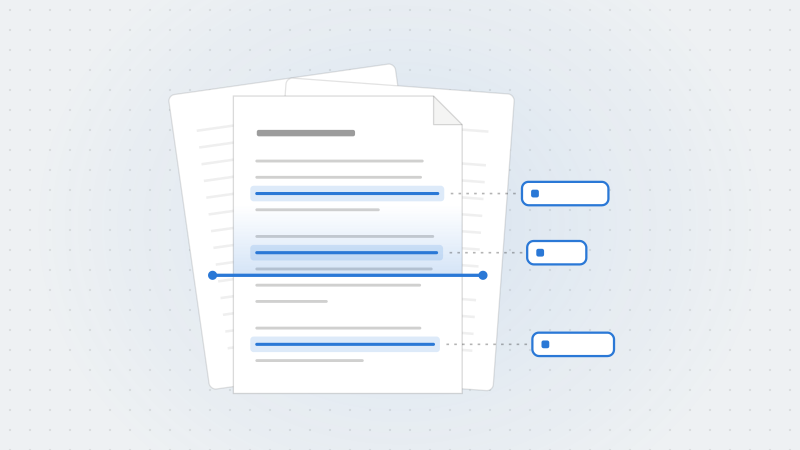
The City of Utrecht pilots an AI assistant that structures, analyzes and summarizes large volumes of free text in civil servants' routine work, with a staff member assessing what it produces.
Gemeente UtrechtNetherlandsLocal and regional governmentPilot
- Scenario
- Free-text structuring and summarization for civil servants
- Business function
- Knowledge management
- Kind of solution
- Document review and drafting
- Human oversight
- Assists people
- Organization
- Public sector
- AI types
- Generative AI, Agentic AI, Machine learning
tl;drUtrecht runs a pilot in which AI structures and summarizes free text for staff to review.See the results
The City of Utrecht runs a pilot with an AI assistant that structures, analyzes and summarizes large volumes of free text1. The pilot aims to automate routine tasks of the city’s civil servants1.
The assistant combines AI agents, a language model, analytics and machine learning1. A staff member assesses what it produces, and the city uses Uthiek, its own ethics framework, to assess this use of AI1.
As of June 2026, the assistant runs as a pilot in the city’s routine work1.
Before the deployment
The pilot targets routine work in which civil servants structure, analyze and summarize large amounts of free text1.
Utrecht already had a process to review the ethics of its digitalization projects2:
- Team Uthiek: The city set up the team in its CIO Office in 2020 to carry out ethical impact assessments2.
- Utrecht values model: The assessments are based on eight ethical values that matter to the city2.
- Case owners: The team carries out each assessment together with the owners of a digitalization project2.
What was built
The AI assistant takes in large volumes of free text and returns it structured, analyzed and summarized, without a person doing that work1. People stay at the end of the process:
- AI assistant: Structures, analyzes and summarizes the free text on its own1.
- Staff member: Assesses the output that the assistant produces1.
- Uthiek review: The city uses its ethics framework to assess the ethical and social impact of this use of AI1.
Technology and architecture
| Layer | What they used | Role | Source |
|---|---|---|---|
| Solution platform | AI assistant | Structures, analyzes and summarizes large volumes of free text, built with AI agents, a language model, analytics and machine learning | 1 |
The assistant’s input is the free text of civil servants’ routine work, and its output goes to a staff member for assessment1.
Results
As of June 2026, the assistant runs as a pilot to automate routine tasks of civil servants1. The first structuring, analysis and summary of the free text moves to the assistant, and a staff member assesses the result1.
Lessons learned
The design keeps a person at the end of the process, because a staff member assesses the assistant’s output1. The city also assesses this use of AI with its own ethics framework1.
Researcher Ronald Scherpenisse argues that the pilot goes further than supporting civil servants1. In his view, the government doesn’t hand over its decisions, but it risks handing over part of its first reading of files, signals and patterns1.
Scherpenisse places the start of knowledge at that first ordering of what seems relevant, not at the final decision1. He applies the point to most retrieval-augmented generation (RAG) applications, not only to Utrecht’s pilot1.
The account of the pilot comes from Binnenlands Bestuur, a trade outlet for Dutch public administration1.
Case study scorecard
Sources by publication date
- Organization 1
- Press, academic, and regulators 1
Build this solution yourself
Analysis
What you need
- Routine work on large volumes of free text: Utrecht chose routine tasks in which staff structure, analyze and summarize free text1. Check that your candidate task repeats often enough to be worth automating.
- A staff member who assesses the output: In Utrecht, a person reviews what the assistant produces1. You need people with the subject knowledge to judge a summary, because the first reading of a file shapes what counts as relevant.
- An ethics review with the project owner: Utrecht assessed this use of AI with Uthiek, which its CIO Office has run with project owners since 20201, 2. You need a comparable review so that the effect of handing the first reading to AI is weighed.
Reference architecture
Document review and drafting
A document review and drafting solution reads a case's documents against a written standard, precedents, or a list of questions and drafts a review, summary, clause, or report with its sources for an expert to finish. The solution pulls the case's documents, and a language model answers each question from the passages that bear on it, with its source. Fixed logic settles what must not vary, and an expert checks the draft against the sources and makes the decision.
- Source system
- Connector to the source system
- Review and drafting platform (documented in this case study)
- Text recognition
- Document preparation
- Passage index
- Access control
- Questions and templates
- Drafting model
- Private model endpoint
- Fixed logic
- Review workbench
- Reviewer feedback
- Tests on known cases
A check mark shows a building block that this case study's sources document.
Open the reference architectureOthers who built it
- City of Amsterdam: Its civil servants use ChatAmsterdam, an AI assistant that can summarize and translate text among other tasks1.
- City of Rotterdam: For VONK, the city’s innovation center, startup Parai built AI personas from 66 resident interviews that it transcribes, anonymizes and analyzes to identify every viewpoint1.
In the library
- How Nationwide uses generative AI to summarize claim notes Nationwide
- Merck drafts clinical study reports in days with gen AI Merck & Co.
- AI drafts clinical study reports in minutes at Novo Nordisk Novo Nordisk
- Corona, California speeds building plan review with AI City of Corona
- Denver pre-screens permit applications with CivCheck AI City and County of Denver
- Court strikes down DOGE's ChatGPT screening of NEH grants United States DOGE Service
Cite this case study
Enterprise AI Case Studies. "Utrecht pilots an AI assistant that summarizes free text." Updated Nov 21, 2026. https://case-studies.ai/case-studies/document-intelligence/DI-044-free-text-summarization-assistant-utrecht/
@misc{csai-di-044,
  author = {{Enterprise AI Case Studies}},
  title = {{Utrecht pilots an AI assistant that summarizes free text}},
  year = {2026},
  note = {Updated 2026-11-21},
  url = {https://case-studies.ai/case-studies/document-intelligence/DI-044-free-text-summarization-assistant-utrecht/}
}Sources
The following reporting, and every passage quoted from it, belongs to its publisher, not to this site. Sources and ownership
- Source 1:
Zo zetten gemeenteambtenaren generatieve AI in
Supporting excerpts (14)
draait de gemeente Utrecht een pilot
klussen van ambtenaren te automatiseren
Met behulp van AI-agents, een taalmodel, analytics en machine learning is een AI-assistent in het leven geroepen die grote hoeveelheden vrije tekst zelfstandig kan structureren, analyseren en samenvatten.
De output van dit proces wordt vervolgens beoordeeld door een medewerker.
De gemeente gebruikt het eigen ethisch kader, Uthiek, om de ethische en maatschappelijke impact van deze inzet van AI te beoordelen.
Het experiment roept de vraag op in hoeverre ambtenaren de eerste interpretatie van informatie kunnen uitbesteden aan AI.
Dit gaat verder dan ambtenaren simpelweg ondersteunen, stelt onderzoeker Ronald Scherpenisse.
De overheid besteedt hier niet direct haar besluiten uit, maar loopt wel het risico een deel van haar eerste lezing van dossiers, signalen en patronen uit handen te geven.
En precies daar begint kennis. Niet pas bij het laatste besluit, maar al bij de eerste ordening van wat relevant lijkt.
Dat geldt niet alleen voor deze pilot, maar voor de meeste RAG-toepassingen.
Net als commerciële AI-chatbots kan ChatAmsterdam onder meer sparren, samenvatten en vertalen.
Binnen VONK, het innovatiecentrum van de gemeente, onderzochten de Erasmus Universiteit en de Delftse startup Parai hoe zij reageren op andere genAI-toepassingen, zoals voor participatie.
op basis van 66 interviews met bestaande inwoners uit de wijk Bospolder-Tussendijken
Wij transcriberen en anonimiseren de oorspronkelijke gesprekken en analyseren ze om alle standpunten te identificeren
- Source 2:
Doelmatigheids- en doeltreffendheidsonderzoek Utrechtse ethiek
Supporting excerpts (5)
In 2020 is hiervoor Team Uthiek
binnen het CIO office opgezet om deze assessments uit te voeren gebaseerd op het Utrechtse waardenmodel.
Dit model bestaat uit acht ethische waarden die belangrijk zijn voor de gemeente Utrecht.
Ook voert het team ethische impact assessments uit samen met
casushouders van digitaliseringsprojecten














Comments
Start the conversation.
Invited members of the library comment here. Sign in to join the conversation.