
UK government's Consult tool sorts responses into themes
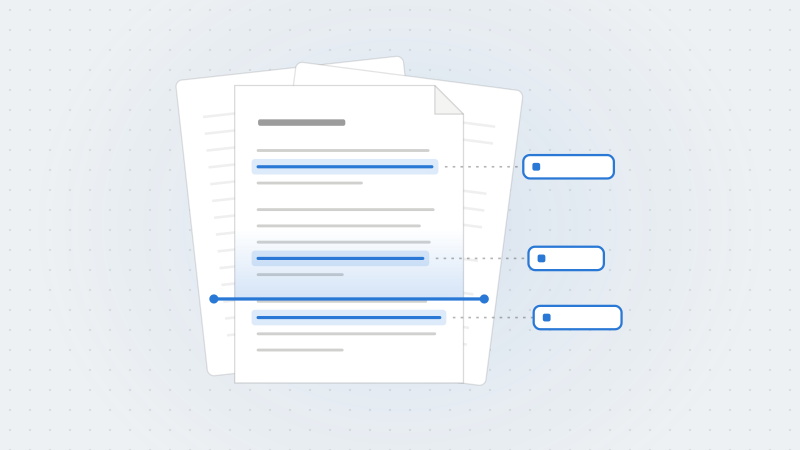
The UK government's Incubator for AI built Consult, which uses GPT-4o to draft the themes in free-text consultation responses and sort each response into them, while officials sign off and check the work.
Incubator for AIUnited KingdomNational governmentPilot since 2025
- Scale
- 47,983 responses to the DWP Pathways to Work consultation
- Scenario
- Public consultation response analysis
- Business function
- Knowledge management
- Kind of solution
- Document review and drafting
- Who built it
- Built in-house (Scottish Government, Department for Work and Pensions, and Independent Water Commission)
- Where it runs
- Public cloud, In the United Kingdom
- Human oversight
- Assists people
- Organization
- Public sector, part of Department for Science, Innovation and Technology
- AI types
- Generative AI, Document AI
- Users
- 125
tl;drConsult's theme mapping matched reviewers more closely than reviewers matched one another.See the results
The UK government’s Incubator for AI (i.AI) built Consult, a tool that finds the themes in free-text consultation responses and sorts each response into them1. A chain of GPT-4o prompts drafts the themes, the policy team signs them off, and reviewers check how the model mapped each response1, 3.
Consult’s first live consultation was a Scottish Government consultation on non-surgical cosmetic procedures, with more than 2,000 responses5. The Independent Water Commission then used it to support the identification of key themes in a call for evidence that drew over 50,000 responses14. In July 2026, i.AI was testing Consult with a small number of live consultations and planned to roll it out more widely in 20277.
The largest evaluation came on the Department for Work and Pensions (DWP) consultation on Pathways to Work. In an evaluation dated August 2025, Consult’s mappings scored a mean F1 of 0.816 against a single reviewer, while two reviewers scored 0.710 against each other3. DWP used the tool for the thematic analysis in its published response4.
Before the deployment
The civil service had no standard process for analyzing a consultation1. Teams of civil servants read, themed, and counted the free-text responses by hand, or paid a third-party supplier to do it1.
The conventional method had three stages. A team read a subset of the responses to draw up a framework of themes, trained its analysts on that framework, and then read every response and mapped it to the themes2. The old process had the following scale and problems:
- Volume: i.AI’s March 2025 report counts around 600 public consultations a year, some with more than 100,000 responses, which take hundreds of thousands of hours to analyze2. DSIT counts 500 a year5.
- Time: A comprehensive review of the free-text responses often took teams many months1.
- Cost: Analyzing one consultation by the existing, often outsourced method cost up to £100,0007. Outsourcing the full process can cost millions each year1.
- Procedural errors: In a human comparison test completed in November 2024, human labelers made procedural errors on almost 2.5% of responses (29 out of 1200). They missed responses, put labels in the wrong position, or didn’t follow the method1.
- Disagreement: In the same test, two policy advisers each labeled 200 responses for 3 questions against a senior adviser’s answers. The two agreed with each other only 62% of the time1.
What was built
Consult divides the work so that people decide what the themes are and the model does the bulk reading1, 3. The work is divided as follows:
- Prompt pipeline on GPT-4o: Generates a theme framework for each question from the whole set of responses, not a sample1, 2. After sign-off, it maps each response to as many of the agreed themes as apply, or to none1.
- Policy team: Reviews a long list of generated themes and decides which to use. It can add, edit, or remove themes before any mapping runs3.
- Reviewers: Check each mapping in the Consult application. A reviewer sees one response with its mapped themes and changes them with tick boxes2.
- Dashboard: Shows how often each theme appeared. Officials search and filter the responses by theme, respondent demography, and evidence weight3, 4.
- Civil servants: Consult makes no decisions and gives only a guide to the responses. Civil servants quality-assure what it shows before they use it in the consultation report, and they can edit any of its outputs1. Analysts carry on with their own analysis where themes are ambiguous or need subject expertise1.
Theme sign-off is a working session. In the Scottish trial, four Scottish Government experts read Consult’s short list, a longer list from before the final condensation step, and example responses for each theme2. They suggested merging, splitting, adding, or renaming themes, and an i.AI engineer updated the themes. The round repeated until all parties signed off2.
At DWP, policy officials worked with DSIT to turn Consult’s long list into a short list for each question. At times they picked out less common themes from the long list that they felt were particularly important4. In Scotland, six expert reviewers split the mapping review between them. Because it was the tool’s first live consultation, they reviewed every response2, 5.
“Using this tool has allowed the Scottish Government to move more quickly to a focus on the policy questions and dive into the detail of the evidence we’ve been presented with, while remaining confident that we have heard the strong views expressed by respondents.”
Consult is one of the tools in Humphrey, a bundle of AI tools designed to speed up civil servants’ work5. In May 2025, DSIT said that more evaluation of the tool’s accuracy and efficiency would come before a rollout across departments5, 6.
Alternatives considered
i.AI tried BERTopic, a topic-modeling library, before it chose a chain of LLM prompts1. BERTopic had the following limitations:
- Users found its topics hard to understand and couldn’t easily steer them1.
- It struggled to label one response with several topics1.
- It offered no easy way to feed in the context of the question or the consultation1.
The prompt pipeline takes context on each question and allows several themes per response1, 9.
Rollout
Consult moved from a test on historic data to three live consultations in 20251, 3. Demand then exceeded capacity, so i.AI manages access through a waitlist ahead of a full cross-government rollout planned for 202712.
Technology and architecture
i.AI built the tool itself and published both of its parts as open source1, 2. The following table lists the components of the solution.
| Layer | What they used | Role | Source |
|---|---|---|---|
| Language model | GPT-4o | Runs the question expansion, sentiment, theme and mapping prompts | 1 |
| Model hosting | Azure Open AI service | Serves GPT-4o from an internal Azure instance | 1 |
| Prompt and context management | ThemeFinder | Open-source package holding the prompt chain for theme generation and mapping | 1, 2, 9 |
| Solution platform | Consult application | Web application that holds the review interface and dashboard | 2 |
| Review workbench | Review interface | One response at a time with its mapped themes, corrected with tick boxes | 2, 3 |
| Workplace application | Dashboard | Theme counts, the original responses, and search and filters for officials | 3, 4 |
| Cloud platform | Cabinet Office provided AWS and Azure environments | All cloud processing | 1 |
ThemeFinder holds the AI capabilities. i.AI separated them into their own package to make them easier to test, develop, and share, and the Consult application adds the review interface and the dashboard2. Consult reaches GPT-4o through an internal instance of the Azure Open AI service, at API version 2024-02-01. Its applications, databases, and networking run in the London AWS data center1.
Prompt pipeline
The pipeline runs a fixed chain of prompts, and the policy team signs off the themes before the last one runs1, 2.
Each task in the chain has its reason:
- Question expansion: Adds context from the consultation’s aims to each question, because consultations use specialist language, acronyms, and legal terms1.
- Sentiment analysis: Labels each response as agreeing or disagreeing with the proposal. Theme generation batches the responses by these labels to improve performance1.
- Condensation: Merges the themes from each batch into one master list, because each batch yields its own themes. It removes duplicates and groups similar themes1.
- Refinement: Rewrites themes that carry a stance into neutral wording1.
- Mapping: Assigns each response zero or more of the final themes, and gives a reason for each choice1.
The model wasn’t fine-tuned. The i.AI team evaluated and iterated on the prompts instead1. A generic interface loads a prompt template for each task, splits inputs that are too large for one prompt into batches, and submits the prompts asynchronously1.
Data inputs
Consult uses the following data:
- Free-text responses: The answers to each question, uploaded after formatting. The free text itself isn’t changed1.
- Consultation aims: A summary of the aims, which question expansion uses for context1.
- Demographic answers: The dashboard filters responses by respondent demography4. Self-reported disability status served for the equality check at DWP3.
- Evaluation data: Historic consultation data sets shared by other departments, and synthetic responses whose themes are known1.
Integrations
Consult connects to the following systems:
- Department response data: In May 2025, i.AI uploaded each consultation by hand, and the only processing was getting the data into the right format1. The current repository has a script that validates a question workbook against the response data, builds ThemeFinder’s input layout, and uploads it to S315.
- Azure Open AI service: ThemeFinder submits batched prompts to GPT-4o. A retry system with exponential back-off absorbs rate limit errors, and integrity checks test that each output conforms to a predetermined JSON structure1.
Data protection
The data stays inside government through the following controls:
- Model endpoints in Azure: Consult calls OpenAI endpoints within Azure, so Microsoft and OpenAI can’t see the consultation data or use it to train future models1.
- Access: Role-based permissions control who can access what. A firewall admits only whitelisted government IP addresses1.
- User statement: Every user reads a statement on how the model and the tool work before using it1.
- Department agreements: Each department that sends its data completes its own data protection impact assessment and signs a memorandum of understanding or service agreement1.
How one consultation flows through the system
DWP’s Pathways to Work consultation moved through Consult in the following steps:
- The consultation ran from 18 March to 30 June 2025 and received 47,983 responses. Of these, 14,763 were direct answers to its 17 free-text questions, and 32,788 came from a single campaigning platform4.
- DWP started using Consult to generate and map themes before the consultation closed, because of the consultation’s timetable3.
- Policy officials signed off a short list of themes for each question4.
- In a double review, two reviewers each judged Consult’s mapping of 1000 responses for each of the 17 questions. This gave a person-to-person comparison on the same responses3.
- The policy experts gave further feedback on the themes between the two phases3.
- In a single review, one reviewer checked Consult’s mapping of up to 5000 responses per question. Reviewers could mark a response as fitting none of the listed themes, an option Consult didn’t have3.
- After the consultation closed, a Dip Test checked 200 responses per question, to see whether the themes from early responses still fit. Its result supported the decision to use Consult on the full consultation3.
- In all, 125 reviewers reviewed 87,738 responses3. Consult also mapped the campaign responses to three of the questions3.
- The checked themes went into DWP’s government response, which breaks down the most frequent themes for each question. The dashboard let officials search and filter the responses behind them4.
Results
The headline figures are F1 scores, which reward correct themes and penalize both wrong and missing ones. i.AI scored each response against the reviewer’s corrected themes and averaged across responses2, 3.
| Metric | Before | After | Scope and timeframe | Reported by |
|---|---|---|---|---|
| Mean F1, Consult vs. one reviewer | Two reviewers vs. each other: 0.710 | 0.816 | 70,738 responses, DWP consultation, 2025 | i.AI, pilot3 |
| Responses with no themes changed | Two reviewers identical: 65% | 73% | DWP single review phase, 2025 | i.AI, pilot3 |
| Mean F1 in the Dip Test | Not disclosed | 0.849 | 3,400 responses after the DWP consultation closed | i.AI, pilot3 |
| Mean F1, Consult vs. one reviewer | Two reviewers in an earlier evaluation: 0.81 | 0.76 | Scottish Government consultation, report dated March 2025 | i.AI, pilot2 |
| Responses with no themes changed | Not disclosed | 60% | Scottish Government consultation | i.AI, pilot2 |
| Median review time per response | Not disclosed | 23 seconds | Reviewers checking mappings, Scottish consultation | i.AI, pilot2 |
| Cost and time vs. human labellers | 6 hours | 3 minutes, 400 times cheaper | Labelling test sample, historic data | i.AI, pilot1 |
The following metrics need explaining:
- Mean F1 at DWP: The baseline comes from the same consultation, where two reviewers judged the same 17,000 responses3. DWP’s response calls it a human benchmark of 0.71, which Consult “exceeded”4.
- Theme rankings and equality: In Scotland, themes generally moved less than one place in the rankings, and at DWP half a rank on average2, 3. Performance didn’t differ with self-reported disability status, with “None of the above” rates of 4.41% and 4.39%3.
- Campaign responses: In the double review, Consult scored F1s of about 0.46 and 0.42 against the two human labelers, who scored around 0.48 against each other. The single review phase gave Consult about 0.863.
- Review time: The median was 23 seconds in Scotland and 19 seconds at DWP, with 77% and 78% of responses under a minute. Longer and more complicated answers took longer2, 3.
- Projected savings: Across the 500 consultations the government runs each year, the tool could save around 75,000 days of officials’ analysis, which cost £20 million in staffing. The figure is DSIT’s projection5.
Lessons learned
The DWP evaluation is the strongest evidence, because it measured a human baseline on the same consultation2, 3. The rankings barely moved, the Dip Test held up after the consultation closed, and i.AI read the results as showing that Consult matches, and potentially surpasses, typical human agreement3. DWP and the Independent Water Commission then used the tool for their published summaries4, 14.
Consult missed themes that reviewers then added. Reviewers added themes far more often than they removed them, and Scottish reviewers added an “Other” theme to 14% of responses2, 3. Most of those themes were in Consult’s original long list, so i.AI suggested preserving more of it2. On DWP’s campaign responses, Consult scored slightly below the human labelers3.
The agreement figures measure how much of Consult’s draft reviewers accept. Reviewers corrected the draft rather than theming from scratch, and at DWP the baseline compared two people correcting the same draft2, 3. A reviewer shown a plausible draft probably accepts more of it than they’d produce alone.
Theme sign-off was the costly part. i.AI found it cognitively demanding and concluded that it “would not be sustainable for future consultations”2. Reviewers felt the themes had to be perfect because they couldn’t edit them after sign-off2.
How much human checking remains is unsettled. DSIT said in May 2025 that Consult would soon run on major consultations without officials manually reviewing every response5. The transparency record flags legal and process concerns about the need for all responses to be read and considered1. Michael Rovatsos, a professor at the University of Edinburgh, cautioned about AI bias and manipulation and called for tough safeguards13.
The figures are the UK government’s own. The accuracy figures come from i.AI’s reports, the cost comparison from one sample on historic data, and the £20 million and 75,000 days are DSIT’s projections1, 3, 5. A May 2025 plan for use across departments by the end of 2025 became a waitlist ahead of a 2027 rollout12, 13. ThemeFinder’s documentation and the Consult repository say that i.AI doesn’t recommend the code for critical use cases yet9, 15.
Case study scorecard
- 0.816 Mean F1 score, Consult against a single reviewer3
- 73% Responses where the reviewer changed none of Consult's themes3
- 0.76 Mean F1 score on the first live consultation2
- 23 seconds Median time for a reviewer to check one response2
- Rules and standards:
Sources by publication date
- Organization 8
- Vendors and partners 4
- Press, academic, and regulators 3
- 1 undated
Build this solution yourself
Analysis
What you need
Before you build the same, check that you have what Consult depended on at DWP:
- A policy team with time for sign-off: The team approves the themes before any mapping runs, and in Scotland that work proved cognitively demanding and time intensive2.
- Reviewers and a double-reviewed sample: Reviewers’ corrections are the answer key for the F1 scores, and a double-reviewed sample shows what the human baseline is3.
- A model inside your own cloud tenancy: GPT-4o ran on OpenAI endpoints within Azure, so Microsoft and OpenAI couldn’t see the consultation data or train on it1.
Reference architecture
Document review and drafting
A document review and drafting solution reads a case's documents against a written standard, precedents, or a list of questions and drafts a review, summary, clause, or report with its sources for an expert to finish. The solution pulls the case's documents, and a language model answers each question from the passages that bear on it, with its source. Fixed logic settles what must not vary, and an expert checks the draft against the sources and makes the decision.
- Source system
- Connector to the source system
- Review and drafting platform (documented in this case study)
- Text recognition
- Document preparation
- Passage index
- Access control
- Questions and templates (documented in this case study)
- Drafting model (documented in this case study)
- Private model endpoint (documented in this case study)
- Fixed logic
- Review workbench (documented in this case study)
- Reviewer feedback
- Tests on known cases
A check mark shows a building block that this case study's sources document.
Open the reference architectureOthers who built it
- UK Department for Transport: Built the Consultation Analysis Tool with Google Cloud and the Alan Turing Institute, using Gemini models on Vertex AI to identify and categorize themes in public feedback8.
- Innovation, Science and Economic Development Canada: Ran more than 11,000 national AI strategy submissions through an in-house classification pipeline using models including Cohere’s Command A and Anthropic’s Claude Haiku10.
- Lambeth Council: Is piloting LLM-based analysis of consultation responses to see whether it gives more efficient and reliable reporting11.
In the library
- How Nationwide uses generative AI to summarize claim notes Nationwide
- Merck drafts clinical study reports in days with gen AI Merck & Co.
- AI drafts clinical study reports in minutes at Novo Nordisk Novo Nordisk
- Corona, California speeds building plan review with AI City of Corona
- Denver pre-screens permit applications with CivCheck AI City and County of Denver
- Court strikes down DOGE's ChatGPT screening of NEH grants United States DOGE Service
Cite this case study
Enterprise AI Case Studies. "UK government's Consult tool sorts responses into themes." Updated Nov 18, 2026. https://case-studies.ai/case-studies/document-intelligence/DI-011-public-consultation-analysis-uk-government/
@misc{csai-di-011,
  author = {{Enterprise AI Case Studies}},
  title = {{UK government's Consult tool sorts responses into themes}},
  year = {2026},
  note = {Updated 2026-11-18},
  url = {https://case-studies.ai/case-studies/document-intelligence/DI-011-public-consultation-analysis-uk-government/}
}Sources
The following reporting, and every passage quoted from it, belongs to its publisher, not to this site. Sources and ownership
- Source 1:
DSIT: Consult (Algorithmic Transparency Recording Standard record)
Supporting excerpts (70)
Consult is a new internal tool offering civil service departments high-quality, assured AI topic modelling capabilities for consultation processing.
The Consult processing pipeline is a series of LLM prompts designed to work together in a pipeline.
These prompts are broadly defined as capabilities and can be separated into: sentiment analysis, topic generation and topic mapping.
Question Expansion: the first task enriches the short consultation question with extra context (typically this is extracted from a detailed summary of the aims of the consultation).
Sentiment Analysis: the second task runs on individual free-text responses
if these inputs are too large to fit into a single prompt they are batched and a series of prompts are produced.
In order to improve performance, responses are batched using the classification labels produced by sentiment analysis.
this task aims to combine the topics produced using different batches to a single list of topics.
Topic Consolidation - generated topics are de-duplicated; semantically similar topics will be grouped.
Topic Refinement - topics containing evaluative language synonymous with a stance (agreement or disagreement), are refined to produce a neutral topic framework
There is no standard process for completing this analysis and it often takes teams many months to complete a comprehensive review of free text responses.
These are read, themed and counted manually by teams of civil servants, or the full process, if completed by a third party supplier, can cost millions each year.
We explored using BERTopic for this analysis, and found several limitations.
The topics generated by BERTopic were often difficult for the users to understand.
it was difficult to label one response to multiple topics
Also there was no easy way to feed the context of the question or consultation into the analysis.
Using an LLM for this is novel, but offers a new and efficient approach.
add consultation context to our processing pipeline, to expand on the questions and their meaning
The tool makes no decisions and provides only a guide to the consultation responses, rather than definitive, in-depth consultation reports.
GPT-4o (hosted on the Azure Open AI service)
We have developed capability to generate and map themes using LLMs. We have turned this into a package which we have open sourced. It is called ThemeFinder.
This model has not received any further training to its core model or fine tuning.
Because we are using Open AI endpoints within Azure, none of the consultation data can be seen by Microsoft or OpenAI or be used to train future models.
All of our cloud processing is done inside of the Cabinet Office provided AWS and Azure environments
Historic consultation data sets, shared under MOU by other government departments. We also generate synthetic data to assist with evaluation and refinement.
i.AI human comparison evaluation - Completed November 2024
each reviewing 200 responses per question for 3 questions
The AI agreed with the supervisor themes 62% of the time and humans agreed with the supervisor on 70-73% of the themes
The human labellers only agree with each other 62% of the time showing how much variation there is.
Consult is 400 times cheaper and over 120 times quicker (3 minutes vs 6 hours on this sample) and does not make procedural errors.
The procedural error rate for the human labellers was almost 2.5% (29 out of 1200 responses) in the labelling test.
There is a risk that Consult will not have the appropriate context to understand the meaning of this specialist terminology.
There are some legal and process-based concerns about how AI can be adopted in the consultations process, while preserving the need for all responses to be appropriately read and considered.
The i.AI team is developing a tool to make the process of analysing public responses to government consultations faster and less expensive.
The tool works by responses being uploaded into the tool
At the moment, we do that manually.
We don't change any of the free text responses.
Topic Generation - sentiment analysis results are paired with the responses to inform a topic generation step.
In addition to classification this process also provides a reason for its choice.
There are zero-to-many assignments per answer.
Asynchronously submitting these prompts to a LLM.
If required we use a retry system, with an exponential back off, this allows us to robustly handle rate limit errors without disrupting the pipeline.
Ensure the outputs conform to a predetermined JSON structure (we run integrity checks to test this).
GPT-4o (Internal Azure Instance)
2024-02-01 - API Version
The i.AI team have have undertaken prompt engineering activities which have been evaluated and iterated on.
Evaluated the theme generation process using synthetic data.
where personas are generated and then they create responses where the ground truth themes are known.
was asked to provide what they felt was the correct answer for each response and this was used as the ground truth to compare each labeller against.
This is still under development, but is also open sourced - Consult.
Load a prompt template with task specific instructions (detailing how the task should be carried out).
In most cases, consultations use very specialist language, including lots of acronyms and at times legal terms.
classifies whether or not they agree or disagree with the proposed changes.
The only pre-processing is getting the data into the right format.
We haven't yet, but want to develop a simple process that allows users to upload the data to the tool.
Relevance - The AI performs comparably with human labellers on relevance (~95% agreement compared to supervisor).
(~85% agreement compared to supervisor)
These errors took the form of responses being partially or entirely missed out, labels being put in the wrong position, or incorrectly following the methodology.
Users of the tool have the ability to edit any of the AIs outputs if they disagree with them.
Civil servants can use the information provide in the tool in the full consultation report after quality assuring it.
All users are required to read a statement prior to accessing and using the tool which explains how the model and tool work.
We have role based permissions to control who can access what.
We operate a universal firewall for all our application endpoints where we have individually whitelisted only government IPs (individual and ranges).
All of our applications, databases and networking runs in the London AWS data centre for all our work loads.
Data Protection Impact Assessment - Completed
Each department that will use this tool and provide it with their consultation outputs will need to be complete their own DPIA.
For each department we work with, we have a signed memorandum of understanding or service level agreement.
Further in-depth analysis will then be required by analysts, especially where the themes produced by Consult are either ambiguous or could benefit from subject matter expertise to interpret them.
Proprietary models may have inherent biases based on the data they are trained on.
We are working closely with legal colleagues and individual departments to help work through these important questions.
- Source 2:
Consult Evaluation: Scottish Government's Non-surgical cosmetic procedures consultation
Supporting excerpts (51)
Each year the government runs around 600 public consultations, with some receiving more than 100,000 responses.
Analysing these consultations takes hundreds of thousands of hours of civil service time, or are contracted out at substantial cost.
1. This is the first evaluation we have done on a live consultation, so allows us to better understand how Consult performs in practice.
it generally involves an initial review of a subset of responses to identify common themes.
a team is trained on the theme framework (to ensure they have a common understanding of each theme) before reading through all of the responses and mapping each response to the list of possible themes.
First, it uses a topic modelling approach to identify common themes for each question (using the whole dataset, rather than a sample). It then maps each response to the available themes using LLMs.
For this evaluation, this stage involved four expert reviewers from the Scottish Government.
For this evaluation, this stage involved six expert reviewers, who split the responses between them.
ThemeFinder is a python package containing the AI capabilities (theme generation and mapping).
Consult is our application, containing a UI for both evaluation and for the final dashboard.
The overall performance F1 score was 0.76 out of 1
reviewers made no changes to the Consult themes for 60% of responses
The median time taken to review a response was 23 seconds, with 77% of responses reviewed in less than a minute.
In a previous evaluation of Consult where we had two reviewers, the equivalent F1 score between the reviewers was 0.81
themes were added 1,671 times, but only removed 763 times.
For 14% of responses reviewers added an 'Other' theme, suggesting our original theme list was not exhaustive and Consult struggled to make adjustments.
They initially saw 3 representative responses per theme but this was later changed to 10 based on their feedback.
An AI engineer used this feedback to update the themes
The theme sign-off process was cognitively demanding and time intensive.
We found that the process was resource intensive and would not be sustainable for future consultations.
After completing the evaluation of the mapping phase, the reviewers thought they should have trusted the original AI themes more and changed them less.
The reviewers would prefer a process where they didn't check 100% of responses, but raised concerns about trusting the outputs with no human checks.
expert reviewers working on the policy area can review and approve the themes before they are used in the mapping process.
Using the Consult application, reviewers were presented with an individual free text response to an individual question and the themes that Consult had mapped to it.
reviewers made changes to the themes which Consult had mapped to the response using the tickboxes.
We separated these into their own package to make it easier to test, develop and share with others.
A longer list of themes that existed before the final condensation step
they could suggest merging themes, splitting out themes, adding new themes, or editing theme names and descriptions.
This process was repeated several times until the themes were signed off by all parties.
Differences between Consult and reviewer-identified themes had negligible impact on the overall theme rankings
the average distance moved for each theme is generally less than one place
two reviewers disagreed on the exact mappings 40% of the time
the majority of 'Other' themes had been captured by Consult in the original theme long list
Preserving more of this long list of themes could mitigate this issue.
because the themes could not be edited after signoff, they had to be perfect.
In some cases, participants also needed an explanation of why Consult had mapped certain responses to a theme.
Consult struggled to identify missing themes.
The current theme sign-off process is cumbersome and would not scale well.
given theme mapping is inherently subjective
This would be easier if responses were double reviewed, which we will test in future evaluations.
Experiment with running the mapping as part of the theme sign-off process
Observations of the theme sign-off process (n=4)
Interviews and usability sessions to understand experiences (n=5)
The time taken to review responses was related to the length of the response and the number of changes reviewers made to the theme mapping.
they recommended that other departments using Consult should have more trust in the themes Consult generates and avoid too many changes to themes
Surveys to understand perceptions of the themes and the AI mapping (n=4)
The reviewers said they needed access to a larger number of consultation responses for each theme
We calculate the F1 score at a response level, and then average across all the responses.
that can credit partial matches (where one theme is correct, but another is not), and penalises both false positives and false negatives.
store the timestamp when each response was first seen by a reviewer.
the duration between consecutively reviewed responses
- Source 3:
Consult Evaluation: DWP's Pathways to Work consultation
Supporting excerpts (40)
A total of 87,738 responses to consultation questions were reviewed by 125 people.
The reviewer made no changes to Consult's mapped themes for 73% of responses.
When two reviewers were compared to each other, they gave identical theme mappings for 65% of responses.
The overall performance (F1) score was 0.816 (out of 1) when comparing Consult to a single reviewer.
When two reviewers were compared to each other, then the equivalent score was 0.710.
Consult's theme mapping performance did not differ with self-reported disability status.
We have also conducted an evaluation on a live consultation from the Scottish Government and a live call for evidence from the Independent Water Commission.
The policy team running the consultation reviews a long list of generated themes and decides which to use for the analysis, with the ability to add, edit or remove themes.
two reviewers independently judged the mapping that Consult had provided for a sample of 1000 responses for each of the 17 questions in the consultation.
one reviewer assessed the mapping that Consult had provided for up to 5000 responses for each question.
Single Review 70,738 Consult vs. Reviewer 73% 0.816
themes moving, on average, half of a rank
Reviewers used 'None of the above' for 4.5% of responses.
almost three times as many theme mappings were added (19,047) as were removed (6,498).
This suggests that the reviewers erred more on the side of including themes than Consult does.
The median time taken to review a response was 19 seconds, with 78% of responses reviewed in less than a minute.
it was necessary for DWP to begin using Consult to generate and map themes (for the purpose of evaluation) before the consultation had closed.
The results of the 'Dip Test', with a mean F1 score of 0.849
Dip Test 3,400 Consult vs. Reviewer 73% 0.849
Double Review 17,000 Reviewer 1 vs. Reviewer 2 65% 0.710
theme mappings for 200 responses to each question were assessed by a single reviewer.
supports the decision to use Consult to analyse the full consultation.
to help the Department for Work and Pensions (DWP) decide whether to use Consult to analyse the full set of responses when their consultation closed.
Between the two phases, experts working on the policy area provided further feedback on the themes for each question.
(which were not available to Consult)
The mappings are summarised in a dashboard allowing policymakers to see how often each theme appeared, read the original response content
Consult was also used to map the responses submitted to a third-party website-related campaign.
F1 scores of approximately 0.46 and 0.42 when compared to human labellers, is slightly below the agreement observed between the human labellers themselves (F1 score of around 0.48).
achieving an F1 score of approximately 0.86
a subsequent 'single review' phase (of 500 responses per question)
4.41% and 4.39% respectively
The theme mapping evaluation was conducted in two phases using 125 reviewers in total.
This is the third evaluation we have done on a live consultation or call for evidence
responses were double reviewed, giving us a better idea of how two people differ when asked to review the same responses.
using all the available responses, rather than a sample
indicating that Consult's performance matches, and potentially surpasses, the typical level of agreement seen between human labellers.
Though it is worth noting that we do see some overlap of
This is a proxy evaluation of the theme generation and sign-off processes which reassures us that no commonly occurring themes were overlooked.
We calculate the F1 score at a response level, and then average across all the responses.
We used a multi-label F1 score that can credit
- Source 4:
Government Response to the Pathways to Work Consultation
Supporting excerpts (16)
The consultation ran from 18 March to 30 June 2025 and, in total, received 47,983 responses.
14,763 of these were direct responses to our consultation questions
The consultation was organised around 17 free text questions, with an additional 3 multiple choice demographic questions.
To enhance the quality and efficiency of our analysis, Consult, an artificial intelligence tool developed by the Department for Science, Innovation and Technology, was employed.
Starting with a long list generated by Consult, the policy teams were able to add, modify, split, or combine themes, to produce a short list.
Finally, Consult produces a dashboard of responses available to policy officials, which summarises the thematic findings and allows them to easily search through and filter responses by theme, respondent demography and evidence weight.
In our evaluation, the human benchmark was an F1 score of 0.71.
Consult exceeded the performance threshold, performing at least as well as humans in thematic analysis.
Consult supports human reviewers to produce the list of themes and identify which themes are present in a given response.
we partnered with the Department for Science, Innovation and Technology (DSIT) to employ their artificial intelligence-powered tool, Consult.
at times to identify less common themes from the AI-generated long list that officials felt were particularly important.
32,788 responses from a single campaigning platform, which put 2 surveys asking its own questions to its members
AI is considered good quality if human reviewers agree with the AI at least as often as they agree with other humans.
We will consider all responses to the consultation, including those which raise less common themes, viewpoints or issues.
For each question, a final list was agreed to be used in the assessment of findings.
a breakdown of the top 10 most frequent themes in graphical and tabular format
- Source 5:
Supporting excerpts (13)
Reviewing comments from over 2,000 consultation responses using generative AI, Consult identified key themes that feedback fell into across each of six qualitative questions.
These themes were checked and refined by experts in the Scottish Government, the AI tool then sorted individual responses into themes
experts at the Scottish Government manually reviewed every response too.
Across the 500 consultations the government runs annually, the tool could help save officials from around 75,000 days of analysis every year, which costs the government £20 million in staffing costs.
Consult will soon be used on major consultations without officials manually reviewing every response individually.
Officials will always review the themes and how responses are sorted into them through an interactive dashboard that will allow them to filter and search for insights.
The consultation will inform the content of a Non-Surgical Cosmetic Procedures Bill that was announced on 6 May.
is currently in trial
a bundle of AI tools designed to speed up the work of civil servants
No one should be wasting time on something AI can do quicker and better, let alone wasting millions of taxpayer pounds on outsourcing such work to contractors.
Technology Secretary Peter Kyle said:
More evaluation covering the accuracy and efficiency of the tool will take place to ensure it's working properly ahead of final rollout decisions.
The full evaluation, published today
- Source 6:
Civil service AI tool for consultation analysis passes first public test
Supporting excerpts (4)
Scottish Government officials also manually reviewed each of the exercise's 2,000 responses.
No one should be wasting time on something AI can do quicker and better, let alone wasting millions of taxpayer pounds on outsourcing such work to contractors
Technology secretary Peter Kyle said
more evaluation on the tool's "accuracy and efficiency" would be required before it is rolled out across departments.
- Source 7:
Consult: Processing consultation responses to support policymaking
Supporting excerpts (6)
The current method of analysing responses is manual and often relies on external consultants, costing up to £100,000 per consultation and taking months.
Initial testing suggested that the tool would be 400x cheaper to use for this analysis than the existing methods.
We cannot take on new consultations right now. We're currently testing Consult with a small number of live consultations, and we plan to roll it out more widely in 2027.
Last updated: 23 July 2026
It is important to evaluate both technical performance of a model and how it is used to make improvements and build trust.
Read the full technical details in the Algorithmic Transparency Recording Standard repository (Consult)
- Source 8:
UK Department for Transport accelerates public policy insights with Google Cloud AI
Supporting excerpts (2)
the DfT's AI and Data Science Team collaborated with Google Cloud and the Alan Turing Institute to build the Consultation Analysis Tool (CAT).
Built on Google's Vertex AI platform, the CAT system uses Gemini models to identify and categorise themes from massive volumes of public feedback in just a few hours
- Source 9:
Supporting excerpts (5)
ThemeFinder is a topic modelling Python package designed for analysing one-to-many question-answer data (i.e. survey responses, public consultations, etc.).
ThemeFinder now supports a range of language models through structured outputs.
Otherwise you will need whichever variables LangChain requires for your LLM of choice.
Supports multiple theme assignments per response through detailed analysis
we don't recommend using this for critical use cases yet
- Source 10:
Ottawa releases findings from AI task force and public consultation
Supporting excerpts (2)
the need to absorb more than 11,000 submissions
an in-house classification pipeline for analysis that incorporates large language models like Cohere's Command A, OpenAI's GPT-5 nano, Anthropic's Claude Haiku, and Google's Gemini Flash to read through the submissions and identify common themes.
- Source 11:
Consultation thematic analysis using large language models
Supporting excerpts (1)
At Lambeth, we are piloting AI-integrated analysis of consultation responses to see if LLMs can potentially provide more efficient and reliable reporting.
- Source 12:
Supporting excerpts (3)
Published 22 July 2026
It helps government teams analyse public consultation responses by identifying themes across large volumes of responses and maps each response to those themes.
Demand currently exceeds capacity, so we are managing access through a waitlist ahead of a full cross-government rollout planned for 2027.
- Source 13:
AI tool speeds up government feedback, experts urge caution
Supporting excerpts (5)
Over in Scotland, Public Health Minister Jenni Minto said:
Using this tool has allowed the Scottish Government to move more quickly to a focus on the policy questions and dive into the detail of the evidence we've been presented with, while remaining confident that we have heard the strong views expressed by respondents.
Professor Michael Rovatsos from the University of Edinburgh, for instance, acknowledges the benefits but also wisely cautions about the risks of AI biases and even the potential for these tools to be manipulated.
He's calling for tough safeguards and ongoing investment to make sure any AI tool used by the government remains reliable and fair.
the plan is to get Consult working across various departments by the end of 2025.
- Source 14:
Independent Water Commission's Call for Evidence - Final Summary of Responses
Supporting excerpts (10)
The Call for Evidence received over 50,000 responses
was open from 27 February to 23 April 2025
For open-text responses, thematic analysis was conducted by the Secretariat for the Independent Water Commission.
the team used a Government Artificial Intelligence (AI)-assisted tool to support the identification of key themes.
This evaluation assessed the tool's performance in identifying themes and sentiment across a sample of responses.
providing assurance of the tool's effectiveness and supporting its use in the thematic analysis process.
The Consult AI tool used is owned by the Department for Science, Innovation and Technology
These long-form submissions were analysed separately and individually by policy experts within the Commission.
assisted tool with those of human reviewers.
The findings ensured a high level of alignment between the
- Source 15:
Supporting excerpts (13)
Consult is a web application that combines AI with human oversight to process public consultation responses at scale to inform public policy.
Once consultation responses are uploaded to the app, the AI identifies themes across the responses using the themefinder package.
The results are presented in a dashboard for users to analyse and draw insights from.
a Django REST backend (backend/), an Astro and Svelte frontend (frontend/)
AI processing pipelines that run on AWS Batch (pipeline-sign-off/, pipeline-mapping/)
Lambda functions that sync pipeline results to the database
Validate a Q.U. workbook against response data, build the ThemeFinder
input layout, and upload it to S3
LLM evals for each ThemeFinder stage live in themefinder/evals.
tiny dataset, checks every eval runs (PR check)
compares scores to committed baselines (nightly and on main)
We use langfuse to track the metrics from our eval runs
This project is an incubation project; as such, we don't recommend using this for critical use cases yet.














Comments
Start the conversation.
Invited members of the library comment here. Sign in to join the conversation.