
Hollands Kroon reads property tax objections with GPT-4o
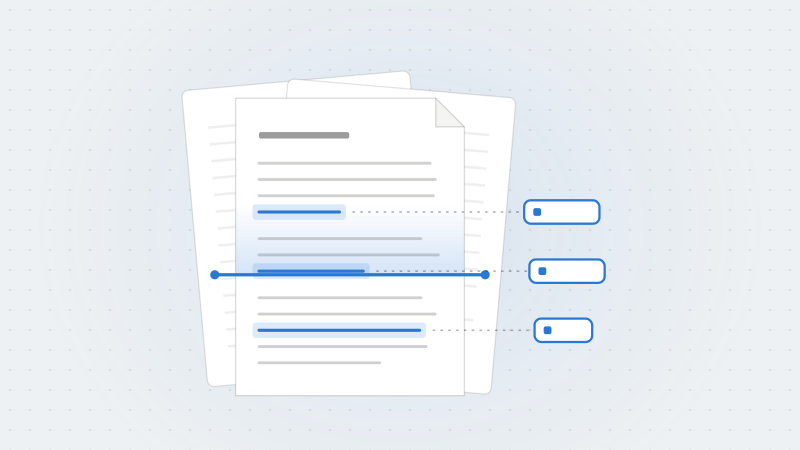
The Dutch municipality of Hollands Kroon uses PinkRoccade's AiBezwaar module, which reads emailed objections to property tax assessments, registers each case and suggests a reply for staff to review.
Gemeente Hollands KroonNetherlandsLocal and regional governmentIn production since Feb 2025
- Scenario
- Property tax objection intake and reply drafting
- Business function
- Finance and accounting
- Kind of solution
- Document extraction
- Who built it
- Vendor product (PinkRoccade and Microsoft)
- Where it runs
- Public cloud, In the EU or EEA
- Human oversight
- Assists people
- Organization
- Public sector
- AI types
- Generative AI, Document AI
tl;drSince February 2025, AiBezwaar has registered Hollands Kroon's tax objections and suggested replies.See the results
Gemeente Hollands Kroon, a Dutch municipality, uses AiBezwaar to read emailed objections to its property tax assessments. The module from PinkRoccade registers each objection as a case and suggests a reply text that a staff member reviews1.
AiBezwaar sends each objection to GPT-4o through Microsoft’s Azure OpenAI Service. The model finds the property, the applicant and the grounds, and AiBezwaar picks reply texts from answers given earlier1.
The municipality has used AiBezwaar since February 2025. In January 2026, its entry in the Dutch national algorithm register listed the system as in use, with a data protection impact assessment (DPIA)1.
Before the deployment
Under the Wet WOZ, the Dutch property valuation act, owners can object to the value that the municipality sets for their property1. On October 17, 2024, the Waarderingskamer, which inspects how municipalities carry out the WOZ, examined Hollands Kroon’s process2.
- For the valuation date of January 1, 2023, objections covered 1,256 homes, 5.8% of all homes, and 202 non-residential properties2.
- No-cure-no-pay firms (NCNP) filed the objections on 667 of those homes, 53.1%2.
- At the inspection, objections on 891 homes and 138 non-residential properties were still open, 70.6% of the objects under objection2.
The inspectors rated objection handling as sufficient. They noted a possible backlog for the current tax year and no demonstrable evaluation of the results2. The municipality was bringing in extra support, a process that the inspectors called complicated in the municipality2. Staff changes and the number of objections left no time to research the quality of the property data2.
What was built
AiBezwaar is an optional module in the iBezwaar application. It aims mainly at registering objections, to lighten the administrative load, and it suggests a reply text for each objection1. The stated goal is faster handling with less administrative work and a shorter processing time, so that residents get an answer sooner1.
- AiBezwaar and GPT-4o: Identify the applicant and the main parties, the WOZ property, whether the objection is pro forma, its grounds, and whether a hearing is requested. They draft a reply from answers given earlier on those grounds1.
- Objection module: Receives a new case directly from the data that AiBezwaar identified1.
- Staff: Complete the emails that AiBezwaar flags, assess every suggested text, and write the decision letter themselves. They decide whether each objection is well-founded, and a case can’t be closed without that decision1.
Technology and architecture
- AI component
- Data
- Trigger or control
- Handoff to people
- Feedback
AiBezwaar is PinkRoccade’s own algorithm. It builds the prompt for GPT-4o and turns the model’s match into a case and a set of reply suggestions1. The model doesn’t write the reply from scratch, because AiBezwaar takes each suggestion from a database of answers that staff gave before1.
| Layer | What they used | Role | Source |
|---|---|---|---|
| Document intake | Email intake | Takes in the objection emails that AiBezwaar analyzes automatically | 1 |
| Solution platform | AiBezwaar | Prompts the model and picks the best matching historical answer for each ground | 1 |
| Language model | GPT-4o | Identifies the required data, such as the WOZ number, and matches the grounds to the set | 1 |
| Model hosting | Azure OpenAI Service | Connects AiBezwaar to GPT-4o, with content filters and abuse monitoring | 1 |
| Workplace application | iBezwaar | Objection-handling application in which AiBezwaar runs as an optional module | 1 |
| Business or operational system | Tax application | Supplies the data that an objection lacks | 1 |
| Review workbench | Reply suggestion screen | Shows the suggested texts, which staff use, edit, regenerate or replace | 1 |
| Handoff to staff | Manual processing flag | Marks an email when the required data can’t all be recognized | 1 |
| Feedback capture | Reply text feedback loop | Adds edited and new texts to the suggestion options for the next objection | 1 |
Data inputs
- Objection emails: The full text of each objection, which can include sensitive personal data. The emails arrive in standard Office formats1.
- Case fields: The assessment number, the citizen service number (BSN), the name and address, the WOZ number, the applicant, the representative, the grievances, and the reasons1.
- Set of grounds: A list of possible grievances and objection reasons, sent with each prompt so that GPT-4o matches against fixed options1.
- Historical answers: Replies given earlier on each ground, from which AiBezwaar takes its suggestions1.
Integrations
- Objection module: AiBezwaar creates the case there directly1.
- Tax application: AiBezwaar looks up missing fields there. For example, it finds the WOZ object number from the assessment number and the name and address1.
- Azure OpenAI Service: Carries the connection to GPT-4o. Data is processed on a Microsoft server in the European Economic Area, and Microsoft states that customer data isn’t used for training1.
How one objection flows through the system
- A resident or a representative emails an objection. AiBezwaar analyzes the incoming email automatically1.
- AiBezwaar sends GPT-4o a prompt with a copy of the objection, a request for the required data, and the set of possible grounds1.
- GPT-4o returns the data and the grounds in the objection that match options in the set1.
- If data is missing, AiBezwaar uses the other data to find it in the tax application1.
- If the required data still can’t all be recognized, AiBezwaar flags the email. A staff member adds the missing information and registers the objection1.
- AiBezwaar creates the case in the objection module. It shows the best matching historical answer for each ground as a suggestion1.
- The staff member uses, edits or regenerates the suggestions, or writes a new text, and drafts the decision letter1.
- The staff member records whether the objection is well-founded, which closes the case. An edited or new text joins the suggestion options for the next objection1.
Results
AiBezwaar has been in use at Hollands Kroon since February 20251. In its register entry, updated on January 14, 2026, the municipality lists the system as in use and names a DPIA as its impact assessment1.
AiBezwaar registers the objections, except for the emails that it flags for manual processing1. Staff get suggested texts for each decision letter, and they make every decision on the merits1.
Lessons learned
The design keeps the legal judgment with staff. GPT-4o matches grounds to a fixed set, the replies come from earlier answers, and no case closes until a staff member decides it1. The Waarderingskamer’s April 2026 guidance on AI in the WOZ puts the staff member’s value in that check: verifying generated texts and keeping the human touch in letters to residents3.
AiBezwaar doesn’t recognize every objection. When it can’t find all the required data, a staff member completes and registers the objection by hand1. Aalten and Heemskerk, which use the same product, name possible inaccuracies in automatic processing and categorization as the main risk, to be caught by human checks and continuous model improvement4, 5.
The privacy set-up removes human review by Microsoft but not all storage. PinkRoccade had Microsoft’s default abuse monitoring adjusted or switched off, so no person at Microsoft reviews the prompts1. The automated abuse scan still runs, so prompts and responses that hold personal data, such as the BSN, are stored temporarily and deleted after the real-time scan1.
The regulatory status of AI in objection handling depends on the application. The Waarderingskamer’s guidance says that AI used in objection and appeal processes can fall under the high-risk category of the EU AI Act, and it asks each WOZ organization to assess and record this per application3.
The account of the solution is the municipality’s own register entry. Its description of the design repeats the wording of other municipalities that use the product, such as Heusden1, 6.
Case study scorecard
- Rules and standards: GDPR, ISO/IEC 27001, SOC 2, EU AI ActGDPR, EU AI Act, ISO/IEC 27001, SOC 2
Sources by publication date
- Organization 4
- Press, academic, and regulators 2
Build this solution yourself
Analysis
What you need
- A store of earlier replies, sorted by ground: AiBezwaar takes every suggestion from answers given before. You need a history of decision texts for each type of grievance before the suggestions are of use1.
- A fixed list of grievances and reasons: GPT-4o matches each objection against this set. You need a list that covers the grounds your residents raise, because a ground outside the list has no matching answer1.
- Lookups in the tax system: AiBezwaar fills missing fields, such as the WOZ object number, from the tax application. You need that system to answer queries by assessment number and by name and address1.
- A data protection agreement for the model service: Objections carry citizen service numbers and other personal data. You need processing in the European Economic Area, a DPIA, and a decision on the provider’s prompt retention, as Hollands Kroon has1.
Reference architecture
Document extraction
Document extraction reads the documents, forms, and images that an organization receives, sorts each one to its case, and turns it into structured fields for the business system that acts on it. Models read each document into fields, and ordinary software checks the fields against business rules and the organization's reference records. A reviewer compares the fields with the source before they reach the business system, or sees only the doubtful ones, and the corrections measure and improve the models.
- Document intake (documented in this case study)
- Document extraction platform (documented in this case study)
- Preparation
- Text recognition
- Extraction model (documented in this case study)
- Validation rules
- Reference records
- Workflow engine
- Review workbench (documented in this case study)
- Answer explanation
- Connectors
- Business system (documented in this case study)
- Corrections log (documented in this case study)
- Accuracy monitoring
A check mark shows a building block that this case study's sources document.
Open the reference architectureOthers who built it
- Gemeente Aalten: Uses AiBezwaar for objections to its tax assessments, with a start date of February 20254.
- Gemeente Heemskerk: Has used aIBezwaar since March 2025, a system that optionally uses a large language model to parse, categorize and enter submitted objections5.
- Gemeente Heusden: Lists AiBezwaar in use, with GPT-4o reached through Microsoft’s Azure OpenAI service, in an entry updated in April 20266.
In the library
- Condé Nast speeds rights contract analysis with Claude Condé Nast
- Cargolux drafts cargo quotes from customer emails with AI Cargolux Airlines International
- Air France KLM Martinair Cargo uses AI to book and quote Air France KLM Martinair Cargo
- Pennsylvania's AI check cuts illegible benefit documents Pennsylvania Department of Human Services
- How Liberty Global matches supplier invoices with GenAI Liberty Global
- Parte embeds AI in property managers' email in 27 offices Parte
Cite this case study
Enterprise AI Case Studies. "Hollands Kroon reads property tax objections with GPT-4o." Updated Nov 21, 2026. https://case-studies.ai/case-studies/document-intelligence/DI-035-tax-objection-intake-hollands-kroon/
@misc{csai-di-035,
  author = {{Enterprise AI Case Studies}},
  title = {{Hollands Kroon reads property tax objections with GPT-4o}},
  year = {2026},
  note = {Updated 2026-11-21},
  url = {https://case-studies.ai/case-studies/document-intelligence/DI-035-tax-objection-intake-hollands-kroon/}
}Sources
The following reporting, and every passage quoted from it, belongs to its publisher, not to this site. Sources and ownership
- Source 1:
Supporting excerpts (49)
Binnenkomende e-mails worden automatisch geanalyseerd waarbij de relevante gegevens worden geïdentificeerd, zoals de indiener, de hoofdbetrokkenen en de redenen van bezwaar.
Vervolgens suggereert het algoritme een tekst ter beantwoording van het bezwaar
Laatst gewijzigd op 14 januari 2026
Status In gebruik Algemene informatie
Organisatie en bedrijfsvoering Begindatum 2025-02
Het doel is een efficiëntere afhandeling van bezwaren, vermindering van de administratieve druk en kortere verwerkingstijd.
Identificeert de aanvrager en hoofdbetrokkenen.
Identificeert het WOZ-object van bezwaar.
Identificeert of het bezwaarschrift een pro-forma bezwaar is.
Identificeert de redenen van het bezwaar (ontgrieven).
Identificeert of om hoorzitting wordt verzocht.
Stelt een conceptreactie op gebaseerd op eerder gegeven antwoorden op bepaalde griefredenen.
Op basis hiervan wordt direct een zaak aangemaakt in de bezwarenmodule.
Wanneer niet alle benodigde gegevens automatisch herkend kunnen worden, wordt de e-mail gemarkeerd voor handmatige verwerking door een medewerker.
Hierbij kan de medewerker snel en efficiënt de ontbrekende informatie aanvullen en het bezwaar correct registreren.
Het gaat om een efficiëntere afhandeling, waarbij de inwoner sneller antwoord krijgt.
AiBezwaar is vooral gericht op het inboeken van bezwaren om zo de administratieve last te verlichten.
De ambtenaar dient de gesuggereerde tekst altijd te beoordelen en zelf een bezwaarbrief op te maken.
Hiervoor kan hij/zij de gesuggereerde teksten gebruiken, aanpassen, nieuwe suggesties genereren of zelf een nieuwe tekst opstellen.
Er kan nooit een zaak worden afgerond zonder dat een medewerker zelf aangeeft of een bezwaar gegrond of ongegrond is.
Dit is niet iets dat het algoritme automatisch invult in de applicatie.
De gegevens worden verwerkt op een server van Microsoft binnen de Europese Economisch Ruimte.
Microsoft benadrukt dat klantgegevens niet worden gebruikt voor training van het AI-model.
De Azure OpenAI-service heeft mechanismen om misbruik te detecteren en te voorkomen, waaronder contentfilters en misbruikmonitoring.
Onder de EU Digital Services Act is Microsoft verplicht maatregelen te nemen tegen illegale inhoud
bewaart Microsoft in een standaard situatie de prompts en gegenereerde antwoorden die gebruikers via de Azure OpenAI-service versturen maximaal 30 dagen
Als de gebruiker gevoelige of vertrouwelijke gegevens verwerkt en deze standaardbewaring wil aanpassen of uitschakelen, biedt Microsoft de mogelijkheid om een aanvraag in te dienen voor beperkte toegang.
Klanten die aan bepaalde criteria voldoen, zoals PinkRoccade, kunnen hiermee de standaard misbruikmonitoring aanpassen of uitschakelen, wat PinkRoccade inderdaad heeft laten doen.
Dit betekent dat een menselijke beoordeling niet wordt uitgevoerd.
Omdat geautomatiseerde beoordeling nog wel plaatsvindt, dienen de prompts en gegenereerde antwoorden nog steeds tijdelijk opgeslagen te worden.
Microsoft geeft aan dat deze controle in real time gebeurt. Data wordt na het uitvoeren van deze scan verwijderd.
PinkRoccade heeft een ISAE 3402 type2-certificering. Ze controleren regelmatig of Microsoft zich aan de regels houdt.
Microsoft heeft ISO 27001-, SOC2- en SOC3-certificering.
Microsoft heeft naar aanleiding van de AVG een Data Protection Addendum opgesteld
Het gaat om de taak van de gemeente om belasting te innen. Zie de Wet WOZ, Gemeentewet, Wet belastingen op milieugrondslag
Data Protection Impact Assessment (DPIA)
Aanslagnummer, BSN, NAW, WOZ-nummer, aanvrager, gemachtigde, grieven, redenen van bezwaar
Algemene Office applicaties: Dit betreft standaard Office formaten inclusief email en social media formaten.
AiBezwaar is een optionele module in de applicatie iBezwaar.
AiBezwaar bestaat uit een eigen algoritme van PinkRoccade dat interactie heeft met het groot taalmodel GPT 4o van OpenAI.
De verbinding met GPT 4o loopt via de Azure OpenAI-service van Microsoft.
Het eigen algoritme levert een prompt aan GPT 4o.
De prompt bestaat uit een kopie van het bezwaar; het verzoek om de nodige gegevens te identificeren, zoals WOZ-nummer; en een set aan mogelijke grieven en bezwaarredenen.
GPT 4o zoekt vervolgens een match: welke grieven en bezwaarredenen staan er in het bezwaar en komen deze overeen met opties uit de set.
Hierbij wordt voor elk van de achterhaalde bezwaren uit een database met historische antwoorden het best passende antwoord gevonden en als suggestie getoond in AiBezwaar.
Wanneer in het bezwaar bepaalde gegevens niet kunnen worden gevonden, worden de andere gegevens gebruikt om in de belastingapplicatie automatisch de ontbrekende gegevens te vinden.
Bijvoorbeeld via het aanslagnummer + NAW achterhalen wat het WOZ-objectnummer is.
Wanneer een door het algortime gesuggereerde tekst door de medewerker wordt aangepast of de medewerker schrijft zelf een tekst, dan wordt deze bij het volgende geanalyseerde bezwaar meegenomen in de tekst-opties die het algoritme suggereert.
Het Algoritmeregister
- Source 2:
Rapport onderzoek kwaliteit WOZ-processen gemeente Hollands Kroon
Supporting excerpts (13)
Datum rapport: 11 november 2024
Datum onderzoek: 17 oktober 2024
er is sprake van een (mogelijke) achterstand bij de bezwaarafhandeling voor het
er heeft geen aantoonbare evaluatie plaatsgevonden naar de resultaten van de
reguliere bezwaren en bezwaarschriften ingediend door een NCNP-bureau.
(totaal) 1256 5,8%* 1631 7,5%* -375
667 53,1%** 879 53,9%** -212
(totaal) 202 5,7%* 72 2,1%* 130
2023 Woningen 891 70,6%* Niet-woningen 138
De gemeente is bezig met het inschakelen van extra ondersteuning, echter dit
proces is in de gemeente ingewikkeld en kent de nodige beperkingen.
Door de diverse personele wisselingen en het aantal bezwaren is er alleen tijdens reguliere
processen aandacht geweest voor de objectkenmerken. Er is geen tijd voor onderzoek
- Source 3:
AI handreiking voor de WOZ-uitvoering
Supporting excerpts (5)
bepaalde AI-toepassingen binnen de WOZ-uitvoering onder de hoog-risico-categorie
met financiële gevolgen of worden ingezet in bezwaar- en beroepsprocessen.
van WOZ-organisaties dat zij per AI-toepassing expliciet beoordelen of sprake is van een
hoog-risico-AI-systeem. Deze beoordeling wordt vastgelegd en periodiek herijkt, zodat
het verifiëren van de gegenereerde teksten en het bewaken van de menselijke maat in de
- Source 4:
Supporting excerpts (3)
Laatst gewijzigd op 7 oktober 2025
Organisatie en bedrijfsvoering Begindatum 2025-02
Mogelijke onnauwkeurigheden in de automatische verwerking en categorisatie die moeten worden gemitigeerd door menselijke controle en continue modelverbetering.
- Source 5:
Supporting excerpts (3)
Systeem voor het verwerken van bezwaarschriften waarbij optioneel een large language model wordt ingezet voor het ontleden, categoriseren en invoeren van de ingezonden bezwaarschriften.
Organisatie en bedrijfsvoering Begindatum 2025-03
Mogelijke onnauwkeurigheden in de automatische verwerking en categorisatie die moeten worden gemitigeerd door menselijke controle en continue modelverbetering.
- Source 6:
Supporting excerpts (3)
Laatst gewijzigd op 23 april 2026
AiBezwaar is een optionele module in de applicatie iBezwaar.
De verbinding met GPT 4o loopt via de Azure OpenAI-service van Microsoft.














Comments
Start the conversation.
Invited members of the library comment here. Sign in to join the conversation.