
How Hirschbach cut freight billing to three days with AI
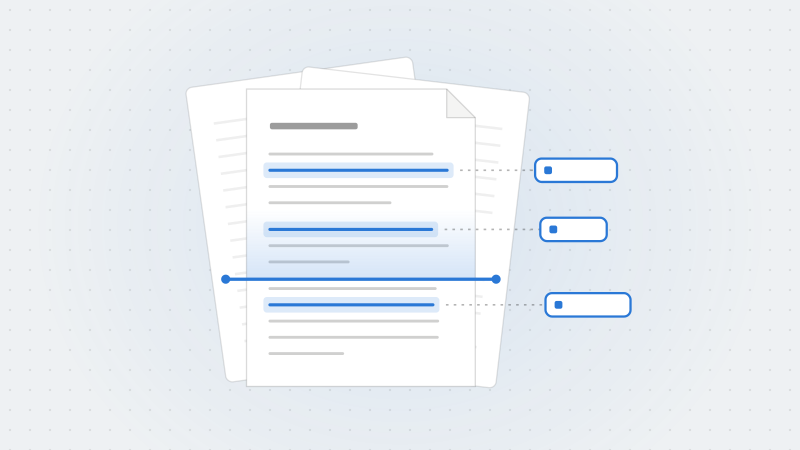
Hirschbach Motor Lines uses the Hyperscience Hypercell platform to read its bills of lading, proofs of delivery and receipts, so that its billing staff handle only the exceptions.
Hirschbach Motor LinesUnited StatesFreight and logisticsIn production
- Scenario
- Freight billing document processing
- Business function
- Finance and accounting
- Kind of solution
- Document extraction
- Who built it
- Vendor product (Hyperscience)
- Human oversight
- Acts under watch
- Organization
- Enterprise
- AI types
- Computer vision, Document AI
tl;drHirschbach cut its average days to bill from 9 to 3 with AI that reads its freight documents.See the results
Hirschbach Motor Lines, a temperature-controlled trucking company, uses the Hyperscience Hypercell platform to read the freight documents behind its invoices1. The platform classifies bills of lading, proofs of delivery and receipts, extracts their data, and passes it to billing as structured data1.
Staff now correct only the data that the models flag as low confidence1. In July 2026, Hyperscience reported that Hirschbach’s average days to bill fell from 9 days to 3 days2.
Before the deployment
Hirschbach’s operational and back-office teams handled shipment documents by hand1. Staff classified each document, matched it to the correct shipment, and keyed in the billing fields1. The manual process had the following results:
- Hirschbach processed over 2.5 million documents a year, from bills of lading to fuel receipts and weight tickets3, 4.
- Handwritten signatures and quantities, multi-page packets with missing pages, and customer-specific layouts needed the most manual work1.
- The legacy imaging process needed heavy manual intervention to classify, index and validate those fields and packets2.
- The time from document receipt to billing readiness averaged 9 days1.
- Teams found missing documents only after the fact, and drivers got repeated requests to resubmit documents1.
Operational pressure, growth and customer demands for faster billing led Hirschbach to look for a new foundation1.
“In the fast-paced logistics industry, documents dictate our cash flow. Before Hyperscience, we were burdened by manual data entry that slowed down our billing process and limited our visibility”
What was built
The solution ingests freight documents from Hirschbach’s existing channels, classifies them, extracts their data, and delivers it to billing systems through an API1. The work is divided as follows:
- Hypercell models: Classify each document and extract its fields. Specialized models work with ORCA, Hyperscience’s vision language model, in what the vendor calls inference layering1, 2.
- Hypercell workflow: Applies Hirschbach’s custom field mapping, document type definitions and customer-specific routing logic. High-confidence fields and documents pass straight through1.
- Human validators: Correct low-confidence or ambiguous data in a validation queue. Their corrections feed continuous improvement of the models1.
- Back-office staff: Move from data entry to exception quality, continuous improvement and customer-specific tuning1.
Hirschbach chose Hypercell for its document processing capabilities, its accuracy across variable formats, its ease of integration, and its human-in-the-loop model for exceptions1.
Rollout
The deployment has the following dated steps and plans:
- February 2025: Hyperscience announced that Hirschbach had selected its platform to automate document processing and workflows3, 4.
- July 2026: Hyperscience published Hirschbach’s results2.
- Plan: Hirschbach plans to extend the automation to claims, over, short and damaged (OS&D) documentation, customer compliance packets, driver onboarding and maintenance paperwork1.
Technology and architecture
The following table lists the parts of the solution.
| Layer | What they used | Role | Source |
|---|---|---|---|
| Solution platform | Hyperscience Hypercell | Ingests, classifies and extracts documents and routes each field by confidence | 1 |
| Document and OCR model | ORCA | Vision language model that classifies documents, extracts data and detects signatures | 1, 2 |
| Document and OCR model | Specialized models | Work with ORCA in inference layering | 1, 2 |
| Document intake | Document intake | Ingests documents from Hirschbach’s existing channels | 1 |
| Review workbench | Validation queue | Holds low-confidence or ambiguous data for human validators | 1 |
| APIs and connectors | JSON payloads over API | Carries the normalized data to downstream systems | 1, 2 |
| Business or operational system | Legacy IBMi/AS400 components | Older billing components that the pipeline integrates with | 1 |
| Workplace application | Connect | Shows teams the status of each document | 1 |
In Hypercell, a task that needs a person is a Supervision task, and a submission isn’t complete until every such task is done5. Role-based access, encryption and strict logging protect the pipeline, so that the automation doesn’t become a black box1.
Data inputs
The solution uses the following data:
- Freight documents: Bills of lading, proofs of delivery, lumper receipts, rate confirmations and accessorial documentation1.
- Purchase orders: PO and BOL matching compares purchase orders with bills of lading1.
- Validator corrections: Feed continuous model improvement1.
Integrations
The pipeline connects to the following Hirschbach systems:
- Core billing workflows: Receive the extracted data as structured JSON payloads through an API1.
- Legacy IBMi/AS400 components: Older parts of Hirschbach’s systems that the pipeline integrates with1.
- Connect: Hirschbach’s homegrown operating workflow system shows each document as received, in review or ready to process1.
Results
The following table lists the results that Hyperscience published in July 20262.
| Metric | Before | After | Scope and timeframe | Reported by |
|---|---|---|---|---|
| Average days to bill | 9 days | 3 days | Document receipt to billing readiness | Hyperscience, measured1, 2 |
| Document processing turnaround | Up to 4 hours | 10 to 15 minutes | Documents processed and returned from Hyperscience | Hyperscience, measured1 |
| Manual effort saved | Not disclosed | Over 288 hours per week | Billing workflows, 2025 | Hyperscience, measured1 |
| Document classification accuracy | Not disclosed | About 98 to 99% | All documents | Hyperscience, measured1 |
| Signature detection accuracy | Mid-60% range | Over 77% | After layering specialized models with ORCA | Hyperscience, measured1 |
| Manual task hours | 111 hours in January | 34 hours in February | One example month | Hyperscience, measured1 |
The following notes explain the metrics:
- Days to bill: Measures the time from document receipt to billing readiness. It fell by over 60%1.
- Manual effort saved: Hirschbach estimates a further 244 hours per week of savings in the first half of 20261.
- Signature detection: The better detection removed about 47 hours a week of manual document reviews1.
- Automation rate: Ongoing retraining and PO and BOL matching raised overall automation by a further 6.3%1.
- Manual task hours: The drop of about 70% in one month came as the automation eliminated the document processing backlog1.
Lessons learned
Hirschbach tied the project to a cash-flow measure, and days to bill was its largest improvement1. Its own advice is to start with a document-heavy workflow tied to cash flow, design for exceptions early, involve operations and measure everything1.
Process visibility was an unexpected benefit1. Structured queues show where processes break and why exceptions occur, so the team can make improvements upstream1.
People still do part of the work. Low-confidence or ambiguous data goes to human validators, and the staff role changed from data entry to managing exceptions1, 2.
Signature detection is less accurate than document classification, even after the layered models raised it1. Only the signatures that remain true exceptions go to human staff1.
The two Hyperscience releases date the start differently. The July 2026 release dates the implementation to early 20242. The selection release of February 2025 describes the work in the future tense, under a dateline of February 19, 20243.
The figures come from Hyperscience’s customer story and press release1, 2. FleetOwner’s 2025 report relayed the selection announcement4.
Case study scorecard
- 3 days Average days to bill1, 2
- 10 to 15 minutes Document processing turnaround1
- Over 288 hours per week Manual effort saved1
- 98 to 99% Overall document classification accuracy1
Sources by publication date
- Organization 1
- Vendors and partners 4
- Press, academic, and regulators 2
Build this solution yourself
Analysis
What you need
To build this solution, you need the following in place:
- A billing cycle that you can measure: Hirschbach picked a document-heavy workflow tied to cash flow and tracked days to bill. Check that you can measure the same cycle before you start1.
- People who know the documents: Validators correct the low-confidence data, and their corrections improve the models. You need staff who can work that queue1.
- Systems that accept data through an API: Hypercell delivers JSON payloads to Hirschbach’s billing workflows, its IBMi/AS400 components and Connect. Check that your billing and operations systems can take structured data1.
Reference architecture
Document extraction
Document extraction reads the documents, forms, and images that an organization receives, sorts each one to its case, and turns it into structured fields for the business system that acts on it. Models read each document into fields, and ordinary software checks the fields against business rules and the organization's reference records. A reviewer compares the fields with the source before they reach the business system, or sees only the doubtful ones, and the corrections measure and improve the models.
- Document intake (documented in this case study)
- Document extraction platform (documented in this case study)
- Preparation
- Text recognition (documented in this case study)
- Extraction model
- Validation rules
- Reference records
- Workflow engine
- Review workbench (documented in this case study)
- Answer explanation
- Connectors (documented in this case study)
- Business system (documented in this case study)
- Corrections log
- Accuracy monitoring
A check mark shows a building block that this case study's sources document.
Open the reference architectureOthers who built it
- Accurate Transport: The carrier uses the AI BOL Extraction module from Carrier Logistics, integrated with its freight management system, for about 4,000 bills of lading a month6.
- Customs Support Group: Its Customs SmartAssist tool reads customs documents and flags doubtful fields for its experts to review before submission7.
In the library
- Condé Nast speeds rights contract analysis with Claude Condé Nast
- Cargolux drafts cargo quotes from customer emails with AI Cargolux Airlines International
- Air France KLM Martinair Cargo uses AI to book and quote Air France KLM Martinair Cargo
- Pennsylvania's AI check cuts illegible benefit documents Pennsylvania Department of Human Services
- How Liberty Global matches supplier invoices with GenAI Liberty Global
- Parte embeds AI in property managers' email in 27 offices Parte
Cite this case study
Enterprise AI Case Studies. "How Hirschbach cut freight billing to three days with AI." Updated Nov 19, 2026. https://case-studies.ai/case-studies/document-intelligence/DI-022-freight-billing-document-processing-hirschbach/
@misc{csai-di-022,
  author = {{Enterprise AI Case Studies}},
  title = {{How Hirschbach cut freight billing to three days with AI}},
  year = {2026},
  note = {Updated 2026-11-19},
  url = {https://case-studies.ai/case-studies/document-intelligence/DI-022-freight-billing-document-processing-hirschbach/}
}Sources
The following reporting, and every passage quoted from it, belongs to its publisher, not to this site. Sources and ownership
- Source 1:
Shifting Operations Into Overdrive: Hirschbach's Journey to 60% Faster Invoicing
Supporting excerpts (36)
Hirschbach is a temperature-controlled trucking and logistics company operating a large, multi-location network that supports time-sensitive, compliance-heavy refrigerated freight.
Hirschbach handles critical documents such as bills of lading (BOL), proof of delivery (POD), lumper receipts, rate confirmations, and accessorial documentation, all of which directly impact cash flow and invoice accuracy.
Driven by internal operational pressure, growth needs, and customer demands for faster billing, Hirschbach sought a new foundation to support scalable, AI-driven workflows.
Hirschbach manages a high volume of shipment-related documents across multiple operational and back-office teams.
Prior to modernization, the process required significant manual review to classify documents, associate them to the correct shipment, and validate key billing information.
The most problematic inputs for the team included handwritten fields (such as signatures and quantities), multi-page packets with missing pages, and customer-specific formats where the same data appeared in varying layouts.
the turnaround time from document receipt to billing readiness was frequently delayed, averaging 9 days to bill.
Drivers, meanwhile, faced administrative friction and repeated requests to resubmit documents.
Hyperscience was selected for its enterprise-grade Intelligent Document Processing (IDP) capabilities, strong accuracy across variable document formats, integration friendliness, and practical human-in-the-loop model for handling exceptions.
The solution automatically ingests documents from existing channels, classifies and extracts data using Hyperscience, and normalizes the output into structured JSON payloads for downstream delivery via API.
core billing workflows, legacy IBMi/AS400 components, and a new homegrown operating workflow system called
Security was prioritized through role-based access, encryption, and strict logging
become an unmanageable
Today, high-confidence fields and documents flow straight through the system automatically.
Low-confidence or ambiguous data is routed to a validation queue, where human validators make corrections that subsequently feed continuous model improvement.
including custom field mapping, document type definitions, and customer-specific routing logic
Hyperscience has helped Hirschbach eliminate the document processing backlog
which dropped by over 60%
The most significant KPI improvement was the reduction in
from an average of 9 days to just 3 days
Documents are now processed and returned from Hyperscience in as little as 10 to 15 minutes, drastically faster than prior legacy imaging processes, which took up to 4 hours.
teams now have clearer insight into document status (e.g., received, in review, ready to process)
addressing prior gaps where missing documents were only discovered reactively
Overall document classification accuracy has reached approximately 98-99%.
By applying an inference layering approach that combines specialized models and the ORCA, the vision language model from Hyperscience, signature detection accuracy jumped from the mid-60% range to over 77%.
This reduced manual reviews of the documents by approximately 47 hours per week
ensured only true exceptions were routed to human staff
Ongoing model retraining and PO / BOL matching enhancements increased overall automation by an additional 6.3%.
In 2025 alone, Hirschbach realized over 288 hours of manual effort savings per week across billing workflows.
The company estimates an additional 244 hours per week of savings in the first half of 2026.
manual task hours dropped from 111 hours in January to just 34 hours in February
~70% month-over-month reduction
Staff hours are no longer viewed as pure reductions, but are instead being redeployed to higher-value tasks, such as exception quality, continuous improvement, and customer-specific tuning.
By moving work into structured queues, Hirschbach now has deep insight into where processes break and why exceptions occur
Looking ahead, Hirschbach plans to expand this automation foundation into other manual, document-centric workflows, including claims and Over, Short, & Damaged (OS&D) documentation, customer compliance packets, driver onboarding, and maintenance paperwork.
Start with a high-value, document-heavy workflow tied to cash flow. Design for exceptions early, involve operations deeply, measure everything
- Source 2:
Supporting excerpts (11)
following the implementation of the platform in early 2024 to overhaul its complex, document-centric operations
In the fast-paced logistics industry, documents dictate our cash flow. Before Hyperscience, we were burdened by manual data entry that slowed down our billing process and limited our visibility
Our team is no longer doing repetitive data entry; they are managing exceptions, monitoring continuous improvement, and delivering a faster, more transparent experience for our customers.
legacy imaging processes required heavy manual intervention to classify, index, and validate handwritten fields and multi-page packets.
which combines specialized models with ORCA
proprietary Vision Language Model
turning unstructured documents into structured JSON payloads in minutes
process to a managed exception model
dropping from an average of nine days to just three.
human validators focus only on low-confidence exceptions and high-value strategic tasks
You cannot run an intelligent, agentic enterprise if your critical ground truth is trapped in unstructured, messy documents.
- Source 3:
Hirschbach Motor Lines Selects Hyperscience to Drive Digital Transformation in the Trucking Industry
Supporting excerpts (6)
has selected Hyperscience as a key component of the company
New York, NY – February 19, 2024
Each year, Hirschbach processes over 2.5 million documents to run their business.
These documents include bills of lading, carrier invoices, fuel receipts, inspection reports, lumper receipts, pallet receipts, toll receipts, trip sheets, washout receipts, and weight tickets.
Hirschbach will accurately extract and process key data from this vast array of varied and complex unstructured documents
Efficient document processing is critical to optimizing operations, ensuring timely delivery and billing, streamlining workflows, reducing errors, and accelerating decision-making
- Source 4:
Hirschbach accelerates digital transformation
Supporting excerpts (3)
Hirschbach Motor Lines recently selected Hyperscience enterprise AI as part of its digital transformation strategy to automate document processing and workflows
Each year, Hirschbach processes over 2.5 million documents to run its business.
The veteran-owned transportation and logistics provider specializes in temperature-controlled and long-haul freight services.
- Source 5:
Supporting excerpts (2)
the system will enlist the help of a human to complete a Supervision task
A submission will not be completed until every Supervision task generated for this submission has been completed.
- Source 6:
Accurate Transport uses AI to cut freight processing costs and improve delivery performance
Supporting excerpts (2)
Accurate Transport implemented the AI-powered BOL Extraction module from Carrier Logistics (CLI), which is fully integrated with its freight management system.
The module handles around 4,000 BOLs per month by scanning orders in batches at terminals or by drivers.
- Source 7:
Customs Support Group Deploys AI-Powered Smart Document Processing Across Europe
Supporting excerpts (2)
is introducing AI-powered Customs SmartAssist solution for documentation processing at all its locations in Europe
if any data fields are unclear, they are flagged for CSG experts to review before submission















Comments
Start the conversation.
Invited members of the library comment here. Sign in to join the conversation.