
Dutch Ministry of General Affairs redacts Woo files with AI
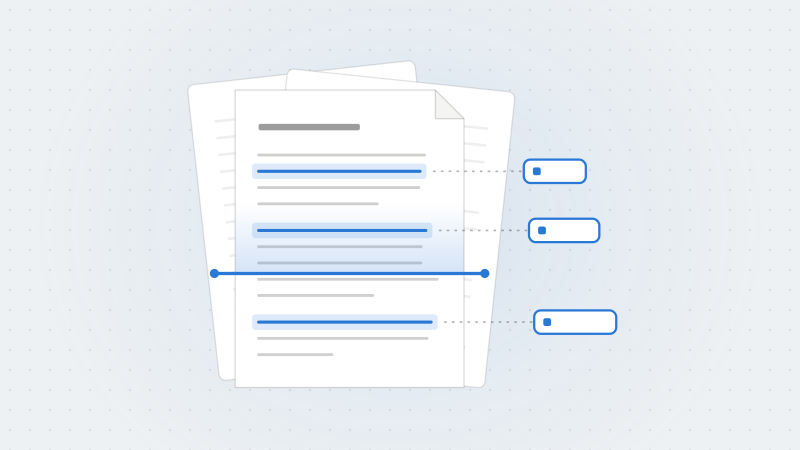
The Dutch Ministry of General Affairs uses Octobox Anonimiseren to find names, signatures and other personal data in documents it releases under the Open Government Act, and staff approve each suggested redaction.
Ministry of General AffairsNetherlandsNational governmentIn production since Dec 2023
- Scenario
- Document redaction for freedom of information requests
- Business function
- Legal and compliance
- Kind of solution
- Document review and drafting
- Who built it
- Vendor product (Octobox Nederland B.V.)
- Human oversight
- Assists people
- Organization
- Public sector
- AI types
- Generative AI, Computer vision, Document AI
tl;drSince December 2023, staff have redacted Woo documents from Octobox Anonimiseren suggestions.See the results
The Dutch Ministry of General Affairs (Ministerie van Algemene Zaken) uses Octobox Anonimiseren to redact documents. The tool suggests which personal data to black out before the ministry releases documents under the Open Government Act (Wet open overheid, Woo)1.
The software finds names with natural language processing, signatures with an image model, and numbers such as bank accounts with optical character recognition. A ministry employee approves, changes or rejects every suggestion1.
The ministry has used the tool since December 2023. Its entry in the Dutch algorithm register, last updated in September 2024, lists it as in use1.
Before the deployment
Before Octobox Anonimiseren, the ministry redacted documents for active and passive disclosure fully by hand1. Woo requests across Dutch ministries take long to handle, and redaction is one of the steps:
- In 2024, Woo requests at ministries took 188 days on average, against a legal maximum of 42 days3.
- The effective work on one request at a ministry is estimated at 18 person-days3.
- Handling a request is labor-intensive, with much manual searching and testing of documents against the Woo’s exception grounds3.
- Ministries and municipalities have a growing shortage of Woo specialists3.
The ministry also judged the manual way more error-prone1.
What was built
Octobox Anonimiseren scans each document and returns suggested passages to redact, mainly for Woo requests. It suggests personal data and passages that recur and must be redacted1. The tool, the vendor and the ministry’s staff divide the work:
- The models: Recognize names and other entities in the text, signatures in the page, and data in recognizable formats such as phone numbers, citizen service numbers (BSN), IBAN numbers, postcodes and email addresses1.
- The rules: GDPR rules form the base of the algorithm1.
- The staff: An employee approves, changes or rejects every suggested passage. Suggestions are only adopted after that check, and the tool makes no automatic decisions1.
- The feedback loop: The algorithm learns from the corrections and additions that staff make1.
The outcome of the redaction stays the responsibility of the ministry’s staff1. Octobox Nederland B.V. supplies the software1.
Rollout
The ministry started using the tool in December 2023 and listed it as in use when it last updated its register entry on September 11, 20241.
Technology and architecture
- AI component
- Data
- Handoff to people
- Feedback
Octobox Anonimiseren packages three recognizers. Their findings become one set of suggested passages that an employee works through1.
| Layer | What they used | Role | Source |
|---|---|---|---|
| Solution platform | Octobox Anonimiseren | Scans each document and returns suggested passages to redact | 1 |
| Language model | spaCy | Open source natural language processing with named entity recognition (NER), which finds names | 1 |
| Vision model | YOLO | Open source library that recognizes signatures | 1 |
| Document and OCR model | Optical character recognition (OCR) | Detects data in recognizable formats, such as BSN and IBAN numbers | 1 |
| Review workbench | Redaction suggestion review | An employee approves, changes or rejects each suggested passage | 1 |
| Feedback capture | Correction feedback | Feeds staff corrections and additions back into the algorithm | 1 |
Data inputs
- Documents for disclosure: Documents of different types and formats that the ministry prepares for release, mainly for Woo requests1.
- Public training documents: Public documents and articles, on which the base algorithm was trained to recognize entities and names1.
- Staff corrections: The corrections and additions that employees make to the suggestions, from which the algorithm learns1.
Results
Since December 2023, redaction at the ministry starts from the tool’s suggestions instead of a fully manual pass1. The ministry names these effects in its register entry:
- Speed: The tool speeds up and simplifies the existing redaction process, which helps the ministry meet the Woo’s statutory deadlines1.
- Quality: The process makes fewer errors than the manual way1.
- Privacy: The risk of a data breach is smaller, and the data of citizens and companies is better protected1.
The ministry’s impact analysis found that the algorithm isn’t high-risk and has no significant effect on the people concerned, including those who file Woo requests1.
Lessons learned
The design keeps every redaction decision with a person. The ministry built the case for a low-risk rating on that point, after an impact and measures analysis for algorithms (IAMA) and a pre-scan data protection impact assessment (DPIA)1.
The benefits are the ministry’s own assessment in its register entry1. The ministry published the entry although the tool isn’t high-risk, because Woo handling and redaction are regular subjects of public debate1.
Wide use of redaction tools sits beside long handling times. All ministries are estimated to use search or redaction tools, and the 2024 average at ministries stayed far above the 42-day maximum3. In the same research, Amsterdam halved its turnaround from 137 to 63 days, and management information on the process accounted for 70% of that success3.
The tool suggests personal data and recurring passages1. The Woo also has other exception grounds, such as the security of the state, and testing documents against them is a separate step of handling a request3.
Provincie Noord-Brabant, which runs the same software, names the main risk of this kind of tool: information that is redacted wrongly or published by accident. It answers with mandatory human checks, staff training and extra guidelines2.
Case study scorecard
Sources by publication date
- Organization 2
- Press, academic, and regulators 1
Build this solution yourself
Analysis
What you need
- A person who decides on every suggestion: The ministry’s low-risk rating rests on employees approving, changing or rejecting each passage, so plan the staff time for that review1.
- Documents the recognizers can read: The tool combines text recognition, OCR and signature detection across many formats, so check that your documents reach it as text or clean scans1.
- A way to feed corrections back: The algorithm learns from staff corrections, so you need reviewers who correct the suggestions in the tool rather than outside it1.
Reference architecture
Document review and drafting
A document review and drafting solution reads a case's documents against a written standard, precedents, or a list of questions and drafts a review, summary, clause, or report with its sources for an expert to finish. The solution pulls the case's documents, and a language model answers each question from the passages that bear on it, with its source. Fixed logic settles what must not vary, and an expert checks the draft against the sources and makes the decision.
- Source system
- Connector to the source system
- Review and drafting platform (documented in this case study)
- Text recognition (documented in this case study)
- Document preparation
- Passage index
- Access control
- Questions and templates
- Drafting model (documented in this case study)
- Private model endpoint
- Fixed logic
- Review workbench (documented in this case study)
- Reviewer feedback (documented in this case study)
- Tests on known cases
A check mark shows a building block that this case study's sources document.
Open the reference architectureOthers who built it
- Provincie Noord-Brabant: Has used Octobox Anonimiseren since January 2024, with a configuration document that sets which categories of information the software redacts in draft2.
- Politie: The Dutch National Police registers its own Octobox Anonimiseren deployment, which recognizes privacy-sensitive information in documents and makes it unreadable1.
- Ministry of Economic Affairs and Climate: Uses Octobox Anonimiseren, set up mainly to recognize and anonymize privacy-sensitive information in documents1.
- Gemeente Hoeksche Waard: Works with Conduction on anonymization with a large language model3.
In the library
- How Nationwide uses generative AI to summarize claim notes Nationwide
- Merck drafts clinical study reports in days with gen AI Merck & Co.
- AI drafts clinical study reports in minutes at Novo Nordisk Novo Nordisk
- Corona, California speeds building plan review with AI City of Corona
- Denver pre-screens permit applications with CivCheck AI City and County of Denver
- Court strikes down DOGE's ChatGPT screening of NEH grants United States DOGE Service
Cite this case study
Enterprise AI Case Studies. "Dutch Ministry of General Affairs redacts Woo files with AI." Updated Nov 21, 2026. https://case-studies.ai/case-studies/document-intelligence/DI-039-woo-document-redaction-general-affairs/
@misc{csai-di-039,
  author = {{Enterprise AI Case Studies}},
  title = {{Dutch Ministry of General Affairs redacts Woo files with AI}},
  year = {2026},
  note = {Updated 2026-11-21},
  url = {https://case-studies.ai/case-studies/document-intelligence/DI-039-woo-document-redaction-general-affairs/}
}Sources
The following reporting, and every passage quoted from it, belongs to its publisher, not to this site. Sources and ownership
- Source 1:
Supporting excerpts (36)
Octobox Anonimiseren wordt ingezet bij het onleesbaar maken (lakken) van informatie, zoals persoonsgegevens.
Dit gebeurt vooral bij verzoeken in het kader van de Wet open overheid (Woo).
De basis van het algoritme wordt gevormd door AVG-regels.
Het algoritme heeft daarnaast zelflerende eigenschappen op basis van menselijke input.
Laatst gewijzigd op 11 september 2024
Status In gebruik Algemene informatie
Organisatie en bedrijfsvoering Begindatum 2023-12
Octobox Anonimiseren helpt het ministerie om informatieverzoeken in het kader van de Woo sneller te verwerken en zodoende te voldoen aan wettelijke afhandelingstermijnen.
Octobox doet suggesties voor het weglakken van persoonsgegevens en/of terugkerende te lakken passages.
laksuggesties worden uitsluitend na menselijke controle overgenomen. Er is geen sprake van automatische beslissingen.
Octobox Anonimiseren versnelt en vereenvoudigt een bestaand proces (actieve en passieve openbaarmaking) dat voorheen volledig handmatig verliep.
Ook wordt de kwaliteit van het proces verhoogd omdat de handmatige werkwijze foutgevoeliger was.
De kans op een datalek is kleiner en de gegevens van burgers en bedrijven beter beschermd.
Alle door Octobox Anonimiseren voorgestelde te lakken passages worden door een medewerker goedgekeurd, gewijzigd of afgekeurd.
Inzet van het algoritme brengt geen extra risico's met zich mee.
De uitkomst van het proces is en blijft de verantwoordelijkheid van medewerkers van het ministerie.
Er is een impactanalyse uitgevoerd, gebaseerd op het Implementatiekader 'Verantwoorde inzet Algoritmen' van het ministerie van Binnenlandse Zaken en Koninkrijksrelaties.
concludeert het ministerie dat er geen sprake is van een hoog-risico algoritme en dat het gebruik van het algoritme geen significant effect heeft op betrokkenen
Reden om het algoritme te publiceren is dat (de afhandeling van) Woo-verzoeken in het algemeen en het onleesbaar maken van passages in het bijzonder regelmatig onderwerp zijn van maatschappelijk debat.
Impact- en maatregelenanalyse Algoritmen Pre-scan DPIA
Het algoritme is in de basis getraind met openbare documenten en/of artikelen om specifiek entiteiten en namen te herkennen in verschillende soorten documenten en formats.
Octobox Anonimisering werkt op basis van open source Natutal Language Processing (NLP) van SpaCy
Binnen het model wordt gebruik gemaakt van Named Entity Recognition (NER) om bijvoorbeeld namen te herkennen.
De open source bibliotheek YOLO (You Only Look Once) stelt in staat handtekeningen te herkennen.
Verder worden technieken zoals Optical Character Recognition (OCR) toegepast om gevoelige gegevens die voldoen aan herkenbare formats (zoals telefoonnummers, BSN-nummers, IBAN-nummers, postcodes of e-mail adressen) te detecteren.
De output van het algoritme betreft suggesties voor te lakken passages in documenten.
Het algoritme leert op basis van menselijke correcties en toevoegingen.
Leverancier Octobox Nederland B.V.
Algemene verordening gegevensbescherming (AVG)
Algemene Wet Bestuursrecht (AWB)
Wet Open Overheid (WOO)
Wet Elektronische Publicaties (WEP)
Anonimiseringstool Politie Octobox Anonimiseren herkent privacygevoelige informatie in documenten en maakt die onleesbaar.
Laatst gewijzigd op 22 juli 2026
Ministerie van Economische Zaken en Klimaat Het algoritme in de software is voornamelijk ingesteld op herkennen en anonimiseren van privacygevoelige informatie in documenten.
Impact- en maatregelenanalyse Algoritmen, DPIA
- Source 2:
Supporting excerpts (6)
Laatst gewijzigd op 3 februari 2026
Organisatie en bedrijfsvoering Begindatum 2024-01
De provincie kan middels dit inrichtingsdocument bepalen welke categorieën van informatie de software in concept lakt.
Het grootste risico is dat informatie onjuist gelakt of per ongeluk toch openbaar wordt gemaakt
Deze risico's worden gemitigeerd door verplichte menselijke controle: Octobox doet alleen suggesties en medewerkers maken de uiteindelijke beslissing.
Daarnaast worden medewerkers opgeleid in het gebruik van Octobox en zijn er aanvullende richtlijnen beschikbaar.
- Source 3:
Supporting excerpts (13)
PROGRAMMA DIGITAAL DOORDACHT • MR. DR. GUIDO ENTHOVEN • FEBRUARI 2026
bij ministeries kostte in 2024 gemiddeld 188 dagen, terwijl de maximale wettelijke termijn uit de Woo 42 dagen bedraagt.
Inschatting effectieve behandeltijd bij ministeries 18 mensdagen
is nu een arbeidsintensief proces, waarbij nog veel sprake is van handmatig zoeken en toetsen op uitzonderingsgronden.
Er is een groeiend tekort aan Woo-specialisten bij gemeenten en departementen om Woo-verzoeken af te handelen.
Inschatting is dat alle ministeries en ongeveer de helft van de gemeenten gebruikmaken van zoektools en/of laktools
veiligheid van de Staat,
Toets op uitzonderingsgronden
Vaak volstaat het zoeken in een vijftal bronnen
Daarbij zijn vooral organisatorische aanpassingen essentieel, zoals autorisatie van aangewezen medewerkers om in alle relevante bronnen te kunnen zoeken.
Amsterdam halveerde de doorlooptijd van Woo-verzoeken, van 137 naar 63 dagen
informatie is goed voor 70% van het succes in Amsterdam.
Gemeente Hoeksche Waard/Conduction Anonimiseren met LLM












Comments
Start the conversation.
Invited members of the library comment here. Sign in to join the conversation.