
Kadaster's Akte AI extracts data from notarial deeds
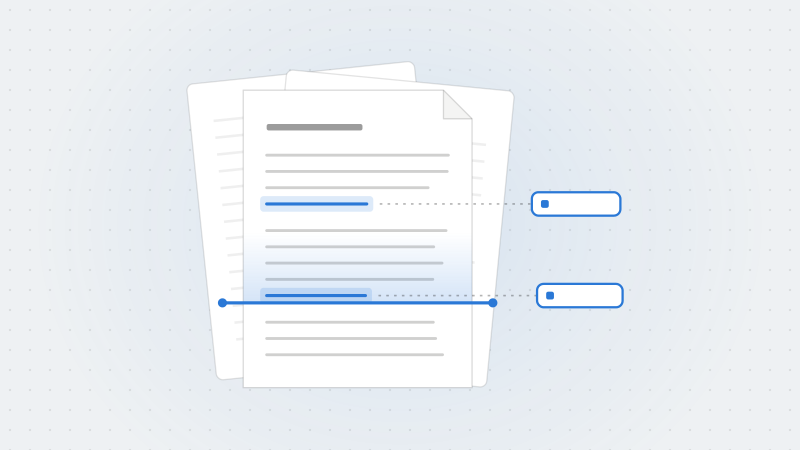
The Dutch land registry built Akte AI, a chain of in-house language models that reads notarial deeds and proposes their data for the key register, so staff check the proposed data rather than enter it.
KadasterNetherlandsNational governmentIn production
- Scenario
- Notarial deed data extraction for land registration
- Business function
- Legal and compliance
- Kind of solution
- Document extraction
- Who built it
- Built in-house
- Human oversight
- Assists people
- Organization
- Public sector, 1,000 to 9,999 employees
- AI types
- Generative AI, Document AI
tl;drKadaster's AI supports staff on almost every document it can't register automatically.See the results
Kadaster, the Dutch land registry, uses Akte AI to extract the data from notarial deeds1. The system proposes the persons, properties and legal facts in each deed, and an employee checks them before the key register changes1, 3.
Kadaster built Akte AI in-house with its own trained models and an open Dutch language model1. Deeds on approved model documents are registered by rules without a person, and Akte AI supports the staff who process almost all of the rest3, 7.
By December 2025, almost half of the documents that Kadaster received for registration went through without human intervention, and AI supported employees on almost all others3. In 2025, Kadaster took further steps with AI in its deed processing chain2.
Before the deployment
Kadaster records deeds on property rights in the public registers and updates the key register, the Basisregistratie Kadaster (BRK), from them3. Notaries, judicial officers and government agencies send their deeds electronically, and from 2005 on almost no document arrived on paper3.
From 2009, deeds drawn up on model documents that the registrar approved were processed fully automatically7. Some deeds are too complex for model documents, and staff had to process them by hand7.
- Volume: In 2023, Kadaster registered about 300,000 mortgage deeds and about 400,000 other deeds7. In 2025, deed production was 11% higher than in 20242.
- Automation share: In mid-2023, about 45% of deeds could be processed fully automatically7.
- Review effort: A deed can be a lengthy PDF, and each one was examined three times5.
- Staff: Kadaster expected fewer experts in the near future, because colleagues were retiring5, 6.
- Goals: Replace repetitive manual work, do more in less time or for less money, and improve the quality of the registers5.
What was built
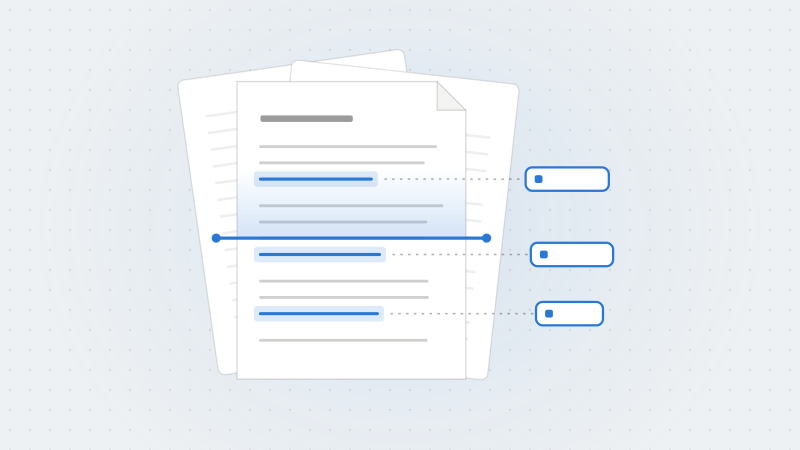
Akte AI reads each deed that an employee processes, extracts its structured data and shows it in a viewer for review1, 5. The aim is to process deeds as fast and as correctly as possible1.
- Model-document processing: Checks that a deed uses an approved model document unchanged, and then updates the BRK without a person7. A rule set of regular expressions finds registrable legal facts in the free second part of these deeds, and staff check a 2% sample8.
- Akte AI: Extracts the persons, organizations, real property, notaries, legal facts and signing from the deed text, and classifies the type of deed1.
- Employees: Read the deed, review the proposed data and adjust it where needed. Only after this check is the BRK updated3.
- Registrar: Remains the responsible authority for each registration, and in the extreme case answers for it before a court3.
“To meet the high quality requirements of Kadaster (99,5%), our AI model must be certain about the context (more than our employees!)”
Technology and architecture
Akte AI is Kadaster’s own system. In this deployment, it chains text extraction, trained models, rules and a viewer, and the employee’s check sits between the models and the register1, 5.
| Layer | What they used | Role | Source |
|---|---|---|---|
| Solution platform | Akte AI | Extracts the data from notarial deeds and proposes it to the employee | 1 |
| Document intake | Text extraction with OCR | Gets the text from the PDF, uses OCR where needed, analyzes the structure | 5 |
| Language model | bert-base-dutch-cased-finetuned-sonar-ner | Recognizes person names, open source from the University of Groningen | 1 |
| Document and OCR model | Kadaster-trained spaCy models | Recognize organizations, addresses, legal forms and properties, parse relations, classify the deed type | 1 |
| Document and OCR model | Real-property models | Find real property, classify relevant sentences, judge if a deed suits automated signalling | 4 |
| Framework or library | Hugging Face Transformers | Runs the recognition of person names | 1 |
| Rules and decision logic | Regular expressions and spaCy pattern matchers | Self-developed algorithms beside the trained models | 1 |
| Review workbench | Viewer | Shows the PDF and the data found, and takes corrections and additions | 5 |
| Business or operational system | Basisregistratie Kadaster | Key register, updated only after the employee’s check | 1, 3 |
For real property, Kadaster uses several models in series rather than one4. The first recognizes real property in a passage, the second decides whether a sentence contains relevant real property, and the third judges whether a deed suits automated signalling4.
Data inputs
- Deeds: Notarial deeds and related documents, sent electronically as PDFs that can be lengthy3, 5.
- Training sets: Sets of deed texts, from a few hundred to a few tens of thousands of texts each. In June 2024, Kadaster was working on a feedback loop that would refresh 8.33% of each set every month1.
Integrations
- Electronic deed submission: Delivers the deeds from notaries, judicial officers, government agencies and senders abroad3.
- Basisregistratie Kadaster: Receives the checked data of each deed, which Kadaster has the legal task to keep up to date1, 3.
How one deed flows through the system
- A notary sends the deed to Kadaster electronically3.
- If the deed uses an approved model document unchanged, Kadaster’s system updates the BRK without a person7. Almost all other documents go to an employee with AI support3.
- Akte AI gets the text from the PDF, uses OCR where needed, and analyzes the document structure5.
- The Dutch BERT model finds the person names. Kadaster’s spaCy models find organization names, addresses, legal forms and property descriptions1.
- Dependency parsing links the persons, organizations, real property, notaries, legal facts and signing. A classifier sets the type of deed1.
- Further models split each name into first name, infix and surname, and each address into street, house number, letter and addition1.
- The viewer shows the PDF beside the data found. The employee reads the deed, reviews the data and corrects or adds to it3, 5.
- After the employee’s check, the BRK is updated with the deed’s data3.
Results
Akte AI is in use for deed processing, and Kadaster extended its use of AI there in 20251, 2.
- Coverage: By December 2025, AI supported employees on almost all documents that weren’t processed without human intervention3.
- Extraction quality: Data extraction reached human-level performance after five years of development4. In 2025, the AI recognized the data in deeds with very high accuracy2.
- Effect on the work: Employees check the proposed data instead of collecting it. The AI contributes to faster processing, consistent quality and less manual work1, 2.
Lessons learned
The split by how standardized a deed is gives each part the work it can do. Rules register the deeds on model documents without a person, and Akte AI with an employee takes the free text that model documents can’t capture3, 7.
Context made deed extraction slow to build. Kadaster’s staff name context as the core problem of reading deeds, and the team answered it with a chain of narrow models instead of a single one4.
Every suggestion still needs an employee’s check before the BRK changes1, 3. That is by design, because the registrar answers for each registration. Kadaster’s land registers staff hold that the registrar should have meaningful oversight in all cases where AI is used3.
In June 2024, Akte AI’s training sets were still static. The feedback loop that would refresh them every month was in development then1.
Fitting new algorithms into established workflows is hard, Kadaster’s staff found. Success depends on clear objectives and agreed roles for the key stakeholders6.
The descriptions of Akte AI’s accuracy and effect are Kadaster’s own, from its register entry, annual report and staff presentations1, 2, 4. The 45% automation share comes from the ministry’s explanatory memorandum and concerns the model-document path, not Akte AI7.
Case study scorecard
Sources by publication date
- Organization 8
- Press, academic, and regulators 2
Build this solution yourself
Analysis
What you need
- A rules path for standardized deeds: Kadaster’s AI only takes the deeds that model documents can’t cover. You need a similar split so that people and models see only the free-text deeds3, 7.
- Labeled deed texts of your own: Kadaster trained its own models on sets of up to tens of thousands of deed texts, beside an open Dutch model for names. You need annotated documents in your own legal language1.
- A review screen and an accountable reviewer: An employee checks every proposal before the register changes, because the registrar answers for each registration in court. You need the same check before your system of record is updated3, 5.
Reference architecture
Document extraction
Document extraction reads the documents, forms, and images that an organization receives, sorts each one to its case, and turns it into structured fields for the business system that acts on it. Models read each document into fields, and ordinary software checks the fields against business rules and the organization's reference records. A reviewer compares the fields with the source before they reach the business system, or sees only the doubtful ones, and the corrections measure and improve the models.
- Document intake (documented in this case study)
- Document extraction platform (documented in this case study)
- Preparation
- Text recognition (documented in this case study)
- Extraction model (documented in this case study)
- Validation rules (documented in this case study)
- Reference records
- Workflow engine
- Review workbench (documented in this case study)
- Answer explanation
- Connectors
- Business system (documented in this case study)
- Corrections log
- Accuracy monitoring
A check mark shows a building block that this case study's sources document.
Open the reference architectureOthers who built it
- Belastingdienst: The Dutch tax administration extracts and classifies text from notarial deeds to supervise their registration and to levy taxes1.
- HM Land Registry: An OCR engine, a large language model and bespoke models captured one council’s land charges in four weeks with four people, against an estimated three months for 20 colleagues9.
- Swedish Land Registry: Handwritten text recognition and an AI model highlight the location, names and summary in historical property documents for case handlers10.
In the library
- Condé Nast speeds rights contract analysis with Claude Condé Nast
- Cargolux drafts cargo quotes from customer emails with AI Cargolux Airlines International
- Air France KLM Martinair Cargo uses AI to book and quote Air France KLM Martinair Cargo
- Pennsylvania's AI check cuts illegible benefit documents Pennsylvania Department of Human Services
- How Liberty Global matches supplier invoices with GenAI Liberty Global
- Parte embeds AI in property managers' email in 27 offices Parte
Cite this case study
Enterprise AI Case Studies. "Kadaster's Akte AI extracts data from notarial deeds." Updated Nov 21, 2026. https://case-studies.ai/case-studies/document-intelligence/DI-034-notarial-deed-data-extraction-kadaster/
@misc{csai-di-034,
  author = {{Enterprise AI Case Studies}},
  title = {{Kadaster's Akte AI extracts data from notarial deeds}},
  year = {2026},
  note = {Updated 2026-11-21},
  url = {https://case-studies.ai/case-studies/document-intelligence/DI-034-notarial-deed-data-extraction-kadaster/}
}Sources
The following reporting, and every passage quoted from it, belongs to its publisher, not to this site. Sources and ownership
- Source 1:
Supporting excerpts (23)
Akte AI zorgt ervoor dat data uit notariële akten automatisch wordt overgenomen. De medewerker die de akte verwerkt hoeft de gegevens alleen nog maar te controleren en eventueel aan te passen.
Laatst gewijzigd op 4 juni 2024 om 11:20
Status In gebruik Algemene informatie
Met Akte AI willen we akten zo snel mogelijk en zo juist mogelijk kunnen verwerken.
Het proces is zo ingericht dat de rechtszekerheid niet minder wordt en waarschijnlijk zelfs beter wordt.
Human in the loop. De Akte AI doet een suggestie aan de medewerker die de data verwerkt. Er is dus altijd een medewerker, die de suggestie beoordeelt.
Risicobeheer Minimaal risico
Volgens artikel 3 lid 1a Kadasterwet is het onze wettelijke taak om de Basisregistratie Kadaster te beheren en bij te werken. Daar helpt Akte AI bij.
Voor het herkennen van persoonsgegevens gebruiken we bert-base-dutch-cased-finetuned-sonar-ner. Dit is een open source taalmodel van de Rijksuniversiteit Groningen.
Voor het herkennen van de andere data gebruiken we modellen die we zelf hebben getraind. En algoritmen die we zelf hebben ontwikkeld.
De trainingssets bestaan uit akteteksten. Die zijn op dit moment nog statisch en variëren in grootte: van enkele honderden tot enkele tienduizenden teksten per set.
Verder werken we aan een feedback-loop. Hiermee is het geen statische set meer: iedere maand wordt dan 8,33% ververst.
Named Entity Recognition van persoonsnamen met Hugging Face Transformers
Named Entity Recognition van organisatienaam, adres en rechtsvorm met het spaCy framework
Dependency Parsing van personen, organisaties, onroerende zaken, notarissen, rechtsfeiten en ondertekening met het spaCy framework
Named Entity Recognition van de omschrijving van de onroerende zaak met het spaCy framework
Named Entity Recognition voor het splitsen van persoonsnamen in voornaam, tussenvoegsel en achternaam met het spaCy framework
Named Entity Recognition voor het splitsen van een adres in straat, huisnummer, huisletter, en toevoeging met het spaCy framework
Classificatie van type akte met het spaCy framework
De zelf ontwikkelde algoritmen maken onder andere gebruik van:
reguliere expressies
Informatie-extractie uit, en classificatie van, notariële akten (DNI)
Het algoritme detecteert en selecteert tekst uit notariële akten voor toezicht op de juiste registratie van de notariële akte en het heffen en innen van belastingen.
- Source 2:
Supporting excerpts (9)
Akten 536.900 465.800 412.000 457.800 517.500
Hypotheekstukken 545.900 494.500 334.900 390.000 456.500
Vergeleken met 2024 was de omzet van akten en hypotheekstukken € 23,2 miljoen hoger. Ook hier lag een hogere productie van akten (11%) en hypotheken (15%) aan ten grondslag.
In 2025 hebben we verdere stappen gezet in het toepassen van artificiële intelligentie (AI) binnen de akteverwerkingsketen.
Door deze technologie kunnen we reguliere akten sneller inlezen en controleren.
AI ondersteunt onze medewerkers door gegevens uit akten met zeer hoge nauwkeurigheid te herkennen en te presenteren, waarna deze efficiënt worden gecontroleerd en verwerkt.
Deze innovatie draagt bij aan een hogere verwerkingssnelheid, een consistente kwaliteit en een vermindering van handmatige werkzaamheden.
In het Algoritmeregister staan onder andere impactvolle algoritmen opgenomen, zoals Akte Al, KKN en Rechtsfeiten 2e deel KIK-akten.
Aantal werknemers 1844 1934
- Source 3:
Supporting excerpts (9)
Interview with Cadastre, Land Registry And Mapping Agency
Jacques Vos & Doris Smudde, Land Registers of Kadaster
Kadaster ensures that deeds and other legal instruments relating to property rights are accurately recorded in the public registers and the key register is updated accordingly.
For all of these tasks, the registrar is the responsible administrative authority, who, in the most extreme case, must also account for their actions before a court of law.
operates as a fully digital organization, where since 2005 hardly any document – although according to law this still needs to be possible – is sent on paper.
We receive these deeds and related documents in an electronic way from judicial officers, governmental agencies and notaries and also from abroad.
Almost half of all the documents we receive as application for registration are processed without any human intervention. For almost all other documents we use Artificial Intelligence to support employees in processing these documents.
at Kadaster we already use AI to automatically extract data from notarial deeds, so the employee scrutinizing the deed only needs to read the deed and review, and, if necessary, adjust the data proposed for registration). Only after this check, the key register will be updated accordingly.
For this, it is already recognized that, if AI is used in land registry processes, the registrar should have meaningful oversight in all cases.
- Source 4:
Supporting excerpts (10)
Jacques Vos | 20250312
image recognition & deeds-AI (AkteAI)
Data extraction of digital deeds => update key registry
Data extraction took 5 years to achieve human-level performance.
The problem of natural language processing is 1 word: context
To meet the high quality requirements of Kadaster (99,5%), our AI model must be certain about the context (more than our employees!)
We use not one, but multiple models
Model 1: recognizes real property in a text passage
Model 2: classifies a sentence for containing relevant real property
Model 3: classifies the suitability of a deed for automated signalling
- Source 5:
Overview of AI Applications at Kadaster
Supporting excerpts (10)
Replacing repetitive manual labour
Less experts available in near future (retiring colleagues)
Do more in less time or for less money
Improve the quality of our registries
(Possibly lengthy) PDF
Each is examined three times
Extracting structured data from deeds
Get text from PDF - Use OCR if necessary - Analyze document structure
Find named entities -> Dutch language model - Dependency parsing
Show PDF and found info - Allow corrections and additions - Human stays in control
- Source 6:
Harnessing AI for Responsible Land Surveying and Administration
Supporting excerpts (3)
At the same time, there is a looming shortage of experts due to an aging workforce.
However, incorporating new algorithms into established workflows is challenging and requires a structured, informed approach.
Success depends on a clear understanding of objectives and the roles of key stakeholders.
- Source 7:
Verzamelwijziging Kadasterwet: Memorie van toelichting
Supporting excerpts (11)
De Dienst heeft hiertoe een systematiek ontwikkeld, waarbij de elektronisch ter inschrijving aangeboden stukken geheel geautomatiseerd worden verwerkt op basis van vooraf, door de bewaarder goedgekeurde modeldocumenten.
Op grond van een in 2006 gesloten convenant tussen de Dienst en de Koninklijke Notariële Beroepsorganisatie (hierna: KNB) is een specifieke systematiek ontwikkeld, die sinds 2009 ook wordt gebruikt.
kan het geautomatiseerde systeem van de Dienst controleren of het modeldocument ongewijzigd is gebruikt en daarmee geautomatiseerd vaststellen welke gegevens op welke wijze in de basisregistratie kadaster moeten worden opgenomen.
Deze akten zijn dusdanig complex dat handmatige verwerking ervan noodzakelijk blijft.
Medio 2023 ligt het percentage akten dat geheel geautomatiseerd verwerkt kan worden op circa 45%.
Deze baten bestaan uit minder personeelsinzet voor het «vertoetsen» (handmatig verwerken) van akten.
Bij een percentage van ongeveer 45% van de akten die geautomatiseerd verwerkt kunnen worden per jaar, scheelt dat ongeveer 68 fte, wat qua personeelskosten ongeveer 5,5 miljoen euro bedraagt.
Afgelopen jaar zijn ongeveer 300.000 hypotheekakten ingeschreven
Naast hypotheekakten zijn in 2023 ca. 400.000 (excl. BES) overige akten ingeschreven.
Door akten geautomatiseerd te verwerken wordt ingeschat dat aan de kant van het notariaat, bedrijven en burgers ongeveer 10 miljoen euro per jaar bespaard wordt.
grondslag voor de geautomatiseerde verwerking van aktes
- Source 8:
Supporting excerpts (3)
Dit algoritme herkent inschrijfbare rechtsfeiten in het 2e deel van KIK-akten.
Human on the loop. Dit algoritme wordt gebruikt in een geautomatiseerd proces. Er is geen directe, handmatige controle. Wij controleren door middel van een steekproef van 2%.
Wij maken gebruik van een set regels (reguliere expressies). Die helpen om inschrijfbare feiten te herkennen. De bewaarder heeft deze gecontroleerd en akkoord gegeven.
- Source 9:
Transforming local land charges migrations with AI
Supporting excerpts (2)
Initially, the LLC Programme estimated it would take 20 Data Transformation Team colleagues three months to capture Newham's data. AI completed the task in four weeks with just four people.
The sophisticated system combines an enhanced Optical Character Recognition engine, a large language model and several bespoke models to enhance accuracy.
- Source 10:
Natural language processing for Land Registry documentation in Sweden
Supporting excerpts (2)
The SLR then used handwritten text recognition (HTR) to extract information from the handwritten documents.
Once SLR had extracted the text, they used an AI model to highlight key features in the document, for example location, names and summary.












Comments
Start the conversation.
Invited members of the library comment here. Sign in to join the conversation.