
Penn Medicine triples fax processing speed with AI
Penn Medicine built coordn8, an in-house system that reads incoming faxes, suggests the patient, document type and spam or duplicate flags, and files each into Epic once a staff member confirms.
Penn MedicineUnited States (University of Pennsylvania Health System, Philadelphia region)Hospitals and health systemsScaled since Sep 2022
- Scale
- More than 3,000 faxes a day across more than 150 fax lines
- Scenario
- Inbound fax processing and filing
- Business function
- Clinical care
- Kind of solution
- Document extraction
- Who built it
- Built in-house
- Where it runs
- Public cloud
- Human oversight
- People approve each output
- Organization
- Academic or research
- AI types
- Generative AI, Machine learning, Document AI
- Sites
- more than 150 fax lines
tl;drFaxes now take about 40 seconds instead of two minutes, and 8,500 staff hours have been saved.See the results
Penn Medicine uses coordn8, a system that its Center for Health Care Transformation and Innovation (CHTI) built in-house, to read incoming faxes and file them into patients’ electronic health records (EHRs)1, 4.
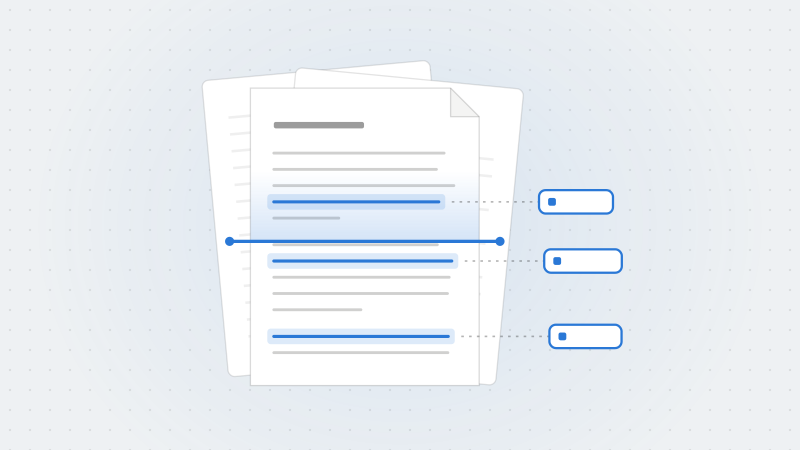
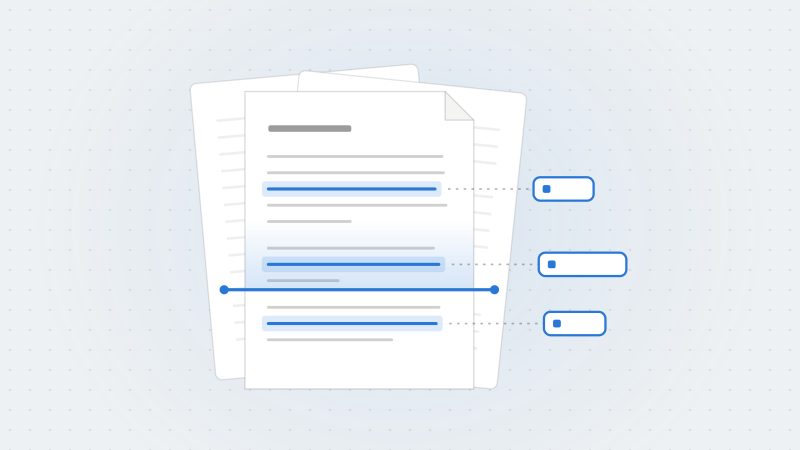
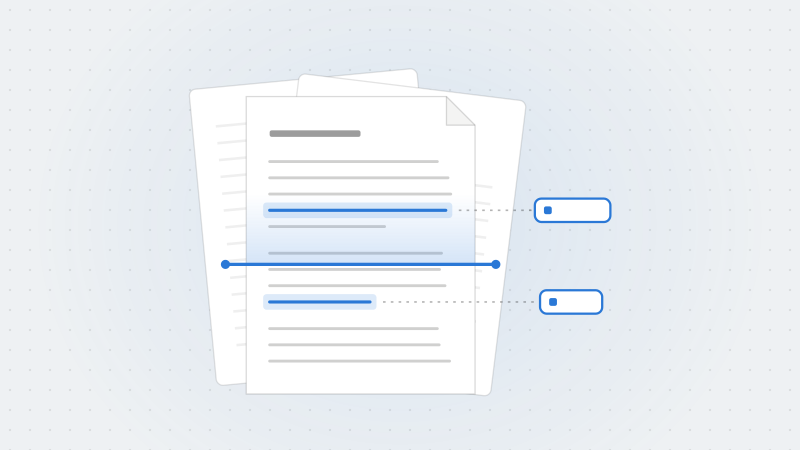
coordn8 reads each fax with optical character recognition (OCR). Machine learning models then suggest the patient, the document type, and whether the fax is spam or a duplicate. A staff member confirms or corrects the suggestions, and coordn8 files the document into Epic4.
In November 2025, Penn Medicine described coordn8 in a paper in NEJM Catalyst1. By then, the system averaged more than 3,000 faxes a day and had saved 8,500 staff hours in just over a year and a half of use1, 3. In a timed study, the mean time to process a fax fell from 172 seconds to 24.5 seconds, a saving of 147.5 seconds per fax4.
Before the deployment
Fax stays a vital channel in health care because records systems don’t interoperate well and because of HIPAA privacy requirements1. Healthcare Innovation adds institutional inertia as a reason3.
Before coordn8, the University of Pennsylvania Health System (UPHS) processed every fax by hand in a relay between people4:
- RightFax converted each incoming fax to an electronic file and routed it to a shared Microsoft Outlook inbox4.
- Dedicated staff downloaded each fax as a PDF and opened it in Adobe Acrobat4.
- The staff member split the fax into its documents, removed duplicates and spam, identified the patient in Epic, and assigned a document category4.
- The staff member watermarked the file with the patient identifier and saved it to a shared network drive4.
- A separate team uploaded the file from the drive to Epic through OnBase4.
The manual process had the following costs:
- Volume: Penn Medicine receives an estimated 1.3 million records by fax every year2. Daily counts for UPHS are 5000 to 10 000 faxes4 and between 8,000 and 9,000 faxes1, and nearly 24,000 faxes system-wide7.
- Handling time: Patient identification took a mean of 40 seconds, and splitting, tagging, and saving took 109 seconds4.
- Records collection: Gathering a new patient’s records from other providers could take more than six days, and staff typed the faxed information in by hand7.
- Consent: A signed release of information took about a week when it went by mail1.
- Delays in care: Late or incomplete records could leave clinicians unable to prepare a treatment plan in time for the visit2.
Earlier automation at UCSF, the Referrals Automation software that coordn8 builds on, used OCR templates that tell the software where to look on each page. Every new type of fax needed a new template4, 5. coordn8 goes a step further and feeds the OCR text to machine learning models4.
What was built
coordn8 folds the steps of the manual relay into a single web application4. A multidisciplinary CHTI team of physicians, project managers, designers, and software developers started building it in the spring of 2022, in close work with outpatient clinic staff4.
The work is divided as follows:
- OCR and models: Microsoft Azure Form Recognizer extracts the text. Four machine learning components suggest the document type, a spam flag, the patient, and a duplicate flag. They never file a document on their own4.
- Review interface: Shows each document beside the suggestions. It shows one document class when the classifier is confident, for example at 95%, and up to three when three classes are near 30% each, because the right type is almost always in the top three4.
- Patient matcher: Favors precision over recall, because a wrong match can violate patient privacy. When no name clears the threshold, it offers no patient4.
- Staff: Confirm, modify, or reject each suggestion, and search for the patient when the matcher offers none. Only confirmed documents and metadata go on to Epic4.
- Governance review: Penn’s internal governance review saw this “human-in-the-loop” design as a critical component in approving the project4.
“On top of that, we designed this in a way so that team members can easily cover for each other. Vacations or sick days won’t slow the process down anymore.”
Every confirmation is also a labeled example. The in-house models train on the input document and the patient, document type, and spam and duplicate flags that users assign4. The coordn8 database stores each model output beside the user’s label, so the team can track accuracy over time and retrain when it slips4.
Fax filing, which Penn calls eFax automation, is one of three coordn8 modules aimed at the same new-patient delay2. eDisclosure sends the release-of-information form to patients by text or email through Penn Medicine’s Way to Health platform1, 2. The Intake SmartForm is a questionnaire, built with existing functionality in Epic, that guides new patient coordinators through the first phone call2.
Alternatives considered
The team made the following choices:
- Build instead of buy: In September 2023, Emeka Anyanwu, a clinical informatics manager at CHTI, put coordn8’s projected savings at about five times those of an external vendor’s product with fewer features7.
- Microsoft Azure instead of spaCy: For patient identification, the team moved from a spaCy model to Microsoft Azure, which improved accuracy and cut computation4.
- XGBoost for classification: The team chose it because it handles missing values well and has built-in regularization against overfitting4.
- A TF-IDF vocabulary of 200 words: After testing other sizes, the team kept 200, because that size kept accuracy high while using few resources4.
Rollout
coordn8 grew from two clinics to more than 150 fax lines across many UPHS departments, and Penn is extending fax processing and eDisclosure to outpatient services throughout Penn Medicine1, 3. The new clinics brought documents the original classifier hadn’t seen, so the team retrained it on all 11 clinics and expanded it from 10 to 20 document types4.
Technology and architecture
- AI component
- Data
- Trigger or control
- Handoff to people
- Feedback
- Inferred, not documented
At its core, coordn8 is a web application with a user interface and a backend server. Both run in an internally secured cloud environment hosted by Microsoft Azure, and the backend calls the services around it through APIs4.
The following table lists the components of the solution.
| Layer | What they used | Role | Source |
|---|---|---|---|
| Document intake | RightFax | Receives faxes and converts them to PDF for the backend | 4 |
| Document and OCR model | Microsoft Azure Form Recognizer | Extracts the text of each fax | 4 |
| Predictive model | TF-IDF and XGBoost classifiers | Suggest the document type and flag spam | 4 |
| Graph and entity resolution | Microsoft Azure Text Analytics | Finds names and dates for patient matching | 4 |
| Embedding and ranking model | word2vec | Turns each document into an embedding | 4 |
| Search and vector index | FAISS | Finds earlier copies of the same document | 4 |
| Language model | OpenAI API | Second pass on failed patient matches | 4 |
| Review workbench | coordn8 review interface | Shows suggestions for staff to confirm, modify or reject | 4 |
| Feedback capture | coordn8 database | Stores model outputs beside staff labels | 4 |
| Data platform and storage | Epic Clarity | Supplies the patient list for matching | 4 |
| Business or operational system | OnBase | Routes confirmed documents into Epic over HL7 | 4 |
| Cloud platform | Microsoft Azure | Runs the web application and backend in a secured environment | 4 |
Model components
The OCR text goes to the following components, each of which produces a label for the user to review:
- Document classification: Turns the text into a TF-IDF embedding of the 200 most useful words. An XGBoost model then gives a probability for each document type4.
- Spam classification: Uses the same method with a binary XGBoost model4.
- Patient identification: Microsoft Azure Text Analytics finds names and dates with named entity recognition. Dates narrow the patient list by date of birth, and each name is scored against each patient name by Levenshtein distance. A patient counts as a match only when the score falls below a threshold4.
- Duplicate detection: Averages the word2vec vectors of a document’s words into one embedding of size 50. FAISS compares it with the embeddings of all earlier documents by cosine distance4.
- Second pass: After an OpenAI API passed internal governance, the team began using it for second passes on failed patient matches4.
The platform lets the team upgrade each machine learning component on its own as better models arrive or retraining is needed4.
Integrations
coordn8 connects to the following systems:
- RightFax: The backend downloads each fax as a PDF through the RightFax API4.
- Epic Clarity: A SQL database that supplies the list of UPHS patients for matching4.
- OnBase: Hyland’s document management system receives confirmed documents and their metadata over Health Level 7 (HL7) standards and routes them to Epic4.
- Epic: Indexed documents are available to every EHR user in the patient’s chart4.
How one fax flows through the system
- AI component
- Data
- Trigger or control
- Handoff to people
- Feedback
- Inferred, not documented
A fax of lab results from an outside practice moves through coordn8 in the following steps:
- The backend pulls the fax from RightFax. Form Recognizer returns its text4.
- The classifiers suggest “lab results” and no spam flag. Duplicate detection checks the fax against every earlier fax4.
- Text Analytics finds the patient’s name and date of birth, which narrow the Clarity list to a likely match4.
- The staff member sees the fax beside the suggestions, confirms the patient or searches for another, settles the document type, and approves it4.
- coordn8 files the document through OnBase into the patient’s Epic chart. It stores the confirmed labels for the next round of training4.
Results
The following table lists the results through November 20251, 4.
| Metric | Before | After | Scope and timeframe | Reported by |
|---|---|---|---|---|
| Mean processing time per fax | 172 s by hand | 24.5 s, saving 147.5 seconds | 28 manual and 46 coordn8 observations at outpatient clinics | Penn Medicine, measured4 |
| Total staff time saved | Not disclosed | 8,500 staff hours | Just over a year and a half of use, to November 2025 | Penn Medicine, estimated1, 3 |
| Average fax processing time | Two minutes | about 40 seconds | Fax processing under coordn8, as of November 2025 | Penn Medicine, measured1, 3 |
| Document classification accuracy | 75.3% for the original model | 81.6% for the retrained model, introduced January 2024 | All 11 clinics, production data collected after November 2023; the two models were scored over different windows, not on the same faxes | Penn Medicine, measured4 |
The metrics measure the following:
- Mean processing time per fax: Staff were timed by hand at four outpatient clinics, mostly Heart and Vascular and Family Medicine, and then with coordn8 at Cardiology and Family Medicine. The median fell from 180 seconds to 18.9 seconds4.
- Production event logs: Logs of 7,178 faxes from October 4, 2022 to February 27, 2023 timed each fax from first opening to confirmation. They gave a median of 21 seconds and a mean of 62.8 seconds, when only patient identification was built in4.
- Average fax processing time: This two-minute baseline is the basis for the claim that coordn8 tripled fax processing speed1. CHTI’s project page gives 3 minutes to under 40 seconds, so one staff member can process more than triple the faxes2. In September 2023, Penn Medicine News gave a fall from about three minutes to about half a minute7.
- Total staff time saved: The saving is 2,300 hours for every 100,000 faxes, a volume coordn8 reaches every 11 to 12 days1. By December 2024, approximately 200,000 faxes had saved more than 4,500 hours, about 2 FTEs2. In September 2023, Penn projected savings of approximately $5 million annually7.
- Document classification accuracy: The right type was among the retrained model’s top three suggestions 95.9% of the time. Across all clinics, retraining raised accuracy from 71.7% to 81.9%, a gain of 10.2%4.
- Duplicate detection: Of 100 documents the model flagged as duplicates, 81% were duplicates4.
- Staff satisfaction: During a nine-month pilot in 2023, satisfaction and effort scores among clinical staff rose from 35 to 60 percent within two weeks, 25 percentage points each1, 2.
Lessons learned
Storing every model output beside the staff label let the team catch model drift and fix it. When nine clinics joined in November 2023, the original classifier’s accuracy fell from 87.4% at its two clinics to 67.7% at the new ones4. The model retrained on all clinics scored 80.4% at the original clinics and 82.0% at the new ones4.
The human check kept the drift out of the chart, at a cost in development time. In the team’s view, users adapt to new documents faster than models and correct errors in real time, which buys time to retrain4. Retraining competes with running a production system, and every interface change goes through internal review and testing, which slows upgrades and new tasks4.
Patient matching leaves work for staff by design. The matcher has 99.8% precision and 83.6% recall, so a suggested patient is almost never wrong, and staff find the patient themselves for the faxes it can’t match4. Spam detection has 82.8% recall but 71.1% precision, and the document classifier struggles with broad categories such as prior records and the catchall “Other”4.
The authors call the observation study’s sample of 28 manual and 46 coordn8 observations relatively small, and they judged a larger study unnecessary given the large effect size and its cost4. The paper also says the event logs likely overestimate processing time, because users open faxes at their own discretion4. Penn’s accounts give different manual baselines and daily volumes for the same work1, 4, 7.
The figures are Penn’s own, from the team that built coordn8: its peer-reviewed paper, whose authors declare no competing interests and no outside funding, its project page, its news posts, and its press release1, 2, 4, 7. Healthcare Innovation relays the press release and attributes the hours figure to what the researchers claim3. The staff hours are an estimate of time saved, and CHTI puts “saved” in quotation marks2.
Penn scales selectively. The Intake SmartForm stays where it is, because it’s customized to disease-specific needs2. Yevgeniy Gitelman, head of Custom Software at CHTI, advises starting with the departments that have the highest need and the highest willingness to take part, so that colleagues see the results and buy in1.
Case study scorecard
- 147.5 seconds Mean time saved per fax4
- 8,500 staff hours Staff time saved in total1, 3
- about 40 seconds Average fax processing time1, 3
- 81.6% Document classification accuracy4
- Source quality: 77%, High quality. Rests on a peer-reviewed paper.
- Rules and standards: HIPAA
Sources by publication date
- Organization 3
- Vendors and partners 1
- Press, academic, and regulators 3
Build this solution yourself
Analysis
What you need
To build this solution as Penn did, you need the following in place:
- Interfaces into the fax server, the EHR, and the document system: coordn8 reads faxes through the RightFax API and the patient list through Clarity, and it files into Epic through OnBase4.
- A team that can build and run the software: CHTI’s physicians, designers, and developers built the review interface and run the models in a secured Azure environment4.
- A log of every suggestion beside the label staff chose: That log showed the drift and fed the retraining when new clinics joined4.
Reference architecture
Document extraction
Document extraction reads the documents, forms, and images that an organization receives, sorts each one to its case, and turns it into structured fields for the business system that acts on it. Models read each document into fields, and ordinary software checks the fields against business rules and the organization's reference records. A reviewer compares the fields with the source before they reach the business system, or sees only the doubtful ones, and the corrections measure and improve the models.
- Document intake (documented in this case study)
- Document extraction platform
- Preparation
- Text recognition (documented in this case study)
- Extraction model (documented in this case study)
- Validation rules
- Reference records (documented in this case study)
- Workflow engine
- Review workbench (documented in this case study)
- Answer explanation
- Connectors
- Business system (documented in this case study)
- Corrections log (documented in this case study)
- Accuracy monitoring
A check mark shows a building block that this case study's sources document.
Open the reference architectureOthers who built it
- UCSF: Its Referrals Automation tool used Nuance OCR to pull demographic and referral details from faxes into Epic, and it processes over 20% of incoming faxed referrals5.
- Montage Health: It removed two hours a day of referral transcription by automating faxed referrals on Notable’s platform, which reads faxes with OCR and visual large language models6.
In the library
- Condé Nast speeds rights contract analysis with Claude Condé Nast
- Cargolux drafts cargo quotes from customer emails with AI Cargolux Airlines International
- Air France KLM Martinair Cargo uses AI to book and quote Air France KLM Martinair Cargo
- Pennsylvania's AI check cuts illegible benefit documents Pennsylvania Department of Human Services
- How Liberty Global matches supplier invoices with GenAI Liberty Global
- Parte embeds AI in property managers' email in 27 offices Parte
Cite this case study
Enterprise AI Case Studies. "Penn Medicine triples fax processing speed with AI." Updated Nov 18, 2026. https://case-studies.ai/case-studies/document-intelligence/DI-017-fax-processing-automation-penn-medicine/
@misc{csai-di-017,
  author = {{Enterprise AI Case Studies}},
  title = {{Penn Medicine triples fax processing speed with AI}},
  year = {2026},
  note = {Updated 2026-11-18},
  url = {https://case-studies.ai/case-studies/document-intelligence/DI-017-fax-processing-automation-penn-medicine/}
}Sources
The following reporting, and every passage quoted from it, belongs to its publisher, not to this site. Sources and ownership
- Source 1:
'Really, faxes?' New patient process sped up dramatically by Penn-made system
Supporting excerpts (20)
An emerging artificial intelligence-powered system developed at Penn Medicine has tripled the speed of fax processing and cut a full week off the new patient intake process—freeing up thousands of staff hours.
The system, called coordn8, was created by the Penn Medicine Center for Health Care Transformation and Innovation (CHTI) and is detailed in a new paper published this week in NEJM Catalyst.
in health care it remains a vital communications tool due to challenges with interoperability and HIPAA privacy requirements
at the University of Pennsylvania Health System (UPHS), between 8,000 and 9,000 faxes are processed each day
Coordn8 automates the intake and filing of faxed documents into electronic health records and allows patients to digitally give their consent to release records instead of mailing forms.
Reducing processing time allows staff to focus on more patient-facing activities and results in higher job satisfaction
a lead transformation strategist at CHTI
On top of that, we designed this in a way so that team members can easily cover for each other. Vacations or sick days won't slow the process down anymore.
During a nine-month pilot period in 2023, the CHTI team surveyed clinical staff using coordn8 and found that their satisfaction with the new patient intake process jumped from 35 to 60 percent in just two weeks.
a survey of coordn8 users found the same improvement (35 to 60 percent) in their "effort score,"
Fax processing time under coordn8 improved from an average of two minutes to just about 40 seconds.
for every 100,000 faxes processed (a number reached every 11 to 12 days at Penn Medicine now), staff could save 2,300 hours of time
On average, it took a week to process this at UPHS.
By sending the eDisclosure via text message—thanks to Penn Medicine's Way to Health platform—the coordn8 team decreased the time it took to get a patient signature by 85 percent.
This allowed staff to get to work acquiring health information six days sooner than before, increasing staff satisfaction from 41 percent to 90 percent.
While the NEJM Catalyst paper described the initial implementation in more than 150 fax lines across many different departments across UPHS, coordn8 is expanding its fax processing and eDisclosure form to span outpatient services throughout Penn Medicine.
In just over a year and a half of use, coordn8 has reached an average of more than 3,000 faxes per day and saved a total of 8,500 staff hours in total.
For other health systems looking to apply this, it's essential to identify the departments with the highest need and the highest willingness to participate
head of Custom Software at CHTI and associate chief medical information officer at Penn Medicine
If others in a health system can see their colleagues thriving, it will increase buy-in and help to better expand a service like this, increasing its impact.
- Source 2:
coordn8: Streamlining external records processing and coordination
Supporting excerpts (15)
Penn Medicine receives an estimated 1.3 million records via fax annually
Delays, incompleteness, or other issues with records can prevent clinical providers from preparing treatment plans in time for the visit and cause delays in care.
We built a platform called coordn8 that integrates advanced AI tools such as optical character recognition (OCR), natural language processing (NLP), and intuitive user experience design to efficiently process faxed medical records.
coordn8 eFax reduced the average processing time for an individual fax from 3 minutes to under 40 seconds.
This reduction translates to a single staff member being able to process more than triple the number of faxes in a given timeframe.
As of December 2024, coordn8 had efficiently processed approximately 200,000 faxes, equating to more than 4,500 hours (2 FTEs) of staff time "saved."
eFax automation increased staff satisfaction and reduced effort by 25 percentage points each, as measured by customer satisfaction scores (CSAT) and customer effort scores (CES), respectively.
This process was previously done through email or postal mail and took almost a week on average.
Patients can now sign their release of information or disclosure forms via text or email, and signed forms are automatically sent to the EHR with coordn8 once reviewed by a staff member.
eDisclosure reduced the time to patient signature by 85 percent, which means that records collection can start 6 days earlier.
Working alongside clinical users and using existing functionality within our EHR (Epic), we created an Intake SmartForm.
The SmartForm serves as an algorithmic questionnaire with decision points to guide new patient coordinators gathering information from the patient during the initial phone call.
The SmartForm improved the accuracy of intake information by 19 percentage points without increasing intake call duration.
Because the intake SmartForm is highly customized to meet disease-specific needs, we are not scaling it enterprise wide at this time.
we're strategically expanding the use of two coordn8 modules, eFax automation and eDisclosure consent, throughout Penn Medicine outpatient departments
- Source 3:
Penn Medicine Develops Solution to Speed Fax Processing
Supporting excerpts (6)
An AI-powered system developed at the Penn Medicine Center for Health Care Transformation and Innovation (CHTI) in Philadelphia has tripled the speed of fax processing and cut a full week off the new patient intake process, according to a paper published in NEJM Catalyst.
people who work in healthcare know it has been difficult to eliminate due to interoperability challenges and institutional inertia
Fax processing time under coordn8 improved from an average of two minutes to just about 40 seconds.
The NEJM Catalyst paper described the initial implementation in more than 150 fax lines across many different departments across UPHS.
The researchers claim that in just over a year and a half of use, coordn8 has reached an average of more than 3,000 faxes per day and saved a total of 8,500 staff hours in total.
a lead transformation strategist at CHTI, in a statement
- Source 4:
The incremental design of a machine learning framework for medical records processing
Supporting excerpts (104)
This work presents the development and evaluation of coordn8, a web-based application that streamlines fax processing in outpatient clinics using a "human-in-the-loop" machine learning framework.
Our observation analysis showed a mean reduction in individual fax processing time by 147.5 s, while our event log analysis of over 7000 faxes reinforced this finding.
Document classification produced an accuracy of 81.6%, patient identification produced an accuracy of 83.7%, spam classification produced an accuracy of 98.4%, and duplicate document detection produced a precision of 81.0%. Retraining document classification increased accuracy by 10.2%.
The University of Pennsylvania Health System (UPHS) handles a substantial volume of 5000 to 10 000 faxes daily based on unpublished internal data.
These faxes need to be processed manually to identify the patient, extract relevant data, and integrate with Epic, the EHR used across UPHS.
The coordn8 platform was developed by a multidisciplinary team at the Center for Health Care Transformation and Innovation (CHTI) within UPHS, including physicians, project managers, designers, and software developers.
The team collaborated extensively with outpatient clinic staff to characterize the problem and work toward an automated solution.
Development of coordn8 started in the Spring of 2022 and has been ongoing since.
coordn8 builds on the Referrals Automation software,17 which employs OCR for partial automation of fax processing. However, coordn8 goes a step further by using OCR-extracted text as input to machine learning models
Faxes are received by UPHS through RightFax, which converts them into an electronic format and routes them to a shared Microsoft Outlook email inbox.
Dedicated staff download each fax individually in Portable Document Format (PDF) from the shared Outlook folder.
Staff import the document to Adobe Acrobat and complete the following tasks:
Splitting: Separating the document into sub-documents if it contains multiple document types.
Filtering: Identifying and removing any duplicate or spam documents.
Identification: Identifying the intended patient, then querying Epic to confirm and retrieve the patient identifier.
Categorization: Classifying the document into the appropriate document category.
Staff watermark the document(s) with the patient identifier(s), then upload to a shared network drive.
Separate team members monitor the network drive and upload the processed document(s) to Epic through OnBase.
The design of coordn8 focused on reproducing and consolidating these steps into a single system
At its core, coordn8 is a web application that consists of a user interface and backend server that runs within an internally secured cloud environment hosted by Microsoft Azure.
The backend server integrates with external services through Application Programming Interfaces (APIs) to perform various processing and routing tasks.
The backend server downloads the documents using the RightFax API, then inputs them to Microsoft Azure's Form Recognizer API
an OCR service, to extract and return text. The text is then input into the various machine learning components, which generate output labels.
The document and machine learning outputs are presented to the user in a single, consolidated interface.
allows the user to view the recommendations made by the models but apply their own judgment to either confirm, modify, or reject these outputs
The back-end server then routes the confirmed documents and metadata to Epic through OnBase
a document management system, using Health Level 7 standards
Indexed documents are available to all EHR users with the patient
internally developed models, which are trained using data generated by user task completion
These data consist of the input document and the user-assigned values of the patient
document type, and flags for spam and duplicate
the output of each component is stored in the database alongside the user-generated labels, which allows for the performance of the models to be evaluated over time and refined as needed
Our implementation uses TF-IDF16 to compute the text embedding and XGBoost19 to produce the label.
XGBoost, an implementation of gradient boosted decision trees known for speed and performance, was selected because it handles missing values well and has built-in regularization to prevent overfitting.
We experimented with different sizes of n and found that a text embedding size of 200 maintained a high accuracy while minimizing resource use.
During model training, we performed 5-fold cross validation with a hyperparameter grid search to select the XGBoost model parameters.
A list of UPHS patients is extracted and loaded from Epic using Clarity
The provided document text is input into Microsoft Azure's Text Analytics Client
which uses NER to identify names and dates
If any dates are found, they are used to filter the list of patients by date of birth.
Each identified name n is compared to each patient name n' using the Levenshtein distance formula
If the score falls below a specified threshold, the identified patient is considered a potential match for the document.
If no patients are identified, the component does not produce an output.
The user can confirm the potential match or search for a different patient.
The spam classification component uses the same methodology as document classification, apart from using a binary XGBoost model.
The duplicate document detection component uses word2vec15 to compute a text embedding then uses Facebook AI Similarity Search (FAISS)
Our implementation uses an embedding size of 50.
A given document is transformed into an embedding by computing the average of all word2vec outputs for each word within the document.
All previous document embeddings are retrieved and loaded into FAISS, which efficiently compares the new embedding with all previous embeddings using cosine distance.
The coordn8 platform was initially launched at 2 clinics, Cardiology and Family Medicine, in September 2022, and expanded to an additional 9 clinics in November 2023.
The initial machine learning components were calibrated using data collected from these clinics up to November 2023
All training and evaluation samples are pulled from the production database, and the time frame indicates when the samples were collected.
The overall processing time using coordn8 was further validated by an early indirect analysis of event logs pulled from the coordn8 production system between October 4, 2022 and February 27, 2023.
Carolina Garzon-Mrad, Jency Daniel, and Divya Saini worked extensively with stakeholders to design elements of the user interface and user experience and collect the time savings data.
The machine learning evaluation includes data collected after November 2023 and is divided into 3 datasets—Base Clinics, Expanded Clinics, and All Clinics.
We deployed coordn8 in 11 outpatient clinics and conducted a time savings analysis by observing users and measuring fax processing event logs.
The Base Document Classification model supports 10 document types, while the Expanded Document Classification model supports 20 document types.
The Base Document Classification model produced an accuracy of 75.3% and a top-3 accuracy of 95.6%. In contrast, the Expanded Document Classification model showed improved performance with an accuracy of 81.6% and a top-3 accuracy of 95.9%. Patient identification produced an accuracy of 83.7%, with a high precision of 99.8%, a recall of 83.6%, and a specificity of 90.3%.
Spam classification produced an accuracy of 98.4%, a precision of 71.1%, a recall of 82.8%, and a specificity of 98.9%.
We sampled 100 documents predicted as being a duplicate and manually evaluated whether this label was correct. Out of the 100 selected documents, the model correctly identified 81% as being a duplicate.
Since September 26, 2023, there have been 9386 documents identified as being a duplicate
notable challenges with broader categories such as Prior Records and Other, a catchall category for unclassified documents
showed a low incidence of spam faxes, at 3.65%
The Base Document Classification model's accuracy dropped from 87.4% in the Base Clinics to 67.7% in the Expanded Clinics.
Top-3 accuracy was less sensitive to the new data, decreasing from 98.6% to 93.8%.
Conversely, the Expanded Document Classification model showed a slight increase in accuracy, from 80.4% in the Base Clinics to 82.0% in the Expanded Clinics.
In January 2024, overall performance improved and stabilized when the Expanded Document Classification model was introduced.
The Base Document Classification model produced an accuracy of 71.7% (95% CI, 70.2-73.3) across All Clinics, while the Expanded Document Classification model produced an accuracy of 81.9% (95% CI, 80.7-83.0) with a mean absolute difference of 10.2%
Users were initially observed manually processing faxes across 4 outpatient clinics, predominantly at the Heart and Vascular and Family Medicine clinics, totaling 28 manual observations.
Users were subsequently observed using coordn8 to process faxes at the Cardiology and Family Medicine clinics, totaling 46 automated observations.
totaling 28 manual observations
totaling 46 automated observations
notably during patient identification and fax splitting, tagging and saving stages, requiring a mean processing time of 40 and 109 s, respectively
The results of the observation study (Figure 5) showed a reduction in processing time from a mean of 172 s (95% CI, 144.5-199.6) manually to a mean of 24.5 s (95% CI, 19.9-29.1) using coordn8, achieving a significant mean time savings of 147.5 s per fax
Specifically, within the Family Medicine clinic, the time reduced from a mean of 132.7 s (95% CI, 98.1-167.2) manually to a mean of 35.1 s (95% CI, 9.4-60.9) using coordn8, saving a mean of 97.6 s per fax
rendering a larger evaluation unnecessary due to the large effect size and cost associated with carrying out an expanded study
Manual had a median processing time of 180 s, coordn8 had a median processing time of 18.9 s
Event-based processing times were computed by measuring the time difference between when a user first opened a fax and when the fax was confirmed.
The improvement in processing time was further validated by analyzing 7178 processed faxes logged by the platform during the first few months of deployment. This analysis showed a median processing time of 21 s and a mean processing time of 62.8 s (95% CI, 60.5-65.1).
During this period, only patient identification had been integrated into the system.
This data likely overestimated the actual processing time, as users open and process faxes at their own discretion
By emphasizing high precision, the platform reduces the number of incorrect patient matches. This is important in medical settings where misidentification can violate patient privacy.
Human operators can identify patients correctly when the models fail to produce an output
We designed the interface to suggest up to 3 document classes based on the model's high top-3 accuracy.
For instance, if the output of the model suggests that a single class has a high probability of being correct that is 95%, then only this class will be displayed.
Conversely, if the top 3 classes all have a similar probability of being correct that is 30%, then all 3 will be displayed.
Finally, making a human operator the final decision maker allowed for the safe deployment of machine learning models on medical data while maintaining necessary human oversight.
The "human-in-the-loop" design was seen as a critical component by our health system's internal governance review for approval of this project.
Our human-in-the-loop framework facilitated the collection of high-quality data necessary for model training.
We designed the platform to allow for the machine learning components to be easily upgraded as better models become available or model retraining is needed.
For patient identification, we switched from using a spaCy (https://spacy.io/) model to Microsoft Azure for OCR, which improved accuracy and decreased computation requirements.
Now that an OpenAI API has passed internal governance requirements, we are using it for second passes on failed patient matching.
Storing all model and user outputs allowed for performance to be quantified over time and provided the basis for model retraining.
Users can adapt to new data distributions and changing requirements much faster than models and provide real-time error correction.
This creates a buffer to retrain these components while preventing errors from being propagated downstream.
The processing time results are constrained by a relatively small sample size
Furthermore, the platform received overwhelmingly positive user feedback, which helped to reinforce the adoption of coordn8 across clinics but limited the need to record additional user interactions.
While we can mitigate these effects through model retraining, this requires development time and effort, which must be balanced against the demands of maintaining a production system. Interface updates must undergo internal review and testing which limits our ability to quickly upgrade components or integrate new tasks.
LLMs such as GPT-424 have proven to excel at understanding the context of text and being able to perform tasks, such as classification, without requiring any additional training.
We have started testing this model on the tasks of document classification, spam classification, and generating document descriptions.
However, this integration will need to be balanced against the increased cost of using this service.
Christopher Streiffer, Gideon Whitehead, and Emeka Anyanwu designed and implemented the machine learning components and coordn8 source code.
This research received no specific grant from any funding agency in the public, commercial, or not-for-profit sectors.
The authors have no competing interests to declare.
- Source 5:
Supporting excerpts (4)
The Referrals Automation software was developed by the Center for Digital Health Innovation (CDHI) at the University of California, San Francisco (UCSF).
Commercial OCR software from Nuance (Irvine, CA, USA) was integrated to recognize and extract the demographic and referral information required to create a digital referral object in the EHR (Epic, Verona, WI, USA).
The application now processes over 20% of all incoming faxed referrals to UCSF.
the reliance on traditional OCR methods for automating text ingestion, meaning that templates must be created to show the OCR software where to look on each page for the required text. New types of incoming faxes require creation of a new template.
- Source 6:
Streamlining referral workflows to reduce burnout
Supporting excerpts (2)
Montage Health eliminated two hours of work per day that was spent on referral transcription alone by using Notable's Platform to automate the referral process.
When a fax comes in, the AI platform uses OCR (optical character recognition) and visual LLMs (vLLMs) to read the fax.
- Source 7:
Less Paperwork, More 'Peoplework': Penn Makes Health Care Easier
Supporting excerpts (9)
Before a new patient visit, care coordinators are responsible for collating their health records from various sources, an endeavor that could take more than six days
each fax would have to be manually processed and the information it contained typed in by hand
At a system-wide scale of nearly 24,000 faxes per day, processing faxed documents consumes a lot of valuable personnel time
senior innovation manager with the Penn Medicine Center for Health Care Transformation and Innovation
which uses optical character recognition and natural language processing to speed the processing of faxes received from outside Penn Medicine
It has reduced the time to input each fax from an average of three minutes to just about half a minute, which results in less burden on staff, and consequently lower processing costs.
The software is projected to save the health system approximately $5 million annually
about five times the savings in comparison to an external vendor with less features
clinical informatics manager with the Center for Health Care Transformation and Innovation














Comments
Start the conversation.
Invited members of the library comment here. Sign in to join the conversation.