
UnitedHealth cuts chart review time 33% with AI summaries
UnitedHealth Group's Optum Health rolled out an AI tool that summarizes patient charts, so its clinicians spend less time reviewing records before appointments and after clinic hours.
Optum HealthUnited StatesHospitals and health systemsScaled
- Scale
- More than 40% of UnitedHealth Group's employed clinicians
- Scenario
- Patient chart summarization for clinicians
- Business function
- Clinical care
- Kind of solution
- Document review and drafting
- Human oversight
- Assists people
- Organization
- Enterprise, part of UnitedHealth Group
- AI types
- Generative AI
- Users
- more than 40%
tl;drAI chart summaries reached more than 40% of employed clinicians, cutting chart review time 33%.See the results
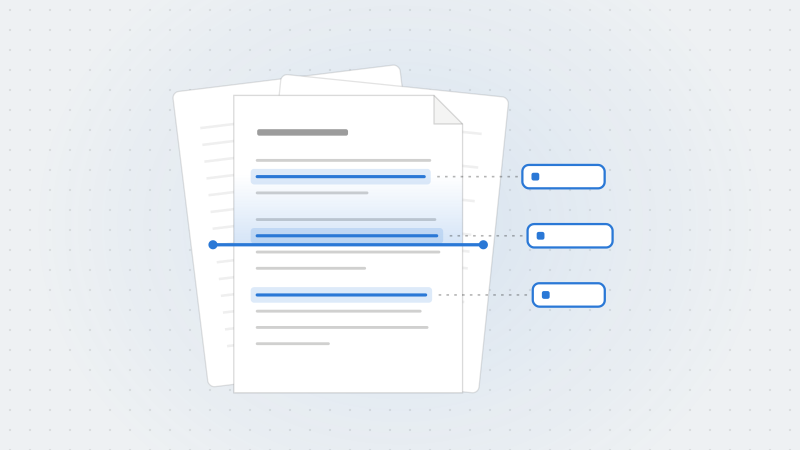
Optum Health, part of UnitedHealth Group, uses an AI chart summarization tool to give its clinicians a summary of each patient’s chart before appointments4. The tool targets the time physicians spent reviewing records after clinic hours4.
By October 2026, AI-enabled chart summarization reached more than 40% of UnitedHealth Group’s employed clinicians, and chart review time fell by 33%1. Stephen Hemsley, the chairman and chief executive, gave both figures on the third-quarter earnings call on October 13, 20261, 2.
Before the deployment
Before the tool, Optum Health physicians reviewed patient records themselves to prepare for visits, and part of that review ran past clinic hours4.
- After-hours review: Physicians spent time reviewing records after clinic hours4.
- Visit preparation: Clinicians had to understand a patient’s medical history before each appointment4.
UnitedHealth Group set the work inside a wider effort to give clinicians “a simpler, faster and more supportive system”1. Hemsley presented chart summarization as one of the AI capabilities that are beginning to help clinicians spend more time with patients1.
What was built
The tool summarizes the patient chart in the electronic health record (EHR) so the clinician can understand the patient’s medical history before the appointment4. The tool, the EHR and several teams divide the work:
- Summarization tool: Generates a summary of the patient’s chart for the clinician before the appointment4.
- EHR: Holds the patient chart. The tool first ran in one regional EHR environment and now runs in Optum Health’s largest one4.
- Clinicians: Read the summary to prepare for the visit, and report their experience through feedback surveys4.
- Governance teams: Clinical informatics, operations, data science, compliance, legal and privacy teams review each AI capability before release4.
“A tool is only ready if it integrates seamlessly into existing workflows, delivers clear value, and reduces friction for both clinicians and patients.”
Rollout
- Pilot: Informatics and clinical teams reviewed the tool before a two-month evaluation in a regional EHR environment, with targeted training and peer-led demonstrations4.
- May 2026: After meeting internal performance thresholds, the tool supported thousands of providers in Optum Health’s largest environment, with additional EHR systems being added4.
- October 2026: UnitedHealth Group had expanded the summarization to more than 40% of its employed clinicians1.
Technology and architecture
The tool reads one input, the patient chart in the EHR, and its output is a summary of the patient’s medical history4. After launch, dashboards and escalation pathways monitor the tool for appropriate use, safety and regulatory alignment4.
| Layer | What they used | Role | Source |
|---|---|---|---|
| Solution platform | AI chart summarization tool | Summarizes the patient chart so the clinician can understand the medical history before the appointment | 1, 4 |
| Business or operational system | Electronic health record (EHR) | Holds the patient chart; the tool launched in a regional EHR environment and runs in Optum Health’s largest one | 4 |
| Monitoring | Monitoring dashboards | Track the tool’s use, safety and regulatory alignment, with escalation pathways | 4 |
| Feedback capture | Feedback surveys | Collect clinicians’ feedback during the rollout | 4 |
Each expansion passes the same gates. Optum Health treats AI governance with the same rigor it applies to clinical interventions4.
- Data
- Trigger or control
- Feedback
Results
| Metric | Before | After | Scope and timeframe | Reported by |
|---|---|---|---|---|
| Reduction in chart review time | Not disclosed | 33% | Employed clinicians with the tool, October 2026 | UnitedHealth Group, measured1, 2 |
| Employed clinicians with AI-enabled chart summarization | Not disclosed | more than 40% | UnitedHealth Group, October 2026 | UnitedHealth Group, measured1, 3 |
- Chart review time: Measures the time clinicians spend reviewing a patient’s chart. The 33% reduction applies to clinicians with AI-enabled chart summarization, as of the October 2026 earnings call1.
- Clinician coverage: The share counts UnitedHealth Group’s employed clinicians to whom the summarization had been expanded by October 20261, 3.
- Pilot feedback: In the pilot, providers cited time savings, smoother visit preparation and less administrative work in the evenings4.
Lessons learned
Gating each expansion on thresholds didn’t keep the tool from scaling. It went from one regional EHR environment in the pilot to more than 40% of employed clinicians by October 20264, 1.
The 33% and 40% figures are UnitedHealth Group’s own, given by its chief executive on the earnings call and relayed by PYMNTS and The National CIO Review1, 2, 3. The pilot’s benefits rest on early feedback from providers4.
The coverage figure counts clinicians who have the tool. UnitedHealth Group described the summarization as expanded to them, and The National CIO Review as available to them1, 3.
Each EHR system needs its own expansion. In May 2026, the tool ran in Optum Health’s largest environment, and additional EHR systems were still being added4.
Launch didn’t settle how clinicians used the tool. Post-launch monitoring found gaps, and Optum Health refined how clinicians used it4.
The criticism of AI in health insurance that PYMNTS reported beside the figures concerns claims. The Doctors Not AI Act would bar an automated system from having the ultimate say on whether an insurer approves a claim2. The chart summaries serve a different step, the clinician’s preparation for an appointment4.
Case study scorecard
- 33% Reduction in chart review time1, 2
- more than 40% Employed clinicians with AI-enabled chart summarization1, 3
- Source quality: 74%, High quality. Rests on an official disclosure.
Sources by publication date
- Organization 1
- Press, academic, and regulators 3
Build this solution yourself
Analysis
What you need
- Patient charts the tool can read in your EHR: The tool summarizes the chart in the EHR, and each additional EHR system meant another expansion step4. Check which of your EHR environments it would reach first.
- A cross-functional review with set thresholds: Clinical informatics, operations, data science, compliance, legal and privacy teams reviewed the tool, and expansion waited for performance, safety and adoption thresholds4. You need those teams and those thresholds agreed before you scale.
- A measure of chart review time: The headline result is a cut in chart review time1. You need a before measure of your clinicians’ review time, and dashboards to watch use after launch4.
Reference architecture
Document review and drafting
A document review and drafting solution reads a case's documents against a written standard, precedents, or a list of questions and drafts a review, summary, clause, or report with its sources for an expert to finish. The solution pulls the case's documents, and a language model answers each question from the passages that bear on it, with its source. Fixed logic settles what must not vary, and an expert checks the draft against the sources and makes the decision.
- Source system (documented in this case study)
- Connector to the source system
- Review and drafting platform (documented in this case study)
- Text recognition
- Document preparation
- Passage index
- Access control
- Questions and templates
- Drafting model
- Private model endpoint
- Fixed logic
- Review workbench
- Reviewer feedback (documented in this case study)
- Tests on known cases
A check mark shows a building block that this case study's sources document.
Open the reference architectureOthers who built it
- Nationwide: How Nationwide uses generative AI to summarize claim notes. Nationwide's AI now summarizes the log notes of thousands of claims every week.
- Merck & Co.: Merck drafts clinical study reports in days with gen AI. First drafts of clinical study reports take three to four days instead of two to three weeks.
- Novo Nordisk: AI drafts clinical study reports in minutes at Novo Nordisk. NovoScribe cut clinical study report creation from 12 weeks to 10 minutes at Novo Nordisk.
- City of Corona: Corona, California speeds building plan review with AI. AI cut Corona's permit plan-review time by 97% across 20 permit types.
- City and County of Denver: Denver pre-screens permit applications with CivCheck AI. Denver's AI assistant now checks permit applications for missing information before submission.
- United States DOGE Service: Court strikes down DOGE's ChatGPT screening of NEH grants. A federal court struck down DOGE's ChatGPT-aided cancellation of more than 1,400 NEH grants.
Cite this case study
Enterprise AI Case Studies. "UnitedHealth cuts chart review time 33% with AI summaries." Updated Nov 25, 2026. https://case-studies.ai/case-studies/document-intelligence/DI-056-chart-summarization-optum-health/
@misc{csai-di-056,
  author = {{Enterprise AI Case Studies}},
  title = {{UnitedHealth cuts chart review time 33% with AI summaries}},
  year = {2026},
  note = {Updated 2026-11-25},
  url = {https://case-studies.ai/case-studies/document-intelligence/DI-056-chart-summarization-optum-health/}
}Sources
The following reporting, and every passage quoted from it, belongs to its publisher, not to this site. Sources and ownership
- Source 1:
UnitedHealth Group (UNH) Q3 2026 Earnings Call: EPS Guidance Raised to at Least $20.50
Supporting excerpts (6)
We have expanded AI-enabled chart summarization to more than 40% of our employed clinicians, reducing chart review time by 33%.
Across the businesses, AI-enabled capabilities are beginning to help clinicians spend more time with patients
AI-enabled information gathering and research have shortened appeal cycle times by 26%
I will now turn the conference over to Chairman and Chief Executive Officer of UnitedHealth Group, Steve Hemsley.
clinicians experience a simpler, faster and more supportive system
Good morning, and welcome to the UnitedHealth Group Third Quarter 2026 Earnings Conference Call.
- Source 2:
UnitedHealth Says Chart Review Time Falls 33% With AI Usage
Supporting excerpts (2)
UnitedHealth has expanded AI-enabled chart summarization to more than 40% of its employed clinicians, shrinking chart review time by 33%.
the Doctors Not AI Act would prohibit an automated system from having the ultimate say on whether a medical insurer approves a claim.
- Source 3:
UnitedHealth Group Expands Agentic AI Across Healthcare Operations
Supporting excerpts (3)
AI-enabled chart summarization is now available to more than 40%
cutting chart review time by 33%
AI-assisted research has also shortened appeals processing cycles by 26%.
- Source 4:
Optum Health rolls out AI chart summaries to cut clinician administrative work
Supporting excerpts (19)
Optum Health has piloted an AI tool that automatically summarizes patient charts, reducing the time physicians spend reviewing records after clinic hours.
The health system is now expanding the feature across thousands of providers after a two-month evaluation period.
The tool generates summaries designed to help clinicians quickly understand a patient's medical history before appointments.
Early feedback from providers cited time savings, smoother visit preparation, and less administrative work bleeding into evenings.
The AI capability underwent review by informatics and clinical teams before launching in a regional electronic health record environment.
Only after meeting internal performance thresholds did the organization expand into broader multi-market use.
The rollout included targeted training, peer-led demonstrations, and feedback surveys.
Post-launch monitoring helped identify gaps and refine how clinicians used the tool.
Racquel Moore, vice president of EMR platform and product strategy at Optum Health
Readiness is operational, clinical and human,
A tool is only ready if it integrates seamlessly into existing workflows, delivers clear value, and reduces friction for both clinicians and patients.
Optum Health established a formal governance structure with clinical informatics, operations, data science, compliance, legal and privacy teams reviewing AI capabilities before release.
The organization monitors tools through dashboards and escalation pathways to ensure appropriate use, safety and regulatory alignment.
Moore said the company treats governance with the same rigor applied to clinical interventions.
The phased approach reflects caution about scaling AI too quickly.
Optum Health expands only after meeting predetermined performance, safety and adoption thresholds, which helps ensure tools work reliably in complex real-world clinical environments.
The chart summarization tool now supports thousands of providers in Optum Health's largest environment, with expansion underway across additional EHR systems.
Scale is about sustaining meaningful impact over time,
It gives time back to clinicians, strengthens trust and creates more space for human connection at the heart of care.














Comments
Start the conversation.
Invited members of the library comment here. Sign in to join the conversation.