
ZAS rewrites medical letters in plain language with AI
Antwerp hospital group ZAS uses a generative AI model to turn doctors' consultation reports and discharge letters into plain-language versions that patients read in their health portals.
Ziekenhuis aan de Stroom (ZAS)BelgiumHospitals and health systemsIn production since Apr 2026
- Scale
- About 40,000 letters a year, for patients with rheumatic and kidney conditions
- Scenario
- Plain-language medical letters for patients
- Business function
- Clinical care
- Kind of solution
- Document review and drafting
- Who built it
- Built with a partner (element61, Microsoft, and Federal Public Service Health)
- Where it runs
- Public cloud
- Human oversight
- Acts on its own
- Organization
- Non-profit, 1,000 to 9,999 employees
- AI types
- Generative AI
- Sites
- 3
- Languages
- drie
tl;drIn tests, patients rated AI summaries of their letters 8.4 out of ten, against four for originals.See the results
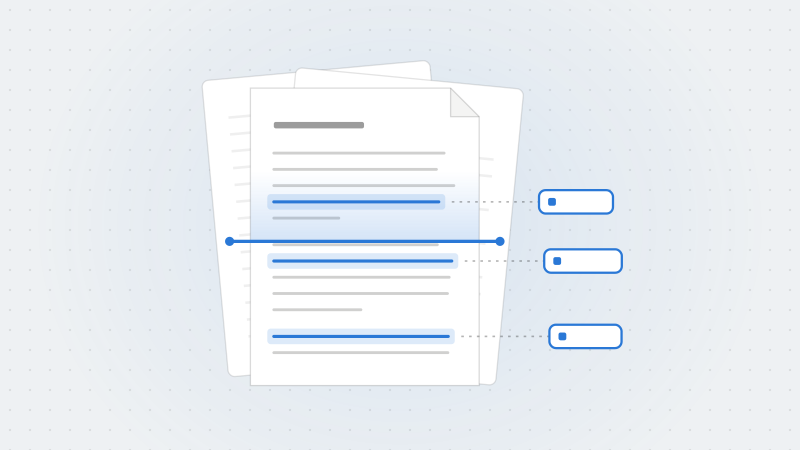
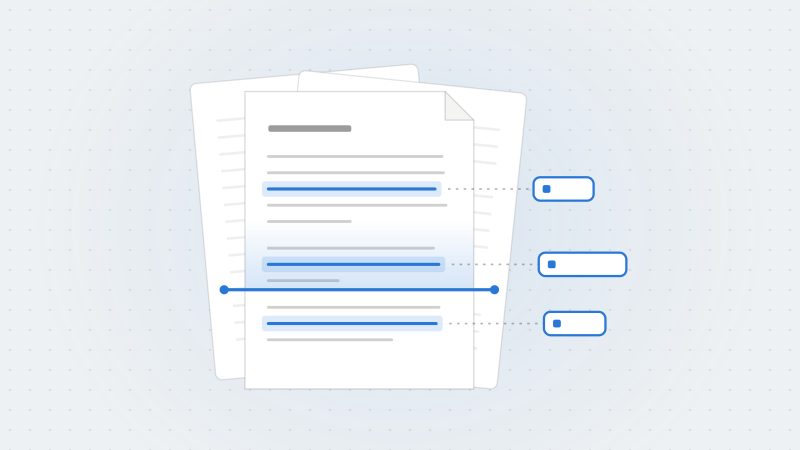
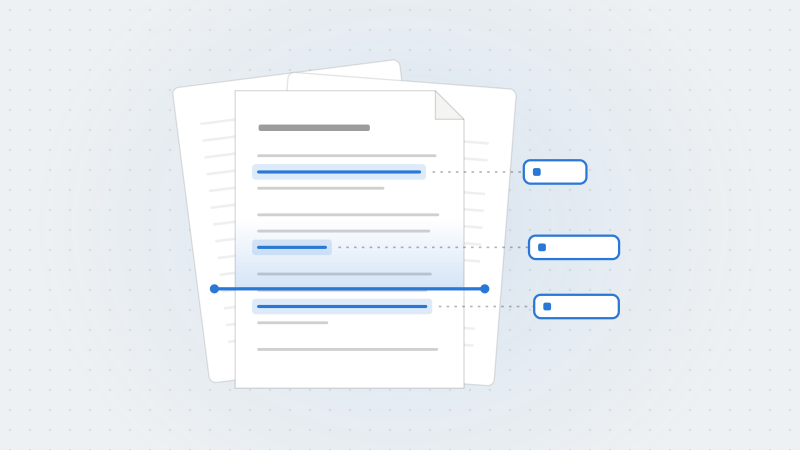
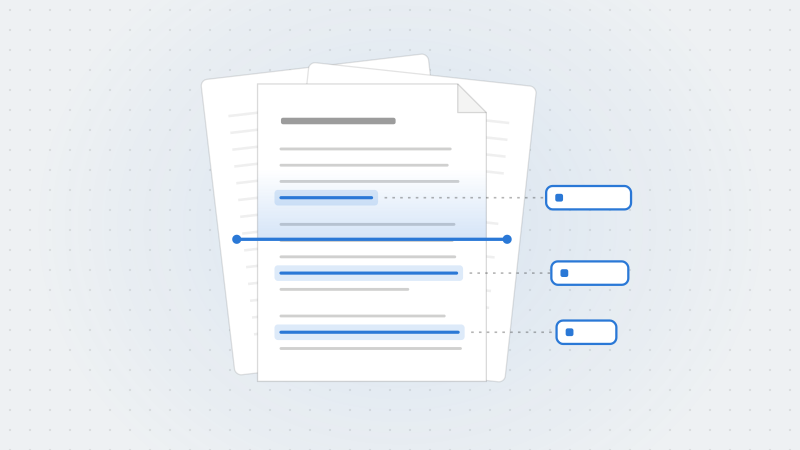
Ziekenhuis aan de Stroom (ZAS), a hospital group in Antwerp, uses a generative AI model to rewrite doctors’ consultation reports and discharge letters in plain language for patients1. It built the application with AZ Maria Middelares in Ghent, UZ Brussel and the consultancy element611, 5.
The first phase went live in April 2026 for patients with rheumatic and kidney conditions, about 40,000 letters a year1, 3. In tests before launch, patients rated the plain-language summary 8.4 out of ten for readability and understandability, against four for the original letter1.
Before the deployment
Doctors at ZAS wrote consultation reports and discharge letters for the referring general practitioner or other specialists1. Patients could also read these letters in health portals such as mijngezondheid.belgie.be1.
- Jargon: The letters were full of medical jargon and abbreviations, and their structure followed what doctors need to know1.
- Understanding: Eight in ten patients found the original letters barely understandable1.
- Workload: Doctors had too much work to write a separate plain-language version for each patient1.
- Patients’ rights: Belgium’s Patients’ Rights Act gives every patient the right to all information about their health, given in a way that suits them1.
- Public chatbots: Many patients tried to decode their letters with the internet or AI tools such as ChatGPT, which put their medical data with outside services4, 3.
What was built
The application rewrites each consultation report or discharge letter at language level B1, which about 80% of the population understands1, 2. Patients get three documents beside the original letter, in Dutch, French or English as they prefer1:
- Line-by-line translation: Rewrites every line of the letter so that no detail is lost, and explains the medical terms1.
- Summary: Gives the main points in simple language. Patients preferred this version in tests1.
- Annex: Explains the prescribed medication and holds a glossary of difficult words1.
The doctor’s letter stays the reference, and the AI versions supplement it1:
- Generative AI model: Writes the three documents from the original letter. It doesn’t translate technical reports, such as lab and ECG results, or medication schedules2.
- Portals: The government health portals and mijn.zas.be show the versions to the patient and, if the patient wishes, to family or carers1.
- Doctors: Write the original letter as before. They don’t review the simplified versions, which state that the original letter holds the correct information1.
- Patients: Reread the versions at their own pace. The versions don’t replace a conversation with the doctor1.
“This way, patients can understand much better what is going on”
Rollout
A multidisciplinary team of patient representatives, language experts, physicians and technology experts set the requirements2. ZAS worked with ReumaNet, the Flemish Patients’ Platform and the language advisory organization Atlas, with financial support from the Federal Public Service Health1.
Patients and doctors tested the simplified letters in three phases1. ZAS launched the first phase for patients on April 16, 20261. The project ran in five tracks across the three hospitals2. ZAS plans to extend the application to other specialties, such as cardiology, and to more languages1.
Technology and architecture
Each letter travels encrypted through a private VPN tunnel to the model, so it never crosses the public internet3. The model’s output goes straight into the government portal for patients’ health information3.
| Layer | What they used | Role | Source |
|---|---|---|---|
| Language model | Generative AI model | Rewrites each letter at level B1 into three documents | 1, 2 |
| Cloud platform | Microsoft cloud platform | Hosts the model behind several firewalls, with Microsoft’s guarantee that the data isn’t used for training | 3 |
| Privacy controls | Private VPN tunnel | Carries each letter encrypted to the model | 3 |
| Prompt and context management | Prompts | Instruct the model, adjusted to remove the error types that testing found | 2 |
| Customer app or website | Government health portals | Show the versions to patients, such as on mijngezondheid.belgie.be | 1, 3 |
| Customer app or website | mijn.zas.be | ZAS’s patient portal, which also shows the versions | 1 |
The application uses three sets of letters, each for a different purpose:
- Consultation reports and discharge letters: The doctor’s original letter is the input for each case1.
- Anonymized letters: ZAS used anonymized letters to develop the application1.
- Rated letters: Patients and doctors rated rewritten letters in three test phases1.
Results
| Metric | Before | After | Scope and timeframe | Reported by |
|---|---|---|---|---|
| Patient score for the summary, out of ten | 4 | 8.4 | Original letter against the plain-language summary, tests before launch | ZAS, pilot1 |
| Patient score for the line-by-line version, out of ten | 4 | 8 | Original letter against the line-by-line version, tests before launch | ZAS, pilot1 |
| Translations rated correct | Not disclosed | 97% | Evaluation of the translated letters | ZAS, pilot2 |
| LLM errors removed by prompt adjustments | Not disclosed | 90% | Seven error types found in testing | ZAS, pilot2 |
- Patient scores: Patients rated readability and understandability. In three test phases, 41 patients gave feedback on 131 rewritten letters, and 18 doctors evaluated 157 simplified letters1. Patients whose first language isn’t Dutch also rated the Dutch versions1.
- Translations rated correct: The rest of the translations were rated suboptimal or wrong2.
- LLM errors: The error types included medication misinterpretation, confusion over who must act, chronological distortion and inference from silence2.
Lessons learned
Testing showed that some documents don’t suit plain-language translation2. Technical reports such as lab and ECG results were often a source of error, and medication schedules carry an inherent risk of misinterpretation, so ZAS excluded both under a safe-by-design principle2.
The model’s errors needed prompt work. After the prompt adjustments, 0.4% of translations still contained an error and 2.5% were suboptimal, mostly because abbreviations weren’t adapted for lay readers2. Doctors don’t review the versions, and the documents state that the original letter holds the correct information1.
Patients welcomed the plain language, but not all of them trusted it4. Patients interviewed by VRT NWS named privacy and reliability as concerns, and one said that he wouldn’t use AI as a first source because it isn’t fully reliable4. Patients also said that a tool from the hospital inspires more trust than outside tools4.
The privacy design drew outside praise. Steven Latré of the company Openchip, who wasn’t involved, judged the setup 99% sealed, because the data travels encrypted and the model runs on its own server3. The Flemish Patients’ Platform praised the involvement of patients and vulnerable groups from the start1.
The accounts differ on the first patient groups. ZAS says that it first developed the application for kidney and heart patients and tested it with rheumatism patients, and the launch covers rheumatic and kidney conditions1. VRT NWS describes that first phase as a test3.
The scores and error rates are ZAS’s own figures, from its announcement and a conference presentation by Mark Helbert1, 2.
Case study scorecard
- 8.4 Patient score for the readability and understandability of the plain-language summary, out of ten1
- 97% Translations rated correct2
- 90% Reduction in LLM errors through prompt adjustments2
- Rules and standards: GDPR, EU AI Act, Medical device rules
Sources by publication date
- Organization 2
- Vendors and partners 1
- Press, academic, and regulators 4
Build this solution yourself
Analysis
What you need
- A portal where patients already read their letters: ZAS placed the versions beside the originals in the government health portals and its own patient portal, so you need a channel that already shows patients their letters1.
- An evaluation panel of patients and doctors: The error types and the documents to exclude came out of ZAS’s evaluation of rewritten letters, so you need patients and doctors who rate output over several rounds before launch1, 2.
- A private route to the model: Medical letters are among the most sensitive personal data, so you need encrypted transport to a model whose provider doesn’t train on them3.
- A reading level set with language experts: ZAS chose level B1 on the advice of language specialists, which gives the prompts and the raters one standard1.
Reference architecture
Document review and drafting
A document review and drafting solution reads a case's documents against a written standard, precedents, or a list of questions and drafts a review, summary, clause, or report with its sources for an expert to finish. The solution pulls the case's documents, and a language model answers each question from the passages that bear on it, with its source. Fixed logic settles what must not vary, and an expert checks the draft against the sources and makes the decision.
- Source system
- Connector to the source system
- Review and drafting platform
- Text recognition
- Document preparation
- Passage index
- Access control
- Questions and templates (documented in this case study)
- Drafting model (documented in this case study)
- Private model endpoint
- Fixed logic
- Review workbench
- Reviewer feedback
- Tests on known cases
A check mark shows a building block that this case study's sources document.
Open the reference architectureOthers who built it
- University Hospital Tübingen: Its researchers used GPT-4 to turn discharge letters into patient-centered letters and found medical errors in 3.9% of sentences6.
- New York University: Researchers used generative AI to rewrite the discharge summaries of 50 patients from its General Internal Medicine unit into patient-friendly language7.
In the library
- How Nationwide uses generative AI to summarize claim notes Nationwide
- Merck drafts clinical study reports in days with gen AI Merck & Co.
- AI drafts clinical study reports in minutes at Novo Nordisk Novo Nordisk
- Corona, California speeds building plan review with AI City of Corona
- Denver pre-screens permit applications with CivCheck AI City and County of Denver
- Court strikes down DOGE's ChatGPT screening of NEH grants United States DOGE Service
Cite this case study
Enterprise AI Case Studies. "ZAS rewrites medical letters in plain language with AI." Updated Nov 20, 2026. https://case-studies.ai/case-studies/document-intelligence/DI-031-plain-language-medical-letters-zas/
@misc{csai-di-031,
  author = {{Enterprise AI Case Studies}},
  title = {{ZAS rewrites medical letters in plain language with AI}},
  year = {2026},
  note = {Updated 2026-11-20},
  url = {https://case-studies.ai/case-studies/document-intelligence/DI-031-plain-language-medical-letters-zas/}
}Sources
The following reporting, and every passage quoted from it, belongs to its publisher, not to this site. Sources and ownership
- Source 1:
ZAS maakt medische verslagen begrijpelijk met AI
Supporting excerpts (24)
Het gaat om verslagen na een raadpleging en ontslagbrieven na een opname. De toepassing zet de teksten om in Nederlands dat 80 procent van de bevolking begrijpt.
In een eerste fase is dit beschikbaar in drie talen voor patiënten met reumatische aandoeningen en nieraandoeningen.
Later breidt ZAS de toepassing uit naar andere medische specialismen – zoals cardiologie – en met extra talen.
De toepassing werd ontwikkeld met financiële steun van de FOD Volksgezondheid.
Medische brieven zijn documenten waarin artsen relevante gezondheidsinformatie van een patiënt delen met de verwijzende huisarts of andere specialisten. Deze teksten zijn rijk aan medisch jargon en afkortingen en zijn opgebouwd volgens de informatiebehoeften van artsen.
Door de hoge werkdruk is het echter niet haalbaar dat een arts voor elke patiënt manueel een afzonderlijke, begrijpelijke versie van het verslag opstelt.
De wet op de patiëntenrechten bepaalt dat elke patiënt recht heeft op alle informatie over zijn of haar gezondheidstoestand
Zorgverleners moeten deze informatie op een kwaliteitsvolle wijze en op maat van de patiënt verstrekken. Vandaag zijn deze medische verslagen beschikbaar voor patiënten via gezondheids- en patiëntenportalen als www.mijngezondheid.belgie.be .
ontwikkelde Ziekenhuis aan de Stroom samen met AZ Maria Middelares (Gent) en UZ Brussel een AI-toepassing die medische brieven automatisch omzet in mensentaal. Patiënten en hun familie of mantelzorgers kunnen deze patiëntvriendelijke versies raadplegen via de gezondheidsportalen van de overheid of het patiëntenportaal van ZAS (mijn.zas.be).
Dr. Mark Helbert, Chief Medical Information Officer van ZAS
Sari Dekelver, beleidsmedewerker van Vlaams Patiëntenplatform
Dat patiënten en kwetsbare groepen van bij het begin betrokken werden, is een mooi voorbeeld van hoe het hoort.
Naast de originele medische brief die bestemd is voor een andere arts, krijgen patiënten drie aanvullende documenten.
Eerst is er een vertaling lijn per lijn van de originele doktersbrief. Zo gaat er geen informatie verloren en wordt elk detail vermeld. Medische termen worden hierin toegelicht.
Daarnaast is er een samenvatting van de originele brief in eenvoudige taal, waarin de patiënt de grote lijnen terugvindt. Uit tests blijkt dat patiënten deze versie verkiezen.
Tot slot is er een bijlage met uitleg over voorgeschreven medicatie en een verklarende woordenlijst voor moeilijke woorden. De originele medische brief bevat met zekerheid de juiste informatie. Dit staat ook zo in de documenten die de patiënten krijgen.
De vereenvoudigde versies worden niet nagekeken door artsen en dienen als aanvulling op het originele verslag. Ze vervangen de communicatie met de arts dus niet. Ze kunnen ook dienen als naslagwerk. Zo kunnen patiënten de informatie op hun eigen tempo herlezen of er later naar teruggrijpen.
Voor de ontwikkeling van de toepassing gebruikte ZAS geanonimiseerde brieven. Na advies van taalspecialisten is gekozen voor taalniveau B1
Ter vergelijking: van de originele doktersbrieven vindt tachtig procent van de patiënten dat die nauwelijks te begrijpen zijn.
Waar de originele doktersbrief gemiddeld vier op tien kreeg, steeg dat naar gemiddeld acht op tien voor de vertaling lijn per lijn en naar 8,4 voor de eenvoudige samenvatting.
De toepassing om patiëntvriendelijke brieven op te stellen, werd in eerste instantie ontwikkeld voor patiënten met nier- of hartproblemen, en afgetoetst bij patiënten met reuma.
Patiënten en artsen of zorgverleners hebben de vereenvoudigde brieven in drie fases getest. 41 patiënten gaven feedback op 131 herwerkte brieven, 18 artsen evalueerden 157 vereenvoudigde brieven. Ook patiënten die het Nederlands niet als moedertaal hebben evalueerden de Nederlandse versies.
Voor de ontwikkeling werkte ZAS samen met ReumaNet (Vlaams samenwerkingsplatform voor mensen met een reumatische aandoening), Vlaams Patiëntenplatform (koepelorganisatie voor 125 patiëntenverenigingen) en Atlas (organisatie die adviseert bij taal).
Momenteel biedt ZAS deze patiëntvriendelijke versies aan in het Nederlands, Frans en Engels, volgens de voorkeur van de patiënt.
- Source 2:
Patient Friendly Letter: Clear communication and inclusion through the power of AI
Supporting excerpts (21)
Mark Helbert ZAS, Antwerp, Belgium
Requirements defined by multidisciplary team ▪ Patient representatives ▪ Language experts ▪ Physicians ▪ Technology experts
Gen. AI solution that converts medical documents (consultation/discharge letters) into patient-friendly language, i.e. CERF-B1 language level (80% inclusion)
2 translation variants (Line-by-Line, Summary), supplemented with list of complex medical terms and Medications + explanations
Three languages (Dutch, French, English)
according to patient preference
Solution Compliant with Legislation (GDPR, MDR and AI act) & evaluated against an AI-Ethical Framework
Compliance with Be. Patient Rights Act
5 Tracks & 3 BE Hospitals
e.g. Technical Reports (lab, ECG)
often source of error
e.g. Medication Schedules
inherent risk of misinterpretation both were excluded from the translation (Safe-by-design principle)
Not everything is suitable for patiënt friendly translation
Seven types of LLM errors were identified and had to be eliminated through prompt adjustments (90% reduction)
Medication Misinterpretation
Action-Holder Confusion
Chronological Distortion
Inference from Silence
Insufficient Lay Adaptation (Mainly abbreviations)
Translation Errors 2.5% suboptimal 0.4% error (97% correct)
- Source 3:
Ziekenhuizen laten patiënten hun medisch verslag lezen met behulp van AI
Supporting excerpts (11)
Het gaat om de Antwerpse ziekenhuisgroep ZAS, AZ Maria Middelares in Gent en UZ Brussel.
De toepassing plaatst ook gezondheidsinformatie van patiënten meteen in het overheidsportaal.
Mijngezondheid.be is daar een voorbeeld van.
Voorlopig kunnen ook enkel ZAS-patiënten met reumatische aandoeningen en nieraandoeningen de toepassing testen.
De nieuwe tool is goed voor 40.000 medische verslagen per jaar.
De nieuwe tool moet verhinderen dat patiënten zelf hun medische verslagen downloaden en in een AI-model zoals Chat GPT gooien, zegt Helbert.
Dat zijn de meest gevoelige persoonsgegevens die je kan delen, en niemand weet wat er dan mee gebeurt.
De informatie wordt versleuteld doorgestuurd via een private VPN-tunnel naar het AI-model, zodat er geen toegang tot het publieke internet aan te pas komt. Het AI-model zelf draait op een cloudplatform van Microsoft, en is met verschillende firewalls afgeschermd. Microsoft garandeert ook dat de informatie niet gebruikt wordt om AI-modellen mee te trainen.
legt AI-expert Steven Latré uit (van het bedrijf Openchip, niet betrokken bij dit AI-project)
voor 99 procent dichtgetimmerd, heel goed dus
de data wordt versleuteld doorgestuurd en het AI-model staat op een eigen server.
- Source 4:
Supporting excerpts (6)
Vandaag proberen veel patiënten hun medische gegevens zelf te ontcijferen, vaak met hulp van het internet of AI.
Ook gebruik ik wel eens ChatGPT.
Toch zijn de patiënten niet helemaal overtuigd. Vooral privacy en betrouwbaarheid blijven aandachtspunten.
AI is nog niet 100 procent betrouwbaar, dus ik zou het zeker niet als 1e bron gebruiken.
Tegelijk vinden patiënten wel dat een toepassing van het ziekenhuis zelf meer vertrouwen opwekt dan externe tools.
De AI-toepassing verwerkt momenteel zo'n 40.000 medische brieven per jaar en is beschikbaar in het Nederlands, Frans en Engels.
- Source 5:
ZAS turns complex medical reports into clear language with AI
Supporting excerpts (2)
a global first for three Belgian hospitals, which, together with element61, have developed an artificial intelligence application designed to help patients read their medical reports.
"This way, patients can understand much better what is going on," says Dr Mark Helbert (ZAS), who led the project from the Ziekenhuis aan de Stroom (ZAS).
- Source 6:
Supporting excerpts (3)
Department of Medical Strategy, Process and Quality Management, University Hospital Tübingen, Tübingen, Germany
GPT-4 addressed the majority (56/72, 78%) of the learning objectives from the discharge letters.
Medical errors were found in a small proportion of sentences (31/787, 3.9%).
- Source 7:
How AI can make a more patient-friendly hospital discharge summary for patients
Supporting excerpts (2)
In a recent study published in JAMA Network Open, researchers investigated whether large language models (LLMs) might improve the understandability and readability of hospital discharge summaries.
The researchers examined discharge records for 50 individuals receiving discharge from New York University’s General Internal Medicine unit between June 1 and 30, 2023, omitting those discharged as dead.












Comments
Start the conversation.
Invited members of the library comment here. Sign in to join the conversation.