

How Suffolk cut care assessment write-ups with FormFlow AI
Suffolk County Council records adult social care assessments with System C's Liquidlogic FormFlow AI, which turns each conversation into a draft form in the case record for the practitioner to check.
Suffolk County CouncilUnited KingdomLocal and regional governmentIn production since Sep 2025
- Scale
- Every adult social care practitioner, with training from August 2026
- Scenario
- Social work case notes and report drafting
- Business function
- Clinical care
- Kind of solution
- Conversation summarization
- Who built it
- Vendor product (System C)
- Where it runs
- Vendor-hosted service
- Human oversight
- People approve each output
- Organization
- Public sector
- AI types
- Generative AI, Speech AI
tl;drIn the pilot, assessment write-ups fell from around three hours to roughly 45 minutes.See the results
Suffolk County Council records adult social care assessments with Liquidlogic FormFlow AI Assistant from System C, which turns each conversation into a draft assessment form in the council’s case management system2, 5. The practitioner checks and completes every form2.
A proof-of-value pilot ran from September 2025 to January 2026 with social workers, independence and wellbeing practitioners, and occupational therapists2, 3. A study during the pilot found a 67.9% reduction in form completion time across all completed form types3.
In August 2026, the council said that it would train every adult social care practitioner on the tool, after a pilot in which write-ups fell from around three hours to roughly 45 minutes1.
Before the deployment
Suffolk’s practitioners assess adults in their homes and in hospital, often in sensitive cases that involve domestic abuse, dementia or mental capacity2, 3. Before the pilot, they took notes by hand during the visit and wrote up the assessment afterwards3.
- Divided attention: Conversations paused while notes were written, and some people in safeguarding and domestic abuse assessments were sensitive to the practitioner writing things down3.
- Awkward settings: In cramped or cluttered homes, practitioners held paperwork and equipment while they moved around3.
- High caseloads: Some staff held 26 similar cases at one time, and cases could blend together without detailed notes3.
- Write-ups from memory: Some social workers sat in their cars after visits to record verbal summaries, and complex write-ups often took several hours3.
The council ran the pilot to test whether AI could reduce the administrative burden and improve the quality and timeliness of assessments3.
What was built
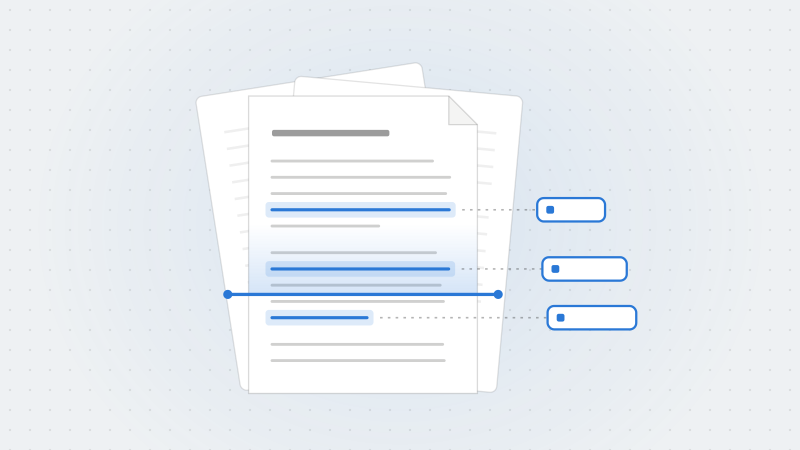
FormFlow records the assessment on a phone app and pre-populates the matching Liquidlogic form, including its scaled questions and narrative sections2. The app, the AI, the case record and the practitioner divide the work:
- FormFlow AI: Produces a transcript organized into assessment sections and drafts concise summaries of practitioner concerns, family input and proposed actions2, 3.
- Case management system: Receives the uploaded recording in the background and alerts the practitioner when the form is ready for review2.
- Practitioners: Ask for consent, talk through what they observe during the visit, and refine or amend each AI-generated response. They stay responsible for the analysis and the decision2, 3.
- Council policy: Requires a human action before an AI output takes effect, and makes every user accountable for validating outputs5. The council doesn’t use AI to support or inform decisions6.
Use of the tool isn’t compulsory for practitioners1.
“We’re still the ones in charge. FormFlow makes helpful suggestions, but you decide what stays in your assessment”
Alternatives considered
In February 2026, the council was piloting Magic Notes by Beam and FormFlow by System C before making a decision4. By April 2026, FormFlow was its AI tool for recording and summarizing adult social care interactions, and Magic Notes was in a pilot for children’s services5.
Rollout
In August 2026, the council’s adult social care cabinet member wrote that the service already uses AI-powered voice-to-text transcription so that practitioners spend more time in conversation with adults and carers7. Full practitioner training completes over the following months1. Jamie Stewart, who leads practice and culture transformation at the council, has presented Suffolk’s Liquidlogic AI work with System C1, 9.
Technology and architecture
Liquidlogic FormFlow AI Assistant is System C’s AI module for its Liquidlogic social care platform. In Suffolk, it’s embedded within the Liquidlogic Adults’ and Children’s Case Management solution and writes structured draft content into the correct form fields2, 9. System C built it in partnership with Microsoft and hosts it on Azure10. Suffolk is one of 15 local authority social care teams in England that use it8.
| Layer | What they used | Role | Source |
|---|---|---|---|
| Solution platform | Liquidlogic FormFlow AI Assistant | Transcribes the assessment recording and pre-populates the matching form | 2, 3, 9 |
| Mobile or field app | FormFlow app | Records the assessment and post-visit dictation on the practitioner’s phone | 2, 10 |
| Business or operational system | Liquidlogic Case Management | Receives the recordings and holds the assessment forms that FormFlow fills | 2 |
| Review workbench | Form review with recording playback | Lets the practitioner amend each drafted response and replay the recording behind it | 2 |
| Messaging and notifications | Form-ready alerts | Tell the practitioner when a pre-populated form is ready for review | 2 |
| Cloud platform | Microsoft Azure | Hosts FormFlow AI Assistant | 10 |
Data inputs
- Assessment recording: The conversation in the person’s home, recorded with consent, with the practitioner describing what they observe2, 3.
- Post-visit dictation: The practitioner’s reflections after the visit, dictated by voice, also while on the move2.
- Hospital conversations: Talks with ward staff, families and patients that hospital-based practitioners record for Mental Capacity Assessments and Care Act assessments2.
- Assessment form: The Liquidlogic form for the case, whose scaled questions and narrative sections FormFlow fills2.
How one assessment flows through the system
- The practitioner asks the person, carers and family for consent, then starts an audio recording on the FormFlow app at the beginning of the visit2, 3.
- The practitioner talks naturally while moving around the home and explains what they observe3.
- The app uploads the recording into Liquidlogic Case Management in the background, while the practitioner continues with other tasks2.
- FormFlow produces a transcript organized into assessment sections and pre-populates the form2, 3.
- An alert tells the practitioner that the form is ready for review2.
- The practitioner replays the relevant sections of the recording within the form and refines or amends the drafted responses2.
- The practitioner applies their own judgment before recording a decision1.
Results
The figures come from the pilot, which the council compared with a small control group, and from the benefits calculator for the trial1, 2.
| Metric | Before | After | Scope and timeframe | Reported by |
|---|---|---|---|---|
| Assessment write-up time | around three hours | roughly 45 minutes | Adult social care pilot, before August 2026 | Suffolk County Council, via Resultsense, pilot1 |
| Reduction in form completion time | Not disclosed | 67.9% | All completed form types, September 2025 to January 2026 | System C, pilot3 |
| Non-cash releasing time savings, equal to 30 whole-time equivalents | Not disclosed | £1,365,213.65 | FormFlow trial in adult social care, September 2025 to January 2026 | Suffolk County Council, via System C, estimate2 |
| Assessments completed within seven days | Not disclosed | 81.5% | All assessments in the trial, September 2025 to January 2026 | System C, pilot2 |
- Write-up time: The time to write up an assessment fell from around three hours to roughly 45 minutes in the pilot, as the council described it in August 20261.
- Form completion time: A study during the pilot measured a 67.9% reduction in the time to complete forms, across all completed form types3.
- Time savings value: The benefits calculator valued the trial’s non-cash releasing time savings at £1,365,213.65, equal to 30 whole-time equivalents. It’s an estimate of expected benefits2.
- Assessment timeliness: Of all assessments in the trial, 81.5% were completed within seven days2.
- Staff-reported times: Staff reported shorter completion times for 50% to 75% of assessments on average, from 1 to 2 hours to under 30 to 60 minutes2.
Individual practitioners also described their own gains. A hospital-based practitioner said FormFlow cut her recording time by half, so she can do at least 40% more work2. Practitioners with dyslexia found the transcripts particularly helpful3.
Lessons learned
The early worries about the tool eased once practitioners used it. Senior social workers had feared that AI would remove the human element of care and that recording would harm trust with people and families2.
Trust took time to build. As reliability improved, practitioners kept fewer backup notes and were more willing to use the tool in everyday practice3.
The transcription made errors, so the trial embedded feedback loops to identify and correct them2. System C’s own lesson is that practitioners must keep their core assessment skills for times when the technology is unavailable3.
The figures are the council’s own and System C’s, from the pilot and the vendor’s customer stories1, 2, 3. Jamie Stewart called the numbers provisional, with a small control group, early days, and no measured effect yet on waiting lists or caseload size1.
The figures also rest on different baselines. The council’s account starts from around three hours per write-up1. The staff-reported figures start from 1 to 2 hours, and the 67.9% figure measures form completion time2, 3.
The British Association of Social Workers (BASW) disputes where the savings go. Andrew Reece, its strategic lead, said the money will be found by shedding social work jobs1. The council states that AI isn’t intended to replace existing staff5.
Jo Finch, social work professor at the University of Suffolk, welcomed the lighter administrative load but said AI must not draft the assessment reports or perform the analysis that shapes a care plan1. FormFlow already drafts summaries into the narrative sections of the form, which the practitioner then edits2.
Case study scorecard
- roughly 45 minutes Assessment write-up time1
- 67.9% Reduction in form completion time3
- £1,365,213.65 Non-cash releasing time savings, equal to 30 whole-time equivalents2
- 81.5% Assessments completed within seven days2
Sources by publication date
- Organization 4
- Vendors and partners 5
- Press, academic, and regulators 1
Build this solution yourself
Analysis
What you need
- A case management system that the AI writes into: FormFlow fills the Liquidlogic form directly, so its value here depended on Suffolk already running Liquidlogic Case Management2. Check that your recording tool can write into your own case record.
- Consent at the start of every visit: Each recording depends on the person, carers and family agreeing to it, so your practitioners need a way to ask and record that consent2.
- Time and training for review: Suffolk requires a human action before any output takes effect and is training every practitioner5, 1. Plan for practitioners to check each drafted form, not only to record visits.
Reference architecture
Conversation summarization
A conversation summarization solution turns the audio of a call or a consultation into the summary, note, or record entry that a staff member would otherwise write by hand. Speech recognition turns the audio of each conversation into a transcript, and a language model writes a draft summary from it. The staff member who held the conversation checks and corrects the draft before it enters the record system, or the platform writes routine after-call summaries straight into it.
- Conversation capture
- Summarization platform (documented in this case study)
- Speech recognition
- Privacy controls
- Summarization model
- Record system (documented in this case study)
A check mark shows a building block that this case study's sources document.
Open the reference architectureOthers who built it
- St Helens Borough Council: St Helens rolls out Magic Notes to 450 social care staff. Pilot staff saved about 3.7 hours a week, and Magic Notes went out to 450 frontline staff.
- Municipality of Staphorst: Staphorst subtitles council meetings with Amberscript AI. A deaf resident of Staphorst can now follow the council meetings online, with subtitles.
- Barts Health NHS Trust: Barts Health rolls out Oracle's AI scribe after NHS pilot. Over half of the pilot clinicians saved at least five minutes per appointment with the AI scribe.
- Municipality of Noardeast-Fryslân: Frisian councils subtitle meetings with bilingual speech AI. The new recognizer cut word errors on council test recordings from 31.67% to 27.38%.
- Kent County Council: Kent County Council takes Magic Notes to 1,100 care staff. After a pilot that saved staff seven hours per week, Kent rolled Magic Notes out to 1,100 staff.
- UCHealth: UCHealth rolls out Abridge AI scribe systemwide after pilot. Pilot users saved 2.2 minutes a visit, and over one-third of UCHealth providers now use Abridge.
Cite this case study
Enterprise AI Case Studies. "How Suffolk cut care assessment write-ups with FormFlow AI." Updated Nov 26, 2026. https://case-studies.ai/case-studies/document-intelligence/DI-075-assessment-recording-formflow-suffolk/
@misc{csai-di-075,
  author = {{Enterprise AI Case Studies}},
  title = {{How Suffolk cut care assessment write-ups with FormFlow AI}},
  year = {2026},
  note = {Updated 2026-11-26},
  url = {https://case-studies.ai/case-studies/document-intelligence/DI-075-assessment-recording-formflow-suffolk/}
}Sources
The following reporting, and every passage quoted from it, belongs to its publisher, not to this site. Sources and ownership
- Source 1:
Suffolk cuts social care write-ups to 45 minutes with AI
Supporting excerpts (10)
Suffolk County Council will train every adult social care practitioner on an AI tool that records and transcribes assessments, following a pilot in which write-up time fell from around three hours to roughly 45 minutes.
The British Association of Social Workers has warned the resulting savings will come out of social work posts rather than out of waste.
Jamie Stewart, who leads practice and culture transformation at the council and trained as a social worker, said practitioners still read what the tool has gathered and apply their own judgement before recording a decision.
Participation is not compulsory: staff who would rather not use it are not required to.
Andrew Reece, strategic lead at BASW, put the counter-case bluntly: the money will be found by shedding social work jobs, which loads more onto a system already unable to complete its caseload.
The University of Suffolk's social work professor, Jo Finch, splits the difference.
Easing the administrative load is welcome, she said, given research showing practitioners spend steadily less time with the people they serve.
What must not follow is AI drafting the assessment reports themselves, or performing the analysis that shapes a care plan.
Suffolk's own numbers are also provisional: Stewart described a small control group and early days, and no measured effect yet on waiting lists or caseload size.
Full practitioner training completes over the coming months
- Source 2:
Suffolk County Council Transforms Social Care Practice with FormFlow
Supporting excerpts (29)
Suffolk's trial took place between September 2025 and January 2026.
The trial included social workers, independence and wellbeing practitioners, and occupational therapists.
including ensuring people, carers and their families were informed and consented to recording, practitioners retained full editorial control over all outputs, and feedback loops were embedded to identify and correct transcription errors.
At the start of the trial, senior social workers within Suffolk's team had some reservations.
However, these worries were quickly alleviated once the technology was put into practice.
The team were concerned that using AI could remove the human element of care and that recording conversations might negatively impact trust and the relationships with people, carers and their families.
Social care is all about relationships. I was worried it would take us too far in the wrong direction
said Chris Palmer, Senior Social Worker at Suffolk County Council.
added Laura Palmer, Occupational Therapist at Suffolk County Council.
FormFlow is embedded within the Liquidlogic Adults' and Children's Case Management solution and enables practitioners to capture audio recordings during assessments through an intuitive app.
The solution uploads recordings securely and pre-populates the appropriate form, generating concise summaries that reflect practitioner concerns, family input, and proposed actions.
The AI also enables voice-to-text dictation, allowing practitioners to record reflections post-visit, even while on the move.
The solution was designed to support existing ways of working by reducing the administrative burden of assessments, while ensuring practitioners retained full control over professional analysis and decision-making
Following assessment meetings, conversation recordings were automatically uploaded into the Liquidlogic Case Management solution and used to complete the appropriate forms.
This included pre-populating responses for scaled questions and narrative sections.
practitioners retained full control over content, with the ability to refine or amend AI-generated responses.
They could replay relevant sections of recordings directly within the form, removing the need to scroll through handwritten notes or listen back to entire recordings.
We're still the ones in charge. FormFlow makes helpful suggestions, but you decide what stays in your assessment
I would say FormFlow has cut my recording time down by half. Meaning I'm able to do at least 40% more work
During the trial, the upload and transcription process happened in the background, allowing practitioners to continue with other tasks.
Alerts notified them once forms were ready for review
During the FormFlow trial, Suffolk were able to quantify expected non-cash releasing benefits, including time savings equating to £1,365,213.65, equivalent to 30 whole-time equivalents (WTE).
These figures are drawn from the benefits calculator findings and reflect the realised efficiencies across the trial.
Staff reported that 50%–75% of assessments on average saw reduced completion times, decreasing from 1–2 hours to under 30–60 minutes.
Other figures highlighted that 81.5% of all assessments were successfully completed within seven days.
Hospital-based practitioners completing Mental Capacity Assessments and Care Act assessments, and coordinating care with multidisciplinary teams, benefited from securely recording and transcribing conversations with ward staff, families and patients in real time
With dementia, people might have word-finding difficulties or repeat themselves. When you're rushing to write notes, you miss that.
Diane Steels, Hospital-based Social Care Practitioner, Suffolk County Council.
The amount of work I've been able to get through has increased, but my stress levels have decreased
- Source 3:
Supporting Social Workers with Liquidlogic FormFlow AI Assistant at Suffolk County Council
Supporting excerpts (20)
SCC undertook a proof-of-value (POV) pilot programme from 1st September 2025 to 30th January 2026 to evaluate the FormFlow AI Assistant.
The initiative aimed to explore how AI could support frontline practice, reduce administrative burdens and improve the quality and timeliness of assessments.
She recalled how conversations often paused while notes were written.
She also noted that in some safeguarding and domestic abuse assessments, individuals were particularly sensitive to the practitioner writing things down
Sometimes there is nowhere to sit down or there is nowhere to put your notes
In cramped or cluttered settings, practitioners had to hold paperwork and equipment while moving around
some staff could be holding 26 cases at one time that are all very similar and that is really challenging.
Without detailed notes captured in the moment, workers found that cases could blend together.
After visits, it was reported that some social workers had to sit in their cars and record verbal summaries to avoid forgetting key details.
In addition, they faced challenges whilst writing up complex assessments that often took several hours.
Instead of writing notes, practitioners can, with consent, start an audio recording at the beginning of a visit.
As they moved around the home, they could talk naturally and explain what they were observing.
This was particularly helpful in sensitive assessments involving domestic abuse, dementia or mental capacity issues.
After visits, FormFlow AI Assistant produces a transcript organised into assessment sections.
As reliability improved amongst practitioners there was a noticeable reduction in backup notes and more willingness to integrate the tool into everyday practice.
a study conducted during the pilot phase found a 67.9% reduction in the time across all completed form types
with the write-up stage allowing the practitioner to remain in control of the information and be responsible for the analysis and decision-making.
Practitioners who found written documentation challenging, including those with dyslexia, found the transcripts particularly helpful.
Even teams with low digital confidence can adapt successfully when they are given practical support.
However, practitioners must retain core assessment skills for times when technology is unavailable.
- Source 4:
Supporting excerpts (1)
Magic Notes by Beam and Formflow by SystemC before making a decision
- Source 5:
Supporting excerpts (8)
LiquidLogic Formflow – recording and summarising interactions with Adult social care
Beam Magic Notes – records and summarises conversations for uploading by practitioners into Children's applications.
Yes – enforced through policy and technical breaks in process requiring a human action
all users are accountable for AI outcomes and must validate outputs.
The council operates a robust Data Protection Impact Assessment (DPIA) process which means that operational risks around the use of AI tools are considered before a decision is taken about whether a particular tool is appropriate for use within SCC.
Any significant ethical risks identified through the DPIA process can be escalated to the council's Ethics Panel if required.
The council's Digital Data and Technology Governance Board and its Corporate Information Governance Board oversee compliance
AI is deemed an enabler to support staff in their roles, it is not intended to replace existing staff.
- Source 6:
26769 - Use of Artificial Intelligence
Supporting excerpts (1)
Whilst AI or algorithmic systems are not used to support or inform decision making within SCC, human oversight is required of every use of AI to ensure that any information produced by way of administrative support is accurate.
- Source 7:
OPINION: Technology and AI must be at the forefront of Government's Adult Social Care Reform
Supporting excerpts (2)
Within Adult Social Care, we are already using AI-powered voice-to-text transcription to reduce administrative burdens and allow practitioners to spend more time having meaningful conversations with adults and carers, rather than sitting behind a screen writing up notes.
Column by Councillor Philip Faircloth-Mutton, Suffolk County Council's Deputy Leader and cabinet member for Adult Social Care
- Source 8:
Supporting excerpts (3)
the rapid expansion of our AI-powered FormFlow Assistant AI across 15 local authority social care teams in England.
Deployed across councils including Sandwell, Suffolk, Leicestershire, Hertfordshire, Bolton, Trafford, Sefton, Wirral, Lewisham, Thurrock, Kirklees, North East Lincolnshire, Cheshire East, and Wigan
FormFlow AI Assistant uses ambient AI technology to capture assessment conversations in real time, resulting in high-quality draft documentation directly populated into the Liquidlogic case management solution.
- Source 9:
Supporting excerpts (4)
FormFlow turns conversations into structured draft content in the correct Liquidlogic fields for review.
Automatic form population – maps content to the correct Liquidlogic fields.
Embedded workflows – keeps review, validation and approval within normal practice.
Ben Ankers and Jamie Stewart share Suffolk County Council's Liquidlogic AI journey and what they have learned along the way.
- Source 10:
Introducing the Liquidlogic FormFlow AI Assistant
Supporting excerpts (2)
Built in partnership with Microsoft and securely hosted on Azure, Liquidlogic FormFlow AI Assistant is designed to be a quiet, behind-the-scenes assistant.
it records interactions via a mobile app, turning them into structured text



























Comments
Start the conversation.
Invited members of the library comment here. Sign in to join the conversation.