

Deutsche Telekom AI agents handle network events in minutes
Deutsche Telekom built RAN Guardian, a set of AI agents on Google's Gemini that spot crowd events in advance and retune the mobile cells serving them, as a first step toward a self-healing network.
Deutsche TelekomGermanyTelecommunicationsIn production since Nov 2025
- Scale
- German mobile network, 237,000 events identified for 2026
- Scenario
- Autonomous radio network optimization
- Business function
- IT operations
- Kind of solution
- Process optimization and control
- Who built it
- Built in-house (Google Cloud)
- Where it runs
- Public cloud
- Human oversight
- People review exceptions
- Organization
- Enterprise, 100,000 employees or more
- AI types
- Generative AI, Agentic AI, Machine learning
- Sites
- 611
tl;drManaging a major network event fell from hours to around a minute, a more than 95% improvement.See the results
Deutsche Telekom uses RAN Guardian, a set of AI agents built with Google’s Gemini models, to prepare its German mobile network for crowds1, 2. The agents find upcoming public events, check whether the cells that serve them can cope, and change the network’s settings before people arrive1, 2.
The agent went live in November 2025, and its rollout to the Czech Republic and Croatia was announced in February 20262. Deutsche Telekom calls RAN Guardian its first step toward autonomous, self-healing networks1.
By February 2026, the time needed to manage a major event had fallen from hours to around a minute, a more than 95% improvement2. In its first month, the agent triggered over 100 remediation actions at Christmas markets on its own2. In October 2026, Armin Sumesgutner, chief network officer across Europe, put the agents’ reach at 100,000 events a year, against about 1,000 that engineers could cover by hand3, 6.
Before the deployment
Deutsche Telekom plans its mobile network around customer experience, to give people the best experience at a given spot3. That plan is largely static, and it struggles when large numbers of people gather or an event upsets the usual traffic6. The old approach had the following limits:
- Static planning: Gatherings of people ruin a static plan. “The most important issue is we are always behind the wave,” Sumesgutner told investors in October 20263, 6.
- Manual analysis: Each event meant understanding the issue and all the network parameters behind it. At that depth, engineers could analyze about 1,000 events a year, a small part of what actually happens3.
- Number of events: By February 2026, RAN Guardian had identified 237,000 events for the year2.
- Temporary base stations: The largest events get extra hardware. In 2026, the company set up more than 200 temporary mobile base stations at about 100 large events, more than 50 of them music festivals, and planning with the organizers often starts months ahead8.
- Rule-based automation: In February 2025, the company said that traditional network management was no longer enough for 5G and beyond, and that rule-based automation falls short of real-time challenges4, 10.
The agent was designed for high-load situations in the radio access network (RAN), the antennas and base stations that phones connect to10. It also serves a longer aim, a Level 4 autonomous network by 2030, in which humans intervene by exception3.
What was built
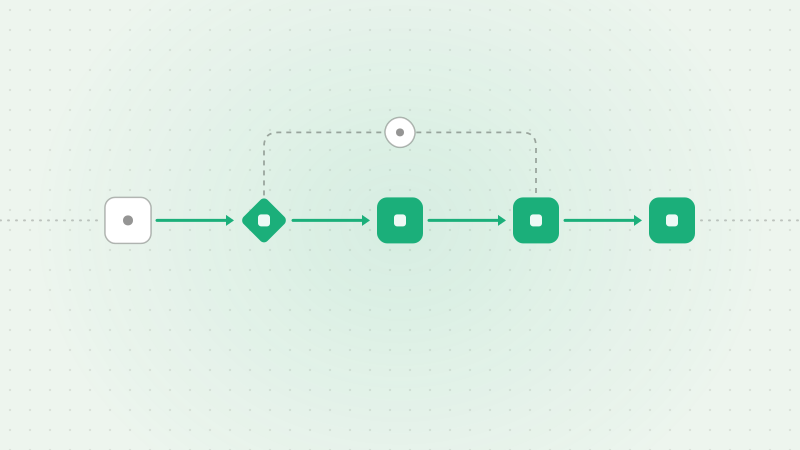
RAN Guardian is a multi-agent system that prepares the network before a crowd arrives, instead of reacting once cells are full1, 3. Three specialized agents split the work, so that identifying, classifying, and remediating all happen inside the agents3. The work is divided as follows:
- Scanning agent: Reads public media, social media, online directories, and other public sources for upcoming sports events, festivals, and community gatherings across Germany1, 3. It lists each event, estimates its scale, fixes its location, classifies it, and verifies the information automatically1.
- Monitoring agent: Puts a T-shirt size on each event and breaks it down to the physical sites and antennas that serve it3. It evaluates their capacity, watches key network parameters in real time, checks each cell’s status, and estimates whether the risk can be mitigated, and whether that can be done autonomously1, 3. Some cells are fine and need nothing, and the cells at risk go to the remediation agent3.
- Remediation agent: Acts fully autonomously on the cells at risk, ahead of the event3. It reallocates network resources, adjusts configurations, and documents every action and its outcome to prepare for future events1.
- Field staff and extra sites: A technician brings each amber cell back to a green state before the automation starts. Red cells need extra mobile sites or added capacity, which the system can’t supply3.
- Network staff: Follow every site that the agents touched and each step that the remediation agent took. Most of the time, congestion is mitigated automatically, and some cases still need human interaction3, 6.
For one event shown at the AI Investor Day, the remediation agent executed 24 actions, changing carrier aggregation, the uplink, and antenna tilt3. It can also bring neighboring sites in to serve the congested ones3.
The changes favor a usable connection for everyone over top speeds for a few. James Ratzer of New Street Research asked why the agent so often switched off carrier aggregation, which bonds several frequency bands into one faster link3. Sumesgutner said that the aim is a fair share for the people at the event, with at least a minimum acceptable capacity for every user in the area3.
Arash Ashouriha, the group technology officer, compared a cell site’s signal to a Christmas tree. Turning carrier aggregation down leaves more bandwidth at its broad base, where everyone can reach it3.
“With an intelligent interaction between our network experts and AI, we are solving specific challenges for the benefit of our customers - for the best network.”
Rollout
RAN Guardian moved from an agent tested at Deutsche Telekom and announced with Google Cloud to live operations in Germany within 2025, and its move to other national companies began in 20261, 2, 4. In October 2026, Ashouriha said that the Czech Republic would go live that year and several more markets the next. The group’s principle is to build once and deploy many times, with the same agent structure, data structure, and infrastructure in every market3.
Technology and architecture
Deutsche Telekom developed RAN Guardian in-house on Google Cloud. It takes what the industry offers as its base and puts its own insight and intelligence on top3. The version announced in February 2025 was built with Gemini 2.0 in Vertex AI, Google Cloud’s AI platform4. The live agent was created with Gemini 2.5 and also uses CloudRun, BigQuery and Firestore1, 5.
The following table lists the components of the solution.
| Layer | What they used | Role | Source |
|---|---|---|---|
| Language model | Gemini 2.5 | Google model the live agent was created with | 1, 5 |
| Task agent | Scanning agent | Reads public sources, then lists, sizes, locates, classifies and verifies events | 1, 3 |
| Task agent | Monitoring agent | Maps events to sites and antennas, checks capacity and cell status, sorts cells by risk | 1, 3 |
| Task agent | Remediation agent | Changes carrier aggregation, uplink, tilt and other settings at sites at risk | 1, 3 |
| Audit trail | Action and outcome record | Documents every action and its outcome | 1 |
| Operations console | Agent console | Shows events, sites, cell status and every action per site | 3 |
| Cloud platform | CloudRun, BigQuery and Firestore | Google Cloud services the live agent uses. With Gemini 2.5, they enable its monitoring, classification and corrective actions | 1, 5 |
Data inputs
The agents use the following data:
- Public event sources: Online directories, social media, and other public media, which the scanning agent reads for upcoming events1, 3.
- Network monitoring and performance data: Key network parameters, watched in real time to detect high utilization and anomalies1.
- Inventory data: Ties each event to the physical sites and antennas that serve it1, 3.
- Coverage data: Combined with the other network data to identify and prioritize degradations1, 4.
- Action and outcome record: Kept to improve readiness for later events, and shown site by site in the console1, 3.
Integrations
The agents write to the radio access network itself. The remediation agent changes carrier aggregation, uplink settings, and tilt at the sites that serve an event3, 6. The changes most likely pass through the operator’s existing network management systems rather than going straight to the base stations.
How one event flows through the system
The February 2026 Carnival season shows the order of work. RAN Guardian identified around 130 Carnival events and parades, each expected to draw over 10,000 participants, and pre-checked all 611 mobile sites that served them2. Most of those sites were also monitored live while the events ran2.
Results
The headline figures date from February 2026, three months after launch2. The following table lists the reported results.
| Metric | Before | After | Scope and timeframe | Reported by |
|---|---|---|---|---|
| Time to manage a major event | Hours | Around a minute, more than 95% less | Live operations in Germany, reported February 2026 | Deutsche Telekom, measured2 |
| Time for the processes the agent runs | Roughly an hour | Within just a few minutes | Germany, reported at launch in November 2025 | Deutsche Telekom, measured1 |
| Remediation actions triggered autonomously | Not disclosed | Over 100 | Christmas market events, first month after launch | Deutsche Telekom, measured2 |
| Events analyzed and remediated a year | About 1,000, by hand | 100,000 | Germany, stated October 2026 | Deutsche Telekom, estimated3 |
| Pre-checked Carnival sites that still hit peak loads | Not disclosed | 5 of 611 | About 130 Carnival events, February 2026 | Deutsche Telekom, measured2 |
| Bad customer experience avoided | Not disclosed | 24 million minutes | Stated October 2026, no period given | Deutsche Telekom, estimated3 |
Some of the metrics need explaining:
- Time to manage a major event: Measured in live operations, a more than 95% improvement2, 7. The launch figure of November 2025 measured the processes that the agent runs instead1.
- Remediation actions: Counts the actions that the agent triggered on its own at Christmas markets in its first month2.
- Events a year: Counts the events that the agents analyze, break down, and remediate, a hundredfold the events that people could cover3.
- Carnival sites at peak load: Counts the pre-checked sites that still hit peak loads, which RAN Guardian adjusted during the event2.
- Bad customer experience avoided: Sumesgutner presented the 24 million minutes as the most important impact3. RCR Wireless’s report of the same presentation describes them as what the system is aimed at avoiding6.
Lessons learned
RAN Guardian has run in production since late 2025, through Christmas markets, Carnival, and a summer of festivals, and its move to the Czech Republic and Croatia has been announced2, 8. The Carnival account is concrete: it names the season, the number of events and sites, and the five sites that still peaked2. The design answers the problem it was built for. Static planning can’t see a crowd coming, and the scanning and monitoring agents give the network that notice3.
Software fixes only part of the crowd problem. Red cells need extra mobile sites, amber cells need a technician before automation starts, and some congestion still needs human interaction3, 6. The largest events still depend on temporary base stations planned months ahead, which the company describes as classic event planning combined with network automation8. Switching off carrier aggregation spreads capacity by giving up top speeds, which is a choice about whose experience matters3.
The accounts differ on approval. Deutsche Telekom describes the agent as initiating corrective actions autonomously, and Sumesgutner called the remediation agent fully autonomous1, 3. SDxCentral wrote at launch that the third agent executes approved recommendations5. The 2025 announcement said that it would recommend or autonomously implement actions4.
The launch date and the count of events also differ. The press releases say November 2025, but Ashouriha told investors that RAN Guardian had been live in Germany since January2, 3. The February 2026 release gave 237,000 events identified for 2026, while the scanning agent shown in October put the year’s events of more than 1,000 people at “213k”2, 3.
Ashouriha described safeguards for MINDR, the cross-domain successor announced in February 20262, 3. No agent has direct access to a network element, a Model Context Protocol (MCP) gateway limits what each agent can do, and an observer agent sits above each set3. A human will approve every critical change3, 6. Because agents sometimes behaved differently than expected in testing, the company is hardening the system and goes one use case at a time, starting with an MVP by the end of 20263, 6.
Every figure is Deutsche Telekom’s own, from its press releases and its investor presentation, and SDxCentral, RCR Wireless, and TelecomTV repeat the company’s numbers5, 6, 7. TelecomTV greeted MINDR with “If it works as promised”7.
Case study scorecard
- more than 95% less time to manage a major event2, 7
- over 100 remediation actions triggered autonomously2, 6
- 100,000 events a year analyzed and remediated3, 6
- 5 of 611 pre-checked Carnival sites that still hit peak loads2
Sources by publication date
- Organization 6
- Vendors and partners 1
- Press, academic, and regulators 3
Build this solution yourself
Analysis
What you need
To build this solution, you need the following in place:
- Network data down to each antenna: The monitoring agent ties each public event to the exact sites and antennas that serve it, by using real-time counters, an inventory of physical sites, and coverage data1, 3.
- Software control of radio settings: The remediation agent changes carrier aggregation, uplink, and tilt without a site visit, which probably meant opening the operator’s existing management systems to the agents3.
- A sorting rule that people trust: Green, amber, and red cells decide what the agents fix and what goes to people first, so you need technicians and mobile sites ready for the cells that software can’t fix3.
Reference architecture
Process optimization and control
A process optimization and control solution learns from a site's operating data how a physical process responds to its settings and works out better settings as conditions change. A process model predicts how the process responds to live readings, and an optimizer picks the settings that do best within limits that operators set. An operator accepts and enters each recommendation, or the control system carries the settings out while operators watch and can take the process back.
- Sensors and meters
- Site data link
- Operating history
- Optimization platform
- Forecasting model
- Process model
- Optimizer
- Control model
- Process simulation
- Operating limits
- Operations console (documented in this case study)
- Control system
- Process equipment
- Cloud platform (documented in this case study)
A check mark shows a building block that this case study's sources document.
Open the reference architectureOthers who built it
- T-Mobile US runs the same concept under another name, Dynamics CX3.
- Telus, the Canadian operator, deployed Samsung’s AI-powered RAN intelligent controller with applications such as a KPI Anomaly Detector to find network issues early5.
- Vodafone Idea had Nokia’s AI-powered MantaRay SON deployed in its 4G and soon-to-launch 5G networks in India by December 2024, to optimize more than 1 million cells9.
In the library
- Aramco's AI agents cut amine and steam use at a gas plant Aramco
- Cebi cuts scrap with an AI digital twin of its plants Cebi
- ArcelorMittal applies AI across its Differdange steel mill ArcelorMittal
- Meta uses machine learning to allocate ads serving compute Meta
- Schneider Electric cuts silver paste waste 73% with AI Schneider Electric
- 3D vision guides windshield packing at Carglass in Bilzen Carglass
Cite this case study
Enterprise AI Case Studies. "Deutsche Telekom AI agents handle network events in minutes." Updated Nov 19, 2026. https://case-studies.ai/case-studies/operational-technology/OT-002-telecom-network-operations/
@misc{csai-ot-002,
  author = {{Enterprise AI Case Studies}},
  title = {{Deutsche Telekom AI agents handle network events in minutes}},
  year = {2026},
  note = {Updated 2026-11-19},
  url = {https://case-studies.ai/case-studies/operational-technology/OT-002-telecom-network-operations/}
}Sources
The following reporting, and every passage quoted from it, belongs to its publisher, not to this site. Sources and ownership
- Source 1:
Deutsche Telekom: AI agents for mobile network
Supporting excerpts (19)
Deutsche Telekom’s AI agent, the “RAN Guardian Agent,” is now live.
First step towards autonomous, self-healing networks
The project was jointly presented by Deutsche Telekom and Google Cloud at the Mobile World Congress (MWC) earlier this year.
The RAN Guardian Agent is capable of analyzing network behavior, identifying performance anomalies, and autonomously initiating corrective actions.
It functions as a multi-agent system, composed of several specialized AI agents that work seamlessly together to ensure optimal network performance.
In the first step, an AI agent continuously scans and analyzes publicly available sources, such as online directories and social media, to identify upcoming public events across Germany.
It compiles a comprehensive list, estimates their scale, determines their locations, and classifies them accordingly. All gathered information is then automatically verified by the agent.
In the second step, another component of the RAN Guardian uses this data to assess how well the mobile network can handle the expected traffic during each event.
It evaluates the capacity of nearby antennas, monitors key network parameters in real time, and can immediately recognize high utilization levels, recommending suitable optimization measures if required.
In the third step, an additional AI agent executes these measures, for example by reallocating network resources or adjusting configurations.
It also documents all actions and outcomes to continuously improve performance and enhance readiness for future events.
Processes that previously took roughly an hour can now be completed within just a few minutes.
The RAN Guardian Agent was created with Google's Gemini 2.5. In addition, it also uses CloudRun, BigQuery, and Firestore.
This enables the following functions
The agent identifies and prioritizes degradations based on multiple data sources, including network monitoring data, inventory data, performance data, and coverage data.
With an intelligent interaction between our network experts and AI, we are solving specific challenges for the benefit of our customers - for the best network.
explains Abdu Mudesir, Board member for Product and Technology at Deutsche Telekom
The RAN Guardian continuously analyzes key network parameters in real time to predict and detect anomalies.
The agent recommends and autonomously implements corrective actions, including resource reallocating or adjusting the network configuration.
- Source 2:
Deutsche Telekom and Google Cloud Collaborate for Superior Network Experience with Agentic AI
Supporting excerpts (14)
Since its launch in November 2025, RAN Guardian Agent has autonomously triggered over 100 remediation actions at Christmas market events during its first month.
And in live operations it has reduced the time needed to manage major events from hours to around a minute, a more than 95% improvement.
For 2026, it has identified 237,000 events.
And during the February Carnival season in Germany for example, it identified around 130 Carnival events and parades, each expected to draw over 10,000 participants.
These were served by 611 different mobile sites, all pre-checked for issues by RAN Guardian, with most also monitored live.
Only 5 sites experienced peak loads, RAN Guardian optimized the network by adjusting those sites during the event.
Following its successful rollout in Germany, RAN Guardian is now scaling across Deutsche Telekom’s European national companies, starting with the Czech Republic and Croatia.
MINDR comes as an evolution of Deutsche Telekom’s RAN Guardian Agent, which is already live in production in Germany.
The RAN Guardian, built with Google’s Gemini models, monitors network behavior during high-impact events and traffic surges to maintain network quality.
MINDR applies the same agentic principles at the service level across the entire network – including the RAN, transport and core domains.
Developed with Google Cloud’s Autonomous Network Operations framework, and built with Google Gemini models on Vertex AI
The solution has been designed, tested and verified by Deutsche Telekom with first production releases planned for later this year.
With the RAN Guardian Agent, we demonstrated how Agentic AI can enhance network operations to consistently deliver the highest quality of experience for our customers
said Abdu Mudesir, Board Member, Product & Technology, Deutsche Telekom
- Source 3:
DT AI Investor Day - Transcript
Supporting excerpts (55)
Armin Sumesgutner (Chief Network Officer across Europe)
we typically plan for customer experience. So, we try to get the best customer experience at a certain spot for the people.
And the most important issue is we are always behind the wave.
events happening somewhere where people are gathering, where you have a lot of people coming together, because that is totally ruining a static planning.
So that's why we move from a static approach into a more dynamic approach.
you have to understand the issue, you have to understand all the parameters
we have about 1,000 events which we can do manually. So, 1,000 events where we can do all the analysis, running through all the details. The big issue, that's not reflecting reality. So reality is much bigger.
We build three agents, the one having a scanning function.
reading public media, social media, reading all the elements on the market and trying to bring that one into a structured format.
sports events, festivals, community gatherings, other things
So, what are the events plus 1,000 people which are happening in Germany in that case?
It's 213k events which are impacting in any way, so to say, our network, which is huge.
The second agent is the monitoring agent right now. He's taking over this information and trying to categorize the information. So putting T-shirt sizes on it, trying to understand what is the technical implication of that one
So, you see it broken down to physics. So, you see the physical antennas, the physical sites on this site here.
The next important information is the cell status.
you see what is the first estimation of the agent according to the size of the event, whether we can mitigate the risk and whether we can run, so to say, in an autonomous way.
So, you see a few of them are sufficient, so nothing to be done there, all fine. You also see a few at risk. These are the ones where we will then see the autonomous agent taking remediation actions to make sure we're going to solve it.
But we also have cells which need some action upfront before we start the automation. And you see the amber ones, you better send a technician there, make sure, so to say, this also goes into the green state before we start the remediation action.
And we also see some red ones where, as an estimation, we need some additional measures, which would mean we have to bring some mobile sites, we have to bring some more capacity to the site. This can't be dealt with out of the system itself.
the remediation agent. So, this agent is right now taking the information and trying fully autonomously to react on the demand in front of the event
This is how we work at the moment with RAN Guardian in our networks.
example, for a specific event, 24 actions were executed. There are totally different kinds of things, like we change the carrier aggregation, we change the uplink, we make sure, so to say, the tilt is the right one.
So, this is right now for this one event, all the touched sites and all the activities we executed.
you can also follow all the steps which were done in the remediation device or which are done in the remediation agent
Most of the time, we fortunately already see congestions could be mitigated automatically, so full autonomous activity. Some of them need still some human interaction to make sure we're going to solve it.
we deactivated carrier aggregation. So, we spread the capacity more to the people, less high-speed capacity or high-speed service delivered to the customers, less capacity, but spread to everyone
So, the whole identifying, classifying remediation is done within the pairs of agent.
I said before, we can cover about 1,000 events a year with human beings. Now we do a 100-fold. So, we do 100,000 events, really analyzing and really breaking it down and also remediate.
which is the avoidance of 24 million minutes of bad customer experience
Arash Ashouriha (Group Technology Officer)
RAN Guardian is live in our German market since January. It will go live this year in Czech Republic and multiple other markets will follow next year.
we want to achieve Level 4 autonomous networks
Most of today's automation is still domain-specific and addresses specific use cases.
So, point solutions will not get us to autonomous network.
for every critical change, there will be always a human in the loop, which has to approve the change before it gets executed
we will go with our first use case as an MVP live by the end of the year in Germany
Our target for 2030 is Level 4, which is just short of Level 5, which is a fully 100% autonomous network. So that means an autonomous network where humans intervene by exception
So, we take whatever the industry offers; that's our base kind of level, and we start from there.
We put on top, so to say this extra insight and this extra kind of intelligence, trying to get beyond what the industry is offering.
MINDR was developed in -house; also, RAN Guardian was developed in -house
James Ratzer from New Street
it seemed like the number one solution you always had was to deactivate carrier aggregation
what we are trying to do is to get a fair share to the people
it's by the way, also tilting; it's bringing some neighboring sites to the -- serve the ones, so to say, where it's more congested.
there's at least this minimum acceptable capacity for each and every user in the footprint
That's why you lower down your carrier aggregation to have much more bandwidth at the bottom of the Christmas tree
MVP, because we are hardening the system.
each set of agents have an agent's observer on top of it
never, never has an agent direct access to the network element. There is what's so-called MCP, which is a gateway.
Sometimes it's behaving differently than what we expected. And that's why hardening it, hardening it.
but giving a critical network, we just go with one use case because we work hard on that.
We build once, we deploy many times
we have the same capability built on the same agent structure, built on the same underlying infrastructure across the group.
Hannes Wittig (Head of Investor Relations)
we have the RAN Guardian and T-Mobile in the USA; they have a different name, it's Dynamics CX, but it's the same concept.
- Source 4:
Deutsche Telekom and Google Cloud Partner on Agentic AI for Autonomous Networks
Supporting excerpts (10)
RAN Guardian agent will be shown at Mobile World Congress (MWC)
Deutsche Telekom and Google Cloud today announced a new partnership to improve Radio Access Network (RAN) operations through the development of a network AI agent.
Built using Gemini 2.0 in Vertex AI from Google Cloud
traditional rule-based automation falls short in addressing real-time challenges
The RAN Guardian agent, which has been tested and verified at Deutsche Telekom, collaborates in a human-like manner, detecting network anomalies and executing self-healing actions to optimize RAN performance.
In addition to Gemini 2.0 in Vertex AI, the RAN Guardian also uses CloudRun, BigQuery, and Firestore
including network monitoring data, inventory data, performance data, and coverage data
The agent will also recommend or autonomously implement corrective actions, including resource reallocation and configuration adjustments.
Traditional network management approaches are no longer sufficient to meet the demands of 5G and beyond.
From March 3 to 6, 2025, you will find Deutsche Telekom in Hall 3 at Stand 3M31.
- Source 5:
Deutsche Telekom AI-powered RAN Guardian Agent now live
Supporting excerpts (6)
The RAN Guardian Agent is a multi-agent platform designed to analyze radio access network (RAN) performance, identify anomalies, and autonomously initiate fixes.
runs on the hyperscaler’s Gemini 2.5 platform, with access to Google’s CloudRun, BigQuery, and Firestore offerings.
The final step uses an additional AI agent to execute approved recommendations, including the ability to reallocate network resources or adjust configurations.
“Processes that previously took roughly an hour can now be completed within just a few minutes,” DT said of the platform.
Canadian operator Telus recently tapped long-time equipment vendor Samsung for the first deployment of an AI-powered RAN intelligent controller (RIC) in that country.
The initial list of applications includes the KPI Anomaly Detector and RAN Anomaly Inisight to proactively identify and analyze network issues
- Source 6:
Deutsche Telekom expands agentic AI from RAN to network-wide automation
Supporting excerpts (11)
Sumesgutner said traditional network planning is largely static and can struggle when large numbers of people gather unexpectedly or when events disrupt normal traffic patterns.
“The most important issue is we are always behind the wave,” he said.
RAN Guardian scales – The live system uses three agents to identify events, assess network impact and autonomously implement selected remediation actions.
For events that could be handled through the system, the remediation agent could make changes including carrier aggregation, uplink and antenna-tilt adjustments to focus capacity where it was needed.
“Some of them need some human interaction to make sure we’re going to solve it.”
He compared the roughly 1,000 events that could previously be handled manually with 100,000 events that the agentic approach can analyze and remediate.
He also said the system is aimed at avoiding 24 million minutes of poor customer experience.
The company said the system went live in Germany in November 2025 and had autonomously triggered more than 100 remediation actions during its first month.
Less critical issues can be handled autonomously, while critical changes require human approval.
Deutsche Telekom is targeting more than 90% automated handling of tickets, average issue qualification in less than 15 minutes and incident resolution below one hour.
At the AI Investor Day, Ashouriha said Deutsche Telekom plans to introduce an initial MINDR use case as an MVP in Germany by the end of 2026, followed by broader scaling of the platform across Germany and other markets.
- Source 7:
DT, Google Cloud expand agentic AI collaboration with MINDR
Supporting excerpts (3)
According to the telco, the AI agent has identified 237,000 events so far during 2026 and “has reduced the time needed to manage major events from hours to around a minute, a more than 95% improvement”.
Based on that experience, RAN Guardian is being rolled out across Deutsche Telekom’s European national companies, starting with those in the Czech Republic and Croatia.
If it works as promised, that would mark a major step forward in AI-native network operations
- Source 8:
Festival-Sommer 2026: Musik-Fans sorgen für neue Datenrekorde im Mobilfunknetz der Telekom
Supporting excerpts (6)
Für die Festival-Saison erweiterte die Telekom ihre bestehende Mobilfunkversorgung bundesweit bei mehr als 50 Musik-Festivals um temporäre Lösungen.
Insgesamt setzte die Telekom 2026 bei rund 100 Großveranstaltungen mehr als 200 mobile Mobilfunkstationen ein.
Die Planung der Sonderversorgung beginnt häufig Monate im Voraus.
In enger Abstimmung mit den Veranstaltern plant die Telekom den gesamten Einsatz
Der RAN Guardian Agent hilft dabei, öffentliche Veranstaltungen zu erkennen, die erwartete Netzlast zu bewerten und mögliche Optimierungsmaßnahmen abzuleiten.
Damit kombiniert die Telekom klassische Eventplanung mit moderner Netzautomatisierung.
- Source 9:
Supporting excerpts (2)
Nokia today announced that it has successfully deployed its cutting-edge AI-powered MantaRay SON (Self-Organizing Networks) solution in Vodafone Idea’s (Vi) 4G and (soon to be launched) 5G networks across India
This innovative, Self-organizing solution will optimize more than 1 million 4G and 5G cells, making one of the largest SON deployments globally.
- Source 10:
RAN Guardian Agent: The autonomous AI agent for self-healing networks
Supporting excerpts (3)
designed to tackle high-load scenarios in RAN operations
Reduces mean time to repair
traditional rules-based automation falls short when it comes to addressing real-time challenges










Comments
Start the conversation.
Invited members of the library comment here. Sign in to join the conversation.