
Truck optimizer cuts cycle time 13% at Tanjung Pelepas
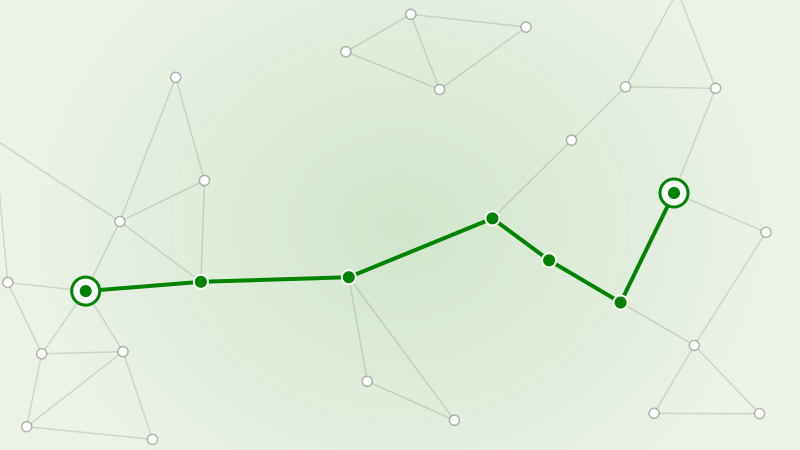
Malaysia's Port of Tanjung Pelepas built Terminal Truck Optimization with Kaleris, software that sends each terminal tractor to the nearest open container move so quay cranes stop waiting for trucks.
Port of Tanjung PelepasMalaysiaAirports and portsIn production
- Scale
- One terminal: 58 quay cranes and 572 prime movers in December 2024, more than 600 prime movers by October 2026
- Scenario
- Container terminal equipment dispatch
- Business function
- Supply chain and logistics
- Kind of solution
- Scheduling and routing optimization
- Who built it
- Built with a partner (Kaleris)
- Organization
- Enterprise, part of MMC Corporation Berhad
- AI types
- Optimization
tl;drTruck cycle time fell 13% and quay crane waiting time 20% after PTP switched to TT-O dispatch.See the results
Port of Tanjung Pelepas (PTP), Malaysia’s busiest transshipment hub, built Terminal Truck Optimization (TT-O) with its terminal-system supplier Kaleris1. The software decides which of the port’s tractors fetches which container next1.
The problem TT-O tackles sits at the edge of the quay. PTP’s 58 quay cranes are fed by a fleet of 572 prime movers, the tractors that haul containers between ship and yard along a 5.1-kilometer berth3. When a truck is late, a crane waits.
By March 2025, with TT-O assigning the moves, drivers got their jobs 44% faster and truck cycle time had fallen 13%1. Quay crane waiting time fell 20% within two months of deployment, and the terminal then set a record of 14,914 quayside moves in a single 12-hour shift1. In October 2026, with the fleet past 600 prime movers, PTP still cited the same cycle-time, deployment and fuel figures as it worked to get more out of its existing trucks15.
Before the deployment
PTP assigned truck moves by manual or static processes, which caused delays and left resources underused across the terminal14. The old process had the following problems:
- Waiting trucks: Trucks spent a lot of time waiting for their next assignment. Without a dynamic system, those delays stretched truck cycle times14.
- Cranes out of step: Truck movements were out of step with the quay cranes, which slowed the whole terminal14.
- Empty driving: Many trucks drove empty and burned fuel for nothing14.
The pressure came from volume. PTP handled more than 1 million TEUs (twenty-foot equivalent units) in each of the five months from May to September 20244. The year closed at 12.25 million TEUs, beating the previous record of 11.2 million set in 20216. Every one of those boxes rides a truck between the quay and the yard, where 199 rubber-tired gantry (RTG) cranes do the stacking3.
In January 2025, Mark Hardiman, PTP’s chief executive, said the port aimed to “help our customers achieve their schedule reliability, especially during a time of global supply chain disruptions, and we are proud to deliver this with no congestion”6.
What was built
TT-O decides which truck does which job1. It reads each truck’s GPS position and job completion status in real time1. It sends trucks to the nearest available move, which cuts idle time and keeps containers moving across the yard1. The work is divided as follows:
- TT-O: Plans truck movements across multiple yard zones rather than within one7. It adapts its dispatch strategy automatically as yard conditions change1.
- Assignment rules: TT-O prioritizes moves according to each quay crane’s performance. It supports dual cycling, in which a tractor carries a container on both legs of a trip instead of driving back empty. Both rules aim at more crane moves and shorter crane waits1.
- Drivers: Receive the assignments and do the hauling1.
- Operations team: Used TT-O to redefine its scheduling and dispatch workflows for terminal tractors7.
PTP didn’t buy TT-O off the shelf. Joe Schofield, its chief operating officer, led the development together with Kaleris1, and PTP describes the module as jointly developed3. Kaleris then took TT-O to market as part of its Advanced Optimization solutions for the N4 terminal operating system, naming PTP the first terminal in the world to implement it13.
PTP also runs Navis RTG-Optimization, a separate N4 module, for automated dispatching of its yard cranes and for lane and block change recommendations5. That module gives each RTG an optimized list of jobs and re-positions containers just in time through predictive housekeeping5. Predictive housekeeping means moving boxes before they’re needed so that later pickups take fewer shuffles. PTP drove the innovation behind it, and with it the port stopped managing RTG zones by hand4.
The truck module came out of the same long collaboration with Kaleris1, and PTP runs the two side by side.
“With RTG-O and TT-O working in tandem, we can precisely plan our resources and strategically make operational decisions. Having a real-time view of both our landside and waterside CHE with N4 empowers us to minimize downtime and maximize productivity.”
Rollout
PTP layered each optimizer onto one terminal operating system, Navis N4, and moved to Navis N4 4.0 after months of planning with Kaleris and its shareholder APM Terminals3. The truck module already existed at the upgrade, which gave it a smoother, faster user experience3.
Technology and architecture
The solution has three documented parts. The following table lists them.
| Layer | What they used | Role | Source |
|---|---|---|---|
| Optimizer | Terminal Truck Optimization (TT-O) | Assigns each move to the nearest available terminal tractor, prioritized by quay crane performance, with dual cycling | 1, 13 |
| Business or operational system | Navis N4 4.0 (Kaleris) | PTP’s terminal operating system, which TT-O is integrated with; version 4.0 since December 2024 | 3, 6, 14 |
| Machines, robots and vehicles | Prime movers (terminal tractors) | The 572 trucks of December 2024, driven by PTP drivers between quay and yard | 3, 1 |
TT-O is the optimizer, and the prime movers are the trucks it dispatches. They carry containers between operational areas of the terminal15.
Data inputs
TT-O works from the following live inputs:
- Truck GPS positions: Show where each truck is, so that TT-O can send the nearest available one to each move1.
- Job completion status: Shows which trucks are free for the next move1.
- Quay crane performance: Sets the priority of truck moves1.
Integrations
TT-O is fully integrated with PTP’s Navis N4 terminal operating system, the system that runs the terminal’s container moves14, 1. Kafka messaging and improved software configurations in N4 4.0 raised system speed, uptime and the stability of its planning client3. In Kaleris’s own product description, TT-O assigns the nearest available truck to the next job and adapts to delays, congestion or new tasks as they occur16.
How one container move flows through the system
One container move runs through the following steps:
- A quay crane needs a truck for its next move1.
- TT-O finds the nearest free truck, and the driver gets the job1.
- Where a return load is waiting, dual cycling lets the same truck carry a container on the way back1.
- When the driver finishes, the job’s completion status feeds the next round of assignments1.
Results
The results cover TT-O’s first two months in operation and came out in March 20251, 2. Kaleris repeated them when it launched the product in June 202513. In October 2026, Khairul Amalin Abd Rahman, PTP’s head of health, safety, security, environment and sustainability, gave the cycle-time, deployment and fuel figures again in a newspaper interview15.
| Metric | Before | After | Scope and timeframe | Reported by |
|---|---|---|---|---|
| Truck cycle time | Not disclosed | 13% lower | Terminal tractors after TT-O launch | PTP and Kaleris, measured1, 2, 15 |
| Time for drivers to receive job assignments | Not disclosed | 44% faster | Terminal tractors after TT-O launch | PTP and Kaleris, measured1, 2 |
| Quay crane waiting time | Not disclosed | 20% lower | First two months of TT-O | PTP and Kaleris, measured1, 2 |
| Quayside moves in a 12-hour shift | 14,036 (22 September 2024) | 14,914, with 1,420 in one hour | Terminal records before and after TT-O | PTP and Kaleris, measured1, 6 |
| Truck productivity | Not disclosed | 14% higher | First two months of TT-O | PTP and Kaleris, measured1 |
| Laden truck travel | Not disclosed | 20% higher | First two months of TT-O | PTP and Kaleris, measured1 |
| Trucks deployed | Not disclosed | 11% fewer | First two months of TT-O | PTP and Kaleris, measured1, 15 |
| Fuel consumption | Not disclosed | 7% lower | First two months of TT-O | PTP and Kaleris, measured1, 15 |
The metrics need the following explanations:
- Job assignments and cycle time: The two headline figures are linked. Drivers got their assignments faster because TT-O planned across multiple zones, and that brought truck cycle time down1. Cycle time most likely means the time a tractor takes to complete one job, from assignment to drop-off.
- Laden truck travel: The rise means a larger share of driving was done carrying a container, which fits the dual cycling TT-O supports1.
- Trucks deployed and fuel consumption: Fewer trucks deployed and less fuel burned go together, and truck productivity rose over the same two months1.
- Shift record: The baseline is PTP’s previous best 12-hour shift6. The workforce used the faster assignments to beat it1.
Lessons learned
The gains came from the fleet PTP already had. Khairul Amalin framed them as fuel saved without new equipment, saying “Just by using digitalisation, we are able to reduce terminal truck cycle time, terminal truck deployment and ultimately achieve fuel reduction”15. The Sun’s account of PTP’s energy program in October 2026 drew the lesson that operational improvements like this can complement capital investment in new equipment15.
The design came from the operator. PTP’s chief operating officer led TT-O’s development, the port had already driven the yard-crane module, and Kaleris sells both today1, 4, 13. PTP credits the result to its own staff working with the Kaleris team, a point Hardiman made in the March 2025 announcement1. Kaleris’s customer case study attributes the same words to Schofield, which doesn’t change the substance but is a reminder that the material was assembled for publicity14.
Every figure is PTP’s and Kaleris’s own, published in a joint press release and a vendor case study. The trade press, the award announcement and the 2026 newspaper interview repeat them without measuring anything themselves1, 2, 7, 15. Nineteen months after the first announcement, PTP’s head of sustainability still cited the same 13%, 11% and 7%15.
The figures cover two months, and they followed the N4 4.0 upgrade of December 2024, which raised system speed and uptime and made the truck module itself faster3. The gains can’t be cleanly separated from the upgrade or from the new dispatch workflows that the operations team adopted at the same time7.
Kaleris speaks of enhanced and automated logic and of optimization, not machine learning or AI1, 7. In May 2026, Kaleris launched an AI-powered Yard Intelligence Suite that works alongside RTG Optimization and Terminal Truck Optimization and extends its optimization from equipment dispatch to yard planning8.
A dispatcher like this depends on its data. Khairul Amalin’s own view, given about PTP’s use of analytics and AI generally, is that “Analytics is important, but it is only as good as the input”15. TT-O is only as good as its GPS and job-status feeds.
Case study scorecard
- 13% shorter truck cycle time1, 2, 15
- 44% faster job assignments to drivers1, 2
- 20% less quay crane waiting time1, 2
- 14,914 quayside moves in one 12-hour shift1, 6
Sources by publication date
- Organization 1
- Vendors and partners 8
- Press, academic, and regulators 7
- 3 undated
Build this solution yourself
Analysis
What you need
To build this solution, you need the following in place:
- Live tractor telemetry: Every tractor at PTP reported its position and job status live, which TT-O uses to pick the nearest free truck1.
- A terminal operating system to integrate with: TT-O was built to integrate closely with the Navis N4 system that the port had run since 20191, 3, 14.
- A senior operator who leads the work: PTP’s chief operating officer led the development with the port’s own vendor1.
- Experience with an optimizer: PTP had run an optimizer on its yard cranes since 20225, so its staff were probably used to taking work from one.
Reference architecture
Scheduling and routing optimization
A scheduling and routing optimization solution computes who or what goes where, in what order, and when, within the constraints that apply. An optimizer builds a plan from the work, live positions and conditions, and the organization's rules, and rebuilds it as conditions change. Planners approve or finish the plan or steer it through limits, and the people who carry it out can depart from it.
- Operational system (documented in this case study)
- Live positions and conditions
- Network and reference data
- Rules and priorities
- Forecasting model
- Optimizer (documented in this case study)
- Planner console
- Field app
- Customer app or website
- Planning platform
- Machine learning platform
- Offline evaluation
A check mark shows a building block that this case study's sources document.
Open the reference architectureOthers who built it
- Port Houston: Kaleris RTG-Optimization raised productivity by up to 20% across 142 RTG cranes at its Barbours Cut and Bayport terminals, after a phased rollout planned with labor representatives from the International Longshoremen’s Association9.
- YILPORT Holding: Its Gebze Terminal in Türkiye raised yard productivity 21% within three months of deploying Kaleris RTG Optimization on 31 RTG cranes10.
- ICTSI: In March 2021, the operator went live with YardSight, an AI yard management tool from Avlino and IGO Solutions, at Manila International Container Terminal11.
- HHLA: At Container Terminal Burchardkai in Hamburg, INFORM’s Syncrotess ML Module predicts each container’s dwell time and outbound mode inside the slot allocation algorithms of the terminal control system12.
In the library
- Alaska Airlines cuts fuel burn with AI route optimization Alaska Airlines
- How American Airlines uses AI to save tight connections American Airlines
- AI production planning takes 91.6% less time at Atlas Copco Atlas Copco
- UPS's ORION cuts 6 to 8 miles from each delivery route UPS
- GlobalFoundries fills idle fab tool time with AI dispatching GlobalFoundries
- AI disruption tools cut Heathrow delays at British Airways British Airways
Cite this case study
Enterprise AI Case Studies. "Truck optimizer cuts cycle time 13% at Tanjung Pelepas." Updated Nov 19, 2026. https://case-studies.ai/case-studies/supply-chain-and-logistics/SC-003-container-terminal-operations/
@misc{csai-sc-003,
  author = {{Enterprise AI Case Studies}},
  title = {{Truck optimizer cuts cycle time 13% at Tanjung Pelepas}},
  year = {2026},
  note = {Updated 2026-11-19},
  url = {https://case-studies.ai/case-studies/supply-chain-and-logistics/SC-003-container-terminal-operations/}
}Sources
The following reporting, and every passage quoted from it, belongs to its publisher, not to this site. Sources and ownership
- Source 1:
Supporting excerpts (25)
recently implemented a new Terminal Truck Optimization (TT-O) solution empowering their team to take a smarter approach to scheduling and dispatching moves to terminal tractors
Using the solution to strategically plan truck movements across multiple zones, drivers received their job assignments 44% faster, leading to a 13% reduction in truck cycle time.
set a new record for the terminal of 14,914 quayside moves in a single 12-hour shift and 1,420 moves in one hour within that shift
PTP’s skilled workforce leveraged this acceleration
Joe Schofield PTP’s COO has led the development of Terminal Truck Optimization (TT-O) in collaboration with Kaleris
This partnership builds on our long history of collaboration with Kaleris, which has delivered innovations such as RTG Optimization, Lashing / Pinning Apps, and more
The deployment of TT-O has already demonstrated measurable improvements, including reduced deployment, fuel savings, improved cycle times, and increased laden travel.
This success showcases the impact of bringing together our talented staff and the Kaleris team to drive the industry forward.
developed the Terminal Truck Optimization product that integrates closely with the latest version of the company’s N4 TOS
The solution uses enhanced logic to assign truck moves, with automated strategy adaptation to dynamically respond to changing yard conditions.
Within two months of deployment of Terminal Truck Optimization, the value PTP experienced includes:
14% improvement in truck productivity
20% increase in laden truck travel
20% reduction in quay crane waiting time
11% reduction in truck deployment
7% reduction in fuel consumption
By leveraging real-time data, including truck GPS positions and job completion status, TT-O ensures trucks are efficiently assigned to the nearest available move.
This minimizes idle time, maximizes productivity, and optimizes horizontal container movements across the yard.
The solution also enables dual cycle handling and prioritization based on each crane’s performance, maximizing quay crane moves and lowering their wait times.
container terminals evaluating how to drive operational efficiencies with their existing fleet will find tremendous value in adding TT-O to their N4 TOS
Port of Tanjung Pelepas (PTP) is Malaysia’s busiest transshipment hub with the capacity to handle 14 million twenty-foot equivalent units (TEUs) annually.
PTP is a joint venture between MMC Corporation Berhad (70%), a leading utilities and infrastructure group and APM Terminals (30%)
said Mark Hardiman, CEO at Port of Tanjung Pelepas
Working closely with PTP and its leadership team gave us crucial insight into needed innovation benefiting the container handling industry and the overall supply chain
said Kirk Knauff, CEO at Kaleris
- Source 2:
Port of Tanjung Pelepas meets efficiency benchmarks with new solution
Supporting excerpts (4)
Kaleris developed the terminal truck optimisation (TT-O) product that uses enhanced logic to assign truck moves, with automated strategy adaptation to dynamically respond to changing yard conditions.
drivers received their job assignments 44% faster, leading to a 13% reduction in truck cycle time
Within two months of deploying the TT-O, PTP noted a14% improvement in truck productivity; 20% increase in laden truck travel; 20% reduction in quay crane waiting time; 11% reduction in truck deployment; and 7% reduction in fuel consumption.
This milestone comes as Port of Tanjung Pelepas (PTP) celebrates its 25th anniversary and its recognition as the 5th most efficient container port globally, according to the latest Container Port Performance Index.
- Source 3:
Port Of Tanjung Pelepas Goes Live With Kaleris 4.0 Terminal Operating System
Supporting excerpts (8)
PTP had been utilising the Navis N4 system since 2019, and this fourth-generation upgrade further cemented its readiness to handle future volume growth seamlessly while maintaining operational excellence.
It also marked the largest-scale “go live” of the N4 4.0 system globally to date.
Going live in just two and a half hours, ramping up 38 cranes within five hours, and achieving zero critical glitches reflect exceptional change management, adoption of new processes and frontline technology integration.
attributing it to months of meticulous planning and collaboration with service provider, Kaleris, and joint venture shareholder, APM Terminals
This N4 4.0 system upgrade, spearheaded by PTP’s Chief Operations Officer, Joe Schofield
comprising a total of 58 quay cranes, 199 RTG cranes, 572 prime movers and 743 trailers, spanning a 5.1-kilometre berth, and facilitating throughputs of over 1 million TEUs per month
Key features of the N4 4.0, namely Kafka messaging and improved software configurations, have significantly enhanced system speed, uptime and the stability of the extreme performance system (XPS) client.
It also further enhances the PTP-Kaleris jointly developed Terminal Truck Optimiser (TTO) module, delivering a smoother, faster user experience.
- Source 4:
Port of Tanjung Pelepas Recognized With Supply Chain Innovator of the Year Award
Supporting excerpts (7)
By introducing real-time terminal operations monitoring with Navis OpsView, PTP improved its operational efficiency, increased berth productivity, and reduced operating costs.
PTP also drove the innovation behind the Navis RTG-Optimization module, developed in partnership with Kaleris.
PTP uses the technology to automate decision-making on RTG jobs, blocks and lane assignments.
By prioritizing jobs according to the areas of highest demand, PTP achieved a 6% increase in RTG productivity, a 77% improvement in predictive rehandles for load containers and eliminated manual zone management.
who has been at the forefront of championing PTP’s digital transformation over the past seven years
consistently maintaining the performance of handling over 1 million twenty-foot equivalent units (TEUs) for five consecutive months, from May to September 2024
on Sept. 22, 2024, PTP surpassed its previous record with an exceptional 14,036 quayside moves within a single 12-hour shift
- Source 5:
RTGO: How PTP Found Terminal Success with Kaleris
Supporting excerpts (3)
Implemented in 2022, Port of Tanjung Pelepas uses Navis N4 optimization module, RTG-Optimization, for automated dispatching, solution providing lane, and block change recommendation.
Re-plan and re-position the container just in time with predictive housekeeping.
Assign an optimized list of jobs to each RTG, saving time for the RTG Operator.
- Source 6:
Port of Tanjung Pelepas achieves record 12.25M TEUs in 2024
Supporting excerpts (5)
The Port of Tanjung Pelepas handled over 12.25 million twenty-foot equivalent units (TEUs) in 2024, surpassing its previous record of 11.2 million TEUs in 2021.
PTP implemented Kaleris’ Navis N4 4.0 terminal operating system in December 2024 to support future growth
On September 22, 2024, the port recorded 14,036 quayside moves during a 12-hour shift.
July 2024 marked PTP’s highest monthly throughput with 1,115,181 TEUs, maintaining over one million TEUs per month since May.
help our customers achieve their schedule reliability, especially during a time of global supply chain disruptions, and we are proud to deliver this with no congestion
- Source 7:
Supporting excerpts (4)
The award specifically recognizes the successful launch of Kaleris’ Terminal Truck Optimization (TT-O) at Port of Tanjung Pelepas.
One of the newest modules in Kaleris’ Advanced Optimization solutions portfolio, TT-O has already delivered strong results for PTP, an early adopter of the program.
By enabling PTP’s Operations team to redefine scheduling and dispatch workflows for terminal tractors
Using automated logic designed to plan truck movements across multiple yard zones strategically
- Source 8:
Kaleris launches AI-powered Yard Intelligence Suite for container terminals
Supporting excerpts (3)
Kaleris has launched its new Yard Intelligence Suite, an AI-powered solution designed to help container terminals improve yard planning, reduce congestion and increase throughput without expanding physical infrastructure.
The Yard Intelligence Suite extends Kaleris’ Advanced Optimization technology beyond equipment dispatching into strategic yard planning.
The platform works alongside RTG Optimization and Terminal Truck Optimization systems to improve container positioning, reduce bottlenecks and maintain cargo flow.
- Source 9:
Kaleris' RTG-Optimization Drives Major Productivity Gains at Port Houston
Supporting excerpts (4)
Managing 142 RTG cranes and up to 12,000 truck visits daily across the Barbours Cut and Bayport terminals, Port Houston needed a smarter way to optimize operations with its existing assets.
Kaleris partnered closely with Port Houston and labor representatives from the International Longshoremen’s Association (ILA)
The phased rollout began with over-the-road truck moves in a small section of the yard, allowing for continuous learning and minimal disruption.
Productivity improvements of up to 20% have been achieved through smarter fleet management, more efficient RTG moves and improved data visibility for demand-based dispatching.
- Source 10:
YILPORT Gebze boosts RTG productivity by 21%
Supporting excerpts (2)
YILPORT Holding has increased yard productivity at its Gebze Terminal in Türkiye by 21% following the deployment of Kaleris’ RTG Optimization technology.
The improvement was recorded within three months and reflects an increase in moves per hour across the terminal’s fleet of 31 rubber-tired gantry (RTG) cranes.
- Source 11:
ICTSI launches AI-powered yard management solution at MICT
Supporting excerpts (2)
International Container Terminal Services, Inc. (ICTSI) has successfully conducted the live implementation of an artificial intelligence (AI)-powered yard management solution at flagship terminal Manila International Container Terminal (MICT).
YardSight is part of a larger AI solution suite, AiCON, developed by AI and digital transformation company Avlino together with container terminal solutions provider IGO Solutions, ICTSI said in a statement.
- Source 12:
Machine Learning Module at Hamburg Port
Supporting excerpts (2)
The companies have integrated the Syncrotess ML Module into the slot allocation algorithms already running within CTB’s terminal control system, ITS.
Inform’s AI solution predicts the dwell time (i.e., the time period the container is expected to be stored in the yard) and the outbound mode of transport (e.g., rail, truck, vessel)
- Source 13:
Kaleris Launches Advanced Optimization Solutions at TOC Europe 2025
Supporting excerpts (5)
today announced new Advanced Optimization solutions that complement its N4 terminal operating system
was also the first terminal in the world to implement the new Terminal Truck Optimization (TT-O) solution
Within two months of deployment, PTP experienced a 14% improvement in truck productivity
Joe Schofield, Chief Operations Officer at PTP, said
With RTG-O and TT-O working in tandem, we can precisely plan our resources and strategically make operational decisions. Having a real-time view of both our landside and waterside CHE with N4 empowers us to minimize downtime and maximize productivity.
- Source 14:
Supporting excerpts (8)
Manual or static processes for assigning truck moves led to delays and suboptimal resource utilization across the terminal.
Trucks spent significant time waiting for assignments, reducing overall productivity and increasing operational costs.
Misalignment between truck movements and quay crane operations caused delays and impacted overall terminal throughput.
High levels of unladen truck travel and inefficient workflows contributed to unnecessary fuel consumption and resource inefficiency.
Without a dynamic system, delays in assigning jobs to terminal tractors led to longer truck cycle times and reduced productivity.
implement the Terminal Truck Optimization (TT-O) solution, fully integrated with the Navis N4 Terminal Operating System.
leveraging real-time data to dynamically assign tasks and adapt to changing yard conditions.
Kaleris team to drive the industry forward. - Joe Schofield, COO of PTP
- Source 15:
PTP steps up energy efficiency measures as capacity expands
Supporting excerpts (8)
PTP head of health, safety, security, environment and sustainability Khairul Amalin Abd Rahman
PTP was complementing its electrification and renewable energy initiatives with digital solutions to optimise terminal truck operations and reduce fuel use.
Khairul Amalin said the port’s terminal truck optimisation module had reduced truck cycle time by 13%, truck deployment by 11% and fuel consumption by 7%.
Just by using digitalisation, we are able to reduce terminal truck cycle time, terminal truck deployment and ultimately achieve fuel reduction.
The approach demonstrated how operational improvements could complement capital investment in new equipment, helping the port extract greater productivity from its existing assets.
The port operates more than 600 prime movers
which transport containers between operational areas within the terminal.
Analytics is important, but it is only as good as the input.
- Source 16:
Supporting excerpts (2)
Terminal Truck Optimization (TTO) dynamically assigns the nearest available truck to the next job, keeping vehicles moving and reducing idle time across the yard.
Dynamic optimization adapts to delays, congestion, or new tasks as they occur.









Comments
Start the conversation.
Invited members of the library comment here. Sign in to join the conversation.