
Life underwriters at State Farm search criteria with AI
State Farm moved its life underwriting manuals into SharePoint Online and a data scientist built a Copilot Studio agent over them, so underwriters and trainees can ask for criteria instead of paging through them.
State FarmUnited StatesLife insurance and pensionsIn production
- Scenario
- Underwriting guidelines assistant
- Business function
- Knowledge management
- Kind of solution
- Knowledge assistant
- Who built it
- Built in-house (Microsoft)
- Human oversight
- Assists people
- Organization
- Enterprise, 10,000 to 99,999 employees
- AI types
- Generative AI, Conversational AI
tl;drWithin 30 days, the underwriting criteria agent was State Farm's second most-used agent.See the results
State Farm uses an agent built in Microsoft Copilot Studio to help life underwriters and trainees search underwriting criteria1. A data scientist at the insurer built it after the manuals had been moved into SharePoint Online, where the agent could surface them1.
In October 2026, ScienceSoft’s quarterly review of insurance AI listed life underwriting support among the early applications of State Farm’s agent program2.
Within 30 days, the agent was the second most-used agent at State Farm, out of more than 3,000 AI agent identities in the company’s Power Platform environment1. The figure appeared in a Microsoft customer story in August 20261.
Before the deployment
State Farm is one of the largest insurance and financial services companies in the United States1. It’s headquartered in Bloomington, Illinois, employs about 65,000 people, and sells auto, home, life, and health cover among other lines1.
Its life underwriters decide whether to accept an applicant and on what terms. Underwriting criteria are the rules behind those decisions. At State Farm, they filled large manuals that ran to hundreds of pages and were hard to navigate1.
Underwriting wasn’t the only team with this kind of friction. Across the company, teams dealt with the following work that took significant manual effort1:
- Large manuals1
- Repeated policy questions, which HR teams answered although employees could have looked them up themselves1
- Onboarding chores1
- Content and translation work1
Ideas weren’t in short supply, because State Farm already had an active community of Power Platform builders among its employees. The harder part was turning their enthusiasm into production-ready solutions that could reduce manual work, speed up answers, and help employees in HR, underwriting, and onboarding1.
What was built
How the agent works
The agent helps underwriters and trainees search the criteria that used to live in the manuals1. The manuals were moved into SharePoint Online, where Copilot Studio could surface the information and underwriters could navigate it more easily1. The work is divided as follows:
- Copilot Studio agent: Brings up the criterion that an underwriter or trainee asks for, so they find the relevant information faster and spend less time searching by hand1.
- SharePoint Online: Holds the life underwriting manuals that the agent draws on1.
- Underwriters and trainees: Read the criterion, apply it to the applicant in front of them, and own the outcome. Employees remain responsible for the decisions that require judgment, expertise, and care1.
The agent reuses a self-service pattern from HR. The Ask HR policy agent, also built in Copilot Studio, lets employees ask about HR policies and benefits instead of contacting an HR representative1. After its early success, the HR team began a roadmap of 12 more agents, and the same approach was then extended to underwriting1.
Other teams applied the approach too. Translation agents help translate marketing materials between English and Spanish, including through an email-based workflow that cut translation turnaround from 12 months to 24 hours1.
Route to production
State Farm gives its employee builders a known route from an idea to production. The route rests on clear approval paths, close alignment with the risk and compliance teams, and practical guidance on responsible AI1. It has the following parts:
- Workshops: Hands-on workshops on Copilot Studio and responsible AI build on Microsoft-provided labs that the team adapted to State Farm’s own governance requirements. Each starts with responsible AI principles, and sessions can reach up to 150 people in person and online1.
- Office hours: Open office hours give builders a place to bring what they’re working on1.
- Laddering: Azsure Dorton, who manages Power Platform engineering at State Farm, calls the approach “laddering”. The point was not to rush builders into production, but to help them build confidence and develop strong habits before scaling their work1.
- Risk assessment: A build reaches production once it has passed a risk assessment1.
- Shared work: Catalog capabilities let teams share connectors and solutions. In information security, a builder wrote design templates, documentation, and a wiki series that walk other Copilot Studio builders through the risk process1.
- Microsoft support: Microsoft supported the program with labs, workshops, guidance on new capabilities, and its Power Up Program. A continuous feedback loop with State Farm helped shape Copilot Studio over time1.
“Start for yourself. Build for your team. Build for your department. Then you begin to see where an enterprise idea takes shape and can grow.”
- Trigger or control
- Handoff to people
- Feedback
- Inferred, not documented
Technology and architecture
- AI component
- Data
- Trigger or control
- Handoff to people
- Inferred, not documented
The following table lists the components of the agent.
| Layer | What they used | Role | Source |
|---|---|---|---|
| Solution platform | Microsoft Copilot Studio | The platform the agent was built in. It surfaces underwriting criteria from the manuals when someone asks | 1 |
| Knowledge content | SharePoint Online | Holds the life underwriting manuals, moved there so the agent could surface them and underwriters could navigate them | 1 |
Moving the manuals follows from how Copilot Studio uses SharePoint. A SharePoint site that an agent uses as a knowledge source works as follows:
- Search: When a user asks a question that the agent has no topic for, the agent searches the site and all its subpaths3.
- Generative answers: The agent summarizes what it finds into a targeted response3.
- Permissions: The agent surfaces only content that the user has permission to access, because the calls are made on behalf of the user who is chatting with the agent3.
The underwriting agent most likely uses that SharePoint knowledge source, with a large language model that writes the answer from the passages it retrieves.
Results
The agent’s headline result is its usage rank, a measure of adoption1.
| Metric | Before | After | Scope and timeframe | Reported by |
|---|---|---|---|---|
| Usage rank of the underwriting criteria agent | Not disclosed | Second most-used agent | Within 30 days, out of more than 3,000 AI agent identities in the Power Platform environment | State Farm, measured1 |
The results need the following context:
- Usage rank: The rank appeared in a customer story in August 20261. It counts use across every agent identity in the environment, from personal experiments to the builds in production. The underwriting agent was built for one group, the life underwriters and their trainees.
- Speed and effort: The tools help employees find relevant information faster and reduce manual searching1. ScienceSoft’s October 2026 review notes that State Farm reported improvements in workflow speed and efficiency soon after its agents launched2.
- Program scale: The program the agent belongs to had 41 builds in production that had passed risk assessments by August 20261.
Lessons learned
The agent’s adoption is its strongest result. A tool that one data scientist built for a specialist group ranked second among more than 3,000 agent identities within a month1. It answers a problem that comes up at other insurers. Allianz UK built its BRIAN tool over underwriting guides for the same reason, and it singles out junior underwriters, who are still learning their way around a vast body of documentation, as the people who gain most4.
The design keeps the risk low, and that is also its limit. The agent finds criteria, and employees remain responsible for the decisions that require judgment, expertise, and care1. The time it saves is reading time, not decision time, and the applicant’s file most likely never reaches it.
Like most of State Farm’s early agents, this one retrieves knowledge, while builders were only beginning to explore orchestration across several systems1. Dorton describes the next step as a move away from this kind of agent: “Right now, we’re looking at moving past those conversational or knowledge-retrieval AI agents towards more complex, action-oriented or autonomous AI agents”1. State Farm was planning build-a-thons on orchestration, system-to-system scenarios, and approvals to get there1.
The lesson State Farm itself draws is about governance. Dorton says that “Getting governance, risk, and responsible AI right is an important part of the journey,” and the customer story presents the approval paths and the alignment with risk and compliance as what let builders take ideas into production with confidence1.
The facts and the usage figure come from Microsoft’s customer story, in which State Farm supplied them1. ScienceSoft’s review relays the program figures, and it notes that most public insurance AI figures that quarter came from vendors, vendor-controlled pilots, and insurtech firms2.
The two accounts describe the 3,000 differently. Microsoft counts AI agent identities in the Power Platform environment1. ScienceSoft describes 41 agentic solutions in production and more than 3,000 AI agents created in State Farm’s development environment2. Most of them are probably personal and team experiments, so the pool that the underwriting agent ranks against is wide but mostly not in production. A rank isn’t a count of users.
Case study scorecard
- Second most-used agent Usage rank of the underwriting criteria agent1
Sources by publication date
- Vendors and partners 3
- Press, academic, and regulators 2
Build this solution yourself
Analysis
What you need
To build this solution, you need the following in place:
- Criteria that are already written down: State Farm’s criteria sat in manuals that the company maintained, so the main job was to move them into SharePoint Online, where Copilot Studio could reach them1. Guidelines that live in memos, spreadsheets, and senior underwriters’ heads would have to be gathered first. Keeping that copy current is most likely the larger, ongoing effort.
- A route to production that one builder can use: The agent depended on a route that a single data scientist could use. State Farm had built its workshops, shared templates, and risk process for its builders before the agent existed1.
Reference architecture
Knowledge assistant
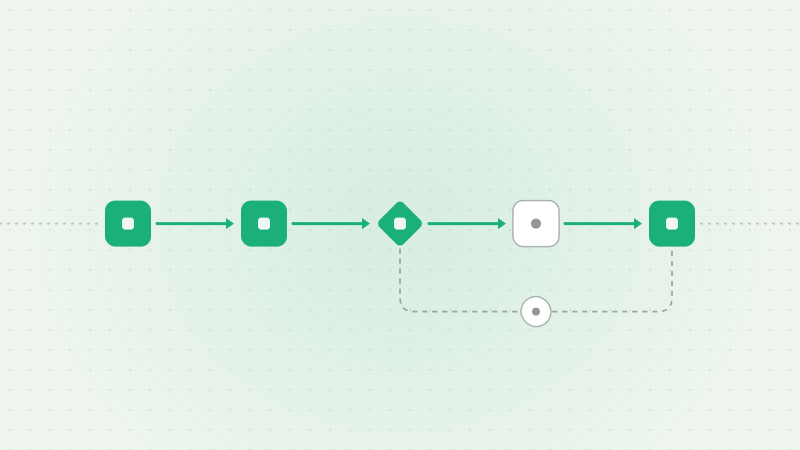
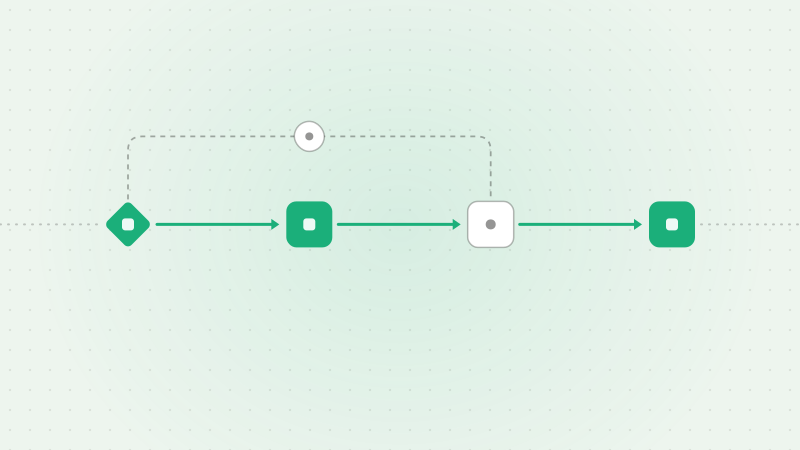
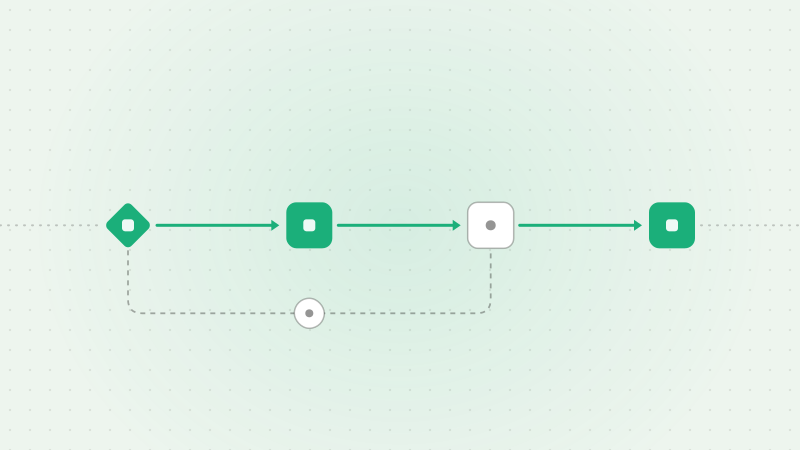
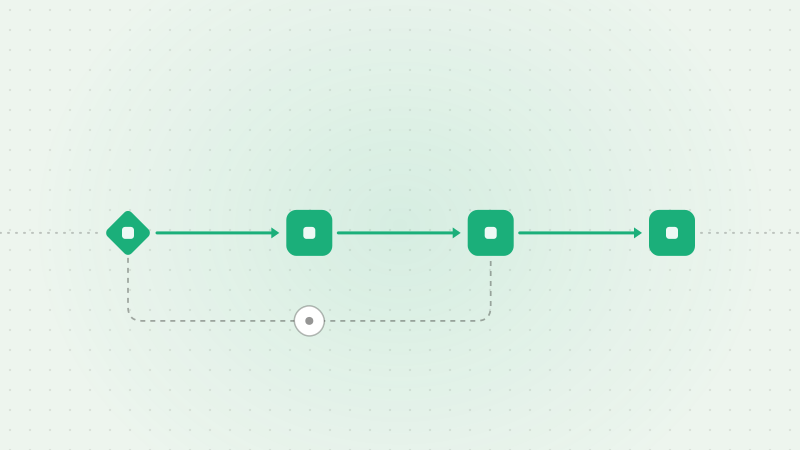
A knowledge assistant answers a question that staff ask in their own words, by using the organization's own documents, and shows the sources of the answer. The search index returns the passages that best match a question, and a language model writes the answer from them. Content curators prepare the content beforehand, and the person who asked checks the answer and decides what to do with it.
- Chat interface
- Assistant platform (documented in this case study)
- Search index
- Knowledge content (documented in this case study)
- Content ingestion
- Embedding and ranking models
- Language model
- Answer ratings
- Business system
- Test set of sample questions
A check mark shows a building block that this case study's sources document.
Open the reference architectureOthers who built it
- Allianz UK: Its BRIAN tool reads the underwriting guides for its Property and Casualty and Specialty lines and answers underwriters’ questions, with a link to the section of the guide that each answer came from4.
- Swiss Re: In April 2024, it added Life Guide Scout, a generative AI assistant built on Microsoft Azure OpenAI Service, to its Life Guide life and health underwriting manual5. The pilot launched in English, and underwriters can ask questions and get an answer with the source of the information5.
In the library
- European Commission's DG INTPA gives staff an AI assistant European Commission
- AskNSI answers 83% of employee queries at NSI Luxembourg NSI Luxembourg
- West Midlands Police halts Copilot after AI hallucination West Midlands Police
- Vanderlande's AI assistant handles IT self-service requests Vanderlande
- How Target rolled out an AI chatbot to nearly 2,000 stores Target Corporation
- How CM.com staff search company policies with AI agent Norma CM.com
Cite this case study
Enterprise AI Case Studies. "Life underwriters at State Farm search criteria with AI." Updated Nov 19, 2026. https://case-studies.ai/case-studies/process-automation/PA-015-life-underwriting-criteria-agent-state-farm/
@misc{csai-pa-015,
  author = {{Enterprise AI Case Studies}},
  title = {{Life underwriters at State Farm search criteria with AI}},
  year = {2026},
  note = {Updated 2026-11-19},
  url = {https://case-studies.ai/case-studies/process-automation/PA-015-life-underwriting-criteria-agent-state-farm/}
}Sources
The following reporting, and every passage quoted from it, belongs to its publisher, not to this site. Sources and ownership
- Source 1:
Supporting excerpts (31)
State Farm is one of the largest insurance and financial services companies in the United States, supporting customers across auto, home, life, health, and other insurance needs. Headquartered in Bloomington, Illinois, the company employs approximately 65,000 people.
Life underwriters and trainees navigated hundreds of pages of underwriting criteria.
A data scientist built an agent to help underwriters and trainees search criteria that previously lived in large, hard-to-navigate manuals.
By moving those manuals into SharePoint Online, the information became easier for Copilot Studio to surface and easier for underwriters to navigate.
These tools help employees find relevant information faster and reduce manual searching.
Employees remain responsible for decisions that require judgment, expertise, and care.
Within 30 days, the agent became the second most-used agent at State Farm, out of more than 3,000 AI agent identities within the Power Platform environment.
The same approach extended to underwriting.
State Farm has 41 builds that have passed risk assessments and are now in production
While many early agents focused on knowledge-retrieval, builders are increasingly exploring more complex scenarios, including orchestration across multiple systems.
Clear approval paths, close alignment with risk and compliance teams, and practical guidance on responsible AI helped reduce hesitation and gave builders a way to move useful ideas into production with confidence.
Start for yourself. Build for your team. Build for your department. Then you begin to see where an enterprise idea takes shape and can grow.
The workshops begin with responsible AI principles, then move into hands-on building.
Sessions can reach up to 150 attendees, both virtually and in person.
Using Microsoft-provided labs as a foundation, the team adapted the content to reflect State Farm
but to help them build confidence and develop strong habits before scaling their work.
Microsoft Copilot Studio and Microsoft Power Platform, alongside technologies such as Microsoft Power Apps, Microsoft Power Automate, Microsoft Dataverse, SharePoint Online, Microsoft Entra ID, and the Power Apps vibe experience.
Translation agents assist with translating marketing materials between English and Spanish, including through an email-based workflow that helped reduce translation turnaround time from 12 months to 24 hours.
Built in Copilot Studio, the agent allows employees to ask questions about HR policies and benefits instead of manually contacting an HR representative.
After seeing early success, the HR team began building a roadmap of 12 additional agents.
To support this shift, State Farm is planning build-a-thons focused on orchestration, system-to-system scenarios, approvals, translation scenarios, and intelligent apps.
Catalog capabilities allow teams to share connectors and solutions.
The bigger challenge was turning that energy into production-ready solutions that could reduce manual work, speed up answers, and deliver value to employees across HR, underwriting, and onboarding.
HR teams answered policy questions that employees could have self-served.
close collaboration with Microsoft through labs, workshops, new capability guidance, and the Power Up Program
A continuous feedback loop also helped shape Copilot Studio capabilities over time.
Getting governance, risk, and responsible AI right is an important part of the journey.
Right now, we're looking at moving past those conversational or knowledge-retrieval AI agents towards more complex, action-oriented or autonomous AI agents.
We are energized by Power Platform adoption at State Farm and look forward to exploring new AI capabilities that can empower our employees and deliver greater value for our customers
Dorton describes this as a
In information security, a builder created design templates, documentation, and a wiki series that now help other Copilot Studio builders navigate the risk process.
- Source 2:
Supporting excerpts (4)
State Farm reported deploying 41 agentic solutions in production and having more than 3,000 AI agents created within its development environment.
Early applications included life underwriting support, document management, content creation, and HR policy research.
State Farm reported improvements in workflow speed and efficiency soon after agent launch.
In Q3, most publicly available figures came from insurance AI software vendors, vendor-controlled pilots, and insurtech firms.
- Source 3:
Add SharePoint as a knowledge source
Supporting excerpts (4)
By using this option, the agent surfaces only content that the user has permission to access.
When a user asks a question and the agent doesn't have a topic to use for an answer, the agent searches the URL and all subpaths.
Generative answers summarize this content into a targeted response.
When you publish your agent, the calls that use generative answers are made on behalf of the user who is chatting with the agent.
- Source 4:
BRIAN the AI brain giving Allianz's commercial underwriters a head start
Supporting excerpts (3)
BRIAN is now fully operational, digesting underwriting guides for Property and Casualty (P&C) and Specialty lines, allowing underwriters to ask specific questions and receive concise, accurate responses sourced exclusively from uploaded documents.
It provides a concise answer and includes a direct link to the specific section of the guidance document used to generate the response
BRIAN is particularly beneficial for junior underwriters, accelerating their familiarity with vast documentation and ensuring smoother navigation.
- Source 5:
Swiss Re Launches Swiss Re Life Guide Scout, a Generative AI-Powered Underwriting Assistant
Supporting excerpts (3)
Swiss Re launches an augmented version of its Life & Health underwriting manual Life Guide. The new version comes equipped with Swiss Re Life Guide Scout, a Generative AI-powered underwriting assistant, developed by Swiss Re, that integrates Microsoft Azure OpenAI Service.
Swiss Re Life Guide Scout allows underwriters to make professional queries, receiving an AI-generated answer and the source of information, within seconds.
Swiss Re Life Guide Scout is launched in English as a pilot programme.








Comments
Start the conversation.
Invited members of the library comment here. Sign in to join the conversation.