

Equinor's Omnia.Prevent watches over 700 rotating machines
Equinor built Omnia.Prevent, machine learning models that learn how each turbine, generator and compressor normally runs and alert engineers when its sensor readings drift.
EquinorNorway (Offshore platforms on the Norwegian continental shelf and onshore plants such as Kårstø)Oil and gasScaled since 2020
- Scale
- Over 700 rotating machines with 24,000 sensors across all facilities
- Scenario
- Industrial equipment predictive maintenance
- Business function
- Field operations and maintenance
- Kind of solution
- Predictive maintenance
- Who built it
- Built in-house (Microsoft)
- Where it runs
- Public cloud
- Human oversight
- Assists people
- Organization
- Enterprise
- AI types
- Machine learning
- Sites
- 30+
tl;drMonitoring over 700 rotating machines created an estimated USD 120 million in value since 2020.See the results
Equinor uses Omnia.Prevent, a predictive maintenance solution it built itself, to watch the rotating equipment on its offshore platforms and onshore plants1, 2. Machine learning models read sensor data from machines such as turbines, generators and compressors, and flag readings that depart from normal2, 7.
In January 2026, Equinor said that monitoring over 700 rotating machines with 24,000 sensors had created USD 120 million in value since 20201. It named predictive maintenance as one of three contributors to USD 130 million in value from AI in 20251, 3.
Before the deployment
Before Omnia.Prevent, Equinor’s engineers monitored the machines by hand, a task that was both repetitive and large in scale2.
- Shutdown risk: A sudden shutdown of rotating equipment can lead to flaring and increased CO2 emissions1.
- Slow modeling: The usual approach, training models on records of when each machine failed, was a very long process5.
- Production target: Equinor aims to hold Norwegian continental shelf production at about 1.2 million barrels of oil equivalent per day through 2035. It calls AI crucial to that ambition1.
In 2019, Equinor’s vice president of data science said the team was about to create 9,000 predictive maintenance models. They were to cover the whole Norwegian continental shelf5.
What was built
Omnia.Prevent learns how each machine normally runs and creates an event when its sensor data changes unexpectedly2, 5. Data scientists, developers and engineers build it as one team for Equinor’s Integrated Operations Center (IOC)2.
- IoT devices: Sit on rotating equipment and pick up changes in temperature, pressure and more2.
- Machine learning models: More than 520 models in production produce millions of predictions every day. A model creates an event when a machine’s readings leave their normal range2.
- Prevent engineer: Looks at each alarm first and decides whether it’s normal unexpected behavior or a case for the IOC2.
- Integrated Operations Center: Decides whether to investigate the alarm further2.
“Some believe Prevent will replace engineers, but it’s a new tool and a way of working that’s based on mathematics and data. Without engineers that help us understand the data before it goes into the algorithm, interpret the output and then actually fix the problem, Prevent would be pointless”
Alternatives considered
- One precise model per machine: The team chose many good models over a few perfect ones. Fewer models would mean fewer machines monitored and less chance of catching real failures2.
- Learning from failure history: Prevent models normal behavior instead. Predicting from known failures is a very long process, and an automated normal-behavior approach can run everywhere5.
Rollout
Omnia.Prevent was in its fifth year of production use in March 20256. By January 2026, it covered over 700 rotating machines across all of Equinor’s facilities1.
Technology and architecture
Omnia.Prevent runs on Omnia, Equinor’s cloud-based data platform, which takes the sensor data out of the plants’ IMS systems5. The IoT readings most likely reach Omnia through those plant systems.
| Layer | What they used | Role | Source |
|---|---|---|---|
| Solution platform | Omnia.Prevent | Equinor’s predictive maintenance solution that watches rotating equipment and reports findings to engineers | 2, 6 |
| Anomaly detection model | Machine learning models | More than 520 models learn each machine’s normal sensor values and create an event when readings change unexpectedly | 2, 5 |
| Sensors and telemetry | IoT devices | Sit on turbines, generators and other rotating equipment and pick up changes in temperature and pressure | 2 |
| Business or operational system | IMS systems | Plant information systems that hold the sensor data Omnia takes out | 5 |
| Data platform and storage | Omnia | Equinor’s cloud-based data platform that manages the sensor data behind Omnia.Prevent | 5 |
| Cloud platform | Microsoft Azure | Cloud that Omnia is built on, with Microsoft as the main partner | 5 |
Data inputs
- Sensor readings: Temperature, pressure and other values from more than 18,000 sensors on 30+ oil and gas installations offshore and onshore2.
- Normal operating behavior: The models learn which sensor values to expect from a machine that works normally, so that they can tell those from unexpected ones5.
How one alarm flows through the system
- A generator normally runs at 75°C. If its temperature climbs toward 125°C, the model watching it creates an event that notifies the Prevent team2.
- A Prevent engineer looks first and decides whether the reading is normal unexpected behavior or a case for the IOC2.
- The IOC decides whether to investigate further2.
- Engineers fix the problem on the machine2.
At the Kårstø processing plant, a Prevent alarm caught a fault on an important compressor that a person could hardly have spotted. Staff handled the fault, and the plant avoided a shutdown7.
Results
In January 2026, Equinor reported USD 120 million in value from predictive maintenance since 20201.
| Metric | Before | After | Scope and timeframe | Reported by |
|---|---|---|---|---|
| Value created by predictive maintenance | Not disclosed | USD 120 million | Over 700 rotating machines with 24,000 sensors across all facilities, 2020 to January 2026 | Equinor, estimate1, 3 |
| Failures detected on heavy rotating equipment | Not disclosed | 200+ failures | Heavy rotating equipment at Equinor’s plants, 2022 | Equinor, measured2 |
| Estimated value of one avoided compressor shutdown | Not disclosed | NOK 300 million | Several days of expected production at Kårstø | Equinor, via Sopra Steria, estimate7 |
- Value since 2020: Equinor attributes the USD 120 million to improved safety, more stable operations and fewer sudden shutdowns across over 700 rotating machines1, 4.
- Failures detected: In 2022, Prevent helped detect 200+ failures on heavy rotating equipment at Equinor’s plants, saving millions of NOK2.
- Kårstø compressor: The avoided shutdown would have cost several days of expected production, which Equinor later estimated at NOK 300 million7.
Across all of its AI in industrial processes, Equinor counts over USD 330 million in value since 20201.
Lessons learned
Prevent has run in production for years and grew to every Equinor facility. It was in its fifth year of use in March 20256. In January 2026, Equinor named it one of three valuable AI contributors1.
The models don’t replace engineers. Equinor’s own team calls Prevent no magical fix for machine failures. Engineers still prepare the data, judge each alarm and repair the fault2.
The design accepts imperfect models on purpose. The team trades perfection for generalization, because more models monitor more machines and catch more real failures2.
The value figures are estimates of losses that didn’t happen. Equinor says it’s difficult to determine an exact amount, because it can’t measure incidents that don’t happen2.
The counts of the monitored fleet differ by source. The feature page counts more than 18,000 sensors and more than 520 models2. The January 2026 release counts 24,000 sensors on over 700 machines1. The 2019 interview spoke of 9,000 models for the Norwegian continental shelf5.
Every figure is Equinor’s own, from its newsroom, its feature page and its executives1, 2, 7. The trade press relayed the January 2026 figures3.
Case study scorecard
- USD 120 million Value created by predictive maintenance1, 3
- 200+ failures Failures detected on heavy rotating equipment2
- NOK 300 million Estimated value of one avoided compressor shutdown7
Sources by publication date
- Organization 2
- Vendors and partners 1
- Press, academic, and regulators 4
Build this solution yourself
Analysis
What you need
- Sensors on the machines and a platform that collects their data: Prevent’s models read IoT readings from each machine. Omnia takes that data out of the plants’ IMS systems2, 5.
- Engineers who know the equipment: Equinor pairs data scientists with engineers who prepare the data and judge each alarm before it goes further2.
- An operations center that acts on alarms: At Equinor, the IOC decides whether to investigate, and engineers repair the fault2.
Reference architecture
Predictive maintenance
A predictive maintenance solution reads sensor data or fault codes from equipment in service and flags a unit that is drifting toward failure, so that the repair is planned before the breakdown. Readings go from the equipment to a data platform, where models score each unit and rules turn a score into an alert. Maintenance engineers or the equipment's owner act on each alert, and planners or a support team see the repair through.
- Sensors on the equipment (documented in this case study)
- Data link
- Monitoring platform (documented in this case study)
- Data platform (documented in this case study)
- Maintenance records (documented in this case study)
- Anomaly detection models (documented in this case study)
- Failure prediction models
- Alert thresholds and rules
- Alert review workbench
- Alert notifications
- Outcome record
A check mark shows a building block that this case study's sources document.
Open the reference architectureOthers who built it
- easyJet: Predictive maintenance avoids 1,343 cancellations at easyJet. Predictive maintenance avoided 1,343 easyJet cancellations from January 2019 to September 2025.
- Nationwide: How Nationwide uses Ting sensors to prevent electrical fires. Ting sensors in nearly 80,000 Nationwide homes helped prevent more than 1,100 potential fires.
- Collins Aerospace: Collins Aerospace's AI spots aircraft part wear early. Alerts reached about 90% accuracy and prevented more than 200 hours of potential disruption.
- Stedin: Stedin plans grid maintenance with machine learning. Stedin plans maintenance and replacement on an in-house AI risk model of likely grid failures.
- Bridgestone EMEA: Bridgestone predicts car maintenance needs with My Speedy. Bridgestone launched My Speedy predictive car alerts in 20 Speedy stores in France in 2018.
- Waterschap Limburg: Waterschap Limburg's AI flags sewage pumping faults early. Since 2021, AI has watched all 149 sewage pumping stations, and leaks get a response in minutes.
Cite this case study
Enterprise AI Case Studies. "Equinor's Omnia.Prevent watches over 700 rotating machines." Updated Nov 26, 2026. https://case-studies.ai/case-studies/operational-technology/OT-055-rotating-equipment-predictive-maintenance-equinor/
@misc{csai-ot-055,
  author = {{Enterprise AI Case Studies}},
  title = {{Equinor's Omnia.Prevent watches over 700 rotating machines}},
  year = {2026},
  note = {Updated 2026-11-26},
  url = {https://case-studies.ai/case-studies/operational-technology/OT-055-rotating-equipment-predictive-maintenance-equinor/}
}Sources
The following reporting, and every passage quoted from it, belongs to its publisher, not to this site. Sources and ownership
- Source 1:
Use of artificial intelligence saved Equinor USD 130 million in 2025
Supporting excerpts (9)
Artificial intelligence (AI) contributed to value creation and savings for Equinor and its partners amounting to USD 130 million in 2025.
AI is now utilized on offshore platforms and land facilities to solve industrial tasks on a large scale in a safe, efficient, and profitable manner.
Here are three valuable contributors that have been implemented:
Monitoring of over 700 rotating machines with 24,000 sensors across all facilities. This predicts failures and maintenance needs, known as predictive maintenance.
It improves safety, provides more stable operations, and reduces the risk of sudden shutdowns that can lead to flaring and increased CO2 emissions. This alone has created value of USD 120 million since 2020.
Since 2020, we have realized values of over 330 million USD with artificial intelligence in industrial processes, of which 130 million USD came in 2025.
We primarily use 'traditional' machine learning on our operational data.
Equinor aims to maintain production on the Norwegian continental shelf at 2020 levels through 2035, which means around 1.2 million barrels of oil equivalents per day.
To achieve Equinor's ambition for the Norwegian continental shelf by 2035, and to contribute to energy security and continued value creation, AI is crucial.
- Source 2:
Machine learning against the machine
Supporting excerpts (18)
Omnia.Prevent is a maintenance solution based on machine learning. Basically, we try to predict and prevent failures from happening on our machines, as well as communicate these findings to our engineers to make their lives easier
While we have engineers who manually monitor these machines today, it's a task that is both repetitive and at a large scale – making it perfect for machine learning.
Made to be used in our Integrated Operations Center (IOC), Prevent has already made a large impact, but it's no magical fix that will take all our machine failure worries away.
Some believe Prevent will replace engineers, but it's a new tool and a way of working that's based on mathematics and data. Without engineers that help us understand the data before it goes into the algorithm, interpret the output and then actually fix the problem, Prevent would be pointless
It's the close collaboration between our engineers and data scientists that has helped Prevent succeed.
And in 2022 alone, Prevent helped us detect 200+ failures on heavy rotating equipment at our plants, saving us millions of NOK and improving safety.
While it's difficult to determine an exact amount – since we can't measure incidents that don't happen – there is no doubt that avoiding breakdowns brings value.
It's nothing short of a team effort involving data scientists, developers and engineers.
The journey starts with our rotating equipment, think of a turbine or generator, which have an Internet of Things (IoT) device attached to them
These IoT devices can pick up on changes in temperature, pressure and more.
The Prevent team have trained machine learning (ML) algorithms to look for changes in this data.
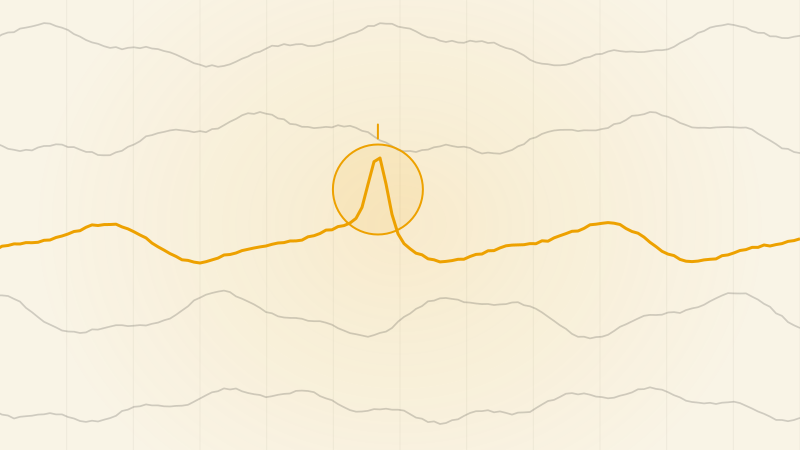
Let's say a generator normally runs at a temperature of 75°C. If the temperature unexpectedly climbs towards 125°C, the ML model would pick up on the change and create what's called an event. This notifies the Prevent team to take a closer look.
Today, Prevent is analyzing data from more than 18,000 sensors spread across 30+ oil and gas installations offshore and onshore
Prevent has more than 520 machine learning models in production that produce millions of predictions every day
We say we trade perfection in favor of generalization, because it's more important to have many good models than one perfect one. If we had fewer models, that would mean less machines being monitored - and therefore a much smaller chance of picking up some real failures.
When the machine learning model triggers an alarm, he will be the first to look and can determine if this could be "normal" unexpected behavior, or if he needs to notify the Integrated Operations Center. Then, they can decide if they want to investigate it further.
Evmorfia “Eva” Andritsoupoulou
Data scientist in Equinor
- Source 3:
Equinor Says AI Saved It $130M in 2025
Supporting excerpts (2)
AI is being used by the company to monitor more than 700 rotating machines with 24,000 sensors across all of its facilities. The AI is used to predict failures and maintenance needs.
Citing improved safety, more stable operations, and reduced risk of sudden shutdowns that can lead to flaring and increased CO2 emissions, Equinor estimates this has saved it $120 million since 2020.
- Source 4:
Equinor's AI Drive Yields $130M in Savings as Digitalization Advances
Supporting excerpts (2)
One application involves monitoring more than 700 rotating machines using around 24,000 sensors across all facilities to predict failures and maintenance needs.
The system has created value of $120 million since 2020.
- Source 5:
Ahmed Khamassi, Former VP of Data Science, Equinor
Supporting excerpts (8)
Omnia is the cloud-based data platform where we develop solutions for managing our data. Our main partner is Microsoft Azure.
The data type that we consume the most is the sensor data and Omnia platform will allow us to get this data out of the IMS systems and manage it.
We are about to create 9,000 machine learning models for predictive maintenance.
Is it Omnia.Prevent project?
We will do that across everything on the Norwegian continental shelf.
Generally, you take a machine and you have sensor data, you know when it fails and try to use machine learning to predict these failures. That is a very long process. Omnia.Prevent flips the problem statement on its head.
So we need AI to distinguish between the sensor values that I’m expecting to see and what I'm not expecting. This is where the engineers help. And if I do that in an automated way, then I can have machine learning everywhere.
The episode was filmed during the Congress AUTOMA 2019 dedicated to automation and digitalization.
- Source 6:
Equinor Hosts dScience Partner Program Workshop on AI and Time Series Anomaly Detection
Supporting excerpts (1)
Equinor’s Hugo Bettencourt Machado presented Omnia.Prevent, the company’s predictive maintenance platform. Now in its fifth year of production use, the system leverages machine learning to anticipate equipment failures, supporting more efficient maintenance planning and reducing downtime.
- Source 7:
Kunstig intelligens har spart Equinor for flere hundre millioner kroner
Supporting excerpts (6)
AI verktøyet Omnia.Prevent, benytter maskinlæring for finne mønster og sammenheng i enorme mengder data.
Larsen viser til et eksempel da Omnia.Prevent identifiserte et problem det nærmest ville vært umulig for et menneske å oppdage i prosessanlegget på Kårstø.
Programvaren rapporterte om en feil på en viktig kompressor og utløste en alarm som førte til at feilen ble oppdaget og håndtert slik at en unngikk driftsstans.
Det ville igjen ført til et tap av flere dager med forventet produksjon, senere estimert til en verdi av 300 millioner kroner.
Omnia.Prevent gjør også at man kan skalere utstyrsovervåkningen til å omfatte mange utstyrstyper på samtlige produksjonsanlegg på en svært kosteffektiv måte.
De siste tre årene i rollen som Vice President for Subsurface Excellence & Digital.













Comments
Start the conversation.
Invited members of the library comment here. Sign in to join the conversation.