
AT&T runs nearly 500 agentic AI workflows in production
AT&T built an agent builder on its Ask AT&T platform and a foundry team that redesigns processes, so agentic workflows now change fiber orders, provision connections and screen sales leads under human checks.
AT&TUnited StatesTelecommunicationsScaled since Nov 2025
- Scale
- Nearly 500 agentic workflows in production, more than 1 million transactions a month
- Scenario
- Agentic workflow automation for business operations
- Business function
- Customer service
- Kind of solution
- Agentic process automation
- Who built it
- Built with a partner (Microsoft)
- Where it runs
- Public cloud
- Human oversight
- Acts under watch
- Organization
- Enterprise
- AI types
- Generative AI, Agentic AI
tl;drAT&T runs nearly 500 agentic workflows and halved provisioning time in fiber-ready buildings.See the results
AT&T uses AI agents to run business workflows such as fiber order changes, internet provisioning and customer service updates. Teams build these agentic workflows in Ask AT&T Workflows, an agent builder added to AT&T’s internal Ask AT&T platform1.
In each workflow, a control agent directs smaller agents that run on fine-tuned small language models2. A person oversees every new workflow until it proves accurate. The Business Agent Foundry, a team set up in early 2025, redesigns each process before agents take it over3.
In November 2026, AT&T had nearly 500 agentic workflows in production, with more than 1 million transactions a month3. Agents halved the time to provision dedicated internet connections in buildings that already had fiber3.
Before the deployment
AT&T is a 151-year-old company that has used computers since they were invented, and much of its order work ran on legacy processes and applications3. The old setup had the following problems:
- Manual order changes: To change a customer fiber installation order, employees retrieved tickets from queues, updated records by hand and returned the tickets to the workflow3.
- Costly legacy applications: Maintaining the applications and training employees to use them cost a great deal3.
- Fragmented data: Mergers and acquisitions had left AT&T’s data spread across many systems3.
Since 2023, AT&T employees had used Ask AT&T, a generative AI platform built with Microsoft, to answer HR questions, translate documentation and write code2. As that work matured, the use cases grew from single tasks into entire processes with decisions throughout2.
“The cost of maintaining those applications, training employees to use them and ongoing maintenance is very high. When you can offset some of that with simpler generative workflows, you’ve got a business case that’s built for itself.”
What was built
The solution redesigns a business process and then hands its steps to a chain of agents that read company data and update AT&T’s systems, under a person’s watch1, 3. The work is divided as follows:
- Business Agent Foundry: Maps each business unit’s processes with industry frameworks, then removes unnecessary steps, handoffs and legacy application dependencies before agents take over3.
- Ask AT&T Workflows: Gives teams a drag-and-drop builder for no-code agents and a pro-code path for finer control1, 2.
- Control agent and smaller agents: The control agent directs the workflow, and smaller agents make the decisions in each step2.
- People: A person oversees the chain of agents, with required checkpoints throughout the process1. Employees can also build personal productivity agents on their own3.
- Generative AI Transformation Office: Ranks every AI use case by its value, and each one needs a formal business case tied to the CFO’s office2.
The documented workflows include the following:
- Customer service updates: The first in-production tool takes update requests, synchronizes data across systems and auto-installs information in real time1.
- Fiber order changes: Agents work directly with AT&T’s mainframe computers, which removed parts of the manual ticket handling3.
- Dedicated internet provisioning: Agents provision connections in buildings where fiber is already installed3.
- Sales prospecting: Agents validate a customer’s location and check fiber availability before a sales representative pursues the opportunity3.
- Network alerts: One agent correlates telemetry, pulls change logs and opens a trouble ticket. A second proposes a fix and writes the code, and a third compiles a summary that the engineer reviews1, 2.
Alternatives considered
AT&T made two documented choices about how its agents are organized:
- Few agents with shared logic, not many specialists: AT&T keeps a relatively small set of agents that run workflows on centrally managed business logic, instead of building many independent, specialized agents3.
- Small language models, not one large model for every step: The smaller agents use small language models because their tasks are narrowly defined, and fine-tuning makes them as accurate as possible2.
Rollout
The foundry’s process work and the builder met in the first production tool, and the program grew from there across business units1, 3. AT&T plans to triple the number of workflows in the next year3.
Technology and architecture
The control agent directs smaller agents, each with a narrowly defined task2. Retrieval agents find the business logic that applies, and planning agents choose the actions, tools and data to complete the task3. The following table lists the components of the solution.
| Layer | What they used | Role | Source |
|---|---|---|---|
| Solution platform | Ask AT&T Workflows | Drag-and-drop and pro-code agent builder in Ask AT&T | 1, 2 |
| Agent orchestration | Master or control agent | Directs the smaller agents in each workflow | 2 |
| Language model | Fine-tuned small language models | Run the smaller agents, tuned for accuracy | 2 |
| Task agent | Retrieval agents | Find the knowledge that applies to a task | 3 |
| Task agent | Planning agents | Choose the actions, tools and data for a task | 3 |
| Prompt and context management | Centrally managed business logic | Holds business rules in context or in memory | 3 |
| Knowledge content | Ask Docs and Ask Data | Hold AT&T information that agents pull | 1 |
| Business or operational system | AT&T mainframe computers | Hold the fiber installation orders agents change | 3 |
| Audit trail | Agent action log | Records every action the agents take | 1 |
| Access and identity | Role-based access at agent handoffs | Enforces data isolation and retention between agents | 1 |
| Monitoring | Continuous drift monitoring | Evaluates performance and detects drift | 3 |
| Cloud platform | Microsoft Azure | Cloud on which AT&T and Microsoft built the builder | 2 |
Data inputs
The agents use the following data:
- Service update requests and order changes: Each request or fiber order change is the input that starts a workflow1, 3.
- Business logic: Rules stored in context or in memory, so that a small set of agents can run many workflows3.
- Company information: Documents and data in Ask Docs and Ask Data, AT&T’s own generative AI tools1.
- Location and fiber availability: Prospecting agents check both for each potential customer3.
- Telemetry and change logs: Network agents correlate them to locate the issue behind an alert1.
Integrations
The agents connect to the following systems:
- Mainframe computers: Agents read and change customer fiber installation orders3.
- Customer service systems: Agents synchronize data across systems and install updates in real time1.
- Trouble ticketing: Network agents open a trouble ticket after they check for known issues2.
From supervised to autonomous
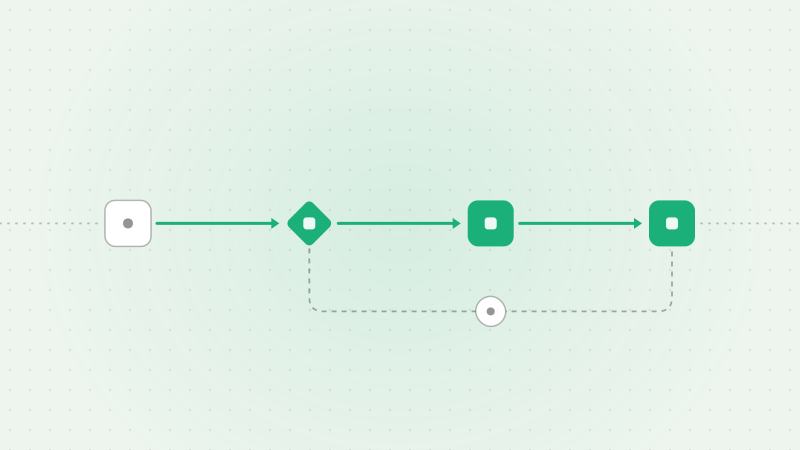
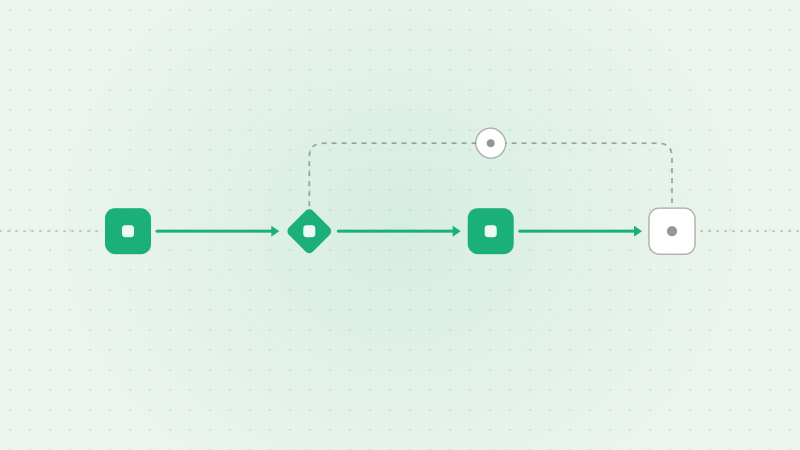
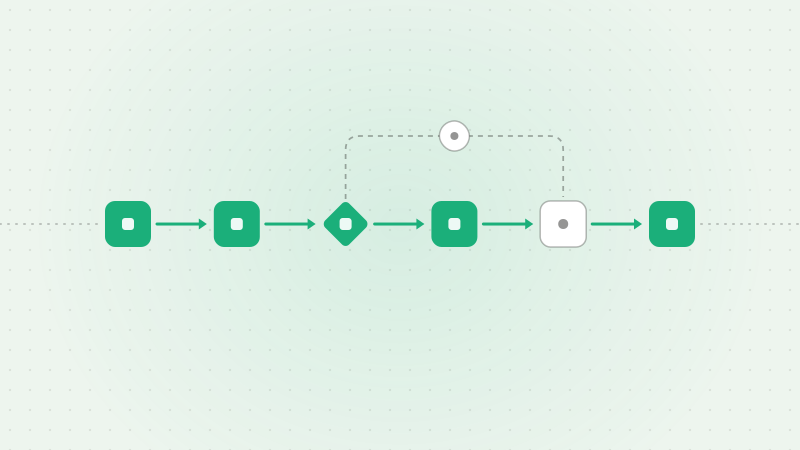
Every workflow starts under human oversight, and its agents act on their own only after they prove accurate3.
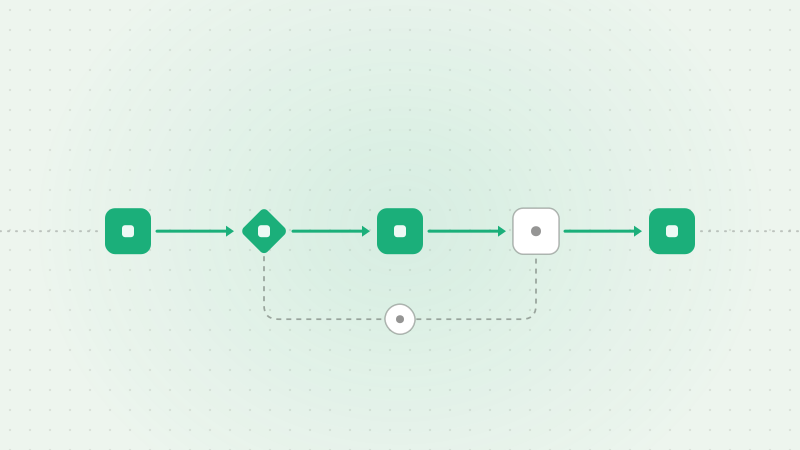
- Data
- Trigger or control
- Handoff to people
- Feedback
Every agent action is logged1. When one agent passes work to the next, data isolation, retention policies and role-based access apply1.
Model routing and cost
Across its AI use, AT&T routes prompts through an AI Gateway, a cache-aware router that it built itself5. At each turn, the gateway weighs speed, cost and expected quality, and it can switch models in the middle of a session5. AT&T processes about 45 billion tokens a day, and the gateway has cut its AI costs by as much as 90%5.
Results
The agentic workflows grew from one production tool in November 2025 into a program across AT&T1, 3. The following table lists the published results.
| Metric | Before | After | Scope and timeframe | Reported by |
|---|---|---|---|---|
| Time to provision dedicated internet | Not disclosed | Halved | Buildings with fiber already installed, reported November 2026 | AT&T, measured3 |
| Agentic workflows in production | Not disclosed | Nearly 500 | Across AT&T, November 2026 | AT&T, measured3 |
| Transactions a month | Not disclosed | More than 1 million | Agentic AI platform, November 2026 | AT&T, measured3 |
The results need the following context:
- Provisioning time: The figure covers dedicated internet connections in buildings where fiber was already installed3.
- Workflows and transactions: Many of the workflows run autonomously, from customer provisioning to sales prospecting3.
- Order changes and service updates: Agents reduced delays on fiber order changes3. The service update tool reduces customer wait times1.
- Return on investment: In January 2026, AT&T put the return of its AI use cases at two times2. In November 2026, it said production AI investments return fivefold within a year3.
AT&T measures each workflow by labor savings, revenue, operating costs and customer satisfaction3. Its next step is to use agents to launch services, enter markets and support new sales channels3.
Lessons learned
AT&T’s path to autonomy starts with oversight. Every workflow starts supervised, and customer-facing workflows pass a security, privacy and compliance review first3.
Redesigning the process came before the agents, and the data had to come first too. Mergers and acquisitions had left AT&T’s data fragmented, so it had to consolidate data and improve connectivity before agents could scale3.
People still handle the hardest problems. AT&T’s CTO Jeremy Legg said fully autonomous networks are “years away,” because complex network problems still need human intervention6.
Some employees worried that AI agents could replace them. Inviting them to bring their own ideas for agents limited that resistance3.
Rajesh Beri, writing on beri.net, questioned the accuracy gate. He argued that “mid-to-high 90s” doesn’t say whether one unit is a step or a transaction, and that one bad edit to shared business logic reaches every workflow at once4. He also warned that a workflow validated on a frontier model hasn’t cleared the bar on a cheaper one4.
All figures are AT&T’s own, from its executives’ talk, interview and blog1, 2, 3, 5. The return figure rose from two times in January 2026 to fivefold in November 2026, a change Beri pointed out2, 3, 4.
Case study scorecard
- Halved Time to provision dedicated internet connections3
- Nearly 500 Agentic workflows in production3
- More than 1 million Transactions a month on the agentic AI platform3
Sources by publication date
- Organization 2
- Vendors and partners 1
- Press, academic, and regulators 5
Build this solution yourself
Analysis
What you need
To build this solution, you need the following in place:
- A team that redesigns processes before automating them: AT&T’s foundry removed steps, handoffs and legacy dependencies first, so its agents didn’t inherit them3.
- Agent access to the systems of record, legacy ones included: The agents change fiber orders on mainframes and sync service data across systems1, 3.
- A way to measure each workflow’s accuracy: AT&T lets a workflow run on its own only after its accuracy reaches the mid- to high 90% range3.
- Consolidated data: AT&T had to bring fragmented data together before its agents could scale3.
Reference architecture
Agentic process automation
An agentic process automation solution gives the routine steps of a business process to software agents that carry each case across the business systems. A task agent reads each case, gathers what's missing, and takes or prepares the next step in the business systems, within limits that rules enforce. People set the limits, approve the outcomes that need approval, take the cases outside the agent's authority, and monitor the rest.
- Business systems (documented in this case study)
- Agent platform (documented in this case study)
- Orchestrator or planner (documented in this case study)
- Task agent (documented in this case study)
- Language model (documented in this case study)
- Checking agent
- Knowledge and context (documented in this case study)
- Shared data layer
- Tools and connectors
- Pricing and scoring models
- Rules and limits
- Fixed workflows
- Handoff to staff
- Review queue or workbench
- Audit trail (documented in this case study)
- Monitoring (documented in this case study)
A check mark shows a building block that this case study's sources document.
Open the reference architectureOthers who built it
In the library
- Lemonade's AI claims bot automates more than half of claims Lemonade
- AI agents spread ML techniques across Meta's ads models Meta
- AI agents handle freight quotes and orders at C.H. Robinson C.H. Robinson
- Walmart's AI negotiates deals with tail-end suppliers Walmart
- Mars cuts brand campaign creation from months to weeks Mars
- Saudia Cargo answers emailed rate requests with AI agents Saudia Cargo
Cite this case study
Enterprise AI Case Studies. "AT&T runs nearly 500 agentic AI workflows in production." Updated Nov 19, 2026. https://case-studies.ai/case-studies/process-automation/PA-021-agentic-business-workflows-att/
@misc{csai-pa-021,
  author = {{Enterprise AI Case Studies}},
  title = {{AT&T runs nearly 500 agentic AI workflows in production}},
  year = {2026},
  note = {Updated 2026-11-19},
  url = {https://case-studies.ai/case-studies/process-automation/PA-021-agentic-business-workflows-att/}
}Sources
The following reporting, and every passage quoted from it, belongs to its publisher, not to this site. Sources and ownership
- Source 1:
Bringing Agentic Power to Bear Across AT&T's Entire Business
Supporting excerpts (11)
Ask AT&T Workflows gives teams a graphical drag-and-drop agent builder.
an update to our internal Ask AT&T tool
The first in-production tool built with Ask AT&T Workflows is already proving its value at scale.
Built together by the AT&T Business and technology development teams, AI agents can take customer service update requests, synchronize data across systems, and auto-install information in real time.
It improves the customer experience and reduces wait times, while allowing employees to focus on higher priority actions.
A human always oversees the "chain reaction" of agents (and has required human checkpoints throughout the process).
able to pull information and data from Ask Docs and Ask Data, our proprietary GenAI tools that securely house AT&T information
Every action the agents take is logged, and when one agent passes off a workload to the next, data isolation, retention policies and role-based access are enforced
An agent can correlate telemetry to identify the location of the alert's issue, pull recent change logs, check for known issues, and open a trouble ticket.
Then, another agent could propose a path to resolution, writing new code to patch the issue.
a third agent could compile artifacts and a summary, which the engineer reviews to plan preventative measures for the future
- Source 2:
Supporting excerpts (13)
In 2023, working closely with Microsoft, it introduced a version of ChatGPT called Ask AT&T, a gen AI platform for everything from answering employees' HR questions and translating customer and employee documentation, to helping software developers write code.
In November, AT&T upped the ante when it worked closely with Microsoft using Azure to create Ask AT&T Workflows, a graphical drag-and-drop agent builder to help teams build agents to automate time-consuming tasks.
AT&T funnels all potential agentic AI and gen AI use cases through a program office called the Generative AI Transformation Office, which considers the potential value of those use cases for customers and the company.
each use case gets a formal business case tied to the CFO's office
Those use cases are what's driving the value, and that value is a two-times return on investment
Now we're looking at entire workflows, entire processes where decisions have to be made throughout that process
His team designed Ask AT&T Workflows with both pro-code and no-code paths. The no-code path offers the drag-and-drop capabilities, while the pro-code path provides much finer control.
Typically in a workflow, what we have is a master agent or control agent, and smaller agents that are making the decisions in the process
In general, we like to have the smaller agents use a small language model because their tasks are very defined. At the scale we're operating in, we've been very successful at fine tuning small language models to be as accurate as possible, and accuracy is the driver of everything.
AT&T network engineers can now use agents to help them resolve network alerts and get customers reconnected after an incident.
pull recent change logs, check for known issues, and open a trouble ticket
We have hundreds of business cases that are waiting for us to prioritize
Markus says one of the keys to the success of AT&T's agentic AI efforts has been getting the business excited by showing them what's possible.
- Source 3:
AT&T uses agentic AI to reinvent business processes from the ground up
Supporting excerpts (28)
Nearly 500 agentic workflows are already in production, and the telecom giant plans to triple that number next year.
AT&T now processes about 45 billion AI tokens daily across the company
assistant vice president of digital transformation and AI at AT&T Business
Its agentic AI platform handles more than 1 million transactions monthly. Many of those workflows now operate autonomously, handling tasks ranging from customer provisioning to sales prospecting.
Speaking at an Amazon Web Services Inc. event in Boston earlier this month
At the heart of the transformation is Business Agent Foundry, a group established in early 2025 to work with individual business units.
Rather than soliciting isolated automation ideas from employees, the foundry maps business processes using industry frameworks and identifies opportunities to eliminate unnecessary steps, organizational handoffs and legacy application dependencies, Corbin said.
One early initiative involved automating interactions with AT&T's mainframe computers. Changes to customer fiber installation orders previously required employees to retrieve tickets from queues, manually update records and return them to the workflow.
Agentic automation eliminated portions of that manual process, reducing delays and accelerating service delivery.
In another example, AT&T halved the time required to provision dedicated internet connections in buildings where fiber infrastructure was already installed.
AT&T's architecture breaks from conventional approaches that build large numbers of independent, specialized agents.
Instead, the company maintains a relatively small set of agents that execute business workflows using centrally managed business logic.
We store the business logic in context or in memory
Retrieval agents identify applicable knowledge, while planning agents determine the actions, tools and data needed to complete a task.
Individual employees can independently create personal productivity agents, but workflows affecting customers must pass through the foundry and undergo security, privacy and compliance reviews.
We've democratized agents to the point where people can use them for personal productivity, but not to where you would drive business workflows that could touch your customers or materially have an impact on your business
Every production workflow initially includes human oversight. Only after accuracy reaches the mid- to high 90% range within a permissible risk profile can agents operate autonomously. Continuous monitoring evaluates performance and detects drift.
Success metrics include labor savings, revenue generation, operating costs and customer satisfaction. Corbin said production AI investments are achieving fivefold returns within a year.
A 151-year-old company that has been using computers since they were invented
is built on a lot of legacy processes and applications
The cost of maintaining those applications, training employees to use them and ongoing maintenance is very high. When you can offset some of that with simpler generative workflows, you've got a business case that's built for itself.
Agents identify promising customers by validating their locations and checking fiber availability before representatives invest time pursuing sales opportunities.
AT&T has had to consolidate fragmented data and provide reliable connectivity across data centers, cloud infrastructure and mobile workers.
We've been through a lot of mergers and acquisitions
Encouraging employees to come forward with ideas for using agents has helped limit resistance from those who worry AI could replace them.
Ultimately, Corbin said responsibility for AI-driven business transformation should be distributed throughout the organization, rather than concentrated in a specialized team like Business Agent Foundry.
I feel privileged to have the team that I do, but in the long run, my team shouldn't exist
Corbin said AT&T is now shifting its focus from improving existing processes toward using agents to launch services, enter markets and support new sales channels.
- Source 4:
AT&T Keeps Human Review on Nearly 500 AI Workflows
Supporting excerpts (6)
Accuracy per what? "Mid-to-high 90s" says nothing about what counts as one unit.
A single threshold across 500 workflows only works if "acceptable risk profile" carries the weight
The cost of central logic is blast radius. One bad edit to a shared rule reaches every workflow at once.
A workflow that cleared the high-90s bar on a frontier model has not cleared it on a cheaper one.
In January the claim was a "two-times return on investment" expected to grow, so the ratio moved fast
The strongest case against copying AT&T is that its numbers are self-reported and its definitions are private.
- Source 5:
The Tokenomics Equation: Balancing Cost and Performance
Supporting excerpts (6)
we're using a proprietary cache-aware router to select the most cost-effective models for each task
Running advanced AI models can be expensive, especially at AT&T's scale: an average of 45 billion tokens per day.
only a small percentage of the tasks we run require that level of sophistication
At each turn, the gateway weighs speed and cost with the expected quality of the output, then routes the prompt to the best model.
It can even change models partway during multi-turn sessions.
The result: we're reducing AI costs as much as 90%, already saving millions.
- Source 6:
AT&T, T-Mobile tighten AI guardrails as autonomous networks remain years away
Supporting excerpts (3)
handing over entire networks to AI-driven autonomous systems is still "years away," Legg said, as human intervention is still required to solve complex network problems.
AT&T has automated some tasks such as analyzing trouble tickets to identify potential fixes and, in some cases, automatically implementing repairs.
There (are) industry problems, not things that AT&T can solve by itself
- Source 7:
The making of a Frontier Firm: How AI is redesigning work at BNY
Supporting excerpts (2)
BNY calls these "digital employees," and there are nearly 140 of them throughout the company: "super agents" built from multiple agents.
a supervisor who assigns tasks and reviews output
- Source 8:
How Pennymac uses AI agents to automate 40% of its backend fulfillment operations
Supporting excerpts (2)
About 40%, 45% of our backend fulfillment operations are handled by AI agents,
We do deployments daily, and we always start with 100% human in the loop.








Comments
Start the conversation.
Invited members of the library comment here. Sign in to join the conversation.