
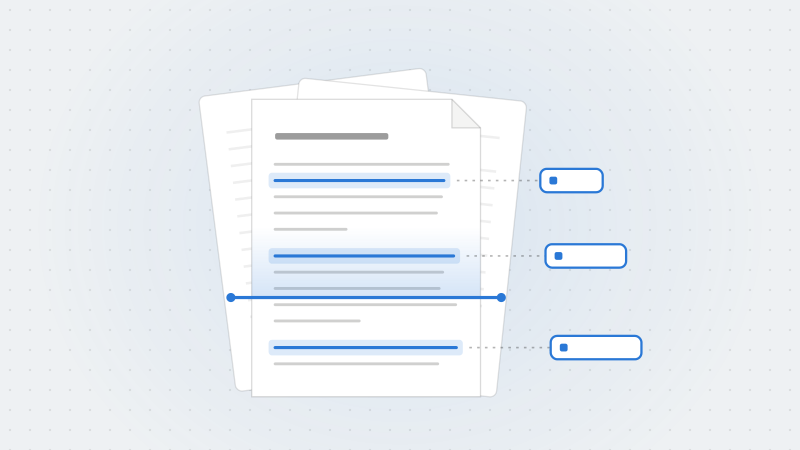
Customs Support Group halves document processing with AI
Customs Support Group built AI into its declaration software to read the invoices, packing lists and bills of lading behind each customs declaration, leaving its declarants to check the result and sign it off.
Customs Support GroupUnited Kingdom, Netherlands, Belgium, Italy, and IrelandFreight and logisticsIn production since 2025
- Scale
- Operational in five countries by May 2025
- Scenario
- Customs declaration document processing
- Business function
- Supply chain and logistics
- Kind of solution
- Document extraction
- Human oversight
- People approve each output
- Organization
- Enterprise, 1,000 to 9,999 employees
- AI types
- Document AI
- Sites
- 16 countries
- Team size
- 12 specialists
tl;drSince its 2025 launch, SmartAssist has cut the document stage of declarations by around 50%.See the results
Customs Support Group (CSG) uses Customs SmartAssist, AI built into its declaration software, to read the trade documents behind each customs declaration1, 3. The tool pre-fills the declaration from invoices, packing lists and bills of lading, and a declarant checks it and signs it off1, 3.
Testing began in CSG’s UK office at the end of 20244. By May 2025, SmartAssist ran in offices in five countries1.
By October 2026, SmartAssist had cut the documentation-processing stage of CSG’s declarations by around 50% from its 2025 launch2. The cut contributed to an efficiency improvement of over 25% per declaration2.
Before the deployment
Before SmartAssist, a CSG declarant typed the data from each declaration’s trade documents into the declaration and checked it1. The manual process had the following problems:
- Volume: CSG handles 4 million customs declarations a year1. A basic declaration involves at least 4–5 multipage documents, and a complex one can need more than 101.
- Document quality: The invoices, arrival notices, packing lists and bills of lading are often unstructured, handwritten or poorly scanned, in many languages3. Some arrive as blurry phone photos with the lorry driver’s hands or feet across the page4.
- Time: A declarant typically needed several hours to input and check the data1.
- Errors: Moving data between documents by hand invites omissions and errors, which can delay clearance, create compliance risks or lead to fines1, 4.
- Post-Brexit paperwork: When the UK left the European Union in 2020, the paperwork at customs exploded4. In 2017, the National Audit Office reported an HMRC estimate that UK declarations could rise from around 55 million to a maximum of around 255 million a year, subject to the customs arrangement agreed with the EU6.
The declarant’s expertise came in only at the end. In an April 2025 interview, CSG’s CDO Ian Featherstone said, “Historically, our agents would sit there for hours but only use their real knowledge for the last 10 minutes to save on tariffs or duties.”4
CSG had already digitized half of its declarations by January 2025, from a share of zero when it started4. Nearly half of the European manufacturers and logistics providers it surveyed at the end of 2024 saw AI as a way to overcome their efficiency and capacity challenges1.
What was built
SmartAssist automates the data entry, and a customs declarant reviews the input and makes the decisions4. It combines artificial intelligence, machine learning and Optical Character Recognition (OCR) to read documents of mixed format and quality, then extracts the customs data and translates it1. The work is divided as follows:
- SmartAssist: Reads each document, handwriting, low-resolution copies and phone photos included, and pre-fills the declaration1. It highlights a field it can’t read in red for typing by hand, and a field it isn’t sure about in orange for review4.
- Declaration software: CSG built the AI into its own declaration software, so declarants see the output in the system they already use3.
- Declarants: Verify and adjust all the processed data, then sign off each declaration and submit it to the authorities3, 1. No AI-generated declaration goes directly to authorities or partners3.
- Machine-learning component: Archives every correction and applies it to similar future cases, so that the same mistake isn’t repeated3.
CSG keeps the AI to simple data input and repetitive tasks because of the fear of non-compliance1. It aims SmartAssist mainly at high-volume transactions1.
“We wanted to strip away the burden of repetitive manual entry without stripping away the control and decision-making power of our people”
The time saved goes to work that needs a customs expert1, 4. Chief executive John Wegman named reviewing declarations, resolving complex issues and personal client support1. Featherstone’s examples were a revised Harmonized System (HS) code for a product or a new trade agreement that cuts a client’s duties4.
Rollout
CSG ran several rounds of AI testing and put great effort into honing and training the system before the full rollout4. The rollout reached offices in five countries within the first half of 2025, and CSG expected more than one million declarations to pass through SmartAssist that year1.
Customs Support Italy’s IT department in La Spezia has 12 specialists, including an automation team that uses AI to phase out manual entry3. The department trains customs experts across the Southern Cluster of Italy, Spain and France3. CSG keeps the implementation gradual so that the new software doesn’t disrupt the workflows it’s meant to modernize3.
Diego Tocchella, managing director of Customs Support Italy, said, “Change is never easy, especially when it alters long-standing workflows.”3
In October 2026, CSG appointed Robert Kent to a new role of Chief Data & AI Officer2. It also ran a separate pilot of AI agents, built in-house on its proprietary AI platform, that processed around 1,000 export declarations entirely by AI2. The pilot cut processing times by a factor of three, and CSG expects the agents to scale across its European network in 20272.
Technology and architecture
SmartAssist sits between the documents that arrive with a shipment and the declaration screen1, 3. Logistics providers, freight forwarders and other parties in the trade issue those documents in large numbers4. The following table lists the components of the solution.
| Layer | What they used | Role | Source |
|---|---|---|---|
| Solution platform | Customs SmartAssist | Reads trade documents, extracts and translates the customs data, and pre-fills the declaration | 1, 2 |
| Document and OCR model | Optical Character Recognition (OCR) | Interprets scanned, photographed and handwritten documents in the common formats and languages of customs paperwork | 1, 3 |
| Feedback capture | Machine Learning (ML) component | Archives every correction and applies it to similar future cases | 3 |
| Business or operational system | Customs clearance and declaration software | Holds the declaration and presents the processed data to declarants for verification and adjustment | 3 |
The red and orange flags most likely come from a confidence score that the tool gives each field.
Data inputs
SmartAssist uses the following data:
- Trade documents: Invoices, arrival notices, packing lists and bills of lading are the input for each declaration3.
- Corrected documents: Declarants’ corrections are fed back to the AI model, which learns from its mistakes4.
- Accuracy scores: Declarants score the accuracy of the AI’s work with a traffic-light system, which continually trains the AI8.
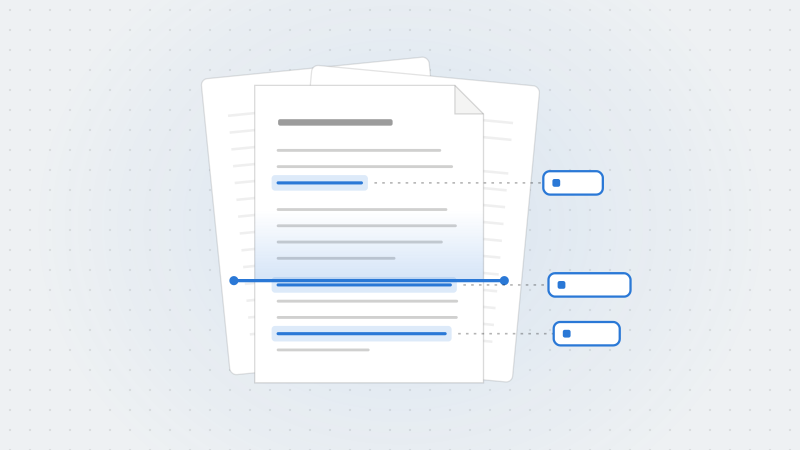
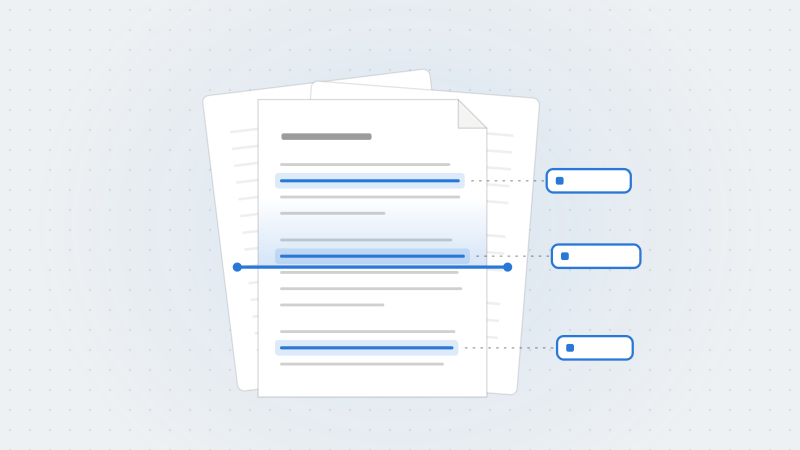
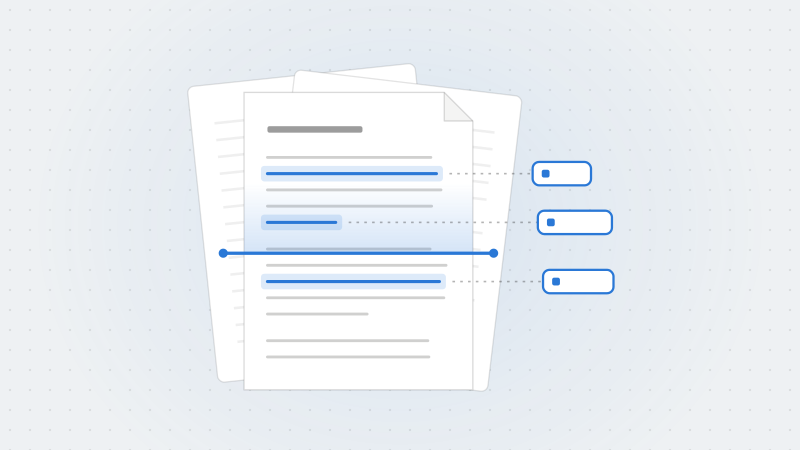
How one declaration flows through the system
A declaration moves from the client’s documents to the customs authority, and only a declarant signs it off and submits it1, 3.
Results
The October 2026 figures cover declarations handled with SmartAssist from its 2025 launch, and the earlier figures come from the UK test round2, 4. The following table lists both.
| Metric | Before | After | Scope and timeframe | Reported by |
|---|---|---|---|---|
| Documentation-processing stage of a declaration | Not disclosed | Reduced by around 50% | Declarations handled with SmartAssist since its 2025 launch, reported October 2026 | CSG, measured2 |
| Overall efficiency per declaration | Not disclosed | Improved by over 25% | Same scope and period | CSG, measured2 |
| Efficiency on complex goods declarations | Not disclosed | Improved by 36% | First test round, UK office, from the end of 2024 | CSG via Intelligent CIO, pilot4 |
| Efficiency of documentation processing on complex goods declarations | Not disclosed | Improved by over 30 per cent | First test round, UK, 2024 | CSG, pilot1 |
| Efficiency on simple, repetitive, high-volume tasks | Not disclosed | Improved by up to 99% | First test round, UK office | CSG via Intelligent CIO, pilot4 |
| Declarations per person issued through the new system, Italy | 2025 targets set | December 2025 targets met in October | Customs Support Italy, 2025 | CSG, measured3 |
The following metrics need explaining:
- Documentation-processing stage: Covers the document stage of each declaration, not the whole declaration2.
- Overall efficiency per declaration: Covers the whole declaration. The shorter document stage contributed to it, along with more consistency and quality2.
- Test-round figures: Pilot results from the first round of testing in the UK office4, 1. At the time, CSG aimed for an overall efficiency increase of up to 50 per cent by the end of 20251.
- Italy: A target met, not a measured gain. Customs Support Italy reached its 2025 declarations-per-person target two months early3.
Lessons learned
SmartAssist spread fast and left every decision with a customs expert. It ran in five countries within about six months of the first UK test1, 4. The design answers the compliance worry, because the AI does the data entry, flags what it can’t read or isn’t sure of, and leaves every signature to a declarant3, 4.
The gain sits in the document stage. In May 2025, CSG headlined up to 50% more efficiency in preparing declarations, and by October 2026 a cut of that size applied to the document stage while the whole declaration improved by over 25%1, 2. The difference is probably the work the tool doesn’t do, such as classification, valuation and the declarant’s review.
The figures are CSG’s own, and they don’t always line up1, 2, 3, 4. For complex goods declarations, the interview gave 36% and the release a month later gave over 30 per cent, while the up to 99% is a ceiling for the simplest work4, 1. The interview and CSG’s announcement on the Multimodal site count 14 markets, and the press release counts 16 countries4, 8, 1.
The tool has documented limits. Fields that the AI couldn’t read still had to be typed in by hand4. Over a quarter of the customers CSG surveyed at the end of 2024 worried about compliance violations from automated interventions, and the interview put the share that saw AI as a potential risk at 27%1, 4.
Declarants were nervous at first and assumed that a tool working 50% faster meant fewer jobs4. Featherstone said the time went to more interesting work, and he also said of new technology, “It’s not always going to work”4.
TT Club, a transport insurer, set out the general risks of AI in customs declarations in February 20265. Poor data and over-reliance on automation can cause undetected errors, models might lag behind regulation, staff can lose expertise, and the forwarder can stay liable5. CSG’s review of every declaration addresses the first two risks, and its training of customs experts addresses the loss of expertise3.
Case study scorecard
- around 50% shorter documentation-processing stage2
- over 25% efficiency improvement per declaration2
- 36% efficiency gain on complex goods declarations4
Sources by publication date
- Organization 4
- Vendors and partners 2
- Press, academic, and regulators 3
Build this solution yourself
Analysis
What you need
To build this solution the way CSG did, you need the following in place:
- Your own declaration software: CSG built the AI into the screen its declarants already use, so the red and orange flags appear there and every correction is captured as they work3.
- High-volume, repeating documents: CSG aimed the tool at high-volume transactions, where the same kinds of documents come back and the correction archive has something to learn from1.
- Experienced declarants: A customs expert reviews every declaration, which answers the compliance worry and produces the corrections that the tool learns from3.
Reference architecture
Document extraction
Document extraction reads the documents, forms, and images that an organization receives, sorts each one to its case, and turns it into structured fields for the business system that acts on it. Models read each document into fields, and ordinary software checks the fields against business rules and the organization's reference records. A reviewer compares the fields with the source before they reach the business system, or sees only the doubtful ones, and the corrections measure and improve the models.
- Document intake
- Document extraction platform (documented in this case study)
- Preparation
- Text recognition (documented in this case study)
- Extraction model
- Validation rules
- Reference records
- Workflow engine
- Review workbench
- Answer explanation
- Connectors
- Business system (documented in this case study)
- Corrections log (documented in this case study)
- Accuracy monitoring
A check mark shows a building block that this case study's sources document.
Open the reference architectureOthers who built it
- Sumitomo Warehouse: The logistics company turned to ABBYY’s document-processing platform to capture invoices of varying layouts for its customs clearance work, cutting invoice processing from more than 40 minutes to 4 minutes per document7.
- Portumna Pastry: The Irish pastry supplier used ABBYY’s intelligent document processing to extract the data from its transport documents and submit it to national customs systems without manual review, cutting its EU/UK border clearance from one hour to five minutes9.
In the library
- Condé Nast speeds rights contract analysis with Claude Condé Nast
- Cargolux drafts cargo quotes from customer emails with AI Cargolux Airlines International
- Air France KLM Martinair Cargo uses AI to book and quote Air France KLM Martinair Cargo
- Pennsylvania's AI check cuts illegible benefit documents Pennsylvania Department of Human Services
- How Liberty Global matches supplier invoices with GenAI Liberty Global
- Parte embeds AI in property managers' email in 27 offices Parte
Cite this case study
Enterprise AI Case Studies. "Customs Support Group halves document processing with AI." Updated Nov 18, 2026. https://case-studies.ai/case-studies/document-intelligence/DI-003-customs-trade-document-processing/
@misc{csai-di-003,
  author = {{Enterprise AI Case Studies}},
  title = {{Customs Support Group halves document processing with AI}},
  year = {2026},
  note = {Updated 2026-11-18},
  url = {https://case-studies.ai/case-studies/document-intelligence/DI-003-customs-trade-document-processing/}
}Sources
The following reporting, and every passage quoted from it, belongs to its publisher, not to this site. Sources and ownership
- Source 1:
Customs Support Group Deploys AI-Powered Smart Document Processing Across Europe
Supporting excerpts (27)
Customs Support Group (CSG), Europe's leading provider of customs clearance and trade solutions, is introducing AI-powered Customs SmartAssist solution for documentation processing at all its locations in Europe.
CSG already processes every second customs declaration digitally
out of 4 million annually
Even a basic declaration involves handling at least 4–5 multipage documents, while more complex cases can require over 10, including import/export licenses, certificates of origin, and various regulatory compliance documents.
Transferring, consolidating, and processing information from various documents consumes valuable time and is prone to omissions or errors, which can lead to delays in customs clearance, non-compliance risks or even fines
says John Wegman, CEO of Customs Support Group
AI-powered document processing eliminates manual data entry, freeing our customs experts to focus on higher-value tasks such as reviewing customs declarations, resolving complex issues, and delivering personalised client support.
Up to 50% increase in efficiency in the preparation of digital customs declarations
The Customs SmartAssist solution uses artificial intelligence (AI), machine learning, and Optical Character Recognition (OCR) to process documents accurately in various formats and qualities
including handwritten information or low-resolution copies and mobile phone photos
it automatically extracts all relevant customs-specific information and instantaneously translates it
The system is designed to be self-learning: if any data fields are unclear, they are flagged for CSG experts to review before submission.
Once corrections are made, the AI learns from the feedback and continuously improves its ability to interpret and process similar documents accurately in the future.
After the first round of testing in the United Kingdon, in 2024, the efficiency of documentation processing improved by over 30 per cent even for complex goods declarations.
As the module is self-learning, the aim is to achieve an overall increase in efficiency of up to 50 per cent by the end of the year
Customs SmartAssist is already operational across CSG's offices in the United Kingdom, Netherlands, Belgium, Italy and Ireland
With a presence in 16 countries across Europe, CSG aims to achieve a wider rollout network in the second half of 2025.
the company anticipates passing over one million customs declarations through the SmartAssist system this year
focusing primarily on high-volume transactions
A customs declarant typically needs several hours to input and check the data
Once the document has been completed by the AI, it still requires the complex expertise and judgement of our customs professionals
to review all entries, sign off the declaration, and submit it to the authorities
But the fear of non-compliance risks emphasizes the crucial role of human customs knowledge and expertise.
We therefore use automation and AI primarily for simple data input and repetitive tasks.
conducted at the end of 2024 with leading European manufacturers and logistics providers
nearly half of respondents see AI as a game-changer for overcoming efficiency and capacity challenges
there are concerns (over a quarter of respondents) about possible compliance violations through automated machine interventions
- Source 2:
Customs Support Group Accelerates AI Strategy with Appointment of Chief Data & AI Officer
Supporting excerpts (10)
Since its launch in 2025, SmartAssist has reduced the documentation-processing stage of customs declarations by around 50%, contributing to an overall efficiency improvement of over 25% per declaration, while increasing consistency and quality.
SmartAssist, its AI-powered intelligent document processing tool
the company has appointed Robert Kent as Chief Data & AI Officer
CSG has begun testing agentic AI capabilities in live customs environments.
In its first pilot, involving around 1,000 export declarations processed entirely by AI, the technology has delivered highly accurate results while reducing processing times by a factor of three.
Developed in-house as part of CSG's proprietary AI platform, these capabilities are expected to scale across the Group's European network in 2027.
This includes capabilities such as the automated intake and processing of clearance requests, document interpretation, regulatory validation, goods classification support, and gap analyses.
To date, much of the value generated by AI has come from automating highly structured activities such as document processing and data extraction.
Traditional automation has already delivered significant efficiency gains in highly structured parts of the declaration process.
backed by a team of 1700 dedicated customs professionals
- Source 3:
Artificial Intelligence (AI) Meets Customs: The Transformation by Customs Support Group
Supporting excerpts (21)
The Group has integrated Artificial Intelligence (AI) into its customs clearance and declaration software
such as invoices, arrival notices, packing lists, and bills of lading
is often unstructured, handwritten, or poorly scanned in various languages
Our advanced Optical Character Recognition (OCR) functionality overcomes these barriers by effectively interpreting the most common formats and languages found in customs documentation.
AI-generated declarations are never sent directly to authorities or partners; instead, they are reviewed by a CSG customs expert.
the system presents processed data to declarants for verification and adjustment
The real game-changer is the Machine Learning (ML) component: the system archives every correction, applying that knowledge to similar future cases to ensure the same mistake isn't repeated.
Gianluca Schiavina, IT Director for the Southern European Cluster at Customs Support Group
Our AI enhancements were designed specifically for customs agents.
We wanted to strip away the burden of repetitive manual entry without stripping away the control and decision-making power of our people
The IT department of Customs Support Italy, based in La Spezia, consists of 12 specialists (7 in Italy, 5 off-site)
Development, dedicated to updating internal software and creating custom S2S interfaces for clients
Automation, tasked with leveraging AI to phase out manual entry
enabling them to train customs experts across the Southern Cluster (Italy, Spain, and France)
Following the rollout and training phase, the Group measured the real-world impact of these systems.
Diego Tocchella, Managing Director of Customs Support Italy
Change is never easy, especially when it alters long-standing workflows.
We set 2025 targets for declarations per capita issued via the new system.
I am proud to say that Italy led the way
we hit our December 2025 targets as early as October
a gradual implementation is equally important to avoid disrupting internal workflows
- Source 4:
Customs Support Group carries industry from burden to business opportunity through AI innovation
Supporting excerpts (30)
By the end of 2024, it thus began testing AI-powered Intelligent Document Processing within its UK office.
When the UK withdrew from the European Union back in 2020, there was an explosion of additional paperwork at customs.
Ian Featherstone, CDO, Custom Support Group
Logistics providers, freight forwarders and other key players are all issuing barrages of documents
reducing border delays and hefty fines introduced by errors in human data entry
with 42% of big companies in these industries agreeing that AI could change the game in terms of efficiency and capacity challenges
This highlighted the importance of maintaining oversight by qualified human expertise when introducing any kind of AI into customs.
AI is used to automate data entry within the documents, then a customs declarant reviews the input, applying deep expertise and judgement.
Only then can declarations be signed off and submitted to the authorities.
a customs agent might use additional time to suggest revising a specific HS code or leveraging a new trade agreement
Historically, our agents would sit there for hours but only use their real knowledge for the last 10 minutes to save on tariffs or duties.
reaching a major milestone in January 2025: processing every second of its four million annual customs declarations fully digitally
More than half our declarations are done digitally now
but that figure was zero when we started
great effort was put into honing and training the system before full rollout
Customs Support Group thus launched several rounds of AI testing
for example in blurry phone photos of documents obscured by the lorry driver's hands or feet
After the first round of testing, the efficiency of the customs process improved by up to 99% for simple, repetitive, high-volume tasks, increasing by 36% for more complex goods declarations.
Any information that AI was unable to read was highlighted in red and still had to be manually entered and anything it wasn't sure about was highlighted in orange, to be reviewed and validated by an agent.
Corrected documents were then fed back to the AI model, which learns from its mistakes to allow for continual improvement.
Initially, our agents felt nervous
when people see tech come in and work 50% faster, they automatically assume that we will need less people
Our efficiency savings have actually improved career satisfaction, as people can now focus on the interesting jobs
Currently live in the UK, Custom Support Group's AI solution will soon be deployed across operations in Italy, Sweden, the Netherlands and Belgium.
By the third quarter of 2025, this extension of services will have been expanded to include all 14 of the Group
increase its current digital 50% processing rate to between 80% and 90% of all customs declarations in 2026
The remaining 10% to 20% reflects only those companies that are bound to continue submitting paper-based documents despite advancements
27% of respondents to the same 2024 CSG Strategic Radar Customer Survey also viewed AI as a potential risk
Our development team is very agile and can pick up new tech that can be in production just a week later.
It's not always going to work
- Source 5:
TT Talk - Using AI for customs declarations
Supporting excerpts (6)
Poor data quality can lead to incorrect declarations, and over-reliance on automation may reduce human oversight and increase the risk of undetected errors.
there is a risk the AI models may lag behind regulatory updates
Legal liability for customs misdeclarations can remain with the freight forwarder, even if errors are made by automated systems
Freight forwarders' staff may lose expertise in customs procedures if they become overly reliant on AI systems.
should ensure they maintain robust processes for human oversight and review
which will need to be addressed through ongoing training to supervise and validate machine-learning outputs
- Source 6:
The Customs Declaration Service
Supporting excerpts (3)
HMRC currently estimates that, subject to the new customs arrangement agreed with
these changes could increase the number of customs declarations from around 55 million to a maximum of around 255 million each year
This number is subject to the new customs arrangement negotiated with the EU
- Source 7:
ABBYY Intelligent Document Processing Reduces Invoice Processing Time by 90%
Supporting excerpts (5)
Sumitomo Warehouse Co., Ltd. was established in 1899
They turned to ABBYY to streamline customs clearance operations
capture invoices that come in
different layouts with irregular text
from more than 40 minutes to 4
- Source 8:
AI technology to revolutionise customs declarations
Supporting excerpts (3)
Using a traffic light system, the declarant can score the accuracy of the AI
which continually trains the AI over time
is now rolling it out across 14 European markets
- Source 9:
Supporting excerpts (4)
Ireland-based pastry supplier Portumna Pastry Ltd
to reduce their customs clearance times at the EU/UK border from one hour to just five minutes
ABBYY IDP accelerated the customs clearance process by extracting data from complex transportation and logistics documents
allowing critical data to be submitted to national customs systems without the need for any manual review















Comments
Start the conversation.
Invited members of the library comment here. Sign in to join the conversation.