
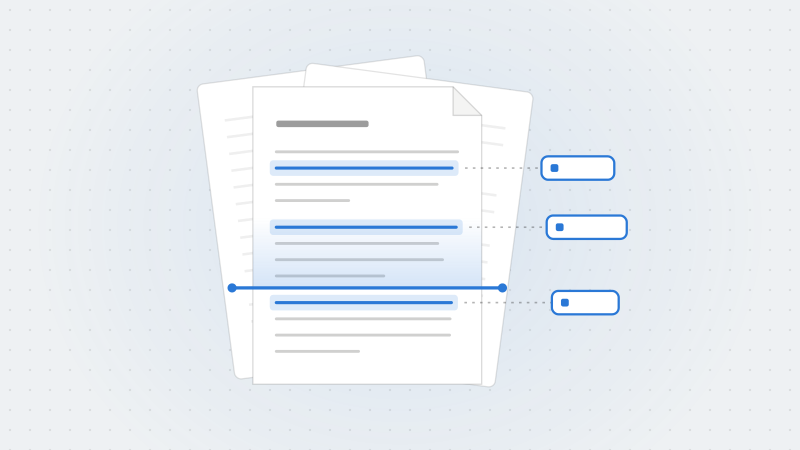
AZ Oostende drafts consultation reports with ambient AI
AZ Oostende moved Cavell's ambient AI scribe from a pilot to permanent use, so its doctors get a structured draft report in the patient record from each recorded consultation.
AZ OostendeBelgium (Ostend, West Flanders)Hospitals and health systemsIn production since Jul 2026
- Scale
- Neurology, pulmonology, oncology and psychiatry departments
- Scenario
- Ambient clinical documentation
- Business function
- Clinical care
- Kind of solution
- Conversation summarization
- Who built it
- Vendor product (Cavell and Nexuzhealth)
- Where it runs
- Vendor-hosted service
- Human oversight
- People approve each output
- Organization
- Non-profit
- AI types
- Speech AI
tl;drAmbient AI drafts consultation reports at AZ Oostende, right in more than 9 out of 10 cases.See the results
AZ Oostende, a hospital in Ostend, Belgium, uses Cavell’s ambient AI scribe to turn doctor-patient consultations into structured medical reports1. The doctor no longer types the report while seeing the patient1.
In July 2026, after an extensive test, the hospital put the tool into permanent use, mainly in neurology, pulmonology, oncology and psychiatry2. The tool runs inside the hospital’s electronic patient record, Nexuzhealth Hospital: KWS3, 4.
The doctor reviews every draft and keeps final responsibility for it. The tool gets the report right in more than 9 out of 10 cases1.
Before the deployment
Doctors at AZ Oostende wrote the consultation report themselves, in the patient record, while the consultation ran1, 3.
- Divided attention: During a consultation, the doctor listened, asked questions, weighed the treatment and recorded everything in the medical record at the same time3.
- Long consultations: In neurology, pulmonology, oncology and psychiatry, consultations are often long and detailed1.
- Administrative burden: Doctors described writing the reports as a bureaucratic hassle1.
The hospital started its test to answer the heavy administrative pressure on healthcare3.
What was built
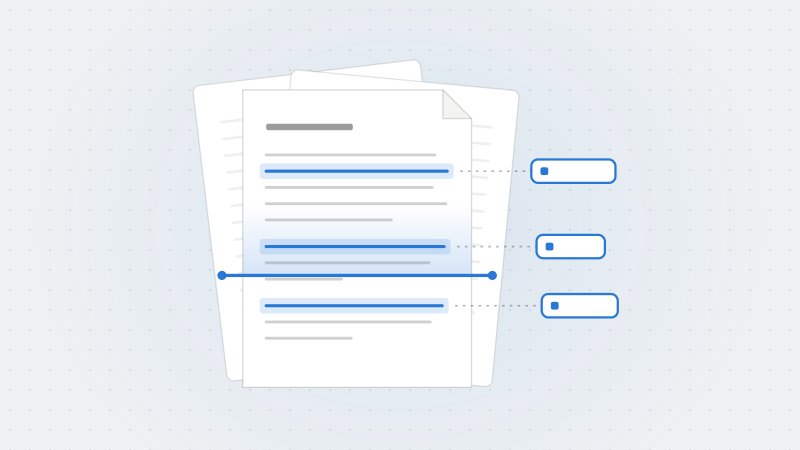
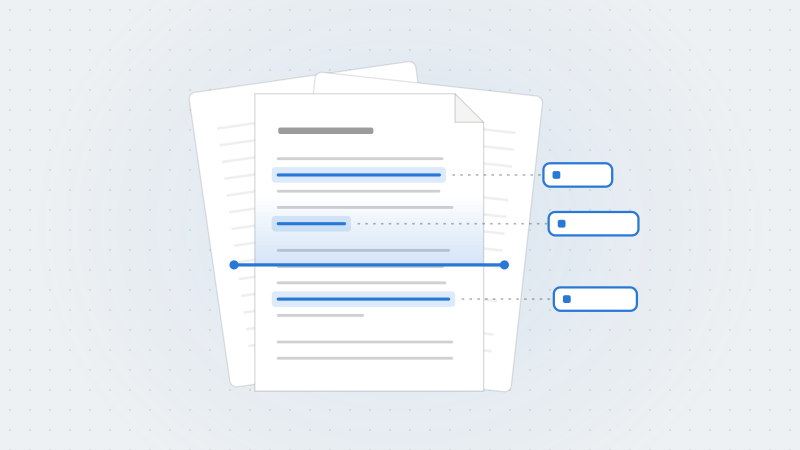
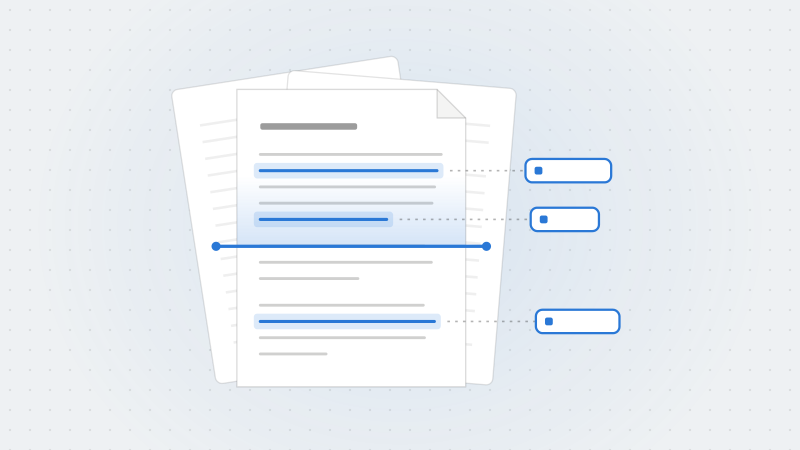
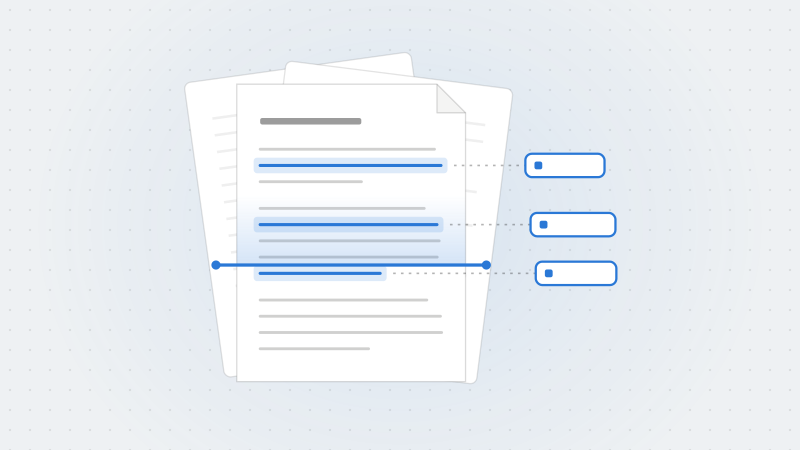
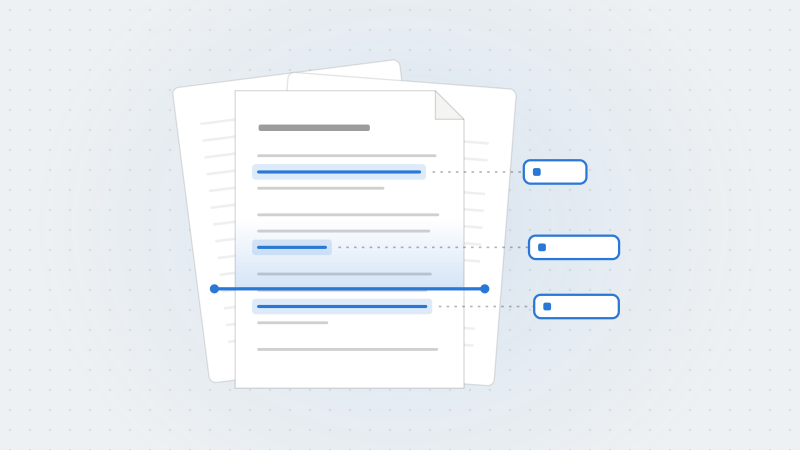
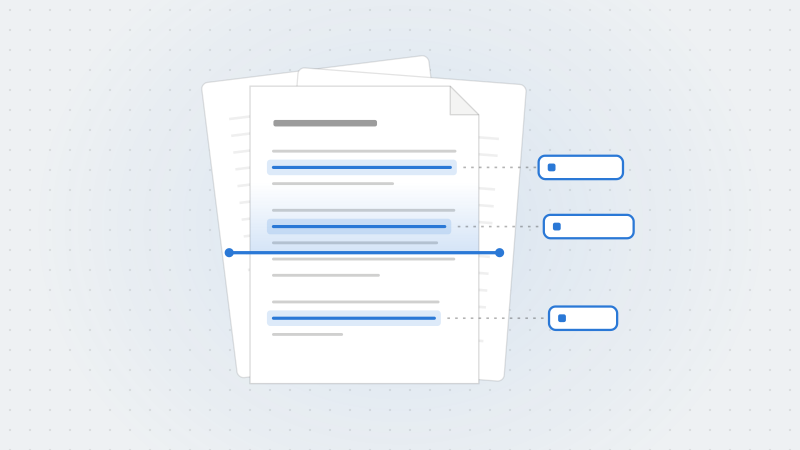
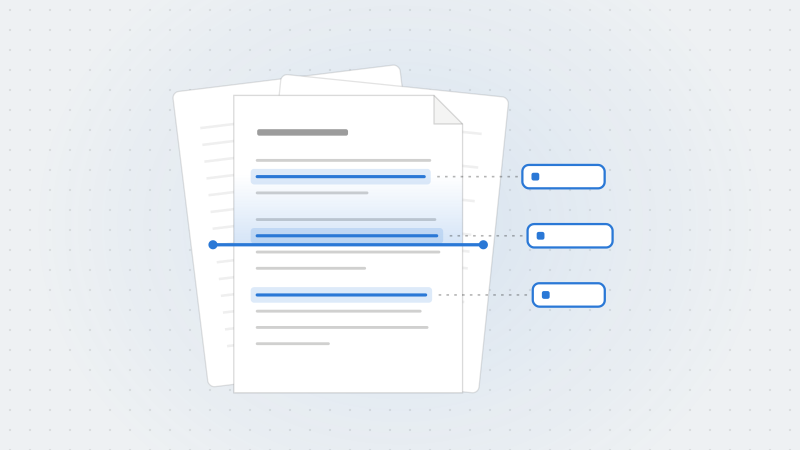
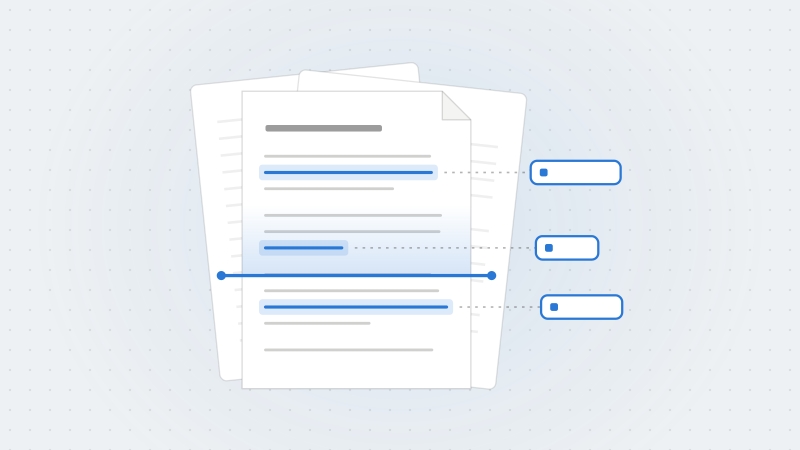
The solution records the consultation and converts it into a structured medical report that includes the patient’s medical history and medication1. The report appears in the patient record, where the doctor checks it and validates it4.
- Cavell Ambient Scribe: Listens in the background during the consultation and generates the structured report for the electronic patient record3, 7.
- Nexuzhealth Hospital: KWS: The doctor launches Cavell from the record module and receives the finished draft there, without typing4.
- Doctor: Asks the patient’s permission first, then reviews the report after the consultation, completes it where needed and stays responsible for its content1, 3.
- Patient: Can decline. The tool isn’t used for that consultation1.
Nurses and paramedics at AZ Oostende use the software too4.
“My productivity is increasing, my workload and especially stress are decreasing. I also have the impression that the quality of care for my patients is improving.”
Rollout
The first pilot ran on Cavell’s web version with AZ Oostende doctors, and it grew into an integration inside the patient record4. A pilot of the integrated version with test users followed in early 20264.
Technology and architecture
| Layer | What they used | Role | Source |
|---|---|---|---|
| Solution platform | Cavell Ambient Scribe | Records the consultation and drafts the structured report | 1, 7 |
| Business or operational system | Nexuzhealth Hospital: KWS | Patient record that launches Cavell and holds the report for validation | 3, 4 |
Cavell is a speech-to-text-to-code engine6. Cloud-based processing converts the speech to text, and a set of collaborating AI models turns the text into a coded report of free text, diagnosis codes and structured parameters6. The case input is the conversation itself, and the audio is deleted right after the report is drawn up1.
How one consultation flows through the system
- The doctor asks the patient’s permission to use the tool1. In KWS, the doctor opens the consultation, ticks informed consent and presses start5.
- Cavell listens through an external microphone that connects by USB5.
- The transcription step tells apart what the patient, a companion and the physician say6.
- Cavell fills the template of the doctor’s specialty, with 12 fixed sections such as reason for visit, history and conclusion5. It leaves out sections that didn’t come up and filters out small talk and noise5.
- The doctor sees the draft beside the transcript, checks where each detail comes from and adjusts it5.
- One click finalizes the report in KWS5.
Results
| Metric | Before | After | Scope and timeframe | Reported by |
|---|---|---|---|---|
| Reports the tool gets right | Not disclosed | More than 9 out of 10 cases | AZ Oostende consultations, July 2026 | AZ Oostende, measured1 |
| Pilot user ratings, out of 5 | Not disclosed | Ease of use 4.50/5, patient interaction 4.86/5, less admin 4.58/5, report quality 4.33/5 | Pilot studies at UZ Leuven and AZ Oostende | Cavell, pilot5 |
- Reports the tool gets right: The share of consultation reports that need no correction from the doctor, as of the permanent rollout in July 20261.
- Pilot user ratings: Scores that pilot users at two hospitals gave the tool5.
- Completeness: The hospital finds the reports often more complete, because information is sometimes overlooked during a consultation, for example when the doctor takes a phone call1.
- Patients who speak other languages: The tool translates such a conversation directly into the record1. A dermatologist at AZ Oostende got good Dutch reports from consultations held in French4.
Lessons learned
The doctors value the conversation more than the time saved. For many of them, the main gain is more eye contact and fewer interruptions, with a better report still at the end4. Dr Van Diest, a neurologist on the project from the start, found the conversation more natural because he types less3.
The tool still makes minor errors that need correcting, so the doctor reviews every report1. The hospital’s IT director, Brecht Dekeyser, calls the tool an aid that leaves the doctor responsible for the content1.
The help with other languages depends on the doctor. A consultation can run in the patient’s language, but the doctor must speak it too, because the doctor reviews and approves the report5.
Two reports of the same day describe the stage differently. VRT NWS reported permanent use after an extensive test2. A Belga report in Le Spécialiste described a test that had run for several months in a secure, strictly delimited environment3.
The accuracy figure is the hospital’s own, given by its IT director in an interview with VRT NWS1. The pilot ratings are Cavell’s, from its pilots at UZ Leuven and AZ Oostende5.
Case study scorecard
- 9 out of 10 cases Consultation reports the tool gets right1
- Source quality: 69%, High quality. Rests on a news report.
- Rules and standards: EU AI Act
- Transparency duties under the EU AI Act5
Sources by publication date
- Organization 1
- Vendors and partners 4
- Press, academic, and regulators 4
Build this solution yourself
Analysis
What you need
- A patient record that hosts the scribe: At AZ Oostende, the doctor starts Cavell inside Nexuzhealth Hospital: KWS and validates the report there. Check that your record system can embed the scribe or receive its reports4.
- A consent step at every consultation: The hospital asks each patient first, and KWS won’t start Cavell until the doctor confirms that the patient was informed1, 5.
- Specialty templates for the departments you start in: The report follows the template of each specialty, and AZ Oostende began where consultations are long and detailed5, 1.
Reference architecture
Conversation summarization
A conversation summarization solution turns the audio of a call or a consultation into the summary, note, or record entry that a staff member would otherwise write by hand. Speech recognition turns the audio of each conversation into a transcript, and a language model writes a draft summary from it. The staff member who held the conversation checks and corrects the draft before it enters the record system, or the platform writes routine after-call summaries straight into it.
- Conversation capture
- Summarization platform (documented in this case study)
- Speech recognition
- Privacy controls
- Summarization model
- Record system (documented in this case study)
A check mark shows a building block that this case study's sources document.
Open the reference architectureOthers who built it
- UZ Leuven: The university hospital ran one of the first pilots of Cavell inside Nexuzhealth Hospital: KWS4.
- Jeroen Bosch Ziekenhuis: In this Dutch hospital, the care provider starts an AI recording, checks the summary and adds it to the patient record9.
- Erasmus MC: Its researchers observed 535 consultations at Dutch general practices, and the AI note-taker saved doctors 42.7 seconds per consultation on average8.
In the library
- St Helens rolls out Magic Notes to 450 social care staff St Helens Borough Council
- Staphorst subtitles council meetings with Amberscript AI Municipality of Staphorst
- Barts Health rolls out Oracle's AI scribe after NHS pilot Barts Health NHS Trust
- Frisian councils subtitle meetings with bilingual speech AI Municipality of Noardeast-Fryslân
- How Suffolk cut care assessment write-ups with FormFlow AI Suffolk County Council
- Kent County Council takes Magic Notes to 1,100 care staff Kent County Council
Cite this case study
Enterprise AI Case Studies. "AZ Oostende drafts consultation reports with ambient AI." Updated Nov 20, 2026. https://case-studies.ai/case-studies/document-intelligence/DI-033-ambient-consultation-reports-az-oostende/
@misc{csai-di-033,
  author = {{Enterprise AI Case Studies}},
  title = {{AZ Oostende drafts consultation reports with ambient AI}},
  year = {2026},
  note = {Updated 2026-11-20},
  url = {https://case-studies.ai/case-studies/document-intelligence/DI-033-ambient-consultation-reports-az-oostende/}
}Sources
The following reporting, and every passage quoted from it, belongs to its publisher, not to this site. Sources and ownership
- Source 1:
Ostend Hospital uses AI to draw up medical reports, especially handy with non-Dutchspeakers
Supporting excerpts (13)
AZ Oostende, Ostend Hospital, is now using artificial intelligence (AI) to convert the information gleaned during consultations with patients automatically into medical reports.
Thanks to this tool, doctors no longer have to type up a report themselves when they see patients.
This improves contact with the patient, is more reliable and also helps us to better assist patients who speak other languages
The AI tool, developed by Cavell, the Ghent-based health tech start-up, was first extensively tested at AZ Oostende, and is now being rolled out permanently.
We are using it primarily in the neurology, pulmonology, oncology and psychiatry departments, where consultations with patients are often long and detailed
In practical terms, the tool records the conversation and then converts it into a structured medical report, including the patient
Doctors also say that they often find writing such medical reports a bureaucratic hassle.
We’ve noticed, for instance, that the report is often more comprehensive, as information is sometimes overlooked during a consultation – for example, if the doctor receives a phone call.
It’s also useful during consultations with patients who speak a different language, as the AI tool helps to translate the conversation directly into the medical record.
But it remains a tool. The doctor always reviews the report afterwards and retains ultimate responsibility for its content. Occasionally, minor errors crop up and corrections are needed, but the tool gets it right in more than 9 out of 10 cases.
We always ask the patient for permission to use the tool before the consultation. If the patient would rather not, then we do not use it
The hospital also emphasises that the audio clips are not stored.
They are used solely to draw up a report and are deleted immediately afterwards. Your data is never used to train systems
- Source 2:
Supporting excerpts (2)
De AI-tool van ontwikkelaar Cavell is eerst uitgebreid getest in het AZ Oostende, nu zetten ze de AI-tool ook definitief in.
Dat doen we vooral op de diensten neurologie, pneumologie, oncologie en de psychiatrie
- Source 3:
L'hôpital d'Ostende teste l'IA en consultation
Supporting excerpts (9)
écouter le patient, poser des questions, réfléchir au traitement et consigner en même temps toutes les informations dans le dossier médical
expérimente depuis plusieurs mois une application d'IA. Celle-ci écoute la consultation en arrière-plan et convertit automatiquement la conversation en un compte rendu médical destiné au dossier patient électronique.
Pour le Dr Van Diest, neurologue et impliqué dans le projet depuis son lancement
La conversation avec le patient est beaucoup plus naturelle, parce que je suis moins occupé à taper sur le clavier. Les informations reprises dans le compte rendu sont en outre plus complètes.
En collaboration avec Nexuzhealth, fournisseur du dossier patient électronique, et Cavell, développeur du modèle d'IA, l'hôpital teste cette technologie dans un environnement sécurisé et strictement délimité.
Le médecin vérifie toujours lui-même le compte rendu après la consultation, le complète si nécessaire et en demeure le responsable final.
les enregistrements audio ne sont pas conservés, mais uniquement traités de manière temporaire afin de générer un compte rendu
Par cette expérimentation, l'hôpital entend répondre à la forte pression administrative qui pèse sur le secteur des soins de santé.
Les enseignements tirés de cette phase de test doivent orienter le développement de futures applications d'intelligence artificielle au sein de l'hôpital.
- Source 4:
Nexuzhealth and Cavell join forces. Less admin, more patient contact
Supporting excerpts (13)
Through this partnership, it has now been directly integrated into Nexuzhealth’s Clinical Workstation (Nexuzhealth Hospital: KWS).
the doctor launches Cavell within the record module in the central electronic patient record (Nexuzhealth Hospital: KWS) and has the conversation with the patient. After the consultation, a fully structured report is ready in Nexuzhealth’s central electronic patient record, without the doctor having to type a single letter. After a quick check by the healthcare professional, the report is ready for validation.
The first pilot tests at UZ Leuven and AZ Oostende show what AI-driven voice registration can mean for daily practice.
Good rendering in Dutch of consultations conducted in French. Even with very West-Flemish patients, a very good report comes out.
Dermatologist, AZ Oostende
My productivity is increasing, my workload and especially stress are decreasing. I also have the impression that the quality of care for my patients is improving.
Dr De Soete, medical oncologist, AZ Oostende
Notably: for many doctors, the greatest added value is not even in the time saved, but in the quality of the conversation. More eye contact, fewer interruptions, a structured consultation, and yet a better report.
The collaboration with Cavell and Nexuzhealth fits within our vision of reducing screen time for healthcare providers and focusing on more direct patient contact.
Not only the doctors, but also the nurses and paramedics who use the innovative software, are very enthusiastic about the direct impact Cavell has on their work.
Brecht Dekeyser, Director Data & IT at AZ Oostende
What started as a pilot project with the web version of Cavell with doctors at AZ Oostende grew, in the course of 2025, into a fully-fledged technical integration directly inside the central EHR, the Clinical Workstation (Nexuzhealth Hospital: KWS).
a pilot with the integrated version started in early 2026 with test users
- Source 5:
Smart speech recording in Flemish hospitals
Supporting excerpts (12)
Open the consultation as you usually would in Nexuzhealth Hospital: KWS, tick informed consent and press start.
Cavell listens in discreetly via the external Cavell microphone, which connects easily through USB.
Cavell builds a structured report based on the template of your specialism. Every report consists of 12 fixed sections such as reason for visit, history, medical background, clinical examination and conclusion.
Sections that did not come up are not included in the report. Anything irrelevant such as small talk, interruptions and noise is filtered out.
Every report is a proposal. Nothing is stored without your approval. You see the draft alongside the original transcription, so you can verify at a glance where each detail comes from.
One click, and the report is finalised in Nexuzhealth Hospital: KWS.
Run your consultation in the patient's language, including regional accents.
You do need to speak the language yourself, so that you can review and approve the report.
Tested in extensive pilot studies at UZ Leuven and AZ Oostende
4.50/5 Ease of use 4.86/5 Patient interaction 4.58/5 Less admin 4.33/5 Report quality
Under the EU AI Act, users of Cavell must therefore meet transparency requirements, meaning that patients on whom Cavell is used must be informed about its use.
Within Nexuzhealth Hospital: KWS, Cavell cannot be used without confirming that the patient has been informed.
- Source 6:
Under the hood - How does Cavell go from speech to a note?
Supporting excerpts (6)
Technically speaking, Cavell is a speech-to-text-to-code engine.
In this phase, spoken language is converted to text via cloud-based processing, which is necessary to guarantee speed and scalability.
it is essential to be able to distinguish what is said by the patient, by a companion or by the physician
In the third step, the text is converted into a coded report, tailored to the care setting and to the way the EHR expects information. Such a coded report consists of a combination of free text, diagnosis codes and structured, coded parameters.
That is why Cavell contains templates for more than twenty-five specialties and subspecialties
our team of AI engineers set up a set of collaborating AI models
- Source 7:
Supporting excerpts (1)
With Cavell Ambient Scribe, Cavell listens in during consultations and automatically generates structured medical reports.
- Source 8:
Hundreds of Dutch doctors letting AI listen in on conversations with patients
Supporting excerpts (2)
Reinier van Linschoten, a university lecturer at Erasmus MC, researched how well AI voice-controlled reporting actually works last year. He and colleagues observed 535 GP consultations with and without AI
saved doctors an average of 42.7 seconds per consultation
- Source 9:
AI in de spreekkamer: automatische spraakherkenning
Supporting excerpts (2)
De zorgverlener start via de computer de opname. Terwijl u samen praat, zet het systeem het gesprek om in een digitale,
De zorgverlener controleert de samenvatting zorgvuldig en voegt deze toe aan












Comments
Start the conversation.
Invited members of the library comment here. Sign in to join the conversation.