
Hackensack Meridian summarizes patient charts with Gemini
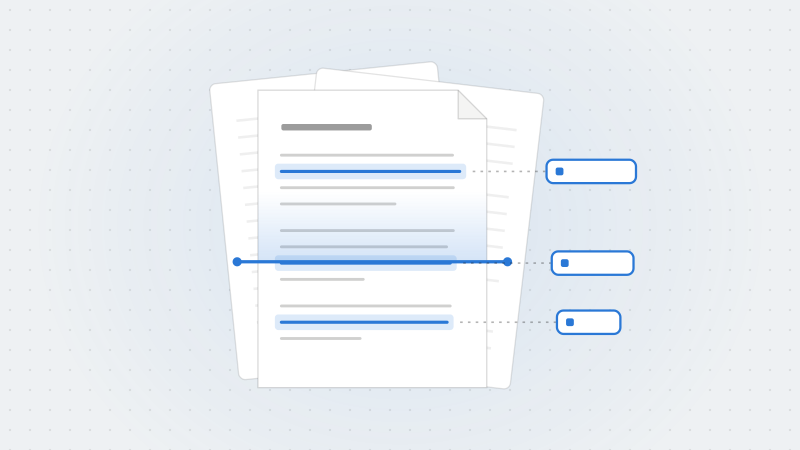
Hackensack Meridian Health put a Gemini-based agent behind a button in the patient chart that reads a patient's clinical notes and writes a summary shaped for each specialty, from oncology to urology.
Hackensack Meridian HealthUnited States (New Jersey)Hospitals and health systemsScaled since Jun 2025
- Scale
- More than 7,000 clinicians across 18 hospitals and 500 clinical care sites
- Scenario
- Patient chart summarization for clinicians
- Business function
- Clinical care
- Kind of solution
- Document review and drafting
- Who built it
- Built in-house (Google Cloud)
- Where it runs
- Public cloud
- Human oversight
- Assists people
- Organization
- Non-profit, 10,000 to 99,999 employees
- AI types
- Generative AI
- Users
- more than 1200 clinicians
tl;drMore than 1,200 clinicians generated over 17,000 chart summaries after the June 2025 launch.See the results
Hackensack Meridian Health, New Jersey’s largest health network, uses a Gemini-based agent in its patient charts that reads a patient’s clinical notes and writes a summary at the press of a button1, 2. Each summary is shaped for the specialty of the clinician who asks3. The agent went live in June 20251.
In October 2025, Google Cloud, whose models and platform the agent runs on, described Hackensack Meridian as the first health system to deploy a Gemini agent at scale for clinical note summarization1. Nurses know the tool as Ekam, and a nurse-led rollout brought it to nursing units by February 20262.
By October 2025, the agent produced summaries for 12 specialties and was used by more than 7,000 clinicians across 18 hospitals and 500 clinical care sites1. Since the June launch, more than 1,200 clinicians had generated more than 17,000 summaries1.
Before the deployment
Hackensack Meridian is a not-for-profit network of 18 hospitals and more than 500 patient care locations, with 38,000 team members and 7,000 physicians1. Its clinicians assembled each patient’s story from the chart themselves, much of it from complex provider notes2. The reading had the following costs:
- Physicians spent significant time combing through patient records during visits, time taken from the patient in the room4.
- Sameer Sethi, the system’s chief AI officer, ties the problem to “pajama time”, the documentation clinicians finish at home, and to physician burnout1.
- Nurses carried the same load. “Because I have so many patients and I have things to do,” said Margia Fonseca, a nurse at the system’s John Theurer Cancer Center, describing why she wanted a note summarizer2.
In August 2023, Hackensack Meridian expanded its partnership with Google Cloud to use generative AI to reduce the administrative burden on clinicians5. That work was to build on Ekam, the health system’s cloud data platform on Google Cloud, and on Google’s Vertex AI platform5.
Clinical summarization became one of its earliest uses of large language models4. At Google Cloud Next in April 2025, Sethi said the team was using Google’s platform “to build various capabilities around clinical note summarization, ways by which our clinicians can shave off time”6.
What was built
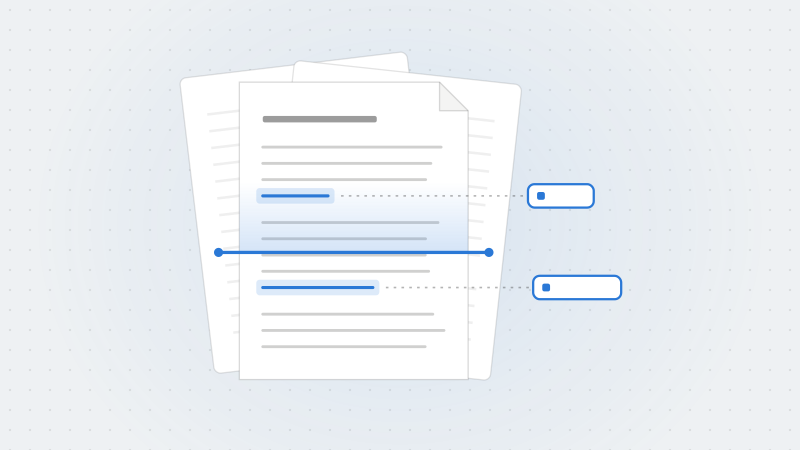
The summarizer is a button inside the patient chart that returns a summary of the patient’s provider notes, shaped for the clinician’s specialty2, 3, 4. It started with a general summary of the patient record. The team then customized the output by specialty, so that an oncologist sees different, more relevant information than a urologist looking at the same chart3. The work is divided as follows:
- Gemini agent: Reads the patient’s provider notes when a clinician presses the button, and returns a summary of what that clinician needs to know2, 4.
- Specialty templates: Set what each specialty’s summary covers, which clinicians decide. Fonseca wrote the oncology template’s starting point, a set of questions on the top things she wants to know about an oncology patient2.
- Data science team: Tested Fonseca’s oncology questions, and receives every thumbs-up or thumbs-down rating and comment that users submit on an answer2.
- Clinicians: Treat the summary as a decision-support tool, not a replacement, which keeps a human in the loop4. Only staff use the tool, so patients aren’t asked to acknowledge it2.
Sethi describes the approach as finding the problem first and then partnering “with the clinicians who want to solve it”4. He separates it from a chatbot. “It’s one thing to give someone access to a conversational AI,” he said, and the value is “in customizing it for clinicians at the point of care”4.
“It’s not taking over your job. It’s not taking critical thinking. It’s just doing the reading for you”
Rollout
The summarizer moved from a pilot with clinicians to a launch for clinicians, and then to nursing units through a nurse-led soft rollout1, 2. Fonseca joined the data science team’s pilot and template work, and internal policy let her test the oncology template on random charts for educational purposes2.
Fonseca leads the nurse rollout, with sessions that introduce Ekam and the training around it2. The rollout reached all units at the John Theurer Cancer Center and parts of JFK University Medical Center, such as same day surgery and preadmission testing2.
Technology and architecture
The model is Gemini, reached through Google Cloud’s Vertex AI platform, which supports HIPAA compliance1, 2. The generative AI work sits on Ekam, a Sanskrit word for one source of truth, which nurses also use as the name of the summarizer2, 5. The following table lists the components of the solution.
| Layer | What they used | Role | Source |
|---|---|---|---|
| Language model | Gemini | Reads the patient’s clinical notes and writes the summary | 1, 2 |
| Machine learning platform | Vertex AI | Google Cloud’s AI platform the summarizer runs on, which supports HIPAA compliance | 2, 5 |
| Data platform and storage | Ekam | The health system’s cloud data platform, and the name nurses know the summarizer by | 2, 5 |
| Cloud platform | Google Cloud | The cloud Ekam and the generative AI work are built on | 5 |
| Workplace application | Summarize button in the patient chart | Starts a summary from inside the chart with one click | 2, 4 |
| Prompt and context management | Specialty summary templates | Set what each specialty’s summary covers, such as past chemotherapies for oncology | 2, 3 |
| Business or operational system | Patient charts | Hold the provider notes the agent reads | 2 |
| Feedback capture | Thumbs-up and thumbs-down ratings | Collect ratings and comments on each answer for the data science team | 2, 4 |
Data inputs
The agent uses the following data:
- Provider notes: The case input, which the agent reads and condenses from the patient’s chart2, 3.
- Specialty questions: The context, because each template holds the questions a specialty wants answered2.
- Ratings and comments: The feedback, which flows from users back to the data science team2.
Integrations
The summarizer connects to the following systems:
- Patient chart: The button sits inside the chart and starts the summary, and the agent reads the provider notes there2.
- Ekam: The generative AI work draws on Ekam, Hackensack Meridian’s cloud data platform built on Google Cloud2, 5.
How one summary request flows through the system
Fonseca’s oncology work shows the path of one request. The agent returns “the main points I want to know about a patient right away”, shaped by the questions she wrote for the oncology template2. The nurse uses that as a starting point for her own judgment, not as the final word2, 4.
Results
The results measure use and speed, from October 2025 and February 20261, 2, 3.
| Metric | Before | After | Scope and timeframe | Reported by |
|---|---|---|---|---|
| Summaries generated | Not disclosed | more than 17,000 summaries | By more than 1,200 clinicians, June to October 2025 | Hackensack Meridian Health, measured1 |
| Clinicians using the agent | Not disclosed | more than 7,000 clinicians | 18 hospitals and 500 clinical care sites, October 2025 | Hackensack Meridian Health, measured1 |
| Specialties with their own summaries | One general summary | 12 specialties | October 2025 | Hackensack Meridian Health, measured1, 3 |
| Time to summarize a patient’s provider notes | Not disclosed | about 45 seconds | Nurse-facing Ekam tool, February 2026 | Margia Fonseca, estimate, via NJBIZ2 |
Two points add to the table:
- Time to summarize: Ekam reads and synthesizes complex provider notes in under a minute, which Fonseca put at about 45 seconds in February 20262.
- Effect on clinicians: Sethi describes it as freed-up pajama time, less physician burnout, and more personal care1. His aim is to cut “that time that the physician spends on screen looking at the patient chart”3.
Lessons learned
The summarizer’s spread is its strongest point. It went from a general summary to 12 specialty versions between June and October 2025, reached clinicians in every hospital of the network, and then moved into nursing units through a nurse who helped design it1, 2, 3. The design choices fit the problem as the team describes it: the summary sits inside the chart, each specialty decides what its summary covers, and every user can rate an answer2, 4.
A user and a builder put the lesson in their own words. Fonseca’s warning to the people who build such tools is “Don’t just make an AI product and tell us at the end, here you go. You need to have us as part of step one”2. Sethi’s version is “If we don’t capture feedback, adoption eventually suffers”4.
Hackensack Meridian states the limits itself. The summaries aren’t 100% accurate, and clinicians are told to treat them as decision support, not a replacement, so the time saved probably depends on how much of the chart a clinician still checks4. Fonseca stressed that the tool is only as good as the information available to it, which depends on physicians and nurse practitioners sharing information in a timely way2.
The published figures don’t line up. The same October 2025 release says the agent is “now used by” more than 7,000 clinicians and that more than 1,200 clinicians have generated summaries, so the larger number probably counts the clinicians with access1. The specialty count is 12 in the headline, “more than 12” in Sethi’s quote1, and “more than 15 clinical disciplines” in a write-up of his August 2025 podcast interview, two months before the release4.
Every usage figure is Hackensack Meridian’s own, published through Google Cloud’s press release and repeated by the trade press1, 2, 3. The 45 seconds is one nurse’s estimate to a reporter2. The phrase “the blueprint for the next generation of value-based care” is Google Cloud’s description of its customer1.
NJBIZ treats the physicians’ specialty summarizer and the nurses’ Ekam as one agent, and Ekam is also the name of the health system’s data platform2, 5. In June 2026, an Epic update also gave Hackensack Meridian’s clinicians Epic’s own note summaries for rounding and for visit preparation7.
Case study scorecard
- more than 17,000 summaries Chart summaries generated1
- more than 7,000 clinicians Clinicians using the summarization agent1
- 12 specialties Specialties with their own summaries1, 3
- about 45 seconds Time to summarize a patient's provider notes2
- Rules and standards: HIPAA
Sources by publication date
- Organization 3
- Vendors and partners 2
- Press, academic, and regulators 4
Build this solution yourself
Analysis
What you need
To build this solution, you need the following in place:
- Data plumbing in place before the first summary: Hackensack Meridian had Ekam on Google Cloud, and Vertex AI, which supports HIPAA compliance, to build on from August 2023, nearly two years before launch5.
- Clinicians who define each summary: The oncology template started from a nurse’s list of the questions her specialty needs answered2.
- A data science team for the templates and the ratings: It turns those questions into templates and reads the ratings that come back2.
- Provider notes that reach the model quickly and completely: The summary can’t be better than the chart, so it depends on providers sharing information in time2.
Reference architecture
Document review and drafting
A document review and drafting solution reads a case's documents against a written standard, precedents, or a list of questions and drafts a review, summary, clause, or report with its sources for an expert to finish. The solution pulls the case's documents, and a language model answers each question from the passages that bear on it, with its source. Fixed logic settles what must not vary, and an expert checks the draft against the sources and makes the decision.
- Source system (documented in this case study)
- Connector to the source system
- Review and drafting platform
- Text recognition
- Document preparation
- Passage index
- Access control
- Questions and templates (documented in this case study)
- Drafting model (documented in this case study)
- Private model endpoint
- Fixed logic
- Review workbench
- Reviewer feedback (documented in this case study)
- Tests on known cases
A check mark shows a building block that this case study's sources document.
Open the reference architectureOthers who built it
- Stanford Health Care built ChatEHR into its electronic medical record so that clinicians can ask questions of a patient’s history and summarize charts, in a pilot as of June 20258.
- HCA Healthcare is exploring with Google Cloud how Gemini can synthesize complex patient information from multiple electronic health record systems and care settings9.
- Hartford HealthCare is a launch customer of Google Cloud’s Gemini for healthcare and sees Gemini helping clinicians understand a patient’s story more quickly9.
In the library
- How Nationwide uses generative AI to summarize claim notes Nationwide
- Merck drafts clinical study reports in days with gen AI Merck & Co.
- AI drafts clinical study reports in minutes at Novo Nordisk Novo Nordisk
- Corona, California speeds building plan review with AI City of Corona
- Denver pre-screens permit applications with CivCheck AI City and County of Denver
- Court strikes down DOGE's ChatGPT screening of NEH grants United States DOGE Service
Cite this case study
Enterprise AI Case Studies. "Hackensack Meridian summarizes patient charts with Gemini." Updated Nov 18, 2026. https://case-studies.ai/case-studies/document-intelligence/DI-019-clinical-note-summarization-hackensack/
@misc{csai-di-019,
  author = {{Enterprise AI Case Studies}},
  title = {{Hackensack Meridian summarizes patient charts with Gemini}},
  year = {2026},
  note = {Updated 2026-11-18},
  url = {https://case-studies.ai/case-studies/document-intelligence/DI-019-clinical-note-summarization-hackensack/}
}Sources
The following reporting, and every passage quoted from it, belongs to its publisher, not to this site. Sources and ownership
- Source 1:
Hackensack Meridian Health Transforms Patient Care with AI Agents Built with Google Cloud Technology
Supporting excerpts (10)
Collaboration expands Hackensack Meridian Health's clinical note summarization agent to now support 12 specialties
Hackensack Meridian Health (HMH), New Jersey's largest and most comprehensive health network
Hackensack Meridian Health has become the first health system to deploy an agent built on Gemini at scale for clinical note summarization now used by more than 7,000 clinicians across its 18 hospitals and 500 clinical care sites.
Since the clinical note summarization offering rolled out in June 2025, this feature has helped more than 1200 clinicians generate more than 17,000 summaries and usage is growing exponentially.
By using Gemini to summarize clinical notes for more than 12 specialties, we're freeing up pajama time, reducing physician burnout and empowering care teams to create a more personal experience for every patient
In addition to the groundbreaking clinical note summarization, HMH is deploying two other AI agents, all powered by Gemini 2.5:
Hackensack Meridian Health is not simply adopting AI; they are establishing the blueprint for the next generation of value-based care,
HMH is also planning to expand its use of AI into clinical decision support.
Our network includes 18 hospitals, more than 500 patient care locations
Our 38,000 team members and 7,000 physicians
- Source 2:
Hackensack Meridian nurse 'on tour' to roll out Ekam AI tool
Supporting excerpts (20)
Ekam is a Sanskrit word that means one source of truth.
Live since the summer, Ekam integrates directly into patient charts at Hackensack Meridian Health to rapidly read and synthesize complex provider noes, activated with the touch of a button.
Ekam uses Google Cloud's Vertex AI platform, which supports Health Insurance Portability and Accountability Act (HIPAA) compliance.
It leverages machine learning to read and synthesize complex provider notes in under a minute. About 45 seconds, according to Fonseca.
Since then, HMH's Cloud Data Platform Ekam, built on Google Cloud, has started making the rounds.
In a case study published before its deployment, Google Cloud noted how quickly the AI tool could analyze patient data. According to the report, it was able to immediately digest 100 pages of information, including clinician notes.
Because I have so many patients and I have things to do. But at least I can offset this with this note summarizer.
It's not taking over your job. It's not taking critical thinking. It's just doing the reading for you
It's giving you the main points I want to know about a patient right away.
They let me take part in their pilot program and template.
That was in January 2025, Fonseca said.
To help develop the oncology Ekam template, she created a specific set of questions for the data science team to test — the top things she wants to know about an oncology patient. For instance, past chemotherapies or reactions to other drugs.
She said internal policy at HMH allowed her to use random charts to test the template for educational purposes. In practice, Fonseca said Ekam does not require patient acknowledgement because it is only used by staff.
she's leading a soft rollout of Hackensack Meridian Health's generative AI agent to nurses.
In rolling out Ekam and the training around it, Fonseca offers a bridge between the disciplines.
Don't just make an AI product and tell us at the end, here you go. You need to have us as part of step one
Maybe we should add a lab component to the Ekam.
Ekam is only as good as the information that is available to it. Fonseca stressed how that necessitates providers, such as physicians and nurse practitioners, sharing information in a timely manner.
Like other conversational AI, Ekam collects feedback from users, utilizing a thumbs up and thumbs down response to answers generated, as well as the ability to submit experience comments. Fonseca said the feedback goes directly to data science.
According to HMH, Ekam is currently active across all units at John Theurer Cancer Center, as well as parts of JFK University Medical Center: the Magnet committee, same day surgery, preadmission testing and PACU.
- Source 3:
Google Cloud unveils health AI agent partnerships
Supporting excerpts (4)
including a tool that can recap patients' medical records for doctors.
The provider began offering a general summary of patient records, but has since been able to customize results by specialty — so an oncologist may see different, more relevant information compared with a urologist, said Sameer Sethi, SVP, chief AI officer, Hackensack Meridian Health.
We all have been in situations where we go to our physician offices, and the physician is reading the screen while trying to understand and talk to you, right?
We're trying to reduce that time that the physician spends on screen looking at the patient chart.
- Source 4:
Reducing Clinician Burden and Unlocking Value Through AI
Supporting excerpts (10)
One of HMH's earliest use cases with large language models was clinical summarization. Traditionally, physicians spend significant time combing through patient records during visits, time that often takes away from patient interaction.
By building an AI-powered "summarize" button, clinicians can now generate instant patient summaries. Over time, this tool has evolved to generate specialty-specific summaries for more than 15 clinical disciplines.
It's one thing to give someone access to a conversational AI,
But the real value is in customizing it for clinicians at the point of care.
We first understand the problem that needs to be solved, then partner with the clinicians who want to solve it,
For example, with clinical summarization, clinicians are reminded that AI is not 100% accurate and should be treated as a decision-support tool, not a replacement.
This approach helps maintain trust while reinforcing the principle of keeping a "human in the loop."
From simple thumbs-up/thumbs-down ratings to detailed comments, feedback is built into every deployment.
If we don't capture feedback, adoption eventually suffers,
It starts with technical teams evaluating models, includes a cross-departmental governance group with representatives from legal, HR, finance, and clinical domains, and culminates in oversight by the executive leadership team and board.
- Source 5:
Supporting excerpts (2)
Hackensack Meridian Health, New Jersey's largest health system, today announced an expansion of its strategic partnership with Google Cloud to deploy generative AI solutions to improve patient care and reduce the administrative burden on clinicians, caregivers, and hospital operators.
The companies' generative AI work announced today will leverage Ekam, HMH's Cloud Data Platform built on Google Cloud, and will use Google Cloud's Vertex AI platform, which supports HIPAA compliance.
- Source 6:
Google brings the power of AI to healthcare with new partnerships
Supporting excerpts (2)
Today at the Google Cloud Next 2025 event in Las Vegas, the company announced it's teaming up with Highmark Health and Hackensack Meridian Health Inc.
Internally, we're using Google's platform to build various capabilities around clinical note summarization, ways by which our clinicians can shave off time,
- Source 7:
New AI Tools in Epic to Streamline Clinical Workflows
Supporting excerpts (3)
A recent Epic update introduced new AI tools designed to streamline workflows and provide clinicians with valuable, time-saving insights.
Inpatient Insights: Provides summaries for rounding clinicians, including a Patient Story for new patients, Notes summaries and Recent Events summaries.
Outpatient Insights: Summarizes notes from a patient's past visits (including external Care Everywhere notes) 36 hours before a scheduled encounter, assisting clinicians in preparation.
- Source 8:
Clinicians can 'chat' with medical records through new AI software, ChatEHR
Supporting excerpts (2)
The technology, currently in a pilot stage, enables them to ask questions about a patient's medical history, automatically summarize charts and perform other tasks.
it's built into the electronic medical record system
- Source 9:
Google Cloud Launches Gemini for Healthcare
Supporting excerpts (3)
Through our work with Google Cloud, we're exploring how Gemini can interpret and synthesize complex patient information from multiple electronic health record systems and care settings
launch customers including Blue Cross Blue Shield of Massachusetts, Hartford HealthCare, HCA Healthcare
The opportunity to use Gemini to help synthesize that information could make it easier to understand a patient's story more quickly and comprehensively,












Comments
Start the conversation.
Invited members of the library comment here. Sign in to join the conversation.